Since the last edition of Village, in August, the global economy has teetered. From its foundation in 2004, Village has been one of the few local publications that systematically criticised the thrust of the direction of the economy and society. If it did not necessarily predict the at least temporary rout of capitalism then surely it would not have been surprised by it. The new Village takes up where the previous one was suspended.
Democracy depends on justice. Justice must be dispensed evenly. This democracy is subverted by the flagrancy and impunity of white-collar crime – crime committed by the upper social classes, a type of crime that has ultimately ravaged this country. At every level the criminal system has been set up to ensure maintenance of the status quo, and certainly not to challenge the privileges of the wealthiest or most powerful in society. There is some sign that progressive legislation is being introduced but the culture in the criminal justice system and particularly among the prosecuting authorities has allowed white collar crime to fester and grow – from widespread tax evasion to deception on a gigantic scale causing the loss of billions. Regulators raided the offices of the Anglo Irish Bank in February 2009. Three years on, the investigation continues. This is far from the first time that the State has launched a lengthy investigation into white-collar crime. The investigation into Merchant Banking’s failure to comply with financial regulations in the 1980s lasted for six years before it was determined that the case could not be prosecuted. Criminal investigations of planning corruption in the 1980s were abortive. In 2011 High Court Judge Peter Kelly refused an application from the gardai and the Office of the Director of Corporate Enforcement (ODCE) for a six-month extension to their joint inquiry into Anglo Irish Bank.”Will it [the inquiry] ever end?” he thundered, occasioning privately-expressed outrage from the beleaguered gardai, the Director of Public Prosecutions (DPP) and the ODCE. Three separate investigations are ongoing into Anglo after its spectacular collapse likely to cost the country around €25bn. It appears that the refusal of ten witnesses to co-operate with the ODCE is one of the principal reasons why the Anglo investigation rolls on interminably. Last year the ODCE submitted five extensive investigation files on Anglo to the DPP. In the first quarter of 2012, it sent another three large investigation files to the DPP. The ODCE now regards the investigative phase of its Anglo Irish Bank investigations as almost complete. Yet no charges have been referred against Seán Ftzpatrick, David Drumm or Michael Fingleton. It is entirely a matter for the DPP to determine if, and to what extent, any of the extensive investigation files which she has received from the ODCE and the Garda Bureau of Fraud Investigation warrant prosecution. The biggest problem seems to be the mentality of civil servants in the prosecuting authorities who do not see the urgency of the imperative to prosecute those who have riven our country with their greedy corruptions. There is evidence that the judiciary, led by some of the Tribunal judges and Judge Kelly, but also the likes of Judge Griffin in the Circuit Court who recently sentenced Councillor Forsey for corruption, understand the significance of advancing these prosecutions, but the ODCE, DPP, Central Bank and the Fraud Squad are timorous, and deferential in the face of the moneyed and the professional. Since its inception, the Competition Authority has secured 33 convictions against companies and individuals, but the yield has been low: €600,000 in fines and no one sent to jail. The ODCE has secured around 300 convictions, mostly in the District Court where fines and penalties are derisory. In its 10-year history, the ODCE has never secured a single prosecution for insider trading or market abuse, though last year it did finally secure a three-year prison sentence arising from a company law conviction. The only convictions related to the drawn-out tribunals have been of Ray Burke for tax evasion, George Redmond (eventually overturned) and Frank Dunlop for corruption, and Liam Cosgrave for offences under the ethics acts; as well as of Liam Lawlor for blatant obstruction of the Planning Tribunal. More are needed. Comparisons have inevitably been drawn with the US where Ponzi scheme supremo, Bernie Madoff, is serving a 150- year jail term and where even cuddly newspaperman, Conrad Black, did porridge. But there is little appetite in cosy Ireland to replicate the US prosecutor’s panoply of wire-taps, plea-bargaining, monetary incentives for witnesses to testify against former colleagues and the wholesale removal of discretion in sentencing from judges. Consideration needs to be given to granting US-style immunity from prosecution to corporate whistleblowers. It is also time to consider the introduction of pre-trial hearings that would force prosecutors to show their hand at an early stage, flushing out frivolous cases and reducing delays. Such hearings would deal with complex issues such as disclosure, admissibility of evidence and disputes over documents and expert evidence before a single juror is empanelled. There should be a debate as to how prosecutors should be more democratically accountable. Rudolph Guiliani and Eliot Spitzer both made names from aggressive prosecutions of white-collar criminals, though it seems clear that US-style elections would introduce an undesirable majoritarian populism to prosecution. A law is required, as in the UK, to compel witnesses (as opposed to suspects) to co-operate with serious fraud investigators. Many powers to procure co-operation and information from are on the statute books: there is little evidence that those powers have been used or fully tested. The powers must be reviewed immediately to see if they can be improved by reference to the experience of other jurisdictions such as the UK. Indeed last year Minister for Justice Alan Shatter introduced the Criminal Justice Act 2011, which sees witnesses being compelled to provide information to Gardai across a broad range of white collar/fraud categories if it might be of material assistance in preventing the commission by another person of a relevant offence or securing the prosecution of any person for a relevant offence. But above all we need a change in the ethos of the criminal justice system. A rigorous programme of training for judges, lawyers, Gardaí and officials in the Office of Corporate Enforcement, Central Bank, Competition Office and Director of Public Prosecutions and Revenue offices must be initiated as soon as possible.
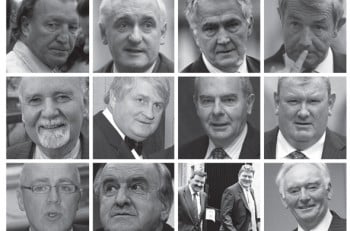
Why no prosecutions? Some unethical behaviour is not criminal; and some prosecuting authorities are slow or inert. So bankers and the villains of our tribunals are not getting justice. By Michael Smith The law on corruption • The main relevant law in place when the activities considered by the tribunals took place was the Prevention of Corruption Acts 1889 to 1916 included the Public Bodies Corrupt Practices Act, 1889 which applied only to local authorities and created an offence of corruptly giving or receiving any consideration as an inducement or reward for exercising official authority in a particular manner. Simply stated, this Act made it an offence for members or servants of such bodies to accept or seek bribes. • The Prevention of Corruption (Amendment) Act, 2001 made it easier to prove corruption because the person who gave the gift [or consideration or advantage] or on whose behalf the gift [or consideration or advantage] was given had an interest in [the way official powers were exercised] the gift or consideration or advantage was deemed corrupt. • Established in 1996, the role of the Criminal Assets Bureau is to carry out investigations into and potentially freeze the suspected proceeds of criminal conduct. • Findings of Tribunals can’t be used in evidence in criminal proceedings. BOX 2 Ray Burke, Frank Dunlop, Liam Lawlor served prison sentences arising, directly or indirectly from the Planning and Payments Tribunals. The twelve others who feature on the cover of the magazine have not faced prosecution Ray Burke Minister for Foreign Affairs June-October October 1997; Minister for Justice 1989-1992; Minister for Industry and Commerce 1988-1989; Minister for Energy 1987-1988; 1987-1991; Minister for the Environment March-December 1982. Experience in Tribunal Shortly after his appointment as Minister for Foreign Affairs, allegations resurfaced that Burke had received IR£80,000 from JMSE AND Bovale developments. Burke denied the allegations but resigned from the Cabinet and from the Dáil in 1997, after just four months in office. This allegation led to the establishment of the Planning Tribunal chaired by Justice Feargus Flood. In an interim report of the subsequent Flood Tribunal, Flood judged Burke to be “corrupt”. The Flood Tribunal found that “the assignment of Briargate by Oakpark Developments Limited to Mr Burke conferred a substantial benefit upon him which in the opinion of the Tribunal was given in order to ensure that he would act in the best interests of Oakpark Developments Limited’s director, Mr. Tom Brennan and his associates when performing his public duties as a member of Dublin County Council and a member of Dáil Eireann. In the opinion of the Tribunal the transfer of Briargate to Burke amounted to a corrupt payment to him from Tom Brennan and his associates. More problematically, the Tribunal was unable to discover what actions Burke performed for Tom Brennan or his associates in return for the benefit provided to him. Experience in Court In July 2004, Burke pleaded guilty to making false tax returns. The charges arose from his failure to declare for tax purposes the payments that he had received from the backers of Century Radio. On 24 January 2005 he was sentenced to 6 months in jail for these offences, though he he got some remission. Possible Criminal Action Presumably the difficulty was that the Tribunal as stated “was unable to discover what actions Mr. Burke performed for Mr. Tom Brennan or his associates in return for the benefit [corruptly] provided to him”. Frank Dunlop He was appointed Press Secretary of the Fianna Fáil party in 1974, based at Leinster House. He was head of the Irish Government‘s Information Service and Government Press Secretary from 1977 to 1982. He became a lobbyist, specialising in planning matters, and for a while fronted an RTE political programme with Fergus Finlay Experience in Tribunal Dunlop was initially brought to the attention of the Tribunal by Tom Gilmartin, who alleged that Dunlop was being used as a bag-man for developers wishing to pay bribes to politicians in return for favours. When he first took the witness stand in 2000, after failing to provide a written statement, Judge Flood responded to his evidence by asking him to reflect overnight on his position. The following day, Dunlop began to reveal payments that he had made to politicians. Experience in Court When charged Dunlop replied “we always knew this day was coming and I will not be contesting the charges”. Dunlop was sentenced to two years in prison for corruption, with the final six months suspended. He had pleaded guilty to five charges of corruption. He admitted handing over money to politicians at the time of crucial rezoning votes at council meetings relating to lands at Carrickmines in Dublin. The 62-year-old was initially charged with 16 counts of bribing Dublin City Councillors, but he pleaded guilty to five sample charges. In May 2009, he was sentenced to two years in prison for corruption, with the final six months suspended. CAB/Anything else The Criminal Assets Bureau successfully obtained a High Court order in 2006, freezing relevant land assets of 107 acres at Carrickmines owned by Jackson Way Properties Ltd and preventing their sale. Rezoning increased the value of just 17 acres of the property from €8 million to €61 million. It is within the discretion of the DPP to prosecute Dunlop for other crimes implied in the Mahon Report. And CAB can be expected to pursue other lands deemed to have been the object of illegal zonings such as Cherrywood or Quarryvale. Nothing so far, mind you. Liam Lawlor First elected to the Dáil in 1977, two years later he became a member of Dublin County Council. In 1987 he was appointed Chairman of the Oireachtas Joint Committee on Commercial State-Sponsored Bodies. Bertie Ahern appointed him chair of his “ethics” committee. In 2000 he was expelled from Fianna Fail who took a dim view of his presence in the
Government covering up for pulling of planning inquiry By John Gormley May 2012 Village “it was Phil Hogan who, even before he took office, told Village that many of the accusations contained in the files were ‘spurious’ I know how Tom Gilmartin must have felt listening to Pádraig Flynn speaking on the Late Late. You’ll recall that this was the evening that Pee just couldn’t stop talking about how difficult it was to keep three luxury homes and in the process also ‘dissed’ the developer, Mr Gilmartin, who had given him money. Gilmartin, who was described by Flynn as being “out of sorts”, took umbrage and decided to spill the beans to the tribunal. I can guess how Gilmartin felt because I had similar feelings of annoyance when a succession of government ministers decided to discredit my efforts to deal with the planning difficulties in this country. Claims that I hadn’t done “an ounce of work” on planning enquiries were repeated by Ministers Alan Kelly, Chief Whip Paul Keogh, Minister Phil Hogan and Minister Jan O’Sullivan, all of them perfectly on message, all of them equally misleading. Rather than let the sleeping dog lie, the government had decided to give this particular former minister an unmerciful kick. Did they really believe I wouldn’t react in any way? Listening to Phil Hogan talking on the issue on Newstalk one morning I tweeted that Minister Hogan “was talking bull”. That’s not exactly a revelation, you might say – Phil regularly indulges his penchant for talking twaddle. But this was different even by his own egregious standards. To turn a story completely on its head takes some neck. So, for the record, I’d like to list what I had done as minister on the planning inquiries and what exactly Phil Hogan had in front of him on taking office. When Minister Hogan took office he had: a) an extensive dossier prepared by planning officials in the Department following an internal review of the complaints (Nov 2009) b) a series of reports from the Managers in each of the local authorities submitted in response to a formal request from the Minister using his statutory powers under the Planning and Development Acts c) terms of reference for a panel of planning consultants to carry out independent reviews in the six local authorities d) a completed tender process to select this panel of consultants e) letters of appointment ready to be issued to the members of the panel And here’s the exact chronology of what occurred: 2007-2009: Various complaints received about planning practices in a number of local authorities. No process existed in the Department for dealing with such complaints and they were usually referred back to the local authority in question. 2009: I asked the Department to examine the complaints with a view to developing a more robust system of dealing with information brought to my attention concerning planning practices. September 2009: I requested a report from the Donegal County Manager under section 255 of the Planning and Development Acts, on foot of a complaint received. November 2009: An internal review of complaints against 11 local authorities was completed by planning officials. A dossier containing the Department’s analysis of each complaint was provided to me, as Minister. Late 2009/early 2010: I decided that further action was appropriate in a number of cases, including a review by independent consultants of planning practices in some of the local authorities. I then began work with Department officials to develop the most appropriate format for such reviews. 21 June 2010: I announced the commencement of the reviews. Using powers under section 255 of the Planning and Development Acts – for the very first time, I issued six local authorities with formal requests for reports on the issues raised: Dublin City Council, Carlow County Council, Galway County Council, Cork City Council, Cork County Council and Meath County Council. 16 July 2010: Reports are received from the Managers of each local authority. It should be noted that a report had already been received from Donegal County Council on foot of earlier request. 24 September 2010: Invitation to tender is issued by the Department for the appointment to a panel of expert planners to carry out independent reviews in each of the seven local authorities. 22 October 2010: 40 tenders were received from a large number of expert planners seeking appointment to the panel. November/December 2010: Department officials carried out assessment of tenders received. 12 January 2011: The Department recommended the appointment of 6 of the 40 applicants 17 January 2011: I approved the Department’s recommended panel and approved the issue of letters of appointment. 19 January 2011: The six successful bidders were informed of their appointment to the panel and asked to submit a tax clearance certificate. 22 January 2011: I resigned as Minister and the six successful bidders received no further correspondence from the Department And below is a list of the issues to be examined. Dublin City Council: Complaints from An Taisce that the City Council was not adhering to policies in its development plan, specifically in relation to tall buildings. Carlow County Council: Report from the Local Government Auditors highlighted weaknesses in the procedures followed by the planning department. Galway County Council: Complaints from An Taisce that the County Council was not adhering to policies in its development plan in granting planning permissions – a large proportion of permissions have been overturned on appeal to An Bord Pleanála. Cork City Council: Procedures around the holding of pre-planning consultations have been highlighted by the Ombudsman. Cork County Council: Complaints have questioned the appropriateness of a procedure of liaison between the planning department and councillors on specific planning applications. Meath County Council: Complaints received concerning adherence to development plan policies. Donegal County Council: Complaints received about processes followed in the planning department. I think it’s pretty clear from the above account that practically everything that could have been done was done in relation
For those who see the media affected by liberal or secular bias, for those who see the media as agents of corrupt power, reading the editorial direction of any particular newspaper is a simple task. They can always find confirmation of their view in particular opinion pieces or news stories. Ireland’s newspapers do not define themselves as those of many European countries do, on liberal/conservative, left/right, secular/religious lines. Our newspapers, like our main political parties, have a bit of everything. Assessing a newspaper’s orientation thus requires more than a reading the (little-read) editorial opinion columns or contributor opinion pieces. These can give us clues, but little more. Newspapers make it their business to ensure a spread of columnists: Joe Higgins TD and Senator Ronan Mullen write in the Irish Daily Mail; John Waters and Fintan O’Toole write in The Irish Times. Inclusions and exclusions in news selection, the tendency and tone of headlines, the choice of vocabulary – all of these details, and many more, contribute to the impact a newspaper has on its readers. With these characteristics in mind I took a snapshot of The Irish Times in an arbitrarily chosen week, Monday 23rd to Saturday 28th April. Several major themes ran through the news coverage and opinion pieces for some or all of those six days: the referendum on the fiscal treaty, the troika view of and the prospects for the Irish economy, media ownership and diversity issues and internal disputes at Independent News and Media, the French presidential election and its possible impact on EU policies. All of these were also extensively covered by other media. The Irish Times also had its selected themes, carrying several stories prominently on education, and on the Catholic Church, and on the connections between them. It ran features under the rubric, The Politics of Water, and a series of pieces in the foreign news pages about the Caucasus region, ahead of a meeting in Dublin of the Organisation for Security and Co-operation in Europe (OSCE). No other Irish medium showed anything like the same interest in the OSCE meeting. The Irish Times’ piece in this series on Azerbaijan excluded any reference to the capital, Baku, as the location of the Eurovision Song Contest, so it did not try to connect the subject to a broad readership. The choice of topic and its treatment reflected the agenda of the inter-governmental organisation, OSCE, and of its host this week, the Irish Department of Foreign Affairs. The newspaper takes this perspective in many other matters, basing much of its agenda on the government’s and focusing its coverage on individual ministers. Front-page headlines of this week name-checked Varadkar (Monday), Gilmore (Tuesday), Howlin (Wednesday), Kenny (Friday). Gilmore was centre-stage on a report about trade unions advocating a No vote in the referendum. Howlin took the lead on a report about public service employees’ allowances being under scrutiny. Kenny was credited in a report that the state (deferentially State in The Irish Times house-style) might get a possible larger-than-expected proportion of the sale price of state assets. The first two of these stories, at least, could have been told from other perspectives, e.g. Pressure builds on ICTU to advocate No, or Public service unions vow to protect allowances. The Irish Times’s choices indicate a primary orientation to those in political, economic, cultural, educational and other elites: other front-page names during the week included O’Reilly (Thursday) of Independent News and Media, Le Brocquy (Thursday), whose death was very generously marked, and Bono (Friday), in reference to his role in a spat between property developers. Two members of the European political elite, Sarkozy and Hollande, were named in a page-1 headline on the French presidential election (Monday) as presumably familiar to readers. Personal names and personal agency were less clearly stated when it came to questionable behaviour by people in authority. A page-1 report (Monday) on ministers’ spending €7 million on outside consultancies merely listed the larger spends, without giving any standard by which to judge whether this was a lot or a little. A story on Michael Lowry (Tuesday) was another product of the assiduous work of public affairs correspondent Colm Keena: the reports on page 1 and page 5 recorded that property owned by a Lowry company was not recorded on the TD’s register of interests, and listed documented details about the company and about Lowry’s connections with disgraced financier Michael Fingleton. The Irish Times did not state, “Lowry fails to register land ownership”, much less explore his previous record in this regard or the sanctions for not making complete returns. As it turned out, there was no failure of compliance on Lowry’s part: The Irish Times (Saturday) reported that an Oireachtas committee had ruled that Lowry was not required to register details of the property transaction, just his directorship of the company involved. If this was a correction of the earlier report, it was not presented as such. The Irish Times, if we are to judge by the minuscule Corrections column, very rarely gets things wrong, and then only on relatively trivial details. A muffled 38-word first sentence led a page-1 report (Wednesday) on a Catholic priest against whom sex abuse allegations were made being allowed to continue in service. Here too, the passive voice much favoured by The Irish Times was used: “the parish pastoral council was not given any of this information”, “Father Benito was allowed to serve”, etc. The paper did not identify who was responsible for these decisions. Coverage of the Catholic Church also included extensive coverage of the forthcoming Eucharistic Congress (Tuesday), including a striking front-page photograph of a woman with the veil she wore to the 1932 Congress, and a long feature (Tuesday) about church influence in teacher education that included some critical from students. However, The Irish Times did not give as much attention as other media during the week to church-government differences over mandatory reporting of sexual abuse claims, nor to the church’s censure of broadcaster-priest
The Egalitarian Niall Crowley, equality consultant and former CEO of the Equality Authority, commissioned some alternative voices economically, socially and environmentally We are constantly told there are no alternatives. The markets allow for no flexibility, they say. The Troika demand this, they tell us. Closing down the debate inspires a hopelessness and yet it suits the dominant and doomed economic project to get us back to where we were and to protect those interests that, supposedly, retain the capacity to get us there. It stifles public debate and locks all commentators into ways of thinking that narrow the range of solutions being considered. We need alternatives now more than ever before if we are to imagine a different and better future. The current situation in Ireland “requires a refounding of the the institutions and culture of the Irish State, and a new development project for the country”, according to Kirby and Murphy in their book ‘Towards a Second Republic’ (Pluto Ireland, 2011). They bemoan the constraints to our social imagination. They quote Colin Hay writing about the situation in Britain: “that new economic paradigms are difficult to summon up, especially when you need them most”. Those who are working on alternatives – alternative policies, strategies and even models for society and the economy do not get the public space they need. The Economist Sinéad Pentony, Head of Policy with TASC, writes that tax determines society Taxes provide the revenue that we need to educate our children, care for those who are ill, keep our communities safe and support those who are out of work or in retirement. Ireland is an advanced economy, with western European standards of social and economic development. If we wish to maintain and enhance these standards, our levels of taxation will also need to be comparable to those of our most advanced European neighbours. In 2009, Ireland’s overall tax-to-GDP ratio was the third lowest in the European Union at 28 per cent, and the second lowest in the Eurozone. This is compared to an EU average of 38 per cent. The difference between Ireland and our European neighbours is primarily attributable to Ireland’s relatively low level of (employer and employee) social-security contributions, more commonly known as PRSI, and the relatively low levels of local-government taxation. The tax base was eroded over the last two decades by a policy of cutting taxes when they should have been increased, and through the proliferation of tax breaks that undermined the tax base and fuelled the property boom. We need a lot of painful adjustments to make up for the mistakes of the past. TASC has been making the case for rebuilding the tax system in a way that creates the conditions for greater equality and sustainable and job-rich growth. Government income and Government expenditure are out of line. The Government, in its first budget, has maintained the budgetary parameters set by the previous administration, prioritising spending cuts over tax increases. TASC has proposed a different package of measures to reduce the deficit by focusing on revenue-raising measures that will minimise the impact on employment, economic growth and low-income groups. Taxation measures that promote equality and sustainable growth must target high-income groups, property assets, unproductive activity and passive income (e.g. rent), as well as protecting the environment. For example, this would mean that the Universal Social Charge is levied on all income from inheritances, gifts and capital gains in the same way that it is currently levied on labour income. The thresholds determining liability to Capital Gains and Acquisitions taxes would be reduced. While the last Budget made some progress in this regard, it did not go far enough. Tax reliefs are generally regressive since they disproportionately benefit higher earners and property-owners. The curtailment of pension-tax reliefs and reliefs relating to rental income would increase the tax take while minimising the impact on low-income families. The domicile levy has failed to ensure that wealthy Irish people who are non-resident for tax purposes pay their fair share. There is clearly a need for a radical rethink of how these wealthy elites should be taxed. Other countries have successfully taxed their wealthy citizens through taxation based on citizenship or taxation of global assets. The question is: do we have the political will to put in place equitable taxation measures for our wealthy citizens? Ireland has very low levels of local taxation compared to other European countries. TASC supports equality-proofed residential-property tax and water charges, as these measures represent an opportunity to sustainably fund reformed local services that are more accountable and responsive to local needs. Unfortunately, the flat-rate household charge is highly regressive because people on lower incomes pay proportionately far more of their income than those on higher incomes. While there is a lack of clarity regarding how water charges will be implemented, the indications are that they will not be taking household size or circumstances into consideration, so registerig a disproportionate impact on low-income households and larger families. Ireland also has very low levels of social-security contributions. We should be planning for gradual increases in employer and employee PRSI, combined with general taxation, to provide free-universal healthcare and earnings-related pensions. Minimising the impact of tax increases on low-income groups not only promotes equality and allows people to live in dignity, it also protects spending in the economy, which is crucial for economic recovery. TASC’s taxation proposals outline in a credible way a realistic set of measures to move us away from an under-resourced, unsustainable and unfair tax system and towards a modern progressive European tax system. The Sociologist Mary Murphy, lecturer in Irish Politics and Society in NUI Maynooth and one of the organisers of Claiming our Future, writes that without a struggle of ideas there can be no political struggle. In ‘Shock Doctrine’ Naomi Klein chillingly describes the Right as always ready, waiting for moments of crisis, to move in and apply its prescriptive ideas. While the Left also expects opportunity in crisis, progressives have been found