Recently Hot and News

Random entry RSS

  • Posted in:

    Loving that property tax (Oct 9)

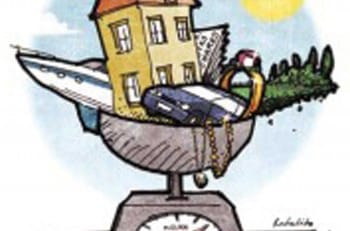
    Taxes can serve all sorts of positive policy goals including redistribution through a tax on property, which constitutes three quarters of private wealth. by Michael Smith   Learning to love property tax requires a perspective on the purposes and types, of taxation. The purposes of taxation include financing government spending; and promotion of greater equality, reduction in the use of harmful goods and the protection of local enterprise. There are three main types of tax: on incomes, on consumption and on wealth. Particular taxes include income taxes, PRSI, consumption taxes like VAT, capital gains taxes, capital acquisition taxes, wealth taxes, property taxes, water taxes, corporation taxes, transaction taxes like stamp duty, excise duties like tobacco taxes, and pollution taxes. In Ireland there has for long been an unimaginative over-emphasis on income and consumption taxes. For example, despite the on-going high levels of unemployment, income tax in 2012 made up 42% of the total tax yield compared with 27% in 2006 at the height of the boom. This creates a problem since high rates of income tax tend to impede job creation. As a result, Budget 2013 introduced base-broadening measures which are considered to be less damaging to economic recovery and job creation than income-tax increases. This magazine believes in government spending to promote high quality of life, in the promotion of radically greater equality and in the reduction of pollution, especially greenhouse gas emissions. Taxes to those ends must be supported and we should all have a vision of where the tax burden should fall. There should be a balance of all the forms of taxes cited above, with no tax overwhelmingly pre-eminent. Capital gains and acquisition taxes, wealth taxes and pollution taxes should be far more widely deployed in a society where equality and sustainability are driving goals. All the other taxes should play strengthened roles, perhaps especially – since the abolition of domestic rates, wealth taxes. Wealth is as sure, indeed surer, an indicator of riches, as income.  As such it should be taxed scrupulously. Perhaps the primary reason for not so doing has been the ease of collection of income tax – at least from PAYE taxpayers. A property tax is an, admittedly somewhat imperfect, surrogate for a wealth tax. The main strategy to reduce the pressure on income tax in Budget 2013 was the introduction of the Local Property Tax which is expected to yield €250 million in 2013 and €500 million from 2014 onwards. €250 million is the equivalent of just a 1% increase in the standard rate of income tax. There is clearly therefore scope for increase. So when people talk about taxing wealth in this country, they are talking principally about taxing the homes that we live in. According to economist, Ronan Lyons, “In Ireland, as of 2006, deposits made up 10% of Irish wealth, equities a further 8%. Pension and investment funds – wealth holdings of unknown type but likely to be a mix of mainly equities and bonds – made up a further 11% of wealth. But it was property that was the overwhelming type of wealth in Ireland, making up 72% of all wealth. The vast bulk of this was residential property. And that picture is not likely to have changed substantially with so much of Irish equity wealth being invested in the banks, which are now all next to worthless. So when people talk about taxing wealth in this country, they are talking principally about taxing the homes that we live in. In second place comes taxing the deposits we have in the bank. Make sure to mention this to the next person who says ‘We don’t need a property tax, we need a wealth tax’”. Lyons himself argues that a property tax should take the form of a ‘land value tax’ on the unimproved component of land – encouraging owners of land to optimise its use, since they are paying tax as if they have already done so. If such a tax is linked to proper zoning and planning it can be used to steer high-quality, well-planned development, so improving quality of life. Economists note too that such a tax does not deter production, distort market mechanisms or otherwise create deadweight losses the way other taxes do. This is presumably why a commitment to such a version of the property tax was in the coalition’s programme for government. Difficulty in explaining the concept ie feeble-mindedness led to its supersession. Property taxes, such as the one now being imposed, that include the value of buildings on land are less efficient, since they are, in effect, a tax on the (desirable) investment in that property. Even so, they are less likely to affect people’s behaviour than income or employment taxes.  Almost any tax is better than income tax since that taxes the ‘good’ of work, not some ‘bad’ like underuse of land or pollution. Economists like property taxes since, in an efficient capital market the burden of property taxes is borne by owners of capital across the economy; and since capital owners tend to be richer, the tax is likely to be progressive. Furthermore property taxes are a stable source of revenue in a globalised world where firms and skilled people can easily move. They are also less prone to cyclical swings. US state and local governments have seen smaller recent declines in property taxes than in other forms of revenue, largely because the valuations on which tax assessments are based were adjusted more slowly and less dramatically than actual prices. Property taxes may even restrain housing booms by rendering it more expensive to buy homes for speculative purposes. According to publicpolicy.ie’s Jessica Worth, the following are some of the advantages of the  Local Property Tax being imposed in Ireland: *    The economic impact is expected to be relatively small since a recurrent tax on residential property is deemed much less distortionary than a tax on income or capital. *    It is a reliable, sustainable source of revenue. Revenue

    Loading

    Read more

  • Posted in:

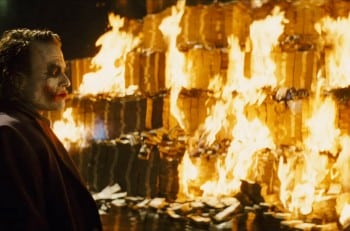
    Gurdgiev on Healthcare. Jokers burning money

    Public sector not reforming or cutting – as taxes rise Health service inflation second highest in EU   ‘spending on health has shrunk by just 128 million euro over the last two years’.   ‘Between December 2005 and mid-2012, cumulative Irish consumer price inflation (CPI)  was 9.5%. Health CPI was 21.4%’   With an early Budget looming, the circus of  ‘austerity is overbaked’ politics has rolled into town. The Labour and the FG backbenchers are out in force trying desperately to salvage what little popular support they still might command on the streets. Not to be ever outdone, Fianna Fail, freshly again converted to the Church of Socialistas has been unleashing torrents of social consciousness. Things are getting so hot on the backlash speaking circuit that Siptu was able to net even Jack O’Connor a gig. Their star performer was last seen thundering at the MacGill Summer School a potent brew of outlandishly misinformed comparisons of European and American policies for dealing with the Great Recession and calls on for an end to ‘human-rights-violating’ austerity.   The problem is that, once you come down from the highs of this Keynesian Lollapalooza, you’re still in Ireland where the Government continues to run an insolvent state with spending less than revenue and where society needs bigger and more effective expenditures. The fiscal mess we are in has nothing to do with the lack of economic growth and everything to do with the policy institutions that the current Government inherited from the decades of political clientelism presided over by its predecessors.   Let us look at some numbers.   In the first six months (H1) of 2013, the Irish State’s current expenditure was 27.12 billion euro, just  352 million euro shy of the level in H1 of 2012, and 3.2 billion euro more than we spent in H1 of 2011. Meanwhile, tax revenues rose from 15.3 billion euro in H1 2011 to  17.6 billion euro in H1 this year. Crunching  ‘austerity’ based on ‘savage cuts’, five years in, still looks more like a tax squeeze and slippery spending re-allocation from one programme to another.   Meanwhile, Department of Health spending is now running at 6.539 billion for H1 2013, down on EUR 6.754 billion for H1 2011 – a whopping reduction of EUR215 million. Remember too that 2011-2012 increases in the cost of beds charged to the private insurers (ie to ordinary insurance patients) have more than offset the above reductions in spending. Net current (ex-capital) spending on health has shrunk by just 128 million euro over the last two years.  Register that, dear Village reader.   The Department of Health is a great example to consider when dealing with the failure of our reforms. It is the quintessential ‘frontline’ service, of the type we all are willing to pay for. Yet, it is also a symbolic dividing line between the poor (allegedly having no access to the services) and the rich (allegedly all those who hold health insurance and as ‘private’ patients clog public wards). Healthcare was also the epicentre of endless rounds of reforms over decades, including the decades of rapid economic growth. And it is one of the two largest departments, with a budget only slightly smaller than the 6.545 billion euro spent in H1 2013 by the Department of Social Protection.   For all this spending, 35% of Irish households have to purchase private insurance to obtain any meaningful level of health services. For those who think insurance a luxury, the Irish Government is considering making health insurance obligatory.   Meanwhile, basic healthcare is shambolic. While emergencies get reasonably decent attention, Ireland ranks at or below the European average in treatment of most chronic diseases, before we control for differences in population demographics. Our primary care and access to specialist consultants is pathetic – apart from hospital emergency rooms  and intensive care units. Despite the fastest rise in healthcare expenditure per capita 1997-2007 in the entire EU27, according to the EU itself, Irish increases have made only “a modest contribution to [improved mortality], substantially less than one third of the total, and possibly only a few percentage points”.   In reality, of course, Irish healthcare is run for the benefit of Irish healthcare staff. The 2005-2007 pay bill for the HSE stood at an average 50.7% of the entire HSE non-capital budget. In 2009 it was 50.1%. In 2010, Irish salaries (excluding other income) for medical specialists were the highest in the EU, with the second highest paid (in the Netherlands) coming at a discount of roughly 25% on  their Irish counterparts. These salaries were not inclusive of Irish specialists’ earnings from private patients.   According to the EU’s 2012 assessment, 33% of Irish people find access to hospitals unaffordable (the 8th highest in the EU) and the same percentage find access to a GP to be out of their financial reach (the 4th highest in the EU), while 53% claim that they cannot afford medical or surgical specialists (the 8th highest in the EU).   This is hardly surprising. Between December 2005 and mid-2012, cumulative Irish consumer price inflation (CPI)  was 9.5%. Health CPI over the same period was 21.4% – more than double the rate of overall inflation. Of  EU15 states, Ireland and Holland were the only states where health costs rose faster than general inflation in the last 7 years. 2005-2011 inflation ran at 47.3% in hospital services (state-controlled charges), followed by 28.6% for dental services , 23.5 % for out-patient services and 21.3% for doctors’ fees. This inflation added to the already high cost base of 2005.   Extraordinarily, from 2005 through mid-2012 Ireland had the lowest rate of inflation in the EU15, while our health services inflation was the second highest after the Netherlands.   Austerity, it seems, has been a boom-time for healthcare costs. Or put differently, while the rest of the world defines efficiency-improving reforms as changes in delivery of services that reduce the cost of services while maintaining or improving, in Ireland

    Loading

    Read more

  • Posted in:

    PAC ignores Docklands conflicts of interests

    PAC doing a Mahon/Dunlop – in Docklands The Public Accounts Committee ignores dozens of other schemes and the position of Treasury Holding, in its focus on the Glass Bottle debacle By Michael Smith     As the Public Accounts Committee allegedly gets stuck in to Docklands, I am struck how – in the same way as the Mahon Tribunal was too lazily dependent on evidence from Frank Dunlop, the PAC, like the Comptroller and Auditor General whose report it is considering,  is unduly focused on the Glass Bottle Site where it seems the conflicts of interest were much better handled than elsewhere…though the commercial decisions were not.  But there was far more afoot in Docklands.   In April 2007 I submitted a  complaint  to the Standards in Public Office Commission (SIPO) based largely on information secured through a Freedom of Information Request from the Dublin Docklands Development Authority [“DDDA”] by the defunct Centre for Public Inquiry and from newspaper articles.  The complaint primarily  concerned conflicts of interests of then Members of the Board (Directors) of the DDDA. These Directors were Lar Bradshaw, Chairman of the DDDA and Sean FitzPatrick.   Bradshaw had been chairman of the DDDA since 1997 and was re-appointed in 2002. FitzPatrick had served as a Director since 1999 and had been Senior Independent Director, with a role in helping with ethical issues, since 2001.  FitzPatrick didn’t like it.  In June 2007 he made a speech to a business lunch hosted by a research company called Experian.  He told his compliant audience: “among the most insidious aspects of our current regulatory environment is the apparent presumption of guilt on the part of entrepreneurs and business people generally.  The whole structure seems to be geared towards something akin to an annual proof of innocence statement.  This is corporate McCarthyism and we shouldn’t tolerate it… We should ask ourselves if it is fair or equitable to allow almost any allegations, however wild and unsubstantiated, against any other citizen with seeming impunity”.  So Matt Cooper invited FitzPatrick on his radio show to find out what on earth he could have been on about.  In Who Really Runs Ireland Cooper writes “He  wouldn’t  give examples despite my repeated requests.  He wouldn’t name any victims of this ‘corporate McCarthyism’… Having raised the hare he wouldn’t chase it, as angry text messages from listeners stressed”.  Cooper continues: “At the time I didn’t realise what had upset FitzPatrick so much… I learned subsequently that only a month before his speech and interview he had been the  subject of a complaint to SIPO.  Legitimate questions had been raised by a member of the public about conflicts of interest.  He had to explain himself to SIPO or, as he would have put it, to prove to them that he was innocent”.   FitzPatrick and Bradshaw served on the DDDA at a time when a great number of schemes in Docklands was being financed by their bank.  But they also both took part in discussions on numerous occasions on planning schemes and their certification  under section 25 of the Docklands  Act 1997, for schemes which the  bank of which they were both major shareholders and Directors (Mr FitzPatrick being chairman), was financing.  That bank was Anglo-Irish Bank. The future of Docklands seemed to be largely in the hands of under fifteen development companies.  It was clear that Anglo-Irish Bank was lending money to a considerable number, perhaps a majority, of them. In itself that was extraordinary and a cause of concern. Mr FitzPatrick and Mr Bradshaw seemed to engender an atmosphere that was conducive to facilitating the interests of the development sector, including those of some clients of theirs.  They clearly had conflicts of interest which hung like clouds over the whole operation of the DDDA Board. That much was clear well before Anglo became a coda for dishonesty, incompetence and intrigue. The question was if these conflicts of interest were illegal or are otherwise actionable.  I asked the Commission to consider the, necessarily incomplete, evidence presented and to investigate.   Another DDDA board member, Donall Curtin, is married to Ms Anne O’Donoghue who was  Associate Director, Anglo Irish Bank Private Banking. Planning Schemes The Grand Canal Dock Planning Scheme 2000, and the North Lotts Planning Scheme 2002 gave the DDDA its statutory planning powers and were similar to an outline planning permission for extensive areas on the north and south side respectively. Any development proposal submitted under Section 25 of the DDDA Act which complied with the Planning Scheme was exempted development for the purposes of the Principal Planning Act.  I requested that the Commission investigate any decisions to amend or review the planning schemes and the reasons for these amendments or reviews particularly regarding the North Lotts Planning Scheme.  I requested the Standards Commission to investigate whether the appropriate declarations had been made and whether Mr Bradshaw and Mr FitzPatrick absented themselves from meetings where required. Review of the planning schemes could obviously significantly benefit Anglo Irish Bank and the developers of schemes it is funding. Scheme DD167 Minutes concerning one of the most controversial schemes in this category, DD167 (967 apartments, office, retail), were eventually put on its file.  They show prolonged and intense debate about social housing and height.  While one Director (Donal Curtin) declared an interest, Mr FitzPatrick does not appear to have, though there were four fraught meetings in 2002-3 of which he attended two. In particular at meetings of 13 Nov and 5 Dec 2002 Mr FitzPatrick was present  for discussions on these matters which did not lead to a conclusion but which pushed in the socially-segregative direction that Treasury Holdings through its Director, Mr Richard Barrett, were suggesting.  Mr FitzPatrick did not absent himself. It is possible that he made declarations in some other manner but this is not clear from the minutes. At a meeting on 9 Jan 2003  (from which Mr FitzPatrick was absent) the developers appeared to get their way: a paper to the board from Peter

    Loading

    Read more

  • Posted in:

    Difficulties challenging the Bono hegemony By Harry Browne

    Could I write something, the Village editor asked, “about the difficulty of getting The Frontman considered in Irish (and other?) media?” And already I can hear the dry laughter of other writers, who can only dream of such “difficulty”. I was interviewed about my critical book on Bono twice in one day on TV3; I had outings on Today FM, NewsTalk, 2FM, US public radio and Cape Town drivetime; there were full-page reviews and stories on news pages to boot; two heavy-hitters of the left, George Monbiot and Terry Eagleton, praised the book in the Guardian. I don’t start from any sense of entitlement to publicity — my previous book, a labour of love about the Pitstop Ploughshares, got almost no coverage at all and sold, modestly, through activist networks. So you’d think I’d be happy with what I got for The Frontman. I am. Yet there was “difficulty”, and some of it was interesting. While no one in the media is prepared to say that Bono personally should be considered above reproach, I suspect there is élite defensiveness about what he represents, which is the self-evident, unquestioned virtue of the “good cause”. This summer, Warren Buffett’s son Peter turned whistleblower against his own class of super-rich donors with a great piece in the New York Times about “the Charitable-Industrial Complex”. He wrote: “Inside any important philanthropy meeting, you witness heads of state meeting with investment managers and corporate leaders. All are searching for answers with their right hand to problems that others in the room have created with their left”. Bono is, in my portrait, the global mascot, the cred-conferring frontman, for this class of alleged do-gooders who are actually responsible for much of the world’s exploitation, violence and inequality. If your newspaper is owned, or your radio show is presented, by someone famed for his ‘great work for charity’, this may be a hard message to take lying down. Publishers Verso had good, professional PR people working to promote the book in London, New York and Dublin. All of them kept telling the same repetitive story about their efforts, a story they said was unusual: enthusiasm from reporters and researchers, then red lights higher up, from editors, producers and presenters. Even getting a launch venue in London proved difficult.  (London was just unlucky too: both the interviews I managed to do there saw the journalists’ audio equipment break down.) Verso thought it had two different newspaper-extract deals in place: both of them failed to result in published extracts once the decision reached the most senior level. When a somewhat garbled account of the no-extract decision at the Irish edition of the Sunday Times hit the Phoenix, it probably cost me my previous good working relationship as an occasional writer for that newspaper, though in fairness the ST did later publish a smart and balanced news story about the book. Is all publicity really good publicity? Bill Clinton, Gaybo, Adi Roche and Gavin Friday were quoted attacking the book sight unseen and the reviewers at the Sunday Independent and Irish Times weighed in with usual and unusual bile, respectively. The Evening Herald ran a gloating, almost-accurate piece about the book’s rather poor Irish-bookshop sales, figures that were not surprising given that most shops seemed to hide it away as something shameful. But who was I to complain? I am a sometime critic who has written a book that is not without its vicious moments, but who is now, briefly, at the receiving end. When I have a sleepless night, I find myself wondering: how many of them have I caused for other people over the years? Like Springsteen sings: “My faith’s been torn asunder / Tell me, is that rollin’ thunder / Or just the sinking sound / Of something righteous going under?” But if my righteousness is sunk, I’ve still got something left, thanks to the people who come up to shake my hand or tweet or email me to say that the book helped them to think a little differently about power and how it is wielded. And I’ve still got, heaven help me, Spanish and Italian editions of The Frontman to look forward to in the coming months. You know, I hear Bono is really loved in Italy, Spain and Latin America…  

    Loading

    Read more

  • Posted in:

    ‘Ming, lies and our obliterated raised bogs’

    Mechanised despoliation may cease, though pervasive exceptions  proposed and EU Commission sceptical. By Tony Lowes (2011) Devastating the Bogs In the end for a while even Ming the Merciless, TD, zipped his mouth, allowing the under-informed media to report a ‘cessation’ of immemorial turf-cutting in designated conservation areas – affecting “6,500” turf-cutters and an estimated “17,000” turf-users. The turf-cutters, the IFA and conservationists on the recently-formed and government-appointed Peatlands Council (PC) all ostensibly went along  with an open-ended fudge. This evolved  under pressure from Minister for the Environment Phil Hogan and his man on earth, academic Conor Skehan, who chairs the PC, which was set up to resolve this intractable issue. Illegal turf-cutting of ‘raised bogs’ in EU-designated Special Areas of Conservation (SACs) will cease (except in exceptional cases where the EU will be asked to allow a little bit of ‘small-scale, domestic’ illegal cutting) but past illegal turf-cutting will be ignored and those who have cut illegally can take home their drying turf. Alternatives for bog-cutters will be agreed, including relocation  and compensation. The agreement will close 31 of these raised bogs around the country immediately and 24 at the end of 2011. The government is being asked to prioritise reviewing the domestically-designated Natural Heritage Area (NHA) raised bogs (a portion of the total), though it is not clear if it can review the overlapping, but less-easily reviewed, EU ‘SAC’ designation which applies to all of the bogs covered by the agreement. Elsewhere, the PC press release recites as fact the turf cutters’ view that designation and management of SACs  should take account of the “economic, social and cultural requirements of local communities”, under the science-driven Habitats Directive even though the Habitats Directive (according to EU Case C-371/98) does not elevate such human ‘requirements’ over the protection imperative. But within a few days Ming was describing the agreement as “purely academic”, buying “breathing space”; and the European Commission was reported to be “wary and cautious”.  In short it is clear that the turf cutters are merely regrouping, reserving their position until the bog-cutting season starts again, traditonally on Patrick’s Day. The agreement came after the EU lost the European equivalent of a temper after years of prevarication by Irish ministers and publication of a graphic and damning report by Friends of the Irish Environment exposing continuing despoliation. The Turf Cutter and Contractors Association (TCCA) and their spokesman, Ming Flanagan, had been painting to the public a picture of families returning on fine spring days to their bogs to cut nuggets of turf for the winter. Presented as ‘domestic’, countless TV shots featured old grannies in rocking chairs by flickering peat fires under threat from gnomes in Brussels and spoilt environmentalists. In fact, a 2005 report to the government’s National Parks and Wildlife Service (NPWS) notes that the “mechanisation of the cutting and the use of contractors to carry out this work make it difficult in many cases to distinguish between domestic and semi-commercial cutting”. Ming is a demagogue – his rhetoric normally embraces a vision of shivering God-fearers and before the election he told a cheering crowd of 700 at a meeting of the TCCA, “we must succeed because if not it will be more than turf at stake when they next come calling for your land”. From 12 – 21 May this year, a small band of environmentalists fanned out from a rented holiday home on the Shannon’s Lough Ree and visited 33 of Ireland’s 55 most protected raised bogs to try to inform the fractious and anecdotal debate that had been raging in the media. Irish raised bogs are one of Europe’s most treasured eco-systems, attracting the highest level of  protection under EU law. Raised bogs were formed by decaying vegetation on shallow glacial lakes. They build up over ground level. Blanket bogs on the other hand cover undulating ground. While – mainly through turf-cutting – 45% of Irish blanket bogs have been lost, 99% of more-easily-cut raised bogs have been destroyed. Aside from the damage to the protected habitat, the loss of carbon sequestered in these bogs is extraordinary. Peat bogs account for approximately one-quarter of the carbon stored in land plants and soils worldwide. When destroyed, the rotting or burnt vegetation is a source of CO2 and methane comparable in magnitude to the amount of carbon released by a fossil-fuel powered plant of equivalent power. Drainage of peat soils also releases silt that smothers the river and lake-bed vegetation on which fish and birds rely. It releases organic carbons and suspended solids – the peaty colour in water – which when treated with chlorine creates trihalomethanes – cancer-causing agents. What the environmentalists found and photographed was utter devastation. That last remaining 1% of raised bogs was being savagely destroyed by mechanical turf-harvesting for short-term gain, with no effective action whatsoever being taken by the Government to enforce restrictions. Until the FIE report was published Phil Hogan, the Minister for the Environment, continued the pretence of assiduous legal compliance to the European Commission. Cutting on the closed bogs was not an issue. On the 22nd of March 2011 he told Maureen O’Sullivan, TD, in a written parliamentary reply that: “My department continued to monitor bogs in designated areas following the Government decision ending the derogation. In a number of cases contractors coming onto bogs to begin turf cutting discontinued their activities on having the situation explained to them”. The site visits recorded that even where cutting had apparently been discontinued, bogs were still being burnt. Burning was considered the main reason for the decline in Active Raised Bog habitat at five raised bogs in the 2006 NPWS reports. In all 33 random site visits to SAC-designated raised bogs, not a single instance of hand-cutting was observed. The final report  contains more than 700 damning photographs. Cutting, burning, draining, and adjacent extraction were photographed on 22 of the 33 bogs visited. The reaction was immediate.  Minister Jimmy Deenihan issued a press release within days warning those

    Loading

    Read more