Gender

Random entry RSS

  • Posted in:

    O’ Carroll corollary.

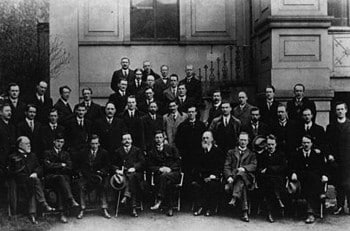
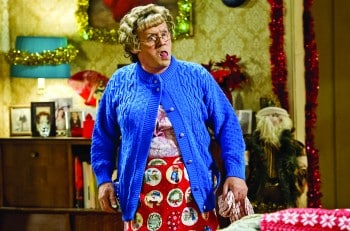
    By Ivana Bacik. In a recent short video, filmed by director Lenny Abrahamson, Mrs Brown – comedian Brendan O’Carroll, explains why she will be supporting the marriage equality referendum. She wants her gay son Rory to have the same opportunity for happiness as everyone else’s son. It’s a simple but effective statement that sums up the core message of this referendum. Mrs Brown notes that there was once a time when Catholics could not marry Protestants and when women were not allowed to vote, and concludes: “Every generation gets a chance to make a big change, and you’re getting your chance on May 22nd”. As we head to the polls in May for this historic vote on the civil liberties issue for our generation, marriage equality for gay couples, it is timely to reflect on the vital civil liberties campaign for a previous generation to which Mrs Brown refers – the campaign seeking votes for women. As we head into the Easter 1916 centenary commemorations next year, it is important to also commemorate and celebrate the achievements of the suffrage movement. In Ireland, the moderate wing of the suffrage campaign was represented by activists like the Quaker couple Anna and Thomas Haslam, described by Carmel Quinlan as “genteel revolutionaries”, who set up the Dublin Suffrage Association in 1876. A more radical approach was adopted by many women who were also prominent in the struggle for Irish independence, with strong female icons like Constance Markievicz involved in both the suffrage and nationalist campaigns. A well-known feminist contemporary of Markievicz’s was Hannah Sheehy-Skeffington, who along with her husband Francis, set up the Irish Women’s Franchise League. The Sheehy-Skeffingtons were nationalists but, unlike Markievicz, took a pacifist position in the Easter Rising. For activists like Markievicz and the Sheehy-Skeffingtons, even where they disagreed on the particular tactics of the nationalist campaign, the causes of Irish independence and women’s suffrage were closely linked by the same motivating force. Some years later Markievicz, then a TD, described in a Dáil speech how the women’s suffrage movement had led to her embracing of other campaigns: “My first realisation of tyranny came from some chance words spoken in favour of women’s suffrage and it raised a question of the tyranny it was intended to prevent – women voicing their opinions publicly in the ordinary and simple manner of registering their votes at the polling booth. That was my first bite, you may say, at the apple of freedom and soon I got on to the other freedom, freedom to the nation, freedom to the workers”. The campaign for women’s suffrage achieved partial success when the right to vote was extended to some women across the then United Kingdom in February 1918 through the Representation of the People Act. This Act however applied more restrictive conditions to women than to men, extending the franchise to almost all men over 21, but only to women over 30, subject to property qualifications. This was followed by the Parliament (Qualification of Women) Act, passed in November 1918, which allowed women to become MPs. In the December 1918 UK election, Constance Markievicz was the only woman elected, and she became the first woman MP and TD, choosing to sit in the first Dáil Eireann. She also became one of the first women Government Ministers in the world, as Minister for Labour in the 1919-1922 Sinn Féin government formed following that election. In 1922, women in Ireland obtained the right to vote on an equal basis to men through the Electoral Act 1923, an important assertion of equal rights for the nascent Irish Free State. This Act extended the vote to all women over 21 and abolished any remaining property qualifications, some years before women in Britain obtained equal voting rights. After the creation of the Irish Free State in 1922 and ensuing Civil War, Irish women like Markievicz, and many other of Margaret Ward’s “unmanageable revolutionaries”, became much less visible publicly, their voices suppressed by the dominant deeply conservative nationalism. Few women were involved at a policy-making level in the new state, and women’s groups were generally organised around women’s domestic roles as wives and mothers. It would be several decades before a second-wave feminist movement began to seek more substantive change for women’s rights. The extension of the equal right to vote for women in 1923 was the last feminist law to be passed for a generation. Only a tiny number of pioneering women stood for election or became TDs during the first decades of the new state. It is perhaps no coincidence that one of those early pioneers, elected to the Dáil in 1954, was Brendan O’Carroll’s own mother, then Labour TD Maureen O’Carroll. •

    Loading

    Read more

  • Posted in:

    Labour should seek repeal of Eighth amendment.

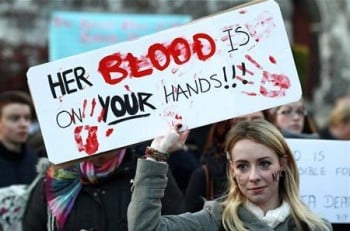
    By Ivana Bacik. This summer we saw yet again the tragic consequences of the Eighth Amendment. In the Ms Y case, a young rape victim, an asylum seeker with a crisis pregnancy, was denied the abortion she sought, and ultimately forced to endure invasive medical procedures against her will. She had sought an abortion early in her pregnancy but was unable to travel abroad for one. She became suicidal, but it appears that her pregnancy was only diagnosed formally as posing a risk to her life too late for an abortion to be performed. Instead, the baby was delivered by C-section at about 25 weeks. Not all the circumstances are clear, and the HSE is currently reviewing the case. However, it is manifest that this appalling case is a direct consequence of the 1983 Eighth Amendment. That amendment enshrined Article 40.3.3 in our Constitution, giving equal rights to life to both “mother” and “unborn”. In the 1992 X case the Supreme Court interpreted this Article to mean that a rape victim was entitled to an abortion only where the pregnancy posed a “real and substantial” risk to her life. Abortion is thus only lawful in Ireland where a pregnancy poses a risk to the life of a woman, and not on any other ground; not rape, nor risk to a woman’s health, not even fatal foetal abnormality. Our law portrays women as vessels, forced to carry unwanted pregnancies to term. But that’s not the reality for most women in hypocritical Ireland. In 1992 we amended Article 40.3.3 to allow the right to travel for abortion. So we have a two-tier regime. Women who can travel abroad to terminate their pregnancies do so in their thousands every year. Last year 3,679 Irish women had abortions in British clinics. Since 1983, more than 150,000 women have made that journey. We may have the most restrictive law on abortion in Europe, but the Irish abortion rate is comparable with that of every other EU country. Abortion is only denied to vulnerable women unable to travel due to poverty or legal status – like Ms Y. The adoption of Article 40.3.3 has not prevented one crisis pregnancy. Yet legal change – even legislation to implement the X case – has been resisted by the powerful anti-choice lobby for decades. The Labour Party had promised this legislation and the Protection of Life During Pregnancy Act was finally introduced at our initiative last year. The debate on the legislation was overshadowed by public outrage at the tragic death in October 2012 of Savita Halappanavar, which highlighted the urgent need to provide clarity on the carrying out of life-saving abortions. The Act does this but deals only with the most extreme cases, involving risk to a woman’s life. This is due to the restrictive wording of the Eight Amendment, which has effectively tied the hands of the Oireachtas for 31 years. It is our duty now as legislators to address the health needs of women by holding a referendum to repeal the Eighth Amendment. Only then can we introduce the compassionate legislation that is the norm throughout the EU, in which abortion is made available on a range of grounds up to specified time limits within pregnancy. There is clear public support for this. The silent majority are well ahead of politicians on this issue, despite the strident “pro-life” lobbyists. Labour has long taken liberal stances on social issues. In line with this tradition, I believe that Labour should now seek political agreement for a referendum to repeal the Eighth Amendment within the remaining term of this Government. If Fine Gael do not agree to this, then a consultative group should be convened to recommend how to achieve the necessary Constitutional change. A referendum could be held early in the term of the next Government, if a responsible political consensus could be built on such a recommendation. As we learn the distressing facts about Ms Y’s case, one thing is clear: if we do not change the law, we will see more tragic cases. Only repeal of the Eighth Amendment will enable us to enact an abortion law that meets the real health needs of women in Ireland. •

    Loading

    Read more

  • Posted in:

    Inexorable ascent of women electoral candidates

    By Ivana Bacik. Selection conventions are now being held across the country to bring forward candidates for the May 2014 local and European elections. It is timely to revisit the issue of women’s representation in politics, especially in the new context created by the enactment of the Electoral (Amendment) (Political Funding) Act 2012. This Act should have a transformative effect on the political landscape at the next General Election, likely in 2016.  The 2012 Act requires political parties to select at least 30% women and 30% men as candidates in that election. After a period of seven years, the minimum requirement for each gender will rise to 40%.  Parties which do not meet these targets will see their State funding cut by half. However, unfortunately, the Act does not apply to this year’s local or European elections. In the 2011 General Election, just 86 (15%) of 566 candidates were women and 25 women were elected, representing 15% of the 166 Dáil deputies. This was the best result ever achieved for women in Irish politics. The new statutory target will effectively double the number of women standing as candidates in the next General Election and is likely to result in a significant increase in the numbers of women elected.  This is likely to have a knock-on effect in the numbers of women going forward for local election this year. Currently, only 16% of elected councillors are women, following the 2009 local elections in which 17% of the candidates were women. In the previous local elections, held in 2004, women constituted 19% of elected councillors, the best result to date for women in local politics. Political-party organisers are certainly conscious, during the ongoing selection processes, of the need to recruit more women as local candidates, in order to have sufficient numbers in place to meet the new targets for the next General Election. Figures provided by the Women for Election group, which has been monitoring the convention processes, show that women constituted 24% of the 1,022 candidates selected up to January 2014. Labour had the highest rate of women selected, at 32%. In second place, 30% of the selected Sinn Féin candidates were women. Fine Gael had selected 22% women candidates and only 17% of Fianna Fáil candidates were women.  These figures could change before the election date of 23rd May, but already it seems that the proportion of women candidates will be significantly higher than 2009. This should be part of a build-up to women being more visible as candidates in the general election and, ultimately, in Leinster House.   Nominations are not yet completed for the European elections. In 2009, women constituted 24% of the candidates in the European election  and 25% of those elected (three MEPs out of a total of twelve). Following the resignation of some MEPs and their substitution according to party lists, there are now five women MEPs for Ireland. This constitutes 42% of the total, a record level of participation at any level for women in Irish politics. Five years ago, I organised an event to commemorate the 90th anniversary of the 1918 election, when women first had the right to vote, and in which Constance Markievicz was elected as the first woman TD and MP. The chamber was almost half full of women on that occasion, with 72 present.  I finally obtained permission for the photograph of that event to be displayed on the walls of Leinster House, along a ground-floor corridor in late 2013. Lise Hand memorably observed in the Independent that male TDs and Senators should be sure to see it, given that it is prominently positioned on the way to the Dáil bar.  To mark the 95th anniversary of the historic 1918 election, I have organised for another photograph to be taken, this time of all current women TDs and Senators (a total of 45) sitting in the 60-seat Seanad chamber. Commemorative events like these create a powerful visual image of how a parliament made up equally of men and of women would look.  Perhaps, after May, our local council chambers and European parliament seats may look more like these pictures. •

    Loading

    Read more

  • Posted in:

    Reclaiming the Family

    Feminists must extend the definition of family to include gay and straight, single-parent and extended families; and embrace paternity leave Article by Ivana Bacik Feminist campaigns for women’s rights – for equality in law, for access to affordable childcare, for reproductive rights – should encompass a campaign for paternity leave. After all, feminism is about creating a better society, in which individuals – and individual parents and carers – are judged on their own merits, not on the basis of gender or cultural assumptions. This was always the goal of the Irish feminist movement and is now a goal hopefully also embraced by the new feminist revival. Feminism in Ireland appears to be undergoing a welcome revival. It is, therefore, a good time to review the question of feminist attitudes to the family and to the role of fathers and mothers. Under Article 41 of the Irish Constitution, the ‘Family’ (defined as being based upon marriage) is guaranteed ‘inalienable and imprescriptible’ rights. The same Article speaks of women’s life within the home and refers to the duties of mothers – no reference is made to fathers. It is not surprising that feminists in Ireland have had a difficult relationship with the legal construction of ‘family’– nor that we have often been labelled ‘anti-family’ by conservative pundits. Now is the time to change this discourse. Feminists must reclaim the family. First we must redefine it to be more inclusive – to encompass gay and straight families, single-parent families and extended families. Then we must engage in an honest debate about the role of fathers within families. The role of fathers is often ignored in wider public discussion, just as it is in the Constitution. The focus in any debate on parenting or families invariably rests on mothers. Typically, it is ‘single-parent families’ or ‘lone mothers’ who are blamed in the tabloid press for high rates of truancy or youth delinquency. Such disapproval might perhaps better be focused upon the absentee parent. In June of last year, British Prime Minister David Cameron argued provocatively that fathers who desert their families should be subject to the same social disapproval as drunk drivers. It is always dangerous for Tory politicians to start moral crusades, but his article was in fact a celebration of fathers in general and his own father in particular. In criticising irresponsible fatherhood, he was emphasising the vitally important role of responsible fathers. A feminist strategy of similarly emphasising the importance of responsible fatherhood would recognise the changing reality that fathers increasingly share childcare equally with mothers. This could help to redefine the debate on families. It could also contribute to resolving the tedious media-generated battles between so-called ‘working mothers’ and ‘stay at home mothers’. This tired chestnut was recently re-ignited by a high-profile article by US academic Ann-Marie Slaughter. This was presented as suggesting that mothers cannot ‘have it all’ (i.e. hold down a job and be a good parent). In fact, as she herself stated, her article was based upon her own highly specific experience. She gave up a political policy-maker job in Washington DC with obscenely long hours and a tough commute to return to a tenured academic position closer to her home and family. However, she did not give up work; nor did she argue that mothers should stay at home in order to be good parents. Despite this, the article generated the inevitable anti-working mother headlines internationally. This debate is artificial and, worse, often misses the point. The truth is that childcare arrangements always have to be negotiated between the parents or carers of any child or children. Those parents, fathers or mothers, who do manage to juggle a full-time career and parenthood will invariably have a supportive partner whose work arrangements can be adjusted to make the juggling possible. Just as Ann-Marie Slaughter had.   Traditionally it was the mother who gave up work or went part-time on the birth of a child and the cultural assumption was that she would do so. Even after decades of equal-pay legislation, the marked disparity in earnings between men and women meant that it usually cost more for a father to give up work. So while mothers might have chosen to do so anyway, this meant it would have been harder for a father to become the primary carer. This is changing with economic recession. In many families a father whose work has been downsized will become the primary carer. However, feminists have always campaigned for mothers and fathers alike to have greater choices in combining work and family life. These choices would undoubtedly be easier if fathers had legal recognition in the workplace. That is one reason why the feminist movement in Ireland needs to take on the cause of paternity leave. Of course, there are other powerful social reasons to provide fathers with time off when their children are born. A right to paid paternity leave – even for a token period of one or two weeks, as in Britain – would make an enormous difference to the quality of life for newborn babies and their families. Its introduction, however, would also contribute to challenging engrained cultural assumptions about caring roles. It is time we moved beyond the stale ‘working versus stay at home mothers’ debate, and started honestly talking about how best to provide legal supports for those who are combining parenting and paid work – not just mothers. Indeed, Article 41 of the Constitution could become much more progressive if it were simply amended, as recommended by the Constitution Review Group in 1996, to acknowledge the work of ‘carers’ in the home – male and female. That would be genuinely pro-family. The introduction of paid paternity leave could be a first step towards a new policy on families and parenting, in which carers of both genders are recognised. Decent childcare supports and targeted poverty alleviation measures would then mark further steps towards a more progressive policy on parenting and on the rights of

    Loading

    Read more

  • Posted in:

    Flowering feminism by Ivana Bacik

    What is the current state of Irish feminism? There are those who repeat the mantra that feminism is dead, but others who point to signs of a revitalised women’s movement. The truth is that feminist activism may be re-emerging, but there are many challenges to overcome. In assessing this it is useful to take a historical perspective. Up until the creation of the Irish Free State in 1922, however, serious tensions persisted between the suffragist movement and those allied to the cause of nationalism. After the Civil War, the women who had been most prominent in the independence struggle, including Constance Markievicz who had supported the anti-Treaty side, became less influential in public life. Despite the fact that women had been so active in securing Irish independence, independent Ireland was far from feminist.When independence was achieved in 1922, it seemed that women’s rights would be promoted in the new state. The modern Irish feminist movement had developed during the late-nineteenth and early-twentieth centuries alongside the emerging struggle for independence. These first-wave feminists aimed to achieve equal suffrage and end legal discrimination against women. In 1922 the vote was extended to all women and men over twenty-one. Successive post-independence governments, heavily influenced by the Catholic Church, adopted a conservative approach to social issues. For many decades after 1922, there was no sign of an organised ‘women’s movement’, nor were many laws passed which were emancipatory of women. Women tended instead to be active at a localised level, through the Irish Housewives’ Association and the Irish Countrywomen’s Association. Occasional revivals of a more radical women’s collective voice emerged. For example the Irish Women Workers’ Union three-month laundry workers strike in 1945 was led by suffragist Louie Bennett. Women’s voices were largely absent from the public space. There were some protests outside the Dáil in 1937 against the inclusion of the sexist language in Article 41 of the new Constitution. The three women deputies in the Dáil have been described as ‘the silent sisters’, because they made no meaningful comment on the provisions. Challenges to the power of the Catholic Church, and to social conservatism generally, only became more evident with the emergence of the second-wave feminist movement in the 1970s. This was the period when Ireland joined the EEC and was required to enact equal-pay and anti-discrimination laws. Ailbhe Smyth has described 1974-1977 as marking a period of high energy and radical action within the feminist movement. Then from 1977-1983 she suggests that a consolidation of the movement followed. This included the establishment of rape-crisis centres and groups offering support to women suffering violence in the home. In 1979, a Women’s Right to Choose group was established. The 1980s marked a period of political conservatism in Irish society. This was a time of economic recession, with high unemployment and emigration. The Right mobilised and gathered strength. Smyth sees the years 1983-1990 as marking a succession of notorious political defeats for the women’s movement. Some liberalisation of contraceptive law occurred. However, a referendum seeking to introduce divorce was defeated in 1986. This followed another defeat in the 1983 referendum which inserted Article 40.3.3 into the Constitution denying abortion in all but life-threatening cases. Campaigns against restrictions on abortion information in the late 1980s were led by students’ unions rather than by an active women’s movement. Feminism appeared to be in decline. A significant turning point was November 1990 with the election of Mary Robinson as President. Her impressive track record as a campaigner on liberal and feminist issues had been seen by many as an obstacle to her success. Her election could be seen as marking a real change in public opinion on such issues. Another turning-point was February 1992 and the ‘X’ case. The State had obtained a High Court order to prevent a 14-year-old pregnant rape victim from leaving Ireland with her parents to obtain an abortion. Political uproar ensued, and the Supreme Court reversed the earlier decision, allowing X to travel. The Court found that because she was suicidal, the continuation of the pregnancy threatened her right to life. The two rights were in direct conflict, and in such situations, the right to life of the girl should prevail. A number of constitutional referenda followed the case. People voted to allow travel and information on abortion and voted down referenda in 1992 and 2002 which would have ruled out suicide risk as a ground for abortion. In December 2010, the European Court of Human Rights ruled, in the ABC case, that Ireland’s law on abortion breached women’s human rights. An expert group is currently examining how the government should implement this judgment. The law on abortion remains highly restrictive, but on other fronts there were many positive developments on women’s rights and liberal reform generally in this period. Male homosexuality was decriminalised in 1993 and divorce was introduced following a 1995 referendum. Contraception was legalised. The academic discipline of women’s studies became well-established. During the economic-boom years  women entered the workforce in increasing numbers, although childcare costs have remained high and State supports for working parents relatively limited. Since the start of the economic downturn it could be argued that this momentum has halted and that there is stagnation of women’s rights. There are indications of a resurgence in activism by the Catholic right, through mouthpieces such as the Iona Institute. So where are the feminists now? They are re-grouping on a range of different issues. In fact, there are encouraging signs of the re-emergence in very recent years of a radical, young and active feminist movement. New feminist groups have formed. The Irish Feminist Network (IFN) was founded in May 2010 by a group of post-graduate students from the Centre for Gender and Women’s Studies at Trinity College Dublin. The group is campaigning for change on prostitution law (with the Turn Off the Red Light campaign) and for abortion law (with the new group Action on X, set up in February 2012 to campaign for legislation on the

    Loading

    Read more

  • Posted in:

    Where are all the young feminists?

        By Linda Kelly.   If ever there was a question to raise the hackles on the back of my neck, it is the question ‘Where are all the young feminists?’ A question which is never posed without the accompanying critique that young women simply don’t care about equality or about the path that previous generations of women warriors have beaten down for them. And why does it annoy me so much? Because, in my experience, the critique is simply not true. Firstly, there are lots of young feminists. Lots! Since the time we (Jennifer DeWan and I) set up Cork Feminista in August 2010, there has been a surge in young feminist groups. As Aisling O Connor of Sibéal says “Feminism is alive and well in Ireland today and there has been a rejuvenation of feminist activism and scholarship in recent years”. For example, there are the Irish Feminist Network, Sibéal, the Feminist Society in NUIG, the new Siren Magazine in Trinity College where the DUGES society also operates and FemSoc in NUIM. And before any of us got started there was the Belfast Feminist Network in Northern Ireland and UK Feminista which was set up by Kat Banyard, author of the Equality Illusion. Alison Spillane of the Irish Feminist Network points out that “young people in particular seem to be drawn toward the feminist movement”. For me, the problem isn’t that there are no young feminists, the problem is that the myth has been propagated to the point where it is now accepted as fact. The result is devastating – a generation of excited and passionate activists is slowly being made to feel invisible. Aisling O Connor of Sibéal considers that “The present so-called ‘wave’ of feminism is quieter than those that went before it” and she links this to the fact that many young people are not willing to call themselves a feminist though they still extol a certain level of feminist consciousness. This is definitely true of many Cork Feminista supporters and many of my own friends. And it is this which is perhaps the divider between feminist generations. Young women often refuse to use the word feminist while saying and doing very feminist things. The sting is that the activists who have gone before often feel betrayed by this and feel it’s an insult to their work and identity. And so begins the vicious cycle whereby established feminists question the activities of young feminists, and they in turn resent being silenced and become even more alienated from the traditional movement. Does this make the movement quieter? Perhaps. Less effective – not necessarily. The world has changed and activism and protest have changed with it; our generation is simply figuring out our own way of doing things. Online connections, with well-thought-out branding, are our tool of choice to engage young audiences. And it’s working. All of the groups command popular support across social media sites like Facebook, Twitter and their own blogs that get tens of thousands of hits. Yet, for whatever reason, be it that something is not clearly labelled as ’feminist’ or because it doesn’t happen in a physical room, it is often dismissed. Not only is this disheartening for the thousands who have found a home for their voice online, it also presupposes that this is the only type of activism that young feminists engage in: another myth All of the groups named hold regular events and activities, organise protests and demos and campaign on feminist issues. In the 20 months that Cork Feminista has been established we’ve had 24 events and spoken at a variety of others. Alison Spillane points out that “young feminists can be found on the streets protesting, for example, against cuts to lone parents and campaigning for long overdue changes to Ireland’s abortion laws”. Despite all of this great work, I still get asked why the young feminists are not doing anything – more often than not in spaces where emerging feminists should be getting support, like at  National Women’s Council members’ meetings. And it needs to stop. It shouldn’t be about younger feminists, or older feminists, emerging feminists or established feminists. It should be about all of us focusing on issues and campaigns and learning from each other from a platform of mutual respect. So I present you with a challenge. To those who have ever wondered where the young feminists are and to my peers who often feel ignored and invisible, remember Saturday 19th May. The Irish Feminist Network is hosting a conference entitled ‘Feminist Activism in Ireland, Past, Present & Future’. It is the perfect opportunity for all of us to bridge the current chasm that has been created by the question ‘Where are all the young feminists?’ I’ll be there. I hope you are too.     Linda Kelly is the co-founder of Cork Feminista and a Director of the Irish Family Planning Association and Hanna’s House Peace Project. @corkfeminista

    Loading

    Read more