it’s not just lawyers and accountants who run the world
by admin
it’s not just lawyers and accountants who run the world
by admin
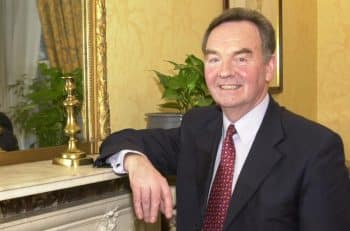
The hands of former Attorney General Paul Gallagher and of the property industry are all over the Planning Bill
by admin
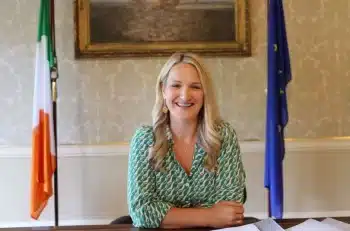
Charity founded by close ally of Helen McEntee, Minister for Justice, obtained €1.6 million from discredited Immigrant Investor Programme By Frank Connolly Former Fine Gael TD and councillor in County Meath, J V Farrelly, has confirmed that a charity of which he is a founder and director purchased a nursing home last year with the help of €1.6 million in Chinese funding obtained through the, now discredited, Immigrant Investor Programme (IIP). Mr Farrelly was among the owners of the nursing home before it was purchased by the charity. Mr Farrelly is also registered with the IIP at the Department of Justice as a lobbyist for Chinese investment. The ‘visa for investment’ scheme, which was abruptly closed in February over concerns about the source and distribution of some of the €1.2 billion in cash it has raised, is run by the Department of Justice and supervised by Farrelly’s close political ally in Meath East, the Minister for Justice, Helen McEntee TD. Mr Farrelly confirmed to Village that the charity, Kilmainhamwood Area Development Association (KADA) had received funds from Chinese investors in order to purchase the nursing home at Kilmainhamwood, Kells, County Meath. However, he could not identify them. “I’ve no idea who they are. I wasn’t dealing with them,” he said. “We found them through a solicitor. They were Chinese people. I don’t know them”. When it was put to him that he is politically “closely associated with the Minister” who is responsible for authorising IIP applicants and asked whether he had had any discussions with her or officials of the Department (in relation to the application under the IIP scheme), he replied: “This discussion is over”. On Friday 9 June, Village asked the Department the following questions: • Whether there been any contact during her time in office between the Minister for Justice, Helen McEntee, and the directors of Kilmainhamwood Area Development Association (KADA) or any person associated or working on its behalf, concerning an application under the Immigrant Investment Programme? • Whether Helen McEntee approved an application by KADA or any associated persons or vehicle for investment in purchasing a nursing home at Kilmainham, Co Meath, during her time in office? • Whether the Minister had any discussions with J V Farrelly in respect of such an investment under the Immigrant Investment Programme? • Whether her departmental officials were lobbied by Mr Farrelly concerning the nursing home or any other matter during her time in office? In response, Village was informed that “The Department does not comment on individual applications to the IIP”. Farrelly has been registered as a lobbyist with the Department of Justice since 2016 on behalf of a company which has promoted the IIP scheme for potential investors. His application stated that Mr Farrelly was “looking for approval of the investment opportunity for the Chinese applicants which would result in them being approved for a 5 year visa”. In 2022, the funding from Chinese investors financed the purchase by KADA, a registered charity, of the nearby Mowlam Nursing Home, in Kilmainham Wood, County Meath. Farrelly is a founder of KADA and was also an investor, with nine others, in the nursing home from its establishment in 2000 and before its recent acquisition by the charity. According to one director of KADA, the investment by the Chinese donors amounted to some €1.6 million. Peadar Fitzgerald, a consultant on social housing, who recently joined the board, also insisted that the KADA directors were aware of Mr Farrelly’s part ownership of the nursing home before its acquisition by the charity. He said the charity intended to reburbish and extend the 36-bed nursing home and that it had applied to build 10 social housing units on the site of the retirement village run by KADA. “I believe the investment was something in the region of €1.6 million. It was used to purchase the nursing home. The directors of KADA were aware that Mr Farrelly was the owner of the nursing home along with a number of other shareholders in a tax scheme“, said Fitzgerald, who provides consultancy to KADA on a voluntary basis. He said it was his understanding that there was a charge against Farrelly as a result of his bank debts which he may have cleared when the nursing home was sold to KADA. Farrelly has also confirmed that there was a charge against his shareholding in the nursing home. The nursing home is managed by Mowlam Healthcare, which was purchased by investment fund, Cardinal Capital, in 2020. KADA operates a retirement village with over 30 residents, many of whom own their homes, and a day-care centre for residents and others from the locality, which is located close to the nursing home. KADA received a capital grant of over €1.9 million from Meath County Council in 2020 and also obtains annual funding from the HSE. Farrelly is a former Fine Gael TD for Meath East and was recently appointed chairperson of the Strategy Committee for the party’s constituency organisation. He is a close political advisor to Helen McEntee who was appointed justice minister in 2020 and had responsibility for endorsing applicants to the IIP scheme. It attracted over €1.25 billion since 2012 before it was suddenly closed in February 2023. An audit of the controversial programme has suggested that there were concerns within the Department about the lack of security vetting of Chinese donors but there are also questions to be asked about many in business and charitable enterprises in Ireland that have been rewarded financially by its operation. At the time of the award to Farrelly’s charity, the scheme was under intense scrutiny and the subject of an, as yet, unpublished review which eventually led to its closure. It would be surprising if McEntee and her officials were not aware of the sensitivity of this particular application. The programme granted residency rights to non-EU citizens, their spouse and children under 18 if they invested a minimum €1 million in a business in Ireland or provided an endowment of up to €500,000 to a social cause or charity. Nursing homes,
by admin
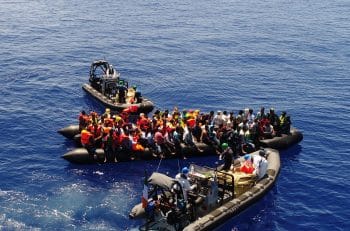
“Whoever was tortured, stays tortured” — Auschwitz survivor Jean Amery. In My Fourth Time We Drowned, multi-award-winning freelance journalist Sally Hayden documents the experiences of those who flee homes destroyed by conflict and oppression. Sally Rooney’s reaction is typical — “the most important work of contemporary reporting I have ever read”. Numerous boat crossings from Libya are detailed, each risking what happened off the Greek coast in mid-June when a boat with hundreds crammed aboard sank. Of an estimated 700 plus passengers, less than 100 bodies were recovered. The majority, locked in the hold, were feared dead. Rescue charities, and authorities in France, Greece and Malta, as well as European border control Frontex, had all been alerted, and monitoring the boat for 12 hours, but disagreed over words exchanged with passengers and what unfolded. Alexis Tsipras, Greece’s former left Prime Minister asked, “what sort of protocol does not call for the rescue … of an overloaded boat about to sink”? If practical assistance was not offered until it was too late, organisations failed in their sea duties under international laws. Barack Obama and others noted the contrast in media coverage of the Titanic submersible incident and called out obscene inequality and disparity in life chances. Meanwhile, Ireland is sending a Navy ship, Lé William Butler Yeats, to Libya, which may indirectly facilitate more drownings, because it is joining an EU naval operation tasked to sink or burn migrant ships encountered, often under smugglers’ control, meaning migrants must use increasingly more dangerous ships. Hayden explores similar ploys; denials of responsibility, or outsourcing it to criminal operators, passing the buck, hands-off exploitation and careerism, politicising desperate plights, whitewashing with tokenism, jargon, image branding, and more. The stricter migration control regime installed by the West since Gaddafi’s overthrow in 2011 has paved the way for ever-graver human rights catastrophes befalling those seeking sanctuary. Hayden’s use of unfiltered messages received directly from hundreds of refugees themselves illustrates how these European policies often result in cruel inhumane incarceration across North Africa, with Libyan militias and the modern slave trade being bankrolled by the EU, and with NGOs and the UN standing by, complicit and even corrupt. The opaque trail of accountability and striking under-reporting of activities and conditions suggest a collective wish to ignore and forget so many victims of the West’s neocolonial foreign policy. The EU does not count detainees, or have a process to contact families in emergencies, though the UN tracks numbers drowned at sea. At least 23,000 refugees have drowned or gone missing in the Mediterranean between 2014 and 2022. 1 in 51 attempting the crossing died in 2017 versus 1 in 21 in 2019. The number of people living as refugees rose by nearly 20 million from 2021 to nearly 110 million people by December 2022, according to a UN report. Hayden’s book is accessibly laid out, with lists of contents and key data, plus maps, notes on terminology, acronyms, acknowledgements and 65 pages of other notes and references, to end. According to the late David Graeber, co-author (with David Wengrow) of The Dawn of Everything, for the vast majority of human social experience, people enjoyed “three primordial freedoms: the freedom to move, the freedom to disobey and the freedom to create or transform social relationships”. Peaceful anarchy was the modus operandi. While inequalities in early human societies were not unknown, the structures of domination common to hierarchical government were absent. The tentacles of many institutions now creep around the planet, enforcing an imagined world of divisive identities, affecting millions of individuals in every facet of their lives. Exploration and colonisation over centuries brought genocides, ethnic cleansing, capture of labour, and accumulation of capital and resources. The spoils are still not going to those who earn them, although the Global South is waking up to the raw deals and lies imposed for too long. As power centres shift, Naomi Klein’s words seem apt: “In the hot and stormy future we have already made inevitable through our past emissions, an unshakeable belief in the equal rights of all people and a capacity for deep compassion will be the only things standing between civilization and barbarism”. A tragic parallel can be drawn between current migration journeys and those of Irish migrants piling into the infamous filthy overcrowded unseaworthy ‘coffin ships’ often arranged by Anglo-Irish landed gentry during the Great Irish Famine halfway through the nineteenth century. Many applicants were already at death’s door, unable to bear further hardships on route to America or Canada. Drownings and sinkings were common. Over 100,000 chose this dangerous option in 1846 alone, numbers which shocked the US Congress into passing two new Passengers Acts to raise minimum voyage fares as deterrents. Unfortunately, modern Ireland mimics international shortcomings. Evidence of human trafficking of migrant fishers off the Irish coast is mounting. And the Irish Refugee Council has recently criticised the preferential treatment of people seeking protection: “While we acknowledge the pressure on homeless services in Ireland, where homeless figures are at a record high, the decision to respond to two groups of people, that are both experiencing homelessness, with different policies on the grounds of their different status and/or nationality, risks being discriminatory and is not tenable”. The 1951 U.N. Refugee Convention states, “no Contracting State shall expel or return a refugee in any manner whatsoever to the frontiers of territories where his life or freedom would be threatened on account of his race, religion, nationality, membership of a particular social group or political opinion”. In a shameful saga, Hayden can be proud of her contribution That is the obligation under international law, incorporated widely into statutory law, but rarely cited anymore. Libya was not a signatory. Still, developing countries shelter about 87 % of the world’s refugees, most of whom have clear entitlements with experiences of conflict, poverty, enforced militarisation and so on. The goal of those fleeing strife is to contact the United Nations refugee agency, UN High Commissioner for Refugees (UNHCR) and/or the International Organisation for Migration (IOM)
by admin
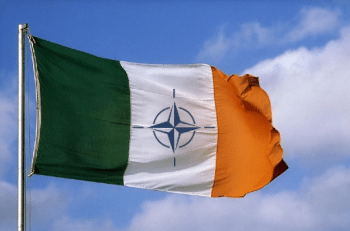
A conceptual look at the Consultative Forum on International Security Policy By J Vivian Cooke The Consultative Forum on International Security Policy that was held at various locations from 22 June to 27 June was an appropriate metaphor for the international security structures it discussed so earnestly. A small and select group directed the discussion about global security and offered their view to a larger General Assembly, some of whom would be allowed to insert them into the conversation from the floor. To add an extra layer of authenticity to proceedings, occasionally a dissident voice would be raised to protest the entire basis of proceedings. The desire expressed by the Department of Foreign Affairs that discussion should be “open, informed, respectful and evidence-based discussion on the State’s foreign and security policy”, was thwarted by a number of subversive interruptions. A shouting match between protesters and Tánaiste Micheál Martin at UCC was an early highlight. However, the chaos was largely constrained, and the moderators of each session were admirably efficient in keeping to the printed timetable. Perhaps the organisers had made allowances in their schedule for these fractious contingencies. The suspicions expressed publicly by the President that the Forum had been carefully curated so that the process would arrive at a predetermined outcome proved, on the whole, to be unfounded. The invited panellists provided important insight and nuance even if it did not reflect the full range of public opinion. Although many panellists were open in expressing their policy preferences on various issues, there was no attempt to disguise these positions and, for all the fulminations, there was little evidence of anyone acting in bad faith on either side of debates. It is helpful to order the wide-ranging discussions using an analytical framework that distinguishes positions based on intrinsic or instrumental values. An instrumental approach assesses various security policy options based on how effectively they deliver underlying policy goals. The advocates of either strict neutrality or deeper cooperation with NATO – positions that are irreconcilable – maintain that their policy preference is best suited to advance Irish security and/or promote the international rule-based order; and/or facilitate Irish participation in UN peacekeeping missions. In this sense, neutrality is not an end in itself, but rather a mechanism of Irish diplomacy to achieve the national interest and values. Even among UN veterans, peacekeepers, diplomats and administrators, there was sharp disagreement on precisely the extent to which Ireland’s neutrality is acknowledged or valued by other members of the international community. The suspicions expressed publicly by the President that the Forum had been carefully curated so that the process would arrive at a predetermined outcome proved, on the whole, to be unfounded For its advocates, international recognition of Irish neutrality distinguishes us from other European States, is evidence of impartiality, and makes Irish interventions more acceptable to other States and peoples. For example, the Taoiseach, Leo Varadkar, said that our neutrality was “helpful” in securing our election to the UN Security Council. Those who are urging changes to Ireland’s security posture assert that, in their experience, Ireland’s position is not recognised around the world as unique, and we are categorised with other small and well-intentioned countries such as Norway or Denmark, both of whom are members of NATO. Renata Dwan, a panellist at the Forum, suggested that a more realistic evaluation is that Ireland’s policy of neutrality underlies the more obvious aspects of our international reputation which others value – such as our consistent support for human rights; our distinguished track record in peacekeeping; and the absence of overriding national interests. On the face of it, the isolation of neutrality is less of a guarantor of Ireland’s national security than any mutual defence pact that creates a treaty obligation for all members to defend Ireland should we be attacked. However, such a collective security agreement cuts both ways: Ireland will have an obligation to all other members of the treaty organisation. Clearly, we could be dragged into an international conflict without having the opportunity to make a positive decision to do so. The Forum questioned if the current ‘Triple Lock’ guarantees ‘traditional neutrality’. It has created a situation where Ireland can only deploy a maximum of 12 personnel in response to any international crisis, including the evacuation of Irish citizens and aid workers from conflict zones. It also frustratingly grants to Russian and Chinese dictatorial regimes and NATO states, the US, UK and France, a veto over Irish peacekeeping missions. In any event, the ‘Triple Lock’ only applies to the authorisation at the start of UN missions and does not grant the Oireachtas a role in the continued oversight of such deployments. This deficiency has been exposed by revelations in internal UN and international reports of widespread sex and child abuse in numerous UN deployments. Any review of the ‘Triple Lock’ must include a role for the Oireachtas in renewing authorisations. The second category of contributions takes it as a premise that our security policy should be an expression of our national values, whether that is pacifism or solidarity. In this sense, neutrality is a categorical imperative that has inherent ethical value – and, for some, moral purity. Those holding this position are typically suspicious of the intent of former colonial masters attempting to maintain their political and economic influence. They note the US’s long history of illegal wars as well as innumerable invasions and coups, and the fact it has been compromised by its material interests in, for example, ensuring energy imports. Unfortunately, at times, this appraisal veers into a cognitive confirmation bias that fails to acknowledge the moral complexity of modern US diplomatic history where, often at the same time, it has been both the architect and the transgressor of international law; it has both encouraged and undermined democracies; it has been both a fierce opponent of some tyrants and close allies of others. Neutrality is not an end in itself, but rather a mechanism of Irish diplomacy to achieve the national
by admin
The State, which has been reimbursed only €242m of the €1.5bn it has paid out, should now take only lands and buildings for Community purposes; not paltry cash By Carolin Zaniewicz and Michael Smith The Commission to Inquire into Child Abuse, also known as the Ryan Commission, was established in 1999. Its goal was to investigate the extent of physical, sexual and emotional abuse of children in institutions such as children’s homes, schools, foster care and hospitals run by Catholic Orders in Ireland from 1936 onwards. The results of this investigation were published on 20 May 2009 in the Ryan Report. The report detailed “significant levels of abuse” suffered by children, who were placed by the Irish State in residential institutions run by Catholic religious orders. It found that thousands of boys and girls were subject to chronic beatings, sexual abuse and humiliation at the hands of Catholic priests and nuns. The investigations also brought to light that the government had been aware of those abuses happening, yet the “deferential and submissive attitude of the Department of Education towards the Congregations compromised its ability to carry out its statutory duty of inspection and monitoring of the schools”. First, Indemnity, Deal The outcomes of the report shocked the nation; and further controversy followed an indemnity deal signed on 5 June 2002 between then Minister for Education, Michael Woods, and 18 religious orders. It was decided that the contributions of the religious institutions to the bill for the abuse would be capped at a value of €128 million Euro, including originally 64 properties. An indemnity was given by the State against further liability, forcing the remainder of the bill onto the Irish State. Woods seemed animated by the fact that the congregations estimated their legal liability at under €60 million if forced into court, as they believed nine out of ten cases would fail— mainly because of the statute of limitations. Woods was determined to believe them though 20 years later it is clear that many religious orders including Spiritans, Jesuits and Carmelites are now reportedly paying pupils for abuse in their schools because they cannot sustain technical defences, morally, and want to continue to act in positions of authority. Crucially too, the cost of the estimated redress portion of the liability rose fivefold to €1.25 billion as a result of the numbers and severity of claims. The State has long estimated the total cost of the inquiry bill, a survivor redress scheme and related survivor supports at €1.5 billion. This has proved accurate and includes payments of nearly 15,000 claims, at an average award of €62,250; and €193 million in legal costs. The State thinks the religious should in principle pay 50%, but the religious demur. The agreement was infamously signed just before the 2002 general election, and consequently was not laid before the cabinet for its approval. It then remained unpublished for several months. Woods said that his strong Catholic faith made him the most suitable person to negotiate the deal. When asked to give a statement about the exclusion of then Attorney-General, Michael McDowell, and his officials from two meetings, Woods said: “The legal people simply couldn’t have attended – it was a no-go area for them – they had fallen out with the religious”. Woods also tried to shift the blame for the institutionalised child abuse onto the State and made the untrue statement that it was the Department of Education that “had control, management role, organisation” and that the State knew all the details when making the deal. Of course, exaggerating the culpability of the State minimised the liability of the Catholic Church. However, the reality was that management was exclusively a matter for the religious orders. Journalist and campaigner Mary Raftery criticised his remarks, pointing out that some of them contradicted statements made by Woods himself. While Woods said his Catholicism was an asset that had helped to break a deadlock in negotiations, he denied he was a member of Opus Dei, the Knights of St. Columbanus or any other lay Catholic organisation. Second, Voluntary, Deal In 2015, there was a second, this time voluntary, deal which agreed to an additional €352 million, given the findings of fault. However, according to an April 2017 report from the Comptroller and Auditor General, the voluntary sum was reduced to €193 million (a press release from the same body a month earlier said €226 million), after the Christian Brothers reduced their voluntary commitment to surrender playing fields by €127 million. There were also other extraordinary adjustments and re-evaluations. The government was aware of the abuses yet the “deferential and submissive attitude of the Department of Education towards the Congregations compromised its ability to carry out its statutory duty of inspection and monitoring of the schools” The value of the indemnity and voluntary deals was a combined €321 million (€128 million plus €193 million) coming, according to the Irish Times, in part from a portfolio of 49 school playing fields from the Christian Brothers valued at €127 million and 48 Sisters of Mercy properties valued, though not independently, at some €107 million. Then Education Minister Richard Bruton noted in 2017 that if the religious orders paid up on all the offers it would come to only 21% of the €1.5 billion paid by the State up to then. As if all that was not scandalous enough, it seems that nearly all of the religious congregations have fallen short of their commitments, especially the voluntary ones. Payments under first Indemnity Deal Some €125 million of the €128 million provided for under the 2002 Indemnity Agreement has indeed creditably been contributed, with the transfer of two properties remaining to be fully completed. The cash and counselling contributions received under the Agreement, amounting to some €65 million, were made on a collective basis which is why it is not possible to identify the amounts paid by individual congregations. Payments under Voluntary Deal The voluntary contributions made in the aftermath of the publication of
by admin
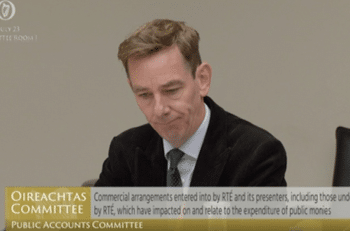
Ryan Tubridy’s evidence to the Oireachtas Committees displays his personal values that have also characterised his broadcasting career – sadly they, and RTÉ’s, are shallow and materialistic. By J Vivian Cooke Ryan Tubridy volunteered to give an exhausting full day of evidence to two Oireachtas committees – (Public Accounts and the Tourism, Culture, Arts, Sports and Media committees) – in order to rescue both his career and his reputation. He can be satisfied that his performance last week left him in a better position than he was in at the start of the day and that he has improved his prospects of returning to the airwaves. Tubridy’s contributions were clear and polished but also focused and consistent in its messaging; for all his polite and respectful congeniality there was plenty of steely resolution on display. There was also an obduracy in how he continued to characterise the payments at the heart of the controversy. Ryan Tubridy’s income paid by RTÉ was not reduced. Although he is correct in saying that the money that RTÉ paid him directly for his broadcasting work was reduced. But this pay cut was made up by a separate contract between Renault and Tubridy for €75,000 per annum for personal appearances. Tubridy’s position is that the calculation of his salary from RTÉ should not include the €75k p/a payments as they were not for his broadcasting work. He maintains this position even after the revelation that the amount Renault paid to him was offset by a reduction of the same amount in how much RTÉ charged Renault for advertising. Moreover, Tubridy’s contract stipulated that RTÉ indemnify him for any failure by Renault to make the contracted payments. When Renault withdrew from this direct contract with Tubridy, this guarantee was called on and RTÉ ended up paying Tubridy €150,000 (2 payments of €75,000) directly – not mediated through the series of transfers of earlier payments. As it transpired, RTÉ funded Tubridy’s payments either indirectly through their credits to Renault or directly once the guarantee was invoked. The fact that Tubridy, or Kelly for that matter, was not aware of how these payments were structured does not validate their factually incorrect assertions. Yet they refuse to correct their position in the face of the established facts. Still, the evidence in the public domain clears Tubridy of any culpability in and any knowledge of dodgy accounting practices. While Tubridy has acknowledged that he has made some mistakes over the years in not questioning or challenging erroneous RTÉ statements, he feels, with good reason, that RTÉ used his celebrity as a diversion from its own delinquencies. In response, Tubridy and his agent attempt to apportion all of the blame for the scandal at RTÉ’s doorstep. However much this is true for the presenter, many committee members repeatedly quizzed Kelly about his participation in the deceptions and questioned the credibility of his evidence. Kelly is Tubridy’s agent in both the show-business sense and in the sense that he is authorised by Tubridy to represent him and to act on his behalf. As such, Kelly’s actions reflect on Tubridy’s character – particularly given Tubridy’s repeated declarations of faith and trust in his agent even in light of the revelations put to him. Both Kelly and Tubridy displayed complete indifference to ensuring the facts of the payments were accurately stated. Kelly provided the invoices that facilitated RTÉ’s accounting deceptions when requested. Their stated objections to the recording of his end-of-contract payment that he forewent were faint and not pursued. The fact that Tubridy, or Kelly for that matter, were not aware of how these payments were structured does not validate their factually incorrect assertions. Yet they refuse to correct their position in the face of the established facts. Like the presenter’s own shows, and, sadly, too much of RTÉ’s output, their behaviour at the time was complacent when confronted with commercial impropriety; was to avoid forcefully challenging or questioning those in power; and above all, not to be disruptive nor create problems. Kelly’s actions reflect an ethos that he shares with Tubridy – a corporate sensibility that is concerned with financial profit while being spiritually bankrupt. While Tubridy has not disputed that, in his own words, his salary was “eye-watering” he makes no apologies for seeking to extract the maximum remuneration from RTÉ or other companies. Tubridy repeatedly stated that he employs Kelly to maximise his income without any consideration of the appropriateness of the quantum of those payments in the context of the company or society that ultimately pays his fees. Tubridy’s commercial personal ethics translates to promoting crass consumerism that sacrifices environmental survival or social equity for the sake of material acquisition. It is a value system that is selfish and narcissistic in its utter unconcern for anyone or anything else. The problem with Tubridy in this instance and throughout his career is not what he has done but what he fails to do.