
General
-
-
-
-
-
-
Posted in:
Rory O’Sullivan reviews The Birdwatcher’s Trip to Alpha Centauri. A Fascinating Mood Journey
by admin
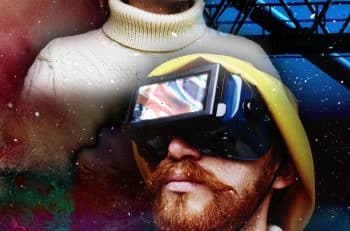
Rory O’Sullivan reviews The Birdwatcher’s Trip to Alpha Centauri This show is highly ambitious and, in many ways, daft: it takes a lot of risks, most of which pay off. Sometimes it is so absorbing it could make you forget to breathe; sometimes it is warm and relaxed, sometimes bizarre. Its biggest problem is that in the end it does not quite finish what it begins, but overall, it is fascinating and at times even profound. It features two men dressed in yellow fisherman’s raincoats and hats and red wellington boots playing music with sometimes one of them speaking poetry. A film plays behind them on a projector-screen of ships and the ocean, bridges, birds, clouds, colourful and abstract ambient-style shapes, and stars. There is no plot, but the piece begins with most of the last human beings on a spaceship leaving the earth. Its ambition is great in two senses. The first is theatrical: it is a film, a poem, a musical sequence and a staged performance all at the same time. The second is thematic: it tries to turn the cycle of natural life, from beginning to end, into a symbol for something else. The poetry is high-style and full of repetition like it is imitating the Rig Veda: “This”, such poetry always says of whatever it speaks about, “‘is a symbol of the entire universe”. It is hard to do that sort of thing while keeping an audience’s attention or respect. The reason it works here is that the sensibility behind the show is not an ideological but a sharp musical one. Nothing is about thought, and everything is about mood and image: what the poetry said mattered less than the feeling it evokes, and the music and film works together the same way. The film and costumes presses the analogy metaphorical connection between a spaceship and a ship on the ocean, which works: it made the ocean seem as it does in Homer, who calls it the ‘empty sea.’ The sea became a lifeless abstraction of materials bobbing alone in the void, just as we imagine space now. What distinguishes a musical sensibility is how it can move from one feeling to another: that journey is music. Here it is accomplishes by two means. The first is silence: the deep, slow, resonant sound of a huge ship, gradually falling into a complete soundlessness that made everyone sit back in their chairs. The technique did not wear out with repetition. The second means is surprise: the new sound which emerges from the silence is different enough – but also similar enough – compared with the old sound that it is emotionally interesting. The poetry is less successful because it quickly runs out of new images, and the repetition that so much characterises religious-style verse and music comes to feel in this script more like a scribe’s copying error than the chime of a six o’clock bell. Poetically, the purpose of a repeated phrase is like a four-four drumbeat. It is a canvas whose outstretching makes possible the play of infinite variation. What is profound in this sort of poetry when it is read out is that its naming of things one after another matches the perpetual creation and destruction of particulars in the cosmos: that is why most hymns involve lists. What the performance needs is to fill its lists with more images, appearing and disappearing as they are spoken, to make the poetry harmonise better with the rest of the piece. The other, bigger problem is that the show did not see its arc all the way through. Humans leave, the earth and space are empty, and then the earth belongs to new, rudimentary (cellular) forms of life. This is a move from the end to the beginning of an arc which is clearly implied to run from the latter to the former. The problem for the show is that when an arc runs from beginning to end, and from end back to beginning, it becomes a cycle. It would have been cheap and complacent to imagine the new forms of life burgeoning fully and taking the place of humans; so instead the show returns back to the scene of humans leaving the earth, and of an earth left behind by humans, with which it had begun. But, with that choice, it is the audience who become locked in a complacent cycle: the middle third of the show has not brought them anything new because in the final part they are back where they were at the beginning. The solution, I think, is to press the idea of a cycle of life on earth to the limit. Isn’t there something about the notion of things all repeating, again and again, that feels not easy or complacent, but appalling? Is the universe so-conceived anything more than a giant unyielding cosmic groundhog-day, tsious from start to finish, and start to finish once again? That awful prospect is where the first half of the show primes the audience to be taken, and it is a shame the production did not bring them there. It does not need to end as despairingly as I am imagining, but in any case the confrontation with despair would have been illuminating. The film made an excellent contribution to the show’s feelings because of the abstraction of its images. This falls away at the end with scenes recognisably shot in Bray: they spoil the fantasy. But overall, this is a very well-constructed piece: interesting to watch, absorbing to listen to, full of transitions straddling the edge of sense,; and emotions that feel more true than whichever nouns or on-screen images contain them. The next time this show runs, I recommend buying a ticket and smoking a joint half an hour before it starts – you would get double your money’s worth. This play
-
by admin
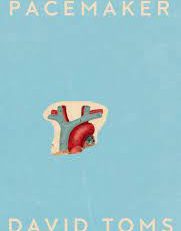
The writer, David Toms (from Waterford, living in Norway), has a rare congenital heart defect called transposition of the great arteries. For people with transposition the aorta and pulmonary artery are inverted, so that much of the blood running through their bodies is deoxygenated. As children this turns their skin blue at the extremities. The official medical term is ‘cyanotic heart disease’ from kuanos, the ancient Greek word for dark blue. Surgeries and medications treat the condition to some extent, but it is a lifelong illness that affects someone’s whole existence in ways big and small. Pacemaker is Toms’s memoir of life with transposition of the great arteries. But it is much more than that because it is also written with great artistry. Instead of the usual beginning-to-end narrative the book is divided up in loosely chronologically ordered vignettes (lots of one-paragraph pages) around thematic subjects such as his teenage experiences, the awkwardness of having an unseeeable disability, the effect of illness on his romantic life, and the pleasures of walking. The best part of the book, near the end, covers the period in early 2020 when Toms caught Covid-19 and was seriously ill. His partner, Miriam, and his mother, Maria cannot visit him in the hospital but get daily updates by phone from the staff; he prints their texts to each other. The next few years will be full people insisting to each other that, yes, despite what you may think, in this or that book the part about Covid-19 is actually very good. Here I insist. The Covid-19 part is extremely good. The reason why it works is that Toms uses the texts between Miriam and Maria to introduce, and for the most part tell, the story. The first ones effect a significant change of tone from the pages before, as if walking across the book suddenly you fall into a drain. They also, by depriving readers of the narrator’s voice, put them in the same position as Miriam and Maria: uninformed but needing to know. When the narrative voice finally reappears, there is such a release of tension that Toms’s gains a charge of powerful feeling. The sequence is enough to compensate for the book’s ending, which is an anti-climax. Obviously, Toms recovers – otherwise he would not have written the book – and that makes a formal problem because recovery is not the same as growth, and the drama of illness is not like a hero’s journey. The ending’s tone has too much of a ‘that’s over, back to normal’ sort of a feeling. In storyboard terms, it is less an arc than a boomerang. In one place in his book of aphorisms Kafka wrote, “‘And then he went back to his job, as though nothing had happened.’ A sentence that strikes one as familiar from any number of old stories – though it might not have appeared in any of them.” It certainly might have appeared at the end of Pacemaker. Probably what Toms needed to do was introduce some new element or point of view that could reach some further climax beyond the personal intensity of being hospitalised with Covid-19 (in Angels in America for example, Prior recovers from AIDS and so the play’s climax comes from one of its side-plots as well as a sweeping call-to-arms for the 1990s gay civil-rights movement). The book is well-written throughout and not over-written. What carries the writing is less the idiosyncrasies of the prose than the way in which details become charged with meaning enough that they turn into symbols. Toms then reintroduces these symbols at moments of high impact. That said, the book’s most effective symbols are not details but mantras. The best of these is the book’s first line: ‘Every time I write about my heart, I write about walking. Every time I write about walking, I write about my heart.’ This might as well have been ‘Ōṃ.’ The writing is blunt sometimes where Toms explains himself with a short ‘sum-up’ sentence, often at the end of a paragraph, that tells the reader what they are meant to take as the point of everything that has gone before. Here is the end a paragraph in which Toms describes making a walking stick: “It takes weeks. Patient waiting. The drying process. The removal of the bark. It is best to do in springtime when bark has not yet dried in and a stick is easily shorn. Then you must treat the wood. Resurrection is a process”. These words have a lovely whispering sensuality; but ‘Resurrection is a process’ undermines it. ‘Abstract Noun X is Abstract Noun Y’ – nothing of what comes before entitles Toms to make this jump straight from the realm of things to that of historically passed-on notions and abstractions. The only means by which writing ever can expect to pass to the transcendent realm is through the backdoor of the immanent. It would have been better to continue describing in more detail the treatment of the wood: to let it stand for itself as its own idea, its sense smaller and larger than any of its interpretations. Overall this is a sensitive and carefully written book worth reading. It is not an easy sort of book to write because of the temptations of false authority. In real life people who suffer for reasons beyond their control always deserve sympathy and respect. But literature is more cruel and no matter what, every narrator must work for their reader by being some combination of beautiful, interesting and manipulative. Pacemaker is sometimes beautiful, often interesting, and always manipulative in a way that makes it a success. I do not have a heart condition, but I identified with the scenes from Toms’s childhood and teenage years, as well as the few mentions of his experience studying at university. They made me see bits of my past differently and understand them better. That was because of Toms’s skill at literary manipulation: finding in