General

Random entry RSS

  • Posted in:

    By Michael Smith.

    This article appears in Village Magazine, May-June 2023.  It was written by Michael Smith and not Rory O’Sullivan.  Apologies for the editorial error.

    Loading

    Read more

  • Posted in:

    The tragedy of nostalgia for the future.

    Biden seemed to acknowledge the American future no longer looks as good as when my grandparents left Galway. By Victoria Costello. Towards the end of my forthcoming novel, Orchid Child, which explores intergenerational legacies and debts in an Irish-American family, an American teenager is walking in a wooded East Galway with an older Irish relative he’s just met, when a gust of wind rises seemingly from nowhere, creating a mini tornado of leaves and twigs, complete with sparks of light and a whirring sound. “We call that a faerie eddie”, the old man tells his visitor, noting that the Good Folk must be pleased at this meeting of far-flung kin on property still in the family. I view this bit of folklore as an apt metaphor for the swirl of mixed emotions generated by Joe Biden’s nostalgia-filled visit to Ireland this past week. Like everything else about the relationship between Ireland and its 32 million, far-flung, American kin, it’s complicated. From both sides of the Atlantic, we shared a laugh about the British display of pique over POTUS relishing his Irish roots for four whole days while skipping the coronation. To which I say, spare us, and Harry and Meghan, too, while you’re at it. Many can also relate to Fintan O’Toole’s discomfort about Biden’s outdated conflation of Irishness with Catholicism. As is true in both countries, “The Church” is simply no longer THE church. A fair number of us have even gone pagan. I get that the Republic of our Irish American imagination can be cringeworthy to today’s politically progressive, Euro-Centric Irish public. And yet, Joe Biden makes a good point when he says, “you can be nostalgic about the future”. Where it gets trickier is when we take in the embarrassed reactions of Irish commentators at Biden’s unabashed displays of sentiment about his Irish roots. I get that the Republic of our Irish American imagination can be cringeworthy to today’s politically progressive, Euro-Centric Irish public. And yet, Joe Biden makes a good point when he says, “you can be nostalgic about the future”. Whether he intended it or not, I took this line of his to refer to an American future that no longer looks as good as it did when our grandparents left West Ireland for the US Eastern seaboard. The fact is, America today is a holy mess. With an ever-blurring line between church and state and a democracy corroded by Trumpian fascist fantasies, it’s like we’re on a runaway train, watching ourselves return to the bad old days. In comparison, Ireland appears as a bastion of liberal democracy. The ironies abide. Another Biden oratorical touch on this trip was his repetition of the phrase, “Ireland remembers”, as an invocation of Irish grit and survival against the Great Hunger and centuries of colonial oppression. To the Irish parliament, he used it as a predicate for his assertion that we will, together, address the global food insecurity that is a direct result of climate change. I can’t imagine Biden making that statement at any campaign stop in the US outside of Vermont or California. So what’s going on here? Allow me to digress. When I first started digging into my Irish roots—my original motivation for doing so was a mental health crisis in one of my sons, which evolved to my researching and writing of a novel based loosely on the family history I’d discovered—I knew nothing more than my Irish grandparents’ names—Michael and Ellen Costello. Not even which county they’d left behind—Galway, as it turns out. This wholesale ignorance, I’ve discovered, is entirely typical. I submit it’s also unhealthy, both for each of us as individuals and for the collective. Much of the story I pieced together of their real lives after emigrating was as tragic as I imagine their lives would have been had they stayed in Galway, given all hell was about to break loose with the rebellion and a civil war. In America, my grandparents’ chief enemy was the poverty they faced alone, without the safety net of nearby family. Indeed their fates were tragic: Michael’s drowning death at 28; Ellen gone in the 1918 flu epidemic, leaving my five-year-old father Jack to be raised by Ellen’s Mitchell and Lynch sisters. For my grandparents’ generation, assimilation was a matter of survival, not for themselves, but for those who came after. For my parents, it was more of a choice. I remember my mother expressing no interest in keeping in touch with any relatives with an address outside the Tri-state area. For me and my siblings, assimilation was a done deal. Ireland a fading story dragged out on St. Patrick’s Day or should the subject of JFK arise. But at what cost? This is the question I grappled with as I wrote what became Orchid Child. The protagonist of my novel, Kate, is a neuroscientist, her family’s third generation success story, who brings her neurodiverse nephew (the teenager at the faerie eddie) to West Ireland, unaware that she’s set foot on the same ground her grandparents fled eighty years earlier. The choice of this scientific specialty for my main character, who is, after all, my alter ego, reflects my fascination with the epigenetics of generational trauma. How the effects of famine, war, poverty, genocide, forced immigration extend across generations and shape our mental and physical health. One of the first Ireland-specific research papers I came across that invoked this still emerging scientific principle was done by Dermot Donaldson, who applied it to a new paradigm for psychotherapeutic treatment of Troubles-related, PTSD in Northern Ireland. His paper contained a poetic phrasing that you’ll see invoked frequently by researchers working in this field. “The generations are boxes within boxes: inside my mother’s violence you find another box, which contains my grandmother’s violence, and inside that box you would find another box with some such black, secret energy – stories within stories, receding in time”. To  borrow from Joan Didion, who famously pointed out that we tell

    Loading

    Read more

  • Posted in:

    Britain’s Capt. Dreyfus affair. By David Burke.

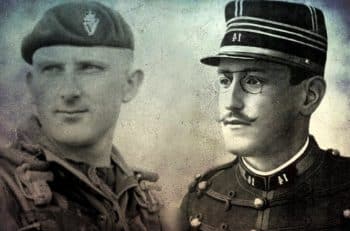
    1. France came to terms with its most shameful military scandal, the framing of Capt. Dreyfus. Britain still clings to the wreckage of its attempt to destroy Capt. Wallace after 50 years of lies and deception. L’Affaire Dreyfus convulsed France for over a decade, 1894-1906. The scandal has come to symbolise an injustice perpetrated by a state against an individual, characteristically a whistle-blower who has exposed state malfeasance. L’Affaire Dreyfus began in December 1894. Capt. Alfred Dreyfus, a 35-year-old Alsatian French artillery officer, spent five years imprisoned on Devil’s Island in French Guiana for allegedly spilling State secrets to the Germans. The real culprit was  Ferdinand Walsin Esterhazy, a treacherous French Army major. When evidence emerged against Esterhazy, the military  was obliged to convene a trial against Esterhazt, but acquitted him after two days. The Army then laid additional charges against Dreyfus, based on forged documents. Subsequently, Emile Zola produced his celebrated denunciation of the scandal, J’Accuse! It ignited public fury. A new trial of Dreyfus resulted in another conviction for the innocent captain and a 10-year sentence. This, however,  did not wash with the public and eventually Dreyfus was pardoned and released. Finally, in 1906, he was exonerated and reinstated as a major in the French Army. He died in 1935. Colin Wallace was also a captain in the military. False evidence was concocted to blame him, inter alia, of leaking military secrets which had been spilt by others. He was unfairly dismissed from his Army post in 1975. He was later accused of murder. As in L’Affaire Dreyfus, the prosecution relied upon perjury to secure the conviction. Dr Ian West, a Home Office pathologist, used his time in the witness box to disgorge one lie after another. Wallace spent six years in prison, a year longer than Dreyfus. Like Dreyfus, his conviction was eventually overturned. One of Wallace’s supporters in the British media was the late Paul Foot. He wrote of Wallace in April 1987 that the ‘most fantastic thing about Colin Wallace’s fantastic story is that every time you check it against the facts, it fits them’. The same cannot be said about the outpourings of Her Majesty’s Government (HMG). Despite repeated humiliations, the British Establishment is still swearing that black is white. 2.  Wallace exposed PSYOP dirty tricks. HMG said he was lying. When proof of dirty tricks emerged,  HMG had to rewrite its lies. HMG lied about the work Wallace carried out while at HQNI at Lisburn. One of Wallace’s tasks was to plan psychological operations (PSYOPs). In 1987 and 1988 when Wallace’s case became a cause célèbre in Britain, HMG assured the Commons that Wallace had never had a PSYOPS role. HMG also denied the existence of a particularly sinister programme run under the rubric of ‘Operations Clockwork  Orange’. Clockwork Orange fed lies to the media about British parliamentarians such as Harold Wilson, Denis Healey, Tony Benn and others. Then, in 1989, files emerged which proved that Wallace had indeed served as a PSYOPs officer; moreover, that Clockwork Orange files existed. Defence Secretary Tom King conspired with Margaret Thatcher to push this particularly embarrassing genie back into the bottle. Rather than hold a wide ranging inquiry, as certain civil servants had expected, King curtailed the terms of what became the Calcutt Inquiry. David Calcutt QC turned out to be an honest man. He confirmed that Wallace had been dismissed unfairly, but little else. This was not Calcutt’s fault. His terms of reference were narrow and restrictive. Wallace was paid £30,000 compensation. 3. Wallace raised the spectre of collusion and was accused of being a Walter Mitty. Now HMG is doling out millions to victims of collusion. What had Wallace discovered during his time as a PSYOPs officer? Wallace came to suspect the existence of collusion long before this became an accepted fact for which HMG has compensated many victims such as the families and survivors of the Miami Show band atrocity. Yet, when Wallace raised the spectre of collusion between the British state and Loyalist paramilitaries, he was denounced as a liar. In addition to the payment of compensation to victims of State-Loyalist collusion, a string of enquiries including that of the Police Ombudsman for Northern Ireland, the Historical Enquiries Team, along with the publication of various books,  have confirmed that British agents were working inside Loyalist paramilitary organisations. The most infamous of these killers was Robin ‘The Jackal’ Jackson. He was one of the gang which bombed Dublin and Monaghan in 1974 murdering thirty-three people. Wallace has maintained for decades that there were reasons to believe the State had colluded with the UVF gang that bombed Dublin and Monaghan in 1974. Various British government have refused to release their files on the twin atrocity. 4.  Wallace said the State knew about the child abuse at Kincora. He was vilified for decades. In 2022 the Police Ombudsman criticised the RUC for having failed to act on knowledge it had of the scandal. What else did Wallace reveal only to be traduced as a Walter Mitty type fantasist? Wallace has told the truth about the infamous Kincora Boys’ Home child sex abuse scandal. All of the inquiries set up by HMG have ordained that the only abuse suffered by the residents of Kincora was that perpetrated by the staff members at the home. This is entirely wrong. In recent decades countless former victims have come forward with detailed accounts describing how they were abused by people from outside of the home. HMG still libels the victims as liars and fantasists. One of the victims, Richard Kerr, is trying ti get his case heard in Belfast. He has become frustrated at one delay after another in the case. Wallace has produced contemporaneous records which prove that he and others in the Army knew about the abuse at the time. RUC records prove that the police knew about it too in the 1970s. In 2022 a report by the Police Ombudsman for NI acknowledged this and criticized the RUC

    Loading

    Read more

  • Posted in:

    Someone is illegally leaking Minister Darragh O’Brien’s role in confidential Cabinet discussions, to the Irish Times. By J Vivian Cooke.

      And O’Brien is benefiting from favourable coverage in the paper for his precipitate  U-turning Planning Bill which embraces Bord Pleanála, social housing, judicial review and the foreshore   The Minister of Housing, Darragh O’Brien has been scrambling of late to hustle through the passage of the still fast-evolving unfinished but critical Planning and Development and Foreshore (Amendment) Bill, 2022 (the ”Bill”) through the Houses of the Oireachtas before the Christmas recess. In previous articles, Village has been critical of the deficiencies in the legislative process that has resulted from this unseemly haste.   In recent weeks, the Irish Times has been helpful in relieving the harried Minister of the distraction of releasing the usual press statements with their tedious official status. And more helpful still in laundering the scrambling and hustling as if it were pre-planned, even where the detail of the legislation contradicts previous releases and stated statutory intent.  This will be no end of relief to the U-turning Minister. Articles were published in that paper on 29 November and 7 December which reported that the Minister had received government approval to amend the Bill to allow for the appointment of an interim Chairperson of An Bord Pleanála (ABP) and to provide for exemptions to existing planning regulations, in certain circumstances, for local authority social and affording housing developments. Original plans to replace the “Chairperson” with an “interim Chairperson” were fast changed after a Village article drew attention to the facts that    that the “interim Chairperson” would not be empowered a)  to investigate misconduct of ABP members and b) to allocate business to divisions of ABP —  a streamlining efficiency that would become central to operations if ABP were expanded as the Bill proposes,  to 14 members. The report involved a contribution to the Cabinet discussion by O’Brien. The report was highly favourable to O’Brien. The report was the third in ten days outlining proposals to Government from O’Brien. The investigation into the source of the leak would do well to start  with O’Brien and those close to him.     The failure to recognise and analyse U-turns that characterised the articles suggests the article has been derived from informal briefing rather  than with the meticulous care typical of carefully crafted official statements published by Departmental press offices. Village has requested a copy of any official statement on which these articles were based from the Department as neither of these “announcements” were published as government press releases.   The Department confirmed to Village that the article of 7 December was accurate and, at the time of writing, was verifying the facts of the 29 November article. On the face of it, so far, there is every reason to believe that the articles are factually correct.   Moreover, even with all this on his plate, O’Brien found time to make an intervention in the drafting of another Department’s proposed bill.   On 8 December, yet another article helpful to O’Brien and based on “sources” rather than official statements reported details of the changes to Catherine Martin’s Registration of Short-Term Tourist Letting Bill that O’Brien had suggested to the Cabinet. The headline of the article tells the tale: ‘Minister wanted new laws to force short term lettings into private market introduced immediately Cabinet papers show that Darragh O’Brien clashed with Minister Catherine Martin over the proposals and wanted them to be introduced without six month grace period’.   The article asserts that  “observations on the new law submitted to Cabinet [were] seen by the Irish Times”. The headline talks of a “Cabinet clash” and the meat of the article says, “Cabinet papers show that Ministers clashed over a proposal to allow short-term lettings to continue operating for up to six months”.  If there is a clash in Cabinet it clearly must arise from “discussions”.  The nature and detail of those discussions have obviously been leaked.  Clearly someone at the very least showed, and possibly gave, the reporter the Cabinet papers in question – papers that are confidential.   In any event, the point is that disclosing, and worse still publishing, Cabinet discussions was illegal. The law is embarrassingly clear on this matter. The Seventeenth amendment to the Constitution, passed in a referendum in 1997, provides that: “The confidentiality of discussions at meetings of the Government [In this context Government means Cabinet] shall be respected in all circumstances save only where the High Court determines that disclosure should be made in respect of a particular matter…”.   So, in essence Cabinet confidentially “shall be respected in all circumstances”. As recently as last year, the High Court confirmed that “[Cabinet meetings] and their records are required to be private and confidential”.   The purpose of Cabinet confidentiality is to encourage Ministers to speak freely without risk of their stance leaking or undermining decisions deemed collective.   The Cabinet Handbook, a guide for Ministers which always recognises collective responsibility, requires that: “(M)inisters must at all times support Government decisions in public debate as a responsibility of office”. In this instance the article prejudices O’Brien’s Green Cabinet colleague, Catherine Martin, who is revealed as having favoured a less direct, more namby pamby approach on Airbnb. If Darragh O’Brien wanted to express his dissatisfaction with this government policy in the press he should have done so outside of government (ultimately, if he felt strongly, by resigning). O’Brien has won for himself  recognition of  this robust approach,  but it has been done through nefarious means. Someone well-placed has not respected  Cabinet confidentiality to the advantage of O’Brien; and nor, notably, has the Irish Times. The illegality of the disclosures is clear cut. The case is egregious as it isolates another Minister: one from another party, in this case Catherine Martin. O’Brien seems to owe Martin an apology for standing beside her in support of her at the launch of her legislation the day before his opposition to her legislation was splashed across the newspaper pages. Leaking from Cabinet  is serious enough that the Cabinet

    Loading

    Read more

  • Posted in:

    Friday, November 18th, 2022.

    Friday, November 18th, 2022 Peace came in the door and sat down beside me and said how glad it was to see me, genuinely, and to finally meet my wife, I knew I must take its hand though I did not know who I would be in the absence of all I had built its belligerent opposite into.   Peace came in the door. I did not know its face my high wall against it had served longer than anyone in Long Kesh – twenty seven years – and bore much graffiti but I knew the name it told me was true and I had to take its hand.   A much smaller man than I remember and so, I realised, now was I the day Peace sat down among us and said it went by my Father’s name.    

    Loading

    Read more