General

Random entry RSS

  • Posted in:

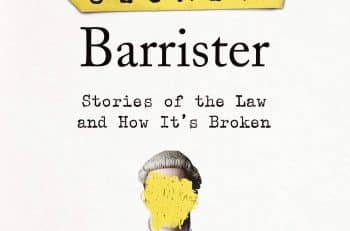
    The Secret Barrister, reviewed by David Langwallner

      The rage of London at the moment is a self-consciously anonymous blog called “The secret barrister” which is an exposé of the profession of a criminal barrister and indeed of the criminal justice system written by a junior counsel specialising in criminal law. This blog aims to provide a fly-on-the-wall view of the criminal justice system, and of life at the Criminal Bar in general. He writes for the New Statesman, The Sun, The Mirror and Huffington Post. His first book, ‘Stories of The Law and How It’s Broken, published in March, is a bestseller.     If the author had named himself the professional repercussions would not have stinted so, sagely, he has not. The book is written with an avowed sense of sadness, indignation and anger grounded in an overarching desire to secure a measure of fairness within the criminal justice system.  The morphology of the book is to take a criminal case from inception to conclusion to show what goes wrong – to demonstrate that which is unfair.   The book’s argument, delphically stated and perhaps not fleshed out in the detail it should, is that we are moving from a criminal justice system to a criminal system which risks presumptions of guilt. The presumption of innocence which is a British creation is central to justice in a civilised system. But the scruple-based process has become telescoped and mere accusation is now criminalisation. The hallowed, flawed system is losing its protections and safeguards. There is, in criminal justice possibly more than any other sphere of public life, a devastating lack of public education, exacerbated by inaccurate, ill-informed media reports and political pronouncements that betray an ignorance of the legal system that stretches up to the very top of government. This lack of understanding means that politicians escape scrutiny when terrible things are wreaked upon criminal justice – such as the policy that you can be wrongly accused of an offence, denied legal aid and then denied the cost of your private legal fees even when acquitted – and that, when we see a legal story reported in the press – such as the latest ‘look at how much legal aid this murderer received from your taxes – we often lack the tools to critically evaluate it”.     Now I agree with all this and it corresponds with my professional experience in Ireland and the United Kingdom. We are not far from the point that corrupt and (in Ireland) criminal state authorities use an accusation to create a snowball effect,  Often an accusation alone touted and reinforced by a dirty and compliant media is enough to destroy. Once the machinery of mediocrity and state incompetence gets a half baked sense of an accusation the whole thing trundles along and guilt or innocence are merely matters of happenstance. This is augmented by the cult of the pseudo-expert: a three-week training course alone underpinning the pontificator’s cant. This is accentuated in Ireland by our deeply corrupt and criminal professional classes and as we have seen the toxic relationship between  TUSLA, the Department of Injustice and the bar with its illusory independence. In the UK I have not seen not overt state criminality though I recognise the book’s theme of derelict state disclosure of favourable unused material in the practice of the criminal bar here in London where I am now working. In an extraordinary 87 per cent of cases audit trails show the disclosure of evidence to defence lawyers from the police or Crown Prosecution Service to be unsatisfactory, In my view this is systemic, as the police, social services, academics and an over-burdened professional class are making decisions in conditions of radical uncertainty and often with limited training.   Putting victims first, witness protection and the prohibition of hard and intimidating cross-examination is very dangerous. It protects liars and fabricators. A cloak of protection engineered by police, social workers and a dumbed down culture protecting those who enlist the nanny state of the semi competent.   Advocates have a right to annihilate people and not to be stopped in their tracks, as I was recently, if they reduce someone to tears where necessary.     Through lack of training, under-resourcing, lack of motivation and a drop in standards the system is descending in both jurisdictions into chaos.   The system’s flaws flaws are not those of the people who work within it, but are imposed: by the state. Each flaw is “either deliberately designed – such as the Innocence Tax, (the Legal Aid Act 2012 under which defendants find themselves massively out of pocket even when found not guilty)  or the restriction of compensation for miscarriages of justice – or is the product of populist, tough-on-crime, anti-defendant posturing, or betrays warped spending priorities where politicians persuade voters that one penny off a pint of lager is a better investment than a working justice system”.     Moreover, as the Secret Barrister notes, “Part of the problem, as well, is the legal profession. We do a stunningly poor job of explaining to people what the law is, and why it matters. Too many of us are content to busy ourselves in our own work, safe in the knowledge that what we do is important, but without feeling the need to deconstruct for the man on the street why two wigged figures incanting Latin before an old man wearing a giant purple robe, and the obscured codes and rules governing this mediaeval ritual, has any relevance to their everyday life. We then wonder why there is an obvious disconnect between the legal system and the people it exists to serve and protect”.   He is concerned about the ethical compass of vulture solicitors, as am I.   He does not say much about the art of the advocate per se but much about how cuts over time and an increasing workload have diminished the quality of justice and the profession.  He is scathing of minor prosecutions: “Much prosecuting in the

    Loading

    Read more

  • Posted in:

    Nada from Nama

    The revelation that the National Asset Management Agency (NAMA) has failed to disclose “relevant material” to the Commission of Investigation into its controversial sale of its 11.5 billion (£1.24 million) Project Eagle loan portfolio in the North in 2014 will not come as any surprise. Many NAMA watchers have been wondering how the Commission, headed by retired High Court judge, John Cooke, has been progressing given that it is now more than a year since it was established. It took the previous two years to convince the reluctant former Minister for Finance, Michael Noonan, and then Taoiseach, Enda Kenny, to concede to a formal inquiry into the portfolio sale to US fund Cerberus despite the dramatic and shocking allegations of corporate and political corruption that first emerged in July 2015. At that time, Independent TD, Mick Wallace, told the Dáil that a sum of £7m had been lodged in an Isle of Man bank account in connection with the sale and that it was intended for political and business interests associated with Project Eagle. NAMA executives were not exactly forthcoming about the background to the loan disposal and rejected out of hand the conclusions of the Comptroller and Auditor General (C&AG), in September 2016 that the agency had incurred a loss of a potential €223m (£190m) from the sale. The C&AG, Seamus McCarthy, resisted intense pressure from Noonan, the Department of Finance and NAMA executives and board to withdraw his damning report which then formed the basis of an inquiry by the Public Accounts Committee in late 2016. Its report was even more damning of the agency and of Noonan’s role in permitting the sale to proceed despite knowledge of questionable fee payments relating to it. The finance committee at Stormont carried out its own investigation in 2015 to which many of the parties to the deal gave evidence – although the NAMA chairman, Frank Daly and chief executive, Brendan McDonagh declined an invitation to attend as did the senior staff and advisors of the agency most intimately connected to the Project Eagle sale. Although it was essentially a ‘value for money’ exercise the C&AG report highlighted serious conflicts of interest in the sale process, not least relating to the role of Frank Cushnahan, the former member of the Northern Ireland Advisory Committee of NAMA. The C&AG reported that NAMA underestimated the value of the loans, applied too high a discount and had failed to act when it discovered details of some £15m in “success fees” promised to Cushnahan, US law rm Brown Rudnick and Belfast solicitor, Ian Coulter of Tughans by US fund PIMCO before it withdrew from the sale in March 2014. Since then Cushnahan, Coulter and a former head of asset recovery at the agency, Ronnie Hanna, have been questioned by the National Crime Agency in connection with the deal while former first minister, Peter Robinson and his son Gareth, have also come under scrutiny for their role in the extraordinary Project Eagle affair. Hanna and Cushnahan were arrested in May 2016 while Coulter, a former head of the Confederation of British Industry in the North who was responsible for transferring some £5 million to the Isle of Man in late 2014 after the sale to Cerberus was completed was also subjected to a grilling by the NCA team. Property developer John Miskelly who admitted to the BBC some years ago that he had legitimately paid large sums of cash to Cushnahan, and had secretly taped his exchanges with the business consultant, was also arrested in 2017 as part of the NCA probe. Last month, it emerged that charges may now be brought against two of the nine people under investigation and there is intense speculation as to who, if anyone, will finally be brought to account over a property disposal that helped to Enrich Cerberus and associated accountancy, legal and other professionals at the expense of the public purse. Also intriguing is the recent decision by the DPP to withdraw charges against a former NAMA official who was accused of disclosing confidential information from the agency. In this case, NAMA executives made the complaint which led to the arrest of its former staff member Paul Pugh in 2013. Pugh was charged with intentionally disclosing loan and other details relating to builder, John McCabe and his UK company, McCabe Builders. Pugh was accused of sending the information to Gehane Tew k of London based Connaught & Whitehall Capital UK in June 2012. When the case came to court in recent months the DPP and investigating gardaí said that they were not proceeding with the prosecution for reasons that were not fully explained to the judge or the public. It appears that the NAMA executives whose complaint prompted the arrest of Pugh in the first place are now less than enthusiastic about pursuing the case, despite the five-year investigation into the matter. Not for the first time, NAMA has failed to disclose its reasons for not pursuing this case to conclusion. Frank Connolly

    Loading

    Read more

  • Posted in:

    Mr Eddie Sheehy and Village

      Mr Eddie Sheehy and Village   The Press Council of Ireland has decided to uphold an appeal by Mr Eddie Sheehy that two statements complained about in an article published by Village in March 2018 were inaccurate and therefore a breach of Principle 1 of the Code of Practice of the Press Council of Ireland. Decision of the Press Ombudsman On 25 June 2018 the Press Ombudsman upheld a complaint made by Mr Sheehy that Village breached Principle 4 (Respect for Rights) of the Code of Practice. He decided that he had insufficient evidence to make a decision on claims of a breach of Principle 1 (Truth and Accuracy). In March 2018 Village published an article on a Senior Counsel’s investigation and report into the compulsory purchase in 2004 of lands by Wicklow County Council.   Mr Eddie Sheehy (the complainant) was the Wicklow County Manager at the time the Compulsory Purchase Order (CPO) was made. The article also reported on a subsequent defamation action taken in the High Court by two County Councillors following the Council’s publication of a press release on the Senior Counsel’s findings.    Mr Sheehy complained that the article, which was published in print and online, contained a number of false and misleading allegations about him, and that it omitted to include a number of rebuttals made by barristers acting for him and Wicklow County Council in the defamation action. Mr Sheehy complained  about a number of particular statements in the article: that an Order made by him was  “false” and “misleading”; that the Senior Counsel was provided with two Manager’s Orders (when, he says, there was only one);  that a number of claims made by the barrister representing the plaintiffs in the defamation action, including one about a landbank  held by the County Council,  had been rebutted by barristers acting on behalf of the defendants (Mr Sheehy and Wicklow County Council); that in her judgment the Judge referred to the extensive documentation available to the Senior Counsel for his review but withheld from the Councillors; that claims in the article concerning  negotiations for the exchange of land were inaccurate and that no effort had been made by Village to contact him in advance of publication of the article. The editor of Village responded to the complaint defending the article as published. He stated that during court proceedings relating to the defamation action Mr Sheehy “accepted that there was a site of over 10 hectares (22 acres) of land which were zoned residential in the immediate vicinity” of the land subject to the CPO in 2004. The editor stated that Mr Sheehy had produced no documentation to support his contention that the 10 hectares had been “earmarked” for the development of Greystones harbour.  He said that the Judge cited the documents available to the Senior Counsel for his review which proved that Wicklow County Council owned the 22 acre site which was zoned residential for housing and said that on this basis it was “factual to state that the Manager’s Order on which the CPO was based was “false” and “misleading” as stated by the barrister representing the plaintiffs in the defamation action. In regard to the claim in the article that there had been two Manager’s Orders, he said that a second Order, dated November 2003, had been “referred to extensively during the High Court action and also in the detailed judgment … which was delivered on 10 July 2017”. In regard to the claims made by the barrister representing the defendants about a landbank held by the Council, the editor said that there was no documentation to support the claim that there was any legal or other impediment to providing social housing on the land, which was zoned for residential use. In regard to the statement in the article that the Judge in the defamation case referred to  extensive documentation available to the Senior Counsel for his review but “withheld” from the councillors,   the editor stated that  the defamation action judgment  referred to the fact that certain documents provided to the Senior Counsel for his investigation had not been in the “Room of Documents” made available to councillors at the time of the CPO. These included reports on possible flooding on the lands subject to the CPO. In regard to references in the article to negotiations for the exchange of land, the editor stood over what was published. In regard to Mr Sheehy’s complaint that he had not been contacted in advance of publication to respond to assertions made in the article the editor stated that efforts had been made to contact the Senior Counsel who had carried out the report and that he had “declined to comment”. In addition, the editor stated that Village had been in correspondence with Mr Sheehy and his officials “over several years” regarding some of the issues reported on in the article. Mr Sheehy responded to the editor’s submission. He described the article as “a partisan piece” that relied heavily on the plaintiffs’ Counsel in the defamation action without reference to “the counter submissions” of the defendants’ Counsel. He reiterated that there had only been one Manager’s Order and that when the plaintiffs’ Counsel had referred in the defamation action to a “2003 Order” it had been done so inadvertently. Mr Sheehy provided the Office of the Press Ombudsman with copies of documentation relating to the 2004 Manager’s Order. In regard to claims in the Village article of the withholding of documents from councillors at the time the CPO was made Mr Sheehy argued that these documents were created after the appointment of the Senior Counsel in 2012 to investigate the matters and could not have been withheld from councillors as they did not exist at the time of the CPO. Finally, in regard to the claim by the editor that the magazine had been in correspondence with Mr Sheehy and Wicklow County Council in the years before the article appeared Mr Sheehy stated that he had

    Loading

    Read more

  • Posted in:

    Did gardaí target Bailey to shield Sophie’s killer? By Gemma O’Doherty.

    As the French courts prepare to prosecute Ian Bailey in absentia, there is growing speculation that gardaí targeted him for the murder of Sophie Toscan du Plantier in order to protect the real suspect. The skies were still dark over the West Cork countryside when Martin O’Sullivan set off from his home in Goleen on a crisp morning two days before Christmas. It was just after 7.30am as he made his way to work along the quiet road to Durrus passing a winding boreen that leads to the white-washed home of Sophie Toscan du Plantier.   As he drove north towards Bantry, leaving the French filmmaker’s secluded farmhouse behind, a blue Ford shot up behind him at high speed. O’Sullivan was forced to slam on the brakes as the car overtook him on a dangerous bend and nearly ran him off the road. He noticed its headlights were on and the rear number plate was red. He believed it was a Fiesta. Several hours later, shock and sadness replaced the festive mood throughout Ireland as news filtered through that the 39-year-old mother of one had been found murdered on the laneway leading to her holiday home overlooking the Atlantic in Toormore, Schull. It was December 23, 1996. Du Plantier was found in a blood-soaked T-shirt, white leggings and a pair of laced-up boots. She had been bludgeoned to death with a rock and a concrete block. She put up a considerable fight but sustained more than 50 injuries to her head, face and body in the attack and was left almost unrecognisable. She had lacerations on her hands and arms. The then State pathologist John Harbison also believed she had been kicked or held down by the neck and wrist with a ‘Doc Marten’ boot, whose prints were also found on the laneway near her remains. In the days that followed, Martin O’Sullivan gave a statement to gardaí about the suspicious car he had seen, telling them he was fairly certain it was not from the immediate locality. It was a critical sighting that occurred close to the time and location of the murder and could hold the key to unlocking the case.
O’Sullivan expected gardaí to carry out an appeal asking for the public’s help in identifying the driver but they never did; nor did they perform door-to-door inquiries in the locality where the suspicious car had been seen. Why was this? Did they have a motive in protecting the identity of the driver? It is just one of the countless unsettling incongruences in an investigation which many people in Cork and across Ireland now believe was mangled not by accident but by design. There is a growing sense that the persecution of English journalist Ian Bailey (61) by the gardaí, which has endured for 22 years and continues to this day, may have been motivated by something more sinister than the need to find a suspect to satisfy her family and the authorities in France. Speculation is rife that gardaí targeted Bailey because they already knew who the real killer was and were protecting him. Allegations have emerged that a senior member of the force may have been responsible for Sophie Toscan du Plantier’s death. The  officer at the centre of these claims, who is now deceased, was a notoriously violent person and a sexual predator infamous for having affairs with women, particularly foreigners. A married man who was strikingly handsome, he was a rampant alcoholic who is described as having abused his power whenever he could. One local portrayed him as being “crooked as a ram’s horn”. He was known for rustling cattle and sheep from farmers who had committed minor offences and he was in a position to blackmail. He also drove a blue Ford car. It is believed the officer may have come into contact with du Plantier because of her fears about drug-dealing in the countryside close to her. Some in the area claim he had a sexual encounter with the French woman, whose love-life was complicated and fraught, but that he was subsequently rejected by her. The violent nature of the killing has always been indicative of a ‘crime of passion’ carried out by a scorned lover. The garda at the centre of these allegations was not involved in the investigation. On his deathbed, he was said to be a profoundly disturbed man. The shocking allegations against him however remain unproven. From the very start of their investigation, gardaí were keen to control the narrative of what might have happened to the French woman. For some reason, they dismissed suggestions that she had a guest in her home in the hours before the murder, rejecting rumours that two rinsed wine glasses had been found beside her kitchen sink. In his book about the case called ‘Death in December’, Michael Sheridan said the wine glass story was a myth. He was assisted in his research by the gardaí. But images from the crime scene disproved this claim and two wine glasses were indeed found draining in the kitchen. More suspicious still was the fact that no fingerprints were found on the glasses – at least according to gardaí. Apart from their relentless targeting of Bailey, the destruction of vital evidence from the crime scene supports the theory that the investigation was deliberately botched. The baffling ‘loss’ of a five-bar blood-splashed iron gate from the entrance to du Plantier’s property has never been explained nor has anyone been disciplined for it. Did the gate disappear because there were blood and finger- prints belonging to the suspect on it? The gardaí have also never accounted for the ‘loss’ of witness statements and suspect files as well as of a document outlining why Bailey and his partner Jules Thomas were to be classified as suspects. A bottle of wine found at the crime scene is also believed to have disappeared as well as a small red hatchet kept inside the doorway of du Plantier’s home which her

    Loading

    Read more

  • Posted in:

    Our hopeless Left (and Centre and Right)

    Village is unashamedly Leftist.  Its agenda is equality of outcome, sustainability and accountability. These are all driven by the overarching goal of treating people  as equals. The right labours freedom to the detriment of equality, tending to fixate on the provision of choices rather than on how in practice those choices are exercised. The non-ideological, non-visionary parties of the pragmatic centre hold little appeal for Village. Depressingly, with a signal in June that it wants to go into coalition with Fianna Fáil or Fine Gael, Sinn Féin has signalled its immediate destination is that pragmatic centre. For fourteen years Village has tried to champion parties taking egalitarian stances but it’s been difficult. Our left has been – and let’s be blunt – remains a disaster, a let-down.  That is not an accident.  For historical reasons most Irish people, though they have a weakness  for leftist rhetoric,  are conservative and property-fetishising with a limited sense of the common good.  Many are viscerally hostile to an agenda of treating people equally. It is almost of the essence, of course, of the current government and its supporters that property rights are sacred. That is why it will never get to grips with the homelessness crisis.  Its respect is already tied up with those who have a home. A variation on this mentality accounts for its reluctance to challenge our over-priced professions. The Independent Alliance is utterly incoherent of policy and membership embracing the apparently disaffected from the likes of  ex-stockbroker Mr Ross to the likes of turfcutter Michael Fitzmaurice. Its agenda was always going to unravel. The Fine Gael-Independent coalition is supported on a ‘confidence-and-supply’ basis by Fianna Fáil. Fianna Fáil is tainted by its reckless past and the incoherence of its platform. It believes serving the people and business in equal measure is viable. It has learnt little beyond the need to regulate the banks and, under impressive Micheál Martin to eschew hoorism of all colours. Labour never does what its manifestos promise. Because of the elasticity of its conscience Labour has long attracted the wrong type of representatives. Sinn Féin is evolving, and not overall in a good way.  Village has taken a coherent stance on post-Troubles Sinn Féin, making pessimistic predictions based on the nuances of its politics over the last twenty years.  Those predictions are now vindicated. Its  commitment to a Left agenda has never been convincing bearing in mind its defining preference for irredentist nationalism over ideology and its governing strategy in the North. Its performance at local-authority level is not impressive or particularly leftist. It is cultist, ambivalent about democracy and transparency, and in thrall to the Northern Army Council. As recently as late June, Mary Lou McDonald was saying she believed Gerry Adams that he was never in the IRA. With shiny, tough-minded new leaders it could do so much better. But it has not avoided the traditional hurtle to hunger for power over principle that characterises the evolution of nearly all our parties. It is now on an uninteresting path to become Fianna Fáil in twenty years. Village has a weakness for the Social Democrats, whose mild platform is essentially the same as Labour’s, but its progress is depressingly slow and it should never have allowed the clever but right of centre and pro-business, Stephen Donnelly to become one of its three leaders. It needs to develop fire, shininess and some new personalities. The radical Left – Solidarity and People before Profit – offer the huge appeal of integrity and seriousness, and some zealous personalities, but its opposition to property taxes is inexcusable, and its focus on opposition to water taxes rather than a broader anti-inequality platform, including opposition to the iniquities of NAMA, corruption and the resurrection of the developer classes has sold its revolutionary ideology short.  It has blown the opportunities of the Economic Crisis and seems destined to remain peripheral. Tragically it has not digested this. No amount of campaigning can disguise its distance from power. The Green Party’s policies are often radical, and its agenda mature, but it is not hard-minded and it achieved so little in the last government that it is difficult to be enthusiastic. Its message needs to be presented in new ways and it needs new faces. A coalition of the parties of the left, radical left and the Greens would, as always, best promote Village’s agenda, if no doubt imperfectly. With Sinn Féin’s flight to the respectable centre or worse, and the sidelining of Solidarity and People before Profit, Ireland seems doomed to another generation of time-serving centrist government boosting the economy but doing little for society, community, the environment or quality of life. What is needed is foundation of a new party of the conventional Left, modern, common-good-embracing, quality-of-life-monitoring, taxing, planning, developing, accounting, envisioning.  It has rarely seemed so unlikely. The vista is bleak.    

    Loading

    Read more

  • Posted in:

    Roslyn Fuller interviews Eleanor Evi MEP before DemCon convention tomorrow

    We are all in the gutter but some of us are looking at five stars Roslyn Fuller interviews Eleonora Evi, MEP for Italy’s Five Star Movement [5SM] which has been depicted as racists and fascists who want to destroy Europe   Fuller: Eleonora, how did you come to be active in politics and why did you join the 5 Star Movement? Evi: I joined in 2010. At the time we were polling at two per cent and had no elected representatives. I joined to support campaigns for public water, against nuclear energy, but also for cleaning out the parliament [of corruption]. At first my activities consisted of collecting signatures for those campaigns. It was after seeing a show by Beppo Grillo [a comedian and one of the movement’s founders] that I decided to stop stitting on my sofa and watching politics, but to do it myself, and within eight years I am here in the European Parliament with a platform that we created. Fuller: Was it difficult as someone with no prEvious political experience to become an MEP? Evi: There is a lot to study, a lot of documents, directives and regulations! But we are not representatives in terms of old-style political representatives. We strongly believe in direct democracy and these decisions are taken through online platforms involving our members. It is more difficult to have a connection when you are physically removed from the local level, as we are here at the EU. Nonetheless, online consultations in a number of areas and debate inside the delegation gives us a clear direction for the political positions we take. Fuller: Can you explain how these consultations with party members work? Evi: On the national level all members can propose legislation or amendments to existing legislation. They vote every so often on which proposals should go forward to  the Parliament and start the legislative process. On other issues, we launch consultations on legislation that is already in the pipeline at the national level where we need to consult our members to determine a clear policy position. That happens quite often. It cannot take place everyday, but we do it for those areas where we need to have a strong political position backed by our members. Fuller: On a national level the Five Star Movement has plans to introduce a minimum basic income in Italy. What is the 5SM position on equality: do you support equality of opportunity or equality of outcome? Evi: We are the only European country that does not have comprehensive social protection schemes and we have been working to fill this gap. It is important to have access to a minimum income in order to live in dignity. But our proposal also has an economic purpose. People receiving the minimum basic income must also commit to engaging in some form of service, for example, helping out in their local city. It is not, as it is often presented in the media, giving money to people to stay at home and do nothing, but an economic plan to help people start again. Our numbers of unemployed and people living in extreme poverty are dramatically increasing, so it is a huge priority to change this situation. Fuller: Do I understand correctly, that there is currently no unemployment or welfare aid in Italy? Evi: We have temporary unemployment assistance only under certain conditions. You can potentially end up without state help of any kind. We do not have other kinds of assistance like paying bills for elecricity, etc. Fuller: One of your particular interests is the environment. How have you formulated your environmental policy? Do you feel people are willing to forego some economic advantages in the interest of the environment or is that a false choice? Evi: It is a false choice, because economic opportunity and job potential is in line with environmental protection. Every star of the Five Star Movement stands for a major theme, one is public water, one is sustainable transport, one is the environment as such. For us the environmental aspect characterises all our policies – the environment and our health – those are deeply interlinked. For example, we are working on new limits for CO2 emissions for cars and vans. Every year more than 400 000 people die prematurely because of air pollution in Europe. This is part of delivering on the climate targets we all signed in Paris a few years ago, but are too often neglected. Fuller: M5S is often said to be a Eurosceptic party and in the EU Parliament you sit in a block with UKIP. Would you ever consider leaving the EU? Evi: We have never considered leaving the EU. We believe that the EU has to be changed from the inside. The monetary union as it is today puts a lot of constraints on some countries while others are exploiting the situation. Germany, for example, is constantly breaking the economic rules for its surplus in imports/exports, but there is no political will to solve this problem. We need a more fair approach in terms of respecting the economic rules and European law. Fuller: When you refer to some countries ‘exploiting the situation’ are you referring to tax havens? Evi: The European Union and Commission are always shouting and fighting all over the world against tax havens, while we have them within Europe. In the long run this will not benefit the creation of this common house that we should create. Fuller: M5S has had a quite hostile reception in the English-speaking press… Evi: Yes, we have been depicted as racists and fascists and as a movement that wants to destroy Europe. We had a great result in the recent national elections, but did not win [despite M5S being the single party with the largest number of votes, the centre-right coalition of parties received more votes and seats]. We thought our responsibility was to engage in a new government. The government that has been created with the Lega [a right-wing

    Loading

    Read more

  • Posted in:

    Drain(Herit)age

    The office of Public Works (OPW, the State’s building service) proposes to construct up to 15km of flood defence walls and embankments in Cork City, including dykes, concrete walls and railings throughout the historic centre of the city. The works would be carried out under the Lower Lee (Cork City) Drainage Scheme (Flood Relief) and are an effort to mitigate the effects of climate-change driven flooding which all agree needs to be addressed in Cork. In some places the OPW walls would cover the entire frontage to the water of 16th, 17th and 18th Century historic quays while in others the new walls (and railings) would be constructed on top of older quays. Clearly the aesthetic and design of the scheme as presented is in stark contrast to the existing historic fabric and could not rationally be considered sensitive to the historic setting. Drawings for the scheme show the effect would be dramatic. The proposals have been viewed as a way of investing in the quays and the historic setting of Cork, and there are those, including some business groups, who want to secure the investment without questioning whether it is necessary or how the project is designed. However, Save Cork City and a growing number of opponents say that, like the main drainage project, the construction of the scheme would undermine local business in the historic city, destroy heritage and leave a barren landscape in the city centre that would lose the competitive advantage of its special character, over out-of-town locations in the Cork area. It says the widespread construction of drainage walls and pump chambers is ill-conceived in Cork where tampering with ground-water systems could lead to building subsidence and that water will rise within buildings, flooding the city from within as has long been the case, regardless of the works proposed. HR Wallingford international hydrological engineers, commissioned by Save Cork City, have said overtopping of quay walls after implementation of the OPW scheme could cause serious risk to life and the OPW has confirmed this may happen as early as 2049. Save Cork City say a tidal barrier at Little Island is the most economical and the fastest way to protect Cork. International experts agree, with Delft University saying it is “an interesting and attractive option” to protect the city. Emeritus Professor Philip O’Kane has extensively studied the upstream dams in Cork and, with HR Wallingford which has provided consultancy advice to the ESB over the years and the Port of Cork Authority, confirming that the dams are suitable to protect the city from fluvial flooding with little alteration to current practice or even electricity production. Save Cork City say the walls scheme is the largest scale planned destruction of heritage in the history of the state. They also say Cork has the largest intact urban Georgian waterway landscape in the World. Cork city has grown for a thousand years as a centre of trade. Its development was heavily influenced by its connections with Northern Europe and the south of England. Early Cork as seen in John Butt’s view of Cork c1740, (Crawford Art Gallery) shows a city of canals and waterways with fine Dutch style gabled, brick buildings. Ireland was a different place back then and Cork connected very fast with other trading cities especially in progressive and innovative Northern Europe. In 2017 Save Cork City ran an international design competition with a €10,000 prize for the quays of Cork to demonstrate what the city quays could be if sensitively repaired. The jury was chaired by Yvonne Farrell of Grafton Architects a multi-award-winning Irish practice and included Tim Lucas of Pryce Myers Engineers in London. The competition received entries from all over Europe and was won by Henry Harker and Francis Keane. The City Council and OPW largely ignored the exhibition and the results, in what was seen as a punitive response to a genuine effort to improve Cork. The winning design considers flood defence and provides for a tidal barrier that would cost less than the OPW and City Council scheme. Save Cork City describe the OPW designs as brutal and insensitive to the art of design in historic settings. It says Cork City Council now has an opportunity to repair the damage it inflicted on the city during the darker days of the later 20th Century. For example as part of the modernisation of the 18th-Century centre the City removed all cobbles from the quaysides, discarding them into the river; and built bridges that prevented boating on the river by being too low. It also demolished much of Cork’s 18th Century building stock. Save Cork City say the destruction has deeply affected the psychology of citizens and wants political support to protect the historic centre of the city and its quay scape. Cork City Council proposed to start the OPW scheme under a Part 8 process (where a local authority gives citizens an opportunity to comment on proposals). It duly consulted on the first phase of the OPW walls proposal – at Morrison’s Island. Tidal flooding has run into the city centre from low lying Morrison’s Island and protecting the area is seen as a priority for the City Council. Save Cork City says localised OPW walls at Morrison’s Island are a wasteful sticking-plaster-type solution and won’t solve the problem as many more areas are also vulnerable and the city would flood regardless. They question that the Council has not ever provided demountable protection to the area. The City Council says Morrison’s Island is a stand alone project, yet the OPW say it is not. Save Cork City has raised concerns as to why there has been no tender process for consultancy services for the “separate project”. It claims the City Council and OPW are supporting “project-splitting” methods to push the scheme against substantial public opposition. Clearly, the full project exceeds the size threshold over which an EIA is required. The City Council received an unprecedented 1491 submissions in response to its part 8 consultation process for the Morrison’s

    Loading

    Read more