General

Random entry RSS

  • Posted in:

    Gross Neglect: MI5's fatal waste of resources

    I have spoken to Fred Holroyd from time to time. Holroyd worked with the British army and MI6 in Ireland, 1973-75, and has written a book about his experience ‘War without Honour’. Incredibly, British spies are still meddling with his post. Holroyd has furnished me with a photograph of an envelope he received from me. It contained an academic book about the origins of the Troubles, something that interests Holroyd. To protect the book from damage, it was placed inside a bubblewrap cover and then slipped inside an ordinary white envelope. Somewhere along the line someone pierced both layers of the package with what was undoubtedly a micro camera wand to see what dangers to the Realm lurked inside. The misuse of precious resources Moreover spendthrift paranoia like this and the decades-long Special Branch monitoring of Jeremy Corbyn and Diane Abbott compromises scarce resources. Since Theresa May became home secretary in 2010 total police numbers in england and wales have fallen by 46,700 or 19.5%. In contrast to this, the overall budget of the Single Intelligence account – which covers expenditure on MI5, MI6 and the government monitoring service GCHQ – rose to £2.63bn in 2015 up from £2.48bn in 2014; in 2010, it stood at £2bn. As a result of these cutbacks, armed troops had to be placed under the con- trol of the police after the Manchester suicide bomb atrocity. Meanwhile, MI5 is making excuses for its failure. One of these is that it is overwhelmed and under resourced. A fact shouted from the rooftops is that it requires 30 officers to place a single suspect under surveillance 24/7. Since there are approximately 3,000 such threats, it would require 90,000 surveillance officers to watch them all. Yet, despite this MI5 is still able to find resources to interfere with Holroyd’s post; photograph its content; compile reports and send them to whatever departments analyses them. After this MI5 probably liaises with MI6 which in turn contacts its spies in Dublin to find out more about the threat posed by the sinister forces who sent a history book from Dublin. Holroyd’s phone is probably also monitored. Since he is scrutinised daily, a fair estimation is that 10 working hours are consumed daily. Why? The surveillance of Holroyd intensified after the pressure to reinvestigate the Kincora Boys Home scandal grew to the point where the Hart Inquiry into child abuse in NI was established. Holroyd’s handwritten notes from his time in NI confirm that he had been told that Loyalist politicians were visiting Kincora for sexual purposes. If Holroyd’s post is being surveilled, other Kincora whistleblowers who have featured in recent editions of Village such as Brian Gemmell and Colin Wallace are probably being scrutinised too; not to mention Kincora survivors such as Richard Kerr and Clint Massey. If only 30 individuals are being monitored, that means about 300 man hours are being consumed daily. This is only part of MI5 and MI6’s misuse of time, energy and gold. They have both had to prepare for the Hart Inquiry and the Independent Inquiry Into Child Sexual abuse (IICSA) in London. Their only interest was to maintain the cover-up of their sordid role in a swathe of child sex abuse blackmail scandals. Officers would have had to talk to serving and retired officers to get a full picture of what went on; trawl through records; cull embarrassing documents; liaise with Home office and Foreign office officials and pull the wool over the eyes of senior politicians; engage with lawyers; consider PR and propaganda initiatives; and last but not least: coach their witnesses to lie to these inquiries. Tens of thousands of man hours must have been spent, and this will continue to be the case as the IICSA looks like it will last another decade. An avoidable massacre There is no doubt that the Manchester massacre could have been avoided. Amber Rudd, the Home Secretary, has stated that the bomber was “known” to the security services “up to a point”. His mother told them that he had been radicalised. Two of his friends called the police hotline in 2012 and warned that he believed that “being a suicide bomber was okay” and that he was “supporting terrorism”. He also made trips to Libya and, it now appears, Syria. In addition to wasting time on Holroyd et al, MI5 has a lamentable record of eavesdropping on trade unionists and other civil rights groups. one of those placed under the microscope was that well-known threat to the realm, Jeremy Corbyn. It’s anyone’s guess how much of this nonsense is still going on at the expense of British taxpayers while Isis terrorists gambol back-and-forth from the Middle east. The present Director-General of MI5 is Andrew Parker. He believes that MI5 is an honourable organisation. We will give him the benefit of the doubt and assume that all the recent child-abuse skulduggery has taken place behind his back. Will someone now please tell him that he should redeploy his troops from Holroyd et al to Isis terrorists. The politics of the pirouette The demons unleashed by Britain’s destruction of Libya loom large in the story of the Manchester bomber. He had a Libyan background and was trained by Isis in Libya and/or Syria. Going back a few years, MI6 (which is responsible for overseas intelligence activity) failed to predict what was likely to happen in Libya when David Cameron was considering bombing Colonel Gadaffi’s forces in support of the rebels. It certainly didn’t impress this likelihood on him with sufficient force to prevent the bombing of Libya by the RAF. Chaos and civil war engulfed the country and created a haven for Isis. Overall, recent British-Libyan history defies belief. Gaddafi furnished the IRA with arms, his agents had planted a bomb on an airliner which exploded over Lockerbie and shot a police officer dead outside the Libyan embassy in London. On the other side of the fence, the US and UK plot against Gaddafi and on one

    Loading

    Read more

  • Posted in:

    Leo’s paradox

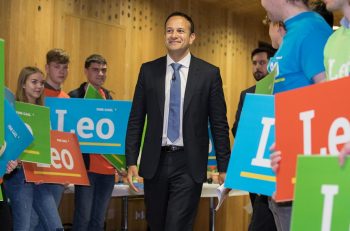
    As a younger, and perhaps wiser, Leo Varadkar once said: there is no messiah who will lead Fine Gael from the desert into the promised land. This did not prevent him from presenting a decidedly messianic image as he posed for the cameras following his decisive victory in the party’s leadership contest on 2 June. Since then politics and the media have obsessed over his choice for cabinet posts with one potential appointee after another scrambling for pole position beside the new leader to confirm their adoration for the man who holds their future in his hands. Soon forgotten was the uncomfortable truth that most of those among the party membership allowed to vote chose Simon Coveney from Carrigaline ahead of the man from Castleknock, and that Varadkar was elected through the over-whelming support of the parliamentary party and local councillors for the sole reason that they believe he is the most likely leader to ensure their re-election. The wider party it seems judged the candidates on policy, rather than geography or dare we suggest because the average blue shirt just is not ready yet for a gay man whose father comes from India as their particular cup of Barry’s tea. This is not to suggest that Fine Gael people are more likely to be homophobic or racist than any other group of political supporters but that they simply have not got their head around the rapid change in attitudes of a population with an average age of 38, which also happens to be Leo’s. For all this, Varadkar is as cautious and conservative as most in his party on both social and economic matters and is more likely to upset the wider LGBT community than endear himself to them. After all, he only came out as gay during the marriage equality referendum which many gay people saw as the culmination of decades of campaigning for their rights from which the young Leo had been silently absent. More importantly however, as Taoiseach, he is unlikely to deliver on a repeal of the eighth amendment which adequately meets the progressive demand for an end to church and State interference with reproductive rights or to tackle the huge range of discriminatory measures the State employs against women, children and minorities in health, education and social provision. There is little question that Varadkar will improve on the future prospects for his party colleagues and that they will go into the next election with greater expectations than if enda Kenny was still in charge. But that does not say much and neither does it take into account the harsh realities facing Fine Gael as it stumbles from one crisis to another while feeding from the life support provided by Fianna Fáil in government. Fianna Fáil is now looking at a general election next year and possibly ahead of the third budget it agreed to allow under the confidence and supply agreement which was negotiated by a less than enthusiastic Varadkar. His tendency to speak first and ask questions later will almost certainly cause some rocky moments over the coming months while his need to satisfy the many competing demands within his own ranks will also hinder any desire he may have to make innovative, not to mind radical, change. Varadkar will be really tested when it comes to the bigger issues facing the country and the first challenge he faces is how to deal with the ongoing and apparently unceasing crisis within the leadership of the Garda. He was among the first to criticise former commissioner, Martin Callinan, for describing the actions of whistleblower, Maurice McCabe as “disgusting”, and almost certainly precipitated the end of his long career in the force. Now he has to decide whether to allow the beleaguered Noirin O’Sullivan to remain in position. Varadkar will be happy to see the public service pay and pensions issue sorted before he takes full hold of the reins but the challenge posed by Brexit and its implications for the border and peace process would have been well outside his previous comfort zone. As to the insuperable health crisis as a medical doctor he might have been expected, when Minister for Health (2014-2016) to have led the delivery of the party’s plan for a universal health service to which he pays lip service, but there is a suspicion he ran out of ideas and little cause to think he will apply swift effective medicine as Taoiseach. Ultimately it will be his willingness to stand up to the vested private interests that sustain and feed the housing crisis, the rise in economic and tax inequality, precarious work and poverty that will test his imputed qualities as a radical young visionary. However, his party promotes the low tax, poor public service model that appeals to the very people he needs to survive in the cruel world of politics. Let’s call it Leo’s paradox. Frank Connolly

    Loading

    Read more