General
-
-
Posted in:
Eschatological ruminations
by John Gibbons
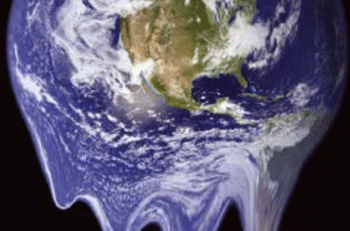
Eschatology, or the study of the end of times, is at least as old as the written word. The concept spans many of the world’s major religions, usually referring to some future day of judgement or reckoning. Beyond the realms of theology, eschatology as a concept is currently undergoing something of a renaissance, especially after the tempestuous and chaotic first twelve months of the Trump regime. In this time, almost everything we once took for granted about inherent stability, even inevitability, of western democracies and the robustness of our institutions has been shaken profoundly. As if to add to the sense of impending calamity, the Bulletin of the Atomic Scientists moved their famous Doomsday Clock for 2018 forward in late January– to two minutes to midnight. This is the closest it has ever been to the witching hour. The authors of the Bulletin excoriated the US government’s reckless nuclear brinksmanship, but poured special scorn on its efforts to derail international climate diplomacy. “Avowed climate denialists have been installed in top positions at the EPA and other agencies, and the administration has announced its plan to withdraw from the Paris Agreement. In its rush to dismantle rational climate and energy policy, it has ignored scientific fact and well-founded economic analyses”. The Bulletin was particularly scathing of the role played by climate deniers in stymieing action. “Despite the sophisticated disinformation campaign run by climate denialists, the unfolding consequences of an altered climate are a harrowing testament to an undeniable reality: The science linking climate change to human activity is sound. The world continues to warm as costly impacts mount, and there is evidence that overall rates of sea level-rise are accelerating – regardless of protestations to the contrary”. The toxic wave of US science denialism has swept right across the Atlantic. As previously reported in Village, last May saw the first meeting in Dublin of the self-styled Irish Climate Science Forum (ICSF) a denialist group with opaque membership and funding sources. February sees it host its fifth meeting in just 10 months, featuring a fringe Italian academic with strong ties to US neoliberal think tanks, the latest in a procession of climate contrarians to present new (thoroughly debunked) ‘findings’ to an eager audience mostly of Irish contrarians and deniers. Their agenda appears to be to hobble effective Irish government response to the existential threats posed by climate change. Their standard operating method is to cherry-pick data, float red herrings and exaggerate uncertainties in the scientific consensus often as political cover on behalf of special-interest groups, for continued inaction. Above all, groups like the ICSF are engaging in ‘post-truth’ assaults on reason itself. A recent edition of New Scientist magazine stated baldly: “There are disturbing hints that western civilization is starting to crumble”. The article quotes intriguing research from Yale university, which examined the two broad modes of human thought: 1) fast, automatic and inflexible, and 2) slower, more analytical and flexible thinking. As flexible thinkers within society solve our various problems, from transport to energy, with complex technologies, this relieves the great bulk of the population from even being aware of these problems, and so inflexible, automatic thinking ensues as the population, in a sense, dumbs down, since technologies can create the beguiling illusion that life is magically simple. One of the psychologists who developed this theory, Jonathan Cohen, suggests this may help solve one of the great puzzles regarding societies heading for catastrophe: why do they persist with their self-destructive behaviour, in the face of overwhelming evidence of future harms? “The train had left the station”, according to Cohen, and the forward-thinking, analytical types were no longer at the controls. Separately, computer modelling carried out at the University of Maryland in 2014 examining the mechanisms that can lead to local or even global system collapse, identified two key elements. The first, unsurprisingly, is ecological strain. The panoply of chronic environmental stressors, including resource depletion, widespread pollution, ocean acidification and sea-level rise are generally well understood, at least in expert circles. What was less widely known was the systemic risk posed by economic stratification or, in plain language, the rich getting richer at everyone else’s expense. In the scenario modelled, “elites push society toward instability and eventual collapse by hoarding huge quantities of wealth and resources, and leaving little or none for commoners who vastly outnumber them yet support them with labour”, according to author Rachel Nuwer. Eventually, she argues, “the working population crashes because the portion of wealth allocated to them is not enough, followed by collapse of the elites due to the absence of labour. The inequalities we see today both within and between countries already point to such disparities”. She notes that the top 10% of global income earners are responsible for almost as much total greenhouse gas emissions as the bottom 90% combined. Here, extreme inequality and ecological stresses converge to form a toxic cocktail capable of crashing our civilisation into the dust. US academic Thomas Homer-Dixon published the influential book: ‘The Upside of Down’ in 2005. It presciently anticipated the global economic crash that occurred some three years later. The financial crisis was, he wrote, one of “five tectonic stresses which are accumulating deep beneath the surfaces of our societies”. Others include population, energy, pollution and resource exhaustion; and climate system stress. The 2008 economic crisis, along with more recent shocks, such as Brexit and the Trump election in 2016 can, according to Homer-Dixon, be seen as a series of non-linearities, or sudden and unexpected jolts to the assumed world order. These may be viewed as a random pattern of tremors presaging a truly global catastrophe, a word that derives from the Greek, meaning ‘to overturn’. To view catastrophe as imminent rather than already occurring requires a deeply anthropocentric perspective. The sequestration, plunder and simplification of the entire biosphere by a single species is without parallel in a billion years of Earth, let alone human, history. Irrespective of our own narrow fate, the human stain will be etched

-
The nineteenth Six Nations tournament begins on February 3 but one man who won’t feature is Simon Zebo. It was announced in October that Zebo will be leaving Munster at the end of this season and moving to Paris to play for Racing 92 in the French Top 14 league. The announcement of his planned move abroad resulted in Zebo being excluded from the November Tests series, and now his exclusion from the Six Nations Squad. Joe Schmidt claimed at the official launch of this year’s championship that Zebo has been left out of the squad due to his form rather than the fact that he is about to leave the country, with prodigious Leinster young gun Jordan Larmour his preferred option as reserve. Larmour could well be a fullback great, but Zebo still has plenty to offer his national team as he is only 27 years old and in his prime. The IRFU has a policy, which the current Irish management helped to devise, of only selecting home-based players. This is in part to safeguard provincial rugby and as a way of preventing the top players accepting lucrative contracts with foreign teams. This policy has only come into play in recent years, in part due to the struggles Ireland had with Johnny Sexton during the 2014 and 2015 Six Nations Campaigns when he played for Racing 92 – Zebo’s home from June 2018. Sexton missed vital training sessions as he had to report back to Paris for the two rest-week periods during the Six Nations and to play club games in France: not ideal preparation despite the fact that Ireland was victorious in both of these campaigns. It is something Schmidt is wary of ever repeating. Zebo is Munster’s all-time leading try-scorer, and has become an established member of the Irish squad in recent years, scoring 9 tries in his 35 caps for Ireland. He played all but 5 minutes of the 2017 Six Nations Championship. There has been a clamour for Zebo to be brought back into the squad for the Six Nations but Joe Schmidt and the IRFU have stuck firm. There are a number of other players who ply their trade abroad who could easily be picked for the squad if the policy were to be scrapped, such as Donnacha Ryan at Racing 92, Tadhg Beirne at the Scarlets, Ian Madigan at Bristol and Marty Moore at Wasps. The policy appears to breach the legal requirement of Freedom of Movement and Residence for persons in the EU or, at the very least, its spirit. Freedom of movement and residence for persons in the EU is the cornerstone of the internal market and indeed of European Union citizenship, which originated in the Treaty of Maastricht in 1992. Today, the provisions governing the free movement of persons are laid down in Directive 2004/38/EC on the right of EU citizens and their family members to move and reside freely within the territory of the Member States. Restrictions are only permitted if they are a proportionate response to an inherent need in a sport. One need only look to how ludicrous it would be to impose the same restriction on soccer players to detect a lack of proportion. Zebo, and all the other players who could theoretically be picked by Ireland if the IRFU’s policy were to be changed, are being blocked from significant earning potential. While many people might not have too much sympathy for the players considering they are highly paid and get to enjoy sport for a living, it is worth noting that the Irish players will not receive match or training fees from the IRFU, but a Grand Slam win would see each of them receive a bonus of over €70,000. By excluding Zebo from the team due to his move to France, the IRFU are directly affecting his earning potential from winning, and also from additional sponsorship opportunities that come with being included in the national team. Remarkably, English players get a much better deal: they will earn £22,000 per game from match fees, training fees and image rights. This means that for any team member who appears in all five games will be guaranteed to be paid £110,000 each. The result is that Zebo has been ruled out of international consideration and has now sacrificed any dreams he may have had to represent Ireland in the 2019 World Cup in Japan. Ireland kick off this campaign against the French in Paris – a fixture we have only won three times in 46 years. A player of Zebo’s quality and skills could have been the key to unlocking the French defence. In fact we can expect a fourth win to be added come 3 February – due to the current state of the French team. In the long run the IRFU policy seems to serve Irish rugby well, irrespective of the EU Spirit. The top players are incentivised to stay in Ireland, their game time gets managed punctiliously and they are always made available by their clubs for training camps, no matter what time of year. Another benefit for Irish rugby is the Prodigal Son pardon that is bestowed upon anyone who returns to an Irish provincial team – they can be immediately included for the national side. This can act as a major incentive as there are examples where individuals came back to Irish teams much improved from the time spent away from home in a different environment learning from new coaches and strategies. Tommy Bowe developed immensely from his time in Wales, and look out for Tadhg Beirne once he leaves Scarlets for Munster next season. He appears to have slipped through the cracks for Leinster, he has been nominated for European Player of the Year and has dramatically enhanced his performance level due to the freedom he is allowed in the Scarlets team. Ireland look set to be the best placed team to push favourites England all the way in this year’s

-
by Village
Listen up around what they’re at Villager likes nothing more than a shafted preposition. Most of the articles that come in to this magazine are from academics writing ‘around’ their subjects. They go into Village’s file of death along with cover letters for CVs that sign off cheers. So he was thrilled to see the Irish Times say of Nama that is lending €384m to allow developers to “build out projects”. Zagantagonism It’s been a bad month for Rugby schools. Paddy Jackson, the Kiely’s set-to, the illicit publication of the letter from Eunan O’Carroll. And now Frank Armstrong. The editor and half the Champagne socialists/ environmentalists whose whimsies fill the pages of Village have been taken aback by young Armstrong and his piece in the current edition ripping apart Gonzaga College, alma mater to non-conformist and unbulliable egos of all sorts, from Ranelagh right as far as Bray. Hypocrisy on Equality Talking of which it was amusing to see Michael McDowell bemoaning inequality – “the rich getting far richer” in the Sunday Business Post where he ties down an, unpaid, column. When he had power he was largely an agent for liberalism – and inequality, even claiming the economy “demands inequality in some respects”. In 2004 he told the Eonomist Survey of Ireland that he “sees inequality as an inevitable part of the society of incentives that Ireland has, thankfully, become”. He was quoted by The Economist magazine as offering a robust defence of the gap between rich and poor in Ireland. And he told the Irish Catholic that “a dynamic liberal economy like ours demands flexibility and inequality in some respects to function”. It was such inequality “which provides incentives”. He said: “As far as I am concerned liberal politics and liberal economics go together. In a liberal society, equality of opportunity is an equal opportunity to become unequal. A society which legislates and controls in every way to create some sort of mathematical equality just doesn’t work”. In his pomp he believed: “Driven to a complete extreme, the current rights’ culture and equality notion would create a feudal society”. McDowell sat at the Cabinet table for a decade while the country was run – to disastrous long-term effect – in the interests of elites and cartels, including the legal one he still feeds off. McDowell pulled the plug on the Citizen Traveller campaign when it dared to be controversial. He delayed and censored the reports of his department’s own inspector of prisons, Judge Dermot Kinlan. Dodgy Donegal There is still no sign of a date for the High Court case being taken by Michael McLoone, former County Manager in Donegal, represented by barrister Michael McDowell, over a 2014 Village article titled ‘Dodgy Donegal Planning’, alleging improper behaviour in Donegal County Council’s treatment of planning matters. Nor is there any sign of the Department of the Environment’s report into the activities detailed in the impugned Village article, though it has been promised for years. Loughinisland threats Village has received correspondence from the Hawthorns, Ronnie and Hilary saying they will take legal action over the naming, in these pages, of Ronnie as chief suspect for the Loughinisland massacre in 1994 when six Catholics watching a world cup match were gunned down in a pub. The Hawthorns’ concern vacillates between defamation and privacy. But they seem to be having trouble getting anything beyond a few emails together. Colgan threats And Michael Colgan has apparently initiated proceedings against Village for “defamation of character”, though Village hasn’t been served with anything so we’re not really sure. Colgan alleges a recent editorial implied he was guilty of serious crimes and rape. Village claims it was accusing him of harassment. Unthreatening After all that hassle Villager often wonders if it isn’t better to just say nothing. Then you can become as popular as William and Kate, Royal heirs in waiting, who have literally never saidanything anyone can remember. Kith and Quinn Villager never gets cross, never raises his voice. But he hates those Quinns. Complaints by Sean Quinn jnr and his wife Karen Woods about a recent failure to pay some of their €100,000 annual living expenses should be seen in the context of a “scheme of misappropriation on a grand scale”, the High Court has been told. Some €10m has been extracted from a company in India “and we don’t know where that has gone”, Barry O’Donnell SC, for the special liquidators of Irish Bank Resolution Corporation, said. Documentation from India and Hong Kong showed “a scheme of misappropriation” was executed, over time and especially in 2010, at the instigation, and for the benefit, of members of the Quinn family. The transactions at issue “have never been explained” and while the family maintain they had no idea what was going on, that is “wholly implausible”, he said. This, and the fact Quinn and his wife are receiving close to €100,000 annually in living expenses, was of concern to the bank and it was “imperative” the matters were addressed. Villager absolutely begrudges them their 100k. If he had his way the radical left would have picketed the likes of the Quinns instead of faffing around harassing water-meter installers. And he wants to know where Peter Darragh Quinn, a nephew of the bankrupt former billionaire, on the run five years after an arrest warrant was issued for him, is. Ireland biggest environmental mess by a landslide In July 2008, the Court of Justice of the European Union (CJEU) ruled that Ireland had failed to carry out a proper assessment for the 70 turbine Derrybrien wind farm which was built in the early 2000s. The Government has yet to carry out the assessment on the site. The construction work on the wind farm led to a 2km landslide in October 2003, which the Commission itself has called “environmentally devastating”. The incident caused 450,000 cubic meters of peat to slide down the mountainside, which was washed into the local river systems. The European Commission has now requested that the

-
Heritage and the Irish Psyche The cynic who knows the price of everything and the value of nothing drives the perception of properties in Ireland. There is a belief within the Irish psyche that new is best, even when it comes to our historic properties. We flock to perambulate around our country houses and their gardens once they have been restored, often to the point of sanitisation. However, we wince at the sight of a crumbling beauty, and the mere thought of the cost and effort it takes to bring it back to glory. There are thousands of derelict historic properties strewn across the country. Our planning laws are toothless and we seem unable to incentivise maintenance, most particularly of accommodation over shops. Shifts in our economic and political landscape also frame how we perceive this cultural legacy, often alien in design but built, beautifully, by Irish artesans. It is only a generation ago that one of the major factors leading to the demise of the country house was de-roofing as owners struggled to find ways to avoid paying oppressive rates. The National Attitude towards these buildings has evolved from hostility to indifference without anyone noticing. Hostility only resurfaces when there’s any sort of economic (or social) imperative. The Regime for Protection Who protects it? So whose job is it to look after significant buildings? Legislation enables Local Authorities to protect buildings and to take action if they are vulnerable. However, lack of funding, resources, manpower and wit; the cost of litigation; and inertia militate against, and there is – at bottom – no legal obligation for local authorities to do anything, so mostly they don’t. One way to protect a historic property is to list it on the Record of Protected Structures, and especially if built before 1700, the Record of National Monuments. Each Local Authority puts together a Protected Structures list for each Development Plan taking suggestions from the National Inventory of Architectural Heritage, a unit of the Department of Culture, Heritage and the Gaeltacht. As valuable as this database is, it is only a representative sample of the architectural heritage of each county and not updated regularly. For example Limerick Cty’s was last conducted in 2005. Volunteers For such a small country numerous charities have been set up to raise awareness of and restore our historic properties. An Taisce, established in 1948 owns many properties including Booterstown Marsh, the Boyne Canal and Crocnafarragh blanket bog, Glenveagh, in Donegal. The Irish Georgian Society has restored many properties and provides strategic funding for particular conservation projects such as some on Henrietta Street in Dublin. The Buildings of Ireland Charitable Trust set up in 2005, the Irish Heritage Trust was established in 2006 as a joint initiative between the voluntary sector and the government, receiving approximately one third of its financial support from the State. So far its projects have been Fota House and Gardens, Strokestown Park, and the Irish National Famine Museum in Roscommon – with Johnstown Castle, Estate and Gardens (Wexford) proposed for the coming years. The Irish Landmark Trust for Ireland, a non-profit organisation set up in 1992 has restored 30 properties. Public and private owners typically agree to let it take properties on 50-year leases that allow them to make them suitable for holiday accommodation. Once a lease expires, the property reverts to the owner. Dublin Civic Trust provides pro-active advice on Dublin and completed an audit ‘Dublin’s Wasting Assets’ in 1997 which was revisited in 2001 and 2010. Irish Buildings at Risk Buildings at Risk are heritage assets, such as protected structures or scheduled monuments that are at risk as a result of neglect, decay or inappropriate development, or are vulnerable to becoming so. A major part of this is a lack of property maintenance. We don’t give servicing our cars a second thought but yet we question the upkeep of these hard-working living machines. As to buildings that become dilapidated a national buildings at risk register would raise awareness of problems and act as a catalyst in marrying up potential resources with suitable available properties. Robert O’Byrne, Vice-President of the Irish Georgian Society, who writes on vanishing period homes in The Irish Aesthete blog, advocates such a register. “By having a list you raise its profile: you raise the security level. Otherwise buildings at risk can be invisible. A long-term ideal would be an annual buildings list like the World Monuments Fund Top Ten”. Not everyone shares this enthusiasm: one retired senior advisor to the Department told me that a register would be “a shopping list for thieves”. He believes it would leave the Department open to legal action from property owners citing the public list for the robbery of their original fireplaces or the lead from their roofs. Geraldine Walsh, CEO of Dublin Civic Trust notes: “Yes, An Taisce have compiled an excellent Buildings at Risk document, but an annual review of it should be funded by the State in order to independently maintain the process and to keep the list of the buildings identified updated. It should be co-ordinated with the local authorities’ Derelict Sites database. The UK NGOs, including English Heritage, Historic Environment Scotland, Ulster Heritage Society and SPAB all publish their list of buildings at risk annually. A particularly useful aspect of their work is publicising those properties that are available for sale to prospective purchasers”. Lists of vulnerable buildings are not enough, as Will Derham, author of ‘Lost Ireland, 1860- 1960’ points out: “As we have seen recently in the renting sector, building standards require enforcement. A statutory buildings-at-risk register would be a small, but welcome step in the direction of fully protecting and preserving the nation’s built heritage”. But a State that lacks a culture of enforcement, from banking to spatial planning to police accountability, needs to think hard about how it is going to handle the more ethereal imperative of historic-building conservation and restoration. International Experience of Buildings at Risk In England an annual Heritage at

-
by Niall Meehan
Trinity College’s recent Conor Cruise O’Brien centenary symposium was a largely uncritical exercise. It was especially notable that it was so as it focused on Irish politics. Invited US academics, who discussed O’Brien’s assessment of the American Revolution, appeared unaware of O’Brien’s distinctly illiberal local contribution. Reverential tones underpinned contemplation of O’Brien’s analysis of Irish nationalism. Remarks at Gerry Adams’ expense massaged the prejudices of the mainly elderly audience. Critical observations came mainly from the floor. Audio from an evening session, put up online by TCD, omitted audience interventions. In a way, that was appropriate. O’Brien’s main contribution to the ‘Troubles’ was perfection of radio and television censorship. He achieved that with amending legislation and intimidation of broadcasters, while Minister for Posts & Telegraphs, 1973-77. Many of the academics and journalists chosen to speak referred to “Conor”, whether or not they knew him. A Labour Party activist questioned this from the floor during the last session. He remarked that O’Brien’s 1977 defeat was generally welcomed, including by some on Labour’s left, and asked why no speakers reflected that majority view. One participant, who knew O’Brien quite well, momentarily punctured the semi-sacral nature of the proceedings. In opening the evening session, TCD Chancellor and former Irish President Mary Robinson, recalled how her participation in a public meeting in 1974, in opposition to internment in Northern Ireland. It “enraged” O’Brien. She was, he said, “dancing to the tune of the IRA”. The audience might have been forgiven for expecting the speaker following, barrister and historian Frank Callanan, to tell us more. It was not to be. After her remarks Robinson left the Edmund Burke Hall. The theme of hommage to O’Brien re-congealed around the platform, which included Margaret O’Callaghan from Queen’s University Belfast and former Labour leader Ruairí Quinn. President Michael D Higgins also attended. I pointed out (in remarks that were omitted) that O’Brien insinuated also that Robinson silently acquiesced in the killing of judges. The then-minister, a secret supporter of police brutality, told journalists they were IRA stooges and hacks. The brutality of O’Brien’s language eased his transition from verbal opposition towards explicit support for censorship. Before chastising Robinson, he entered RTÉ and sensed an IRA “spiritual occupation”. Eoghan Harris, RTÉ’s then best-known republican ideologue, was disciplined for broadcasting a programme on internment. Harris told the symposium he was actually a secret supporter of the author of his misfortune. He was not, as is assumed, converted later while producing agricultural and children’s programmes. O’Brien shifted his focus in 1976, the year he amended broadcasting censorship. He threatened to imprison Irish Press editor Tim Pat Coogan for publishing letters O’Brien disliked. Coogan was told this by O’Brien’s interviewer, an alarmed Bernard Nossiter of the Washington Post. Coogan published the threat and republished the letters. In 1979, as Observer editor in chief, O’Brien terminated the contract of Ireland correspondent and leading feminist Mary Holland. She was, he said, “a very poor judge of Irish Catholics”, who “include…the most expert conmen and conwomen in the world”. O’Brien observed of Holland’s ten-years-of-the-Troubles profile of Derry woman Mary Nellis: “Irish republicanism – especially the killing strain of it – has a very high propensity to run in families… the mother is most often the carrier”. Such sectarian and misogynistic perspectives did not interest Friday morning lecturers, Sunday Independent columnist Eoghan Harris and Irish Times journalist Stephen Collins, on their hero as “journalist and editor”. It was left to Susan McKay in the last session to criticise O’Brien’s sacking of Holland. Margaret O’Callaghan delivered an appreciative paper on the 1973-77 Fine Gael Labour government’s subdued remembrance of 1916. She did not discuss its 1976 prohibition of Sinn Féin’s annual 1916 commemoration, which thousands defied. The 1976 platform included Labour TD David Thornley; and the daughter of executed 1916 leader, and Labour Party founder, James Connolly. The ban was accompanied, typically, by threats to sack participants in public-sector jobs. RTÉ’s director general Oliver Maloney directed the Irish-language programme Féach not to cover the banned commemoration. That was testament to an emerging culture of selfcensorship fostered by O’Brien. This did not interest O’Callaghan. Speakers suggested that O’Brien’s 1976 amending legislation liberalised censorship, a foolish thought originated by O’Brien. Before O’Brien’s new measure came into force in January 1977, he declared RTÉ’s pre-existing censorship order too liberal. It permitted interviews with Sinn Féin representatives. O’Brien banned them with terminology from his soon-to-be-enacted measure. The TCD symposium censored the real Conor Cruise O’Brien, once described as “a champion of the overdog”. The real O’Brien can be heard on ‘Bowman Sunday’ talking over Kadar Asmal, former head of the Irish Anti-Apartheid Movement (RTÉ Radio 1, 5 November), while opposing an academic boycott of Apartheid South Africa. Niall Meehan is the author of The Embers of Revisionism, which considers Conor Cruise O’Brien. On sale at Books Upstairs, Dublin

-
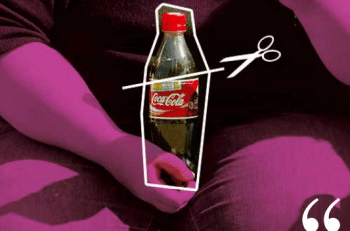
In the early 1980s the government decided to try to get children to drink more milk. I’m not sure that there had been a problem with children not drinking milk. As I recall, that’s all we drank. Yet it introduced a free milk scheme. The milk was to be distributed through schools and it was packaged in a sort of rough plastic bag. If it had arrived cool, by the time we were given the milk it was warm and smelled rancid. We used to have fights using the gone-off milk on the way home from school. If the policy was intended to get children to drink more milk, and not designed to alleviate the then-growing butter mountain, the policy failed. The government is still concerned about children’s diets. Since the 1980s there has been an increase in the number of children who are overweight and diagnosed with type II diabetes – the one related to poor diet. When confronted with such figures the first response should be to question the data. As we can see with Garda data on crime, even measurement of clearcut things is rarely simple. Data are based on man-made decisions, collected by humans, and so can be subject to human biases. The measure of weight using Body Mass Index (BMI) is somewhat controversial, though some of the criticism is overdone. We know for instance that muscle weighs more than fat, and so very fit people can be classed as overweight. We also know that all fat isn’t equal. Fat around the bum and thighs may not be wanted, but it’s not deadly in the way visceral fat around the organs at the belly is. Weight itself isn’t a problem, it’s what weight is associated with. But as a measure BMI broadly correlates with other measures of health, and has the advantage of being relatively easy to measure. We also do it right. Though expensive, we now measure a genuine random sample of people in Ireland, with interviewers willing to call to targeted respondents multiple times. This is rare. It’s also rare to survey over 7,000 people, which allows us to see where they live and who they are in greater detail than most other surveys would. So let’s assume that the data are broadly right, and about 60 per cent of adults are overweight or obese. The government’s concern has led to a number of policies being introduced. One is to give out free samples of healthy food in primary schools – in a Food Dudes programme. It’s the modern equivalent of the milk-in-schools scheme, and it makes the same mistakes. The fresh vegetables and fruit are not that fresh, and so children who don’t normally eat fresh fruit and vegetables will be left (even) less likely to try them again. In the recent budget Paschal Donohoe announced another policy, which has been dubbed a sugar tax. It isn’t actually a sugar tax: processed sugar is zero-rated for VAT and will continue to be. It’s a tax on sugar-sweetened beverages. Sugar is seen by some as today’s tobacco. Whether it is or not is less clear. There’s no evidence that sugar has properties that are addictive in the way nicotine is, but it’s also clear that there is a link between sugar-sweetened processed foods and diseases such as diabetes. However, if we look to UK data (which we are culturally and economically closest to) we are consuming fewer calories now than in the 1980s. However, the nutritional value of the calories we are consuming may have changed. Milk consumption among US children and adolescents has halved since the 1960s, largely replaced by sugar-sweetened beverages. So even though we don’t have good time-series data for Ireland, and the Healthy Ireland survey doesn’t give us very fine grained data on what we are eating, we’re probably consuming more sugar now than in the past. So how do we deal with this? And will Paschal Donohoe’s intervention work? Taxes affect behaviour. We often don’t want them to affect behaviour – taxes on work tend to deter people from offering or taking up employment; taxes on goods may stop people from trading goods, suppressing economic activity. But what if those goods are ones we don’t really want people to consume, or certainly not in large volumes? As long ago as 1776 Adam Smith, who didn’t want taxes that distort the economy, nevertheless noted that “Sugar, rum, and tobacco are commodities which are nowhere necessaries of life, which are become objects of almost universal consumption, and which are therefore extremely proper subjects of taxation”. Whether these taxes would work depends on their price elasticities. That is, the extent to which price changes cause changes in demand. Demand for tobacco is shown to be highly inelastic to changes in prices. Increased prices have little impact on consumption. The tax on cigarettes is now about 400% and, while smoking has reduced that is mainly because of lower take-up and people quitting for health reasons, though no doubt the price helps. It can raise a lot of revenue for the state. But even this huge tax might not affect consumption among existing smokers. In Ireland the tax introduced by Donohoe on sugar-sweetened beverages (SSBs) is modest. He is “introducing a tax at a rate of 30 cent per litre on drinks with over 8 g of sugar per 100 ml and a reduced rate of 20 cent per litre on drinks with between 5g and 8g of sugar per 100 ml”. A can of Coke will go up by 10 cent. This is roughly a 10% tax. Will it deter people? Research by Mathew Harding and Michael Lovenheim, published in the Journal of Health Economics, on elasticity of demand suggests that sweet snacks are quite inelastic, which might mean taxes won’t affect behaviour much. However, using modelling techniques, which are themselves problematic, they found it might work: a 20% tax on high-sugar products might reduce sugar consumption by 16%. There have been