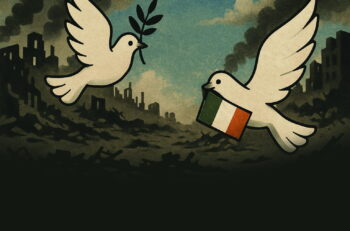
More neoliberalism with the new Italian government. By Conor Deane
by admin
More neoliberalism with the new Italian government. By Conor Deane
Posted in:
by Village
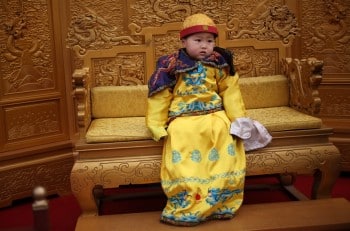
Little Emperors Few, except environmentalists, will miss China’s one-child policy Ken Phelan ‘In September 2013, Liu was taken to the Peopleʼs Hospital of Fangzi District, where she was administered a drug to abort her unborn foetus. She was six months pregnant’ ‘The Little Emperors are Chinaʼs future, single-minded and resolute, and may not be quite as malleable as their parents’. In its 34-year history, Chinaʼs one-child policy has inflicted untold misery and suffering on its population. Despite state censorship and a culture of almost servile obedience and compliance, countless reports have leaked to the press of harrowing personal tragedies and gross human rights abuses. Late-term and forced abortions have been commonplace, as has child trafficking and female infanticide; womenʼs menstrual cycles are kept under surveillance by the state and aborted foetuses can be seen left in dustbins or floating by Chinaʼs riversides. In a country where abortion had originally been outlawed by then leader Mao Zedong, the one-child policy – introduced as a measure to counter spiralling population growth – has resulted in over 336m abortions and 196m sterilisations in a legacy that will forever cast a shadow over China’s troubled history. Following a meeting of top Communist Party leaders in Beijing in November, it was reported by Xinhua, China’s official news agency, that significant changes were to be made to the one-child policy. Under the new rules, couples in which one partner is an only child will now be allowed to have two children; this exception had previously been afforded to couples where both partners were only children. It is believed this rule could be extended to cover all families by 2015. As with most things in China, the reasons for the proposed changes are purely economic: the Peopleʼs Republic, going back to the days of Mao Zedong, views its people as numbers or units, rather than citizens. Over thirty years of the one-child policy has resulted in worrying population trends and disrupted demographics. It is believed that Xi Jinping, who was elected president in March, will pursue reform of the one-child policy as a matter of urgency. Although Chinaʼs population stands at 1.35bn, this is expected to peak at 1.45bn in about 10 years and to decline sharply thereafter. Officially, the fertility rate stands at 1.7 births per couple – below the 2.1 births needed to maintain stable population levels – while other estimates have placed the figure as closer to 1.5. China also has an increasingly ageing population which threatens to put tremendous pressure on the pension system – 8.5 percent is currently over 65, and according to United Nations data it is set to rise to 23.9 percent by 2050. The working-age population also fell for the first time in January 2013 which, if sustained, could threaten economic growth and mean less workers supporting an ever-growing number of retirees. There is also a significant gender gap in the population where females have been aborted in preference to males. The first children of the one-child policy have been left with the so-called “4-2-1 Problem”, where each is left providing for two parents and four grandparents. Statistics show that the ill-conceived policy has resulted in serious demographic problems that are economically unsustainable. As an economist at Citi Research said in October: “China has reached a turning point where the demographic dividend will become a liability”. When the Communist party came to power in 1949, population growth was seen as essential to the workforce and in bolstering the military for an anticipated third world war. At first, Mao Zedong had encouraged large families, and abortions, sterilisations and the use of contraceptives were prohibited. Though these rules were somewhat relaxed in later years, the result was Chinaʼs population growing from approximately 500 million in 1949 to almost a billion under Maoʼs rule. When Deng Xiaoping took over power in 1978 following the cultural revolution and Maoʼs death, he was persuaded by a group led by rocket scientist Song Jian that in order to secure Chinaʼs future economic targets, the population would have to be restricted to 1.2 billion. The intially “temporary” solution they proposed – the one-child policy – remained instead for over 30 years. China-2 Implementation of the one-child policy The one-child policy was introduced nationally in 1979, having previously been trialled in just a few provinces. Under the rules, couples could have only one child, or in rural areas two if the first child was a girl. The State Family Planning Commission (FP) and the Communist Party were entrusted with the task of enforcing the policy, with officials being held personally responsible for population targets. In a process quite unique to the Peopleʼs Republic of China, the one-child policy involves the systematic monitoring of womenʼs menstrual cycles; this is carried out by family-planning officers, party members and local volunteers on all women of childbearing age to determine which pregnancies are ʻlegalʼ. Whether or not a pregnancy is legal is determined by eligibility rules and in some cases by quotas set down for the particular village or workplace. Should a woman fall pregnant with a second child or if the pregnancy is deemed ʻillegalʼ due to quota levels, she is subject to often exorbitant punitive fines which, if unpaid may result in a forced abortion. ʻUnauthorisedʼ children cannot be registered in the state until the so-called “social support fee” has been paid, are not issued documentation, and therefore cannot avail of medical care, schooling or employment. As defined by The State Council in 2002, the social support fee is “a fee paid by citizens giving birth extra-legally to compensate for the governmentʼs public goods spending, (to) adjust the consumption of natural resources and to protect the environment”. Abortions and the one-child policy Forced and late-term abortions have been common in China under the one-child policy: the 1979 abortion law set 28 weeks of gestation as the upper limit for performing legal abortions, but this has often been ignored by unscrupulous and over-zealous officials. In 2000, Jin Yani (20)
Posted in:
by Ken Phelan
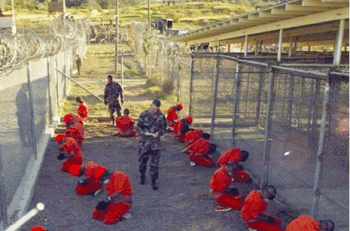
During his election campaign of 2008, US President Barack Obama made a solemn promise to the American people ‒ to close the detention centre at Guantanamo Bay, Cuba within his first year of office. Since opening in January 2002, Guantanamo had been embroiled in controversy with pervasive reports of mistreatment and torture of inmates, detention of prisoners with no affiliation to al-Qaeda or any other terrorist group, indefinite detention without trial, suicides and the holding of minors. Once elected, Obama’s promise dissipated, facilitated in part by ambivalence from the American people, who were still recovering from the aftermath of the September 11th terrorist attacks, but largely due to a recalcitrant Congress, intent on blocking any moves to transfer prisoners off the site. It consistently thwarted Obama’s plans for closing Guantanamo, making it extremely difficult to repatriate or relocate prisoners who had in fact been cleared for transfer. Congress also ruled out the transfer of detainees to US soil, despite Obama’s objections that so-called ‘high value’ prisoners should be brought before a civilian court and afforded due process. In 2011, Congress mandated that detainees could only be transferred out of Guantanamo if the Secretary of Defense certified they would not engage in terrorism upon release ‒ a seemingly impossible demand. Congress last year afforded the president the authority to waive the certification requirement but in effect this had its own restrictions as, for example, the waiver could not be used in the transfer of detainees to countries on the State Department’s list of states sponsoring terrorism. Though in 2012 Obama reportedly admitted he could have done more for Guantanamo, he nevertheless went on to declare: “No one is going to persuade me that we should run a penal colony in perpetuity in America”. The turning point, both politically and in terms of public perception, came perhaps when the cost of detaining prisoners at Guantanamo was revealed by Defense Secretary Chuck Hagel last year: yearly operating costs of $454 million, or approximately $2.7 million per inmate. By comparison, it was noted by one senator that detention per inmate at a federal, high-security prison costs $72,000 per year. In November of last year, on the twelfth anniversary of its instigation, a letter was sent to all US Senators, from thirty-eight retired generals and admirals – imploring Congress to shut Guantanamo down, describing it as as a “symbol of torture”, and a “betrayal of American values”. The following month, the US General who opened Guantanamo, Marine Major General Michael Lehnert, wrote in the Detroit Free Press that Guantanamo was a mistake and should be shut down because “it validates every negative perception of the United States”. In December 2013, Obama signed the National Defense Authorization Act, which finally makes it easier to transfer detainees to other countries, though transferring any prisoner to US soil is still prohibited. Though praising Congress for allowing the concession, Obama criticised it for enacting “unwarranted and burdensome restrictions” in the past, that had hindered his ability to transfer detainees to US Soil where they could be tried and prosecuted in civilian courts. December 2013 saw prisoners sent home to Algeria, Saudi Arabia and Sudan, and the resettlement of three long-detained Uighur captives, whose release a judge had ordered in 2008. According to the New York Times, leaked dossiers for the three Uighur detainees showed that, at least as early as 2003, the military had determined they were “not affiliated with al-Qaeda or a Taliban leader” and should be released. There are currently 155 detainees remaining at Guantanamo; of those, 76 have been approved for transfer, security conditions permitting. Many have been detained without charge for over ten years. The Guantanamo Bay detention camp opened on January 11th 2002 to detain, interrogate and prosecute what then Secretary of Defense Donald Rumsfeld termed “the worst of the worst” ‒ mostly prisoners from Afghanistan, who had been captured during President George W Bush’s ‘War on Terror’. After the September 11th attacks, the political imperative was to bring the conspirators and terrorists to justice and to protect America from further attacks at all costs. It was asserted by the Bush administration, on legal advice, that Guantanamo ‒ on non-US soil ‒ could be considered outside US legal jurisdiction; it was also claimed by the administration that detainees would not be entitled to any protections under the Geneva Conventions. On this premise, the fate of Guantanamo had been sealed, allowing as it did the gross mistreatment and torture of prisoners ‒ with absolute impunity. It wasn’t until a Supreme Court decision in 2006 that it was ruled that detainees should in fact be afforded minimal protections listed under Common Article 3 of the Geneva Conventions. Rather than housing the 9/11 masterminds and terrorists as claimed, it soon became apparent that the detainee population within Guantanamo was a combination of innocent civilians, Taliban footsoldiers and a relatively small number of ‘high-value’ suspected al-Qaeda terrorists. Also held in Guantanamo were an estimated 17 to 22 minors: ‘juvenile enemy combatants’ ‒ a status not recognised under international law. These ‘combatants’ ranged in age from 13 to 17 years. Wikileaks’ ‘Guantanamo Files’, containing classified documents dating from 2002 to 2008 further alleged that during the invasion of Afghanistan, al-Qaeda and Taliban ‘suspects’ were sold to US forces by Afghan and Pakistani allies. The US allegedly paid bounties of $5,000 per prisoner, with leaflets widely distributed emblazoned with the undiscriminating offer. After the September 11th attacks, the CIA and Department of Defense employed new methods of interrogation sanctioned by the Bush administration. Termed ‘Enhanced Interrogation Techniques’, this was a euphemism for torture. They included: waterboarding, sleep deprivation, hypothermia, 20-hour interrogations, controlled fear (with dogs) and sexual assault/humiliation. In 2002, the Bush Administration told the CIA that unless the intent was to inflict pain or suffering, then it was not torture. Inexplicably, the arrogance of both the administration and the military in the abuses inflicted on Guantanamo detainees led, quite ironically, to a situation where even those inmates considered
by admin
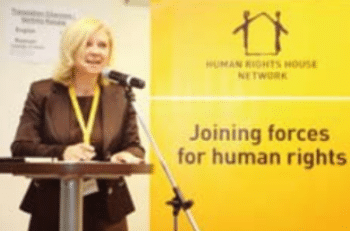
Interview with Tatsiana Reviaka, President, the Belarussian Human Rights House
Posted in:
by admin
Speculating Irish firm San Leon may be atop a bubble, and has questions to answer about a collapsed church
by admin
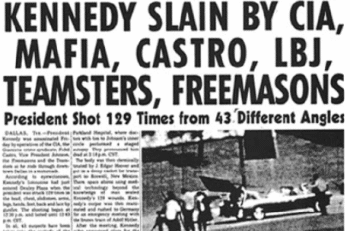
Oswald was, or at least may have been, a patsy for the CIA and Mafia
Posted in:
by admin
Competitive anti-immigration platforms, including ‘Turn Back Boats’ and the ‘Papua New Guinea solution’ dominated the recent election