International

Random entry RSS

  • Posted in:

    Ebola hell in Liberia.

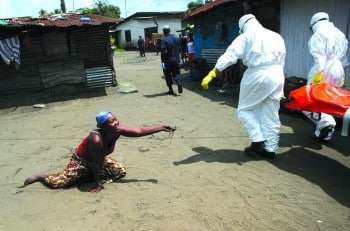
    By Jacinta Fay and Silas Kpanan’Ayoung Siakor. Liberians are haunted by the sights they now see on their streets. Dead bodies await ambulances. Soldiers patrol in combat-ready gear. Every Liberian has been impacted by the Ebola epidemic. In three to six months the epidemic may be under control but the crisis has affected every facet of society. Children are not attending school. Farms have been abandoned. Whole villages and families have been wiped out. Infrastructure projects have ground to a halt. The social and psychological scars will be deep and long lasting. The epidemic has prompted multiple crises. Liberia was already extremely food insecure. It is now cut off from the outside world on which it relies for 60% of its food. Hunger and malnutrition are rising. People are dying from easily preventable and treatable diseases like malaria and diarrhoea as access to healthcare collapses. Women are dying in childbirth. Women and girls, as primary caregivers, are suffering some of the worst impacts. Fear and panic have sparked a myriad of security issues. The future death toll can only be imagined from this multiplicity of crises. In the region the total number of Ebola related deaths has reached an estimated 4,922 and the number of cases has reached an estimated 10,141. Official numbers probably need to be multiplied by two to three times to account for unreported cases. Liberia has been particularly hard hit with the highest official death toll of 2,705 as of October 25th. $294 million has been earmarked in emergency aid for Liberia. However, according to current estimations, $473 million is required. While pledges of assistance have been committed, their delivery remains slow. Pledges and action are two very different things when it comes to emergency aid. The Guardian Ebola funding tracker (as of 29th October) gives an insight into the problem. Countries have pledged $1.22 billion but only disbursed $569.79 million, multilaterial organisations have pledged $442.53 million but only disbursed $257.41 million, and NGOs have pledged $142.59 million but only disbursed $49.87 million. Immediate action on funding commitments and improved coordination between the actors involved in responding to the Ebola epidemic are urgently required. More medical staff and resources are needed immediately. Flights must be allowed into and out of Ebola affected countries to ensure that people are able to travel and supplies are delivered. Security measure being taken in the countries must respect human rights and humanitarian concerns. There are already many lessons to learn from the crisis particularly regarding the inadequate international response. The international community failed to invest in research for a cure for the virus. Only now that there is an international market are the pharmaceutical companies queuing up to conduct trials. The World Health Organisation (WHO) failed in downplaying the outbreak and only declaring an international public health emergency in August after there had been almost a thousand deaths. Governments and international agencies around the world failed to mobilise the necessary support and resources to tackle the epidemic before it became a humanitarian crisis. The media failed with its irresponsible reporting of the epidemic. This has fuelled panic about the spread of Ebola to Europe and North America and perpetuated negative stereotypes about people from west Africa, rather than calling for international assistance to tackle the crisis. Superstition, myths and ignorance are blamed for the spread of the virus whereas the problem is dysfunctional health systems, limited technical and financial capacity of Governments, and the inadequate response of the international community. The Irish Government must increase its support for the response to the Ebola epidemic. This currently stands at 2.5 million Euro and a further 660,000 Euro through UNICEF. Further funding should be provided for medical charities and sending medical personnel. Direct funding to Liberian civil society organisations and their community support programmes should be increased. These groups are to the forefront in equipping communities to protect themselves from the virus and need support to scale up this work. After the immediate crisis a new reconstruction programme will need to begin and Ireland should be to the forefront in this. • Jacinta Fay is a member of the Liberia Solidarity Group and Landgrab Campaigner with Friends of the Earth International. Silas Kpanan’Ayoung Siakor is the founder and Lead Campaigner with the Sustainable Development Institute/Friends of the Earth Liberia.

    Loading

    Read more

  • Posted in:

    No Planet B

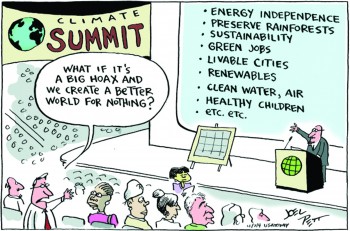
    By Lorna Gold Whatever way you look at it, the last week of September was an extraordinary week in climate politics. The risen dust is only starting to settle. It started with over 2,000 coordinated global demonstrations, including a march of 400,000 people through the streets of New York, demanding climate justice. This was followed by the UN Climate Summit, convened by UN Secretary General Ban Ki Moon to raise the ambitions of Governments coming up to the critical UN Framework Convention on Climate Change talks to be concluded in Paris in December 2015. In the competition between global crises, climate change had slipped far down the agenda since the collapse of the Copenhagen talks in 2009. The fact that so many Heads of States turned up to the UN Climate Summit and made speeches on climate change is significant in itself. Even if many of the commitments were not new, the tone reflected a new urgency. There were a few shifts signalled by big players that mark a new departure for climate politics. Private-finance bigwigs came to the table with commitments to shift significant investment portfolios out of fossil fuels. The most high profile was the announcement that the Rockefeller Brothers’ Fund would join the Divest Invest Philanthropy group and move its asset portfolio away from fossil fuels. There were other, less high-profile, commitments from the insurance industry. These have been a decade in the making. In total, the tally of private investment committed to moving from carbon amounted to around $200 billion. This is a significant move, if it happens, as it gives the first concrete signal from the markets that the fossil fuel era may be coming to an end. However, in terms of new public finance to address critical areas such as climate adaptation, the commitments made at the Climate Summit were much smaller. In total, $2 billion in new commitments to the Green Climate Fund were announced. This is far from the minimum $100 billion annual commitment that is required to support investment in adaptation, particular within developing countries. China’s announcement at the Climate Summit that it is to set out a timetable for peak emissions in the next few months represents a potentially seismic shift if it materialises. Given the disproportionate role that China and the US play in emissions, any signal that their emissions will peak is worth noting. The rise of a more co-ordinated layer of local governance in the form of a coalition of mayors of cities representing 400 million people also points to a change in the political landscape. The alliance announced plans to reduce emissions and is not waiting for national governments but responding to the climate challenge itself. Despite these shifts, much of the old politics of climate dominated the formal sessions of the Climate Summit. New commitments to emissions reduction targets were few. Nobody expected significant new targets, but the lack of any ambition was depressingly familiar. In the conference hall, listening to the endless four-minute cleverly crafted speeches, you had the impression that the formal political processes are as stuck as ever in an outdated system where ‘form matters more than substance’. Energy was high around a number of new voluntary initiatives. These included the launch of the ‘Global Alliance on Climate Smart Agriculture’, which Ireland has signed up to. The aim of this multi-stakeholder alliance is to catalyse action to address the issue of agricultural productivity in a climate-constrained world. It includes corporations, research institutes, a small number of NGOs, and certain Governments. The Alliance has already drawn serious criticism from civil-society organisations. These include Oxfam, Christian Aid, Action Aid and Trócaire who participated in the initial conversations about the Alliance, but withdrew their support. Amongst their concerns are the lack of clarity concerning the concept, the accountability gaps in the Alliance and the way in which corporations were promoting specific products via the Alliance. The emergence of the Alliance and other similar voluntary initiatives is actually a worrying trend. On the face of it, these new initiatives seem to tick all the boxes. They are multi-stakeholder, results -ocused, and formed by a coalition of the willing rather than being held back by the lowest common denominator. Such initiatives, however, by definition are self-selecting and free to pick and choose their policy frameworks according to which bits best suit the partners involved. The energy for producing change is diverted into initiatives funded largely by private finance, or by Public Private Partnerships. They lack accountability and transparency. There has been a shift to ‘invitation only’ events on the margins of the UN General Assembly over the past five years. If these initiatives were merely side-shows to the main event, it would not be so worrying. These events are, regrettably, where the main action is now happening due to the imbalance between public and private funding. The effective transfer of commitment for action from within the multilateral forum into private, invitation-only spaces, points to a fractured political system that is ill-equipped to deal with problems of common concern, such as climate change. It is an approach that is literally bankrupt and reliant on private finance to sustain its operations. In many instances, these new initiatives have emerged from years of pent-up frustration at working within the system. Now that the genie is out of the bottle, it is going to be impossible to put it back. There is a serious need to strengthen the accountability of such initiatives and ensuring that they are linked closely to agreed multilateral frameworks. In the case of the ‘Global Alliance on Climate Smart Agriculture’, for example, it is critical to make a strong link to the Committee on Food Security.                       The biggest shift in climate politics over the past few weeks did not happen in the UN General Assembly Hall or in these new initiatives. It happened out on the streets. The march through the streets of New York,

    Loading

    Read more

  • Posted in:

    Eurout of line on the environment.

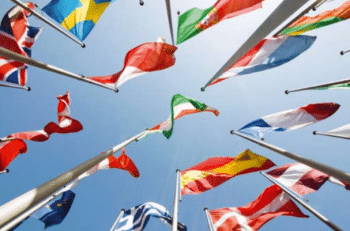
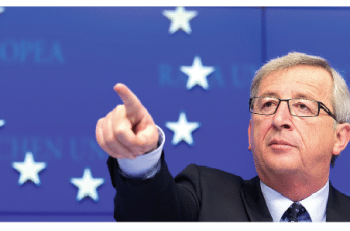
    By James Nix. A currently proposed, the EU Commission would, for the first time in more than two decades, have no dedicated environment Commissioner. Instead environment is rolled in with fisheries and maritime to make up one of what are essentially 20 sub-Commissioner roles – under Commissioner Karmenu Vella. Its role will centre on deregulation. Merging climate and energy and then putting this (sub) Commissioner under a Vice-President for Energy Union implies that climate action is considered subordinate to energy-market considerations. Legally and practically, what new Commission President Jean Claude Juncker has done is quite revolutionary. Instead of 27 Commissioners, all on a par, under one President, Juncker has appointed a ‘first’ Vice President (Dutchman Frans Timmermans), High Representative for Foreign Affairs (Italian Federica Mogherini) and five Vice-Presidents. These seven plus Juncker himself form a team of eight that arches over 20 sub-Commissioners. Each of these 20 subordinates is to report in to a given Vice President – their line manager. Critically, no legislative changes can be promoted by any sub-Commissioner without the approval of the supervising Vice President. Specifically on the environment [,] legislation “will now be the responsibility of the Vice-President for Jobs, Growth, Investment and Competitiveness, who does not have the environment mentioned in his mandate” notes the Green 10, an alliance of European environment organisations. “Since the environment is completely absent from the priority list, and no Vice-President is charged with promoting it, this means a de facto shut down of EU environmental policy-making”. With this downgrading, Juncker has decorated the stage for a serious subversion of existing EU commitments to sustainable development, resource efficiency, air quality, nature conservation, climate action – and health protection. Juncker’s changes come in spite of a Eurobarometer poll in September showing that notwithstanding the economic crisis, 95% of 28,000 citizens interviewed said that protecting the environment is important to them personally and that more should be done. The survey shows no public demand for environmental deregulation. Yet Juncker’s vision effectively scraps the 7th Environmental Action Programme, a legally binding commitment negotiated and agreed by Commission, Member States and European Parliament only a year ago. Juncker’s plan to take responsibility for relations with the European Chemicals Agency, whose job is to protect European citizens from harmful chemicals, out of the Environment portfolio, where it now lies, and add it to Enterprise shows a clear bias towards prioritising business interests over human health and the environment. Juncker has ‘disappeared’ sustainability from EU priorities – at the time as the need for sustainability, resource efficiency and the circular economy are becoming more acute. In fact none of the above are even covered at all at Vice-President level, except for one vague reference to “green growth” in the mandate of the Energy Union Commissioner. This implies a Commission that will be operating on the basis of a hopelessly outdated paradigm of economic growth without counting real costs. Vella has also been ordered by Juncker to stop the two most relevant policy packages inherited from the current Commission – the air quality package and the Circular Economy programme – to give more time for ‘assessment’. Juncker’s chopping and changing of briefs also puts citizens’ health at risk: the shift of several responsibilities on regulation of harmful chemicals from the environment and health portfolios, handing them over to the enterprise directorate of the commission is telling. Unless the Commission structure is changed, Europe is going to end up in a messy situation at next year’s global negotiations on climate emissions in Paris. It could send its Vice President for Energy Union – i.e. a representative with a portfolio that doesn’t cover climate. Or it could send the sub-Commissioner for Climate and Energy – but that would be to send someone from the junior ranks. The European Parliament is now the only backstop to prevent an agenda to weaken more than 25 years of EU environment policy without democratic debate. At a minimum the Parliament must: 1. Secure a Vice-President for Sustainability with environment explicitly in the remit. 2. Ensure what is currently titled the Vice-President for “Energy Union” is amended to reflect “Climate Action and Energy Union”.  3. Ensure the Environment portfolio is reinstated, restoring its competences and providing the Commissioner with a new mandate to respect the European Parliament’s work and implement the 7th Environment Action Programme. Furthermore the Parliament must ensure the instruction to weaken the Birds and Habitats Directives is replaced with an instruction to strongly implement nature conservation. Parliament must also hold the Commission to account in continuing to protect people’s health by strengthening, not weakening, key legislation on air quality and chemicals, and move the responsibility for biocides and pesticides back to the commission department responsible for environment.  4. Resolve potential conflicts of interest for the nominees, and notably for the Climate and Energy portfolio. Juncker’s decision to pick a Climate and Energy Commissioner with well-known links to the oil industry adds a great deal of fuel to his bonfire.   The many conflicts of Miguel Arias Canete, Commissioner designate for Climate & Energy Miguel Arias Canete, a member of Spain’s Partido Popular, was nominated to the newly-formed post of EU Climate and Energy Commissioner in mid September. During his tenure as Spain’s Minister for Agriculture, Food and the Environment from 2011 to mid 2014, Canete and his family controlled 80% of the shares in two oil companies. Yet part of Mr Canete’s environment brief in Madrid was to tackle climate change. When both oil companies secured public contracts, as they did in 2011 and 2008, Mr Canete did not include this in his declaration of interests, which was an illegal omission. After his non-declaration was exposed, Mr Canete claimed he was not aware that the oil companies had secured the contracts.In light of the size of the state contracts, and the 80% family stake, it’s a very difficult claim to sustain. Asked at the Commissioner hearing if (just after the recent share-selling) if his brother-in-law now controls both oil companies,

    Loading

    Read more

  • Posted in:

    Likudation: The ascendant Israeli political party is committed by ideology to oppressing the Palestinians.

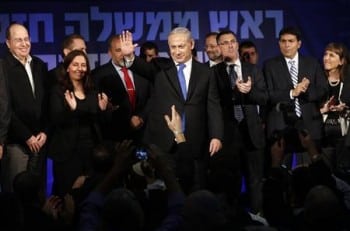
      By Frank Armstrong. There are two possible solutions to the Israeli-Palestinian conflict: one realistic the other miraculous. The realistic solution conjures divine intervention; the miraculous, a voluntary agreement between the parties. The latest round of conflict is, mercifully, largely over. On August 26th, both Israel and the Palestinian Authority (PA) accepted a ceasefire agreement after a 50-day Israeli assault on Gaza had left 2,100 Palestinians dead and devastating destruction in its wake; 71 Israelis were killed, all but 5 soldiers. The agreement calls for an end to military action by both Israel and Hamas, as well as an easing of the ongoing Israeli siege of Gaza. Essentially, nothing has changed. To explain the conduct of the Israeli authorities it is important to understand the ideology behind the Likud party, the dominant political force in Israel since its foundation in 1977 under the leadership of Menachem Begin. Although Ariel Sharon split with the party and formed Kadima in 2006, relegating Likud to fourth place in the ensuing elections, it has since returned to power under the immanent figure of Benjamin Netanyahu. The Arab-Israeli wars which began with the foundation of Israel in 1948 have mostly resulted in comprehensive Israeli victories, notably in the 1967 Six-Day War. This ascendancy has been consolidated by the demise of the Soviet Union and the emergence of the US, Israel’s Cold War patron, as lone Superpower. The Palestinian geopolitical position was further weakened by PLO support for Iraq in the first Gulf War. But, despite accords with Egypt and Jordan, Israel faces perpetual conflict with neighbouring countries, as most Arabs nurse a fixed view of Israel as a colonising, oppressive presence in the region. It is only continued autocratic rule in Egypt and Jordan that keeps these sentiments in check. The Israeli electorate has consistently favoured leaders unwilling to countenance concessions, and the expansion of settlements has become a fixed policy. The withdrawal from Gaza in 2006 was a simple realisation that it was untenable to maintain 10,000 settlers inside a grossly over-populated strip of land containing over a million and a half Palestinians. There were bigger fish to fry in the West Bank and Jerusalem. To explain the intransigence it is necessary to understand the ideology underpinning the Likud Party. Likud ideology can be traced to three principal sources: first, the writings of the Revionist Zionist Ze’ev Jabotinsky; second, the experience of the Holocaust; and third, the emergence of religious Zionism after 1967. Ze’ev (Vladimir) Jabotinsky (1880-1940), a Russian-born Jew, is generally viewed as the spiritual founder of the Israeli Right. In 1923 he wrote a still influential article entitled ‘On the Iron Wall (We and the Arabs)’. In it he asserted that a “voluntary agreement between us and the Arabs of Palestine is inconceivable now or in the foreseeable future”, since: “Every indigenous people… will resist alien settlers as long as they see any hope of ridding themselves of the dangers of foreign settlement”. In response to resistance Jabotinsky advocated “an iron wall” of military might which “they [the Palestinians] will be powerless to break down”. With military ascendancy achieved Palestinians would be ready to yield and only then “will they have given up all hope of getting rid of the alien settlers. Only then will extremist groups with their slogan “No, never” lose their influence, and only then will their influence be transferred to more moderate groups”. At that point limited political rights could be granted. Such a vision ordains that negotiations can begin only when the Palestinians produce a malleable leadership willing to accept their permanent exclusion. Jabotinsky’s metaphorical ‘iron wall’ was given a literal interpretation by Sharon’s construction of the ‘security fence’ that runs through the West Bank. Mahmoud Abbas was perhaps viewed by Sharon as a leader who would acquiesce to Israeli demands, but Hamas most certainly was not. But Jabotinsky’s analysis was flawed as it ignored how the policy of the ‘iron wall’ could generate fatalistic extremism in the form of suicide bombing and the use of civilian shields for rocket attacks. He also failed to foresee the internationalisation of the Palestinian cause. The second major influence on Likud, and Israeli society in general, is the trauma of the Holocaust experience. The collective memory of Jewish passivity in the face of genocide mandates a policy of fierce reprisal in response to the taking of Jewish life. Restraint is characterised as appeasement. The leadership of the Israeli Right manipulates this latent fear of destruction, appealing to an international as well as a domestic audience. In his book ‘A Place Among the Nations’ Benjamin Netanyahu dwelt on the lessons of appeasement of Nazi Germany and the betrayal of Czechoslovakia by the Western powers for the contemporary Middle East. Arabs are likened to Nazi Germany, Palestinians to the Sudeten Germans, and Israel to the small democracy of Czechoslovakia, the victim of Chamberlain’s 1938 deal with Hitler. For Netanyahu the lesson is clear, to grant concessions to Palestinians is to endanger the survival of the state of Israel. This Holocaust motif was also employed by opponents of Yitzhak Rabin after he signed up to the Oslo Accords. Inside the Knesset, Israel’s parliament, two Likud deputies proceeded to open black umbrellas comparing Rabin’s peace deal to Chamberlain’s capitulation, while effigies of Rabin dressed in SS uniform were set alight at right wing demonstrations.. Suicide bombing and rocket attacks cunningly target this traumatic inheritance, perpetuating a cycle of violence that is difficult to contain, and generated support for the extremists on the Palestinian side. The loss of Israeli life calls for harsh reprisal, which in turn radicalises the Palestinian population. Acting out of the core Likud dogma, Netanyahu must respond to an attack even if this completely discredits moderate Palestinian leaders. The ferocity of Israel’s response to terrorism works against the moderate Palestinian leadership that Jabotinsky’s model requires. Likud policy exceeds the idea of the ‘iron wall’. The last major influence on Likud is the rise of religious Zionism, especially generated by the

    Loading

    Read more