Posted in:
Staring at the Sun
What Type of News and Information Society do we Need?
Posted in:
by admin
What Type of News and Information Society do we Need?
Posted in:
Perhaps the strangest event on the Irish media landscape last month was prompted by Sinn Féin MEP Lynn Boylan’s publication of a report into media ownership in Ireland, commissioned by the European United Left/Nordic Green Left (GUE/NGL) grouping in the European Parliament. The report itself – by Belfast solicitors Gavin Booth and Darragh Mackin of KRW Law, and barristers Caoilfhionn Gallagher and Jonathan Price of London’s Doughty Street Chambers – contained little that was new, castigating once again the dominant position held by RTÉ and by “individual businessman Denis O’Brien, through his ownership of Communicorp and significant shareholding in Independent News & Media”. Released on 24 October, the report had little impact at first. In his Irish Times column, Fintan O’Toole noted the coverage. Some of this was extensive – the Sunday Business Post carried both a news report by business editor Tom Lyons and an opinion column by Boylan; the Sunday Times carried the story on the front page; Pat Leahy had a report with quotes from Boylan in the Irish Times. Some was minimal – the Sunday Independent carried only a comment from Liam Collins, not about the report directly, but about Guardian media writer Roy Greenslade’s “tiresome blog”. In fabled Sindo style three of the five paragraphs Collins devoted to the story were salvos at Sinn Féin. There were some other straight news reports, from thejournal.ie and the Examiner. But apart from communications minister Denis Naughten being forced to admit he hadn’t read the report hours after he had dismissed its findings, effectively killing it as a news story, the report seemed destined to decline into obscurity, gathering dust and never to be mentioned again outside of an occasional retrospective the next time someone looked at the Irish media scene. And then, for some reason, Denis O’Brien decided to breathe life into the story, issuing an oddly rambling and misspelled statement: a series of barely connected paragraphs, jumping randomly from topic to topic. Aficionados will recognise the work of his earthly representative, James Morrissey. O’Brien’s piece is familiar to copy-editors and sub-editors as the “celebrity column”, a series of disjointed observations and wisecracks hacked into a workable column by a cynical and overworked staff writer, and headed with the name of an often minor sporting or entertainment ‘name’. The statement, written in the first person, and therefore presumably the work in the first instance by O’Brien, gets off to a predictable enough start, challenging the independence of the report, and indeed the very notion that anything commissioned by a Sinn Féin representative could ever be independent. (“Hardly”). It does land one pertinent early blow, pointing out that while the report identified RTÉ as also holding a dominant media position in Ireland, it devotes “no focus” to the broadcaster. This might give the impression that the entire report is devoted to O’Brien. This is not the case. For example the authors devote twelve pages to a general consideration of the importance of media plurality (and how plurality differs from economic competition). In addition, the authors highlight not only O’Brien’s ownership of media outlets, but his propensity to go to law to protect his reputation, and its chilling effect. The Report notes that since 2010, he has gone to court 21 times, 12 times against media outlets, once against a PR firm, twice against the Moriarty tribunal, once against Dáil Éireann, and once against an individual TD, Colm Keaveney. In addition, there were threats of legal action which were not followed up, such as that reported against satirical website Waterford Whispers, which removed the offending piece. However, O’Brien soon tires of the RTÉ whataboutery, and returns to getting it off his chest about Sinn Féin “pushing its agendas, overtly and covertly”. To this end, he embarks on a divagating walk, stopping first to point out that An Phoblacht has criticised RTÉ, and then to defend Apple’s tax accounting practices, calling Sinn Féin’s criticism of their tax practices “anti-enterprise and anti-Irish”. O’Brien then regains his focus once more, fact-checking, again, that he is not the chairperson of Communicorp, he just owns the company. But then his concentration seems to wander again, and he inadvertently makes the authors’ point for them. “Is the media objective when it is talking and writing about itself?”, asks Denis (or perhaps his human avatar). Pausing to note, controversially – perhaps provokingly, that INM was “days from forced closure” in 2011,O’Brien then complains that RTÉ never contacted him for comment when Boylan’s report was published. Kevin Bakhurst, RTÉ’s Deputy Director-General and Managing Director of News and Current Affairs, was prompted in response to post on Twitter that the broadcaster “did ask for a response on the report and Denis O’Brien’s advisers chose not to give one yesterday”, going so far as to post a screenshot of email correspondence. But we live in post-truth times and no correction ensued. O’Brien then continues with his reflections on the parlous state of Irish media finances, noting “a very challenging environment” and – enigmatically – that the Irish Times is “considering various funding options”, before predicting that “some media companies will not survive this decade without radical restructuring”. He closes on a return to the theme of “Sinn Féin/IRA” funding, offering the hope that perhaps the political party will at some point get into the business of becoming a “fully-fledged broadcaster and publisher and create some jobs for a change”. Sunday Times writer Mark Tighe was the first to point out that the Irish Independent report on the statement amended this to simply “Sinn Féin”. On the Sunday following O’Brien’s midweek broadside, Sunday Independent writers did not mention the affair, except for Shane Coleman, who wrote an unlikely column pooh-poohing the idea that Denis O’Brien has an overweening influence, because everybody is reading blogs and watching Youtube as part of their varied media diet. Meanwhile, the Sunday Business Post reported that KRW Law “reject completely the suggestion that the authors were paid by the IRA and the allegation that we were anything
Posted in:
by admin
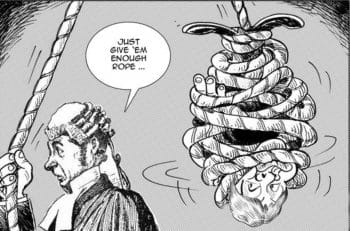
Our hero attacks evil in the world but gets little thanks, except in the organs he part-owns (but doesn’t necessarily control)
Posted in:
by admin
The report contained little that was new, castigating once again the dominant position held by RTÉ and by Denis O’Brien
Posted in:
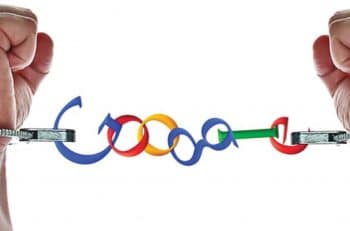
Outline proposals for a modernised Irish copyright regime announced by Enterprise Minister Mary Mitchell-O’Connor at the beginning of August are now dead in the water, following the publication of draft directives by the European Commission in mid-September. The European plans, championed by Digital Economy Commissioner Günther Oettinger, lean heavily towards protectionism for traditional media, in contrast to the general scheme outlined by Mitchell-O’Connor, which drew from the ‘Modernising Copyright’ report prepared by the Committee for Copyright Reform (CRC) in 2013, introducing protections for online ‘innovation’. The CRC, which began its work in 2011, was headed by Trinity College associate professor of law, Dr Eoin O’Dell. While some elements of the CRC’s report – for example proposals for a Copyright Council which would have a role in resolving copyright disputes, among other things – may survive, the ‘tech-friendly’ thrust of the report stands in contradiction to the approach from Brussels. O’Dell agreed that the Commission draft took an approach to copyright diametrically opposite to that of the CRC. Both reports agreed on some aspects of copyright and reform, such as on the need to implement the Marrakesh Treaty for access by the blind to published works and on libraries’ entitlement to digitise works in their collections for conservation purposes – the “boring but necessary” reforms. However, Oettinger and the Commission had “capitulated to the content providers when it comes to a whole range of additional extra rights, in particular the ‘Google tax’- a proposal to make Google and other search engines pay for extracts from newsmedia websites quoted on their search pages”. ‘Modernising Copyright’ outlined specific proposals to allow for quoting news reports online. For example it would not be an infringement to quote up to 160 characters or 2.5% of the work, subject to a cap of 40 words). On the other hand the draft EU directive effectively outlaws any quoting. “This new right is an additional right that just applies for news, so it’s not a copyright, it doesn’t have to meet the copyright standards and it applies whether or not a copyright exception applies”, says O’Dell. “It is effectively acknowledging that copyright ends, and it is adding to it. It is the exact opposite in respect of what we had suggested”. He claims that effectively they are seeing copyright and related rights as about business models, not about rewarding creative content but rewarding particular kinds of business models: “You can them dress up as saying it is rewarding creativity and content, but there are a lot of other ways to have creativity and content beyond these particular business models. And the Commission has accepted the argument that these business models need special protection”. O’Dell notes that it has already been adopted by the Commission, “so this is the equivalent in Irish and UK terms to a first reading. They have effectively published a bill. The civil service, which is basically the Commission, have agreed this is the bill, the Commissioner – the ‘Minister’ – has agreed this bill. It has now been published and has to go through the legislative process, which involves Parliament and the Council [of national ministers]”. While the draft directive still faces legislative hurdles before the Council and European Parliament, O’Dell feels it is likely to survive the process largely unscathed. “As part of the ongoing process that has led to the directive that has been ongoing since 2012, the European Parliament adopted a report from German Green/Pirate Party MEP, Julia Reda, which was far more attuned to the needs of users in particular, and the 21st century in general, and so the Parliament made clear what it wanted to see in the package”. He considers it significant that: “Pretty much none of the Parliamentary priorities were reflected in the Commission proposals. So the Parliament is unlikely to revisit it, because they have their own already-expressed alternative view, but in terms of the power dynamics in Europe the Commission is much more powerful than the Parliament, so the Commission is likely to get its way. The way the Parliament might have had its way would have been if its report of 18 months ago had been incorporated into these proposals, but effectively it hasn’t. There are no votes in copyright, and I can’t see the Parliament blocking it, though that would be its only option”. When the Stop Online Piracy Act (SOPA) was going through Congress, the Stop SOPA campaign appeared almost out of nowhere to kill it (albeit with assistance from technology companies like Google), but Dr O’Dell does not consider it likely that history will repeat itself. “SOPA was a big deal in Europe too and there were protests; it was the biggest protest in a lot of Eastern European countries. There were more people protesting SOPA than against the Iraq war that year, in Poland. But I can’t see how the ‘Google tax’ is going to get people on the streets in the same way. ‘The web is going to go dark’, was the rallying cry; I don’t see what the rallying cry is here. So from my political perspective I think that is unfortunate and sad, but from the perspective of political realities I would be very surprised if the Parliament were to block this. Its opportunity was when it fed into the process 18 months ago, and it has been comprehensively ignored, and the Commission couldn’t have done that if it didn’t think it could get away with it”. So what next after copyright reform? Similar laws passed by national parliaments saw different responses, with Google shutting down news-search in Spain, while Germany granted Google a free licence to quote. Dr O’Dell compares the current stand-off to the Cuban Missile Crisis. “You know how the Cuban missile crisis was resolved? The Russians pulled out of Cuba, and six weeks later the Americans made a significant withdrawal out of Turkey, which wasn’t in any way related whatsoever. [In Germany], the newspapers blinked and said ‘here’s a free licence, no
Posted in:
by admin
Pyrrhic victory for old media as Commission will prevail over Irish Government