Posted in:
Technology neutralises our Neutrality
Irish infrastructure used in US Drone strikes
Posted in:
by admin
Irish infrastructure used in US Drone strikes
Posted in:
The new editor of the Irish Times, Paul O’Neill, was brought up an only child in Waterford where his late father, Paddy, was editor of the ‘News and Star’. His mother Josie’s family, the Larkins, owned the well-known bar and grocery at The Duffry in Enniscorthy, now Donohoe’s/Pettitt’s. Paul started his career at that newspaper and worked for a while at the Cork Examiner. He is married to Jennifer and has two daughters. He is, at 52, five years younger than his predecessor, and an enthusiastic cyclist, though as he admits himself, more for health reasons than environmental concerns about fossil fuels. He cycles competitively with the Dundrum-based Orwell Wheelers. He has cycled the “Étape du tour’, a leg of the Tour de France – 138km from Saint-Jean-de-Maurienne to La Toussuire-Les Sybelles. “But the challenge wasn’t the distance. The true test lay in the climbs: a total of 61.5km uphill”. The challenges facing O’Neill are enormous. When the Irish Times broke the news on Twitter that a new editor had been installed, it incidentally highlighted one of the major problems the newspaper faces. A photo circulated of Paul O’Neill, taking over from Kevin O’Sullivan, who was stepping aside to take on the portfolios of agriculture, environment and science, showed the pair standing in the centre of a large circle as other Irish Times staff crowded round and listened to the announcement Such photos are a tradition in the Irish Times – they bespeak a hive of collegiality led by a winning editor. But as Twitter users quickly pointed out, that crowd was overwhelmingly made up of middle-aged men – pale, male and stale. In contrast to O’Sullivan’s appointment, which came after a lengthy period of speculation over the future direction of the newspaper as several candidates vied for the position, O’Neill’s promotion came on an otherwise unremarkable mid-week afternoon, without fanfare, or notice. “The challenges facing so-called old media companies have been well ventilated”, O’Neill was quoted as saying shortly after the announcement. “But the audience [sic] of The Irish Times continues to grow and now includes those who access our journalism via smartphones, iPads and desktops, as well as those who continue to read the newspaper. The media landscape is evolving rapidly and the future is not settled. But in a world of alternative facts, falsehoods and hidden agendas, I’m confident that The Irish Times and our independent journalism will continue to thrive. As people increasingly question the accuracy of the information presented to them, I believe the standards of quality and fairness associated with the Irish Times will be ever more relevant and valuable to them”. O’Neill was deputy editor (and is replaced by Denis Staunton), not to be confused with assistant editor, which is Fintan O’Toole, to both O’Sullivan and Geraldine Kennedy. He combined this with the title ‘Editorial Director’. Before that he had crossed over to the Dark Side for a time to work in public relations having taken a redundancy package from the paper at the turn of the century. Since he joined initially in 1989, he has been London correspondent, crime and news reporter and finance editor. He applied for the job last time around after Kennedy’s departure, and was very clearly regarded as the front runner for the post once O’Sullivan departed. In reported remarks on his departure O’Sullivan said his term as editor – the thirteenth in the paper’s history – “coincided with unprecedented turbulence and uncertainty for media businesses”. It has been rumoured that Dan Flinter, chairman of the board of the Irish Times Limited,and former boss of Enterprise Ireland, leant on O’Sullivan to move on. His removal was a cloak-and-dagger operation and it is indicative of low morale at the newspaper that none of the supposed standards watchdogs at the newspaper, which is guided by a lofty but precarious Trust arrangement and an “editorial committee”, complained about the furtive lack of proper interview procedures. That uncertainty about the future was also acknowledged by O’Neill in an interview with Sean O’Rourke on RTÉ radio, where he acknowledged the possibility that the Irish Times may eventually have to move to less frequent print editions, perhaps appearing in hard copy only on Saturdays. He had little to say about his editorial vision and nobody in the newspaper’s elevated governance seems to rate this as of much significance in the face of the need to adopt buzz concepts to address the accepted threats of digital, Google and Facebook. Cost-cutting not vision is the order of the day, still. In June last year the Irish Times announced plans to reduce costs by €3.5m over three years, including a target to cut employment costs in the business by €1.5m. Remarkably, the paper employs close to 400 staff but is currently completing a voluntary redundancy programme. Circulation has almost halved since its peak in 2008 and is down a third on O’Sullivan’s watch (compared to 28% at the Irish Independent). The Irish Times has managed to encourage readers to subscribe, both to print and digital offerings. Reading through statements both from the paper itself and the Audit Bureau of Circulation (ABC), it appears to have attracted 13,000 subscribers for the e-paper (a digital reproduction of the print product), and 12,000 more to access behind the website paywall, with an additional 30,000 paying for a joint web-and-print subscription. These numbers allow the paper to claim a combined print+pixel circulation base of over 90,000, though the most recent ABC figure, counting only print sales, is a sobering 66,251. But even if the paper does manage to convert all of its print readers to digital (or – an even greater challenge – increase its total base by attracting new subscribers), it still faces the hard fact that digital advertising revenues are only a fraction of those it can attract for print. And there are only so many commercial features and “sponsored content” reports the paper can host before it starts to detract from the masthead’s credibility. To an
Posted in:
RTÉ’s Claire Byrne show sells short epic issues like the merits of veganism. In order to fulfil adequately its anointed role, a state broadcaster must be courageous, at times running counter to prevailing sentiments.
Posted in:
Around 25% of the population of the earth use Facebook. Its latest accounts, presenting figures up to December 31st 2016, reveal that, at peak, there were 1.83 billion active users, 1.74 billion of those connecting from a mobile device. Figures for Ireland are less clear-cut, but 65% to 78% of the adult population is estimated to be using the service. Stand on the main street of any town in Ireland. If you’re not on Facebook the likelihood is that the person next to you is. The latest figures for 2016 show revenues hitting $27.7bn. A little bit of maths, taking into account regular active users at approximately 75%, reveals that Facebook makes between $18 and $20 per active user every year. That’s pretty impressive for a company that offers a free service. Conventional wisdom suggests that a company can only be making money by selling something; so what exactly is Facebook selling? Facebook’s real product Facebook is selling you. Not the real you, but the virtual you that lives and works online. Facebook, among others, has turned you into a product, and it sells the ability not just to reach you, but to very specifically target you based on a surprisingly intimate knowledge of what would make you a potential customer. Facebook has become so good at selling you, over and over again, that 84% of its revenue comes from advertising. You have been analysed, categorised, matched and packaged into a commodity that advertisers can turn their sights on using the tools that Facebook provides. You can be found based on your gender, age and ethnicity; your relationship and employment status; your education level and any interesting life events, such as birthdays, anniversaries, whether you’re newly engaged or recently married. Of course, for the 1.74 billion mobile users you can also be found based on where you are, where you were recently or on whether you are visiting a location or are at home. This is before it even gets started on your interests, your work, and your entertainment and social preferences. From food to hobbies to political affiliations a cursory examination of the various ways you can be targeted reveals no less than 250 criteria that can be selected. All for the sole purpose of grouping you into consumer groups with the intention of presenting advertising so specifically tailored to you that the likelihood of a sale increases. How much does that likelihood increase when you’re so targeted? 200%-300% is the conservative estimate. How do you become a product? If you are only realising now that you have been ‘productised’ I wouldn’t be overly shocked as most of Facebook’s users are largely oblivious to what’s happened. In Facebook’s defence though, they are quite explicit in their terms and conditions: “For content that is covered by intellectual property rights, like photos and videos (IP content), you specifically give us the following permission, subject to your privacy and application settings: you grant us a non-exclusive, transferable, sub-licensable, royalty-free, worldwide license to use any IP content that you post on or in connection with Facebook (IP License). This IP License ends when you delete your IP content or your account unless your content has been shared with others, and they have not deleted it”. That’s right, worldwide and royalty free; you gave over the information and agreed to let Facebook use it for free. Moreover, scrutinising the various sub-areas of the terms and conditions, specifically the data policy, we find: “When we have location information, we use it to tailor our Services for you and others, like helping you to check-in and find local events or offers in your area or tell your friends that you are nearby. We conduct surveys and research, test features in development, and analyse the information we have to evaluate and improve products and services, develop new products or features, and conduct audits and troubleshooting activities”. Not only did you give it to them, you agreed to let them use it almost without restriction: your profile information; your messages; your likes and, though not often considered, your photographs. Facebook estimates that it receives 134,000 new photographs along with nearly 300,000 status updates every minute of every day. Facebook users are literally keeping the company informed of their every move. For Facebook, the challenge is simply to gather up as much information as it can about you as quickly and as easily as possible. How to get people to monitor themselves Facebook has to convince you that you want to give it the information. It can’t directly ask you for it, you need to volunteer it. The process starts the moment you create an account, give over your name, age and gender. So far so good. Next, for the purposes of making it convenient to connect with your friends, you’re afforded the opportunity to import your contacts from your phone or your email system or from other networks such as LinkedIn. Excellent, now Facebook knows not only about you, but also all of your contacts including, maybe, some it didn’t know about before. Did you remember to remove phone numbers from your contact list before uploading it to Facebook? Of course you didn’t. Facebook now has an additional piece of information that can uniquely identify a person. Imagine if your friend explicitly didn’t add their phone number, or their address, not to worry: you just fixed that outstanding issue. For Facebook. Congratulations! You are now a data source and of course an early stage product. You could be a better product if you could be convinced to offer up more information about yourself. Your friends like this music and these movies, but how about you? Any other music or movies you like? Where did you go to school? How about university? Look: here’s a group of people who went there also. When did you say you attended? The greatest trick Facebook has managed to pull off is the omnipresent ‘Like’ button. Read an article;
Posted in:
by admin
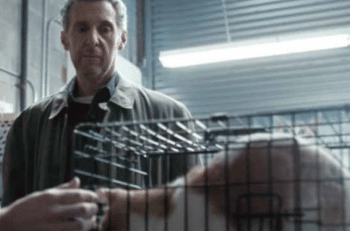
‘The Night Of’ complicates conventional scriptwriting formulas. The lawyer saves the cat, but the cat saves him. When Naz gets his saviour back all characters are freed to empathise, and survive.
Posted in:
by admin
Actually RTÉ is quite good value, though the water-tax debacle means it won’t be properly funded
Posted in:
by admin
Catholic congregations are paying for Protestant abuse, though media are uninterested