
Politics

Random entry RSS

  • Posted in:

    It won’t happen or will be reversed, so at least it’s comedy not tragedy

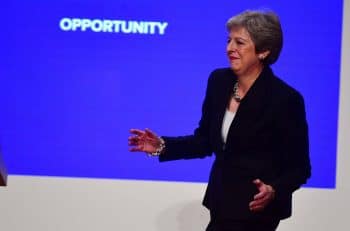
    THE TRUTH is that the world is laughing at the UK’s discomfiture over Brexit. The world will be mildly discommoded by whatever happens but it be will be amply compensated by the comedy of the UK’s stupidity made possible by ignorance of history and economics. For a long time much of the world really didn’t laugh at Britain – now it can, and does. The role of Ireland in frustrating Brexit is particularly gratifying. According to the BBC, “what alarms so many Tories is that after centuries of troubled Anglo-Irish relations it is the smaller of the two islands which appears to be exercising greater power for the first time”. Good, that’s justice. I’m relishing the Brexit difficulty that the English in particular are enduring after 850 years where Ireland was colonised, demonised, ridiculed or relegated to an afterthought, by its bigger neighbour. I can live with the temporary economic hit that we may take because latterly we’ve been doing fine, at least economically, anyway. Brexit also boosts our morale, making our own tawdry politics look relatively good – at least we don’t look nasty any more and this time it is not we who are in a parallel universe. I’m pleased with the irony that it’s an ex colony that’s inflicting the constitutional compromise on the UK: it might help English nationalists understand that if you inflict epochal constitutional prejudice on the neighbours there’s a price to be paid in dysfunctionality. Culturally, the UK has offered so much: in particular to literature, the popular arts especially music, and to humour. From the 1960s, until recently, Britain led the world in humour based on self-awareness, self-criticism, open-mindedness and irony. Yet Brexit is treated as a humourless parody, its protagonists hapless and led by a frumpy and now-abject PM. When “strong and stable” Theresa May says “I’m a bloody difficult woman”, “I stand ready to finish the job”, or “I’ll give everything I’ve got” we recoil because she is so incompetent and, because she is po-faced, frankly we revel in her humiliations. When she dances like an insect, when she takes off across Europe begging shivering atavistic geopolitical rivals to unravel the deal she’s just agreed, and failing to understand that a backstop cannot be time-limited and that the EU won’t budge from it, when she gets locked in her car or the conference scenery collapses around her, I’m afraid the world does laugh. Some might say that Britain taught us to. It was the master of subversive comedy: and specifically targeted cravenness, hypocrisy and class hangups. There was a time when Britain would have seen – not just that Brexit is bad but that it is funny. Mrs May is as uncharismatic as David Brent, her Ministers as principle-free as Jim Hacker or Hugh Abbot. Rees-Mogg recalls the Upper Class Twits from Monty Python, and Boris Johnson represents the swivel-eyed First World General Sir Anthony Cecil Hogmanay Melchett from Black Adder. A swathe of British society seems to have taken its lead from Mind Your Language and Dad’s Army. But Britain’s consolation is that its come-uppance is comedy not – whatever Angela Merkel said – tragedy as, while there may well be anagnorisis and catharsis, there is likely to be a happy ending to Brexit. This is because first the concept of Brexit is largely based on false premises and because second its upshot is so bad that politics will inevitably, however long it takes, reverse it. The counterfactuality of the Brexit arguments derives principally from failure to understand that the loathed constraints on national self-rule are imposed by globalism not the EU. The UK has been anomalously unlucky that its ruling classes don’t seem to understand that the Big Idea of the EU is the economic benefits of trade which dwarf simple structural fund payouts, that they believe that the EU is conspiring against the UK and that the current deal is one-sided when it is not, that they fantasise that European industry depends on its UK trade and that EU membership removes £350m weekly from the National Health Service, that they obsess over the obligation to pay £39bn, as if it were not simply due – a long-term vouched bill. And the UK has been anomalously unlucky in its leaders: witless mediocrities masquerading as Winston Churchills, lionised in the Express and Telegraph; indulged even by the BBC. There is time for the misrepresentations to be forensically nailed and for the mediocrities to be replaced by politicians who are up to the imperatives of our times. All who in any way wish the UK well can take comfort in the general rule of history: countries tend to find equilibrium pursuing solutions that make them better off. The reasons for the Brexit mistake are complex. England has a delinquent education system which fails to teach enough people, including its leaders, history or economics. These disciplines which feature as standard in the curricula of schools in every other country in Europe teach that the EU has helped avoid war in Europe for the first generation in 150 years, and that the customs union and single market have increased wealth through exploitations of comparative advantages and trade, not primarily through transfers of structural funds. The lethal ignorance of these truths when combined with a widespread residual sense of British exceptionalism, by which most mean English superiority, lit a UK anti-EU fire that would largely burn the UK itself. The upside here is that if an ignoble reconciliation with the EU extinguishes the fire it might also liquidate the arsonists too. England needs to find a home at its political centre for its cleverest and most imaginative, moral and outward looking people. But there is a problem with the Little English. They’ve been educated for simplicity. They are suckers for homespun superannuated guff about getting on your bike and the University of Life and for aphorisms like “We have had enough of experts” and “Brexit means Brexit”. The bulk of English people

    Loading

    Read more

  • Posted in:

    He socialised with Royalty and was abused by a future Lord, though his brother had revealed the key story about MI5 abuse of Kincora boys

    RECAP OF PART ONE In Part One of this story, Alan Kerr described how he was sexually abused by three men at Williamson House, a Belfast Corporation Welfare Department care home in Belfast, in the 1970s. He was only six years of age when he was first raped. One of his abusers was Eric Witchell, the Office-in-Charge of the home. Witchell was a friend of the paedophile gang which ran the infamous Kincora Boys’ Home, also in Belfast. Alan Kerr in the years after his arrival in London. Later, Alan was moved to Shore House where he was abused by another two men, one of whom may have been William McGrath, the Housefather at Kincora. Alan eventually fled from institutional care for a life on the streets of Belfast. Desperate, and in need of food and shelter, he worked for a spell at a brothel on the Lisburn Road where boys as young as 13 were made available to Belfast’s paedophile community. At the very least, the brothel enjoyed a measure of shelter from the wall of protection built around NI’s paedophile rings by the UK intelligence community. In order for the spies’ paedophile exploitation and blackmail operations to thrive in NI, it was necessary for the local paedophile population as a whole to flourish. If it wasn’t for this, Alan and many others might never have been abused. HUNGRY, ALONE AND FIGHTING THE BITING COLD Alan was abused by Billy ‘B’, a man he describes as a “toilet creeper”: “I met him out of the blue one time [in Belfast] while I was on the run from Rathgael [Training Centre]. He followed me into the toilet and smiled at me”, Alan recalls. B would prove to be one of Alan’s most prolific abusers. When Alan was 15 or 16 B took him to London via the Belfast-Liverpool car ferry in his silver BMW. At the time Alan was subject to a care order which was not due to expire until he was 21. Alan stayed in London after B headed back to Belfast because he did not want to return to Ireland but this proved no more than jumping out of the Belfast frying pan and into a London hellfire. With no support, trade or qualification, he would spend his youth as a “rent boy” at such places as Victoria Station and on the ‘Meat Rack’ at Piccadilly Circus, also known as the “Dilly”. Over time, he would get to know boys from all over Ireland who were in the same dire straits as he was. The men who abused the young teenagers referred to them as ‘chickens’; the boys called their abusers ‘punters’. Alan would never return to live in NI again. Piccadilly Circus  Victoria Train Station was an infamous hunting ground for paedophiles. “There were pubs inside the station in those days. Some of the men who went to them were only there to have sex with the boys. There was another pub nearby, the Shakespeare, which was similar. Soldiers used to go there a lot. At the weekends there would be a lot of military police outside it”. The police knew perfectly well what was going on at Victoria Station. Not long after his arrival, Alan was approached by a British Transport Police (BTP) officer who asked him who he was and then went away to make inquiries about him. When he returned, he told Alan that since he wasn’t in trouble in NI, he wasn’t going to do anything about him. Clearly, the officer had been able to make enquiries with Belfast – presumably through the communication facilities in the BTP office in the station – and must surely have discovered that Alan was still under a care order. Nonetheless, he abandoned him to a life as a rent boy. Finding somewhere to sleep was a priority for Alan, and the Victoria Station offered some shelter. “In those days, the station was open all night. It is unrecognisable now. I slept on trains that pulled into it for the night”. Sometimes he found himself drenched in so much sweat that his clothes would be wet, even in winter. Then, as the night and early morning crept in, he would begin to freeze while still damp if not actually wet. He recalls having to go to the toilets to try and warm himself up by using the hand dryer. ‘In the morning the police would come onto the trains and turf you off”. One of the visitors to the toilets at Victoria Station was John Imrie, an MI5 officer named by Ken Livingstone in the House of Commons in connection with the Kincora scandal. Imrie was arrested at the station and convicted for exposing himself. See Village March 2018. QUEER-BASHING AND SEXUAL ABUSE AT THE HANDS OF THE POLICE During his early years in London, Alan was assaulted by police officers on a number of occasions. Typically, this happened as he was being escorted towards Vine Street Police Station from the Dilly. “They would start pushing and pulling you to make it look like you were causing them trouble. They would use this as an excuse to punch you in the stomach; always in the stomach; up against the wall outside the station. They never bruised your face as you might be going up before the Bow Street magistrates”. One British Transport Police officer Alan got to know was a pederast, something that would explain how the abuse was able to thrive at the station. He developed a liking for Alan and frequently abused him, even taking him back to his flat. Some of the officer’s colleagues suspected what was afoot and attempted to persuade Alan to talk about it but he refused. The abusive officer has long since died. He operated out of the Transport Police office at Victoria Station. Alan didn’t reveal the nature of the relationship he had with this officer when he was interviewed by his colleagues because he was “afraid of the police”. THE

    Loading

    Read more

  • Posted in:

    Honohan and Equality

    THE RIGHT to Private Property and private ownership of goods tends to divide the Right from the Left. In Locke and Hobbes, it is the central human right as it has always been from a Whig-Liberal or indeed a Neo-Liberal perspective. From a Marxist perspective it is an unqualified evil and even those who accept it as a human right from a leftist perspective do so under characteristically qualified conditions. I have not noted much enthusiasm in Village magazine for property rights. Striking its inevitable balance, the Irish Constitution subjects property ownership to the common good, whatever that means. It has been much elaborated and is more progressively interpreted than is probably widely believed, by Irish courts, especially the Supreme Court. What has not been developed in Ireland is Article 45 of the constitution whose stated object is to establish social and economic rights. In this respect it has always been open as the South Africans, Canadians and others have done to establish a right to housing. In India they are defined as a basic survival right intrinsic to life and General Comments 4 (1991) and 7 (1997) of the UN Economic and Social Rights Committee – on the right to adequate housing – recognise that the human right to adequate housing, which is thus derived from the right to an adequate standard of living, is of central importance for the enjoyment of all economic, social and cultural rights. The UN Declaration of Human Rights and its Covenant on Economic and Social Right article 11 (1) requires that its 153 States parties “recognize the right of everyone to an adequate standard of living for himself and his family, including adequate food, clothing and housing”. Article 26 of the South African Constitution stipulates that the state has an obligation to build adequate housing and is prohibited from arbitrarily evicting anyone. Subsequent jurisprudence has established that before an eviction there should be meaningful consultation through arbitration and that no one should be evicted without having somewhere to go. The state also has a duty to have a housing plan and to build houses. In contrast the courts in Ireland are powerless: once processes have been undertaken for eviction or dispossession and those processes comply with the formalities then that is that. A grandmother can be jailed for contempt of court as she seeks to repossess the house from which she has been evicted. In February the Master of the Irish Court was bumped by a High Court judge out of his role in managing debt repayments as he was blocking banking repossessions and was perceived to be anti-bank. Given his role as a filter of claims always susceptible of appeal to the High Court which almost always over-ruled him, when offered the chance, there is some, not much, merit in the acid view of Judge Garrett Simons that he was giving people false hope by staving off the evil day. Perhaps that seems true from the perspective of a positivistic judge with a planning background who through his filters sees no role for the courts in interfering in social and economic justice issues centring on housing. On the other hand it would not be false hope if it yielded real solutions and radical change. Elsewhere in this edition of Village Tony Lowes explains the evolving right to a good environment in Ireland. It would not be qualitatively different in a country where homelessness is a universal preoccupation if the right to housing crystallised judicially. Ireland has witnessed an upsurge of NGOs and, depending on your perspective, busybodies, clogging up its busy courts, often as lay litigants, agitating for some measure of protection for the dispossessed. The Land League which I have represented is one and of course New Beginnings, a separate initiative before in effect it was flogged to the banks with a profit motive. On the other hand for soft liberals and leftists an overarching concern is that those who massively over-borrowed while others kept their discipline are not to be empathised with as they are part of the casino capitalism problem. Accepting the validity of the blandishments pf property speculators or professional hypocrites is Sleeping with the Enemy. Well yes and no. Firstly, a common Irish failing is to separate out the dancer from the dance. However, in the interests and fairness it is essential to depersonalise and be objective. One of the defects in populism is that it allows demagogues to showboat and scream even when they are the authors of their own downfall. Village readers will dislike populism, demagogues, the property brigade and presumably people who are the authors of their own downfall. But it does not make it unreasonable to support rights to housing – for the following reasons: 1: That the requirement constitutionally (and for example under the UN Covenant on Economic, Social and Cultural Rights) is merely to affordable housing of an appropriate scale – possibly rented – not to the freehold in a ten-bed in Killiney – even if Jerry Beades can justify it; and even those sinking in greed-generated debt are entitled to a humble abode in a just society for without it all dignity and much capacity is lost. The indisputable fact that some of the agents in property-rights activism have lost sight of this entirely should not blind us to the fact that the imperative is none the less forceful for being so limited. It should be conceded that dishonest transfers of assets and the Family Home Protection Act have created a justified sense that in its execution some people are unfairly getting to keep enormous homes when the constitutional right is, and should be, limited to modest lodging. 2. That though the goal at least for those on the left may in theory be equality, in practice we are dealing with the crooked timber of humanity and in Ireland some of the most abject are boomtown debtors, by definition still reeling after more than a decade. The right to equality does not

    Loading

    Read more

  • Posted in:

    Happy Birthday to Euro

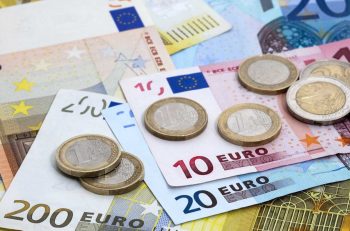
    Throughout its 20-year history, the Euro has been depicted as a crucial element of the development of the European Union. It was supposed to strengthen the European economy, bring EU Member States closer together and increase EU citizens’ prosperity. Yet, after the economic crisis in 2008/09 experienced by the southern Member States and Ireland, the reputation of the Euro was undermined and its weaknesses brutally revealed. By Anna Jermak Love it or loathe it – what it is The Euro is the official currency of 19 of the 28 EU Member States, used by more than 339 million people, and the second-largest currency in the world (after the US dollar). It was introduced by the 1992 Maastricht Treaty as part of the Economic and Monetary Union (EMU), involving the coordination of economic and fiscal policies, a common monetary policy, and a common currency. The Euro was launched in 1999 and three years later came into circulation. Big dreams – how it all began In order to understand the reasons for the introduction of the current European currency, the Euro, one needs to go back to the 1950s, and the genesis of the European Economic Community (1957), when the European leaders first talked of the creation of the single market with free movement of trade, services, capital and persons. The common currency, together with common monetary policy and co-ordinated economic and fiscal policies, was essential for its completion. There was no space for multiple small and vulnerable currencies in the fast-developing business world – a single currency, as presented by the 1989 Delors Report, was the capstone of Europe’s single market. Indeed, one large Euro market would enhance European economic integration, stability and growth. As there was no need to exchange currencies in the Member States which adopted the euro, both consumers and traders were provided with greater confidence, opportunity and security. The adoption of the common currency also strengthened the EU’s position in the global economy. However, leaders like French President Francois Mitterrand and German Chancellor Helmut Kohl also believed that a single European currency would apply irresistible pressure for political integration. It would lead eventually to their ultimate goal: a European political federation akin to that of the United States. They saw that to function smoothly, monetary union requires a banking union – a single supervisor for all the banks and a union-wide deposit insurance scheme. Otherwise, banks overseen only by their national supervisors would be allowed to undertake cross-border lending operations irrespective of the impact on neighbouring countries. And in the absence of a union-wide deposit insurance scheme, a run on the banks in one country could infect the banking systems of others. Furthermore, to operate smoothly, a monetary union requires an integrated fiscal system, like in Australia and the US. States that give up their monetary policy to a higher authority can no longer adjust it to suit domestic conditions. They can no longer lower interest rates to encourage investment when the national economy slows. Of course, if the partners operate an integrated fiscal system, prosperous members can shift resources to depressed regions, compensating for the impossibility of interest-rate cuts. The problem is that banking and fiscal union will only be regarded as legitimate if those responsible for their operation can be held accountable for their decisions by citizens. That prompted a logic for more power for the European Parliament – and less for national legislatures. Monetary integration creates a certain logic and associated irresistible pressure for political integration. But the politics of Europe and the world since 1992 militated against political integration. Without it, the unreadiness of the EU for a common currency back in 1999 was an accident waiting to happen. Some economists did predict this. For instance, it had been predicted by economist Martin Feldsted two years before in an article in Foreign Affairs magazine: In the beginning, there would be important disagreements among the EMU member countries about the goals and methods of monetary policy. These would be exacerbated whenever the business cycle raised unemployment in a particular country or group of countries. These economic disagreements could contribute to a more general distrust among the European nations. The ugly truth The Euro duly imploded as 2008 turned into 2009 when Greece, Spain, Portugal, Cyprus, Italy and Ireland were almost destroyed economically as part of the price for being parts of the Eurozone. The impetus for the debt crisis within the Eurozone was the banking crisis in the US in 2007/2008 – 2009. It affected the global economy, and European countries were not exceptions. Greece, previously so desperate to become the twelfth member of the Eurozone, has suffered the most. Its fraudulent entry, lack of fiscal reforms and unsustainable budget deficits made its debt so large that it exceeded the size of its whole economy. As the banking systems within the Eurozone had become much larger and mightier than their host economies, the Greek government was in practice unable to rescue national banks or to pay debts without the assistance of the European Central Bank, International Monetary Fund or the EU. Austerity measures were introduced, leading to national protests, riots and anti-EU sentiment. In Ireland – the first Eurozone State that fell into recession – the crisis was aggravated by the bursting of a property bubble, which caused loan defaults. In order to rescue Irish banks which had financed properties through now precarious loans, the government took on their debts. That led to the deficit, public spending cuts and tax increases, and left the government in Dublin with no option but to join the EU and International Monetary Fund bailout programmes. The debt crisis followed a similar course in the rest of the countries, although on a smaller scale. In effect, a banking union – a single supervisor for all the banks and a union-wide deposit insurance scheme – was introduced in 2012. It prevented banks overseen only by their national supervisors from undertaking cross-border lending operations irrespective of the impact on neighbouring countries,

    Loading

    Read more

  • Posted in:

    Gemma O’Doherty has become the poster girl for Irish populism. By Michael Smith.

    In 2018 award-winning journalist Gemma O’Doherty wrote several articles for Village magazine. She was easy to work with and produced good copy. Like many contributors she generously did not charge the magazine for her work. She brought a large social-media followership with her, writing pieces on human-interest stories – on Madeleine McCann; on Sophie Toscan du Plantier; on sex abuse in Donegal and in a Dublin rugby school; and she wrote about her experience before the Charleton Tribunal, with which she was not impressed. She had given evidence about how she was removed from her position as Chief Features Writer of the Irish Independent in 2014 after she door-stepped the former Garda Commissioner about the wiping of his own penalty points. Around that time sadly her husband Peter Carvosso, a well-respected editor, who also worked for the Irish Independent, had died. It must have been a very difficult time for her. O’Doherty writes well. Some elements of the stories she submitted to Village were less definitively backed up than was ideal, though they were always scupulously researched and coherent. Her story on rugby trainer John McClean was excellent and was helpful in bringing about long-stalled charges against him for abusing boys in Terenure College. She never ventilated any sort of political view in these articles. When she ran for the Presidency on an anti-corruption ticket expressing her lack of faith in Irish media, Village felt the media should give her a hearing. There were mutterings that she was quietly anti-abortion, anti-vaccination but she denied this, particularly in interviews with online news service, Broadsheet.ie which supported her Presidency bid. She did not do well in the Presidency election – she only received one of the four requisite nominations – and was predictably snookered by the media she loathes for stating, without evidence, that journalist Veronica Guerin had been killed by “the State”. She never got a chance to air her politics or her platform. That was a pity, from all perspectives. It was after that election that her politics appears to have turned. Perhaps this was a reaction to the success of the nastiness of Peter Casey’s campaign which placed him second. She first toured the country with other anti-corruption activists giving talks, and more recently has established an ambitious new platform called Anti-Corruption Ireland with 2000 online members – a “political movement” which intends to field candidates at local, national and European elections. Village is driven by politics not personalities. It promotes equality and sustainability. Gemma O’Doherty derides the equality agenda, and believes climate action has gone too far and that wind farms are an over-subsidised scam. It is not clear how she funds herself: and she is peripatetic. Nor is it clear who she is accountable to or what she regards as her ethical parameters. She provocatively claimed that anti-racism protesters at a rally in Rooskey, Co Roscommon after an asylum centre was burnt, were not locals. A piece about this in Broadsheet was removed after legal correspondence. In early April she was cut off mid-stream by Sligo’s Ocean FM when she mentioned Mary Boyle. On the same trip to Sligo, she says Twitter shadowbanned the notice of the Anti-Corruption Ireland meeting. In mid-March a hotel in Cork cancelled a meeting she planned because she was inflaming the situation after the Christ church murders – and she has run into trouble with Youtube which closed down her channel because of her incendiary videos. She organised a small sit-in at Google, Youtube’s parent, in Dublin in protest. She loathes George Soros, an agent of global liberalism who “uses NGOs to undermine democracy”. Presumably she prefers direct democracy and its voguish manifestation, populism. She can’t get enough of the gilets jaunes. She lists an array of media and political villains: the Irish Times, RTÉ, INM, Communicorp, Virgin Media, FG, FF, Sinn Féin, Labour, the Green Party and she has a particular antipathy to the Social Democrats, People before Profit and the Anti-Austerity Alliance who, with others, she sees as ‘Cultural Marxists’. She has promoted protests outside the houses of political leaders including Bruton and Varadkar. As of now O’Doherty is promoting a God and Country agenda, though her journalism on McClean suggests she is no clericalist. She believes Ireland will become Muslim majority and questions the National Planning Framework which posits radical population targets that depend on wholesale immigration as part of an insidious globalist agenda. She dislikes secularism, highlights alleged high rape rates in Scandinavian countries linked to Muslim immigration and draws attention to violence perpetrated by Muslims in Western countries. She has no qualms retweeting people who believe Africans are inferior to Caucasians. She believes Irish people should “reclaim their Irishness”, saying “if that’s racist, great, bring it on!”. She considers the appalling Christchurch massacre was a “false flag’ operation designed to disguise the actual source of responsibility. She is in bed with conservative commentator John Waters who appears regularly on her long but rollocking podcasts. This relationship encapsulates her political trajectory. At one time she was lionised in Broadsheet.ie. a liberal website with a following that varies from libertarian to leftist but which does not embrace conservatism, the Church or John Waters who it has pilloried, characteristically and in particular for his stance on PantiBliss whose denigration of Waters as homophobic grounded a defamation payout. Now Waters and she make ideological twins and he appears regularly on her Youtube channel. In Irish terms this amounts to a 180-degree rotation. She also has an intense affiliation with someone called Amazing Polly, a Canadian version of herself who often appears on her videos, and she often retweets contrarian Katie Hopkins. Her approach is somewhat tribal and, though she is an attractive and fluid speaker, she also makes for an impressively lethal antagonist. Legal Blogger Gavin Sheridan recently ungallantly tweeted (a lot of this stuff happens in the ethereal world of social media): “If you’re still following Gemma O’Doherty after her descent into the abyss of far-right conspiracy nonsense, false narratives,

    Loading

    Read more

  • Posted in:

    Morally Most Wanted

    Fantasy Indictment: Peter Sutherland for moral offences against the economy, the environment and human rights by David Langwallner and Michael Smith   Christopher Hitchens, no stranger to contrarian positions, once wrote a remarkable polemic called ‘The Trial of Henry Kissinger’ impugning Kissinger for being as guilty as any common war criminal of crimes against humanity. In evidence Hitchens proffered his inculpation in the murder of democratically-elected Chilean president Salvador Allende. After General Pinochet assumed power Kissinger told Richard Nixon that the US “didn’t do it”, but “we helped them…created the conditions as great as possible”. Hitchens also marshalled in evidence Kissinger’s sponsoring of the carpet-bombing of Cambodia, and his and Gerald Ford’s oblique tolerance, and perhaps approval, of genocide in Indonesia. At the time the book had an incendiary effect but the allegations were not immediately directed into concrete legal action. Ultimately of course Kissinger had to leave France with unseemly haste with an arrest warrant pending and return to the safe refuge of the US where he thrives as a nonagenarian staple of talk shows, the idol of Fox News and a totemic visionary of Realpolitik. Such is the shadow existence of a once lethal global potentate. But Kissinger is old news, disempowered, with the historic crimes fading over time and mercifully, absent a call from Trump, out of harm’s way. Though you never know, such is the plausibility in our unethical world of the king of statecraft. Realpolitik has moved on from such crude seventies tactics as murdering a head of state to simply disemboweling him metaphorically – as with Tsipras – with the panoply of capitalism. Moreover we have, some of us, moved on to business-craft. From the modernist, almost industrial complex of building that is UCD stands out a splendid new addition, the Sutherland school of law, a sleek new premises which “incorporates teaching and learning facilities which are purpose built to foster and support more experiential styles of learning”. This is most apparent in the Clinical Legal Education Centre which incorporates a trial room suitable for mock trials, though not of its benefactors of course. If Peter Sutherland were a building it would be this building for, though well-upholstered, it’s a little top-heavy. Why do we never name schools of law after true heroes, or at least flawed ones? The Mansfield School of law, The Sean McBride or Mary Robinson School of law? Of course international businessmen and plutocrats of all sort seek, in the dusk of lives dedicated to the pursuit of money, to have their reputations magnified for future generations. Tony O’ Reilly, by far the most elegant of the Irish philanthropists, has his sponsored buildings in Trinity and UCD, named – perhaps – after his parents. But these things are done better and with fewer strings in the US, where the culture and indeed the tax regime are more conducive: Warren Buffett and Bill Gates are charitable icons and are scrupulously divesting themselves of their assets in the common good; many US universities depend on philanthropy. Naturally the Sutherland school seems a bit more business- friendly than its fuddy-duddy anonymous predecessor: it aims to make “our teaching and learning challenging, rewarding, relevant, and critical in engaging with the challenges of law in Irish and international business, social, political and economic life”. If Goldman Sachs did law faculties it might probably do this one. It is not clear whether the minions and opinion-formers, rushing to their lectures, have been encouraged to downgrade human rights, the environment and culture as part of the process of embracing their exciting challenges. Peter Sutherland is a unique case; a pasha of world fuzzy democracy, a knight of the British realm described in the Financial Times in 2009 as “at the centre of the establishment in all its forms”, a querulous and basilisk Buddha, looking down from a great height at the mortals of the world and their fig-leaves of democracy and national sovereignty, barriers to the elevation of trade that his career has so eminently promoted. But let us construct a narrative for this man. Gonzaga, UCD and King’s Inns educated and aggressively-rugby-playing, he became Attorney General of Ireland in his 30s, after a brief and unsuccessful electoral dalliance with Fine Gael; and then was made the youngest ever EU commissioner – for Competition, in which capacity he was famously dynamic, driving competition in the airline, telecoms and energy sectors, and attracting the admiration of federalist Commission President, Jacques Delors. He chaired the Committee that produced The Sutherland Report on the completion of the Internal Market of the EEC. Only Ireland’s dreary civil-war politics deprived Sutherland of the job he coveted most when, back in 1994, the UK recommended him for the post of European Commission president. His strings to Fine Gael meant he did not enjoy the support of his own country’s government, then led by petfood Taoiseach Albert Reynolds. Tellingly, he once told the Financial Times: “I do absolutely believe in the European project. I think it’s the most noble political ideal in European history in a thousand years”. The Competition Commissionership was the first step in his championing of globalisation, internationalisation, sovereign fluidity, and the promotion of economic liberalisation. Of course Sutherland can surely speak the language of progress and ethics – and he is even, as a Good Catholic, an economic advisor to the Vatican, Consultor of the Extraordinary Section of the Administration of the Patrimony of the Apostolic See (and President of the International Catholic Migration Commission). Nevertheless his work – and even his lifestyle – bespeaks slavery to the amoral deities of capital, profligacy and greed. Globetrotting private jets, secret meetings in the Vatican or with the Bilderberg Group, carefully regulated and deliberately evasive public appearances: bread and butter for decades for this warrior for the business agenda. It is of course an ambivalent existence – grey: not a matter black and white. He is an agent of liberalisations the upshot of which he feels no obligation to take responsibility

    Loading

    Read more

  • Posted in:

    From Senna to Joyce

    Exile from hypocrisy, lack of standards, formalism, begrudgery and betrayal by David Langwallner   The legendary Formula 1 driver Ayrton Senna was famous for flamboyant risk taking. His great rival Alain Prost would complain about his dangerous overtaking and bumper-to-bumper manoeuvrings. Senna was, without doubt, the greatest Formula 1 driver of all time both in terms of style and indeed achievements, even if Prost had a better win record. But of course people can become addicted to risk and risking everything all of the time is likely to prove counterproductive. As I have found to my cost, occasionally consolidation is often the wise course. Senna was also a decent and religious person, dedicated to a series of charitable causes. In the days before he died in the fatal crash in the Monaco Grand Prix he was very concerned about the state of the track in Imola. He had for years been vociferous about the need for greater safety checks in his sport. Ironically, many were introduced as a result of his death. Indeed Senna may have had a premonition of his own death. I have a similar attitude to Ireland which, as I have written previously, does not as a state conform to the rule of law. The reason for the rapid decline is crucial. The word that is truly missing in Ireland in this country is ‘standards’. We do not have any. First, our legal and medical professions are in disarray, unethical and controlled by a narrow privileged elite drawn from established Dublin families recalling what Aneurin Bevin said of Anthony Eden: “Beneath the sophistication of his appearance and manner he has all the unplumable stupidities and unawareness of his class and type”. Further, our police force and social workers – led by Tusla – are utterly unfit for purpose. I have written extensively about the police. They are trained to assume guilt, they bend and manufacture evidence to achieve outcomes, many of them though not all are criminal either by intent or negligence and the cancer of course, as recent events have demonstrated, comes from the top down. I also see the work of Catholic action groups and religious zealots over our family structures and in places our legal profession. In fact to ascend beyond Inspector or Barristerial ‘Devil’ level it is a help to be privy to the corruption. In a dissenting judgment in 2015 in DPP v JC, the late Supreme Court Justice Adrian Hardiman stated: “[T]here have been two Tribunals of Inquiry, each presided over by an eminent member of the judiciary, which have each reported in a profoundly disturbing manner, The first report of the Morris Tribunal, published in 2004… related to bogus explosive finds by gardaí in County Donegal. The report observed that Garda culture: “generally militates against open and transparent cooperation with investigations both internal and external and manifests itself in a policy of ‘don’t hang your own’”. Then there is the relationship between the police and the child-protection agencies, evoking on occasion a deeply unsettling nexus of collusion, with the enlistment of lawyers to manufacture cases and to target people they want to denigrate or destroy. I have known for several years that the Garda have used Tusla to frame innocent people for sex abuse, and indeed other things. Sergeant Maurice McCabe is only one of many who have been smeared by the textbook play of false sex allegations coming from the highest level down. I have seen this myself, personally. I now feel a growing sense of apprehension visiting Dublin, evoking Indonesia or Chile in the 1970s. I have in recent months given papers in Queen’s and also in Waterford to the Irish Association of Law Teachers, and concluded a Coroners Court case but I feel a sense of dread and foreboding when I visit Dublin similar I think to what Senna felt before Imola. It is an unsafe track. The safety standards are not there. But what do standards mean? More to the point what are they confused with? In Ireland standards are confused with other things, reflecting a fetish for appearance over reality: respectability, obsequious etiquette, formal politeness, vested reassurance, sexual abstinence (for the religiously compliant), accurate footnoting (by academics), unwise balance, cowardice and bullshit. These are Irish specialities, over-compensation for the want of seriousness, the want of standards, that have drained my patience as I left these shores for the moment at least. Form over substance, appearance over reality, the sneer on lips of ill-disguised begrudgery. An egregious example of the formalism that weighs down this country is the conservative mindset of our judges, driven by a furious imperative to uphold the state at all costs. Symptoms include their tendency to exclude evidence based on claims of ‘privilege’ or ‘locus standi’, the contrivance of constraints based on pleadings rather than the underlying substance of complaints, a systemic resolution to avoid dealing with the constitution. And the latest vogue: deference to the ‘separation of powers’ as an excuse for licensing executive overbearance. If you are presiding over a Tribunal or Inquiry take refuge in the fact the politicians will have made sure the terms of reference are skewed. Never look at the substance of an iniquitous system if you can divert those who seek justice – down a parallel procedure track. Play the man rather than the ball – after all that is what you learnt in the ‘rock. Most of this derives from our educational system at primary, secondary and college level particularly the regimes in the values-light powerhouse technical schools of UCD. Across the range, our education makes no effort to ‘draw out’ the spirit or ethic of its victims. There is little focus on structural thinking, logic, ethics or vision. Philosophy is a foreign land; values a naïve unattainable luxury. Instead we get rote learning to please the lecturer with a limited and predictable sectoral agenda, tested by pre-signalled exam questions: technocratic skills learned for material and financial ends. James Joyce’s ‘A Portrait of the Artist of a

    Loading

    Read more