Posted in:
The Secret Barrister
Only a covert counsel can splash the dirt as the presumption of suspects’ innocence takes a popular pounding
Posted in:
by admin
Only a covert counsel can splash the dirt as the presumption of suspects’ innocence takes a popular pounding
Posted in:
by admin
In this book 18 essays written by associates of Coughlan in his political activities bear on the man himself, those activities and related matters. Reviewed by Desmond Fennell
by admin
Roslyn Fuller interviews Eleonora Evi, MEP for Italy’s Five Star Movement [5SM]
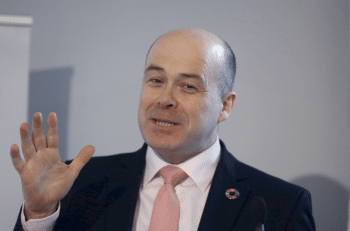
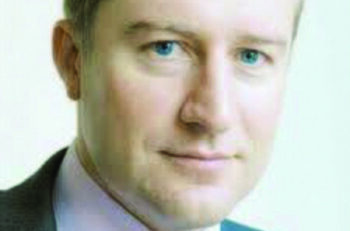
Denis Naughten (45) was born in Drum, County Roscommon, site of the Meehambee Dolmen, a portal tomb estimated to be 5,500 years old, and educated at St Aloysius College, Athlone which closed last year, University College Dublin and University College Cork, where he did a PhD in Food Microbiology (impressively focused on extracellular polysaccharide – complex carbohydrates – production in lactic acid bacteria). Just as DeV was said to be one of only three people in the world who understood Relativity, Naughtenites allege he is driven by the scientific approach. He is married to Mary Tiernan and they have four children. In the New Year of 2017, Naughten was nearly killed while cycling with his wife along a road between Roscommon town and Fuerty when struck by a car, sustaining back injuries. Naughten’s father, Liam, was a Fine Gael TD (1982- 1987) and was Cathaoirleach of Seanad Eireann from 1995 to late 1996. Young Denis succeeded him following his tragic early death aged 52 in a car crash, at a by-election to Seanad Éireann in 1997 , making him the youngest ever senator. He has the ever-important keen interest in all sports and has played Gaelic football with Clann na nGael GAA club and held both county and provincial athletic titles with Moore AC. He was elected for the Longford–Roscommon constituency in the 1997 general election, aged just 24, and re-elected in 2002 when he and Simon Coveney were initially touted as the ace young guns who might replace the jaded Michael Noonan – before Big and wily Phil Hogan moved in to clear the path for Enda Kenny – with preferment promised. Within his first few weeks in the Dáil, he duly became Fine Gael Spokesperson on Youth Affairs, School Transport and Adult Education. This appears to be his level. He was re-elected at the 2007 general election for the new constituency of Roscommon–South Leitrim. In June 2010, he unwisely supported Richard Bruton’s leadership challenge to Enda Kenny, after he had been promised the deputy leadership in a Bruton shadow cabinet. Following Kenny’s victory in a motion of confidence, Naughten was not re-appointed to the front bench and there was bad blood between him and Kenny, perhaps partly because Kenny and Liam Naughten had been close. In October 2010, he was appointed as party Deputy Spokesperson on Health. He was a member of the Governing Council of the Association of European Parliamentarians with Africa which aims to strengthen parliamentary democracy in Africa and keep Africa high on the political agenda in Europe. He prevailed again at the 2011 general election. He voted against the Government in a motion to reverse cuts at Roscommon Hospital and lost the party whip. This parochial issue was the making of him; defined him. His party and constituency colleague Frank Feighan voted with the Government on the controversial issue, despite intense pressure from angry locals. The Government won the vote. On 13 September 2013, he and six other expellees formed the Reform Alliance, described as a “loose alliance” rather than a political party or “loose cannons”. The now largely forgotten grouping included TDs Lucinda Creighton, Billy Timmins, Terence Flanagan, and Peter Mathews as well as Senators Paul Bradford and Fidelma Healy-Eames who lost the whip over an abortion vote. In the run-up to the 2016 General Election Naughten told the Connacht Tribune he would be willing to prop-up a minority Government after the general election – as long as it maintained and invested in Portiuncula Hospital Ballinasloe and Roscommon Hospital, and local health services. He seems to draw his political tempo from his service on Roscommon County Council and the Western Health Board from January 1997 to October 2003. Any more profound political philosophy or vision of the common good has never crossed his lips. Naughten is really a rural populist, the Big Man, with a veneer of scientificism. His website is propelled by slogans like ‘Putting People First” and promises to “Get More Jobs to Cross The Shannon” and “Ensure That Every Child Leaving Primary School Can Read and Write”. Naughten was re-elected in 2016 and the numbers catapulted him to a ministry. The ambitious and crafty Naughten emerged as Minister for Communications, Climate Action and Environment in Enda Kenny’s Fine Gael/Independent minority government after two months of negotiation following the 2016 general election. He styles himself an Independent and has long dumped both Lucinda Creighton’s Reform Alliance and Shane Ross’s Independent Alliance. A year into his second government, Enda Kenny was asked if he would accept Minister Naughten back into Fine Gael. He said that was a matter for Naughten, and that he was doing a good job as an Independent Minister. He said: “How am I getting on with Denis Naughten? Great”. With Enda Kenny gone his rehabilitation is complete. So… time to see if the quiet man with the scientific bent is any good – playing, as they say, senior hurling. COMMUNICATIONS He has little interest in the communications brief, as it is of little value to his constituency. He has been almost invisible as minister for data protection – for Google and Facebook. The underpowered Data Protection Commissioner serves under the aegis of his department from an unimpressive office in Portarlington. Ireland took Facebook’s word for it that very few of the 87 million people compromised by Cambridge Analytica were Irish. He has, however, pushed for wider availability for high-speed broadband. Partly because viability has been undermined by Ireland’s unique fetish for one-off housing, Eir (successor to Eircom) pulled out of the bidding for the National Broadband Plan. Naughten was notably unable to get Eir, which owns much of the national phone infrastructure, to bid for the least attractive – farthest flung – next tranche of business, after it had delivered the most lucrative tranche to 300,000 houses in denser communities. Naughten may have been so reluctant to accept the logic of densifiying rural communities, anathema to his electorate, that he was blinded to its economic downsides. HIS MOST INFAMOUS OUTING IN HIS MEDIA
See below : The Press Ombudsman has upheld part of a complaint that Village magazine breached the Code of Practice of the Press Council of Ireland. The complaint was made under Principle 1 (Truth and Accuracy) of the Code of Practice. Other parts of the complaint are not upheld. Among the issues that have delayed the restoration of power-sharing government in the North is the failure of the DUP and the British government to honour previously-made agreements to deal with what are known as legacy issues. These include a promise to establish some form of historic truth commission to investigate the role of the British state and its security forces in the killing of hundreds of people during the conflict. A documentary film, ‘No Stone Unturned’, examines the deaths of six Catholic men in the Heights bar in Loughinisland, County Down, in June 1994, just three months before the first IRA ceasefire in August 1994. The men were shot dead while watching the Republic of Ireland play Italy in the World Cup on 18 June, when two masked loyalists walked into the bar and one fired indiscriminately at the customers and staff. Those murders were the subject of a 2016 report by the Police Ombudsman of Northern Ireland which found, following an earlier whitewash by the same office, evidence of Royal Ulster Constabulary (RUC) collusion in the protection of Loyalist paramilitary informants, who may have carried out the murders. While he found no evidence that the police knew in advance about the murder plot, the Ombudsman was heavily critical of how the RUC Special Branch handled informers, and failed robustly to disrupt the activities of UVF paramilitaries operating in south Down and to share intelligence with detectives investigating this UVF gang. He claimed there was a “hear no evil, see no evil, speak no evil” approach. The 160-page report by Dr Michael Maguire also found police informants at the most senior levels within loyalist paramilitary organisations were involved in the importation of guns and ammunition. In the film, made by Oscar-winning director, Alex Gibney, three loyalists who were involved in the attack are identified, while it is claimed that the automatic rifle used was among a large consignment imported into the North with the knowledge of the RUC Special Branch and MI5 in the late 1980s. One of those named, Ronald Hawthorn, and his wife Hilary, were among those arrested following the massacre, but have never been charged, while another loyalist, Gorman McMullen, is named in the documentary as the getaway driver. A second attacker is also named and is believed to have left the North in the late 1990s and re-settled in England. The film claims that Hilary Hawthorn identified the gang members, including her husband, in two calls she made to an anonymous police phone line in the wake of the killings, and in an unsigned letter sent to a former SDLP councillor. Her voice was recognised by police officers with whom Hilary Hawthorn worked in an RUC station, while in the anonymous letter she also claimed to have been involved in the planning of the attack. Ronald Hawthorn was arrested and questioned in August 1994, just weeks after the atrocity, while his wife was detained a year later. Neither was ever charged in connection with the killings. The documentary explains that Ronald Hawthorn was only named as ‘Person A’ by the Police Ombudsman, Dr Michael Maguire, who did not disclose the names of the three suspects, in a detailed and shocking report published in 2016. Another confidential and unpublished report prepared by Office of the Police Ombudsman of Northern Ireland (PONI) identified the suspects by name. It was subsequently sent anonymously by post to journalist Barry McCaffrey, who has spent years researching the Loughlinisland killings and who helped to make ‘No Stone Unturned’. The PSNI is currently investigating the leaking of this confidential document to McCaffrey. The published PONI report by Dr Maguire sets out how the killings were carried out by the UVF which directed its members in Down and Antrim to organise attacks on nationalists following the killing of three of its members on the Shankill Road by the INLA in early June 1994. The Ombudsman concluded that there was collusion in the Loughinisland killings involving unnamed members of the RUC. He found that the VZ58 rifle used in the attack and subsequently used in a wide range of loyalist murders was part of a consignment imported from South Africa by police and MI5 informant, Brian Nelson, in late 1987 or early 1988. Maguire wrote: “My conclusion is that the initial investigation into the murders at Loughinisland was characterised in too many instances by incompetence, indifference and neglect. This despite the assertions by the police that no stone would be left unturned to find the killers. My review of the police investigation has revealed significant failures in relation to the handling of suspects, exhibits, forensic strategy, crime scene management, house to house enquiries and investigative maintenance. The failure to conduct early intelligence-led arrests was particularly significant and seriously undermined the investigation into those responsible for the murders”. During the attack, Maguire said, “one of the masked men crouched down, shouted ‘Fenian Bastards’ and opened fire indiscriminately with an automatic assault rifle. Both men then fled the scene in a waiting Triumph Acclaim car driven by an accomplice. The car was driven in the direction of Annacloy and found the next morning abandoned in a field on the Listooder Road between Crossgar and Ballynahinch. The car was destroyed while in possession of the police in 1995”. The Ombudsman recorded how the families of the victims complained at the time that the vehicle should have been retained for potential future examination, especially in light of advances in forensic science. They state that police “wilfully destroyed” this exhibit, which they viewed as “wholly unsatisfactory and unreasonable”. Dr Maguire said: “In addition, investigative opportunities were undermined by the way in which information relating to those involved in the
by Éilis Ryan
The myth that Irish people have a historically-rooted preference for home ownership is a long-standing cornerstone of Irish housing policy. The story goes that Irish people will always have an innate preference to own their homes, regardless of how attractive, secure and affordable renting is made. In the middle of the country’s worst housing crisis, this myth has, extraordinarily, justified yet another round of Council-housing sell-offs, with the 2016 Tenant Incremental Purchase Scheme. Tenants are given a discount of up to 60% in the market value of their home, if they choose to buy it from the Council. It then disappears from Council stock and, a generation later, is sold onto the private market. If there is limited evidence to support the myth that the Irish have an in-built preference for home ownership, what is clear is that government policy in the last half century has done everything in its power to grant preferential treatment to the purchase of homes. What is touted as an ‘innate preference’ for home ownership has in fact been carefully incentivised and manufactured through decades of developer-driven housing policy. Margaret Thatcher, Ireland and the ‘right to buy’ In 1980, British Prime Minister Margaret Thatcher passed legislation granting a legal right to all Council tenants in the UK to buy their homes. It was the culmination of her philosophy that the freedom to accumulate profit was the foundation of all human freedom. Speaking about the scheme in 1984, she said that “Spreading the ownership of property more widely is central to this Government’s philosophy, because where property is widely owned, freedom flourishes”. Any freedom gained by those who managed to buy their Council home was temporary at best. As with all public goods that are privatised, Council-built homes were transformed into commodities to be bought and sold for profit. Now, it’s estimated that 40% of ex-Council homes are owned and let by private landlords. The Tory Minister behind the scheme, Michael Heseltine, once said that the major victory of the “Right to Buy” scheme was “the transfer of so much capital wealth from the state to the people”. If by “the people” he meant “wealthy landlords” – then yes, he was probably right. Otherwise the darling of one-nation Toryism needs a rethink about his party’s victories. Astonishingly, successive Irish governments’ commitment to selling off social-housing stock pre-dated, and has arguably always been stronger than even, Maggie Thatcher’s. Provisions had been in place since the 1930s to enable tenants to buy their Council house in rural areas, and from 1966, with the introduction through the Housing Act of a nationwide ‘right to buy’, there was a surge in the numbers of publicly-built homes which were sold off. As in the UK, the temporary benefits of home ownership have not provided security for further generations. Over time our housing stock, particularly in sought-after areas closest to the city, has been commodified just like the in UK. House built by the Council in places like Marino and Cabra regularly sell for €400,000-€500,000. Working-class estates are under threat of becoming gentrified enclaves. Home ownership has never been affordable – so the State had to introduce schemes to make it so A critical point justifying subsidies to home ownership is that they are designed to somehow rectify temporary problems in the housing market. Lack of affordability is blamed on a temporary market malfunction (for example, lack of adequate supply), and temporary extraordinary measures are deened necessary to enable access to that market. In reality, however, these measures will be required forever – not just to rectify one-off market malfunctions. Michelle Norris has outlined how, in the 1960s, it was possible for a buyer to recoup up to a third of the purchase price of a house through various government subsidies. In the 1970s and 1980s, a hundred thousand Council-built houses were sold to tenants at knockdown rates, ostensibly as a way to make home ownership affordable. And as recently as 2004, the National Economic and Social Council was highlighting that:“The high entry costs of home ownership have conferred advantages on those whose families have housing equity and disadvantages on those who do not have access to ‘parental gifts”. In fact there has been no time when home ownership was ‘affordable’ in the sense of a majority of the country’s population being able to afford to purchase a home on the open market, unassisted by the government. Any ‘affordable housing’ initiatives delivered by this or future governments, will simply be the latest in a long cycle of state subsidies to the private market. Is it a good use of money for the State to subsidise home ownership? Fundamentally, what the debate about ‘right to buy’ and ‘affordable housing’ comes down to is whether it is a good use of public money to subsidise ‘home ownership’. As debates and inaction over the housing crisis rage on, a demand for public housing is being gradually subsumed into a broad and amorphous call for “social and affordable housing”. The notion is that some people will always want to buy their own home, and that they have a right to State support equal to that of those who rent from the State in secure, affordable publicly-owned housing. But what is being lost in this conflation of public housing and affordable housing, is that, unlike investment in public housing for rent, when the government subsidises ‘affordable home ownership’, the investment serves only one generation. The home can then be sold on to the chaotic, unjust and uncontrollable private housing market. “Affordable home ownership” – whether through land, or through ‘right to buy’ schemes selling off Council houses – keeps the property market bubbling. It suits the developers, solicitors and estate agents who benefit from increasing house prices that the state funnels money into pushing more and more workers into that market. But it does absolutely nothing to tackle the housing crisis. The real solution When considering how we invest public money to tackle the housing crisis, we need to look
The paperback edition of Andrew Lownie’s highly regarded Stalin’s Englishman is now on sale with updates which did not appear in the hardback version. It is a riveting biography of the notorious Eton- and Cambridge-educated British spy and traitor Guy Burgess, bristling with new information based on first-hand sources including hitherto unpublished letters and files. Significantly, a careful reading, between the lines, reveals a lot for the discerning Irish reader about a hidden and deeply murky aspect of the Troubles here. RECUPERATING IN IRELAND, BURGESS-STYLE Burgess was a frequent visitor to these shores. One of his trips landed him in the dock of the District Court. Lownie describes how Burgess had tumbled down two flights of stone steps after a drunken midnight wrestle with a friend called Fred Warner, as the pair was leaving the Romilly Night Club in London in early 1949. Burgess smashed his elbow, slightly cracked his skull and dislocated three ribs. Warner pushed him into a taxi, bleeding profusely, and took him back to his rooms from where he telephoned without avail, every doctor whom he knew by name or repute. He received no reply and he remained there all night, with Burgess groaning on the bed. In the early dawn, he found a doctor who took Burgess off to the Middlesex Hospital. Some rest and recuperation were advised and, after ten days in hospital in London, Burgess went with his mother, with whom he often holidayed, first to Wicklow and then for a few days at the Shelbourne hotel in Dublin. In Dublin Burgess met the writer Terence de Vere White. Lownie’s recalls how de Vere wrote how Burgess was “travelling with his mother, a quiet lady. He took the centre of the stage. He was dark and bright-eyed and was either an old-looking young man or a young-looking middle-aged man, I was not quite certain which . . . He was in the Foreign Office and was taking a rest in Ireland on account of an accident in the Reform Club [sic], where he had fallen and bashed his head on the stairs. As a result of this, he was under doctor’s orders to keep off alcohol and if he disobeyed the rule, the result was a complete blackout, lasting for more than a day. I noticed that he drank tomato juice, which seemed out of character”. ON TRIAL AT THE DISTRICT COURT IN DUBLIN True to his reputation, Burgess was actually drinking incessantly. He and de Vere White parted ways after an hour as Burgess was off to enjoy a play at the Abbey Theatre. Shortly afterwards, on 4 March, de Vere White was contacted by phone and asked if he would give evidence for Burgess in the Dublin District Court. Burgess, he learnt, had been charged with “driving a car while drunk, driving without reasonable consideration, and dangerous driving” two days before, on Grafton Street. “Confronted with the most positive medical evidence of a shaky walk and alcoholic breath, Burgess was invited by the Justice . . . to explain how he reconciled this with his story of complete teetotalism”. He responded “with a most affable air” suggesting his tomato juice might have been doctored and pointed at de Vere White who was forced to give an account of the evening. Burgess’s old friend from Eton, Dermot McGillycuddy, now a lawyer with an office on Kildare Street beside the Oireachtas, was brought in as his defence solicitor and managed to make a silk purse out of a sow’s ear. The case was dismissed, with the judge describing Burgess as “a man of brilliance who appeared overwrought and nervous…a man of cultivated tastes” – he had been returning from seeing a play at the Abbey Theatre when the accident took place. According to the doctor, a friend of McGillycuddy, who examined Burgess at the police station, “There was no smell of drink which witnesses could detect from his breath. He was smoking continuously, his speech was confused and when witnesses asked him to walk in a line, he was definitely unsteady and limp”. DRUGS FIT FOR A HORSE Burgess continued his excessive proto-rock star lifestyle while in Dublin. The tumble in London had left him with bad headaches and insomnia which he treated with Nembutal to put him to sleep and Benzedrine to wake him up. He managed to secure his supplies from a vet. The dosage was fit for a horse. A friend quoted by Lownie wrote later that, “Drugs, combined with alcohol made him more or less insensible for considerable periods in which, when he was not silent and morose, his speech was rambling and incoherent” to the extent he “seemed, hardly capable of taking in whatever it was one was saying to him”. A LOT TO LEARN ABOUT THE HIDDEN HISTORY OF THE TROUBLES Reading between the lines of Lownie’s book, there is a lot to be gleaned about the dangerous and seedy side of the Troubles. Burgess, of course, was an MI5 and MI6 officer who worked secretly for the Soviet Union as part of the infamous Cambridge Circle of traitors which included Sir Anthony Blunt, Kim Philby, Donald Maclean and John Cairncross. Village has described aspects of the Anglo-Irish paedophile network of which Blunt and Burgess were members on a number of occasions over the last two years. Burgess knew some of the more senior members of the Anglo-Irish Vice Ring. The ring had probably existed in one form or another for generations but was reorganised on a systematic basis after WWII with access to orphanages and care homes in NI for paedophiles. It survived until at least the mid-Troubles, if not long afterwards. The British Establishment is still engaged in an ongoing cover-up of its activities. Survivors are hopeful that at least some of its Irish branches will be put under the microscope by the London-based Inquiry into Child Sexual Abuse (IICSA). The wider ring included friends of Burgess such as his fellow traitor Sir Anthony Blunt; the poet Brian