Politics

Random entry RSS

  • Posted in:

    Did Thatcher sanction the Finucane murder? It is now up to PM Boris Johnson and his Home Secretary, Priti Patel, to order a full judicial inquiry into the murder of Patrick Finucane to establish whether or not Margaret Thatcher gave Sir Patrick Walker, Director-General of MI5, the green light to murder him.

    Update: this article was published in October 2019. One year later the British government has refused to carry out a judicial inquiry. One of the stated reasons is that the PSNI and Police Ombudsman are reviewing the case. However, no  review is about to take place. Patrick Finucane’s widow has responded by saying that “as long as there is breath” in her body she will continue to seek answers about her husband’s murder and that the decision by the British government was “quite a shock” and showed “startling arrogance at ignoring the highest court in the land”,  i.e. the UK Supreme Court which has ruled that an inquiry should take place. Mrs Finucane has also pointed out that Brandon Lewis, the Northern Ireland Secretary of State, did not go into any detail about why the decision to refuse the inquiry was made. It  “does seem rather bizarre” she added  “that he [Lewis] is insisting the police [will investigate]” as the PSNI later issued a statement saying there is nothing new to investigate. The Police Ombudsman has no funding for a review. In any event such a review would be pointless and it is a judicial inquiry that is required. Clearly, there are other reasons Lewis and his boss Boris Johnson are blocking an inquiry. Village’s 2019 investigation addressed some of the issues the Tories, MI5 and other elements of the British Establishment are trying to suppress. That article starts here: Introduction: Margaret Thatcher and the cold-blooded murder of an Irish lawyer On 12 February, 1989, the UDA assassinated Patrick Finucane, a highly-regarded Belfast solicitor, at his North Belfast home. Finucane, who was 38-years-old, was shot 14 times by two masked UDA gunmen who sledgehammered their way into his house. His wife Geraldine was also injured during the attack which took place while the couple was enjoying a meal with their young family. In 2019 the Supreme Court in London ruled that the British Government had failed to investigate the murder properly. The only tenable reason for this is because the murder was organised by MI5, the intelligence service attached to the Home Office. A retired Canadian judge, Peter Cory, investigated the murder on behalf of the British State. During his inquiry MI5 officers broke into his office and stole some of the evidence he had accumulated. Cory also told Geraldine Finucane that he had seen a document relevant to her husband’s case which was marked  “for Cabinet eyes only”. Mrs Finucane knows no more. This raises the distinct possibility that her husband’s case was discussed in Whitehall in sinister circumstances before the murder. These revelations formed part of BBC NI’s compelling seven part Spotlight  series,  ‘The Secret History of the Troubles’. They have been ignored by the mainstream British media. Put simply, the finger of blame is now pointing at Margaret Thatcher. It now looks like she gave MI5 the green light to murder a perfectly respectable, law abiding lawyer. If Thatcher  and her circle did not order the murder, why are the Tory top brass so terrified of an inquiry? MI5 was led by Sir Patrick Walker at the time the assassination was planned and executed. If MI5 was involved, it is inconceivable he did not call  the shots – literally. When David Cameron was in 10 Downing Street he told the Finucane family that he could not order a public inquiry into the scandal. When Finucane’s brother Martin asked him why, he turned to Mrs Finucane and said: “Look, the last administration couldn’t deliver an inquiry in your husband’s case and neither can we”. According to Cameron this was because “there are people all around this place, [10 Downing Street], who won’t let it happen”. As he was saying this, he raised a finger and made a circular motion in the air. Theresa May, who was Cameron’s Home Secretary between 2010 and 2016, did not order a proper inquiry either when she took over at 10 Downing Street. The opportunity and duty to do the right thing and call one has passed to Theresa May’s successor, Boris Johnson, and his Home Secretary, Priti Patel. Yet, will they prove every bit as disdainful and corrupt as Blair, Cameron and May and continue the cover-up? Time is fast running out to hear what potentially key living  witnesses have to offer about the Finucane case. The list includes  Thatcher’s then Home Secretary, Douglas Hurd. Born in March 1930, he published a 524 page autobiography in 2003.  Unfortunately, there is no entry under the word “Finucane” in its index. Village  offers him the freedom of this website to inform our readers about what he know about the case, most particularly anything about “cabinet eyes only” documents. The evidence that continues to accumulate points to the probability that Finucane, a skilful lawyer, was targeted by the British State because he had mastered the intricacies of the Diplock Court system in NI and was representing his clients to the best of his very considerable abilities. A lot of Provos were walking free from court. In the mind of Thatcher and others in London, he had to have been a Provo and his death warrant was approved. In these circumstances, the task of assassinating him was passed to Walker and his gang of cutthroats at MI5. However, Finucane was not a Provo. On the contrary, he represented both Republicans and Loyalists. Who ever heard of a Provo securing the freedom of the Loyalist enemy? Moreover, he was married to a Protestant. Finucane was perfectly innocent of any involvement with the IRA although he was vilified as a member after his death. Insofar as the UDA was concerned, the kill-order was issued by Tommy ‘Tucker’ Lyttle, the UDA’s ‘brigadier’ or commander in West Belfast. Ian Hurst, who served with the then top secret Force Reconnaissance Unit (FRU) of the British Army, has stated “with cast iron certainty” that Lyttle was a British agent who was “handled” by the RUC’s Special Branch (RUCSB) using the codename “Rodney Stewart”. Lyttle himself

    Loading

    Read more

  • Posted in:

    Maurice The Mole? The Provisional IRA knew Sir Maurice Oldfield, Chief of MI6, was a homosexual. Did the Soviets know too?

    Forty years ago this month Margaret Thatcher sent Sir Maurice Oldfield, the former Chief of MI6, to Belfast to co-ordinate the activities of the various branches of British Intelligence in Ireland. Within a few weeks MI5 was reporting to Downing Street that he was a homosexual and an inquiry was launched to see if he had been blackmailed by the Soviets or any of Britain’s other enemies. He was soon given a clean bill of health. Kieran Conway, the former Provisional IRA Director of Intelligence in the 1970s, has confirmed to Village   that the Provos knew Oldfield was gay. What, if anything, did the Soviet intelligence apparatus, the KGB, know about Oldfield’s homosexuality? More significantly, if the KGB found out, what did they do with the information? The answer is nothing despite the fact it could have destroyed him.  Such inaction makes no sense as Oldfield was reputed to have been a highly effective opponent of the KGB. The notorious MI6 traitor Kim Philby described him as an officer of “high quality” and “formidable” in his memoirs.  In 2017 the Hart Report into child sex abuse published details of an MI6 document which revealed a “small collection of papers in file three which relate to the relationship [Oldfield] had with the Head of the Kincora Boys’ Home (KBH) in Belfast”. The “Head” of Kincora was “Warden” Joseph Mains who abused teenage boys at Kincora and elsewhere. Joseph Mains, according to MI6 records he had a “relationship” and  a “friendship” with Oldfield. PART 1: OLDFIELD AS A SECURITY RISK A DANGEROUS ATTRACTION TO YOUNG MALES Oldfield was in fact attracted to young males. The KGB could have ascertained this through routine surveillance or from its spies inside MI6 such as Kim Philby and George Blake who would have been on the lookout for blackmail material on their colleagues. There is, of course, a world of difference between being a homosexual and being attracted to underage males. However, back in the unenlightened 1970s and 1980s, few in politics would have  acknowledged this important distinction.  Incredible as it now seems, the mainstream print media routinely referred to the Kincora scandal as a “homosexual” one when it was nothing of the sort. In the dark days of the 1970s and 1980s those who ran British Intelligence definitely viewed a homosexual in the ranks as a security risk. Hence, when Margaret Thatcher was told about Oldfield’s sexuality, his security clearance was withdrawn while an inquiry was carried out to see if he had been compromised by the Soviets. It determined that he hadn’t. However, inquiries into the loyalty of Kim Philby, another senior MI6 officer,  had failed to expose evidence of his true allegiance to the Soviet Union. Furthermore, MI5 and MI6 had let at least Anthony Blunt, Guy Burgess, Donald MacClean, John Cairncross, George Blake – all Soviet agents – run amok inside Britain’s intelligence community for decades. HER MAJESTY’S SPYMASTER  Who was Maurice Oldfield and what was he capable of? When ‘The Troubles’ erupted, Oldfield was Deputy Chief of MI6. He assumed control of Irish affairs because his Chief, Sir John Rennie, did not share the same experience as he in the dark arts of the secret world. Rennie, who had been a surprise appointment as Chief of MI6, had a diplomatic and propaganda background whereas Oldfield had participated in deception campaigns during WW2; fought terrorism in Palestine after it; monitored the flow of weapons and money to the communist guerrillas fighting the British in Malaya in the 1950s. And, if all this wasn’t enough to square up to the IRA, he had a good idea of what it took to run a paramilitary campaign due to his knowledge of MI6’s guerrilla campaign against Albania, something that happened in the 1950s during his stint as deputy chief of MI6’s counter espionage directorate, R5. The Albanian campaign was a disaster. Most observers believe it was betrayed from the inside. Oldfield was a tubby little man who waddled when he walked, often dressed badly and was allegedly afflicted with occasional psoriasis. He has become more famous than most of his contemporaries, probably because Alec Guinness drew on his bespectacled appearance for his celebrated portrayal of George Smiley for the BBC’s production of John Le Carre’s Tinker Tailor Soldier Spy. The glamour of the association with Le Carrie has eclipsed the true nature of Oldfield’s character When Rennie retired prematurely in 1973 after a drug smuggling scandal in Hong Kong involving his son, Oldfield finally secured the top spot he had coveted for so long. Once in the driving seat, he steered MI6 until his retirement in early 1978 under an appropriately misleading title, ‘Head of the Foreign and Commonwealth Office, Research Department’. Under Oldfield, MI6 HQ continued to be what it had always been: a haven for criminals and the sort of place where a visitor would have been well advised to wipe his or her shoes on the way out of the building. Oldfield’s retirement as MI6 Chief was not to prove the death of his career: he re-emerged from his crypt to become Ulster Security Co-ordinator at the behest of Margaret Thatcher in 1979. By then too many intelligence cooks had congregated in NI and were spoiling the spy broth. Oldfield was asked to knock heads and streamline their work. While he was in Northern Ireland MI5 discovered he was gay. An MI5 report submitted to Cabinet Secretary, Sir Robert Armstrong, on 31 March 1980 revealed that on 28 March Oldfield had after “some preliminaries” admitted he “had first been introduced to homosexuality at university and he admitted having engaged in homosexual practices, intermittently, up till the time of his acceptance of his Northern Ireland appointment. His relationships were, for the most part, with restaurant waiters and the like: he had none, he said, with (MI6) staff or agents”. In other words, Oldfield admitted that he had engaged in homosexual activity throughout his career as an MI6 officer with random individuals. A copy of

    Loading

    Read more

  • Posted in:

    Was Thomas Passmore, paedophile, politician and County Grand Master of the Belfast Loyal Orange Lodge, an MI5 agent?

    On 16 September last Paul Graham told RTE’s ‘Liveline’ that he had been sexually abused by a senior figure in the Orange Order. Although not named, the abuser was Thomas Passmore, the County Grand Master of Belfast Loyal Orange Lodge.  That Passmore was a paedophile will not come as news to the Northern Ireland Office, MI5 and MI6. In 1973 he was named in a press briefing prepared by the British Army at Lisburn, Northern Ireland. The briefing concerned Tara, a Loyalist paramilitary organisation led by William McGrath, the notorious child rapist and Housefather at Kincora Boys’ Home. McGrath, who acted as an agent for MI5 and MI6, was convicted for child rape in 1981. To its credit, a number of senior military figures in the British Army tried to put an end to the abuse of children at Kincora. Foremost among them was Captain Colin Wallace. He and his military colleagues were thwarted by the NIO, MI5 and MI6, especially by a senior MI5 officer called Ian Cameron. Cameron was once a runner for the post of Director General of MI5. Those organisations and the PSNI persist to this day in covering up the full extent of the abuse at Kincora and elsewhere. The 1973 Tara Press Briefing (’73 TPB) described how ‘other people closely associated with McGrath and aware of his activities are, Thomas PASSMORE, Rev PAISLEY, Rev Martin SMYTH, James MOLYNEAUX and Sir Knox CUNNINGHAM QC MP’. In July 2018 Village published an article entitled ‘Kincora’s Smoking Guns: The Documents With Hugh Mooney’s Handwriting On Them’ which included a description of ’73 TPB. The ‘Kincora’s Smoking Guns’ article also described a number of other documents which demonstrated that the British Government knew about the sexual abuse of children at Kincora Boys’ Home long before the scandal was exposed by The Irish Independent in 1980. In addition, it demonstrated how a number of journalists Wallace had briefed remembered the Tara briefing. If that wasn’t enough, a number of Wallace’s colleagues at British Army HQ, Lisburn, also confirmed they knew about McGrath. Regrettably, Judge Hart who conducted a lighweight inquiry into Kincora was unable to comprehend the significance of any of this before he published his lamentable mistake-riddled report in 2017. Paul Graham’s RTE interview can be heard at https://www.rte.ie/radio/radioplayer/html5/#/radio1/21620062 Passmore was not named during the RTE interview but is the Orange Order figure mentioned briefly (at 13 minutes 30 seconds). The fact that Passmore abused Paul Graham would explain why he did nothing to halt the rape of children perpetrated by his friend and brother Orangeman William McGrath when he was informed about it. It is extremely unlikely that Paul Graham was Passmore’s only victim. Richard Kerr, who was a resident at Kincora, has long since described how he too was abused by Orangemen. The reference to Passmore in ’73 TPB was not highlighted in the ‘Kincora Smoking Guns’ article as its focus was on other aspects of the Kincora scandal. However, a copy of the 1973 document was reproduced in full in the printed edition of Village. WAS THOMAS PASSMORE AN MI5 AGENT? Thomas Passmore JP, was a senior Loyalist politician and Orangeman who operated at the highest levels of Unionist politics in the 1970s and 1980s. He became County Grand Master of Belfast Loyal Orange Lodge in 1973. He was unmarried and lived in Townsend Street, Belfast. He was not only an associate of McGrath but purchased the printing press which McGrath’s paramilitary group Tara used for its publicity. Passmore published an evangelical magazine with it. Like McGrath, Passmore believed that the Protestants of Ireland were descendants of one of the lost tribes of Israel. He was briefly a member of the Woodvale Defence Association in 1970s. It was set up by Alan Moon who was soon replaced by Charles Harding Smith who later became Chairman of the UDA. Passmore later became Chairman of the Woodvale Unionist Association. It supported the Ulster Workers Council (UWC) strike that brought down the 1974 power-sharing Government of 1974. Roy Garland was a member of Tara but walked out of it in 1971 when he discovered that McGrath was abusing boys. He immediately began trying to put a stop to it by telling the Orange Order of which McGrath was a senior member. Passmore was one of those who blocked the taking of any action against McGrath. He may have done this for any one of three reasons: first, because he wanted to protect a fellow child abuser; second, because he was being blackmailed by MI5 and MI6 for whom McGrath was an agent; third, because by 1973 he had become an MI5/6 agent. Perhaps it was a combination of all of the foregoing. Roy Garland persisted in his efforts to put an end to McGrath’s abuses but  met brick walls everywhere he turned. In 1976, the IRA killed Passmore’s father in an attack which he claimed was aimed at him. When Merlyn Rees was NI Secretary, MI5 smeared him and other Labour politicians as part of what they called Operation Clockwork Orange. One of the smears was that he was easy on Republican paramilitaries, especially his release of internees. Passmore reflected these views perfectly. On 3 December 1975 The Belfast Telegraph reported that ‘Mr. Thomas Passmore, said the fact that an ex-detainee had been killed while working with a bomb exposed the foolishness of Mr. Rees’ security policies…’ Passmore opposed the short-lived and unsuccessful 1977  United Unionist Action Council (UUAC) strike. It was led by Ian Paisley of the DUP and Ernie Baird, then leader of the United Ulster Unionist Movement (UUUM). The strike was disrupted by the release of an anonymous document which bears all the hallmarks of an MI5 dirty trick. It portrayed some of the UUAC leaders as homosexuals, something that was deemed reprehensible in Loyalist circles at that time. On 23 April, 1977,  Passmore launched a verbal attack on the strike which was due to commence in early May. One of his allegations was that a member of the UUAC had been

    Loading

    Read more

  • Posted in:

    British Labour Party essays suggest move from austerity, financialisation and neoliberalism to radical democratic ownership of the means of production

    WHAT HAVE the Romans ever done for us? There’s a clear echo of that question in the essay collection of UK Labour-leaning economists edited by Labour’s deputy leader John McDonnell and published last year under the title ‘Economics for the Many’. For them the question is now “What has capital ever done for us?”. The book features contributions from the participants in McDonnell’s New Economics conferences, including Simon Wren Lewis, Professor Costas Lapavitsas, Professor Nick Srnicek, Prem Sikka, Ann Pettifor, according to McDonnell: “just one small part of the ferment of ideas . . . which has flourished since the crash and the economic and social decay of neoliberalism”. This book is the latest in a line of research papers starting with the 2017 Labour Party Manifesto ‘For the many not the few’, and ending with the recently published ‘Land for the Many’ co-authored by, among others, George Monbiot. Unfortunately, Monbiot himself got the ‘usual suspect’ treatment after the publication. As he wrote himself in the Guardian: “It proposed a set of policies that would be of immense benefit to the great majority of Britain’s people: ensuring that everyone has a good affordable home; improving public amenities; shifting tax from the ordinary people to the immensely rich; protecting the living world and enhancing public control over the decisions that affect our lives”. (What’s not to like?) He wrote on: “the result has been four extraordinary attacks in the Mail, Express, Sun, Times and Telegraph… Some of these reports peddle flat out falsehoods”. The Mail on Sunday reported that “we will soar to become one of the world’s few Marxist-Leninist states”. And the capital gains tax on people’s main homes which prompted the criticism? Monbiot writes, “We made no such recommendation, in fact specifically rejected it. He commented “you couldn’t make it up. But they did”. The argument about mediation of the political narrative by edict from press oligarchs is for another day. But it works. I’ll lay odds not a single Irish politician has googled the report. Or, for that matter, the volume of essays with which this article is concerned. N.B: the UK’s problems are mirrored here. McDonnell’s team of authors seeks to dam the trickle down of credit to the “precariat” and create a social or pluralist capitalism, perhaps even a common fund, sovereign to the people, based on a revitalisation of the old architecture of created wealth as a common good. Rubbish? Check out China! The context The neoclassical Keynesian synthesis allows for a deficit spending stimulus to cushion temporary frictions but, ten years after the crash, lingering unemployment must be regarded as a longer-term structural problem. The current ‘solution’ is the fragmentation of the jobs market with a lot of casualisation, temping, and on-call zero-hours labour. The UK has the richest single area in Europe – central London – but also nine of the top ten most deprived regions in Northern Europe. The precariat are being habituated to a life of unstable insecure labour, relying almost entirely on money wages or earnings. “In short, the precariat suffers from chronic economic uncertainty” even with the “cynically named” universal credit benefits system. They note that “The UK has a historically unprecedented mortgage debt overhang”. Banks create money when issuing mortgages and are the winners in what is a pseudo savings market. “Many households use debt to participate in economic life using debt to consume and, like all overleveraged investors, are vulnerable to income shocks”. “The power of finance is mediated through cultural conversations that make finance the legitimate means through which individuals access and participate in the economy”. “The Office for Budget Responsibility predicates its growth forecasts on ever rising household debt-to-income levels”. Undemocratic economics has fed into the rise of the post-truth world, as self-serving elites exploit people’s lack of understanding of the subject with narratives which contort self-serving politics into a story that falsely claims to benefit the individual. Reviewing a sixteen-essay volume in a few lines does it an injustice. Of course you want to know does it propose a re-nationalisation, don’t you? And the deficit? And where’s the tax burden going to fall? It’s clear: “Labour must end its love affair with the centralised state”. And McDonnell himself says that “the old Morrisonian model too often meant creating distant bureaucratic hierarchies that could seem as out of touch with workers and the public as any private-sector monolith. Counterbalancingly he also notes that the privatisation racket of private finance initiative contracts, ‘Public Private Partnerships’, should end. Instead regionalisation and local democratic governance will take up the reins. Can I offer an insight? Human nature is no longer geared to sharing the heavy lifting. The closest analogy I can think of is the structure of support for sport. Locals will cheer the local team, but someone has to manage the teams (without democratic accountability). We don’t want managers who are afraid to move without professional suits signing off on the idea. The question is: must there not be an incentive structure to get results? Gordon Brown “made a key mistake by suggesting that policy could help the recovery and tackle the deficit at the same time”. McDonnell now rejects the austerity narrative which has caused a general crisis of trust in our economic institutions. Instead, his proposed ‘fiscal credibility rule’ has a deficit target, but if interest rates hit their zero lower bound (similar to Keynes “liquidity trap”) the goal of fiscal policy changes from meeting a deficit target to stimulating the economy. And as for tax, for me the issue should not so much be about taxing the wealthy as such, but about using taxation to curb financialisation (‘the making of money from money’). Taxing the rentiers is taxing those who asset strip the earning capacity of the productive sector. One writer notes ruefully that “by the time any process for wealth capture is in place, the wealth has already been extracted into the ether of the global economy”. But another confirms that “a

    Loading

    Read more

  • Posted in:

    Paris trial of Ian Bailey rubber-stamped evidence dismissed by Ireland’s DPP

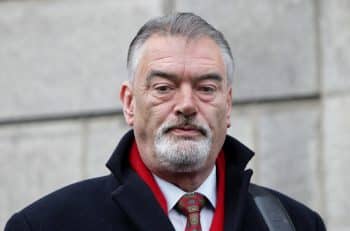
    IN A development that shocked very few people Ian Bailey was found guilty of the murder of Sophie Toscan du Plantier in a French court in May. After a four-day trial and deliberating for five hours a panel of three judges sentenced Bailey to 25 years in prison. He was also ordered to pay a total of 1225,000 in compensation, 1110,000 of which is to go to Toscan du Plantier’s family. Bailey, who has always denied his involvement in the murder of the French woman, was tried in absentia. A peculiar aspect of French law allows the authorities there to prosecute people suspected of crimes against French citizens that were carried out abroad. The French had therefore tried twice before to have him extradited to stand trial. In both cases the Irish courts ruled against his extradition, with the High Court ruling in 2017 that the demand for extradition was an “abuse of process”. Nonetheless, the French went ahead and held a trial with Bailey’s absence noted. But Bailey was not the only person absent from the trial. Irish witnesses received a letter asking them to appear at the trial only two weeks before it began. In some cases they were given as little as one week’s notice. As a result, only three witnesses gave evidence, one of whom, Helan Callanan, had a statement read out on her behalf. Callanan, one-time editor of the Sunday Tribune, wrote in her statement that Bailey had confessed to her that he murdered Toscan du Plantier in order to “to resurrect my career”. And it includes the apparent conversation between Bailey and Fuller. The DPP noted that Fuller’s statement came at a time when the gardaí’s actions were “bound to create a climate in which witnesses became suggestible”. At the time he was freelancing for, and wrote about the case for, the paper. Of the two other witnesses, Amanda Reed gave evidence on behalf of her son Malachi. As a 14-year-old he had received a lift home from Bailey on 4 February 1997, less than two months after Toscan du Plantier’s death. He claimed that Bailey said to him “I bashed her f**king brains in”. His mother related this to the French court. Back on the evening of 4 February 1997 Malachi arrived home, with no apparent concerns, having being dropped off by Bailey. The next day gardaí visited Malachi in school. There they questioned him about his journey with the journalist. And it was after he arrived home from school in an “agitated” state that he informed his mother what Bailey allegedly told him. Bill Fuller, the third witness, told the court that Bailey had confessed to him. Fuller stated that Bailey, speaking in the second person, said “It’s you who killed her”. Bailey denies that this conversation ever took place. But these evidential issues with the trial pale in comparison to the French prosecution’s dismissal of the Irish Director of Public Prosecutions (DPP) and its opinion of the murder. The DPP file about the case was leaked a number of years ago and makes for astounding reading. It contains a litany of concerns with how the murder was investigated. These embrace wide-ranging issues such as witnesses who lacked both credibility and consistency being taken at face value and members of the gardaí stonewalling the DPP itself. It’s pointed out at the start of the report that there is “No forensic evidence linking Ian Bailey to the scene”. He had volunteered blood, hair, and fingerprint samples to the gardaí. This was in spite of the fact that, as the DPP highlights, in his former profession as a crime reporter in the UK Bailey “was aware of the nature of forensic evidence” and that it could comprehensively incriminate the guilty. The trial in France introduced no new forensic evidence to link him to the scene and the murder. The evidence of Marie Farrell, the witness who initially claimed she saw Bailey walking late from the direction of Toscan du Plantier’s home on the night of her murder, was described by the DPP as being unreliable. Yet these initial statements by Farrell, which she retracted years later, were accepted by the French. As for Bailey’s apparent admissions of guilt, the DPP found that they “appear to be sarcastic responses to questions”. This includes his comments to Callanan about trying to “resurrect” his career. The DPP report also discusses the statement made by Malachi Reed. It noted that it was “abundantly clear that Malachi Reed was not upset by Ian Bailey” after the latter had dropped him home. In fact, the DPP pointed out that it was after a conversation with a garda the following day that “he became upset and turned a conversation which had not apparently up until then alarmed him into something sinister”. And then there’s the Garda’s arrest of Bailey’s partner, Jules Thomas. She was arrested for the Toscan du Plantier murder on 10 February 1997. But the arrest appeared to the DPP to be illegal. This was because it discovered she was asked no questions about her involvement in the murder. The DPP wrote that her “questioning indicates that she was arrested to obtain information which could be used against Bailey”. And given this, “her arrest and detention was unlawful”. The French ignoring of the report means that none of this was taken into consideration. It means that a trial was held using evidence that was roundly dismissed by the DPP; evidence which resulted in the DPP clearly stating in unequivocal terms that “A prosecution against Bailey is not warranted by the evidence”. Frank Buttimer, Bailey’s solicitor, is explicit in his condemnation of the French trial, or “so-called trial” as he refers to it. Although not present in France, based on the information he’s seen he says what took place there “was not in any way a trial that we in a common law jurisdiction would understand a trial to be”. He said that what actually happened was a “rubber-stamping exercise”

    Loading

    Read more

  • Posted in:

    Village editorial, September: Gemma O’Doherty 2019

    “Racist: A person who shows or feels discrimination or prejudice against people of other races, or who believes that a particular race is superior to another” – Oxford English Dictionary GEMMA O’DOHERTY has become the it girl for Irish extremism: racism, anti-Islamism, homophobia and transphobia. Village published an article in our last edition, by the editor, establishing that there was little in common between O’Doherty and the ethos of this magazine. Since then, five months ago, she has veered further rightwards and, though ideally she should be starved of publicity, it is timely to address these further changes in a comprehensive piece, for the record, albeit in a small magazine. As is well known, O’Doherty (51) worked as a teacher and then spent twenty years as a journalist for the Irish Independent, rising to become an uncontroversial Chief Features Writer and writing some investigative pieces including most famously about the death of Fr Niall Molloy. She was fired in 2015 as a “rogue reporter” after visiting the Garda Commissioner’s house without editorial permission, to ask him about penalty points. She then took a successful Unfair Dismissals Case. Though most of the Irish media ignored it, it was embarrassing for the Irish Independent as its editor had himself had penalty points cancelled in dubious circumstances. In 2016 she independently produced a documentary about the death of toddler Mary Boyle. In late 2017 and 2018 she wrote several articles for Village magazine – on Madeleine McCann; on Sophie Toscan du Plantier; on sex abuse in Donegal and in a Dublin rugby school; and she wrote about her experience before the Charleton Tribunal, with which she was not impressed. Her cover story on rugby trainer John McClean was excellent and was helpful recently in bringing about his trial on indictment for allegedly abusing boys in Terenure College. She never ventilated any sort of political view in these articles. When last year she explicitly declared her intention to run for the Presidency on an anti-corruption ticket expressing her lack of faith in Irish media, Village felt the media should give her a  hearing. There were mutterings that she was quietly anti- abortion, anti-vaccination but there was no pattern of this in her journalism and she denied it, particularly in interviews with online news service, Broadsheet.ie, which supported her Presidency bid. Beyond this there was never any suspicion of intolerance in private conversations with writers from this magazine. There was no sign of it in an interview she gave to progressive Podcast, Echochambers, in March 2018; in a Kitty Holland article in the Irish Times in 2016: ‘Mary Boyle’s disappearance and the 40-year fob-off’; or when on 16 September 2018 Roy Greenslade wrote in the Guardian: “She has built a reputation as a freelance investigative reporter…Now, in an attempt to raise the profile of her concerns about police practices and what she perceives as a lack of press freedom within Ireland, she is attempting to stand for the presidency”. There was none in a piece by a Washington-based history professor in the Journal of 26 September 2018. And none in a TEDTalk she herself gave in August 2018. As late as during her Presidential bid she was writing to Panti Bliss stating: “I have throughout my career supported the rights of minorities in Ireland including transgender communities, gay families, Travellers, Muslims and victims of state injustice I admire your talent hugely and found your speech about our repressive society inspiring”. This admiration would not last. An editorial in the October 2018 Village did not endorse O’Doherty for the Presidential election the next month. She appeared to be standing on an attractive anti-corruption and media-sceptical agenda with no right-wing component but Village editorialised that she was “damned for an undue emphasis on a number of conspiracy theories” and endorsed Michael D Higgins. She did not do well in the Presidential election – she only received one of the four requisite nominations – and was predictably snookered by the media she loathes for stating, without evidence, that journalist Veronica Guerin had been killed by “the State”. Her politics and her platform were never tested. That was a pity, from all perspectives. She just might have been taken down earlier and more directly during the campaign. It was after that election that her politics appears to have turned. Perhaps this was a reaction to the success of the nastiness of Peter Casey’s campaign which placed him second. She first toured the country with other anti-corruption activists giving talks, and earlier this year established Anti-Corruption Ireland (ACI) with online members – a “political movement” which promotes “truth, justice and integrity in public office” and which intends to field candidates at all elections though it has not yet registered as a political party. In April 2019, O’Doherty ran in the European elections as an independent, receiving 1.85% of first preferences in Dublin, finishing 12th out of 19 candidates – a respectable position in itself but not what she would have expected given her high profile and zealous support. She got in to bed with John Waters, moaning about societal change. In Irish terms this amounted to a 180-degree ideological rotation. For example while O’Doherty had been championed by the libertarian-leaning readership of online news site, Broadsheet.ie, Waters had been vilified. She also developed an affiliation with someone called Amazing Polly, a Canadian version of herself who often appears on her videos, she has a symbiotic relationship with Justin Barrett of the National Party, ‘citizen journalist’ ‘GrandTorino/Rowan Croft’ and Jim Corr of…the Corrs, she often retweets Katie Hopkins, and latterly Donald Trump. But it is her agenda that appals. She conjures a racial apocalypse on Twitter:  On July 13 she Tweeted a video of what she said was “Illegal African migrants storm[ing] the#Pantheon in Paris. Welcome to open borders Europe. It will end in war”. She cites a counter-factual – open borders – and infers something as frightening as a future war. How  is this intended to make citizens feel about immigrants? In May she tweeted

    Loading

    Read more

  • Posted in:

    Blackmailed? Paisley became a conspirator in the the Kincora cover-up. Had he wanted to expose it - and there is no reason to suppose that he did - his hands were tied behind his back because he was almost certainly being blackmailed by the Housefather at Kincora Boys' Home, William McGrath who knew Paisley had been involved in bombings in the late 1960s.

    This story was updated on 6 September 2019. The original content is reproduced underneath this update. UPDATE The imminent revelation by BBC NI’s Spotlight programme that Ian Paisley financed the infamous UVF Silent Valley bombing of 1969 will come as no surprise to Village  readers. While the BBC disclosure provides another piece of the jigsaw and is of enormous historical value, it doesn’t begin to scratch the surface of Paisley’s deeply disturbing partnership with the Ulster Volunteer Force (UVF) and – equally important – the Ulster Protestant Volunteers (UPV). In December 2017 Village published an article entitled “Blackmailed” which outlined Paisley’s links to the UVF/UPV bomb campaign of 1969 and showed how, as a result of it, he was compromised in his dealing with another of the conspirators, William McGrath, the notorious and brutal child rapist who was “Housefather” at Kincora Boys’ home in the 1970s. Paisley was nearly ten years younger than McGrath. He first met the sexually insatiable and lecherous pervert McGrath when he – Paisley – was 22 or 23 in 1949 through his involvement in the Unionist Association in the Shore Road area of Belfast. Paisley had moved into the locality to study at a bible college. McGrath perceived the Catholic Church as the instrument of the Antichrist and was determined to expunge it from the four corners of island of Ireland so that the Protestant community – which he believed was descended from the Tribe of Dan of Caanan, one of the Lost Tribes of Israel – could prevail. He perceived himself as a soldier in what he called the ‘battles of the Lord’. His self-anointed duty was to prevent the Pope ‘enslaving the people of God’, not just in NI but throughout Britain. Paisley came to share these bizarre views and took a step closer to his involvement with McGrath and others in the infamous 1969 bomb campaign. It is an indisputable fact that McGrath, Paisley and others such as John McKeague (another paedophile who was involved in the Kincora scandal) and Gusty Spence of the UVF instigated the violence that lit the sectarian firestorm that became the Troubles. The fact that Paisley financed the Silent Valley bombing demonstrates just how central he was to the entire affair. Paisley used to visit McGrath at Kincora long after 1973 when he had been told by Valerie Shaw that McGrath was a paedophile. One of the former residents at Kincora, James Miller, who was at Kincora between 1976 and 1978, told the Hart Inquiry on 8 June, 2016, about these visits. Miller thought it “just seemed strange that he was so friendly with Mr McGrath, you know”. [Day 210 page 75.] Yet, after the eruption of the Kincora scandal in 1980, Paisley would pretend to have difficulty even remembering who McGrath was. Readers interested in learning more about Paisley’s links to the UVF and UPV can read “Blackmailed” (see below) which first appeared in December 2017. Further details about Paisley’s support for McGrath after he was arrested by the RUC for the rape of children at Kincora can be read by visiting ‘Kincora Survivor‘ also on this website. It shows how Paisley bullied a former Kincora resident lest he might give evidence at McGrath’s trial about “Englishmen” who had abused Kincora boys. See: https://villagemagazine.ie/index.php/2017/11/kincora-survivor/ ‎ A question for historians now is to establish what role William McGrath played in {i} the formation of Ian Paisley’s bigoted, violent and hate-filled religious and political beliefs; {ii} what was the true nature of the Paisley-McGrath personal relationship; {iii} to what extent did Paisley wield his power and influence to cover-up McGrath’s brutal rape of children at Kincora and elsewhere; {iv} did McGrath implicitly or explicitly blackmail Paisley over the latter’s involvement in the UVF/UPV bomb campaign of 1969 {v} since McGrath worked for MI5 and MI6, what did those intelligence services know about Paisley’s financing of the UVF and why was neither man arrested? The source of the BBC’s forthcoming revelation about Paisley is David Hancock, a former British army officer. Hancock served as a major in NI from 1968 to 1970. He told the BBC that an RUC District Inspector in Kilkeel, Co Down, advised him that Paisley had supplied money for the bombings. Hancock is to be applauded for bringing this scandal to light. But why did the RUC not act on the information, then or later? Were MI5, MI6 and RUC Special Branch (who were all involved in running the Kincora operation ) afraid that if they acted on this information, McGrath would be exposed? McGrath, of course, was convicted in 1981. So why did no one at the Cabinet Office, NIO, MI5, MI6  or RUC – then led by Sir John Hermon –  insist that the police act on the information after his conviction? Was it because McGrath had kept his mouth shut about their collective involvement and they wanted to ensure his silence by letting sleeping dogs lie? Is there now any good reason why the PSNI should not declassify the file it inherited from the RUC on Paisley and the Silent Valley bombing? Will Andrew Parker, the incumbent Director-General of MI5 who likes to pontificate on ethics, release his organisation’s file on the Silent Valley bombing?   The original December 2017 article about Paisley is set forth below:   As the Democratic Unionist Party rises to notoriety across the UK and EU for scuppering poor Theresa May’s first effort at a deal in Brussels, it’s timely to consider a hidden side of the party’s charismatic, and always notorious, progenitor, the Reverend, Dr Ian Paisley. Last month, Village revealed that Ian Paisley, First Minister of Northern Ireland (NI), 2007-2008, had participated in the coverup of the rape and abuse of children at Kincora Boys Home. It may have been that he had been forced into doing this because John Dunlop McKeague, a sadistic Loyalist terrorist, and his confrere, William McGrath, knew some of his darkest secrets, and had blackmailed him into coming to their assistance as they faced

    Loading

    Read more