

Politics

Random entry RSS

  • Posted in:

    “But to be forgotten is to die a second time”: when home was the cockpit of the Troubles

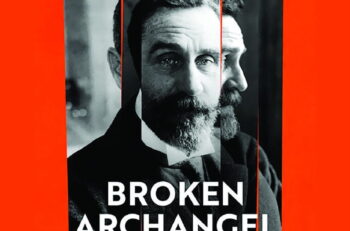
    Lawyer Christopher Stanley reviews the eloquent and beautiful ‘Dirty Linen: The Troubles in My Home Place’, by Martin Doyle. The peace process in Northern Ireland which has followed the Good Friday Agreement in 1998 is best seen as transitional. During this transition, reconciliation requires a consensus of the voices of the dead being spoken through the loss and grief of their loved ones and through other sympathetic interlocutors. This is what Martin Doyle, currently Books Editor of the Irish Times,  accomplishes in ‘Dirty Linen: The Troubles in My Home Place’. The violent deaths Doyle describes and the loss and grief he seeks to give expression to belong to his family and neighbours. Those who are left endow him and enable him, because he understands their person and place, to become their voices through his “speech marks”. Doyle’s project is “polyphonic work, communicating different perspectives through many voices” (page 15). He reminds us – and those who seek to impose silence – that those who suffered a violent death by bomb or bullet and their loved ones will not, should not and cannot be silenced. This includes those ‘own’ lost lives – the victims of suicide and their families – unable to bear the grief of violent loss. Doyle draws upon the Anglo-Irish cultural theorist Benedict Anderson: “The dead, far from being gone, remain as a powerful part of the community. How we think about the dead, and the stories we tell about the relation between the dead and the living, are central to imagining new forms of community and/or narratives of nationhood” (‘Imagined Communities’(1983) page 15). This is a compelling, eloquent, at times beautiful and vital account. It is a needful telling of a narrative — of the families, their lost loved ones, of neighbours in conflict, of fractured communities failing to reconcile deep-rooted religious, sectarian, and economic divisions upon The Narrow Ground, described by a well disposed Sir Walter Scott in 1825 as the space in which “envenomed” Irish factions did their battle “like people fighting with daggers in a hogshead”. It is part of the competing allegedly pernicious counter-narratives to that which the British State seeks to coerce and cleanse as the ‘official account’ for the ‘public record’. Doyle’s book assumes its rightful place – and at the right time – amid the literature of the Conflict most recently supplemented (as acknowledged by Doyle) in works by Anne Cadwallader, Ian Cobain, and Margaret Urwin, in poetry and in prose and in compelling academic contributions including Mark McGovern’s ‘Counterinsurgency and Collusion in Northern Ireland’ (2019). What distinguishes Doyle’s book is clear from its subtitle, The Troubles in My Home Place. This is an autobiography and a biography. It is about the life of the author and about his place and his home. His sense of place – his home returned to – is acute because he understands what has led to both the physical and psychological landscape that historically surrounds and embraces, but also excludes and expels, his community. This is both the inner landscape – the psyche – of emotions, beliefs, ideologies – violently moulded by economic, religious and political forces, religious intolerances and political exigencies and the shattered outer-world reality – The Troubles as ‘a little local difficulty’ upon a Narrow Ground. Doyle’s Narrow Ground  is a handful of rural parishes – the “Murder Triangle’ of Newry, Lurgan and Dungannon ‘ the cockpit of the Troubles” (page 7). It is also the landscape as a bloody signification of a violent Conflict across the Island of Ireland, from Claudy to Banbridge to Belturbet, from Derry to Omagh, from Enniskllen to Dublin, from city to city, town to town, village to village, graveyard to graveyard. Doyle has not written the history of the Conflict in Northern Ireland. Doyle has written a history of the Conflict in Northern Ireland in his part of Ireland – the village of Laurencetown, 25 miles north of the border, in the County Down parish of Tullylish, within the murder triangle (“or Lawrencetown – we can’t even agree on how to spell it” (page 1)). It is his-story about aspects of his life, his space-place, his family, the family next door, his school and their church, a social club and their sports venue, his community and all its graveyards and memorial stones. Because he writes of what and where he knows, Doyle can listen, record, and understand and communicate as much as an anthropological field recording made solid and in unadorned prose (and that is praise not criticism). This is writing with understanding and understatement and without unnecessary adornment or embellishment. Doyle therefore achieves what Ian Cobain accomplishes in a different voice and a focus on a single violent incursion, the murder of off-duty RUC Photographer Millar McAllister in Lisburn on 22 April 1978, in ‘Anatomy of a Killing: Life and Death on a Divided Island’(2021). This is what the magisterial – and regrettably out of print – Lost Lives: The Stories of the Men, Women and Children who Died as a Result of the Northern Ireland Troubles (1999) achieves more clinically. Benedict Anderson’s statement about the relation between the living and the dead (quoted above) is is also used to introduce the Irish Linen Memorial into Doyle’s text – 400 white Irish linen handkerchiefs. The names of those killed between the years of 1966 and 2006 are printed and overstitched with embroidery, and spotted with sewn hair, onto each handkerchief. The Linen Memorial is a “creative project that has now spanned almost 20 years and has travelled to multiple countries, been constructed in churches, galleries,  and libraries. it is an ongoing site‐conscious memorial which seeks to re‐narrate the almost 4,000 deaths which took place during the fraught period of ‘the Troubles’ in Northern Ireland” As Doyle’s publisher notes; “Doyle skilfully weaves together the two strands of history, with the decline of the local linen industry serving as a metaphor for the descent into communal violence, but also for the solidarity that transcends the sectarian

    Loading

    Read more

  • Posted in:

    Unannounced special advisers push total salaries towards €6 million

    By Conor O’Carroll The Department of Education has confirmed to Village Magazine that three as-yet-unannounced special advisers are employed at the department. Áine Doyle and Eoin Murphy are employed as special advisers to Minister of Education, Norma Foley TD, while Diane O’Gorman is employed as a special adviser to Minister of State, Josepha Madigan TD, a department spokesperson said. None of these appointments have been publicly notified in Iris Oifigiúil, or through the release of the statutory instrument confirming their appointment. They also don’t appear on the government’s list of special advisers. No explanation was given for why the advisers, which are required to be officially reappointed following the rotation of Taoiseach last December, have not been made public yet. Another special adviser appointed in April has also yet to see any official announcement. Eoin Delaney, special adviser to the Minister of State at the Department of Foreign Affairs, Seán Fleming TD, was appointed on April 10th and given a salary of almost €75,000. Despite the lack of public announcement, Delaney appears to have begun advising, accompanying Fleming on a visit to Killeshin National School in Laois a few days after he was appointed. A spokesperson for the Department of Foreign Affairs said, “Mr Delaney’s appointment has progressed through the standard process as required by [Section 11(1) of the Public Service Management Act (1997) and the Ministerial Appointments for the 33rd Dáil guidelines]”. “The order for his appointment has been finalised and will now proceed for official approval and publication”, they continued. Last month, following the announcement of Taoiseach Leo Varadkar’s eighth special adviser, Village reported that a substantial delay often exists between appointment and official announcement. This trend continued recently, when two more announcements were made, confirming special advisers for Minister for Further and Higher Education, Simon Harris TD and Minister of State at the Department of Finance, Jennifer Carroll MacNeill TD.  Official notice of these appointments was provided, however, in the case of the Department of Further and Higher Education, no statutory instrument (and name of the appointee) has followed. Over six weeks have elapsed since the official notice in the July 28th edition of Iris Oifigiúil. No explanation was given for this delay by a department spokesperson, stating that “it is expected that the relevant Statutory Instrument will be finalised shortly”. As for the Department of Finance, the statutory instrument was released, showing that Stephen Foley, Jennifer Carroll MacNeill’s new adviser, was appointed on 13 March 2023 and announced 151 days later. A spokesperson for the Department of Finance said that “there was an administrative oversight within the Department of Finance HR” that led to the delay. They claimed that “HR was not aware a separate statutory instrument was required for the specific individual to be named”. These new appointments, along with those from the Department of Education, bring the total number of special advisers to 60. It is also unknown how much the new appointees will earn, though the current average salary for special advisers stands at over €100,000. Following queries made by Village Magazine in July as to why three special advisers – Patrick Cluskey, Fiach Kelly, and Jim D’Arcy – had not been added to the official government list, a spokesperson committed to updating the list to reflect the uncovered appointments. At the time of writing, however, the list has still not been updated and is now also missing a further six special adviser appointments. The salaries of these nine appointments are likely to push the total cost towards €6 million annually, though the true figure won’t be revealed until the government updates their list. The current rules surrounding special advisers stipulate that Ministers, other than the Taoiseach, Tánaiste and party leaders, may not appoint more than two special advisers. The appointment of Simon Harris’ new adviser brings every government minister to the maximum of two special advisers. The rules also state that Ministers of State may only appoint one special adviser, though appointing two is permitted provided that they regularly attend meetings of the Government. Just two Ministers of State, Hildegarde Naughton TD (Department of the Taoiseach – Chief Whip) and Pippa Hackett TD (Department of Agriculture) have appointed two special advisers, with ten others settling for just one.

    Loading

    Read more