
Politics

Random entry RSS

  • Posted in:

    Transfer pattern augurs well for Left

    Transfers matter under proportionate representation though perhaps more for psephologists and party tacticians than in terms of actual electoral difference. Noel Whelan, for example, notes that: “only 12 or 13 of the 158 deputies in the new Dáil will win their seats because of transfers. If we stopped counting after the first counts and declared the results, all but a dozen or so of the seats would have been filled by the same people”. The most dramatic difference transfers made was of Maureen O’Sullivan, a notably gentle and non-partisan independent in Dublin Central. She polled badly on first preferences, getting just 1,990 votes. The quota was 5,922. She was in sixth place. Everyone assumed she was out for the count but in the end she took the last of the three seats. In the same constituency in 2007 Bertie Ahern, then ascendant Taoiseach, brought in his running-mate Cyprian Brady in 2007, though he had polled 939 first preferences. The only other candidate ever to be elected with fewer than 1000 first preferences was Brian O’Higgins (later President of Sinn Féin from 1931–1933) elected in Clare in 1923 on DeValera’s transfers. The Right to Change campaign, which involved around 100 candidates, both party and non-party, helped Sinn Féin to secure transfers that pushed a number of their candidates over the line. As well as a strong transfer pattern (76% as opposed to 58% in 2011) between SF candidates running in the same constituency the party enjoyed a good return of more than 23% from other left candidates who endorsed the campaign. In Dublin Bay North, which had one of the longest counts in the election, Denise Mitchell of Sinn Féin was assisted by significant transfers from John Lyons of People before Profit (PBP) as well as from her party colleague, Micheál MacDonncha who was eliminated at an earlier stage. Similarly, SF candidate and trade unionist, Louise O’Reilly, won a seat following strong transfers from Barry Martin, also of PBP and a running mate of Clare Daly’s in the Fingal constituency. Richard Boyd Barrett who was always likely to take a seat in Dun Laoghaire, was helped by the votes transferred from Sinn Féin candidate Shane O’Brien on his elimination. Across the country, there were other examples of the Right to Change arrangement benefitting successful candidates. AAA-PBP transferred significantly more votes to Sinn Féin than any other party with independents the next block to gain from their transfers. Sinn Féin performed exceptionally in its internal transfers with an unprecedented rate of 76% which augurs well for its future prospects where it stands two candidates. Sinn Féin has historically been quite transfer unfriendly, but in 2016 they have improved significantly on their own transfers as well as taking 28% of the transfers from AAA-PBP. With the exception of Donegal where it overrated its chances of taking three of the five seats, leaving Pádraig MacLochlainn as the party’s most prominent casualty, it came close in several other constituencies to bringing in a running mate. Fine Gael also displayed strong transfer discipline. The transfer rate between Fine Gael candidates was much better than that between Fianna Fáil candidates. In 2016 this discipline brought Fine Gael an even bigger seat bonus than it got in 2011. It benefited from 54% of its own transfers as well as 53% of those of Labour candidates. What is also evident and perhaps a harbinger of the future is the number of transfers between Fine Gael and Fianna Fáil. Where a candidate had no running mate or he or she had been eliminated or elected, Fine Gael was more likely to transfer to its big right-wing rivals than any other party and vice versa. 18% of FF transfers went to FG candidates and 16% of FG transfers nished up with FF. As the two beasts prepare the ground for an historic coalition it would seem that their supporters do not share the view that their differences would make the ending of civil war politics impossible. Frank Connolly

    Loading

    Read more

  • Posted in:

    The left must prepare for the next election

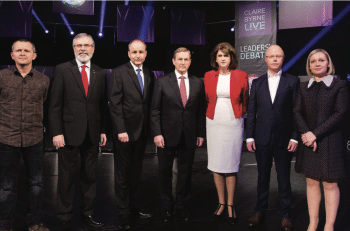
    As the dust settles and the victors and vanquished count their blessings or nurse their wounds all eyes are on the main political kingmaker, Micheál Martin. Fianna Fáil is likely to play the long game and hold out for as long as possible before conceding that it has no option but to shore up a Fine Gae-led government. There will be much hot air about the responsibilities of others, including Sinn Féin, to ‘step up to the mark’ but the people have spoken and the only tally that counts is the combined 90-plus seats of the two main parties. The downward and steady drift of the ideological right from 80% of the vote less than twenty years ago to just over 55% in 2016 makes a single large party of the right an historic inevitability no matter how much the leaders of FG and FF resist it. But resist they will, using any excuse to find reasons to differ even though there is hardly a sliver between them on fundamental policies. It is possible that their reluctance to come together or to agree a minority government arrangement along with right-minded independents or smaller parties will lead to another general election within months but they are both savvy enough to know that the electorate will not reward such failure. Besides, there is no guarantee that the result will be very different with the two centre-right parties each hovering around the 25% mark but unable to reach the numbers required to form a stable and coherent government that can implement their programmes. Another factor that will change the dynamic the next time around is the certainty that, with the possible exception of Martin, the faces on the television for the debates between the four main party leaders will be different. Kenny and Burton will be dumped by their respective parties for their poor showing in GE16 while Gerry Adams could be replaced by a younger leader during the coming Dáil term. As the two parties of the Right play hard to get, the Left cannot claim the historic break-through that some are hailing. Labour has suffered a traumatic implosion and just managed to hold its speaking rights in the Dáil. Sinn Féin increased its numbers but advanced to nowhere near what seemed possible just a few months ago. Obtaining just over 13% of first preference votes is way down on the 17-24% it polled consistently over the previous eighteen months. A relentless and hostile campaign led by Independent News and Media and the difficulties Adams faced during some of the leader debates and in one-on-one interviews were certainly factors in this late drop in support. But party strategists will also be looking at the rise of the far left in urban areas which ate into its potential vote, and at mistakes such as the three candidate experiment in Donegal as issues to be addressed. That said, Sinn Féin has increased its vote by 50% and has a raft of new, yet experienced, men and women in the 32nd Dáil providing a solid platform for its project of leading a left-wing government by 2020. Adams brought in Imelda Munster in Louth and has a secure seat into the distant future. Any decision by him to step down will be dictated by his perception of the best interests of the party, north and south, and not by his political or media opponents. It was something of an exaggeration on the part of the AAA-PBP to describe the outcome as a political earthquake, less still a revolution, when they managed to pull in just 4% of the vote between them. Dancing on the political grave-stones of the Labour casualties is not only crude but exposes their visceral and incorrect tendency to believe that they are the only true believers in the world of progressives. It is a view which guarantees long-term irrelevance and political impotence. As the noise subsided in the immediate aftermath of the vote some of the new and re-elected Left independents were mature enough to recognise that the potential of the Right to Change movement in bringing a swathe of parties, groups and individuals together was not realised this time around but could be the sort of vehicle to impel greater left-wing unity and a real electoral challenge down the road. The combined votes of SF, Labour, Social Democrats, Greens and up to 15 progressive independents would outnumber Fianna Fáil in the extremely unlikely event of such a grand coalition with the Soldiers of Destiny being cobbled together. Martin and his circle have insisted all through the election that they would not join with SF under any circumstances, while Adams would nd it difficult to bring his party into an arrangement which could halt or reverse its steady growth. It has captured a significant portion of the under-34 vote which does not entertain the old establishment. It needs to ensure that it remains vibrant and radical and not another version of the same old. For a long time the SF leader has insisted that he will not repeat the mistakes of the Labour Party which has been emasculated for what it sees as its sacrifice in putting the country first. Since the local elections in 2014 the demise of Labour has been apparent although the scale of its seat loss was not. The 2014 elections showed the steady recovery of Fianna Fáil as former supporters deserted Labour and FG to whom they ‘lent’ their votes in 2011. The Labour pact in 2016 with Fine Gael arguably pro ted the larger party in late transfers in the final counts in several constituencies and brought a seat bonus to the Blueshirts unjustified by their percentage vote. If there is a lesson for Labour it is that doing the right thing does not necessarily impress the voters unless they feel the results in their lives. Too many promises in the heat of the 2011 campaign were undelivered and party leaders failed to detect the

    Loading

    Read more

  • Posted in:

    SF won’t prop up FF, FG or Labour

    The recent General Election was a very good one for Sinn Féin. We increased our number of TDs from 14 to 23. That’s a 65% increase – a success by any standards. Importantly, Sinn Féin also further increased the geographical spread of the party. There are now very few regions in the State in which there isn’t Sinn Féin Dáil representation. There is also in place, another whole raft of Sinn Féin representatives who, although not returned at this election are very likely to be elected next time around if they continue with the valuable work they are doing. So, Sinn Féin returns to the Dáil, not just with a significantly larger team but also with a team of very high-calibre TDs, including more women and more younger representatives. Sinn Féin had two clear objectives going into the election. The first was to get rid of a Fine Gael/Labour government that has brought chaos to housing and health, imposed unfair taxes and promoted mass emigration. We succeeded in that. In the early days of the election campaign we holed the coalition’s strategy below the waterline by proving that their figures were wrong and that they presented €2 billion which they did not have. I think we were also successful in demonstrating that you cannot have US-style taxes and at the same time invest in decent public services.Our other objective was to prove to people that there is a realistic, credible political alternative of which we are a significant part. That is very much a work in progress. We may not have succeeded, at this point, in getting enough seats to form a progressive Government but that will improve as we go on. But the realignment of politics in this State took an important step forward in this election and the next election will see that trend intensify. The political domination of Fine Gael and Fianna Fáil is finished. What we now need to do is increase the cohesion among those who advocate an alternative view of how the economy and society should be organised. Over the past five years, Sinn Féin has been the genuine voice of opposition in Leinster House, offering an alternative to the dreadful austerity policies of Fine Gael, Labour and Fianna Fáil. All of Sinn Féin’s pre-Budget submissions demonstrated a way of ensuring economic growth while also being socially equitable and protecting the vulnerable. We repeatedly warned the Government of the escalating homelessness crisis. The Government refused to listen and it became an emergency. We also consistently raised the issue of all-Ireland integration and the political, economic and social case for a united Ireland. Sinn Féin has now received an enhanced mandate to continue with that work. The post-election sham fight between Fine Gael and Fianna Fáil is nothing to do with the real issues affecting citizens. The people who were homeless last Friday will remain homeless under Fine Gael and Fianna Fáil. Patients will still languish on trolleys in our hospitals under Fine Gael and Fianna Fáil because those parties are not serious about resolving these issues. Going into this election Fianna Fáil picked up on a sense that voters were moving to the left, so they began to steal the phrases Sinn Féin was using about fairness and a recovery for all. That strategy resulted in a partial recovery of the Fianna Fáil vote itself but still left it far, far short, in his-torical terms, of where it once stood. Throughout the election campaign, Sinn Féin made it clear that we would not prop up those parties that created and sustained the economic and social crisis facing our people. That is the mandate we received and we will not break our commitments. Sinn Féin will continue to consult with others, including those aligned to the Right2Change platform, on the way forward. If not in the immediate period ahead, the objective of a genuinely progressive alternative Government in which Sinn Féin plays a lead role is a live possibility. Over 400,000 people voted for candidates aligned to the Right2Change platform to end water charges. The Fine Gael/Labour Government has been defeated and water charges should leave the stage with them. What is now clear from the election is that people voted for real change and a more equal society. Sinn Féin is committed to achieving that and to pursuing and preparing for the peaceful reunification of Ireland and the reconciliation of all our people. Whether in Government or in opposition, Sinn Féin will stick by the mandate we have been given. Gerry Adams Gerry Adams TD is President of Sinn Féin

    Loading

    Read more

  • Posted in:

    Unruly

    What is meant by the Rule of Law and is such a concept honoured in Ireland today? I believe that the rule of law though arguably an unqualified good is not being adhered to in this state save mostly by the judiciary and that the legal system and erratic observance of legality by state officials renders our democracy fragile. In my view Ireland draws close to that amorphous notion, a failed state that cannot in reality uphold the rule of law. This opinion piece will not be a comprehensive pathology but will point out many of the salient practical features which show how the rule of law is breaking down. The Rule of Law: Theoretical Incoherence? We first need to probe the many senses in which the rule of law is described. Joseph Raz, a legal positivist who believes in “perfectionist liberalism” has suggested that the rule of law is merely a kind of shorthand description of the positive aspects of any given political system. From a different vantage point the fundamentalist Christian legal philosopher John Finnis considers that the rule of law is: “[t]he name commonly given to the state of affairs in which a legal system is legally in good shape”. Another philosopher Brian Tamanaha chimes to negative effect that the rule of law is “an exceedingly elusive notion” which leads to “rampant divergence of understandings” and is similar to the amorphous concept of Good in that “everyone is for it, but has contrasting convictions about what it is”. At bottom, there is no consensus: it is elusive at best: a form of smokescreen or professional hypocrisy at worst. But let us endeavour to be constructive. For example Carothers, though sceptical, adds a worthwhile positive definition of the rule of law as: “a system in which the laws are public knowledge, are clear in meaning, and apply equally to everyone. They enshrine and uphold the political and civil liberties that have gained status as universal human rights over the last half-century. In particular, anyone accused of a crime has the right to a fair, prompt hearing and is presumed innocent until proved guilty. The central institutions of the legal system, including courts, prosecutors, and police, are reasonably fair, competent, and efficient. Judges are impartial and independent, not subject to political influence or manipulation. Perhaps most important, the government is embedded in a comprehensive legal framework, its officials accept that the law will be applied to their own conduct, and the government seeks to be law-abiding”. Now let us stress-test certain aspects of this detailed expurgation against the patient – in this context Ireland Inc. Yes of course rights exist in our still fine, if shopworn, constitutional matrix and are enforced by the courts in many instances but there is also an undue deference to the executive that has led to the non-enforcement of social and economic rights particularly the right to housing by the courts. There is an excess of judicial caution on other rights-based claims, particularly where issues of financial iniquity and the countervailing amorphous blob, public policy, are implicated. There is also widespread violation of privacy by the state and its police force, in particular. The overly sanguine way we as a nation have accepted, in effect, what has been police and state criminality with respect to privacy for the last thirty years without widespread outcry is baffling. At least there are signals of an upsurge in civil disobedience, which when peaceful, as Habermas, the German sociologist of critical theory and pragmatist, would contend, leads to a vitalisation of democracy. Not here. Further, the scandal that is our banking structures, the disgrace of the banks varying interest-rate repayments in breach of agreements, the sometimes unconscionable evictions, are not conterminous with the rule of law. NAMA is a mess formulated by the neoliberal club which did its best to avoid a proper new deal for the Irish people. The banking inquiry was a poorly performed French farce. What is desperately needed is a right to housing. Eviction should be rare, require rehousing, and should only follow meaningful intervention by an arbitrator who can determine whether the consumer can repay and whether the bank – with or without the enlistment of a vulture fund – is bundling the mortgage at a bargain-basement rate to private-law profiteers. Further, many of our state institutions have major structural problems. The Garda are not progressive in training and intent: they do not seek justice or the truth, but rather a result. They, at times spin, embellish or at worst, manufacture evidence – and, to be candid, at times act criminally and in violation of the rule of law. Finally, there are limited independent checks and far too close a nexus between politicians and the police. The recent moving of the deckchairs by the Garda Commissioner will not change the culture or training of the force, its group think or, arguably, its competence. It needs a radical ovehaul and a redirection so primarily promotes truth- seeking, investigative process. The impartiality and independence of our judiciary needs at times to be severely questioned because there is far too close a nexus between politics and judicial appointments. Though most are appointed on merit, many of our judges are appointed for their proximity to political parties. Further, some judges have an aggrandised sense of themselves: certainly they are not servants of the state as that is not a judicial function, but rather, they are the servants of the constitution which is a bulwark to protect the people against state excess. Judges also need, in the interest of public confidence as to their impartiality, to declare their share-holdings and indebtedness to the banks. Moreover, parts of the government left itself open to the accusation, during the bugging crisis, that it was also mired in corruption. In the strictest sense it observed the rule of law but, in manner, it laid itself open to the criticism levelled elsewhere by the late great Christopher Hitchens of being crypto-fascist, pursuing a

    Loading

    Read more

  • Posted in:

    Independent Living

    2016 marks another anniversary, the 20th anniversary of a ‘Strategy for Equality’. This was the report of the Commission on the Status of People with Disabilities. Their task was to establish what life was like for people with disabilities in Ireland and to prepare a roadmap to equality for people with disabilities. Before deciding on the appropriateness of any celebrations, it is timely to ask a question: has Ireland become more equal for people with disabilities? The Commission took what it described at the time as “the unusual step” of consulting with people about their ‘lived’ experiences. It reported that people with disabilities experienced outdated social and economic policies and public attitudes, and pointed to “justifiable anger” felt by people with disabilities and their families. In the intervening years a multitude of laws and policies have been introduced but the question remains. Let me state it again: has Ireland become more equal for people with disabilities? A cursory look at the Strategy and subsequent developments would suggest that quite a lot has been achieved on many of its recommendations. A National Disability Authority (NDA) has been established, a Disability Act was passed into law, a National Advocacy Service was established, and a swathe of legislation was brought into force on equality, assisted decision-making and education. However, if you dig a little deeper, there is a different story to be told. Most of these measures were poorly thought out or half-implemented. The Disability Act 2005 created little by way of the rights-based legislation envisaged. Instead it provided a basic right to a person with disabilities to an assessment of need. However, no rights to services follow on from that assessment. Even this limited ‘right’ to an assessment has been only partly commenced and currently just caters for children. The Strategy envisaged an independent advocate for people with disabilities. In 2007 the Citizens Information Act was passed. This provided for “Personal Advocates” with statutory and wide-ranging powers. Four years later a limited non-statutory service called the National Advocacy Service was commenced. A total of 35 advocates operate across a country where there are an estimated 600,000 people with disabilities. The Education for People with Special Educational Needs Act 2004 has been stalled indefinitely. This means that children in mainstream schools struggle to get educational supports. Successive Governments have failed to address the issue of the cost of disability. Many of the manifestos for the recent election used the term “cost of disability” to describe plans to give people an extra ten euro on their welfare payment. This is a regrettable approach. Cost of Disability demands than an increase in welfare payments. It requires a genuine recognition that having a disability can be expensive and moving to alleviate that additional expense. The Strategy recommended that the Department of Environment develop a policy with “the right of people with disabilities to live as independently as possible” as its aim. In 2011 the ‘Congregated Settings’ report was published by the HSE, the agency responsible for care services. This was premised on moving people with disabilities back into the community. Progress on this ambition has been unacceptably poor. The Fine Gael manifesto for the recent election includes a target for 1/3 of residents to move back into the community by 2021, three years after the initial deadline for moving all residents. This is an acknowledgement that the policy has failed and that a generation of people will probably die in institutions. The Strategy stated that ful lment through relationships and sexuality is a basic right. Since 1993, the criminal law has cast a legal shadow over sex and people with disabilities, particularly those with intellectual disabilities or mental illness. The law has provided an easy excuse to opt-out of providing sex education that would strengthen their ability to protect themselves and possibly open the door to a ful-filling, intimate relationship. This is a bleak landscape, but it’s not all negative. We are beginning to win the ideological battle. Concepts of person-centredness, independent living and autonomy are creeping into the parlance of the body politic. The battle now must be to get our partially commenced legislation fully implemented. This will involve resources in many cases and a change in culture in others. Any marking of this 20th anniversary of the ‘Strategy for Equality’ must reflect that not much has changed and must pose the challenge to find the political will for equality. We have all the tools at our disposal. Sarah Lennon Sarah Lennon is Training and Development Of cer with Inclusion Ireland

    Loading

    Read more

  • Posted in:

    Voguish Commissioning

    Government plans to introduce “commissioning” as the means to deliver social, human and community-based services now threaten both the Community and Voluntary Sector and the effective delivery of essential social and community-based services. The Departments of Health, of Children and Youth Affairs, and of Environment, Community and Local Government are now moving to a commissioning model to deliver services. Traditionally they had been funded through block grants to Community and Voluntary Sector organisations. Commissioning is commonly understood as a strategic planning process that links resource allocation with assessed current and future needs, to achieve better outcomes for citizens and service users. The 2011 Programme for Government had the catchier definition: “Choice and Voice” for service users. The assumption of the coalition Government was that the marketisation of social and community-based services will benefit service users and communities. However, we have evidence from the UK, where public services have been privatised for many decades, that the commodi cation of social and community-based services has generated adverse impacts. It has resulted in a shift to one-size-fits-all models of delivery. Its focus is on cost-per-unit to be minimised, regardless of the outcomes for different groups. This ends up in a so-called ‘cherry-picking’ of participants most likely to achieve positive outcomes. As a result, the more marginalised communities and individuals with complex needs are excluded. The impetus driving the move to Commissioning model has been set out in various Government briefings. It includes the desire to link service development and delivery to assessed need and outcomes. It is focused on reducing costs and ensuring value-for-money. This assumes that Community and Voluntary Sector service providers are not already out-comes-focused or allocating resources on the basis of need. This, however, has never been comprehensively assessed by the relevant Departments or State agencies. It assumes that the current model of grant funding to Community and Voluntary Sector organisations is not delivering value-for-money. ‘Value-for-money’ is a contested term. It is all too often reduced to a simplistic cost- benefit equation, rather than being based on an assessment of outcomes for diverse communities and groups. This would take account of, and prefer, the added social value that accrues to individuals and communities as a result of how Community and Voluntary Sector services are delivered. The Government’s own review that examined the evidence for moving to commissioning would suggest it is fraught with risk. This review found: “limited evidence to date that commissioning approaches result in better outcomes” for service users; “a weak evidence base for commissioning as a strategic planning and resource allocation tool”; and the cost of the commissioning process could be extremely high to the commissioning Departments and State bodies. A House of Commons Report has found that almost 14% of the NHS budget was being spent on its commissioning infrastructure, for example. It is a significant undertaking to execute commissioning properly. This is underscored several times in the Government’s own review. The elements in the commissioning process of identifying needs, setting outcomes, and measuring impact all require significant national and regional infrastructure. Comprehensive national, regional and local data, and robust tools to capture the specific needs of different groups and communities are required to assess the social and community service needs of communities across the country. There is a significant absence of such data and tools currently. Until this is rectified it is difficult to envisage how comprehensive needs – assessments can be carried out. The Government’s review noted that expert knowledge and technical skills would be required in commissioning Departments and State agencies. This would include: expertise in needs analysis and service user engagement; robust data information and management systems; expertise in contracting and procurement; and expertise in evaluation. It is not credible that such resources will be found in the Department of Environment, Community and Local Government, to say nothing about the already hugely over-stretched and under-resourced Departments of Health and of Children and Youth Affairs. This lack of infrastructure leads to a very real risk that the costlier, more complex elements of the commissioning process will be dropped. Instead the focus will merely centre on reducing cost and increasing the marketisation of services, regardless of outcome. The Government needs to heed the warnings in its own report, because it will be impossible, under competition law, to revert back to grant-based funding once services have been opened up to competitive tendering processes as part of this proposed commissioning model. There is an urgent case to now press the pause button on this fashionable but insidious and dangerous process. Rachel Mullen

    Loading

    Read more

  • Posted in:

    A programme for government to be proud of

    The next Programme for Government must make choices in favour of those who have the least and have been hit the hardest by austerity. This requires not just a commitment to guaranteeing the rights and welfare of the most vulnerable in society, but also a focus on the values needed in building a strong and cohesive society. The Community Platform, a network of 29 national networks and organisations working to address poverty, social exclusion, and inequality, has proposed that the first, fundamental step must be to adopt values of economic and social justice, social inclusion, human rights, equality, participation, and sustainability. Vote for stability (and progress). These were the main slogans of the outgoing Government parties in fighting the election. It is hard to see either in the wake of austerity and the devastating cuts to our communities and the community sector. Spiralling homelessness and inadequate housing, the health crisis and the collapse of the vision of universal healthcare in the community, low-paid and insecure work, the lack of provision of safe Traveller accommodation and child poverty are shocking indicators of failed governance. This was brought into stark focus by the tragic deaths of ten Travellers, including five children, at a temporary halting site in Carrickmines; the mother with her three young children living and sleeping in a car in Tallaght; the state-sanctioned poverty of children growing up in direct provision; cuts to medical cards for children with life-threatening diseases; the 91-year-old man waiting 29 hours on a trolley in Accident and Emergency; and the father of two living on the minimum wage and crying as he did not know how to feed his children. This is certainly not progress. Ensuring progress requires a paradigm shift in the way we organise our economy and redistribute wealth. A commitment to a progressive and equitable tax system is key and should provide the bedrock in a Programme for Government. This should be the starting point in a move away from a low tax, low pay, and low public investment-economy. We want a country run for its people not for its economy. Develop a progressive tax regime Ensure a tax take as percentage of GDP of between 40% and 45%. Increase the income-tax rate for high earners. Introduce a wealth tax on all assets for high earners. Increase Capital Gains Tax and Capital Acquisitions Tax. Introduce a Financial Transactions Tax. Introduce a refundable tax credit system for people on low incomes. The lack of investment in public services undermines our society’s ability to ensure those with the least have access to essential, tailored supports and services. While the erosion of public services affects all in Irish society, it disproportionally undermines the lives of the most vulnerable. The renewal of public services can ow from a progressive and equitable tax regime and should be the second core element in a Programme for Government. Renew public services Increase investment in public services to ensure they are adequate to meet needs of society. Implement a health and social-care strategy to provide services and supports to enable people to live independently for as long as possible in their own homes. Provide access to more intensive learning options for adults with literacy or numeracy needs and low or no qualifications. Increase publicly-subsidised, comprehensive, and affordable early-years and after-school care infrastructure along with training, living wages and quality conditions for childcare staff. Ireland is now one of the most unequal countries in the EU in terms of income and wealth, yet we have one of the highest GDPs per capita. Inequality erodes trust and social solidarity. It is not an accident of fate. It is shaped and influenced by our political systems and institutions. Building a society with equality at its heart is good for everyone. Evidence shows that more equal societies do better in every sphere of life and that people are healthier and happier. This is not a utopian vision, equality is a conscious choice. The great strides that have been made for LGBT rights demonstrate this. Equality can be brought about through political commitment to rights and justice. Ensuring an adequate income through making work pay, tackling the gender pay gap and providing adequate social protection to have a minimum essential standard of living are critical to achieving equality and need to be a core element of the Programme for Government. The introduction of poverty-proofing in public expenditure and taxation – to ensure economic choices do not adversely affect women, minority and other vulnerable groups – is also critical in the Programme for Government. Ensure income equality and social inclusion  Ensure that a living wage is paid in all sectors. Increase all basic social welfare levels to the level of the Minimum Essential Standard of Living. Restore full social welfare payments to those under 26 years. Reverse the reduction in the income disregard for lone parents on One-Parent Family Payment. Implement the pay transparency initiatives recommended by the European Commission to reduce the gender pay gap. Provide adequate pensions and secondary income supports to all people in later life. Ensure adequate provision for the additional cost of disability calculated for people with disability. Promoting and supporting decent work and providing quality education and training to unemployed people and those alienated from the labour market will be an important political stimulus for greater equality. These need to be centre stage in the Programme for Government. Create decent work for all Develop a person-centred Public Employment Service. Fully implement the right to collective bargaining. Reinforce the instruments and institutions for the protection and enforcement of employment standards. Introduce further measures to tackle insecure contracts and precarious working conditions. Use public-procurement tenders to ensure successful tenderers implement quality-employment standards. Advance social justice Implement a National Action Plan for Social Inclusion based on the right to an adequate standard of living. Create affordability and certainty in housing and increase access to social housing. Invest in Traveller-specific accommodation. Increase resources to tackle homelessness. Increase rent supplement levels to match market rent levels

    Loading

    Read more