campaign

Random entry RSS

  • Posted in:

    Sinn Féin alone

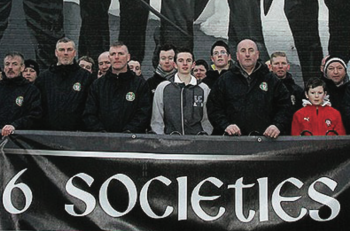
    Republicanism is fragmenting. That was  seen on Easter Sunday, when at least eight Republican groups held commemorations on Belfast’s Falls Road. At protests in the North, it is common for various ‘dissident’ groups to have more presence that mainstream Sinn Féin. That party has a much smaller activist base than a decade ago. Paradoxically, as that base has shrunk, the vote has increased. The exodus of members has not affected the vote. That was seen most starkly in last year’s assembly election for North Antrim. A councillor and 17 other activists resigned in protest when the party forced assembly Member Dáithí McKay to resign. Monica Digney, an able and respected former councillor, and one of those who had resigned, stood as an Independent. Sinn Féin’s vote increased by just under 3%. Digney polled just 435, lagging behind the Green Party. That is a stark version of trends across the north. A few years ago, even Sinn Féin strategists believed the vote had plateaued, and might even fall back. In last year’s Westminster election, Sinn Féin took 29.4% of the vote. That was a 4.8% increase in a year. The terminal decline of the SDlP has been hastened. Sinn Féin took the SDlP’s two perceived strongholds: South Down and, of greater importance, Derry. That is not to deny the importance of the exodus. There is a disillusionment with Sinn Féin. An Easter statement from Óglaigh na hÉireann prisoners sums up the dissidents’ problems: “It’s clear that presently the revolutionary Republican community appear to be facing challenging times and lack strategic direction in response to these events”. The largest single non-Sinn Féin grouping are the 1916 societies. There have spread out of their initial base in East Tyrone across the North, and into the South. They have a sizeable membership, mostly of an older generation, but they also have a small but significant membership from the post-IRA generation. They are an excellent symptom of how widespread the malaise in Republicanism is. They have engaged in some co-ordinated activity, such as calling for an all-Ireland Referendum on unity. However, their main activity is commemorations. This is the only activity on which all non-Sinn Féin Republicans can agree. They certainly cannot on a central debate for Republicans: whether or not there should be an armed campaign. Most are opposed. some, mostly from the anti-armed-campaign cohort, are becoming involved in community issues as individuals or through different organisations. There is no issue about which ‘dissidents’ can coalesce. In 1969-70, the Republican movement split into ‘official’ and ‘Provisional’ wings. (The ‘Provisionals’ became today’s Sinn Féin, while the remnants of the ‘officials’ are the Workers Party). The ‘Provisionals’ derived from the anger of many young Catholics, and a belief that the IRA had spent too much time on left-wing politics rather than preparing to defend catholic areas. This time, there is no single big issue to divide Republicans. There is a generalised unhappiness at Sinn Féin’s acceptance of Stormont and the PSNI. In some cases, unhappiness has spilled over into demoralisation. Some in Sinn Féin dismiss ‘dissidents’ as criminals. That is not to say there are not criminals using dissident groups as a cover; and others who, their war over, have turned to criminality but it is not the central case. The dissident groups are fragmented. The new IRA and the continuity IRA are continuing their campaign, while Óglaigh na hÉireann has called a ceasefire. All armed groups are riddled by infiltration by security-force agents. However, they have found a certain niche in carrying out punishment attacks. These grew by 60% between 2013 and last year. They are popular among a significant layer of the population in Catholic working-class areas. Part of the reason is the traditional hostility between the catholic minority and the police in the Northern state. Part is also that punishment attacks offer ‘quick x’ justice, without the necessity to take the time taken by a formal court system. Police seem willing to let punishment attacks continue, as long as the victims are perceived ‘hoods’. Vigilantism, though, is not a basis for building organisations that will be a serious alternative to Sinn Féin in Catholic areas. Sinn Féin could probably benefit from a bit of coherent opposition from people whose political premises, at least viscerally, it identifies with. Anton McCabe

    Loading

    Read more

  • Posted in:

    Leo’s paradox

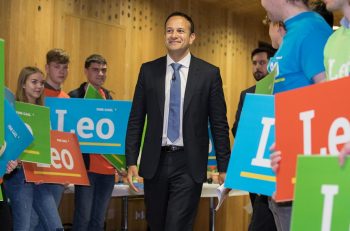
    As a younger, and perhaps wiser, Leo Varadkar once said: there is no messiah who will lead Fine Gael from the desert into the promised land. This did not prevent him from presenting a decidedly messianic image as he posed for the cameras following his decisive victory in the party’s leadership contest on 2 June. Since then politics and the media have obsessed over his choice for cabinet posts with one potential appointee after another scrambling for pole position beside the new leader to confirm their adoration for the man who holds their future in his hands. Soon forgotten was the uncomfortable truth that most of those among the party membership allowed to vote chose Simon Coveney from Carrigaline ahead of the man from Castleknock, and that Varadkar was elected through the over-whelming support of the parliamentary party and local councillors for the sole reason that they believe he is the most likely leader to ensure their re-election. The wider party it seems judged the candidates on policy, rather than geography or dare we suggest because the average blue shirt just is not ready yet for a gay man whose father comes from India as their particular cup of Barry’s tea. This is not to suggest that Fine Gael people are more likely to be homophobic or racist than any other group of political supporters but that they simply have not got their head around the rapid change in attitudes of a population with an average age of 38, which also happens to be Leo’s. For all this, Varadkar is as cautious and conservative as most in his party on both social and economic matters and is more likely to upset the wider LGBT community than endear himself to them. After all, he only came out as gay during the marriage equality referendum which many gay people saw as the culmination of decades of campaigning for their rights from which the young Leo had been silently absent. More importantly however, as Taoiseach, he is unlikely to deliver on a repeal of the eighth amendment which adequately meets the progressive demand for an end to church and State interference with reproductive rights or to tackle the huge range of discriminatory measures the State employs against women, children and minorities in health, education and social provision. There is little question that Varadkar will improve on the future prospects for his party colleagues and that they will go into the next election with greater expectations than if enda Kenny was still in charge. But that does not say much and neither does it take into account the harsh realities facing Fine Gael as it stumbles from one crisis to another while feeding from the life support provided by Fianna Fáil in government. Fianna Fáil is now looking at a general election next year and possibly ahead of the third budget it agreed to allow under the confidence and supply agreement which was negotiated by a less than enthusiastic Varadkar. His tendency to speak first and ask questions later will almost certainly cause some rocky moments over the coming months while his need to satisfy the many competing demands within his own ranks will also hinder any desire he may have to make innovative, not to mind radical, change. Varadkar will be really tested when it comes to the bigger issues facing the country and the first challenge he faces is how to deal with the ongoing and apparently unceasing crisis within the leadership of the Garda. He was among the first to criticise former commissioner, Martin Callinan, for describing the actions of whistleblower, Maurice McCabe as “disgusting”, and almost certainly precipitated the end of his long career in the force. Now he has to decide whether to allow the beleaguered Noirin O’Sullivan to remain in position. Varadkar will be happy to see the public service pay and pensions issue sorted before he takes full hold of the reins but the challenge posed by Brexit and its implications for the border and peace process would have been well outside his previous comfort zone. As to the insuperable health crisis as a medical doctor he might have been expected, when Minister for Health (2014-2016) to have led the delivery of the party’s plan for a universal health service to which he pays lip service, but there is a suspicion he ran out of ideas and little cause to think he will apply swift effective medicine as Taoiseach. Ultimately it will be his willingness to stand up to the vested private interests that sustain and feed the housing crisis, the rise in economic and tax inequality, precarious work and poverty that will test his imputed qualities as a radical young visionary. However, his party promotes the low tax, poor public service model that appeals to the very people he needs to survive in the cruel world of politics. Let’s call it Leo’s paradox. Frank Connolly

    Loading

    Read more

  • Posted in:

    Hands off civil society

    The UN’s Secretary General, Ban Ki Moon, has called civil society “the oxygen of democracy” but its space is shrinking. This may be jargon, but it is inspired by a serious threat to democracy – the undermining of basic rights: freedom of expression, freedom of association, and the right to peaceful assembly. Civicus grandly describes itself as the ‘World Alliance for Citizen Participation’. It is more down to earth when highlighting failures to address this shrinking civil society space. In recent months environmental and land-rights activists have been assassinated in Honduras and South Africa. Civil society organisations in Egypt are being prevented from receiving funds from foreign sources. In India the police have repeatedly sought the arrest of a couple who criticised Prime Minister Narendra Modi for his role as Gujarat chief minister during the Gujarat riots in 2002 in which at least 790 muslims (and 250 Hindus) died. The police have confiscated their passports and blocked their bank accounts and their homes have been raided. A woman human-rights defender has been arbitrarily detained in Bahrain with her 15-month-old son. A new law in Jordan is imposing arbitrary conditions on the formation of civil society organisations. An activist opposing a hydropower dam in Cambodia has been given a suspended sentence. That is disturbing and unacceptable. However, some will argue that only happens elsewhere. But civil society space is shrinking in Ireland too: different means, same intent. Civil society organisations here are strangled with cuts and encumbered with ever greater levels of bureaucracy such as charity regulation, lobbying legislation and tendering demands; and are spending too high a proportion of their time reporting on endless indicators. For example our long-standing local not-for-profit development companies providing programmes to tackle unemployment and social exclusion suffered reductions in funding from €84.7m in 2008 to €48m in 2014 and have been required to submit detailed competitive tenders. Most got through the process but some didn’t. Those that did are now bogged down in an indicator-dominated programme. The environmental pillar of social partnership has been under severe pressure due to reductions in funding arising from cutbacks in the environment fund and Department of Finance obstruction. The Minister for the Environment implied he was considering removing An Taisce, the largest environmental NGO, which has been critical of him, from the list of bodies consulted over big planning applications. Organisations are bound into service-provision contracts that preclude criticism of the state. The structures for engagement with the State have been dismantled. There is an evident hostility to and a demonisation of protest and dissent. We can’t stand aloof in Ireland from this global attack on democracy and ostensibly valued freedoms. Locally, as internationally, those in power do not want these organisations giving voice to and mobilising dissent to a model of development that impoverishes, generates inequality and destroys the planet we live on. Civicus are seeking to foster greater coordination between civil society organisations to face down these threats. Civicus and Human Rights Watch hosted a meeting of regional and international civil society organisations to explore the agenda for a campaign on these issues. They identified the need to develop a new positive narrative about the contribution of civil society to national life. This seemingly basic step was prioritised in the face of what was described as ongoing stigmatisation and vilification of civil society organisations. A second step was to inform the general public about the nature, causes, and extent of restrictions on civil society activists and organisations. A third step was to broaden the debate beyond advocacy organisations and those working on civil and political rights. They noted that restrictions are increasingly applied to anti-poverty and development-focused organisations. Civicus are seeking inputs on how best to develop this global campaign. The International Civil Society Centre is the “global action platform” for international civil society organisations (ICSOs). It works to support the “world’s leading ICSOs in maximising their impact for a sustainable and more equitable world”. It is also initiating a process of consultation on a ‘Civic Charter’ which it will launch in October 2016 as a means of building international solidarity for civil society organisations. Some key directions have been suggested, including the need for new ideas for collective advocacy to reverse repressive legislation targeting civil society organisations, the adoption of progressive institutional frameworks for civil society engagement with Governments, and the recruitment of eminent persons to demand the release of unjustly imprisoned civil society activists. Civil society in Ireland should prioritise the re-appropriation of civil society space. It must participate in these global campaigns and aim to get international demands tailored to address how civil society is specifically being eroded here. As we face increasingly intractable inequalities and irreversible climate change it is a political imperative. Niall Crowley

    Loading

    Read more

  • Posted in:

    Maybe Equality

    The Government would be happy to go to the polls wrapped in the mantle of a ‘Yes Equality’ Government. The Government delivered on the marriage equality referendum. We had the referendum to beat all referendums and same sex couples can now get married, their relationships affirmed as equal. This was a remarkable achievement. Eamon Gilmore called it “the civil rights issue of this generation”. However, is it enough for Fine Gael and Labour to don the mantle of a ‘Yes Equality’ Government in search of a vote? Aodhán O’Riordáin, Minister of State at the Department of Justice and Equality, tried to keep the feeling warm. A month after the referendum he declared the report of the working group on direct provision for asylum-seekers, set up by his Department, as another “Yes Equality moment”. This sorely diminished the mantle and, indeed, any correlative right to don the mantle. The recommendations of this report were far from any ideal for equality and human rights. The report essentially permitted continuation of this inhumane direct provision system for receiving and accommodating asylum-seekers. Only those asylum-seekers serving five years or more in the system were to be released. The mantle has since been further sullied as even the limited recommendations have not been implemented. Direct Provision is not the only serious human rights violation that this Government has countenanced. RTE’s Prime Time exposed the gross abuse of people with disabilities living in Áras Attracta. Political disapproval owed yet action was absent. The Government ignored the 2011 Congregated Settings Report that recommended that “people with disabilities living in congregated settings move to community settings within seven years”. It ignored the costed submission of the HSE, made in 2015, seeking some €250m to implement the report. Whenever it came to money, this Government evinced little interest in donning the ‘Yes Equality’ mantle. The treatment of the Traveller community reflected a rejection of equality and human rights by the Government. There was an extraordinary disinvestment in the Traveller community. The education budget specifically allocated to Travellers was reduced by 87% and the accommodation budget by 85%. This happened despite significant educational inequality for Travellers and the scandalous, often dangerous, living conditions they continue to endure. The tragedy of ten lives lost in the fire on the temporary Traveller halting site in Carrick-mines was not unpredictable. Even tragedy, however, failed to secure any reinvestment in the Traveller community. People with disability fared badly. Their prospects for independent living receded. The Mobility Allowance and the Motorised Transport Grant for people with disabilities were cut. The Minister for Health and Children axed these schemes in 2013 because criteria governing the schemes were found to be in breach of the Equal Status Act in a case heard by the Equality Tribunal in 2008. The Minister did not have to axe the scheme. He promised the issues would be resolved quickly but some people with disabilities remain on the schemes found to be discriminatory and no new scheme has been provided for the many others now precluded from access to these vital supports. The schemes were central to participation in society and to ensuring people do not become trapped in their own homes. Lone parents didn’t fine it was a ‘Yes Equality’ Government. Changes to the One Parent Family Payment caused stress and hardship for many families, that are much more likely to experience poverty and social exclusion than others. 63% of them experienced enforced deprivation in 2013. The Government effectively ended access to the One Parent Family Payment in 2015 for lone parents whose youngest child is seven or over. The financial losses for working lone parents are so significant that they are likely to give up part-time employment. Trans people, on the other hand, did get some of the ‘Yes Equality’ treatment. Legislation secured legal recognition for them in the gender with which they identified. This was on foot of legal action taken by Lydia Foy to assert her rights. The legislation, despite its failure to respond adequately to young Trans people, compares well with the most progressive approaches to the rights of Trans people at a European level. The legislation to ensure 30% of all candidates of each party in national elections are women is progressive. There was a touch of the ‘Yes Equality’ about this. It did not cost money but it is clear that it is causing some significant pain in male bastions. The same commitment did not extend to private-sector boardrooms, despite proposals from the European Commission for a 40% quota of the under-represented gender on corporate boards. And that ‘Yes Equality’ feeling drained away with the failure so far to address women’s reproductive rights by repealing the iniquitous Eight Amendment to the Constitution that has put women’s lives and health at risk. This Government did inject some of the resources cut by the previous Government from the budgets of the Equality Authority and the Irish Human Rights Commission back into the equality and human rights infrastructure. Nothing, however, is ever straightforward when it comes to this Government and equality and human rights. The additional resources were only made available to a new, merged body, the Irish Human Rights and Equality Commission. It seems this potential ‘Yes Equality’ moment was actually more about sweeping equality under the human rights rug. Equality and human rights re ect two very different traditions. Equality is focused on achieving outcomes of equality for the different groups that make up society. Human rights are about minimum standards to be enjoyed by all individuals in society. In merging the two traditions there is much talk of the logic of equality being a human right. When equality is limited to being a human right it is confined to formal equality. Formal equality is only about equal treatment and non-discrimination. Not about outcomes. A merger of the Equality Authority and the Irish Human Rights Commission, based on such an understanding of the relationship between human rights and equality, diminishes any capacity for or drive towards the more substantive forms of equality that so many groups in our society aspire to and

    Loading

    Read more

  • Posted in:

    Election 2016

    In 2011 we wrote in this space, “You would think from our recent history of some of the most notoriously bad governance on the planet, that we would have learnt that our political classes need to be replaced. In fact, this election time we see no new ideas”. Sadly democracy in Ireland needs an overhaul every bit as much now as it did in 2011. Village is disappointed at the quality of politics, across the range. It’s easily diagnosed: Fine Gael is open to regressive policies and cronyism. However, at least on its own terms it deserves credit because it has consistently stuck to its agenda of (unimaginative) economic orthodoxy and because Enda Kenny has proved relatively competent, in the face of scepticism, including from this magazine. In 2011, we stated, “ Perhaps it is a unique merit of Fine Gael that if it is elected with a mandate, this time it may actually govern as it has campaigned. The electorate will be able to assess whether what it voted for was what it wanted”. This edition of Village explores at length the extent to which the coalition government delivered on its Programme for Government. It’s a fair test and it shows that, beyond promoting economic stability, the Government has been a disappointment. Labour certainly does not have the Fine Gael appeal of consistency. It never does what its manifestos promise. Worse, a number of its senior TDs have allowed themselves to appear smug and ideologically jaded or even, in Alan Kelly’s case, dangerous. Because of the elasticity of its conscience Labour has long attracted the wrong type of representatives. Fianna Fáil is tainted by its reckless past and the incoherence of its platform. It believes serving the people, parish and business in equal measure is viable. It has learnt little beyond the need to regulate the banks. Sinn Féin’s commitment to a Left agenda is unclear bearing in mind its defining preference for irredentist nationalism over ideology, its centrist pragmatism in the North and its willingness to coalesce with Fianna Fáil. Its performance at local-authority level is not impressive or particularly leftist. It is cultist, and ambivalent about democracy and transparency, and its leaders lie casually about its, and particularly its leader Gerry Adams’, past. Renua seems like a somehow unendearing chip off Fine Gael’s Christian Democratic block, with a penchant for propriety. The Independent Alliance (dubbed Shane Féin) is utterly incoherent of policy and membership. If ex-stockbroker Mr Ross and turfcutter Michael Fitzmaurice ever breathed an atom of the same political air, Village cannot imagine where it was. Village has a weakness for the Social Democrats, whose mild platform is essentially the same as Labour’s, though strangely more pro-business, but whose small membership is more prepossessing. Its antipathy to water taxes is expedient but regrettable. The radical Left offers the huge appeal of integrity and seriousness but its opposition to property taxes is inexcusable, and its focus on opposition to the loathed water taxes rather than a broader anti-inequality platform, including opposition to the iniquities of Nama, corruption and the resurrection of the developer classes has diverted its revolutionary ideology. The Green Party’s policies are often radical, and its agenda mature, but it is not hard-minded and it achieved so little in the last government that it is difficult to be enthusiastic. To the extent that we have not afforded space in this edition of Village to the policies and protagonists of most of these parties, it is because they simply don’t offer enough to justify it. Village believes equality of outcome, sustainability and accountability are the most important policies; and it is difficult to be optimistic about their immediate Irish prospects. Laboured machinations over the fiscal space are ephemeral, though most of the other media address little else. Reflecting the need for a vision of society as well as economy this edition focuses on the coalition’s delivery across a number of departments that promote equality, sustainability and accountability, though we do have articles by Constantin Gurdgiev, Michelle Murphy and Sinead Pentony on the iniquitous handling of the fragile economy. We consider Education, Health, Social Welfare, Environment including climate change, Small Firms policy, and Accountability. These departments make life worth living. We systematically assess whether they achieved the goals set by the Government for each of them when it took office. In the end the conclusion is that they have underperformed. And so therefore has the unimaginative, regressive and stolid Government behind them. Against this backdrop, we would again not presume to advise readers where to direct their votes. However, we can say the non-ideological, non-visionary parties of the pragmatic centre hold little appeal, even when mitigated by somewhat more thoughtful ones. A coalition of the parties of the Left, radical Left and the Greens would, as always, best promote Village’s agenda, if no doubt imperfectly.

    Loading

    Read more