collusion

Random entry RSS

  • Posted in:

    Drew Harris Drawn in.

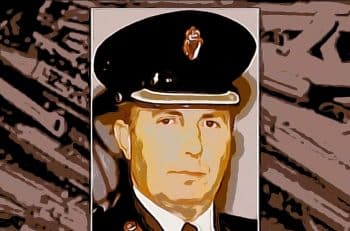
    As allegations continue to be made about the involvement of Robert Nairac in the Miami Showband massacre, how compromised is Garda Commissioner Harris who was PSNI liaison with Britain’s intelligence services? By Deirdre Younge. In the High Court in Belfast the British Government’s Ministry of Defence (MoD) and British Army are applying to have cases relating to the Dublin and Monaghan bombing atrocity of 1974 dismissed, alleging they are out of time. The bombings were carried out by the Glennane gang also known as the Portadown UVF who were also at the heart of an organisation that came into existence in the 1980s called Ulster Resistance. A recent BBC ‘Spotlight’ programme dealing with Ulster Resistance confirmed extensive collusion across the loyalist spectrum from DUP to UVF, UDA, UFF to MI5. Members of Ulster Resistance (UR) became aware that some of its members were MI5 agents. The key MI5 agent inside UR was carved out of the distribution of the weapons it had procured in late 1987 by those who were not under the control of the intelligence services. At the same time, information was leaked from RUC and the UDR which provided them with details of ‘suspected republicans’. The BBC NI Spotlight programme showed images of RUC intelligence that ended up in the  hands of the UFF/UDA. It  was used to target suspected republicans, including Loughlin Maginn, shot in Rathfriland in August 1989. His death, following that of solicitor Pat Finucane in February 1989, sparked the decades-long investigations by Sir John Stevens into collusion by the Security forces. Stevens was not shown evidence of RUC collusion. (BBC Spotlight on the Troubles, October 2019.) The fact that the UDA were receiving large volumes of  intelligence material from RUC sources was known to the agent Brian Nelson,  his Army Intelligence handlers and M15. That intelligence also, no doubt, informs the de Silva Report into Pat Finucane’s murder. De Silva was given access to British Army and MI5 intelligence that RUC officers at every level were leaking information to Loyalists. That intelligence is also integrated into the Ombudsman’s report on the Loughinisland murders as it relates to RUC ‘tip-offs’ about surveillance operations carried out in an attempt to seize UR weapons in Armagh in 1987 and 1988.  Awareness among members of UR that some of its members were M15 agents led to a disastrous loss of control by the Security Services and Special Branch  – and multiple murders Part 1: Commissioner Harris Drew Harris, the Garda Commissioner, didn’t leave the ‘Troubles’ of Northern Ireland behind him on entering Garda HQ. Drew Harris As former Assistant and Deputy Chief Constable of the PSNI and its former interface with the Security Services (UK), Harris has been accused of  fighting attempts to get information about the perpetrators of atrocities like the Miami Showband murders and of blocking access to  files about the many murders carried out by the Mid-Ulster, UVF ‘Brigadier’ Robin  Jackson. In 2011 the Historical Inquiries Team found Jackson had been connected to a weapon used in the Miami Showband murders by fingerprint evidence. In the High Court in Belfast in 2017 Judge Seamus Treacy ruled that there should be an overarching investigation into State collusion with the ‘Glenanne Gang’ and asked the PSNI to respond. In the Court of Appeal in Belfast the Lord Chief Justice ruled in July 9 [2019] against an appeal and said there must be an independent investigation carried out by the PSNI. Chief Superintendent Jon Boutcher has started an investigation into the Glennane series of killings as part of Operation Kenova. In an extraordinary development, Eugene Reavey whose three brothers were murdered in Whitecross in Co Armagh in 1976, has been told by the Police Ombudsman of Northern Ireland that a file has been sent to the Public Prosecution Service in the case. It is believed to recommend prosecution of a former RUC man, who was a member as ‘The Glennane Gang’. With the signing into law in Ireland of the Criminal Justice (International Cooperation)  Act  2019, the Garda can now give evidence and share intelligence with Coroners’ Courts in Northern Ireland. In an interesting twist of circumstances, Commissioner Harris  now has charge of the legacy files of secret Garda intelligence. Clearly how ambitious he’d want to be in sharing this information with authorities in the North is uncertain. As Assistant Chief Constable of the PSNI Drew Harris was the liaison between the Security Services (UK) , the PSNI and the Smithwick Tribunal from 2006 to 2014. (See also https://villagemagazine.ie/how-smithwick-got-diverted/ )The Tribunal was inquiring into alleged Garda collusion in the murders of Chief Superintendent Harry Breen and Superintendent Bob Buchanan. (See also https://villagemagazine.ie/investigation-killusion/http://Killusion ) He confirmed that he had spoken to the Security Service before he gave evidence to the Tribunal in October 2012. Drew confirms his consultation with the ‘British Security Service’ In 1989 MI5 reported the overall picture seems to be one of RUC collusion and links with the Loyalists which is similar in scale to that of the UDR, but the latter is much more likely to become involved in very serious crimes Dealing with the past is also causing problems for some retired RUC men – members of the Northern Ireland Retired Police Officers’ Association (NIRPOA). They now apparently  believe a policy of  non-co-operation with bodies like the Police Ombudsman of Northern Ireland  has been counterproductive. The Miami Showband Part 2: Ombudsman confirms collusion NIPROA took a Judicial Review against the Police Ombudsman of Northern Ireland and his 2016 report on the 1994 Heights Bar murders in Loughinisland. Former Head of Special Branch and Assistant Chief Constable Ray White often acts as its spokesman. In 1989 MI5 reported the overall picture seems to be one of RUC collusion and links with the Loyalists which is similar in scale to that of the UDR, but the latter is much more likely to become involved in very serious crimes Their affidavit was submitted in the names of Ray White and retired Chief Superintendent Thomas Hawthorne, the former Sub Divisional Commander in Co Down and chief investigator of the Loughinisland

    Loading

    Read more

  • Posted in:

    Nailing Harry Breen

    RUC Chief Superintendent whose death was the Smithwick Tribunal’s focus, was not as innocent as the tribunal extraordinarily contrived to believe. Smithwick failed to ascertain how and why he was murdered and credible sources are now telling Village why Harry Breen may have been of particular interest to the IRA.

    Loading

    Read more

  • Posted in:

    Investigation: Killusion

    The Smithwick Tribunal was set up in 2005, by the Irish Government on the advice of Michael McDowell, then Minister for Justice, and sat in public in Blackhall Place from 2011 until 2013, examining the possibility of Garda collusion in the deaths of Chief Superintendent Harry Breen and Superintendent Bob Buchanan, of the Royal Ulster Constabulary (RUC) who were murdered North of the Border in March 1989, after a brief meeting in Dundalk Garda Station. The purpose of the RUC officers’ visit was to discuss a move against the IRA’s Tom ‘Slab’ Murphy, which had been ordered by then Northern Ireland Secretary of State, Tom King. The Smithwick Tribunal ended up in 2011 with a strange, abstract, finding of ‘collusion’ in the murders of the two RUC men. Though it found “no smoking gun” in Dundalk, the Tribunal weakly decided there was indeed less specific evidence of “collusion by gardaí” in the murders. Dutifully, Enda Kenny described these findings as “shocking” and a public and media jaded in affairs Northern determined rather vaguely to remember that Smithwick was about a search for evidence of collusion which it had somehow found. What is extraordinary is that Smithwick provided no name for the ‘colluder’, though it clearly for a long time thought it was Owen Corrigan – even though it wasn’t. One of the reasons for this is that there may in fact have been no Garda colluder, a big embarrassment for those who felt a tribunal needed to be instigated and, worse, for those who conducted the inquiry without ever drawing attention to the inaccuracy of the premise that led to it but who saved face by continuingly, through the eight years of its existence, pretending there was one, albeit with less and less specificity. Smithwick was swayed into its collusion abstraction by the PSNI (which succeeded the RUC) giving untestable, very-late evidence to the Tribunal privately naming a fourth garda who was more plausible than Owen Corrigan as the colluder. Fulton: the man whose evidence led to a falsely perceived need for the Tribunal Smithwick always focused on Corrigan as the colluder because the Cory Inquiry, which prompted the Smithwick Tribunal, unduly relied on the 2003 evidence of a dissembling double agent known as ‘Kevin Fulton’ – now challenged by a source who spoke to Village – that Corrigan gave deadly information to the IRA about the RUC men. In its report the Smithwick Tribunal stated [at 15.1.2]: “This statement was a key factor in Judge Cory’s decision to recommend the establishment of this Tribunal, and Kevin Fulton was therefore an important witness before this Tribunal”. In any event Fulton actually seems to have later changed his story (when giving evidence to Smithwick in 2011) to say that Corrigan gave information to the IRA only about a 37-year-old Cooley farmer, informant Tom Oliver, who An Phoblacht then accused of passing on information to Garda Special Branch. Oliver was kidnapped, allegedly interrogated by Scappaticci and subsequently murdered. The changed story was that Corrigan gave information about Oliver, not about the doomed RUC men; but even the changed story was expressly and ignominiously disavowed by Smithwick, under pressure in a recent High Court case, to the extent it implied that Corrigan’s information led to Oliver’s death. In other words everything related to Fulton collapsed, despite Smithwick’s paean to him. Kevin Fulton had begun to engage with the Smithwick Tribunal in 2006. In its opening statement in 2011, the Tribunal made it clear that “Mr Fulton has elaborated on and expanded the statement he provided to Judge Cory”. The expanded statement was given to Corrigan’s lawyers in November 2011. For the first time they saw the central allegation made by Fulton which sensationally implicated Freddie Scappaticci, ‘Stakeknife’. It did not concern the murders of the two RUC Officers but instead implicated Sergeant Owen Corrigan in giving information which would lead to the death of an alleged IRA informer, Tom Oliver. The first reason not to believe Fulton is that a book about him makes no mention of any of this. Admittedly Fulton now distances himself from the graphic book called ‘Unsung Hero’ about his life but this is chiefly understandable as an expedient in the face of the, at least nine, PSNI Investigations arising from it, and the many civil actions in the pipeline. He has already had to pay compensation to the family of Eoin Morley, a Newry man shot dead in 1990, after failing even to enter an appearance in the Belfast High Court to proceedings by his mother. Nevertheless it is undeniably notable that at no stage in the book does Fulton mention a garda in Dundalk station passing information to the IRA, though it was scarcely something he’d be expected to omit. Nor is there any other evidence – of any sort – that he passed information about Corrigan or other Dundalk gardaí, to his handlers. Bizarrely Smithwick warmly endorsed Fulton, a man who had made a lifetime “career” of deception, as a highly credible witness, in his final report, even in effect if he completely and absolutely disavowed him in the subsequent legal action. Surprisingly, Smithwick was to say of Fulton: “He sat only metres from me and I observed him throughout. He was a very impressive and credible witness and I have formed the view that his evidence was truthful”. However, clearly there is a shadow over the statement from Fulton which inspired Cory’s call for what became the Smithwick Tribunal. If this is so it rewrites the history of both inquiries. Fulton’s’ similar role in other high-profile investigations will emerge in the coming months. But what exactly was the core allegations that convinced Cory and then hung Smithwick out to dry? This is the Fulton Statement as published originally in the Cory Report in 2003: “In 1979 I enlisted in the British Army. Within months of my posting, I was recruited by a British Intelligence Agency to act as an agent. In this capacity, I

    Loading

    Read more