government

Random entry RSS

  • Posted in:

    The strong centre

    Paschal Donohoe is a decent man: modest, cultured, the cleverest man in the room, according to a senior Fianna Fáil figure who spoke to Fiach Kelly in the Irish Times recently: the man other politicians envy, and a safe pair of hands. At 43, he has graduated with first-class honours from Trinity college, lived abroad, pursued a career in the private sector and risen without obstacle from local politics in Dublin city council to the heights of government, and the Ministry of Finance. Unlike his even younger boss Leo Varadkar he doesn’t have the sheen of a cultivated image. he has never attracted any suspicion of impropriety, never been excoriated, even in the unpleasant role of frugal Minister for Public expenditure (which he sure-footedly merged with the Finance brief when he took it over). When Village interviewed him he was open, generous with his time, eloquent. He reads progressive Irish fiction, has some quirky tastes, knows what is going on in his constituency about whose substandard welfare he remains committed. He even says he reads Village. Village’s agenda is equality, sustainability, accountability and it is wide and all-embracing enough that any political force, as Mr Donohoe certainly is, can be assessed against its imperatives. He is certainly in relative terms a model of accountability and openness. But what of equality and sustainability? Paschal Donohoe serves the politics of Fine Gael faithfully. He implies that Fianna Fáil is economically fickle, not always pro-european or outward looking and, increasingly implausibly now, that its attitude to ethics is demonstrably inferior to that of Fine Gael. He believes in Europe, the Open Society of Declan Costello, in an embracing attitude to outsiders. He believes in a balance between the markets and the state and, creditably from the perspective of this magazine, thinks the momentum has moved too far to the markets and needs to move back to the state, globally at least. He takes a robust attitude, as did his hero Declan Costello, to the obligations of the state. It will intervene to incentivise or nudge those who do the right thing, it will not perpetrate evil itself. He was passionate in defending the coherence of this attitude, in his interview. Mr Donohoe believes in the rights of property but will interfere at the edges, as with site-value and sugary drinks taxes. The state needs to plan systematically for development of its own lands. On national planning he was reluctant to stay how he would stop unsustainable development – such as the sprawl of Dublin into counties Meath, Wicklow, Kildare and beyond, as opposed to merely incentivise and encourage sustainable development – for example of cities and towns outside Leinster. He does not seem engaged by the environmental and climate-change agendas, though he knows its rhetoric. He rarely acknowledges, in policy, that Ireland is the laggard in Europe on climate, plastic waste and many other environmental performances. He does not seem zealous to revive the across-the-board indicators of social and environmental success, not just economics, that even the Fianna Fáil and Fianna Fáil-Green governments toyed with a decade ago. Failing them, it is likely we will continue to be a model of unsustainable, joyless growth, a paradigm of how to nearly get it right. As to equality, Mr Donohoe is exercised by the plight of those who cannot put themselves in a position to benefit from the equality of opportunity that those with strength crave. He knows from his Dublin central constituency that intergenerational inequality is difficult to mitigate. But his credo is equality of opportunity and he and his party are never going to be forces for radical redistribution, for equality of outcome. He is a decent man of the “strong centre”. He and his party have done some service bringing back elusive economic success to this country bankrupted by the now shiny principal opposition party. It has been argued that Fine Gael, with its visceral fetish for the rights of property, so well-enjoyed by its protagonists and indeed its voters, is ill-equipped to deal with the crises of housing and homelessness that do much to undermine the fabric of society in 2018. It is ideologically too wedded to the private sector to provide homes on the scale required on public lands. Mr Donohoe, in fairness, claims that he has far-reaching proposals to do just that. We’ll see. Ireland is lucky to have such an open, decent, youthful and thoughtful politician in the Department of Finance as the risen fiscal pendulum suggests we can once again explore a national Vision. But it is impossible to be radical from the centre, however strong, and – for Village, Mr Donohoe would do well to address the social and environmental agendas as stringently and competently as he continues to promote and foster the purely economic agenda.

    Loading

    Read more

  • Posted in:

    NIexit will reduce protections

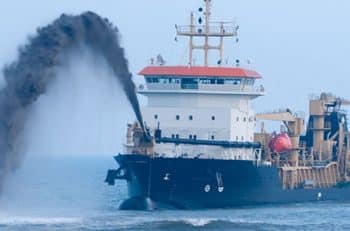
    Brexit brings a threat of the North accelerating in a race to the bottom in terms of the environment and employment, cutting costs in order to get economic advantage. In the face of this, much depends on when or if Devolution is reinstated. There is a particular concern on environmental matters because the EU has had a determining impact on the North’s environmental legislation. Even with EU membership, there is concern at a systemic failure to enforce environmental legislation. Sand has been dredged from Lough Neagh for years, without any planning process being applied. Currently about 1.5m tonnes per year is extracted. The Lough is the largest fresh-water lake in Ireland or Britain. It is a Special Protection Area. It is a Ramsar site, that is recognised as a wetland of international importance. Around 100,000 wild birds winter on and near it. It is one of only five lakes in the world where pollan are found. In June last year the North’s Court of Appeal allowed an appeal from Friends of the Earth against former Environment Minister Mark H Durkan’s decision not to order an immediate halt to the dredging. However, the Department of Infrastructure has said it is “not expedient” to stop dredging, which continues. In another regulatory failure, approximately one million tonnes of assorted waste was illegally dumped on a site at Mobuoy Road, Derry. Remediation will cost at least £20m (€22.4m), but may cost 12 times as much. The dump is beside the River Faughan, which provides drinking water for Derry City. Friends of the Earth has lodged a complaint with the European Commission against the North for systemic failure to enforce planning and environmental laws. The complaint is slowly making its way through the process. The North, like the rest of the UK, has no third-party right of appeal against planning decisions: developers have a right of appeal. That is contributing to pressures to restrict the right of appeal in the South. With this being the current situation, the North’s environmentalists are worried about developments after Brexit. They are particularly worried about the loss of the Habitats Directive. This has been key to their successes: in particular, their two biggest. These were the A5, the North’s biggest-ever road project, which was halted after a court challenge: and the court action on the Lough Neagh dredging. The Habitats Directive is particularly important because it contains the precautionary principle. Politically, there is no great will to protect the environment. The two dominant parties, the DUP and Sinn Féin, have shown little commitment. Famously the first measure the Paisley/McGuinness devolved administration introduced was a relaxation on the former Northern Ireland Minister’s restrictions on one-off housing. In 2008 Arlene Foster as Environment Minister rejected a report ‘Review of Environmental Governance. One of the recommendations was for an independent environmental protection agency, and a limited third party right of appeal. Former DUP Environment Minister Sammy Wilson has said people would “look back at this whole climate change debate and ask ourselves how on Earth were we ever conned into spending the billions of pounds” on policy changes. Sinn Féin has not denied climate change, but has been the main party pushing the A5 project. The party’s attitude to the environment is typically ad hoc. This is more worrying because the North’s environmentalists are not a major lobby group. The Assembly elected last year contains only two Greens, from 90 members. Only a handful of others have any significant interest in environmental matters. The effects on workers’ rights will partly depend on when or if devolution is restored. Certainly, trade unionists are seen as a better – organised lobby than environmentalists. They have had certain limited successes. The Executive parties rejected introducing proposed legislation further restricting the right to strike being introduced by the UK government. It did not follow the British parliament in extending the time limit for the right to claim unfair dismissal. On the other side, Northern wages are lower. The median weekly wage is £501 (€562.50), in contrast to €734.60 in South. The minimum wage, which is UK-wide, is £7.83 (€8.79) and only comes into operation at 25. In the South it is €9.55. It seems Northern Ireland is facing into a future without the threshold protections of for example the EU Working Time Directive 2003 which requires a minimum of four weeks paid holidays annually and a maximum 48-hour working week unless a worker individually consents; of the The Parental Leave Directive 2010 which prescribes four months of unpaid leave for parents to care for children before they turn eight years old, and of the Pregnant Workers Directive 1992 which creates a right for mothers to a minimum of 14 weeks paid leave to care for children. There will be continued pressure to reduce wages and protections. That will be strengthened by the tendency not to let a good crisis go by without seizing the chance to cut pay and conditions. Anton McCabe

    Loading

    Read more

  • Posted in:

    Capitalisteracy

    Ireland has a dreadful, inequitable, dangerously failing healthcare system. The State’s answer is the likes of healthy Ireland, which runs a public campaign that, in essence, throws the responsibility for health on to individuals – who seemingly just need help from an initiative to ‘empower and motivate them’. February saw the launching conference – hosted by the Broadcasting Authority of Ireland (BAI) at Facebook Ireland HQ – of a new network, Media Literacy Ireland (disclosure: I’m in it). From the conference stage there was lots of talk about empowerment and not much talk exploring from whom it might be necessary to take power away. There was even a speaker from healthy Ireland, lest the analogy be missed. Don’t be surprised, then, to encounter an Irish campaign in the next year or two imploring you to the media equivalent of ‘eat your vegetables, get some exercise, don’t smoke cigarettes’. Something along the lines of ‘read the Irish Times, trust in Miriam, don’t tweet fake news’. Or maybe not. Media Literacy Ireland potentially has some of the hallmarks of industry-friendly campaigns like Drink Aware and Gamble Aware, plus the involvement of a regulator, the BAI, which might like a campaign that implicitly justifies light-touch regulation abetted by ‘greater public awareness’. On the other hand – and credit to its organisers for this – Media Literacy Ireland has come into being as a genuine network of interested researchers, activists, community-media practitioners and others. And most of us in it are not disposed to frame the problem with Irish media as one of public credulousness, to be addressed by offering tips for spotting ‘extremism’ online. Regular readers will know my view: that media (like healthcare) have a capitalism problem, and that everything from fake news to clickbait to inadequate investigative resources to Denis O’Brien ows from that basic source. But you don’t have to agree with me and name the underlying problem as capitalism to understand that there are structural causes for crises such as the one that erupted recently over Government ‘advertorial’. “I believe the Government is attempting to exploit the difficulties many local and regional titles are facing to promote their party interests”, said no less a media critic than Fianna Fáil’s Timmy Dooley, the party’s spokesman on communications. (How sweetly old-fashioned that word ‘communications’ can sound as it grapples with the changing world.) Media literacy, if it is to be of any use, has to do more than implore us to look for the little ‘special feature’ tag on the top of a piece of paid corporate or government puffery, then to regard the ‘journalism’ below with due scepticism. It must mean understanding ‘the difficulties’ for all journalism that operates in the current market, especially one in which technological change has accelerated existing trends toward blurred lines, and in which advertisers have alternatives to local and regional newspapers when it comes to reaching eyeballs. If the most poignant aspect of that brief, quickly snowed-under ‘Ireland 2040’ crisis was the image of the Taoiseach issuing guidelines for labelling advertorial content – guidelines of which the most callow intern in a local newsroom should surely already be aware – we shouldn’t lose sight of the fact that media have been operating at the edges of such guidelines for decades, for the benefit of advertisers looking to buy a little ersatz editorial credibility. How can this fail to be a lesson about how fragile, at best, any such credibility has become ? As the media may or may not have told you, global research shows trust in media is in tatters – media are less trusted than governments, NGOs, businesses – and Irish people are at the mistrustful end of the distribution. In this context, media literacy can hardly consist of legacy media saying ‘trust us, not them’. What can be done ? (Yes, short of getting rid of capitalism.) Anyone who has worked in a newsroom knows what a frightening prospect it would be to try to earn the public’s trust with transparency and accountability about our editorial practices. On a daily basis, contingent and incomplete information is transformed into definitive statements of ringing certitude. That’s one sausage factory we don’t want you to see inside, especially since the work often consists of sticking our label on someone else’s meat. The irony is that the technology often over-simplistically blamed for creating the journalism crisis has long offered tools for remarkable transparency, tools that most journalists have chosen to use only in limited ways. What if hyperlinks in journalists’ stories led not to dull pages of cross-references or to Wikipedia, but rather to images of documents and notebook pages, audio of interviews, pictures of the journalist in the field ? It can be done and has been done, but the experiments in transparency of the early web – notably the extraordinary 1996 investigative series by the aptly named Gary Webb in the San Jose Mercury news, about the CIA’s involvement in the cocaine trade – have rarely been repeated, let alone built upon. Such transparency would foster media literacy without the onus being placed on the audience. Whether it would foster trust is, of course, a matter of what audiences thought of the practices revealed by transparency. Interactivity and social media mean we have some tools whereby that reaction could be tested and gauged. Dublin Institute of Technology, thankfully, is prepared to put its money where my media-literacy mouth is: it’s funding a project that will will use the Liberty, a student- produced ‘hyperlocal’ newspaper and website for Dublin’s Liberties area, to innovate in the area of journalistic transparency. We’ll employ social media as a forum for sharing ‘the story behind the story’, with tweets, Facebook updates, Youtube videos and Instagram posts that unveil aspects of the production of journalism, from notebook pages to editing history, from who-was-interviewed to who-refused. A doctoral-level researcher will be responsible for implementation, monitoring, community engagement and evaluation of this project, which should help readers to understand better the process of news construction, and help journalists-in-training become accustomed to

    Loading

    Read more

  • Posted in:

    The cost of costs

    Real justice requires access to justice, which requires effective access to courts, which requires that courts be accessible without the threat of prohibitive costs. Some 90%, or an even higher percentage, of people in Ireland have no realistic access to justice, due to the prohibitiveness of the costs associated with legal actions via the courts. The Irish system of access to justice is permeated with unfair procedures, unconstitutional laws, and conflicts of interests, which means that most court users in Ireland are vulnerable users. BalaNCiNG CONFliCTiNG CONSTiTUTiONal RiGHTS: The English rule (Loser pays rule) on legal costs does not balance two conflicting rights – (1) the property rights of winning litigants, and (2) the right of persons to have access to the courts, without being threatened by unpredictable and prohibitive legal costs. Notionally, proponents of the English rule claim that winners are entitled to be 100% vindicated, and so be in a position to cover all their legal costs. However, this is a very narrow view, which fails to assess the big-picture consequences: (a) winners are also threatened, up to the point of winning, and can be threatened as defendants, in circumstances where they have no chance of recovery of costs from penny-less plaintiffs. (b) the English rule creates all sorts of conflicts of interests and market distortions, which enormously inflate the costs payable. (c) wealthy litigants can threaten persons of lessor wealth, with adverse costs, such that the case is determined more often by issues of fear, rather than justice. (d) the state, and most government actors become unaccountable, as the decision makers are immune from costs (lumped ontaxpayers, often, with little transparency), but can pursue political goals, or engage in abuse of power, with no financial downside, and can still threaten all challengers with financial ruin; this inequality of arms, means that citizens are generally unable to challenge the unconstitutional laws and conduct of government. HeNCe, THe eNGliSH RUle iS NOT COMPaTiBle WiTH a Real CONSTiTUTiONal deMOCRaCy: Costs Allocation Rules incentivise Unfair Adjudication Rules which also incentivise Inefficiencies into the system. Because the government is allowed to intimidate its challengers with unlimited adverse costs, it then wants to maximise those costs, so as to bolster its threat and avoid oversight; High Legal Costs has been the default weapon of choice for all governments since the commencement of the state; the “Big Stick” is maintained to bounce its opponents out of the ring, and this has so far been achieved with little condemnation by international institutions, which have largely failed to recognise the stealth threat that prohibitive costs represents as a threat to the rule of law. The Big Stick undemocratically deters citizens and/or NGOs from challenging the government when it passes unconstitutional laws, or acts unconstitutionally – this allows the government to pander to its own electoral constituency while depriving less well represented persons access to rights protection, leading to violations of minority rights and individual rights. When populist demands call for adjudicative processes which affect specific rights of connected groups, QUANGOs are often created in order to parry off populist demands for accessible justice. The substitute QUANGO justice can rarely be as independent as courts, and the outcomes are often secretised, thus bypassing democratic oversight. Hence, the government passes unfair laws for legal costs adjudication, so as to frighten all challengers – this allows it to exercise power with minimum oversight. THe Need FOR CCOS (COSTS CaPPiNG ORdeRS) In the ex parte application by Dymphna Maher [2012], the applicant effectively sought an assurance from the High Court that any adverse costs would not be prohibitively expensive, if her lawsuit was subsequently deemed not to have fallen under the ambit of the special costs regime (related to some environmental cases). Judge Hedigan insisted that there was no legal authority to permit him to make the order sought by the applicant. However, he observed that: “[It was] very arguable that the absence of some legal provision permitting an applicant to bring such a motion, without exposure to an order for costs, acts in such a way as to nullify the State’s efforts to comply with its obligation to ensure that costs in certain planning matters are not prohibitive. As things stand, I have no power to change this”. This case along with 12 other cases was appealed to the Supreme Court (SC) on an ex parte basis – where only one of the parties is heard. The SC held that it could not provide such an assurance, on an ex parte basis, as the other side (the EPA) needed to be heard first. The SC decision in the Coffey case means, in effect, that any person seeing to access the courts in Ireland is threatened with financial ruin, even if just seeking a CCO. The court failed proportionately to balance the right of access to the courts as a right conflicting with the property rights of government, particularly in the context of the need for real separation of powers. The judicial sphere of power is rendered inaccessible to most citizens, when the loser-pays rule is applied to challenges to executive power, and so the judicial sphere of power is inappropriately diminished; this undermines the checks and balances necessary in a liberal democracy between the legislative, executive an judicial functions. SePaRaTiON OF POWeRS By dividing power between these traditional three spheres, the courts, the government, and the Oireachtas, we help to disperse power and make less probable the accumulation of power to one person, or a small elite, as often happens in what are referred to as illiberal democracies. Diagram 1, above, displays the traditional Montesquieu view of three spheres of power. However the (Montesquieu) tripartite division of power, is a poor reflection of reality. This is largely because it generally fails to engage with the level of real power held by each of the three spheres, in practice. A second flaw, is that there should really be five spheres of power, and not three; the people should be seen

    Loading

    Read more

  • Posted in:

    Bud get real

    The Annual ritual surrounding the budget will come to an end on Tuesday 10 october when finance minister, Paschal Donohoe, unveils his first package of tax and spending proposals since his appointment earlier this year. Don’t expect too many surprises though, as most of the expected initiatives have already been well aired through inspired leaks from various government and other sources. Once again, and despite the faux outrage of some Fianna Fáil frontbenchers who are threatening to pull out of its confidence-and-supply agreement unless the USC is cut or pensioners given another ver, the reality is that the deal is already done. It will not take much to cobble what both parties will claim as a victory in relation to cuts to the USC for lower- and middle-income earners while also ensuring that the wealthy are not overburdened and indeed will also gain from fiddling with tax bands and rates. Varadkar has promised to reward those who get up early and those who create wealth and pay for public services in what is clearly a pitch to the middle-class and better off voters he needs to keep on board if Fine Gael is to regain power. Equally, Micheál Martin does not wish to alienate the same constituency which he hopes will return to the Fianna Fáil fold in greater numbers than the party managed in 2016. Ultimately, the differences on tax and spending policies between the two main parties are minuscule and any rows over tax breaks for builders, increases in stamp duty, inheritance tax or whatever other measures are largely manufactured. The real question of the ratio between reducing the tax burden at the expense of improving public services is of course ideological. This makes the contribution of the hardly radical Economic and Social Research Unit all the more interesting. It has warned against tax cuts while the economy is growing by around 5% this year and an expected 4% in 2018. It submits that tax cuts will only overheat the economy. “Given the pace of growth over the past number of years there is certainly no case to stimulate economic activity with the budgetary package”, ESRI economist Kieran McQuinn said. He added that, if anything, the Government might need to raise taxes in order to dampen consumption and in order to raise the funds for essential capital spending on infrastructure in housing, health and education. This is not the narrative that Varadkar needs, to boost his chances of retaining power after the next election which many expect will come some time after the third and final budget to which Fianna Fáil committed in the confidence-and-supply deal. This is subject of course to the upshots of other unexpected events which could prompt a rush to the polls earlier next year or following the abortion referendum. Others on the Left who oppose the tax-cutting agenda and argue that the housing and health crises, not to mind other social needs, demand that all available resources should go into public services. SIPTU president Jack O’Connor spelled this out at the union’s biennial conference in Cork on 2 October. In his final presidential address to the union after more than fourteen years in the job, he argued that there should be no tax cuts whatever between now and the centenary of the foundation of the State in 2022. Arguing that all available resources should be put into the construction of social housing, decent health and education systems and a mandatory second-pillar pension scheme, he condemned the main parties for promoting tax-cutting policies and “a value system that precipitated the crisis in the first place”. “It’s back to be looking the other way, while exponentially growing inequality reasserts itself in our domestic and social affairs. It is absolutely unforgiveable that thousands of our children are homeless, in the aftermath of the collapse of a credit fuelled property bubble”, he told delegates in Cork city hall. “It is appalling to think that this is happening within twelve months of the celebration of the centenary of the insurrection of 1916, which was fought on the basis of a Proclamation which declared the establishment of a Republic which would cherish all the children of the nation equally. And while this is unforgivable in itself, it is absolutely obscene that our major political parties are again promoting a tax-cutting agenda while children are homeless, in this, one of the wealthiest countries in the world”. It is unlikely that Donohoe and Varadkar will heed such advice or that Fianna Fáil will do anything more than pay lip service to such utterances. As O’Connor, who is chairman of the Labour Party, also said, it will require an alliance of all genuinely progressive forces in Ireland to achieve his ambition for the common good by 2022. And that is a big ask. Frank Connolly

    Loading

    Read more

  • Posted in:

    When shall we three meet again?

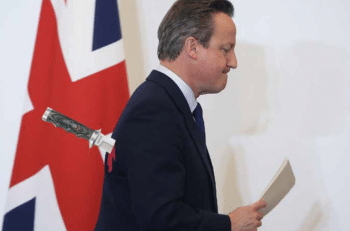
    This is a saga of sadness, a tragic tale of three ‘whiches’, a fairy ‘which’, a whichsoever ‘which’ and a wicked ‘which’. In initiating each of three referendums, David Cameron said, “You have a choice, ‘this’ or ‘that’, which do you want?”. So all three ballots were binary, and while the first two delivered what he wanted, the last one was, in effect, political suicide. All three outcomes were inaccurate reflections of ‘the will of the people’. Let’s have a look, and then let’s consider a better methodology. 2011 Referendum on the Electoral System After the 2010 general election, the UK had a coalition government: Cameron’s Conservative Party (Tories) and the Liberal-Democrats. And he probably thought to himself, “How can I rid myself of the Lib-Dems’ persistent pursuit of proportional representation, PR?” Hence the first ‘which’, so to silence any further debate on electoral reform. Some people liked single-seat constituencies, either the UK’s first-past-the-post, FPTP, a plurality vote; or France’s two-round system, trs, a plurality vote followed by a majority vote; both are single preference systems; or again, there is the Australian alternative vote, av, a preference vote which is like a knock-out competition – in a series of plurality votes, the least popular is eliminated after each round and his/her votes are transferred to the voters’ second or subsequent preference… until a candidate gets 50%. Meanwhile, many wanted PR in multi-member constituencies. There is the German half FPTP and half PR-list system called multi-member proportional, mmp. There is PR-list – in Israel, you vote for a party; in the Netherlands, for a candidate of one party; in Belgium, for one or more candidates of one party; and in Switzerland, for those of more than one party. Or there’s the Irish PR-single transferable vote, PR-STV, where voters can vote cross-party in order of preference; STV is like AV except that success depends on (not a majority but) just a quota of votes. Overall, then, the choice was huge. But Cameron’s 1st preference was FPTP and his 2nd av. So that was the 2011 referendum, the first ‘which’: “FPTP or AV, which do you want?” For countless (and uncounted) supporters of pr, this was like asking vegetarians, ‘Beef or lamb?’. Now maybe FPTP was the most popular but, based on data from just a two-option poll, impossible to say. For Cameron, however, it was a dream: he chose the question, and the question determined the answer, just as any fairy godmother would have wished: a massive 67.9 to 32.1%. Magic. Furthermore, the Electoral Commission said the question was fair. Amazing. The Ombudsman agreed. Incredible. And many thought this was all democratic. So that was the end of that argument. So why not a second fantasia, another referendum? Scotland 2014 “Double, double, toil and trouble”, said the witches in Macbeth. The Scottish Nationalist Party, (SNP), always on about independence. How can I rid myself of these skittish Scots? This was Cameron’s second problem, and so, as if on a broomstick from the darkest recesses of Westminster, the second ‘which’ enters the political stage. There were three options: (a) the status quo, (b) maximum devolution or ‘devo-max’ as it was called, and (c) independence. Thinking that (a) would easily beat (c) in a two-option contest, just as FPTP had wiped out av, Cameron waved his wizard’s wand and demanded a binary ballot. So the second ‘which’ was again dichotomous: “(a) or (c), which do you want?” In the campaign itself, however, the gremlins were grumbling, option (c) was gaining ground. Cameron twitched; no – panicked: and so, as if at the witches’ coven, a vow was made – zap! – and option (a) morphed into option (b). On the ballot paper, however, there was no switch, the ‘which’ was still “(a) or (c)?” So the result was a stich-up: 55.3% and 44.7% respectively were highly in ated levels of support for (a) and/or (c). Furthermore, the winner was (b)… but no-one had voted for it! For Cameron, though the potion was fading, the plebiscite was still successful, and that was the (very temporary) end of that argument too. We return to the diviners’ den. The EU Referendum Believing as it does in majority voting, the Tory Party (and many another) is a beast of two wings and no body. Little wonder that this weird creature is often in a ap, especially over Europe. “Those cursed Europhobes”, he might have muttered. And then, stage extreme right, another scary monster, the UK Independence Party, Ukip. “Oh how can I rid myself of these damned devils?” Ah-ha, the third… but this was the wicked ‘which’. The wrong side won. The Electoral Commission’s semantic change from ‘yes-or-no?’ or ‘in-or-out?’ to ‘remain-or-leave?’ did not change the poisonous potent of the poll, its binary bind, its divisive ‘positive-or-negative’ nature. The question – “Which do you want?” – was again adversarial. The campaign was horrible. And the result? 48.1% chose ‘remain’ to 51.9% ‘leave’. But nobody knows what the latter actually want! To suggest, then, that this outcome is ‘the will of the people’ is, again, bunkum. Meanwhile, politically, Cameron is dead, impaled on his own petard; in a word, ‘bewhiched’. Democratic Theory and Practice So what should have happened? Well, consider first a hypothetical example. The average age of the electorate cannot be identified by a majority vote. If such a piece of research were to be attempted, the question would probably be, “Are you young or old?” In which case, no matter what the answer and by what percentage, it would be wrong! If, however, the question were multi-optional, ‘Are you in your twenties, thirties, forties, etc.?’ the answer could be pretty accurate. With average age or collective opinion, as in a German constructive vote of con dence, voters should be positive. No-one should vote ‘no’ or ‘out’ or ‘leave’; instead, everyone should be in favour of something: for the UK to be in the EU, or like Norway in the EEA, or like Switzerland in a looser

    Loading

    Read more

  • Posted in:

    SF won’t prop up FF, FG or Labour

    The recent General Election was a very good one for Sinn Féin. We increased our number of TDs from 14 to 23. That’s a 65% increase – a success by any standards. Importantly, Sinn Féin also further increased the geographical spread of the party. There are now very few regions in the State in which there isn’t Sinn Féin Dáil representation. There is also in place, another whole raft of Sinn Féin representatives who, although not returned at this election are very likely to be elected next time around if they continue with the valuable work they are doing. So, Sinn Féin returns to the Dáil, not just with a significantly larger team but also with a team of very high-calibre TDs, including more women and more younger representatives. Sinn Féin had two clear objectives going into the election. The first was to get rid of a Fine Gael/Labour government that has brought chaos to housing and health, imposed unfair taxes and promoted mass emigration. We succeeded in that. In the early days of the election campaign we holed the coalition’s strategy below the waterline by proving that their figures were wrong and that they presented €2 billion which they did not have. I think we were also successful in demonstrating that you cannot have US-style taxes and at the same time invest in decent public services.Our other objective was to prove to people that there is a realistic, credible political alternative of which we are a significant part. That is very much a work in progress. We may not have succeeded, at this point, in getting enough seats to form a progressive Government but that will improve as we go on. But the realignment of politics in this State took an important step forward in this election and the next election will see that trend intensify. The political domination of Fine Gael and Fianna Fáil is finished. What we now need to do is increase the cohesion among those who advocate an alternative view of how the economy and society should be organised. Over the past five years, Sinn Féin has been the genuine voice of opposition in Leinster House, offering an alternative to the dreadful austerity policies of Fine Gael, Labour and Fianna Fáil. All of Sinn Féin’s pre-Budget submissions demonstrated a way of ensuring economic growth while also being socially equitable and protecting the vulnerable. We repeatedly warned the Government of the escalating homelessness crisis. The Government refused to listen and it became an emergency. We also consistently raised the issue of all-Ireland integration and the political, economic and social case for a united Ireland. Sinn Féin has now received an enhanced mandate to continue with that work. The post-election sham fight between Fine Gael and Fianna Fáil is nothing to do with the real issues affecting citizens. The people who were homeless last Friday will remain homeless under Fine Gael and Fianna Fáil. Patients will still languish on trolleys in our hospitals under Fine Gael and Fianna Fáil because those parties are not serious about resolving these issues. Going into this election Fianna Fáil picked up on a sense that voters were moving to the left, so they began to steal the phrases Sinn Féin was using about fairness and a recovery for all. That strategy resulted in a partial recovery of the Fianna Fáil vote itself but still left it far, far short, in his-torical terms, of where it once stood. Throughout the election campaign, Sinn Féin made it clear that we would not prop up those parties that created and sustained the economic and social crisis facing our people. That is the mandate we received and we will not break our commitments. Sinn Féin will continue to consult with others, including those aligned to the Right2Change platform, on the way forward. If not in the immediate period ahead, the objective of a genuinely progressive alternative Government in which Sinn Féin plays a lead role is a live possibility. Over 400,000 people voted for candidates aligned to the Right2Change platform to end water charges. The Fine Gael/Labour Government has been defeated and water charges should leave the stage with them. What is now clear from the election is that people voted for real change and a more equal society. Sinn Féin is committed to achieving that and to pursuing and preparing for the peaceful reunification of Ireland and the reconciliation of all our people. Whether in Government or in opposition, Sinn Féin will stick by the mandate we have been given. Gerry Adams Gerry Adams TD is President of Sinn Féin

    Loading

    Read more

  • Posted in:

    Unruly

    What is meant by the Rule of Law and is such a concept honoured in Ireland today? I believe that the rule of law though arguably an unqualified good is not being adhered to in this state save mostly by the judiciary and that the legal system and erratic observance of legality by state officials renders our democracy fragile. In my view Ireland draws close to that amorphous notion, a failed state that cannot in reality uphold the rule of law. This opinion piece will not be a comprehensive pathology but will point out many of the salient practical features which show how the rule of law is breaking down. The Rule of Law: Theoretical Incoherence? We first need to probe the many senses in which the rule of law is described. Joseph Raz, a legal positivist who believes in “perfectionist liberalism” has suggested that the rule of law is merely a kind of shorthand description of the positive aspects of any given political system. From a different vantage point the fundamentalist Christian legal philosopher John Finnis considers that the rule of law is: “[t]he name commonly given to the state of affairs in which a legal system is legally in good shape”. Another philosopher Brian Tamanaha chimes to negative effect that the rule of law is “an exceedingly elusive notion” which leads to “rampant divergence of understandings” and is similar to the amorphous concept of Good in that “everyone is for it, but has contrasting convictions about what it is”. At bottom, there is no consensus: it is elusive at best: a form of smokescreen or professional hypocrisy at worst. But let us endeavour to be constructive. For example Carothers, though sceptical, adds a worthwhile positive definition of the rule of law as: “a system in which the laws are public knowledge, are clear in meaning, and apply equally to everyone. They enshrine and uphold the political and civil liberties that have gained status as universal human rights over the last half-century. In particular, anyone accused of a crime has the right to a fair, prompt hearing and is presumed innocent until proved guilty. The central institutions of the legal system, including courts, prosecutors, and police, are reasonably fair, competent, and efficient. Judges are impartial and independent, not subject to political influence or manipulation. Perhaps most important, the government is embedded in a comprehensive legal framework, its officials accept that the law will be applied to their own conduct, and the government seeks to be law-abiding”. Now let us stress-test certain aspects of this detailed expurgation against the patient – in this context Ireland Inc. Yes of course rights exist in our still fine, if shopworn, constitutional matrix and are enforced by the courts in many instances but there is also an undue deference to the executive that has led to the non-enforcement of social and economic rights particularly the right to housing by the courts. There is an excess of judicial caution on other rights-based claims, particularly where issues of financial iniquity and the countervailing amorphous blob, public policy, are implicated. There is also widespread violation of privacy by the state and its police force, in particular. The overly sanguine way we as a nation have accepted, in effect, what has been police and state criminality with respect to privacy for the last thirty years without widespread outcry is baffling. At least there are signals of an upsurge in civil disobedience, which when peaceful, as Habermas, the German sociologist of critical theory and pragmatist, would contend, leads to a vitalisation of democracy. Not here. Further, the scandal that is our banking structures, the disgrace of the banks varying interest-rate repayments in breach of agreements, the sometimes unconscionable evictions, are not conterminous with the rule of law. NAMA is a mess formulated by the neoliberal club which did its best to avoid a proper new deal for the Irish people. The banking inquiry was a poorly performed French farce. What is desperately needed is a right to housing. Eviction should be rare, require rehousing, and should only follow meaningful intervention by an arbitrator who can determine whether the consumer can repay and whether the bank – with or without the enlistment of a vulture fund – is bundling the mortgage at a bargain-basement rate to private-law profiteers. Further, many of our state institutions have major structural problems. The Garda are not progressive in training and intent: they do not seek justice or the truth, but rather a result. They, at times spin, embellish or at worst, manufacture evidence – and, to be candid, at times act criminally and in violation of the rule of law. Finally, there are limited independent checks and far too close a nexus between politicians and the police. The recent moving of the deckchairs by the Garda Commissioner will not change the culture or training of the force, its group think or, arguably, its competence. It needs a radical ovehaul and a redirection so primarily promotes truth- seeking, investigative process. The impartiality and independence of our judiciary needs at times to be severely questioned because there is far too close a nexus between politics and judicial appointments. Though most are appointed on merit, many of our judges are appointed for their proximity to political parties. Further, some judges have an aggrandised sense of themselves: certainly they are not servants of the state as that is not a judicial function, but rather, they are the servants of the constitution which is a bulwark to protect the people against state excess. Judges also need, in the interest of public confidence as to their impartiality, to declare their share-holdings and indebtedness to the banks. Moreover, parts of the government left itself open to the accusation, during the bugging crisis, that it was also mired in corruption. In the strictest sense it observed the rule of law but, in manner, it laid itself open to the criticism levelled elsewhere by the late great Christopher Hitchens of being crypto-fascist, pursuing a

    Loading

    Read more

  • Posted in:

    Election Times

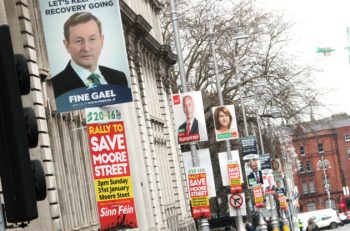
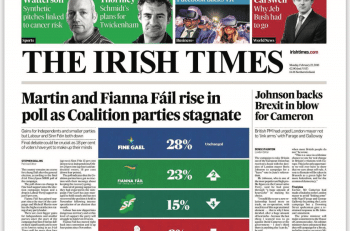
    The story of an election is much more than a few headlines, but the Irish Times front pages mercifully, if languidly, devoid of the kind of blatantly partisan positioning seen elsewhere, provide in hindsight a neat narrative of the campaign, with the slow realisation that Fine Gael was in trouble, the lack of a clear alternative emerging, and of course, “events, dear boy”. While its columnists and editorials may have declaimed preferences in the run-up to the general election, the Irish Times‘ front page generally affected a more neutral stance, certainly by comparison with the anti-Sinn Féin headlines which dominated the Irish Independent and its Sunday sister during the February campaign. The ‘newspaper of reference’ (formerly “of “record”) began the month in ‘phoney war’ mode, leading on Monday 1 February with coalition plans to “target home buyers and parents in poll pledges”. On the Tuesday, with still no election date declared, the story was “Taoiseach prepares Fine Gael ministers for election”. Perhaps ominously, on both days the below- the-fold story concerned the revelations regarding “Grace” a young woman with intellectual disabilities abused while in HSE care in a foster home. The story would feature again several times during the month and, by the end of the campaign, would threaten to inculpate Michael Noonan. Wednesday’s paper finally brought the official election notice, leading with Fine Gael ministers outlining their election promises, but the shine was short lived. Thursday, and the first election poll, brought “disappointing news for Coalition parties”. Much of the remainder of the campaign was spent trying to push back against those low poll numbers, which stubbornly refused to rise. By the first weekend, Fine Gael had announced a “tax U-turn to hit voters earning €100K” (the top 10% of all earners, though Irish Times readers would be better paid than the average). The election narrative was dominated at first by Fine Gael (at least on the front page) but it changed dramatically in the second week. The murderous Regency Hotel rampage called attention to cuts in Garda numbers and resources and Fine Gael, which prides itself as a law and order party, found itself on the back foot. At one point Sinn Féin’s Mary Lou McDonald attacked the government for being soft on crime during an RTÉ radio debate. By the end of the week, the lead story that Garda “may be issued with new weapons” helped to restore marginally Frances Fitzgerald’s battered image, but you know you (we?) are in trouble when Sinn Féin are attacking you from the right on crime. Meanwhile, bubbling below the fold, the news was no better. Lowry, Drumm and Luas strikes festered, and the Times awarded the first TV debate to Micheál Martin. Week Three began with Labour striking out to create a separate identity, promising “an abortion vote in any new deal” – definitely a plus for liberal Irish Times readers. Smaller parties got their first acknowledgement the following day, as the lead reported they did best in the previous night’s debate. For the rest of the week, it was almost as if the Irish Times tired of the “boring” election campaign, with more conventional “newsy” lead stories on an HSE inquiry into baby deaths, welfare benefits for migrants, and Brexit. Week Four began with the writing on the wall, summarised in a single Monday headline “Martin and FF rise in polls as Coalition stagnate”. Tuesday the paper reported Kenny and Martin had “equal backing in race for Taoiseach”, and the final TV debate failed to resolve anything for this hard-to-please newspaper as “leaders fail to land killer punch”, before Kenny’s “last-ditch call for vote in favour of stability.” Below the fold on the same day, the first mention of Sinn Féin in a front-page headline volunteered no favours: “Canvasser for Adams owns hay shed where ‘Slab’ Murphy cash was found”. ‘Slab’ was also the subject of one of the few passionate editorial columns (now perhaps self-deprecatingly titled “the Irish Times view”). Others quite reasonably despaired of the “short election, short of vision”. But while front pages covered national trends, debates and polls, and columnists inside the paper from Una Mullally (who, surprisingly for someone with a political agenda, gave up interest) to Breda O’Brien (vote for people of conscience, if you know what I mean) via Fintan O’Toole (who in the end detected an unlikely victory for social democracy) and Noel Whelan (who again somehow spotted the Fianna Fáil revolution implausibly early) ventilated partisan viewpoints, perhaps the most concise reportage on what happened on election day was by religious affairs correspondent Patsy McGarry, who on the day of the count reported from the north inner city, less than ten minutes from Tara St in a neighbourhood where few read the Irish Times, and fewer would share its editorial concerns: one, a hooded man, was picking up rubbish and putting it in a black plastic bag.“I didn’t vote. I don’t have a voting card. I was abroad for five years. It’s not important at all”. Gerard Cunningham

    Loading

    Read more