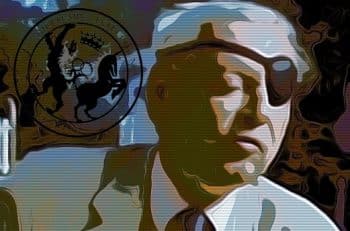
Hugh Mooney

Random entry RSS

  • Posted in:

    An appalling vista: disturbing indications of Kitson's foreknowledge of a third massacre of innocent civilians. Tragedy took fifteen lives including two children. By David Burke.

    New evidence has emerged about the UVF’s bombing of McGurk’s Bar in Belfast in December 1971. The explosion caused the entire structure of the premises to collapse, killing fifteen Catholic civilians – including two children – and wounding seventeen more. It was the deadliest attack in Belfast during the Troubles. Brigadier (later General Sir) Frank Kitson commanded the British Army in Belfast 1970-72. He was a counter-insurgency guru who created havoc on the island before he was drummed out of it by William Whitelaw, the first British secretary of state for Northern Ireland. One of the conscious choices Kitson made while still in Ireland was to take on the IRA but not Loyalist terrorist gangs such as the UVF. This coincided neatly with the policy of the British government of Edward Heath which decided to intern  members of the IRA but not Loyalist paramilitaries. On these grounds alone, the British state became indirectly responsible –  through inaction – for the crimes of the UVF, including the McGurk tragedy. Worse still, there are indications that Kitson may have exploited elements of the UVF as a proxy assassination apparatus for the British state in Belfast. 1. Redaction of Evidence The sliver of new information about the massacre was recorded in a log by the 2nd Battalion Royal Regiment of Fusiliers (2RRF)  approximately forty-two minutes after the bombing. It relates to the proprietor of the bar, Patrick McGurk, and the nearby Gem Bar. Britain’s Information Commissioner’s Office has upheld a decision by Britain’s National Archives to withhold a section of the log from the families of the victims of the massacre. The Archive acted in consultation with the British Ministry of Defence (MoD). The 2RRF log reveals: Owner of pub a moderate RC [Roman Catholic] unlikely to have allowed people to use it as a mtg [meeting] place. Bar close to Gem Bar which is a [REDACTED]. 2. The Gem Bar The information relating to the Gem Bar remains withheld even though the venue no longer exists. When they were making their case for a full declassification of the log, the families of the victims of the attack presented archival evidence to the Information Commissioner’s Office that the Gem Bar was: The original target of the bombers; Known as an Official IRA bar; Recorded in British Army files as the local HQ of the Official IRA; Under British Army surveillance; And that the premises had been targeted by 2 RRF two nights before the bombing during which 2 RRF arrested and questioned six customers from the Gem Bar raid. Put simply, the perceived connections between the Gem and the Official IRA was a known fact and therefore any information pointing in that direction was not going to endanger anyone, especially as the pub has long since closed. Moreover, former known members of both wings of the IRA walk about Belfast without any concern for their safety. Some of them have published books about their paramilitary careers, others have been interviewed on the record by the press, radio and TV Despite this reality, the log remains redacted. 3. Reaction of the families Ciarán MacAirt is a grandson of two of the victims of the McGurk’s Bar Massacre and has been fighting for sight of the information – all of it – for five years. He said: After 50 long years fighting the British state’s lies, our families are outraged but unsurprised that it is withholding evidence relating to the mass murder of our loved ones in McGurk’s Bar. The British state has lied to us from the moment the bomb exploded up to this very day.  Police Service Northern Ireland and the Office of the Police Ombudsman either failed to find this evidence or found it and buried it again as it has been left to the families to expose the truth about the McGurk’s Bar Massacre and its cover-up by the British state. Nevertheless, even when we discover new evidence, the British authorities withhold it from us and deny us access to the truth. In the meantime, many of our older family members are infirm or have gone to their graves without any justice. A video about the attack can be accessed here: https://www.youtube.com/watch?v=uQRLFnBxoWQ 4. The shape of an extremely disturbing state of affairs. The redaction is deeply disturbing. There is no good explanation for it. Why do the MoD censors want the redacted words withheld from public scrutiny, even after more than fifty years? The shape of an extremely disturbing state of affairs involving dirty tricks, collusive murder and black propaganda is swimming into focus. The following scenario is one that offers an explanation for what happened in 1971, and why the British State still feels it necessary to redact the document. 5. Kitson and the IRD Brigadier Frank Kitson was involved in a black propaganda operation that swung into action shortly after the bombing. He was almost certainly aided and abetted by Hugh Mooney who worked for the Information Research Department (IRD) of the Foreign Office. Mooney had been sent to Belfast to destabilise the IRA through the deployment of psychological operations (PsyOps). Kitson, who commanded the British Army in Belfast and its environs, was a meticulous planner who became deeply engaged in propaganda operations during his two years in Belfast. He was also the British army’s foremost counterinsurgency expert having honed and developed his skills in Kenya, Malaya, Oman and Cyprus. His infamous treatise about counterinsurgency, ‘Low Intensity Operations’ was published in 1971. One of the hallmarks of Kitson and Hugh Mooney was the meticulous manner in which they planned their operations in Ireland, invariably well in advance of their deployment. The black propaganda operation that swung into action after the bombing of McGurk’s Bar was up and running a little over four hours after the attack. The operation was a sophisticated affair, one that involved the coordination of senior British Army officers (including Kitson and his superior Lt. General Sir Harold Tuzo, General Officer Commanding Northern Ireland), the

    Loading

    Read more

  • Posted in:

    Vilifying the victims: two of the most vile British Intelligence smear campaigns of the Troubles blamed innocent murder victims for their own demise. By David Burke.

    The Information Research Department (IRD) of Britain’s Foreign Office sought to smear the victims of Bloody Sunday and the McGurks bar bomb atrocity. They even went so far as to attack a group of British politicians by linking them to a campaign for justice for the victims of Bloody Sunday. To the IRD, any association with the campaign for justice for the victims of Bloody Sunday was a shameful act. On 30 January 1972, British paratroopers murdered 13 unarmed civilians in Derry, none of whom posed any sort of a threat to the military – unless, that is, you consider the waving of a white piece of cloth in the air a potentially lethal act. Within minutes Britain’s black propaganda machine swung into action. The head of the Army’s PsyOps department, Col Maurice Tugwell, who had joined the British Army in Derry, was among them. Upfront, Col Derek Wilford, the cowardly commander of 1 Para (cowardly because he has sacrificed his own men by lying about the orders he gave them to save his own skin) spewed out a torrent of lies about an imaginary attack on his troops by the IRA. Later, the Information Research Department (IRD) of the Foreign Office took over the smear campaign against the Bloody Sunday campaigners. A man with deep Irish roots – Hugh Mooney – led the IRD charge. Mooney was a graduate of Trinity College Dublin. He had once worked for the Irish Times. As an IRD officer, Mooney was complicit in a multiplicity of MI6-IRD smear campaigns. An indication of his mindset can be gleaned from the fact that when he later tried to smear leading members of the British Labour Party, he felt the best way to bring them into disrepute was to link them to the families of the victims of Bloody Sunday. (This episode, and a forged document the IRD created to further it, are described more fully later in this article.) Mooney had assets in the British press. One of them was a Tory guru called Tom Utley. Ultley was a British intelligence ‘agent of influence’ or in modern parlance, an ‘influencer’.  At the time of the Bloody Sunday massacre, Utley was working for the Daily Telegraph and Sunday Telegraph, both pro-Tory papers popular with middle and upper class Britain. Mooney and Utley discussed the Bloody Sunday problem together. It was ultimately resolved that Utley would write a paperback about it. According to a confidential letter dated 24 March 1972, the FCO reported to the MoD that Utley hoped to ‘complete the writing in about six weeks, though this may be a little over-ambitious’. According to the letter, he was ‘obviously’ going to ‘need a certain amount of help from Army PR, particularly on the propaganda aspect’. While Utley failed to produce the book, in 1975 he published the rather grandiosely titled ‘Lessons of Ulster’ which took a broader look at Northern Ireland and a litany of developments that had occurred in the meantime. An indication of his mind-set can be gauged from the fact that he objected to the use of the phrase ‘Bloody Sunday’, something he described as ‘slavish obedience to IRA mythology’. He argued that some of those killed were ‘fresh-faced boys who might otherwise have lived to swell the ranks of patriotic militancy’. In other words, they probably would have joined the IRA if they had not been shot. An indication of his mind-set can be gauged from the fact that he objected to the use of the phrase ‘Bloody Sunday’, something he described as ‘slavish obedience to IRA mythology’. He argued that some of those killed were ‘fresh-faced boys who might otherwise have lived to swell the ranks of patriotic militancy’. In other words, they probably would have joined the IRA if they had not been shot. The IRD demonised the families of the victims of Bloody Sunday and those who supported them. Clearly, they believed they had turned them into political untouchables. Hence, they felt they could undermine British Labour Party MPs by associating them with the Bloody Sunday quest for justice. Towards this end, the IRD forged a pamphlet based on a genuine Bloody Sunday campaign leaflet. The original is reproduced hereunder: Merlyn Rees, who served as Secretary of State for Northern Ireland (and later as Home Secretary) was undermined – at least in the eyes of Mooney and his IRD colleagues  – by linking him to the Bloody Sunday campaign.  His name was added to the IRD forgery which appears under this paragraph. (See the bottom of the left hand column). A man called Stan Newens appears on the authentic pamphlet. He was supplanted by Stan Orme MP on the fabricated version. In a similar fashion, Tony Smythe became Tony Benn. David Owen MP was added to the list too.  Owen, however, had the last laugh: when he became Foreign Secretary later in the 1970s, he abolished the IRD. Mooney deployed a similar tactic to smear Charles Haughey TD of Fianna Fail, i.e., he took an original document produced in Ireland and doctored it to include smears about Haughey before printing his own version in London. Mooney was also responsible for the smear campaign against the victims of the McGurks bar bomb atrocity. 15 innocent people were murdered when the UVF attack McGurks bar in Belfast in December 1971. The black propagandists issued a statement insinuating that at least some of the victims of the attack were responsible for their own demise. The propagandists alleged that the bomb had been brought inside the pub by an IRA unit and had exploded prematurely – a so-called ‘own goal’. The campaign was furthered by statements by politicians. See Alleged disappearance of UVF Bomb Massacre Files: MoD excuse for destruction of Brigadier Kitson’s logs is far from convincing. By David Burke. Despite the best efforts of David Owen, the black propagandists found other avenues through which they managed to smear their victims including Charles Haughey. David Burke is the author of 

    Loading

    Read more

  • Posted in:

    A Foul Unfinished Business. The shortcomings of, and plots against, Saville’s Bloody Sunday Inquiry.

      By David Burke. 1. 50-year Concerted Cover-up. The British government’s determination to absolve all British soldiers involved in killings during the Troubles means that there are now precious few opportunities to get to the bottom of what really happened during the Ballymurphy massacre and on Bloody Sunday. The Bloody Sunday cover-up went into high gear in April 1972 with the report by the duplicitous Freemason and Lord Chief Justice of England and Wales, Lord Widgery. See: Mission accomplished. The unscrupulous judge who covered-up the Bloody Sunday murders. Soldier F and other paratroopers have been protected by the British State for five decades. None of them now face prosecution. This perversion of justice began with the connivance of the Lord Chief Justice of England and Wales, John Widgery, a former British Army brigadier, Freemason and oath-breaker. 2. A stab in the back: the Ministry of Defence’s charade of sympathy while waging a secret black propaganda campaign of vilification. Widgery’s report was condemned as a whitewash around the globe, something that forced the grey-suited gnomes in Whitehall to plot a course correction within two years of its publication. This involved a pretence at sympathy for the relatives of the 14 murder victims of Bloody Sunday. The charade manifested itself in December 1974 when the Ministry of Defence (MoD) announced that it was going to pay out £41,500 to the families of those killed in Derry as a gesture of “conciliation and goodwill”. Slyly, while this was taking place, a cohort of black propagandists were vilifying the victims of the massacre. The smear campaign was led by Hugh Mooney, T. E. Utley, Brian Crozier and the smearmeisters of the sinister Information Research Department (IRD) of the Foreign Office. The money spent on the various smear campaigns was probably a multiple of the cynical token gesture afforded to the families. The policy of carrot and smear was not a success and the issue remained an open wound. The relatives’ families pressed ahead with a  campaign for justice assisted by an array of activists, artists, lawyers, politicians, authors and journalists. Finally, in January 1998, Tony Blair announced a fresh inquiry to be led by Lord Saville of Newdigate. Blair stated that Widgery had rushed his work, had failed to take evidence from the wounded and had not read the eyewitness accounts personally. 3. A cynical prediction about the likely outcome of the Saville Inquiry. Tom Hayden, a Californian State Senator and former anti-war movement leader, who has studied state-sponsored cover-ups, predicted in 1998 that: “The more cynical analysis of the new Bloody Sunday inquiry under Lord Saville is that it will become another exercise in damage control, with perhaps some new drops of truth leaking out. In this scenario, the innocence of the victims will be reaffirmed once more and responsibility for the shooting lodged with an isolated “rogue” element of the army. Any inference of knowledge, complicity, or accountability at higher echelons will be rejected. A further apology will be offered, compensation paid, and perhaps a memorial constructed. As American cover-up and damage-control specialists would say, “let us bottom this up and get it behind us”. [1]   4. The MoD plots to deny Saville access to witnesses. The Ministry of Defence plotted to thwart Saville from the start. Author Anthony Verrier submitted a statement to Saville warning him that:  “I know several members of the Parachute Regiment. One particular member of the Battalion in question who was present in Derry on Bloody Sunday was a mature student on one of my courses. I discussed Bloody Sunday with him. My understanding from him was that the soldiers had been instructed not to assist the Inquiry. This student told me that he had received a letter from the MoD which said he would be provided with legal advice should he wish to make a statement to the Inquiry but he was advised not to. He did not want to be involved in the Inquiry and did not want to give evidence. I am not sure if he has made a statement to the Inquiry“. [2] 5. Murder as material for comedy. Soldier Cleary, also known as “Soldier F” shot Patrick Doherty in the buttock while he was on the ground crawling away from him. As he lay crying out in pain, Barney McGuigan stepped forward with a white handkerchief looking to help Doherty. Cleary dropped to one knee, aimed his rifle and shot McGuigan in the head. All of the victims of Bloody Sunday were shot in cold blood. None of them posed any sort of a threat to the elite soldiers of Support Company of 1 Para who slaughtered them. Behind closed door, the civil servants at the MoD had little more than disdain for the victims. They gave the game away when, in 1999, Saville asked them about the whereabouts of the rifles which had been discharged on Bloody Sunday, i.e. the murder weapons which had extinguished the lives of 14 people. This sparked an internal email stating: “The Bloody Sunday Inquiry are after records (if any) of what happened to the Bloody Sunday weapons .. On Tuesday the Battle of Hastings Inquiry will want to find the longbow which put Harold’s eye out!”. [3] An email of such depravity could hardly have been circulated as a joke if the employees at the MoD had an ounce of respect or sympathy for the 14 victims, the many wounded, their distraught relatives and the people of Derry. 6. The MoD secures the anonymity of the Bloody Sunday trigger men Saville made his introductory statement at Derry Guildhall on 3 April 1999. Oral hearings began on 27 March 2000, with an opening speech by Christopher Clarke QC, counsel to the Inquiry. The first witness took the stand on 28 November 2000. The tribunal ruled in December 1998 that the soldiers of 1 Para would be named, save in exceptional cases. The Ministry of Defence appealed this ruling to the Court of Appeal which

    Loading

    Read more

  • Posted in:

    Obit(ch)uary [Updated]: RUC Special Branch and MI5’s friend in the media passes away. Journalist who cast doubt on the truth about the Kincora Boys’ Home scandal has died. He once described the brutal abuse at it as ‘homosexual high-jinks’.

    The legacy of Chris Ryder, the former Sunday Times (ST) journalist who passed away last Friday, is not one to be proud of: he was one of a number of journalists who helped MI5 and the RUC’s Special Branch cover up the rape of children who had fallen into the grip of a paedophile gang that revolved around Kincora Boys’ Home. Some of them were as young as 10-years of age. He did not understand that there was a difference between a person being a homosexual and a paedophile. He once described the abuse of children at Kincora as ‘homosexual high-jinks’. One of the abusers at Kincora was William McGrath. McGrath once described his sexual preference for ten-year-old boys. He was a prolific rapist. His victims did not think they were participating in ‘high-jinks’ rather excruciatingly painful rape and humiliation, something that destroyed their lives. Some of the victims of the Kincora rape gang later committed suicide. Ryder’s negligence also nearly led to the death of a British agent in the IRA called Louis Hammond in 1973. The Hammond fiasco appears to have acted as a catalyst which led to Ryder becoming one of MI5’s many assets in the Irish media. By 1977 he was sending the following type of reports on his colleagues in the media to British Army HQ at Lisburn where MI5 had a station. THE JOURNALIST DOTH PROTEST TOO MUCH Ryder became a frequent visitor to the private dining (and drinking) area at the RUC’s Knocknagoney HQ where he rubbed shoulders with his friends in the RUC Special Branch and MI5. When Ryder appeared at the Smithwick Tribunal he denied suggestions that he had worked for MI5. “That is what people of a Republican disposition have said against me – I did not know a soul in MI5.” He also said that at “one point a person did approach me but I was not interested.” Even if we are to take this denial at face value, it still raises the question: why did MI5 think he might work for them? Surely the person who made the ‘approach’ to him would have been from MI5 or a similar organisation such as MI6? It was hardly someone from the NI Roads Authority. Readers can make up their own minds if they believe Ryder never met anyone from MI5. RYDER AND THE BRITISH-IRISH ASSOCIATION Ryder was also a regular guest at the British-Irish Association (BIA) which was heavily infiltrated by MI5. Former Taoiseach Charles Haughey forbade his ministers from attending the BIA in the 1980s on the basis it was an MI5 front. Surely Ryder met many British intelligence officers and assets at it such as Dame Daphne Park (senior MI6 officer) and David Astor (MI6 media asset)? RYDER AND HAMMOND Ryder’s path crossed with that of Louis Hammond in 1973 courtesy of British Intelligence. On May 13 1972 the British Army arrested Hammond, a Royal Irish Ranger deserter, at a barricade in the Slievegallion area of Andersonstown, West Belfast. Hammond had been born in 1954 and had grown up in Andersonstown. Having joined the Army in 1970 , he had disappeared after a visit home in 1972. He opted to become a Military Reaction Force (MRF) spy instead of facing charges for desertion and IRA membership. The MRF had been set up by Brigadier Frank Kitson before he left NI in 1972. It was based at Palace Barracks, Holywood. It ran a network of informers and agents who identified IRA members who were then sought out by MRF assassination units. After two other MRF agents, Seamus Wright and Kevin McKee, were lifted by the IRA (and later ‘disappeared’), Hammond was spirited to Liverpool. That should have been the end of his entanglement with the intelligence services. However, the Psychological Operations [PSYOPS] unit at British Army HQ in Lisburn was engaged in an operation to sow dissent inside the Provisional IRA by planting stories that certain IRA members were embezzling the proceeds of robberies. A document was prepared which was made to look like it had been written by a senior IRA member being held in Long Kesh. The plan was to pretend it had been intercepted by the security forces. It was addressed to the IRA’s Belfast Commander, Seamus Twomey, and named IRA members who had allegedly misappropriated funds. It would not appear that Ryder was an asset of Her Majesty at this stage as an elaborate ruse was mounted to convince him that the Long Kesh forgery was genuine. The forgery was passed to Ryder who alerted The Sunday Times in London.  The ST delegated Ryder and Paul Eddy, another journalist, to investigate the story. The teenage Hammond was now brought back into play.  He was ordered to contact Ryder and reveal he had been the Intelligence Officer of the Provisional IRA’s E Company in Riverdale and was prepared to sell him information about IRA embezzlement.  To Ryder, it appeared that Hammond was corroborating what was in the Long Kesh document. Ryder published an article in the ST which quoted an unnamed “former Intelligence Officer from E Company” as the paper’s source. The IRA quickly realised it was Hammond and ascertained that he was back in Belfast. He was lured to a house in the Markets district and interrogated for three days after which he was shot three times in the head and once in the stomach. Yet he somehow managed to survive albeit partially paralysed and blind in one eye. Ryder and the ST were clearly negligent in revealing that their information had come from a “former Intelligence Officer from E Company”. Following the publication of the story, the IRA considered killing Ryder. Ed Moloney has revealed on his Broken Elbow blog that they were talked out of this by a journalist – still alive and therefore unnamed – who advised them this would backfire on them by alienating the media. THE SPOOKS MOVE RYDER TO MANCHESTER The intelligence services decided not to take any

    Loading

    Read more

  • Posted in:

    Traduced (updated version): John Hume was the victim of a campaign of character assassination perpetrated by the British Secret Service, MI6, and was placed under MI5 surveillance in Dublin with the assistance of the Gardaí.

    By David Burke. UPDATE: See also Just declassified UK memo on John Hume reveals interest of PM John Major’s top civil servants in “possible press stories regarding John Hume’s private life”. John Hume was the victim of a campaign of character assassination in the early 1970s perpetrated by British spies. It was spearheaded by an individual called Hugh Mooney, a graduate of Trinity College Dublin, who once worked as a sub-editor for the Irish Times. Mooney belonged to the ‘Special Editorial Unit’ (SEU) of the Information Research Department (IRD). It was responsible for the production of black propaganda. Mooney’s boss was the IRD’s Special Operations Adviser, Hans Welser, a veteran of the WW2 Political Warfare Executive. The IRD was part of the Foreign Office and worked closely with the British Secret Service, MI6, which is also attached to the Foreign Office. The IRD operated from a building in London called Riverbank House. Although Mooney worked at Army HQ Northern Ireland under the cover title of ‘Information Adviser to the GOC’, official documents show that in 1972 he was reporting to the Director and Co-ordinator of Intelligence (DCI) at Stormont – not to the GOC. This means that his activities were known about at a very high level. Prior to his attack on Hume, Mooney had worked in Bermuda where his colonial and racist side had come to the fore, a story for another day. Mooney and his associates sought to depict John Hume: as part of a communist conspiracy to turn Ireland into Europe’s Cuba; as a supporter of the IRA; as a fundraiser for the IRA; as a thief who stole charitable donations; as a man for whom a warrant had been issued for his arrest in 1972. There may have been other smears which have not yet been detected. Unintentionally, Her Majesty’s spies and their colleagues in the British Army also made his task of achieving peace extraordinarily difficult at key moments in his career, such as those of Bloody Sunday in January 1972 in his native Derry. Rogue elements inside MI5 also plotted with the Ulster Workers’ Council (UWC) to tear down the 1974 Power-Sharing Executive of which Hume was minister for commerce. This left Hume without a reliable source of income for a number of years and could have forced him to abandon politics for a job outside of it. Throughout his career he was placed under surveillance, something that was tantamount to treating him as a subversive. In the 1980s the Gardai in the Republic of Ireland helped MI5 bug some of his conversations. A house where his deputy leader, Seamus Mallon, stayed in 1983 was also bugged by the Gardai. In the 1990s MI5 opposed his discussions with Gerry Adams. Hume was a towering political figure of immense courage, foresight and integrity. Boris Johnson has paid him a lavish tribute, praising his “strong sense of social justice” and saying that without him “there would have been no Belfast or Good Friday Agreement”. Despite Johnson’s fine words, the Tories did their best to stand in Hume’s way during the 1970s, 80s and 90s. In fact it is not an exaggeration to say that they made his life hell. HEATH IN THE 1970s: Ted Heath served as Tory prime minister, 1970-1974. He sent his black propaganda operatives to Ireland to conduct dirty trick campaigns in the early 1970s. It was they who ran the smear campaign against Hume. Ironically, it is Heath’s legacy which is in now in tatters while Hume’s has never soared higher. Heath’s reputation was destroyed by a report published by the Wiltshire Police in 2017 about his abuse of boys, one as young as 14. THATCHER IN THE 1980s: Margaret Thatcher, Tory PM, 1979-90, let MI5 (attached to the Home Office) spy on Hume in gross violation of his human rights. Some of this surveillance was carried out in the Burlington Hotel in the Republic of Ireland with the assistance of the Republic’s special branch. The first steps of the peace process were taken in the middle of Thatcher’s premiership in 1986 when a back channel was opened between Gerry Adams and Charles Haughey via Fr. Alex Reid. Haughey ‘s Northern Ireland adviser Martin Mansergh was a pivotal figure in the process. Thatcher’s battery of spies do not appear to have had any inkling of what was afoot. Had Thatcher discovered this development, it is – to put it mildly – likely she would have denounced it. The Haughey-Adams process was so secret that even John Hume did not know about it when he entered the process later and expressed disbelief when he finally discovered this fact. MAJOR IN THE 1990s: Thatcher’s successor at 10 Downing Street, John Major, PM 1990-97, was not supportive of the next phase of the process which became known as ‘Hume-Adams’. In 1993 and 1994 key elements of the press in the Republic denounced Hume’s dialogue with Adams, in particular Conor Cruise O’Brien who wrote for Ireland’s Sunday Independent. O’Brien was close to a number of dubious intelligence figures such as Dame Daphne Park, a self-confessed MI6 dirty tricks expert and David Astor, one of MI6’s most important assets in the media. O’Brien knew them through the British-Irish Association (BIA) which Astor had helped set up in the 1970s, and which Park co-chaired in the 1980s. It was Astor who appointed O’Brien as editor of The Observer. Haughey considered the BIA a British Intelligence front and forbade Fianna Fail figures (such as Brian Lenihan) from attending it. How much O’Brien was influenced by his friends in the British Establishment is an imponderable. Major, who had an exceptionally close relationship with his spymasters, was not supportive of what Hume, Adams and Dublin were trying to achieve either. Eventually, Bill Clinton had to intervene to twist Major’s arm and move the process forward. Still, MI5 tried to derail it. Haughey’s successor as taoiseach, Albert Reynolds, 1992-94, became so concerned about the hostility of MI5 that he told Major

    Loading

    Read more

  • Posted in:

    How the Anglo-Irish Vice Ring Trafficked Boys from Belfast to MPs and a TV star in Britain

    In 2017 Village published a series of articles highlighting allegations of British Establishment complicity in child abuse in Ireland, particularly the crucially flawed Hart Report which was published in Northern Ireland (NI) a year ago. Judge Hart was tripped up by false evidence fed to him by MI5, MI6 and others for their own devious reasons. The problems manifest in his report make it an imperative that all of the activities of the Anglo-Irish Vice Ring (A-IVR) be re-investigated by the London-based Independent Inquiry into Child Sexual Abuse (IICSA) which enjoys far greater powers of witness compulsion than Hart did. First, the IICSA should look afresh at the Kincora scandal on account of its multiple links to Westminster figures such as Sir Cyril Smith MP and Sir Peter Hayman of MI6, both of whom abused Richard Kerr, a former Kincora resident. Another former MP who is still alive abused Kerr while he was still at Kincora. He too should be included in these inquiries. In addition, the IICSA should examine the territory which Hart did not explore and call witnesses who were either overlooked or refused to co-operate with him. The trouble with the files Last month, Britain’s National Archive stated that it was withholding a file on Kincora from publication. We believe this vindicates our criticisms of the Hart Report. Hart was given solemn assurances by the UK intelligence, security and political communities that they would provide him with all the relevant files on Kincora for his work. It now appears that this one was not disclosed to him. If indeed it wasn’t, what is in it that is so sensitive that it was withheld from Hart? If, however, it was furnished to Hart, what influence did it have on his deliberations? Since we do not know what is in the file, these questions cannot be answered. In the absence of clarity, Village believes it is far more likely that the file was withheld in its entirety from the Hart Inquiry. In addition to the criticism Village published during the last year, we can now add that Hart missed the significance of some important information which was furnished to him. He was supplied with a copy of an interview with Hugh Mooney, a former ‘Information Adviser’ to the General Officer in Command of the British Army in NI which was published in The Sunday Correspondent. In it Mooney stated unambiguously that Colin Wallace, who worked at the British Army’s HQ at Lisburn as a PSYOPS officer, had told him about the abuse at Kincora. ‘I do know he mentioned it. He was dropping it in and feeling his way. He kept pushing it. But I could never understand why. I thought it was totally irrelevant to our concerns. I did get the feeling he was pushing this’. Hugh Mooney left NI in December 1973. Hence, Colin Wallace must have told him about the scandal before that date i.e. seven years before Hart concluded that the British Army knew about the abuse. This was also two years before Richard Kerr entered Kincora. Hugh Mooney did not appear at the Hart Inquiry. At page 88 of his report Hart stated that, ‘We are satisfied that it was not until 1980 [after the media exposed the Kincora scandal] that MI5, SIS, the MoD and the RUC Special Branch became aware that [William] McGrath [of Kincora] had been sexually abusing residents of Kincora when that became a public allegation”. Unfortunately, Hart made this finding despite knowing that the Ministry of Defence (MoD) had destroyed all the PSYOPS files at Army HQ in Lisburn in 1981, or at least alleged that it had. Colin Wallace is clear in his memory that a number of the missing files concerned McGrath, his paramilitary organisation Tara and Kincora.   The IICSA will begin its probe into VIP abuse next month The IICSA was established in 2015 by Theresa May in her then capacity as UK Home Secretary. She pointedly refused to include Kincora within the remit of the IICSA despite being requested so to do by former Kincora victims. The IICSA came into being as a response to a plague of child-abuse cases linked to VIPs and the British Establishment, including that of Jimmy Saville. Since the instigation of the IICSA, an array of independent campaigning websites has pursued the story tenaciously while the mainstream UK media has largely steered away from any meaningful coverage of it. Its focus has, instead, been on reports about personnel changes on the staff of the IICSA. Meanwhile, elements of the pro-Establishment press, especially the Daily Telegraph and Daily Mail have seized a number of opportunities to undermine claims about elite complicity in the abuse. They have been supported by a handful of Tory Party grandees who have spoken out on radio and TV. Next month the IICSA will finally begin its probe of allegations about Westminster and VIP abuse; at least that is what is intended. On the basis of past performance, the Telegraph, Mail and their allies in the Tory Party will seize upon a series of stories which Village has long argued are nothing more than fictitious and entirely malicious plants designed to distract attention from the truth; worse still, designed to bring credible witnesses into disrepute by tainting them all with the same absurdist brush. A purported ‘witness’ known only as ‘Nick’ has, for example, poisoned the waters of credibility with absurd claims about sadistic murders – some with preposterous and laughable Occult overtones. ‘Nick’ was wheeled out by pro-Establishment commentators to undermine the findings of the Wiltshire Police last year that the late Edward Heath had abused young boys. We can expect to hear a lot more about ‘Nick’ & Co., in the coming months from the Telegraph, Mail and multifarious Tory grandees. Irrespective of what the IICSA ultimately determines, Village believes that much of the truth has already entered the public domain and there is no reason for this process to cease. The rest

    Loading

    Read more