Labour

Random entry RSS

  • Posted in:

    NIexit will reduce protections

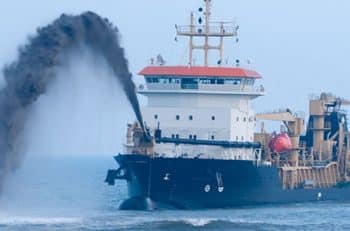
    Brexit brings a threat of the North accelerating in a race to the bottom in terms of the environment and employment, cutting costs in order to get economic advantage. In the face of this, much depends on when or if Devolution is reinstated. There is a particular concern on environmental matters because the EU has had a determining impact on the North’s environmental legislation. Even with EU membership, there is concern at a systemic failure to enforce environmental legislation. Sand has been dredged from Lough Neagh for years, without any planning process being applied. Currently about 1.5m tonnes per year is extracted. The Lough is the largest fresh-water lake in Ireland or Britain. It is a Special Protection Area. It is a Ramsar site, that is recognised as a wetland of international importance. Around 100,000 wild birds winter on and near it. It is one of only five lakes in the world where pollan are found. In June last year the North’s Court of Appeal allowed an appeal from Friends of the Earth against former Environment Minister Mark H Durkan’s decision not to order an immediate halt to the dredging. However, the Department of Infrastructure has said it is “not expedient” to stop dredging, which continues. In another regulatory failure, approximately one million tonnes of assorted waste was illegally dumped on a site at Mobuoy Road, Derry. Remediation will cost at least £20m (€22.4m), but may cost 12 times as much. The dump is beside the River Faughan, which provides drinking water for Derry City. Friends of the Earth has lodged a complaint with the European Commission against the North for systemic failure to enforce planning and environmental laws. The complaint is slowly making its way through the process. The North, like the rest of the UK, has no third-party right of appeal against planning decisions: developers have a right of appeal. That is contributing to pressures to restrict the right of appeal in the South. With this being the current situation, the North’s environmentalists are worried about developments after Brexit. They are particularly worried about the loss of the Habitats Directive. This has been key to their successes: in particular, their two biggest. These were the A5, the North’s biggest-ever road project, which was halted after a court challenge: and the court action on the Lough Neagh dredging. The Habitats Directive is particularly important because it contains the precautionary principle. Politically, there is no great will to protect the environment. The two dominant parties, the DUP and Sinn Féin, have shown little commitment. Famously the first measure the Paisley/McGuinness devolved administration introduced was a relaxation on the former Northern Ireland Minister’s restrictions on one-off housing. In 2008 Arlene Foster as Environment Minister rejected a report ‘Review of Environmental Governance. One of the recommendations was for an independent environmental protection agency, and a limited third party right of appeal. Former DUP Environment Minister Sammy Wilson has said people would “look back at this whole climate change debate and ask ourselves how on Earth were we ever conned into spending the billions of pounds” on policy changes. Sinn Féin has not denied climate change, but has been the main party pushing the A5 project. The party’s attitude to the environment is typically ad hoc. This is more worrying because the North’s environmentalists are not a major lobby group. The Assembly elected last year contains only two Greens, from 90 members. Only a handful of others have any significant interest in environmental matters. The effects on workers’ rights will partly depend on when or if devolution is restored. Certainly, trade unionists are seen as a better – organised lobby than environmentalists. They have had certain limited successes. The Executive parties rejected introducing proposed legislation further restricting the right to strike being introduced by the UK government. It did not follow the British parliament in extending the time limit for the right to claim unfair dismissal. On the other side, Northern wages are lower. The median weekly wage is £501 (€562.50), in contrast to €734.60 in South. The minimum wage, which is UK-wide, is £7.83 (€8.79) and only comes into operation at 25. In the South it is €9.55. It seems Northern Ireland is facing into a future without the threshold protections of for example the EU Working Time Directive 2003 which requires a minimum of four weeks paid holidays annually and a maximum 48-hour working week unless a worker individually consents; of the The Parental Leave Directive 2010 which prescribes four months of unpaid leave for parents to care for children before they turn eight years old, and of the Pregnant Workers Directive 1992 which creates a right for mothers to a minimum of 14 weeks paid leave to care for children. There will be continued pressure to reduce wages and protections. That will be strengthened by the tendency not to let a good crisis go by without seizing the chance to cut pay and conditions. Anton McCabe

    Loading

    Read more

  • Posted in:

    ‘Reclaiming the State – a Progressive Vision of Sovereignty for a Post-Neoliberal World’

    ‘Reclaiming the State – a Progressive Vision of Sovereignty for a Post-Neoliberal World’ is the title of what will surely come to be seen as one of the more important social science works of our time (Pluto Press, 2017, €23). In it Australian economics professor William Mitchell and Italian political theorist Thomas Fazi reconceptualise the Nation State as a vehicle for progressive change. They issue a highly topical challenge to progressives, leftwingers and genuine liberals to come to the defence of national sovereignty and not cede that issue to the populist right. For the thirty years from the end of World War 2 to the 1970s a left-oriented Keynesian consensus held sway in the developed world. Then, for reasons this book describes, the mainstream Left as represented by the mass Labour and Social Democrat parties in Britain, France, Germany and elsewhere, and by the Democrats in the USA, ideologically disarmed themselves before rampant neoliberalism. Key neoliberal propositions were that national sovereignty had become irrelevant in today’s increasingly complex and interdependent international economy. Globalisation had made individual States increasingly powerless in face of market forces. The growth of multinational companies and the internationalisation of finance had eroded the ability of national States to pursue progressive social and economic policies and deliver prosperity for their peoples. Consequently the only hope of meaningful change was to “pool” State sovereignty and transfer it to supranational institutions such as the European Union, thereby regaining at supranational level the sovereignty that has been lost at the national level. Many who regarded themselves as progressive and on the Left came to share these views, stressing how neoliberalism has involved a retreat or a hollowing-out of the State, which found itself increasingly powerless in face of market forces. To cover their abandonment of criticism of capitalism as a social system, progressives and Left parties generally focused instead on issues such as racism, gender, homophobia, multiculturalism and environmentalism – social marginality being no longer described and opposed in terms of class but rather in terms of identity. This book analyses the political timidity, ideological opportunism and intellectual fallacies involved in this surrender. For example the decades of neoliberalism have seen little or no decline in State spending as a percentage of GDP – a key measure of the strength of the State in society. Even supposedly neoliberal governments such as Reagan’s or Thatcher’s did not reduce overall public spending, although they altered its composition, for example spending more on weaponry and less on welfare. As the authors point out, “even though neoliberalism as an ideology springs from a desire to curtail the State’s role, neoliberalism as political-economic practice has produced increasingly powerful interventionist regimes.” Neoliberalism has entailed extensive and permanent intervention by States and their Governments: for example the liberalization of goods and capital markets, the privatization of resources and public services, deregulation of finance, the reduction of workers’ rights in collective bargaining, cuts to social programmes and the lowering of taxes on wealth and capital at the expense of the middle and working classes. The authors show how neoliberal ideology, in its official anti-State guise, has been little more than a convenient alibi for what has been an essentially political and State-driven project aimed at placing the commanding heights of economic policy in the hands of capital and especially Finance Capital. Far from neoliberal globalisation making the Nation State out of date, all its key elements were the result of choices deliberately and consciously made by national governments as their ruling elites set out to limit State sovereign rights. The authors call this a process of “depoliticisation” of policy. Its principal elements were: the reduction of the power of parliaments via-a-vis the executive; making central banks formally independent of government; adopting constitutional limits on debt-to-GDP ratios and public spending, as with the 2012 Stability treaty, thereby limiting what politicians can do at the behest of their voters; enforcing free movement of goods and capital, and, above, all shifting government powers from the national level to the supranational. Why did national politicians choose to ‘tie their hands’ in this way ? As the EU case epitomises, the creation of these self-imposed ‘external constraints’ allowed national politicians to reduce the political costs to themselves of neoliberal policies that were generally unpopular. It enabled them to ‘scapegoat’ these externally imposed rules and supranational and ‘independent’ institutions. These could be publicly presented as an inevitable outcome of the new harsh realities of globalisation, about which supposedly little or nothing could be done at national level. In this way national government choices and State macroeconomic policies were insulated from popular criticism and protest. Mitchell and Fazi contend that the war on sovereignty has been in essence a war on democracy. This process was brought to its most extreme in Europe where the 1992 Maastricht Treaty that created the euro-currency embedded neoliberalism into the EU’s very fabric, effectively outlawing in supranational EU law the Keynesian policies that had been commonplace in the previous decades. Given neoliberalism’s war against State sovereignty it is only natural that the revolt against neoliberalism should first and foremost take the form of demands for a ‘repoliticisation’ of national decision-making processes – that is, for more democratic control over politics and particularly over the destructive effects of the free movement of capital, goods and labour unleashed by neoliberalism. This necessarily can only be done at the national level by means of the national State in the absence of effective supranational mechanisms of representation. The latter are impossible to bring into being as long as people’s primary political identification is with their own nationality and State. Supranational structures will always lack democratic legitimacy because people do not identify with them as their own. The case of Iceland shows what even a tiny country can do when it used its State sovereignty, an independent currency, capital controls and sequestration of its banks to overcome an extreme economic crisis. The authors argue that progressives and the political Left should not regard Brexit –

    Loading

    Read more

  • Posted in:

    Labour starts to rebuild

    Is the Irish Labour party finished, is a question that’s been asked for nearly as long as the party has existed. In the last year or so however, or more accurately since a couple of years into the Fine Gael-led coalition, the party’s tail-spinning poll numbers have started to feel symptomatic of a terminal decline. The old question has a new urgency. The regular Irish Times’ poll with Ipsos/MRBI hasn’t placed Labour over 10% since February 2013. The same poll has yet to rise above the benchmark set in February last year, when the party’s support bottomed out at 6.6% in the general election. On some level, the party recognises that the negative association with the last government isn’t going away in a hurry. Asked whether Labour’s problems might stem from increased competition on the left, Councillor Martina Genockey, recently selected as the party’s candidate in Dublin South-West, is quick to retort that no, “our biggest problem is that we were in government for five years”. Abatement of hostility? “People are still seeing things through that lens”, she says. A year on from the nadir of Labour’s worst general election result, policy proposals are still met on the doorstep with shouts of “you didn’t do this when you were in government, you didn’t do that”. That isn’t to say that canvassing is as rough as it once was. The increased amiability on doorsteps is a recurring line in conversations with the new array of candidates. “I wouldn’t say there’s a swing to Labour”, says Andrew Montague, selected to run in Dublin North-West, “but the anger against Labour has dissipated”. Ged Nash, elected to the Seanad and selected in April to run for his old Dáil seat in Louth, says that “there’s been an abatement of the hostility experienced on the doors”. That the polls have, if anything, gone in the wrong direction since the election, misses the point, says Kevin Humphreys, also a Senator. “Don’t necessarily expect movement in the polls”. Labour, he says, are focussing on 15-20 winnable constituencies, such that national opinion polls may not reflect the party’s strength. How credible is this? According to a spokesperson for the parliamentary party, plans are well underway for the next election, whenever it comes. The plan is to contest a minimum of 30 out of 39 constituencies. All selection conventions are intended to be completed by Christmas, with conventions already on the cards to select Brendan Howlin, Alan Kelly, Seán Sherlock, Brendan Ryan and in Meath West, newcomer Tracy McElhenny. A draft manifesto has been prepared, a fundraising drive is underway, while a membership recruitment drive is ongoing, said the spokesperson. The stated aim of party leader Howlin has been to double the party’s Dáil representation at the next election. Achieving that, bringing Labour to around 14 seats, would see it back around its historical average. That’s when the real rebuild could begin, you might think. Labour’s problem lies partially in its vote distribution, says Adrian Kavanagh, a lecturer in political geography at Maynooth University. Until not that long ago, Labour’s real base was in rural Leinster and Munster, and not necessarily in Dublin. That changed after the amalgamation with Democratic Left in 1999. “The change in the last number of years is in the loss of traditional working-class areas”, says Kavanagh. The party’s result last year saw it shrink back to a core of largely personal votes in rural Leinster and Munster – with the likes of Howlin in Wexford, Willie Penrose in Longford- Westmeath, and Alan Kelly in Tipperary clinging on. This leaves the party in a precarious position as regards vote share. Its vote is more thinly spread than that of Solidarity-People Before Profit, who won only one less seat on a lower vote total. If Labour falls a few percentage points below the 6.6% from last year, “they’ll struggle to win any seats” says Kavanagh – his analysis of the most recent Sunday Business Post poll has Labour winning only one, with Brendan Howlin in Wexford perhaps the sole survivor. Such is the geographical distribution of Labour’s vote, this could come about even as Solidarity- People Before Profit leapfrog them to 7 seats, still on a lower vote share. On the other hand, if Labour go up a few percentage points, “then it’d be possible to get back up to the mid-teens in terms of seats, which is quite a respectable result”. Separate, and socialist? Fairly or not, the primary accusation that’s been levelled at Labour in the years since it entered government has been that it turned away from its working-class base, with the consequences being felt at the ballot box. Joan Burton, the then-leader, lost more than 3,000 votes at the 2016 election. Party figures are reluctant to give credence to this viewpoint – Labour stepped up in the national interest, they still say. According to Nash, Labour’s “unique selling point is that we’re prepared to put our money where our mouth is”, minus a harmful obsession with being “philosophically pure”. Humphreys rejects the idea that Labour’s social democratic roots were abandoned, and emphasises the traditional idea that the party has a record of delivery. “Protest, not People: is all those on the hard left are good for”. Labour are in many ways dealing with an old problem, says DCU academic Eoin O’Malley. “They’re not radical enough for lots of people, while at the same time, they’re a bit too radical for a lot of people in centrist Ireland”. Furthermore, says O’Malley, “as pragmatic as the Labour Party is, it damaged them as a brand to go into government”. Better in 2011, would have been to lean on Fianna Fáil to prop up a Fine Gael government, sailing into 2016 as the uncontested leader of the opposition for the first time in its history. Counter-factuals are fine but what should the party be doing? The party has taken the implications of its diminished representation seriously – rewriting the party constitution, re-energising ordinary supporters and, says

    Loading

    Read more

  • Posted in:

    Done gall

    Former County Manager of Donegal, Michael McLoone, is continuing with his High Court proceedings for defamation against Village. In 2014 the magazine printed allegations which it claims were both true and contained in an affidavit opened in court proceedings, by former Donegal senior planner, Gerard Convie, an employee of Donegal County Council for 24 years. McLoone claims he has been massively defamed. Meanwhile Convie’s allegations are being assessed by a senior counsel appointed by the Department of the Environment. Convie has consistently, in court and elsewhere, claimed that during his tenure there was bullying and intimidation within the council – of planners who sought to make decisions based exclusively on the planning merits of particular applications. He claims one councillor constantly referred to him as a “wee shit from the North”. In the opened affidavit, Convie alleges McLoone: 1. Recommended permissions that breached the Donegal County Development Plan to an extent that was almost systemic 2. Submitted planning applications to Donegal County Council on behalf of friends and associates 3. Dealt with planning applications from submission to decision, including some from friends, family and associates 4. Ignored the recommendations of planners 5. Destroyed the recommendations of other planners 6. Submitted fraudulent correspondence to the planning department 7. Forged signatures 8. Improperly interfered as described in a number of planning applications 9. Was close to a number of leading architects and developers in Donegal, including the head of the largest ‘architectural’ practice in Donegal, with whom he holidayed but the relationship with whom was undeclared. Convie made a number of complaints dating from 2006. He had a list of 20 “suspect cases” in the County. As he later reverted to private practice he claimed to have discovered many more, perhaps hundreds, “a cesspit”. In 2006 he complained to the Standards in Public Office Commission (which ruled the complaints out of time). That same year the Council sued Convie for his allegations, but dropped the proceedings after a fractious four years, without any damages or costs award. In another case McLoone won damages from a local newspaper which had printed some of the allegations but which did not fight the case in a full hearing. Following complaints from Convie after the Greens got into government Environment Minister, John Gormley, announced ‘planning reviews’ in 2010, not of corruption but of bad practice – in seven local authorities including Donegal. Convie’s case studies comprised all the material for the review in Donegal. But when the new Fine Gael and Labour government took over they very quickly dropped the independent inquiries. A lazy 2012 internal review by the Department of the Environment stated of Donegal – according to Minister Jan O’Sullivan in the Dáil, that: “… the complainant [Convie] has failed at any stage to produce evidence of wrong-doing in Donegal Council’s planning department”. Convie felt this left him in an invidious position and he successfully sued. In the High Court Order, all the conclusions by the Minister were withdrawn and an apology issued. Counsel on behalf of the current Donegal County Manager, Seamus Neeley, objected to the decision as it did not know why the case had been settled, though Convie’s barrister noted that the Council was a notice party that had played no active part in the case. There appear to have been no ramifications for the civil servants who concluded that Convie’s complaint did not constitute “evidence”, less still for the ‘progressive’ Minister who accepted the conclusions. The government was forced to reinstate the planning enquiries and found maladministration but not any sort of corruption in the cases outside Donegal. After the ‘RTÉ Investigates’ programme which apparently uncovered examples of corruption in planning last year, the government sheepishly announced a package of ‘radical’ planning measures which included the belated publication of the independent review which uncovered considerable evidence of malpractice throughout the planning system and includes 29 recommendations to improve “standards of transparency, consistency and accountability” which the Department says it will implement. The Convie file was referred to the Attorney General for direction and in the end senior counsel, Rory Mulcahy SC, was appointed to look into it. Convie by all accounts engaged with Mulcahy over the issues which were the subject of the complaints, but has now withdrawn from the process. Mulcahy has spoken to the Council and informed Convie that he would be seeking to interview other relevant parties. He is around half way through the exercise. In February this year Alan Kelly, the then Minister for the Environment, claimed, “this independent process underway remains the priority of the Minister, his Department and his officials”. However, though in general content with the process – which being non-statutory is precariously ‘open-ended’, Convie has some particular concerns. He considers the Minister changed the terms of reference for Mulcahy by re-inserting a confidentiality clause, which unlike an earlier version omitted to state that the provision would continue in force “notwithstanding the termination of this contract by either party for any reason”. In the end the Minister partially reinstated the term relating to the confidentiality of his work. Moreover Convie wants the process to embrace An Bord Pleanála to which he claims improper representations were made. He claims that in the 1990s he bid on a site in Magheraroarty, Co Donegal, never trying to hide anything. His bid was accepted by the owner but on reflection Convie says he felt it was far too much land which his family could not afford. He was approached by a builder in Donegal, Patrick J Doherty, and was delighted when he agreed to take the land and Convie bought a site from him. This posed potential conflicts of interest for Convie. However at all stages of the multifarious transactions, Convie made the necessary declarations of involvement in the land. Doherty made a pre-planning application to determine the attitude of the planning office to the development of the site. As the relevant planning official was on leave [and Convie was dealing with his work as well as his own] he says

    Loading

    Read more

  • Posted in:

    SF won’t prop up FF, FG or Labour

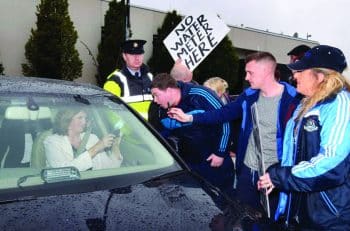
    The recent General Election was a very good one for Sinn Féin. We increased our number of TDs from 14 to 23. That’s a 65% increase – a success by any standards. Importantly, Sinn Féin also further increased the geographical spread of the party. There are now very few regions in the State in which there isn’t Sinn Féin Dáil representation. There is also in place, another whole raft of Sinn Féin representatives who, although not returned at this election are very likely to be elected next time around if they continue with the valuable work they are doing. So, Sinn Féin returns to the Dáil, not just with a significantly larger team but also with a team of very high-calibre TDs, including more women and more younger representatives. Sinn Féin had two clear objectives going into the election. The first was to get rid of a Fine Gael/Labour government that has brought chaos to housing and health, imposed unfair taxes and promoted mass emigration. We succeeded in that. In the early days of the election campaign we holed the coalition’s strategy below the waterline by proving that their figures were wrong and that they presented €2 billion which they did not have. I think we were also successful in demonstrating that you cannot have US-style taxes and at the same time invest in decent public services.Our other objective was to prove to people that there is a realistic, credible political alternative of which we are a significant part. That is very much a work in progress. We may not have succeeded, at this point, in getting enough seats to form a progressive Government but that will improve as we go on. But the realignment of politics in this State took an important step forward in this election and the next election will see that trend intensify. The political domination of Fine Gael and Fianna Fáil is finished. What we now need to do is increase the cohesion among those who advocate an alternative view of how the economy and society should be organised. Over the past five years, Sinn Féin has been the genuine voice of opposition in Leinster House, offering an alternative to the dreadful austerity policies of Fine Gael, Labour and Fianna Fáil. All of Sinn Féin’s pre-Budget submissions demonstrated a way of ensuring economic growth while also being socially equitable and protecting the vulnerable. We repeatedly warned the Government of the escalating homelessness crisis. The Government refused to listen and it became an emergency. We also consistently raised the issue of all-Ireland integration and the political, economic and social case for a united Ireland. Sinn Féin has now received an enhanced mandate to continue with that work. The post-election sham fight between Fine Gael and Fianna Fáil is nothing to do with the real issues affecting citizens. The people who were homeless last Friday will remain homeless under Fine Gael and Fianna Fáil. Patients will still languish on trolleys in our hospitals under Fine Gael and Fianna Fáil because those parties are not serious about resolving these issues. Going into this election Fianna Fáil picked up on a sense that voters were moving to the left, so they began to steal the phrases Sinn Féin was using about fairness and a recovery for all. That strategy resulted in a partial recovery of the Fianna Fáil vote itself but still left it far, far short, in his-torical terms, of where it once stood. Throughout the election campaign, Sinn Féin made it clear that we would not prop up those parties that created and sustained the economic and social crisis facing our people. That is the mandate we received and we will not break our commitments. Sinn Féin will continue to consult with others, including those aligned to the Right2Change platform, on the way forward. If not in the immediate period ahead, the objective of a genuinely progressive alternative Government in which Sinn Féin plays a lead role is a live possibility. Over 400,000 people voted for candidates aligned to the Right2Change platform to end water charges. The Fine Gael/Labour Government has been defeated and water charges should leave the stage with them. What is now clear from the election is that people voted for real change and a more equal society. Sinn Féin is committed to achieving that and to pursuing and preparing for the peaceful reunification of Ireland and the reconciliation of all our people. Whether in Government or in opposition, Sinn Féin will stick by the mandate we have been given. Gerry Adams Gerry Adams TD is President of Sinn Féin

    Loading

    Read more

  • Posted in:

    FF won’t see coalition as an ideological issue and FG is glued to stability

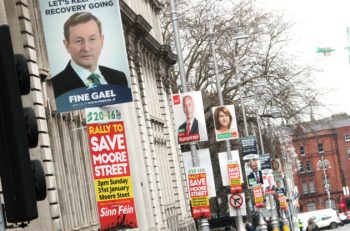
    The most extraordinary coalition formed in Ireland was the first one, in 1948. It involved Fine Gael and a then-new party headed by Sean McBride, Clann na Poblachta. The Clann was a lively mixture of liberals, left-wingers and Republicans with a deep immersion in the IRA. The surprise with the Clann was that its youthful enthusiasm and vigorous campaigns against partition very nearly toppled De Valera from his then hegemony over Irish politics. McBride himself was a former IRA Chief of Staff who subsequently cut out a career for himself as an international eminence becoming a Nobel Prize laureate and founding member of Amnesty International – the campaigning global Human Rights body. Because of lingering republican bitterness against General Richard Mulcahy’s role in the civil war, Mulcahy, the Fine Gael leader, stood aside to facilitate a coalition with the Clann and its tooth and claw republican militants. John A Costello became Taoiseach in the coalition instead. The point of all of this is to illustrate that, from the very outset, coalition formation in Ireland has been a pragmatic business where big parties and small ones dispense with ideological or philosophical differences in order to provide an alternative government and run the country. Down the years few, if any, Fine Gael or Labour leaders worried too much about the differences of left and right when it came to forming a government designed to extract Fianna Fáil from prolonged periods in power. In 1989 Charles Haughey led Fianna Fáil for the first time ever into a coalition arrangement with the Progressive Democrats, stating cheerily: “Sure, it was only me that could have done it”. His party colleagues resisted it furiously believing non-participation in coalition an absolute core value for the party up to that point. The bitterness of doing this coalition was magnified by the presence of Des O’Malley and his new party – composed of individuals who had fought Haughey, then split from him to create their own party. For Haughey it was just another deal but for the Progressive Democrats, who claimed to be policy-focused, it was about taxation and other precious policy items, including a public Tribunal into the goings on in the Beef Industry. Haughey worked hard to save his own skin and persuade his ministerial colleagues of the merits of going into coalition. Apparently at one stage in the discussions around the cabinet table he held out his arms sideways demanding in relation to the opposition: “D0 you want to give them all of this?”. Shortly afterwards the new Taoiseach Albert Reynolds formed a coalition with the Labour Party which followed an election in 1992 which featured advertisements generated by Fianna Fáil scaremongering about a left-wing takeover of the country by Labour. This was no small tactic and involved giant billboards and full-page newspaper adverts in a bid to frighten voters in a move that was redolent of the ‘red scare’ tactics of the 1950s and 1960s. During the actual campaign my father, the late Brian Lenihan Senior. When all about him were these banner advertisements called for an alignment with Labour rather than the PDs. His rationale was that Labour were more compatible with FF than what he viewed as the “Thatcherite ” Progressive Democrats. He was dismissed by the party bosses during the campaign only to find himself instrumental, behind the scenes, after the election in putting the coalition deal with Labour together. Albert Reynolds, a businessman, proved to be very pragmatic when faced with the post-election numbers and getting back into power. My father had key relationships and friendships within the Labour Party and within the labour movement generally. These relationships and ability to communicate became vital to the formation of this government. When people set out to cross party divides there is a need for credible and dependable intermediaries who can give assurances on policy and how the share out of ministries will play out when the negotiations get real. This was my own experience when I set out, at the request of Bertie Ahern, to put in motion the process of having a coalition with the Green Party in 2007. In fact the groundwork had begun in the immediate aftermath of the 2002 election. Ahern was already entertaining doubts about the future sustainability of the PD coalition because of problems with both policy and numbers. I knew a number of the key figures in the Green Party, including Trevor Sargent and had been in university with both Eamon Ryan and John Gormley. Part of the reason for having a coalition with the Greens was a concern within the party about the right-of-centre nature of the PD coalition, as well as a fear that the party was already becoming too visibly identified with the building industry and big capital. It was also made easier by the overarching atmosphere of mainstreaming environmental or green issues. When the post-election numbers showed a Green coalition was necessary Bertie pressed the buttons and appointed a skilled and experienced team of negotiators so that his own ministers were locked into the items agreed with the Greens. The government itself worked well together though it has to be said it was much more difficult for the Greens to get the coalition deal past their activists than it was for Bertie to get it past his parliamentary party. Rural TDs were the most resistant regarding Green policies on farming incentives as tantamount to treason. In the event they overcame their difficulties. As with the previous Labour Coalition, outside of the main negotiations, a series of reliable and discreet intermediaries were on hand to smooth out any issues that arose in the talks. Ahern himself was a very accomplished negotiator. General Election 2016 has been dominated by speculation of a grand coalition between the once very dominant big parties of Fianna Fáil and Fine Gael. The fact that both parties combined now count for slightly less than 50% of the popular vote has hastened a frenzy of speculation about such a

    Loading

    Read more