• Posted in:

    Sex-abuse musical chairs

    The London-based Independent Inquiry into Child Sexual Abuse (IICSA) was established in 2014. It has a mandate to investigate VIP abusers with links to Westminster. Regrettably, it cannot be described as truly independent since it is a creature of the Home Office, the parent department of MI5 which blackmailed, protected and exploited paedophile networks in the UK and Ireland and has dirty tricks embedded in its DNA. An “independent” Inquiry? The Independent Inquiry into Child Sexual Abuse (IICSA) was established in 2014 by Theresa May in her then capacity as Home Secretary. Her first choice as chair was Lady Ann Elizabeth Oldfield Butler-Sloss, whose appointment was announced on 8 July 2014. A storm of protest swept her off the chair within days because she was the sister of the late Michael Havers. He had served as Margaret Thatcher’s Attorney General in the 1980s. As reported in Village last month, Havers spoke up for the high-ranking British diplomat and MI6 officer, Sir Peter Hayman, after he had been exposed as a paedophile in March 1981 by Geoffrey Dickens MP in the House of Commons. The police had discovered that Hayman had been involved in a paedophile network and was a connoisseur of child pornography. Havers, speaking in his capacity as Attorney General, parried that Hayman’s collection was not extreme and had not warranted prosecution. Butler-Sloss was born on 10 August 1933. Since the IICSA is likely to last another 12-15 years, she would have been well on the way to her century when it finished. Just what was Theresa May thinking? May’s second choice as chairman was Dame Catherine Fiona Woolf, DBE, JP, DL, who was appointed in September 2014 and lasted a month. She was a friend and neighbour of Leon Brittan who had served as Home Secretary in the 1980s. In 1984 he was handed the Dickens Dossier which exposed a VIP paedophile network, by Geoffrey Dickens MP. Brittan commanded all the resources of the police and by lifting a telephone could have ensured that immediate action was taken to end the rape and brutalisation of children described in the institutions in the dossier. Instead he did precisely nothing. Why? In 2014 it emerged that the Dickens Dossier had disappeared. When quizzed about this, Brittan initially claimed he had no memory of ever having received it but later relented and “recalled” he had handed it over to an official in the Home Office. After media reports that Brittan had been a dinner party guest at Woolf’s house on at least three occasions, she stepped down from the IICSA and was replaced by Judge Lowell Goddard who shouldered the burden until 2016 when it became too much for her. One would almost be forgiven for suspecting that the Inquiry was designed to topple over under its own weight. A subterranean campaign against the truth A campaign to suppress the truth about manipulation by MI5 and MI6 of VIP paedophile networks has been afoot for decades and shows no sign of abating. As detailed in recent editions of Village, last year MI5 and MI6 (which is attached to the Foreign Office) lied to the Hart Inquiry about their involvement in the Kincora scandal and received a clean bill of health from it. Meanwhile pro-establishment figures in the media (at least one of whom has been linked to MI6) have been campaigning to end police investigations into historical child abuse. There is growing support for this initiative among the British public on account of the behaviour of the police who investigated the singer Cliff Richard and others for child abuse when – patently – there was no evidence against them. Their behaviour was so inept one would be forgiven for thinking their intention was to poison the public against historical abuse inquiries. Some of the vice rings which the IICSA should be investigating overlap with networks in Ireland. The odds are stacked high that the IICSA will be persuaded to ignore them in light of the publication of the Hart Report earlier this year which was meant to have dealt comprehensively with Irish issues but was hoodwinked by the spooks. General-Election woes A small number of courageous Westminster parliamentarians have tried to shine a light on these issues during the last few years. Proving that no good deed goes unpunished, they have suffered nothing but bad luck and now face a more difficult battle to retain their seats in the British general election. Simon Danczuk MP is one of them. He is a candidate in Rochdale and author of the book which denounced the notorious paedophile Sir Cyril Smith. He revealed in 2014 that a Tory minister attempted to get him to back down as pressure was mounting on Leon Britton over the disappearance of the Dickens Dossier. He explained how: “As I was making my way from the House of Commons on Monday night after a late vote a Tory minister stepped out of the shadows to confront me. I’d never spoken to him before in my life but he blocked my way and ushered me to one side. He warned me to think very carefully about what I was going to say the next day before the Home Affairs Select Committee, where I’d be answering questions about child abuse. ‘I hear you’re about to challenge Lord Brittan about what he knew about child abuse’, he said. ‘It wouldn’t be a wise move’, he advised me. ‘It was all put to bed a long time ago’. He warned me I could even be responsible for his death. We looked at each other in silence for a second. I knew straightaway he wasn’t telling me this out of concern for the man’s welfare”. Danczuk persisted and became the target of a torrent of salacious reports about his private life in the red tops. Worse still, an accusation was hurled against him that he had raped a man in 2006, an allegation he described as “malicious, untrue and extremely upsetting”. At the

    Loading

    Read more

  • Posted in:

    Nailing Harry Breen

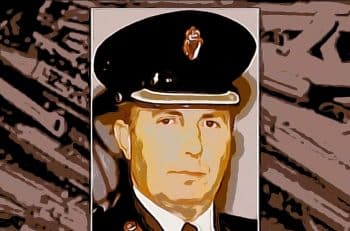
    RUC Chief Superintendent whose death was the Smithwick Tribunal’s focus, was not as innocent as the tribunal extraordinarily contrived to believe. Smithwick failed to ascertain how and why he was murdered and credible sources are now telling Village why Harry Breen may have been of particular interest to the IRA.

    Loading

    Read more

  • Posted in:

    An Offence Against The State

    On 1 December 1972 a car bomb exploded beside Liberty Hall in Dublin. Fortunately no one died but George Bradshaw, a CIE bus driver, and Thomas Duffy, a bus conductor, perished in a second explosion at Sackville Place. No one has ever been charged with these crimes. The UVF belatedly claimed sole responsibility for them but there are legitimate doubts about the veracity of this claim. These bombings were part of four bombings in Dublin’s north city centre at the end of 1972 and beginning of 1973 and are to be distinguished from the even more horrific bombings in the same general area in 1974.   A State In Denial Margaret Urwin has just published ‘A State in Denial’ which unravels a web of intrigue connecting the British Secret State (BSS) to loyalist paramilitaries at a variety of levels. No objective reader of this impressive work could doubt that London focused the might of its counter-insurgency arsenal against Republicans while turning a knowing blind eye at loyalist wrongdoing and also arming and colluding with them. Irwin’s book is fascinating for its dissection of official papers to discern what was going on behind closed doors.   The Man with the English-Belfast Accent The publication of ‘A State in Denial’ is timely as yet another anniversary of the 1972 Dublin bombings comes around. On that fateful evening a man with a mixed English-Belfast accent parked a car bomb beside Liberty Hall. After he alighted, he asked someone who had just left the building when it was likely to empty out for the night. One of the cars used by the bombers to get to Dublin was a Ford Zephyr which had been stolen in Antrim from an Englishman called Joseph Fleming the previous August, along with Fleming’s driver’s licence. Fleming’s licence was put to use on two occasions in November 1972 by an imposter posing as Fleming, to hire cars in Belfast. The imposter was either extraordinarily reckless or had good reason to believe Fleming’s licence was not detailed on the lists circulated by the RUC to carrental companies. He obtained a number of cars over the space of a week, a timespan which underlines his confidence about the use of a stolen licence; and all this at a time when an epidemic of car bombings was bringing Belfast to a standstill. In addition, he left his fingerprints and handwriting on the forms he completed. Another significant fact was that he spoke with a mixture of a Belfast and English accent.   Kitson’s Military Reaction Force The UVF would have us believe that its volunteers: • Stole Fleming’s car in August 1972 and hid it for three months, and; • Drove it across the Border with its original registration plates on display, and; • Proceeded to Dublin at the same time – and possibly as part of a convoy of cars, parked it with explosives, and • Faced an extremely high risk of detection because the rental cars had been acquired using a stolen licence which the gang must have believed was on an RUC watchlist; • Yet all the while possessed the confidence to proceed without any high-level protection from the BSS. It is unlikely this is what happened. On the other hand, the highly secretive Military Reconnaissance Force (MRF) of the British Army had the nerve, skill and high-level protection in place to undertake just such an operation. The MRF was literally above the law. It was a sprawling organisation established by Brigadier Frank Kitson in 1971 to engage in agent-recruitment; surveillance; drive-by shootings (deploying the type of weapons the IRA were known to carry); laundry collection, to detect the residue of explosives on clothing; and even brothel management, to collect gossip and obtain blackmail material. It had access to loyalist agents recruited by the British Army and M15. Stealing vehicles and hiding them at its Palace Barracks HQ for use later was one of its known practices. The MRF could easily have arranged for the details about Fleming’s vehicle and licence to have been erased from the RUC watch lists. With this backing, the loyalist gang that bombed Dublin (or at least some of them) would have enjoyed the confidence to hire the cars and drive them to Dublin.   Albert Ginger Baker Albert Ginger Baker, an alleged British Army deserter, who joined the UDA in the early 1970, ticked all the boxes as an MRF agent. His family have claimed that he was involved in the 1972 bombings. In 1976 the Sunday World published an article exposing his links to a ‘Captain Bunty’, a mysterious figure who can only have been his handler. The pair met regularly in a Belfast coffee bar. Baker was involved in a string of gruesome sectarian murders in Belfast. During one of them, James Patrick McCartan, a 22-year-old forklifttruck driver, was stripped naked, hung up by his ankles and punched, kicked and beaten with a pickshaft, while a dagger was used to stab him in the hands and thigh over 200 times. He was threatened with castration and dropped head first from the ceiling. Eventually one of Baker’s UDA superiors gave him a pistol and told him to kill McCartan. Baker put a hood over his head, and blasted into his skull three times. A grenade Baker’s gang used in another attack was standard British Army issue, which raises questions about how they acquired it. It is doubtful the prospect of bombing Dublin could have troubled the conscience of those in the BSS who ultimately controlled men like Baker. Baker suffered some sort of a crisis in 1973, and fled to England where he confessed to a string of sectarian murders to the police in Warminster, in Wiltshire. As far as the BSS was concerned, some rather nasty cats were now peeping out of the bag. Damage limitation became the order of the day. Hence, while Baker was convicted and sent to prison in 1973, his secret link to the MRF was

    Loading

    Read more

  • Posted in:

    Investigation: Killusion

    The Smithwick Tribunal was set up in 2005, by the Irish Government on the advice of Michael McDowell, then Minister for Justice, and sat in public in Blackhall Place from 2011 until 2013, examining the possibility of Garda collusion in the deaths of Chief Superintendent Harry Breen and Superintendent Bob Buchanan, of the Royal Ulster Constabulary (RUC) who were murdered North of the Border in March 1989, after a brief meeting in Dundalk Garda Station. The purpose of the RUC officers’ visit was to discuss a move against the IRA’s Tom ‘Slab’ Murphy, which had been ordered by then Northern Ireland Secretary of State, Tom King. The Smithwick Tribunal ended up in 2011 with a strange, abstract, finding of ‘collusion’ in the murders of the two RUC men. Though it found “no smoking gun” in Dundalk, the Tribunal weakly decided there was indeed less specific evidence of “collusion by gardaí” in the murders. Dutifully, Enda Kenny described these findings as “shocking” and a public and media jaded in affairs Northern determined rather vaguely to remember that Smithwick was about a search for evidence of collusion which it had somehow found. What is extraordinary is that Smithwick provided no name for the ‘colluder’, though it clearly for a long time thought it was Owen Corrigan – even though it wasn’t. One of the reasons for this is that there may in fact have been no Garda colluder, a big embarrassment for those who felt a tribunal needed to be instigated and, worse, for those who conducted the inquiry without ever drawing attention to the inaccuracy of the premise that led to it but who saved face by continuingly, through the eight years of its existence, pretending there was one, albeit with less and less specificity. Smithwick was swayed into its collusion abstraction by the PSNI (which succeeded the RUC) giving untestable, very-late evidence to the Tribunal privately naming a fourth garda who was more plausible than Owen Corrigan as the colluder. Fulton: the man whose evidence led to a falsely perceived need for the Tribunal Smithwick always focused on Corrigan as the colluder because the Cory Inquiry, which prompted the Smithwick Tribunal, unduly relied on the 2003 evidence of a dissembling double agent known as ‘Kevin Fulton’ – now challenged by a source who spoke to Village – that Corrigan gave deadly information to the IRA about the RUC men. In its report the Smithwick Tribunal stated [at 15.1.2]: “This statement was a key factor in Judge Cory’s decision to recommend the establishment of this Tribunal, and Kevin Fulton was therefore an important witness before this Tribunal”. In any event Fulton actually seems to have later changed his story (when giving evidence to Smithwick in 2011) to say that Corrigan gave information to the IRA only about a 37-year-old Cooley farmer, informant Tom Oliver, who An Phoblacht then accused of passing on information to Garda Special Branch. Oliver was kidnapped, allegedly interrogated by Scappaticci and subsequently murdered. The changed story was that Corrigan gave information about Oliver, not about the doomed RUC men; but even the changed story was expressly and ignominiously disavowed by Smithwick, under pressure in a recent High Court case, to the extent it implied that Corrigan’s information led to Oliver’s death. In other words everything related to Fulton collapsed, despite Smithwick’s paean to him. Kevin Fulton had begun to engage with the Smithwick Tribunal in 2006. In its opening statement in 2011, the Tribunal made it clear that “Mr Fulton has elaborated on and expanded the statement he provided to Judge Cory”. The expanded statement was given to Corrigan’s lawyers in November 2011. For the first time they saw the central allegation made by Fulton which sensationally implicated Freddie Scappaticci, ‘Stakeknife’. It did not concern the murders of the two RUC Officers but instead implicated Sergeant Owen Corrigan in giving information which would lead to the death of an alleged IRA informer, Tom Oliver. The first reason not to believe Fulton is that a book about him makes no mention of any of this. Admittedly Fulton now distances himself from the graphic book called ‘Unsung Hero’ about his life but this is chiefly understandable as an expedient in the face of the, at least nine, PSNI Investigations arising from it, and the many civil actions in the pipeline. He has already had to pay compensation to the family of Eoin Morley, a Newry man shot dead in 1990, after failing even to enter an appearance in the Belfast High Court to proceedings by his mother. Nevertheless it is undeniably notable that at no stage in the book does Fulton mention a garda in Dundalk station passing information to the IRA, though it was scarcely something he’d be expected to omit. Nor is there any other evidence – of any sort – that he passed information about Corrigan or other Dundalk gardaí, to his handlers. Bizarrely Smithwick warmly endorsed Fulton, a man who had made a lifetime “career” of deception, as a highly credible witness, in his final report, even in effect if he completely and absolutely disavowed him in the subsequent legal action. Surprisingly, Smithwick was to say of Fulton: “He sat only metres from me and I observed him throughout. He was a very impressive and credible witness and I have formed the view that his evidence was truthful”. However, clearly there is a shadow over the statement from Fulton which inspired Cory’s call for what became the Smithwick Tribunal. If this is so it rewrites the history of both inquiries. Fulton’s’ similar role in other high-profile investigations will emerge in the coming months. But what exactly was the core allegations that convinced Cory and then hung Smithwick out to dry? This is the Fulton Statement as published originally in the Cory Report in 2003: “In 1979 I enlisted in the British Army. Within months of my posting, I was recruited by a British Intelligence Agency to act as an agent. In this capacity, I

    Loading

    Read more