review

Random entry RSS

  • Posted in:

    Review: Hansel and Gretel charms without enchanting

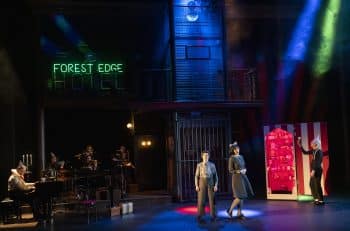
    This production by Theatre Lovett, the Irish National Opera and the Abbey Theatre is fun and artistic, but the opera’s libretto is lost in the woods By Rory O’Sullivan Engelbert Humperdinck (not that one, I’m afraid) produced the opera Hansel and Gretel from four songs he wrote to accompany a puppet show his nieces put on at home. Their mother, his sister, wrote the libretto, and it all premiered in 1893. It was conducted by no less a musician than Richard Strauss, the prelude to whose Also Sprach Zarathustra is instantly recognisable to everyone as the theme of 2001: A Space Odyssey. The opera was a hit and is now the main thing for which Humperdinck is remembered, though he had a full life besides and was an important part of the European musical scene. That said, like virtually every composer of his generation, he wrote in Wagner’s shadow. The music of Hansel and Gretel is mostly a deepening or reworking of folk-themes (e.g. ring-a-ring-a-rosey), but nearly always for Humperdinck to deepen something means to make it sound more like Wagner. The music all has a roundedness, a confidence that the instruments were made expertly by somebody and will sound good if only allowed their full range. Sometimes he makes them wild and dissonant, foreshadowing composers like Schoenberg whom he influenced. When he doesn’t know what to do – usually, in the rare moments when the music is secondary to the libretto – he backslides into Baroque primness: difficult, staccato-y stuff which is impressive in its own way but can feel like the aural equivalent of motion-sickness. In this production Carolyn Dobbin gives a commanding performance as the Witch, but everyone sings well.  The most fundamental problem with Hansel and Gretel as an opera is that, while the score is really very high-brow, the libretto can’t quite find its way up there. This translation by the British librettist David Pountney is usually successful, but the lines rhyme and occasionally they rhyme at all costs. When Gretel (Amy NÍ Fhearraigh) warns Hansel (Raphaela Mangan) against eating the candied-house they have just discovered in the woods, he says “Don’t be a tease / I eat what it sees”. The story, which everyone knows anyway, is so bare-bones that there is not much for the characters to say. ‘We are hungry’, Hansel and Gretel spend too long telling each other at the beginning; then, after they have left, their parents come out and say the same thing. That was most probably why the directors of this production, Muireann Ahern and Louis Lovett of Theatre Lovett, invested much more in the coherence of its atmosphere than its story. It is a co-production of them, the Irish National Opera and the Abbey, but it is they who add the professionalism and the know-how to make it a rewarding piece of theatre. For example, the whole set is the exterior of a dingy, run-down hotel on the edge of the story’s forest. It’s a dangerous conceit, since it involves forcing Hansel and Gretel to sing about being in a forest when they are obviously still in front of a hotel. But it creates a mood, and allows the show to take on a few themes: emotional and atmospheric arguments that challenge the audience intellectually.   For example, there is nearly an entire second play arranged around the opera, a dumb show between the scenes and set to music. It is often better than the opera itself because of its sense of atmosphere. In the Abbey’s Directors’ interview, Louis Lovett says that the show tries to “straddle the world between the fairytale and the modern”: that is, that it is all a mystery. But performers rarely understand that something can never be ‘about’ mystery, since ‘mystery’ is simply the thing you experience and never the thematic or emotional label for it. The dumb show therefore is really about exploring how it feels to encounter what you do not know, and its answer as varied as the notes of a violin.  The whole opera is supposed to be child-friendly (or as child-friendly as an opera can be) and sometimes that leads the show too easily to the blank feeling of ‘wonder,’ but more often it lets the music draw its own complex shapes, and there is an arc of reason and emotion in those. The slow-reveal at the beginning where the musicians walk out, take up and begin playing their instruments is the sort of thing that’s often-done and usually tedious. Here it isn’t: it’s absorbing, and atmospheric, livened by the performance of Raymond Keane as the silent “Night Watchman”. He arranges everything in the background with an air of supernatural mystery and some jokes. Every scene in the show is better for his being in it. But my sense is that even with all these complications, Hansel and Gretel lets everyone off too easily. The witch comes along and is effortlessly dispatched; her past victims are resurrected amid confusion; Hansel and Gretel’s parents find them, and all are suddenly a happy family. Nothing much ever feels like it is at stake in the opera, and without that its power to affect any audience is shackled. But overall, this particular production is clever and genuinely works as a piece of art. I’ll await the day Theatre Lovett decide to do Tosca.

    Read more

  • Posted in:

    Shame us, Séamus (or at least say something genuine)

    When I was a young man, I managed various used and rare book stores for a company based in Washington DC. As part of this book ‘empire’, we leased a large warehouse across the Potomac River in Arlington, VA. It comprised several cavernous rooms. In one of these rooms stood a veritable Everest of books. Further, the entire heap comprised a single title – undustjacketed, misbound and/or damaged US editions of Seamus Heaney’s Poems 1965-1975. Ironically, close by squatted a larger mound of equally misshapen copies of a later printing of the Complete Poems of Robert Frost. To recoup some of his loss, an unscrupulous binder, rather than honouring his contract and pulping the volumes, had sold them to us for a price that would importune a covert cash payment. Kevin Kiely’s bluntly titled, Seamus Heaney and the Great Poetry Hoax, (Areopagitica Publishing, 2018), opens with a comparative appraisal of these two milk bucket obsessed northern agrarians, Frost and Heaney. Kiely focuses on Heaney but neither poet is to his taste. He finds Heaney’s incessant reliance on rural themes disingenuous and out of touch. Certainly, Kiely has a point. What else but nostalgia and bathos could steer anointment and garlanding of the award-winning poet by ensconced academics, wealthy potentates and entertainers who writes lyrics which extol the virtues of peat and cow shit? As Kiely so admirably and doggedly points out, as a consequence, there is nothing honest in Heaney’s work. I think we can agree that Ezra Pound, though for the most part a fine judge of poetry, was a spotty judge of character. Though he called his birthplace of Hailey, Idaho, half savage Pound initially misconstrued Robert Frost’s New England Yankee ‘plain speak’, an intrinsic characteristic of Frost’s work, as providing some sort of spare, down-on-the-farm expression of the American ethos when in reality it was just a faux homespun ‘higher hokum’. Yet I and, in his lukewarm assessment of Frost, Kiely would agree that the folksy American’s snake oil and illusory tales are more genuine than Heaney’s. This even though Frost was little more than a gentleman farmer and Heaney was, at least at one time, a genuine farm boy. If, as Kiely states, and I concur, Frost’s fancies ring truer than Heaney’s what does that say about Heaney’s oeuvre generally? In Heaney’s infinitely tired reprises of farm life – the damp, the smells, the stoic heroism, the sentimentality – one hears faintly the same sort of bombast one gets from America’s ‘Good Gray Poet’, Walt Whitman, who most certainly lived in a country that never existed and never will. If it’s not naïvete, both Whitman’s and Heaney’s approaches manifest sheer cunning. Kiely is correct and, given Heaney’s stature, courageous to tilt at Heaney’s legacy. Whitman was constrained sexually by the very culture he bloviated about. Thus his product was a cry for acceptance which he somehow thought he could gain by pandering to the existing order. And to a frightening degree, it worked – for all the wrong, nationalistic, jingoistic reasons. As Kiely does, let’s assess one of Heaney’s most famous lines from one of his most read and ‘beloved’ poems, Digging. Heaney writes: “Between my finger and my thumb The squat pen rests. I’ll dig with it”. The poem has about it a lassitude as though Heaney himself had grown tired of his subject matter. He opens with a wholly inept and personally disingenuous image which compares two wholly different utile appendages, a pen and a spade — reworking Bulwer-Lytton’s famous quote of pens/swords. Then, after a 22-line instructional on how to use a spade, he resorts to the murky bathos of comparing his pen to that shovel. Kiely, by now frustrated with Heaney’s metaphorical fuzziness, queries “how much earth can you dig with a pen”? But it’s worse. At first, though still painfully sentimental, the shovel-incised blocks of bog, of dead (yet organic) matter, serve the living by providing heat and fertiliser. But what is the bog? History? Tradition? Heaney’s mind may have done some digging. But his pen can only record the process. Within reason and art, the pen does not do the digging. And Heaney is no André Breton, no surrealist, as Kiely points out, so the mental image flounders and flops. Kiely trounces Heaney’s stances on Irish history, international politics, Nobel, institutional pandering and how these factors influenced his poetry. Kiely demonstrates that to avoid the convulsions Ireland faced, especially from 1968 to 1988, Heaney, more often than was tolerable, wrote nostalgia about farm life or buried his poems’ relevance in a miasma of prehistory. Heaney’s stance reminds one of Yeats’ position on Northern Ireland before the Easter Rising. Though Yeats continued to generally support non-violent solutions, he was shattered by the brutal treatment at the hands of the British inflicted on the Irish nationalists as evidenced in his superb poem Easter, 1916. However, Yeats solution of a non-violent literary rebellion with nostalgic Celtic roots reminiscent of Heaney’s bathos, smacks of wishful thinking. As is well known, the far more pragmatic James Joyce would dub Yeats’ and Lady Gregory’s Celtic Twilight the ‘Cultic Twallette’ in his masterpiece, Finnegans Wake. Further, as an individual living the bloody hypocrisy of American foreign policy, I’m certain that palling around with a war criminal like Bill Clinton, as Heaney did, does not speak well of one’s character. And, Seamus, the same went for the Nobel, which the poet Ed Dorn referred to as the Dynamite Prize. The Nobel was in recent years given to yet another American mass murderer and apologist for the very Wall Street that bankrupted Ireland, Barack Obama. And there is some foul whiff that our current golden-domed Baboon-in-Chief should be foisted with Stockholm’s much tarnished award. Kiely also points up another insidious influence on Healey’s ascendance from ‘the Land of the Fee and the Home of the Knave’ — literary critics Harold Bloom and Helen Vendler. It’s bad enough that across the pond, these two old literary fossils have erred so much toward the ‘I’ centered, solipsistic lyric that our current poetic product has all the

    Loading

    Read more

  • Posted in:

    Difference and Repetition

    There is only one ghost scene in ‘Phantom Thread’, Paul Thomas Anderson’s latest film, which is a little surprising, given the title. (The spoilers start right here, I’m afraid.) The hero, played by Daniel Day Lewis, glimpses his long-dead mother as he lies in a fever induced by a poisonous mushroom secretly administered by his ‘girlfriend’. I use inverted commas because the term is altogether too demotic for the rarefied world of this elegant film about elegant people, but really at this stage she has no proper status in the egomaniacal edifice that is his house/life/ work/reputation. And it is this indeterminate status that she overcomes by the poisoning, because, the moment he can get out of bed again, he asks her to marry him. But back to the mother. We know who she is because we have seen her in a photograph earlier in the film. During his first date with the poisoner-to-be Alma (played by Vicky Krieps), Day Lewis’s character, Reynolds, explains that the wedding dress that his mother is wearing in the picture was made by him as a teenager, when she got married for the second time. It was the first dress he ever made. The husband, whoever he was, is nowhere to be seen. It’s an affecting scene, as it helps us understand that Reynolds’s occupation as a dressmaker for the high-society set in 1950s London is rooted in his powerful connection to his dead mother. The scene also positions Alma as the person who understands what his mother means to him, in other words, the person who under- stands him tout court. So when the mother’s spirit appears to him in his poison-induced fever dream, it is appropriate that she has been raised by Alma and her own weird hunger for love. It is appropriate because Alma ultimately proves herself to be the only person who can insert herself into this over-charged bond between unhappy son and dead mother, and in the process help him live a life for the living. The poison brings Reynolds closer to his mother and to Alma. This helps explain the strangest part of the film, which is when Reynolds realises that Alma is planning to give him poison again, and voluntarily eats it. His normal being is in a prison house for which he has lost the key, and the only release available to him is provided by her. Back to the photograph of the mother. It’s an antiquated, formal portrait of a woman in a constricting, formal dress, squarely facing the camera, her mouth clamped shut and without the slightest hint of joy on her features. When the mother appears as a ghost, she is exactly the same as in the photograph. She does not speak or move in any way. It’s as if the thing that is haunting Reynolds is not the flesh and blood mother, but the picture itself,. The moment that this ghost version of the mother appears is worth dwelling on. Given that this is a ghost scene, and that it’s 2018, we might expect some kind of special effect, some computer-generated move that would merge the spirit realm with the feverish state of mind of the character on screen who sees the ghost. But Anderson eschews the trick shot. Instead, the actress simply stands there, seen by one character (the bed-ridden Reynolds) and unseen by the other (Alma), who moves around the room. We cut to the face of Reynolds, but when we see what he sees again, the mother is gone and Alma is there instead. It’s as simple as that. The effect of it all is to emphasise the weird ghostliness of cinema itself, where images of the living and images of the dead are equally substantial, equally insubstantial. All cinema is a kind of trick shot, making us believe that we are seeing something that is not there. Anderson exploits this oddness to show us that this mother is neither living nor dead, but an undead presence with the same weight as all the other characters. The refusal to use any normally ghostly effects (mistiness, echoing sounds, uncertain lighting, etc.) makes it hard for us to decide whether Reynolds believes he is seeing a ghost, or he sees his real mother, or he actually sees a ghost, or he sees an actual ghost. The lack of trickery keeps all the options open and makes it more possible to believe in this ghost than the standard cinematic tricks achieve. We know, of course, that he does not actually see a ghost, because nobody actually sees ghosts. If we could actually see them, they would not be ghosts. They would belong to a more solid category. And yet, the category of ghosts is there, in all of its illogic. The story goes that Daniel Day Lewis gave up his theatrical career after playing Hamlet at the National Theatre in London in 1989. He said back then that the ghost of his father, the poet Cecil Day Lewis, appeared to him on stage, staring at him. He later somewhat retracted this version of events, saying instead that he was speaking more metaphorically than literally. It’s an unclarifying distinction, however, when it comes to ghosts, as ‘Phantom Thread’ makes clear (not to mention ‘Hamlet’). The character of Hamlet is, after all, haunted by his father, or “thy father’s spirit” (is there a difference?), from the opening moments of the drama. Being the method actor that Daniel Day Lewis is, it should come as no surprise that the loss of his own father should inform his on-stage experience. And so it fits the actor’s personal myth that now he is ending his screen career with a film in which he sees the ghost of his mother. For an actor who so deeply invests himself in his roles, brushes with death feel perhaps rather too much like the real thing. What will become of Daniel Day Lewis now? Actors before him have announced retirements,

    Loading

    Read more

  • Posted in:

    ‘Reclaiming the State – a Progressive Vision of Sovereignty for a Post-Neoliberal World’

    ‘Reclaiming the State – a Progressive Vision of Sovereignty for a Post-Neoliberal World’ is the title of what will surely come to be seen as one of the more important social science works of our time (Pluto Press, 2017, €23). In it Australian economics professor William Mitchell and Italian political theorist Thomas Fazi reconceptualise the Nation State as a vehicle for progressive change. They issue a highly topical challenge to progressives, leftwingers and genuine liberals to come to the defence of national sovereignty and not cede that issue to the populist right. For the thirty years from the end of World War 2 to the 1970s a left-oriented Keynesian consensus held sway in the developed world. Then, for reasons this book describes, the mainstream Left as represented by the mass Labour and Social Democrat parties in Britain, France, Germany and elsewhere, and by the Democrats in the USA, ideologically disarmed themselves before rampant neoliberalism. Key neoliberal propositions were that national sovereignty had become irrelevant in today’s increasingly complex and interdependent international economy. Globalisation had made individual States increasingly powerless in face of market forces. The growth of multinational companies and the internationalisation of finance had eroded the ability of national States to pursue progressive social and economic policies and deliver prosperity for their peoples. Consequently the only hope of meaningful change was to “pool” State sovereignty and transfer it to supranational institutions such as the European Union, thereby regaining at supranational level the sovereignty that has been lost at the national level. Many who regarded themselves as progressive and on the Left came to share these views, stressing how neoliberalism has involved a retreat or a hollowing-out of the State, which found itself increasingly powerless in face of market forces. To cover their abandonment of criticism of capitalism as a social system, progressives and Left parties generally focused instead on issues such as racism, gender, homophobia, multiculturalism and environmentalism – social marginality being no longer described and opposed in terms of class but rather in terms of identity. This book analyses the political timidity, ideological opportunism and intellectual fallacies involved in this surrender. For example the decades of neoliberalism have seen little or no decline in State spending as a percentage of GDP – a key measure of the strength of the State in society. Even supposedly neoliberal governments such as Reagan’s or Thatcher’s did not reduce overall public spending, although they altered its composition, for example spending more on weaponry and less on welfare. As the authors point out, “even though neoliberalism as an ideology springs from a desire to curtail the State’s role, neoliberalism as political-economic practice has produced increasingly powerful interventionist regimes.” Neoliberalism has entailed extensive and permanent intervention by States and their Governments: for example the liberalization of goods and capital markets, the privatization of resources and public services, deregulation of finance, the reduction of workers’ rights in collective bargaining, cuts to social programmes and the lowering of taxes on wealth and capital at the expense of the middle and working classes. The authors show how neoliberal ideology, in its official anti-State guise, has been little more than a convenient alibi for what has been an essentially political and State-driven project aimed at placing the commanding heights of economic policy in the hands of capital and especially Finance Capital. Far from neoliberal globalisation making the Nation State out of date, all its key elements were the result of choices deliberately and consciously made by national governments as their ruling elites set out to limit State sovereign rights. The authors call this a process of “depoliticisation” of policy. Its principal elements were: the reduction of the power of parliaments via-a-vis the executive; making central banks formally independent of government; adopting constitutional limits on debt-to-GDP ratios and public spending, as with the 2012 Stability treaty, thereby limiting what politicians can do at the behest of their voters; enforcing free movement of goods and capital, and, above, all shifting government powers from the national level to the supranational. Why did national politicians choose to ‘tie their hands’ in this way ? As the EU case epitomises, the creation of these self-imposed ‘external constraints’ allowed national politicians to reduce the political costs to themselves of neoliberal policies that were generally unpopular. It enabled them to ‘scapegoat’ these externally imposed rules and supranational and ‘independent’ institutions. These could be publicly presented as an inevitable outcome of the new harsh realities of globalisation, about which supposedly little or nothing could be done at national level. In this way national government choices and State macroeconomic policies were insulated from popular criticism and protest. Mitchell and Fazi contend that the war on sovereignty has been in essence a war on democracy. This process was brought to its most extreme in Europe where the 1992 Maastricht Treaty that created the euro-currency embedded neoliberalism into the EU’s very fabric, effectively outlawing in supranational EU law the Keynesian policies that had been commonplace in the previous decades. Given neoliberalism’s war against State sovereignty it is only natural that the revolt against neoliberalism should first and foremost take the form of demands for a ‘repoliticisation’ of national decision-making processes – that is, for more democratic control over politics and particularly over the destructive effects of the free movement of capital, goods and labour unleashed by neoliberalism. This necessarily can only be done at the national level by means of the national State in the absence of effective supranational mechanisms of representation. The latter are impossible to bring into being as long as people’s primary political identification is with their own nationality and State. Supranational structures will always lack democratic legitimacy because people do not identify with them as their own. The case of Iceland shows what even a tiny country can do when it used its State sovereignty, an independent currency, capital controls and sequestration of its banks to overcome an extreme economic crisis. The authors argue that progressives and the political Left should not regard Brexit –

    Loading

    Read more

  • Posted in:

    Haughey cleaned up his own mess

    The author is a senior lecturer in the department of Modern History at Liverpool’s hope University. He has carefully mined the available documentary sources to produce a book that covers Haughey’s, much disputed disposition and policy instincts on Northern Ireland. Given the longevity and impact of Haughey’s career this, by definition, involves a painstaking trawl through a variety of sources. His cautious conclusion is that “Northern Ireland, it seems, was only one of a handful of issues to which Haughey left a positive legacy”. However, even this tentative conclusion is set against the view of the haughey critics who saw his actions as opportunistic and maladroit. The Arms Trial is of course the defining event in Haughey’s career. Stephen Kelly goes a great distance to establish that Haughey was, however unwittingly, the person who most facilitated the emergence of the Provisional IRA as a terrorist organisation in the years that followed from the upsurge of violence in Northern Ireland following the events of 1969. He states that Haughey’s “subversive involvement in the distribution of monies, guns and ammunitions” indirectly facilitated the yet to fully emerge Provisional IRA. The only issue I can see with this line of argument is that it suggests that Haughey was in fact subversive when in fact most of the testimony, research and evidence suggests that the arms importation was part of a fully authorised, albeit covert, operation of state. There is little or no doubt, at this remove of time, that Haughey was part of a plot to import arms for nationalists in Northern Ireland and that this operation was initiated at the highest levels of government and was supervised, quite deliberately, by army intelligence as opposed to that other security arm of the state the Special Branch. The lack of co-ordination between the two agencies meant the importation was badly managed. Kelly appears to give credence to the line, pursued by the Jack Lynch faction, in the wake of the Arms Trial, that Blaney and Haughey were in effect usurping their mandate from government and foisting their own policy on Northern Ireland. The problem in sustaining this argument is firstly the actual jury verdict in the trial which concluded that the accused persons did have a government mandate for their action. The second difficult issue is the copious evidence from military intelligence officers that the operation was run with the active involvement of a variety of ministers including the Minister for Defence. Stephen Kelly does well when covering Haughey’s subsequent efforts, when in power as Taoiseach, to develop policy on Northern Ireland and the famous early summit with Mrs Thatcher. His mishandling of Mrs Thatcher over the Falklands war and its consequences for Anglo-Irish relations is well covered. This book also gives a valuable insight into Haughey’s early approval of contact between Fianna Fáil and Sinn Fáin as well as the careful cultivation of Fr Alex Reid, the Redemptorist priest, who became a crucial interlocutor in what has become known as the peace process and the ending, by way of formal ceasefire, of the IRA’s campaign of violence. In may 1987 Haughey, who had become Taoiseach, was presented with a 15-page letter from Fr Reid. The contents of the letter were groundbreaking. Contained within were the terms of a proposed IRA ceasefire, seven years before the end of hostilities in August 1994. Apart from his secret dealings with republicans, it was also Haughey who first won concessions from John Major, Margaret Thatcher’s successor as prime minister, on Northern Ireland. In December 1991, following three years of discussions between Adams and Hume, Haughey presented Major with a draft of a model joint British-Irish government declaration, known as ‘Draft 2’ which would later become the ‘Downing street Declaration’. Stephen Kelly has set himself a hard task. John Bowman produced his definitive De Valera and the Ulster Question, 1917-1973 with the benefit of a PhD thesis and a lifetime of topical interviews with some of the key people through his work as a broadcaster before he produced his book. Kelly has produced something that will be of great value to others who may wish to write full biographies of haughey in the future. A book yet to come from Vincent Browne is much anticipated. My only other quibble with stephen Kelly is his claim in a footnote that my biography ‘Haughey – Prince of Power’ is a hagiographical work. I might humbly suggest he re-read the book. Perhaps the best part of this book is its description of the build up to and the contents of Haughey’s ground breaking summit with Mrs Thatcher in December 1980. Stephen Kelly rightly gives the credit on the British side to two senior Whitehall mandarins namely Sir Robert Armstrong and Sir Kenneth Stowe. Persuaded by Haughey’s persistence in demanding that there be an Irish or Dublin role in relation to the North, and a personal belief on Armstrong’s part that a united Ireland was inevitable, the two civil servants shifted Thatcher on this issue. This is rightly attributed to be the beginning of a series of agreements that brought both Dublin and London closer together. My father was hugely energised by the Dublin Castle meeting and told me afterwards, on the basis of conversations with Armstrong, that the British had given up the ghost on staying on in Ireland. The process begun at Dublin Castle was a move towards a joint British-Irish stewardship of the Northern Ireland issue. ‘A Failed Political entity – Charles Haughey and the Northern Ireland Question 1945-1992’ by Stephen Kelly is available from Merrion Press. Conor Lenihan

    Loading

    Read more

  • Posted in:

    Review: Faith in Politics by John Bruton

    John Bruton (Taoiseach 1994-7, Minister for Finance 1981-2, 1986-7) has a book out. His publisher, Currach Press, suggested journalists might like to interview the lively former Taoiseach. I signed up and an appointment was arranged. The morning of our interview the man from Currach texted to say Bruton was concerned it should be primarily about the book and then half an hour later to say there was bad news, Bruton would not do it and he would not say why. I said I’d do it by email and was mostly interested in the book. Currach said they would get back to him. But I heard no more. Rude. Maybe he was worried I’d ask him about Cherrywood. In 2006 Bruton told the Mahon (Planning) Tribunal that a donation of £2,500 to him as party leader was received from Monarch Properties in November 1992, during the general election campaign. At that time I was campaigning against a make-or-break rezoning scheme being pursued by Monarch for 234 acres in Cherrywood, Co Dublin. Most Fine Gael County Councillors had not supported the rezoning in 1992 but they would vote for it in 1993: in addition to Bruton, nine out of the 12 FG Councillors who would talk to their party’s internal Inquiry in 2000 admitted receiving money from Monarch or Frank Dunlop (or both) in the 1991-1993 period when I was concerned with the Cherrywood vote. Monarch’s boss, Phil Monahan, had told me he was paying Councillors for rezonings and that many of the Fine Gaelers would vote against it in 1992 but in favour (when it really counted) in 1993. Monarch was duly found by the tribunal to have obtained the rezoning corruptly. During the 1997 general election campaign, the party received a further cheque for £3,800 from Monarch Properties. Later Bruton said he had not tried to “whip” Fine Gael Councillors on 78-member Dublin County Council though he had pressured his 19 party councillors to act coherently when he met them in September 1993: Councillor Mary Muldoon told him that acting coherently would require the minority of non-rezoners moving to back the majority of rezoners. The Council rezoned the Monarch lands shortly afterwards, in November 1993. According to leaflets we produced at the time FG voted 7:7 on the up-zoning in 1992. By 1993 their vote was 12:5 in favour. Why did so many change their minds? The torpid tribunal never asked. Frank Dunlop informed the planning tribunal that he had told Bruton about demands for a £250,000 bribe made to him by a Fine Gael councillor, Tom Hand, to rezone the Quarryvale development. Dunlop testified that Bruton replied, “There are no angels in the world or in Fine Gael”. Bruton vehemently denied this but, following further inculpatory evidence at the Tribunal, returned and conceded that “it gradually came back to me”, that Dunlop, “did say to me something about a councillor looking for money”. He acknowledged that he did not investigate the matter because he had found the story told to him by Dunlop “exceptionally hard to believe”. Anyway the book: Faith and Politics: I couldn’t really see the connection. Bruton is is an intellectual by Irish political standards but he’s wrong to endorse GK Chesterton’s illogical comment that “When a man stops believing in God he doesn’t believe in nothing, he believes in anything”. It is good to see an assiduous Christian Democrat recognise that freedom is no alternative to ethics, as it says nothing about how we should treat one another. He’s right the Rising probably held back a 32-County consensual Republic, and that support for “our gallant [Axis] Allies in Europe” weakened our case for independence, at the 1919 Paris Peace Conference. He’s right that the obligation on Northern MLAs to declare themselves Nationalist or Unionist is now holding back a new politics that transcends history. He’s wrong to even contemplate that we can burn all the fossil fuels left in the world. I hadn’t realised how consistently the EU had emphasised the need for economic and monetary union and (as far back as the 1971 Werner report) that it would involve EU involvement in domestic economic policy. It’s interesting that a man of Bruton’s experience considers a third party in coalition can mitigate tensions. Sometimes he is demonstrably illogical as where he claims that 30 minutes daily spent on religion in schools has not reduced Irish educational attainment because we have been doing it for generations and the reductions are only recent; but then claims that teaching Irish, which we have also been doing for generations, has reduced educational attainment. Some of his articles seem hastily put together, like the ill-thought- through views on ‘waste’ and the half-baked views on Ireland’s “strengths and weaknesses”. And more generally it’s unwise for an ex-Taoiseach to preach the need for Irish people to do more with less when he has a public-sector pension of €141,849 and, perhaps because he’s getting a six-figure salary as president of the IFSC, to obtusely advocate reining in regulation of the banks. Michael Smith

    Loading

    Read more

  • Posted in:

    Review 2015 in Village

    January The Minister for Health, Leo Varadkar, reveals he is gay to a receptive Miriam O’Callaghan, becoming the first openly-gay government minister in Ireland. The Irish economy is not some kind of exemplar, says President Michael D Higgins, controversially but magnificently. Mahon tribunal reverses its finding of corruption against Ray Burke because the tribunal never revealed that whistleblower, James Gogarty, had made unsupportable allegations against the likes of Nora Owen, TD, and Supreme Court justice, Seamus Henchy. Nobody names the lax lawyers, who permitted it, or demands return of their fees. SIPTU’s Jack O’Connor sets out principles for a Charter for parties on the Left.   February 13 men aged 50-70 to appear before the bank inquiry; no women. Gardai arrest Paul Murphy, TD, along with three other anti-austerity activists and politicians, leading to public speculation about “political policing”. Former Fianna Fáil minister Pat Carey reveals his homosexuality publicly. The Irish Times announces the reintroduction of a paywall for its website, beginning on February 23. Michael D Higgins gives us another poem. March Solicitor Brian O’Donnell barricades himself into his Palace in Killiney with help from the ironically titled Land League. The Sunday Independent reports that O’Donnell scion, Blaise, didn’t know how rich his parents had made him. Contrariwise, The Mail reports Blaise got a €156m London office block from Dad. Ireland’s rugby year peaks with Six Nations Championship. Belfast County Court finds Asher’s Bakery guilty of discrimination for refusing to bake an ‘Eric’n’Ernie’ cake bearing a pro-gay-marraige slogan. april Joan Burton proposes a cap on the property tax when the freeze on increases start to register, at the end of the year. Minister Alan Kelly to allow builders of one-off houses to opt out of the usual building-control certification requirements. John Fitzgerald writes that borrowing to fund the bank bailout costs around €1bn a year, a small fraction of the total fiscal adjustment of €30bn since 2008. Gerry Adams tells CBS he never pulled a trigger, ordered a murder or set off a bomb during the war in the North. Ed Moloney, of course, disputes this. May A smug Jeremy Paxman, on the verge of retirement, lays into British Labour leader, Ed Miliband, on Newsnight and is overheard at end asking “are you ok, Ed?”. Miliband says “yeah” and wonders if Paxman is himself ok. Broadcaster and political editor of the TV3 television channel, Ursula Halligan, publicly declared her homosexuality and her support for a ‘yes’ vote for marriage for homosexuals and lesbians in the Constitutional marriage equality referendum. Competition Authority finally getting serious over CRH. Mary Harney promised investigation a political generation ago. Broadcasters Bill O’Herlihy and Derek Davis died. Charles, Prince of Wales, and his wife visited the west of Ireland, including Mullaghmore, County Sligo, where his great-uncle, Lord Mountbatten, was murdered by an IRA bomb in 1979. Referendum on two amendments to the Constitution – the 34th (marriage equality) wins; and the 35th (presidential election voting) loses. NY Times and Guardian, Village and Broadsheet. ie publish the Dáil Record of Catherine Murphy’s allegations about Denis O’Brien’s banking arrangments. The Irish Times, Independent, Mail, Sunday Business Post wait for clarification from the courts. June Strong, clear clarification from High Court on the unambiguous existence of the privilege for Dail utterances. Binchy J as predicted clarifies that he never intended, nor could it have been intended, his comments would apply to reporting of utterances in the Dail. Exciting dream team of Catherine Murphy, Stephen Donnelly and Roisin Shortall to form Social Democrat party. RTE tells Atheist Ireland it will reconsider the title of the Angelus Ireland’s poorest kids hit by lone-parent payment cut. “We are not God,” acknowledges Pope Francis, and we shouldn’t “trample his creation underfoot.” The average American woman now weighs 166 pounds — as much as the average 1960s man. Dutch government ordered by court to cut carbon emissions in landmark ruling. Central bank Governor Patrick Honohan explains “the bank guarantee should not have included subordinated debt nor existing senior-term debt”. Joan Burton slams social welfare fraudsters for “giving two fingers to their neighbours”. July The hottest month in history Brian Cowen scathingly tells the banking inquiry his ‘friends and colleagues’ were private people not bankers though doesn’t explain relaptionship with Fintan Drury, or golf. Media consider performance a triumph. Greece votes no to bailout plan but government imposes it anyway. Yanis Varoufakis resigns as Greek Finance Minister. august IS destroys 200 year old temple in Palymyra, Syria. September INBS, Michael Fingleton appears before Oireachtas banking inquiry but is let off hook Radical socialist Jeremy Corbyn elected leader of British Labour Party. October Five adults and five child Travellers die after fire at Carrickmines, Residents object to rehousing of the survivors nearby. Budget will reduce USC but is light on plans for investment. The Archbishop of Dublin, Diarmuid Martin tells a synod of bishops in Rome that Irish people “struggle to understand abstract moral principles” and that the recent debate about same-sex marriage in Ireland has been conducted by lay people in language that traditionally belongs to the Roman Catholic Church: ‘equality, compassion, respect and tolerance’”. November Judge Brian Cregan announces he does not have the legal powers necessary to conduct his inquiry into write-off sales of loans by IBRC do not allow him to. 130 people murdered by IS in Paris. Peter Robinson says he will resign as First Minister. Former Minister Pat Carey resigns after improper media leaks about alleged paedophilia. December IFA President Eddie Downey declares he has been thrown under a bus by his colleagues after it was revealed he received €147,000 annually and CEO, Pat Smith, half a million annually, from often impoverished farmers. David Cameron announces Britain’s intention to bomb IS in Syria.

    Loading

    Read more