admin

  • Posted in:

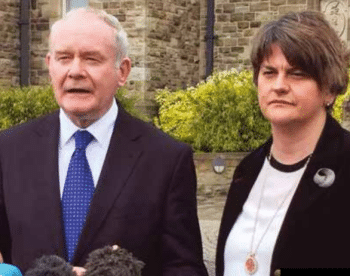
    PACing up

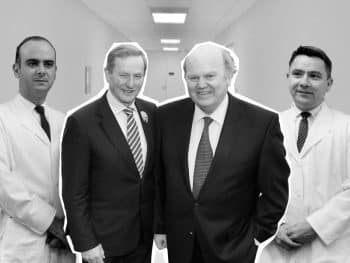
    Public Accounts Committee needs to answer serious questions in the absence of key witnesses in Project Eagle investigation

    Loading

    Read more

  • Posted in:

    Stacking Up

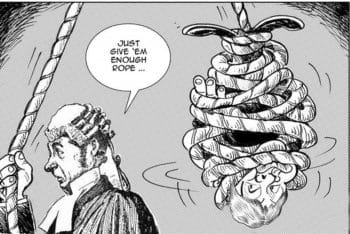
    The Stack family were satisfied that the meeting had led to some closure about their father’s murder. That was until the general election

    Loading

    Read more

  • Posted in:

    Ireland can be Germark

    I have been leafing through the Global Youth Development Index 2016 published recently by the Commonwealth Secretariat, London. It deals with the all-round wellbeing of people aged 15 to 29 in 183 countries inside and outside the Commonwealth. It measures the general condition of that national cohort using five criteria: Civic participation, Education, Employment and opportunity, Health and wellbeing, Political participation. It awards marks in each category, totals the marks and provides global rankings. Ireland is found to be in the Very High group, at number 15. For those of us who wish Ireland well or rather the best, that is encouraging. People between 15 and 29 are the critically important part of a population. To have them in a Very High category of all round wellbeing suggests that a good methodology, mutatis mutandis, is being used for the younger cohort and bodes well for the older one. But this Youth Development Index does more than compliment and encourage us. By placing Germany and Denmark in first and second place respectively in its world ranking, it supplies us with concrete indications of how we can do better still. Irish people who want to better the quality of Irish society go about this in two ways. They call for more equality, justice or fairness – values that it is useful to remind us of, but abstractions. Others call for the remedy of particular ills that have arisen such as homelessness, too many people on hospital trolleys or the threat of being taxed for the supply of domestic water; just demands all of them but made because the problems in question are topical. They are not parts of a coherent scheme for overall social betterment. That is what the Youth Development Index enables us to begin working on -by presenting Germany and Denmark as the two best instances in the world of countries that afford life-enhancing conditions for 15-29-year-olds. Those two countries are near at hand so investigation of the social philosophy and institutional arrangements that have won them top marks would be easy. Equipped with that knowledge, it would be possible for us to apply it intelligently to that central 15-29-year-old tranche of our population. And the lessons learned might also be relevant to the younger and older components of the nation. Pursuing this course of action would mean using a method of national social improvement that has a certain history. It is the method that pursues that goal by adopting for the social improvement of one’s own nation something that has functioned to the benefit of another people. That is what many nations did when, one after another, they adopted parliamentary democracy, first from Great Britain then from the United States, or adopted the welfare state invented in Germany in the 1850s. While it is true that various methods are used for measuring the wellbeing of nations, it seems to me that the method used by the Youth Development Index is particularly useful. Some methods measure the amount of money available to the nation, say its GNP, or the proportion of citizens who vote in national elections. The method used by the Youth Development is more telling. It measures the use made of social philosophy, institutional savvy, and available money to produce beneficial effects in key aspects of the lives of those persons who constitute the central, tell-tale cohort of the nation – those key aspects being Civic participation, Education, Employment and opportunity, Health and wellbeing, Political participation. More to the point for useful assessment of national wellbeing it would be difficult to be. The Irish researchers in Germany and Denmark would be concerned, firstly, with absorbing the social philosophies inspiring the two sets of practical arrangements that enabled those countries to come first in the world in the Index; secondly, with proposing—insofar as the national budget would allow—the corresponding institutional adjustments needed in Ireland. Of course, it is not the case that Ireland has not previously sought to improve its way of doing things by importing methods and institutional arrangements from abroad. However, its method of doing this has normally been simply to copy English practice, not because that practice is of outstanding excellence internationally, but simply because England is near at hand and there is a post-colonial habit of following its lead. What I am proposing is a rationally grounded importation of well-attested excellence.

    Loading

    Read more

  • Posted in:

    Unclaimed Future

    Claiming Our Future was ‘waked’ on 10th December in Tailors Hall in Dublin. There was a good attendance, some sadness, and, as ever, a bit of deliberation. It was felt the deceased had had a good life and that longevity was never the appropriate ambition for such a creation. It had a potential that was never fully realised but made a contribution that was worth celebrating, a contribution that should be built on in the future. Claiming Our Future emphasised the need for crosssectoral civil society action for change. Fragmentation between the different parts of civil society has increased as a result of austerity. There is a lack of networking and collaboration between sectors of civil society, more specifically the trade union, community, cultural, global-justice, environmental and cultural sectors. Each finds it difficult to move beyond its own agendas. Cross-sectoral initiatives led by Claiming Our Future included: online campaigns on the minimum wage, gender quotas in politics, and a wealth tax; the creation of an economic equality steering group involving organisations in each sector working on the annual Budget; and a campaign for the introduction of a Financial Transaction Tax. Developing cross-sectoral approaches was not easy. There remain challenges to provide leadership and to sustain commitment, to collaboration. Claiming Our Future brought values centre stage. It was founded in a crowded Industries Hall in the RDS in 2010 with equality, environmental sustainability, accountability, participation, and solidarity identified as its core values. At first values were seen as the link to draw together the different parts of civil society and to enable them to work together, more coherently and more powerfully, for social change. Then these values became the lens through which Claiming Our Future assessed issues and developed positions. Alignment with these values was the test of any key decision. However, it took time before the full importance of values became clear. Values are the motor of social change. They motivate people in the perspectives they hold and the choices they make. Change will come about by finding ways to convince a wider public to give priority to the values of Claiming Our Future. Lobbying the increasingly unresponsive powerful and hoping the mainstream media will carry our ideas are no longer effective enough, for change. We are up against powerful forces in a cultural battle as we seek to have these values prioritised. The individual, the consumer, the market, and wealth get prioritised as values. The advertising industry, the media, the education system and even political discourse provide the skills and the resources that sustain this. Civil society must gear up to compete so that a different set of values gets prioritised. Claiming Our Future promoted deliberation and the creation of public spaces for deliberation. Deliberation events were hosted on ‘an economy for society’, ‘income equality’, ‘political reform’, ‘international development goals’, ‘local resilience’, ‘new forms of energy production, distribution, and consumption’, and our ‘broken politics’. Deliberation was based on an open invitation to participate in developing a position and plan of action on these themes. Participants worked on tables of ten people to debate and build consensus on a position and how to advance that position. A form of consensus voting, developed by the de Borda Institute, was used to find the consensus across all the tables in the hall. This was a powerful means of exploring alternatives to current models of development. Civil society had been found wanting for convincing alternatives when the economic crisis first hit. A tradition of deliberation had to be rebuilt and needs sustaining and further development if alternatives are to be devised and put forward as the crisis changes and evolves. Claiming Our Future worked to bring the activist and the artist together. Dialogues between activists and artists were organised, creative expression was a centrepiece at all deliberation events, and a summer school on the ‘Art of Campaigning’ was organised. This recognised the central role for creativity in action for social change and in convincing people to prioritise different values. Art has the power to move people, to capture their imagination and attention, and to draw them into seeing new perspectives. It enables people to express themselves and to articulate different futures. Activists are challenged to learn to recognise and draw upon their creative talents. Artists are challenged to contribute their skills to issues they care about and to bring a new focus and meaning to their work. It remains to be seen where these different ideas that have been developed and tested by Claiming Our Future will be taken up. The ‘wake’ will, we hope, be the start of something new and ambitious for civil society as it strives, creatively and cross-sectorally, for change.   Niall Crowley was convenor of Claming Our Future

    Loading

    Read more

  • Posted in:

    Legal Change

    Organisations that support victims of domestic violence have been calling for many years for legal reforms to offer greater protection for victims. Victims of domestic violence who are not cohabiting, or do not have a child in common with an abusive partner, are not eligible to apply for court safety orders. Even where they are eligible for legal protection, they often endure long delays in court processes, and they suffer due to the serious lack of co-ordination between different Courts hearing separate applications relating to the same family. It is outrageous for example that issues of custody and access to children may be dealt with by a judge who is unaware of parallel domestic-violence proceedings. Given the right set of facts and a suitable litigant, I believe that there is now potential for legal action to be taken against the State for the failure to provide adequate protection against domestic violence for women and children. This is a case waiting to happen. Such a case could ensure greater awareness of the challenges faced by victims in negotiating legal processes and speedier introduction of the necessary legal reforms. Similar calls for reform of legislation on rape in the interests of victim protection are being made in the wake of the recent O’R case, where the Supreme Court rejected an appeal by a man who had been convicted of raping his mother. The court confirmed the current law that an “honest, though unreasonable, mistake that the woman was consenting is a defence to rape”. Rape crisis centres and others are calling for a statutory definition of ‘consent’ to be included in the current sex offences Bill. They have also argued that legislation on rape should be changed fundamentally, to require that a man should not have a defence to rape where he makes an unreasonable mistake about a woman’s consent. A core problem with the criminal law is that it is generally designed to deal with isolated events. It can be difficult to apply in the context of an ongoing abusive relationship. Garda statistics do not identify repeat callouts, so it is impossible to know how many recorded incidents involve the same individuals. Indeed we know that a great deal of domestic violence goes unreported. However, reporting levels have tended to rise where individual victims and survivors come forward to tell their stories and to highlight the need for action to be taken against abusers. Recent legal reforms such as the use of victim impact statements in sentencing were introduced largely because of brave individuals who spoke out about their experiences as victims and survivors, and the advocacy of others supporting them, like Women’s Aid. Their work has debunked many of the problematic myths about rape and domestic violence. We now have a better understanding of the terrible effects of such offences upon victims. We know that the majority of perpetrators are known to their victims. The sharing of experiences, and the taking of public interest litigation, are both valuable ways of achieving legal and social change. In a book that I edited with my TCD colleague Dr Mary Rogan, recently published as ‘Legal Cases that Changed Ireland’, we asked some individuals who have taken ground-breaking cases to speak about their experiences. These include Máirín de Burca, who won her case before the Supreme Court in 1975 establishing the right of women to serve on juries; and Dr Micheline Sheehy Skeffington, who in 2014 won her Equality Tribunal claim that NUI Galway had discriminated on gender grounds by denying her academic promotion. Their individual stories, based in experiences 40 years apart, are both essentially tales of courage, of brave women whose actions have made our society more equal. The book shows, however, that the law is only one part of the solution when it comes to achieving progressive change. A range of strategies is necessary, including lobbying, advocacy and campaigning work, to bring about change in attitudes and culture. With domestic violence, a whole package of other measures is necessary, beyond legal reform, including better provision of shelters for victims and their children and of adequate resources for support groups across the country. Currently services are not universally available and, in some areas, victims of gender-based violence have no access to shelters or support groups. We need a fundamental change of emphasis, to challenge a culture in which gender-based violence may sometimes be tacitly tolerated. We need to work on changing attitudes among those engaged in perpetrating abuse, in order to prevent it in the first place, rather than constantly trying to mend the damage that abusers do. As the stories told in our book show, true legal and social change can only be achieved through a combination of legal activism, sharing of experiences, advocacy and campaigning work.

    Loading

    Read more

  • Posted in:

    Genderisory

    This November marks the second anniversary of my successful gender equality case at the Equality Tribunal against NUI Galway for its failure to appoint me to the post of Senior Lecturer. It was hailed as a landmark case and should have been a call to arms, not just for NUI Galway, but for all third-level institutions. However, the awakening is slow and I doubt that much has changed on the ground – or in attitudes amongst university management. Currently, many staff in NUI Galway are disillusioned and afraid. Few staff feel able to challenge the authorities. Many are in precarious posts or worried they won’t be promoted. Some staff, I gather, have been reprimanded for speaking out. Fear has filtered through to the students. Recently a society was told it could not display images of Jim Browne, the NUI Galway President in its ‘Mr Browne’s Boys’ cartoon T-shirts at a table supporting five women lecturers pursuing similar litigation. Last April a cartoon exhibition to raise funds and awareness about the five women was booked on campus by the Students Union, but was taken down by Security in the middle of the night. My case was a landmark case partly because, despite being in the public service, universities have a lot of autonomy, as they should. However, this has led to a lack of transparency in processes such as the promotion and appointment of academics. This has in turn led to an abuse, or perceived abuse, of power. The universities have been getting away with this for a long time now. However, change comes slowly because university management is not answerable to any board of trustees or shareholders. The governing bodies seem powerless or unwilling to effect change. Ireland has an appalling international record for gender equality in academia. It has been ranked second worst in Europe after Malta for its Glass Ceiling Index in academia. Irish third-level institutions have a lot of catching up to do. The facts were stark in NUI Galway when I took my case in 2009. The proportion of successful applicants was stunningly different for men and women. 50% of male candidates were successful compared to the 6.7% of female candidates who were successful (see Table 1). Summing up twelve points in my favour, the Equality Tribunal ruling highlighted that “perhaps the most significant frailty in the respondent’s [NUI Galway’s] rebuttal” was that in all four recent rounds of promotion to Senior Lecturer combined, men had a one in two and women less than a one in three chance of being promoted. One successful man had not even been eligible to apply. I donated my €70,000 award to five other women who, despite being fully deserving of promotion, had been unsuccessful. Their course of action is far more difficult, with only the High Court as an option because the Equality Tribunal deadline was long past. What I find extraordinary is that the university, instead of conceding errors were made, has chosen to spend large sums of taxpayers’ money fighting these women in the courts through an on-going, protracted and emotionally draining, to say nothing of financially stressful, legal wrangle. The Equality Tribunal ruling specified that NUI Galway should send a report to what is now the Irish Human Rights and Equality Commission within 12 months of the ruling. I recently got hold of this and am stunned at what took them 13 months to deliver. It comprises two parts, the larger part being an appendix. The first part, three pages long, sets the tone in stating that “a review had already been underway” but fails to specify that this ‘review’ was actually completed in 2011, three years before the Equality Tribunal ruling and is in fact referred to in the ruling. The first part goes on to repeat the recommendations from that report and devotes one page to the recommendations for the 2013/14 round of promotions, initiated a year before the ruling. No reference is made to the fact that 20 of the candidates deemed suitable but not promoted in that round appealed and that only 18% of female candidates were promoted compared to 35% of male candidates. The consultant’s report commissioned on the back of these appeals is not available even under Freedom of Information (FOI). There was a burst of outrage in the university on foot of my successful case and the action taken by the five other women. The injustice to the five women was immediately raised at the NUI Galway Údarás (Governing Body). I understand the discussion was heated. However, the minutes of that elevated body are only available under FOI where, as part of the process, any useful information has been redacted. Several heated meetings of the NUI Galway Academic Council, that comprises professors, deans and heads of school, and so is overwhelmingly male, resulted in nothing. It was told it was powerless to change matters. Large numbers of students joined the campaign to support the five women, horrified to learn that they had not been promoted. “I am joining the campaign because [name of one of the five women] is the best lecturer I’ve ever had” was a common refrain. The Students Union and both staff unions gave their full support and 26 student societies signed up in solidarity to the campaign. This support continues. What has happened since? A task force was established with much public fanfare and it delivered its final report in May 2016. This was hard-hitting, if limited, since it did not address the position of the five women or focus on non-academic staff, where matters are even worse. The recommendations of the task force are not faring particularly well. It recommended that 50% of the “major influential” committees should be chaired by women by 2018. However, College Deans (all men) chair such committees and three of them were recently replaced by three more men. The task force suggested a cascade system of promotion. This is being watered down. Although 52% of lecturers are women,

    Loading

    Read more

  • Posted in:

    An Offence Against The State

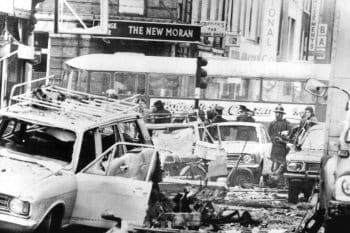
    On 1 December 1972 a car bomb exploded beside Liberty Hall in Dublin. Fortunately no one died but George Bradshaw, a CIE bus driver, and Thomas Duffy, a bus conductor, perished in a second explosion at Sackville Place. No one has ever been charged with these crimes. The UVF belatedly claimed sole responsibility for them but there are legitimate doubts about the veracity of this claim. These bombings were part of four bombings in Dublin’s north city centre at the end of 1972 and beginning of 1973 and are to be distinguished from the even more horrific bombings in the same general area in 1974.   A State In Denial Margaret Urwin has just published ‘A State in Denial’ which unravels a web of intrigue connecting the British Secret State (BSS) to loyalist paramilitaries at a variety of levels. No objective reader of this impressive work could doubt that London focused the might of its counter-insurgency arsenal against Republicans while turning a knowing blind eye at loyalist wrongdoing and also arming and colluding with them. Irwin’s book is fascinating for its dissection of official papers to discern what was going on behind closed doors.   The Man with the English-Belfast Accent The publication of ‘A State in Denial’ is timely as yet another anniversary of the 1972 Dublin bombings comes around. On that fateful evening a man with a mixed English-Belfast accent parked a car bomb beside Liberty Hall. After he alighted, he asked someone who had just left the building when it was likely to empty out for the night. One of the cars used by the bombers to get to Dublin was a Ford Zephyr which had been stolen in Antrim from an Englishman called Joseph Fleming the previous August, along with Fleming’s driver’s licence. Fleming’s licence was put to use on two occasions in November 1972 by an imposter posing as Fleming, to hire cars in Belfast. The imposter was either extraordinarily reckless or had good reason to believe Fleming’s licence was not detailed on the lists circulated by the RUC to carrental companies. He obtained a number of cars over the space of a week, a timespan which underlines his confidence about the use of a stolen licence; and all this at a time when an epidemic of car bombings was bringing Belfast to a standstill. In addition, he left his fingerprints and handwriting on the forms he completed. Another significant fact was that he spoke with a mixture of a Belfast and English accent.   Kitson’s Military Reaction Force The UVF would have us believe that its volunteers: • Stole Fleming’s car in August 1972 and hid it for three months, and; • Drove it across the Border with its original registration plates on display, and; • Proceeded to Dublin at the same time – and possibly as part of a convoy of cars, parked it with explosives, and • Faced an extremely high risk of detection because the rental cars had been acquired using a stolen licence which the gang must have believed was on an RUC watchlist; • Yet all the while possessed the confidence to proceed without any high-level protection from the BSS. It is unlikely this is what happened. On the other hand, the highly secretive Military Reconnaissance Force (MRF) of the British Army had the nerve, skill and high-level protection in place to undertake just such an operation. The MRF was literally above the law. It was a sprawling organisation established by Brigadier Frank Kitson in 1971 to engage in agent-recruitment; surveillance; drive-by shootings (deploying the type of weapons the IRA were known to carry); laundry collection, to detect the residue of explosives on clothing; and even brothel management, to collect gossip and obtain blackmail material. It had access to loyalist agents recruited by the British Army and M15. Stealing vehicles and hiding them at its Palace Barracks HQ for use later was one of its known practices. The MRF could easily have arranged for the details about Fleming’s vehicle and licence to have been erased from the RUC watch lists. With this backing, the loyalist gang that bombed Dublin (or at least some of them) would have enjoyed the confidence to hire the cars and drive them to Dublin.   Albert Ginger Baker Albert Ginger Baker, an alleged British Army deserter, who joined the UDA in the early 1970, ticked all the boxes as an MRF agent. His family have claimed that he was involved in the 1972 bombings. In 1976 the Sunday World published an article exposing his links to a ‘Captain Bunty’, a mysterious figure who can only have been his handler. The pair met regularly in a Belfast coffee bar. Baker was involved in a string of gruesome sectarian murders in Belfast. During one of them, James Patrick McCartan, a 22-year-old forklifttruck driver, was stripped naked, hung up by his ankles and punched, kicked and beaten with a pickshaft, while a dagger was used to stab him in the hands and thigh over 200 times. He was threatened with castration and dropped head first from the ceiling. Eventually one of Baker’s UDA superiors gave him a pistol and told him to kill McCartan. Baker put a hood over his head, and blasted into his skull three times. A grenade Baker’s gang used in another attack was standard British Army issue, which raises questions about how they acquired it. It is doubtful the prospect of bombing Dublin could have troubled the conscience of those in the BSS who ultimately controlled men like Baker. Baker suffered some sort of a crisis in 1973, and fled to England where he confessed to a string of sectarian murders to the police in Warminster, in Wiltshire. As far as the BSS was concerned, some rather nasty cats were now peeping out of the bag. Damage limitation became the order of the day. Hence, while Baker was convicted and sent to prison in 1973, his secret link to the MRF was

    Loading

    Read more

  • Posted in:

    Contextualising continual conflictual conflagration

    Published in the November 2016 issue of Village Why has rebel-held East Aleppo taken so long to fall, despite being besieged for months by Syrian Government soldiers, backed by Russian war-planes? Will ISIS-occupied Mosul hold out similarly against Iraqi troops supported by the Kurds and Americans? Or will agreed escape corridors in either case help the rebels/terrorists steal away? World War 2 showed how costly it can be for troops to take besieged cities in house-to-house fighting against well-motivated defenders holding out in cellars, rooms and on roof-tops, with good sniper positions on all sides. The sieges of Stalingrad, Warsaw and Berlin are good examples. Even our own Easter Rising’s Battle of Mount Street Bridge showed the heavy losses a small group holding a building can inflict on a much more numerous attacking enemy. President Assad’s soldiers are presumably in no hurry to get killed, so the miserable Aleppo story goes on while the international media try to make our hearts bleed at the thought of the unfortunate civilians, especially children, in the besieged city. The Assad Government and its Russian allies are judged heartless for not permitting enough truces to allow in food and medicines. But who decides the allocation of aid once it gets behind rebel lines? Presumably the rebel leadership, who are unlikely to allow themselves starve while they dole out food to the women and children. Last year I saw a TV film of food aid being distributed in another besieged Syrian town. Some children grasping for the food tins being handed down from the back of a lorry looked as well-nourished as their Irish counterparts. Other children beside them were clearly starving. One could count the ribs of their thin bodies. The scene pointed to a pecking order among aid recipients, with unseen people in the background, presumably the rebel leadership or administration, giving aid supplies to those they favoured and denying supplies to others, when there were no TV cameras around to film them. This is likely to be the reality on the ground as regards aid being delivered along ‘humanitarian corridors’. While Assad is the West’s current “bad guy” in Syria and we are urged to wax indignant at the thought of his bombs falling in Aleppo, we hear little of the bombs which Saudi Arabia, that staunch ally of “the West”, is dropping simultaneously on a different group of rebels/terrorists in Yemen. One of these recently killed a hundred mourners at a funeral. This selective indignation is encouraged by the aid agencies which echo the political rhetoric of the Western Governments that supply most of their funding. It is startling to learn that the income of Ireland’s aid agency, GOAL, increased three-fold from €60m in 2012 to €210m in 2015, according to the Irish Times, mostly for its Syrian operation. This money came from the US and British Governments which have their own political agenda in Syria. Syria has turned GOAL into Ireland’s biggest charity. Political allegiance follows donor money. GOAL spokesmen have strongly criticised the Syrian Government’s attempts to suppress the rebellion against it, although such suppression is the right of any lawful internationally recognised government, which, whether one likes it or not, the Assad regime happens to be. Likewise spokesmen for Médecins Sans Frontières Ireland echo French Government policy on Syria as it assumes a continuing right of intervention in France’s one-time mandatory territory. These aid agencies serve the internationally orchestrated campaign to delegitimise the Assad Government and give moral sanction to those attempting its overthrow. Yet if the Assad Government were to be overthrown thousands of Shias, Alawites and Christians could expect to have their throats cut by the fundamentalist ‘freedom-fighters’ who would then take over in Syria. Concern at the fate of civilians in Benghazi, Libya, in face of Colonel Gaddafi’s threatening rhetoric was what ostensibly motivated Britain, France and America to intervene in Libya in 2011. This led to Gaddafi’s overthrow and gave us the current failed State there. Hilary Clinton, then Obama’s Secretary of State, pressed hard for that intervention and got a UN Security Council resolution to authorise it. Mrs Clinton has called for a no-fly zone in Syria to stop President Assad’s forces dropping bombs on East Aleppo, ostensibly because they hit civilians. If the President tries to push through such a policy while the Russians are still supporting Assad, it could have the potential to start World War 3! The Syrian conflict shows alarming evidence of tension between the military hardliners of the Pentagon and the diplomats around US Secretary of State John Kerry. On 17 September last US and Australian air attacks on Syrian army troops killed 62 and wounded 100. The Americans said it was an accident. Others thought it a deliberate attempt by hardliners in Washington to scuttle the partial ceasefire which Kerry and Russian Foreign Minister Lavrov had agreed with the support of Presidents Obama and Putin, and which had taken effect just five days before. In public remarks bordering on the insubordinate, senior Pentagon officials showed unusually open scepticism regarding key aspects of that Kerry-Lavrov deal. One can assume that what Lavrov told his boss in private was close to his blunt words on Russian TV on 26 September: “My good friend John Kerry is under fierce criticism from the US military machine. Despite the fact that, as always, they made assurances that the US Commander in Chief, President Barack Obama, supported him in his contacts with Russia, apparently the military does not really listen to the Commander in Chief”. Lavrov also criticised General Dunford, chairman of the US Joint Chiefs of Staff, for telling the US Congress that he opposed sharing intelligence with Russia “after the agreements concluded on direct orders of Russian President Putin and US President Barack Obama stipulated that they would share intelligence…It is difficult to work with such partners”. It is scarcely surprising in the light of this that the Russians and the Assad regime are desperate to get the siege of

    Loading

    Read more

  • Posted in:

    Trump/Slump

    By all possible measures the US presidential election of 2016 has set a record low in the quality of political discourse. However, with the outcome handing the Republicans a decisive victory in the White House, Senate and House of Representatives contests, the election will have a lasting and systemic impact on the development of economic and social policies in the US for years to come. First, the presidential contest failed to develop key policy proposals that could define the new administration. In a way, by diverting election debates away from large-ticket economic and social issues toward personalities, legal and ethical mudslinging, and geopolitical blame-games, both Donald Trump and Hillary Clinton have cleared the water for a rudderless new Presidential Administration. Key issues including immigration, healthcare, social insurance and taxation, spending and fiscal policies, and economic strategy were left largely unaddressed. This leaves the legislative agenda to the Republican-controlled Congress. This is a far better outcome than the commentariat allow, but not as good an outrun as those of us expecting significant economic change would have wished for. Second, for all the differences between them, both candidates were aligned in one specific area: their propensity to shower voters with promises irrespective of their costs. While Trump mentioned the Federal debt overhang, his policy priorities included accumulation of more debt to fund increased social security handouts to interest groups, massive infrastructure investment, and tax breaks. His isolationist stance on foreign trade also implies heavier debt though the effect is unclear. Hillary Clinton was even more profligate that Trump.   The US is heading for Government debt of over 108% of GDP in 2016, and up until 2021. With President Trump and the Republican-controlled legislature, the likely outcome will be that US Federal debt  will remain high, as the deficit swings from the 3.5% average expected 2017-2021 to closer to 3.7-3.8 percent. Most of this debt will go to fund military expenditure (the so-called modernisation of the US armed forces will take trillions out of the Treasury, interest groups, and a wave of tax cuts, primarily targeting capital and financial markets, as well as the upper-middle class and higher earners. Third, neither of the candidates offered a serious plan to address competitiveness, including bureaucratic regulations and the tax codes, especially corporate taxation that incentivises capital flight and corporate-tax avoidance. Trump vaguely talked about the need for change, but never offered specific measures. Hillary Clinton advanced only marginal reforms. By default, the regulatory and tax agenda will now shift to Congressional Republicans. As a result, we are likely to see unwinding of even the feeble banking and financial-services reforms currently in train. Clawing back Federal controls and giving more room to individual States is preferable to the Democrats top-down approach. Fourth, while both candidates decried the loss of competitiveness and jobs in the manufacturing sector, neither offered a plausible solution. Declining labour-productivity growth, stagnant total-factor productivity, and the challenges of growing automation and robotisation, including for many services, remain untouched. And there was nothing constructive on offer on external imbalances and the impact of the trade deficit on the domestic economy. On balance, therefore, the Democrats loss across ensures that the gridlock and acrimony that characterised the presidential contest will now be past. Much however, remains uncertain, given the unclear divergence of agendas between the Republican legislature and the Republican Presidency. While the US economy inherited by President Trump appears to be in much better health than the one inherited by President Obama in January 2009, US growth has been weak and the risks of a new economic calamity are rising, not abating. Within the last two weeks, the US economy reported a much better trade deficit for September, down 10 percent compared to August. This is the best external trade imbalance in 19 months driven by the fourth straight monthly rise in exports. Exports rose 0.6 percent on a monthly basis, reaching the highest level since the summer of 2015. The silver lining imported a couple of clouds: much of the recent gains were driven by lower energy imports and the weaker dollar, albeit this was moderated by the undesirability of currency volatility. However, since the dollar is expected to further strengthen as US monetary policy tightens, the likelihood of these trade gains continuing is low. A Republican-controlled Federal Government will deliver current account deficits that remain around 2.5-2.7 percent of GDP over the next four years – below the 3.4 percent average for the last ten years, but not healthy enough to support export-driven growth. Another bright spot in the economy over recent months has been the labour market. Based on October figures, US pay levels are rising at the fastest pace since 2009 and unemployment currently stands at 4.9 percent, a near eight-year low. Healthcare companies, white-collar professional services, education and financial firms now lead job creation: a change of fortune from the low-wage-jobs growth that characterised 2015. In line with tight labour markets, hourly average pay jumped 0.4 percent in October, to $25.92. This implies we are now witnessing a change in the US labour market compared to 2015, when gains in income were predominantly concentrated amongst the non-working population. Judging by the headline numbers, the pace of the jobs recovery  since 2008 has been faster than after the 2001 recession, and is running closer to that of the recovery of the 1990s – the last ‘golden’ era of growth. It all sounds wonderful. And yet… those in unemployment for 27 weeks or longer (the US definition of the long-term unemployed) currently account for 40 percent of all unemployed, the lowest share since 2009, but still well above the same figure at the same time after previous recessions. It is also roughly double the average rate across the growth cycle. This attests to the severity of the Great Recession, but also reflects the simple fact that the US economy continues to deleverage, meaning that the massive fiscal and monetary stimuli deployed over the years are having less impact than

    Loading

    Read more

  • Posted in:

    Poverty shapes abortion

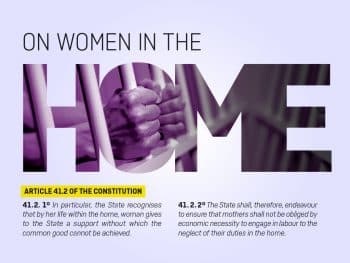
    A woman in poverty is damned from two perspectives when it comes to pregnancy. She can’t afford to continue a pregnancy but she can’t afford to stop it either. Constitutional reform; investing in women; trusting women; reversing austerity; treating all mothers equally; addressing poverty, low pay and childcare and all the other social and economic issues – are part of the politics of motherhood and choice in women’s lives. In our ‘Repeal the 8th’ debate we need to make links to a different section of the Constitution, Article 41.2. This prioritises a woman’s domestic role over her labour market participation by unambiguously implying that a woman’s place is in the home. Repeal the 8th needs to make links with the reality of a contemporary politics of motherhood based on Article 41.2. The values informing this Constitutional Article are still widely and deeply held and shape the politics of motherhood today. They are reflected in current policies on child income support, lone parents, homecare tax credit, tax individualisation and childcare. Economic independence and women’s access to, and control of, economic resources are key to understanding women’s choices and the barriers to women’s choices. Crisis Pregnancy Agency research has established that economic factors mediate a woman’s pregnancy in complex way: “the balance between the ‘value’ and the ‘cost’ of a child is important in shaping fertility decisions”. Poverty and financial dependence impede women’s ability to act on a range of choices, not least those associated with reproductive health including her right to choose to have a child. Poverty is a barrier to having children as it may make it impossible to pay for food. 10% of Irish people experience food poverty. They have problems meeting basic needs including health, housing, and children’s education. Austerity has made people more likely to experience poverty and the recently loosened purse strings have yet to dispense much to those who need resources most. Precarious jobs, bogus self-employment, if-and-when contracts, casual hours, low-hour jobs and internships all make pregnancy a non-viable option. Young people, women and migrant workers are most likely to have such jobs. Being pregnant and an employee is precarious. There has been an increase in unfair dismissals of, and discrimination against, pregnant women. Being self-employed and pregnant is often the foundation for stress and poverty. Poverty, and related lack of access to economic independence act as a constraint on a woman’s capacity or right to choose not to have a child. The Irish Human Rights and Equality Commission (IHREC) argues that the high cost of prescription and non-prescription contraceptive items interferes with the right of men and women on low incomes to obtain affordable contraception and to enjoy their right to adequate reproductive health. Cost deters young adults from using contraception. The need to get a GP for renewal of a prescription for a contraceptive pill acts as a further barrier. Once a woman living in poverty falls pregnant, accessing the finance needed for an abortion is a barrier. Borrowing from informal or formal sources, money lenders or credit unions, is rarely an option. Austerity has acutely affected the extent and depth of financial exclusion. Small-scale debt is now part of many households’ day-to-day finances. There is little capacity to absorb unexpected one-off costs. Informal sources of credit are exhausted. Money lenders (legal and illegal) and other forms of high-cost credit are used when conventional credit is no longer available. Such sources offer loans at exorbitant interest rates and often with far more serious risks. Credit Unions’ ability to make small-scale loans accessible is diminishing, due to increased regulation and a change in the Credit Union ethos. A 2016 study found 43% of women using at-home medical termination of pregnancy through online telemedicine, the abortion pill, could not afford to continue the pregnancy. Indeed 34.6% struggled to cover the £70 donation. These women were also more likely to lack emotional support. Financial control is another restraint. Some women in well-off households do not have access to their own income or control of their own time or space. To make choices to get pregnant or avoid pregnancy real, women need the practical capability to implement those choices. Debates must reflect this or lose relevance. by Mary Murphy

    Loading

    Read more

  • Posted in:

    Enda(ngered)

    The election of Donald Trump is just the latest headache for an already precariously balanced Irish government. The election of the man whose words were described as ‘racist and dangerous’ by Enda Kenny just a few months ago does not in itself pose an imminent threat to the Taoiseach’s political survival but it certainly intensifies the political and economic uncertainty already heightened by Brexit. While most Irish people would agree with the sentiments expressed by Kenny during the US election campaign in response to Trump’s consistent attacks on immigrants, women, minorities and the disabled, it may not have been, in hindsight, the cleverest thing in the world for the Taoiseach to express such forthright opinions about a possible incumbent of the White House. No wonder he was on the phone to ‘The Donald’ less than twenty-fours hours of the shock US presidential result to ensure that the door will still be open when he brings the bowl of shamrock to Washington in March. It would not be so awkward for Kenny if he was not already under pressure to set a date for his departure as leader of his party and the government. And it will have to be both, despite the kite he has recently flown about staying on as Taoiseach while relinquishing the leadership of Fine Gael. He has already claimed at various times that his experience is needed to navigate the turbulent waters following Brexit but he can’t have any such illusions about the impact of the latest international shock to the Irish economy from the promised Trump era. The most immediate is Trump’s promise to reduce domestic corporation tax from 35% to 15% with its inevitable consequence for Irish tax revenues from multinationals but others include his threat to deport undocumented immigrants and to place obstacles on young people making study and work trips to the States. Not to mention the knock-on effect of his victory for the election of extreme right-wing forces in France, the Netherlands, Italy and possibly Germany if the refugee flow persists, over the coming year. Kenny knows he is hanging on by a thread and the rival contenders for leadership will almost certainly intensify their campaigns in the new year with the expectation of a contest by late Spring, if not before. Neither can Michael Noonan expect to receive any retrospective laurels from his cringe-making welcome for president-elect Trump on his arrival in Shannon in 2014. Whatever about Kenny the finance minister is a political dead-man walking, for a number of reasons. In the week before Budget Day in October, according to a number of flies on the wall in Merrion Street, there was the usual flurry of activity and panic in the Department of Finance as the big day approached. Except the nerves of officials were frayed, not by the well flagged budget, but by the minister’s date with the Public Accounts Committee days later where his role in the Project Eagle affair was to come under scrutiny. Noonan had been informed by NAMA executives, in March 2014, of the dodgy fee payments associated with the planned sale by the agency of its £5.6 bn Northern Ireland property portfolio to US fund, Pimco. While Pimco withdrew from the sale on the advice of its compliance team the sale went ahead to Cerberus who paid just £1.24bn for the commercial and property assets just weeks later. Although he protests otherwise, Noonan could have made known his reservations about continuing the sales process in the light of the shocking information about backhanders to legal and other insiders, including a former advisor to NAMA, but did not do so. It then emerged that Cerberus was represented by US firm Brown Rudnick, the same law firm that acted for Pimco. And that Brown Rudnick along with Belfast solicitors, Tughans, and a number of others including Frank Cushnahan a former member of the agency’s Northern Ireland Advisory Committee (NIAC) were due to receive £15m between them in success fees from Cerberus for their assistance with securing the deal. Former NI first minister, Peter Robinson was also named a possible recipient in the arrangements. At the early October meeting of the PAC, Noonan defended his position and argued that he was not legally empowered to interfere with the NAMA sale. He rounded on committee members, notably Mary Lou McDonald of Sinn Fein, who clearly got under his skin when she questioned his failure to intervene. He tetchily reminded her that her colleague, Martin McGuinness, the deputy first minister had not expressed any concerns over the recommendation of Cushnahan as a member of the NIAC by former Stormont finance minister, Sammy Wilson in 2010. He told Fianna Fáil members of the PAC that it was their man, the late Brian Lenihan, who had passed on Cushnahan’s name to NAMA as an appropriate appointment to the NIAC at the time. However, nothing could disguise Noonan’s discomfort at being subjected to detailed questions about his role in the controversy over his hours of evidence during which he was accused of bluster by McDonald. His reputation as a financial guru who has safely steered the ship through the Troika years into economic recovery has also been severely dented not least by his miscalculation of the available ‘fiscal space’ or financial reserves in the Fine Gael election manifesto earlier this year and over his dithering on the question of the massive tax avoidance by US multinationals and vulture funds. When the full extent of the climb down in the face of the Garda threat of all out strike became known on the eve of the mass walk out by AGSI and GRA members of the force, Noonan commented that he was taken aback by the potential €50m-plus cost of the eleventh-hour deal proposed by the Workplace Relations Commission. But nobody, in government not to mind opposition, believes that the finance minister would not have been aware of the concessions on pay, overtime and allowances given to the Garda to avert

    Loading

    Read more

  • Posted in:

    McKinseygalitarian

    Stephen Donnelly is an accidental politician. There he was sitting in front of his TV minding his own business, watching the news pictures of IMF officials striding the streets of Dublin. He saw the threat. “I’m trained in this stuff – what happens when the IMF arrives in your country, the mistakes that get made, and how to protect people in a context of painful economic correction”. He had a sense, from watching the government make mistakes, “that our political system was missing some key skills. I couldn’t just sit by and watch it happen”. A whirlwind election campaign saw the new deputy take his seat in the Dáil.  Endearingly, his first day he mistakenly went to the gate of the next-door National Museum in search of his new place of work. The 2011 election “created a politburo”. A huge majority in the Dáil was controlled by a cabinet that was ruled by four people. This “consolidation of power” made for a highly dysfunctional Dail with parliament effectively “sidelined, left with the role of observer to critical decisions affecting millions of people”. Donnelly was unimpressed with his initiations in the Dáil. “I, and many other TDs, invested a great deal of time and effort in drafting amendments to proposed legislation and then spent hours debating them, only to find that none of them were ever, ever accepted”. It is not easy to break into politics in Ireland. You need to be family, you need to be part of the party machines and you need resources. Irish politics has been unique, with economic crisis and austerity merely nudging politics to the left without any real change in personnel or direction. New faces and new ideas are scarce. Donnelly stands out in this regard. It’s not easy to start a new political party in Ireland. Donnelly gave it a go, but came a bit of a cropper. Ambition, however, will not hold him back. He is an enthusiast for the ‘new’ politics. He is unforgiving of the “jaded commentary” that asserts “this Dáil is a mess”. “Parliament is relevant for now. Parliament has a role. It is working”. “I’m talking with TDs and Senators across the political spectrum who are flying. This Dáil provides them with the opportunity to make progress on issues they care about and that matter for the country. That is what good politics should be about”. This could go in the future but “once you empower people it is hard to revert back”. TDs who have never been “remotely happy with their role on the sidelines” are unlikely to allow a return to the dysfunctionality that was a feature of previous majority governments. Tax avoidance by vulture funds costs the State between €10bn and €20bn, according to Donnelly. He offers treatment  of this issue as an example of the ‘new’ politics in action. He raised it at leader’s questions a few months ago but the government had no position on it. He then talked to politicians across Fianna Fáil, Labour and even Fine Gael and prepared a policy paper on the issue. Fianna Fáil then announced they would not vote through any Finance Bill that did not address the issue. Michael Noonan presented an amendment to address the issue. Donnelly prepared a technical note on the amendment, pursued the matter further through the new Budget Oversight Committee, and met Michael Noonan privately on the matter. A further amendment was put forward by the Minister. Another detailed technical note issued from Donnelly: further change was promised. This new-found efficacy, he allows, may reflect the fact he’s a more experienced legislator in his second mandate. However, his case is that this is the ‘new’ politics in action. This would not have happened in the last Dáil. “TDs can now raise issues, co-operate across party lines, and have some confidence that the executive will respond. TDs have greater and more varied forms of leverage open to them. They have more possibilities for engagement on issues. More responsibility leads to better outcomes. My hope is that is what we are seeing now through this ‘new’ politics”. He comes across as somewhat unforgiving in his first responses on issues. He is not patient with popular disaffection. If we are not happy with our political system, we need to be aware that: “the political system is a manifestation of the country. If it has faults we need to remember we get to choose those who run it”. If we are not happy with our economic system, we need to keep in mind that: “we live in one of the most prosperous countries in the world. We have high quality public services compared to most countries”. However, conviction gives way to further reflection and nuance when he is pushed. This is what makes him an interesting politician. “Are we short of political vision? Yes. Do we need more political vision? Yes. Would the public respond positively to this? Yes”. It gets more interesting when he suggests politicians “need to get better at laying it out”. We don’t do much political vision and the bit we do, we don’t do very well. That last element is missing from most commentaries, but it could be the real stumbling block. Still he doesn’t let go. “We have an awful habit here of blaming the supposedly lazy or self-interested politicians for everything. That’s a trap and it disempowers us. If we want to see change, we have to stand up and make it happen”. Donnelly’s political vision is set out in neat frames. We should be building “a country where every child grows up with opportunities and everyone can live with dignity. We have a fantastic country but we’re still a long way from achieving this”. If we are to pursue this goal, we need first to secure “sustainable exchequer revenues”. That means “backing SMEs and Foreign Direct Investment, stopping unwanted tax avoidance, and responding well to Brexit”. Secondly, we need targeted investment “looking at short-term and long-term

    Loading

    Read more

  • Posted in:

    Rolling back the Eighth Amendment: the Church’s power grab for the new national maternity hospital­­ — backed by government.

    The big day The sun shone, marquees fluttered, caterers bustled. Everybody who was anybody was there, ‘old boys’, former nurses, family friends. The No 1 Army band heralded the arrival of the Archbishop of Dublin; His Grace was followed five minutes later by the Tánaiste and Mrs Childers. The Archbishop said Mass for some 1200 people after leading a procession to bless ‘the new Vincent’s’, also known as the Mary Aikenhead School of Nursing. After the speeches came a two-tier lunch, turkey in the cafeteria for staff, cold meats, salads, wines and coffee for distinguished guests. Acquisitions The following year, the Religious Sisters of Charity acquired St Michael’s Hospital, Dun Laoghaire, from the Sisters of Mercy. Thirty years later, in 2001, they established St Vincent’s Healthcare Group to own and manage their hospitals. In 2010, the RSC expanded their portfolio again, mortgaging a publicly-funded asset, St Vincent’s University Hospital, to fund the building of their new private hospital at Elm Park. A decade later, the congregation is poised to acquire a new multi-million maternity facility — set to be one of the biggest in Europe — built and maintained from the public purse. Succession The key RSC objective today is to guarantee that their ethos will continue to determine care in their facilities. The congregation is dying out, so succession problems arise, as they do for religious worldwide, the dwindling owners of hospitals, schools and other non-profit enterprises. The order, which comprises some 250 members in all, mainly in their 70s and 80s, is headquartered in Dublin. Controversially, the congregation refused to pay its agreed €3 million share for victims of institutional child abuse in 2012, following the publication of the Ryan Report into industrial and reform schools. The order subsequently declined to compensate the Magdalene women, having netted €45 million in 2001 from the sale of its land at Donnybrook, Dublin, site of a laundry it ran for over 150 years. The flouting of public-pay policy by the Vincent’s Group was also widely censured.  Vincent’s and Holles Street Vincent’s has always had a special relationship with the National Maternity Hospital, Holles Street, a privately owned-corporation under the aegis of the Catholic Archdioceses. For decades, the NMH led the way in symphysiotomy, an operation that unhinged a woman’s pelvis, performed in lieu of Caesarean section by doctors who disapproved of birth control.  Today a much more liberal regime prevails. As Tony Farmar’s centenary history of Holles Street shows, medical consultants practised privately in both hospitals from the 1890s. Archbishop John Charles McQuaid was the National Maternity Hospital’s (NMH) all powerful chairman when he performed the opening ceremony at Elm Park in 1970. Today, around 40 per cent of NMH consultants work in the RSC’s hospitals despite the religious restrictions imposed on their practices. A power grab In 2013, Minister for Health James Reilly announced the building of ‘the new NMH’ — then set to cost €150 million — at Elm Park. KPMG had recommended that Dublin’s three private maternity hospitals be co-located with acute general hospitals in 2008. Co-located single-speciality hospitals offer ready access to wider specialist care: hospitals retain their independence while sharing ancillary services. Initial agreement between Vincent’s and the NMH on co-location broke down. In or around September 2014, under a new chairman, James Menton, a former KPMG partner, the nun’s company made a takeover bid for the NMH, reportedly delaying the planning process until Holles Street caved in. The Mulvey report Incoming Minister for Health Simon Harris appointed Kieran Mulvey to broker an agreement between the two warring private entities in May 2016. Four months later, the then deputy chair of the NMH, Nicholas Kearns, and the hospital’s then Master, Dr Rhona Mahony, now a director of the Group, reportedly informed Mulvey that they were willing to dissolve the NMH charter to become a wholly-owned subsidiary of the nuns’ company. This offer was made without consulting either the NMH board or the governors, according to former master and former board member Peter Boylan, a strong opponent of the takeover by the nuns’ company. St Vincent’s Healthcare Group, the company founded by the order in 2001, was now set to own and control the new maternity hospital company, which is to be a wholly-owned subsidiary of the Group. Mulvey had no public-interest mandate. The report set out detailed proposals for the takeover: it did not question it, nor did it consider who should own the land underneath the new hospital. Simon Harris welcomed the publication of the Mulvey report in April 2017, in a U-turn from the government’s previous support for NMH independence from Vincent’s, expressed by his predecessor Leo Varadkar in May 2016. It was a watershed for the congregation’s plans. Pushback Public opposition grew. A mass demonstration took place at Leinster House, one of many, and over 100,000 signed a petition against the government’s proposal to gift the new facility to the RSC. Peter Boylan publicly expressed his concern that certain procedures would not be available in the new hospital because of its Catholic ethos. Responding on 25 April 2017, the chair of the Group, James Menton asserted that “in line with current policies and procedures at SVHG [the nuns’ company], any medical procedure which is in accordance with the laws of the Republic of Ireland will be carried out at the new hospital”. This is a remarkable claim— later repeated — that gives the impression that abortion and other procedures banned by the Catholic Church were, and would continue to be, provided at Vincent’s hospitals. The Irish Catholic Bishops’ Conference healthcare code The Irish Catholic Bishops’ Conference issued its ‘Code of Ethical Standards in Healthcare’ in 2018. Abortion is permitted only as a lifesaving  procedure.  Under all other circumstances, such as rape, the threat of suicide or the diagnosis of a fatal foetal abnormality, abortion is prohibited. Referral for abortion is also banned, because it  constitutes “formal co-operation with wrongdoing”, which is “never morally permissible”. Other prohibited practices include artificial contraception, IVF, surrogacy and

    Loading

    Read more

  • Posted in:

    In which Denis gets himself sued

    Perhaps the strangest event on the Irish media landscape last month was prompted by Sinn Féin MEP Lynn Boylan’s publication of a report into media ownership in Ireland, commissioned by the European United Left/Nordic Green Left (GUE/NGL) grouping in the European Parliament. The report itself – by Belfast solicitors Gavin Booth and Darragh Mackin of KRW Law, and barristers Caoilfhionn Gallagher and Jonathan Price of London’s Doughty Street Chambers – contained little that was new, castigating once again the dominant position held by RTÉ and by “individual businessman Denis O’Brien, through his ownership of Communicorp and significant shareholding in Independent News & Media”. Released on 24 October, the report had little impact at first. In his Irish Times column, Fintan O’Toole noted the coverage. Some of this was extensive – the Sunday Business Post carried both a news report by business editor Tom Lyons and an opinion column by Boylan; the Sunday Times carried the story on the front page; Pat Leahy had a report with quotes from Boylan in the Irish Times. Some was minimal – the Sunday Independent carried only a comment from Liam Collins, not about the report directly, but about Guardian media writer Roy Greenslade’s “tiresome blog”. In fabled Sindo style three of the five paragraphs Collins devoted to the story were salvos at Sinn Féin. There were some other straight news reports, from thejournal.ie and the Examiner. But apart from communications minister Denis Naughten being forced to admit he hadn’t read the report hours after he had dismissed its findings, effectively killing it as a news story, the report seemed destined to decline into obscurity, gathering dust and never to be mentioned again outside of an occasional retrospective the next time someone looked at the Irish media scene. And then, for some reason, Denis O’Brien decided to breathe life into the story, issuing an oddly rambling and misspelled statement: a series of barely connected paragraphs, jumping randomly from topic to topic. Aficionados will recognise the work of his earthly representative, James Morrissey. O’Brien’s piece is familiar to copy-editors and sub-editors as the “celebrity column”, a series of disjointed observations and wisecracks hacked into a workable column by a cynical and overworked staff writer, and headed with the name of an often minor sporting or entertainment ‘name’. The statement, written in the first person, and therefore presumably the work in the first instance by O’Brien, gets off to a predictable enough start, challenging the independence of the report, and indeed the very notion that anything commissioned by a Sinn Féin representative could ever be independent. (“Hardly”). It does land one pertinent early blow, pointing out that while the report identified RTÉ as also holding a dominant media position in Ireland, it devotes “no focus” to the broadcaster. This might give the impression that the entire report is devoted to O’Brien. This is not the case.  For example the authors devote twelve pages to a general consideration of the importance of media plurality (and how plurality differs from economic competition). In addition, the authors highlight not only O’Brien’s ownership of media outlets, but his propensity to go to law to protect his reputation, and its chilling effect. The Report notes that since 2010, he has gone to court 21 times, 12 times against media outlets, once against a PR firm, twice against the Moriarty tribunal, once against Dáil Éireann, and once against an individual TD, Colm Keaveney. In addition, there were threats of legal action which were not followed up, such as that reported against satirical website Waterford Whispers, which removed the offending piece. However, O’Brien soon tires of the RTÉ whataboutery, and returns to getting it off his chest about Sinn Féin “pushing its agendas, overtly and covertly”. To this end, he embarks on a divagating walk, stopping first to point out that An Phoblacht has criticised RTÉ, and then to defend Apple’s tax accounting practices, calling Sinn Féin’s criticism of their tax practices “anti-enterprise and anti-Irish”. O’Brien then regains his focus once more, fact-checking, again, that he is not the chairperson of Communicorp, he just owns the company. But then his concentration seems to wander again, and he inadvertently makes the authors’ point for them. “Is the media objective when it is talking and writing about itself?”, asks Denis (or perhaps his human avatar). Pausing to note, controversially – perhaps provokingly, that INM was “days from forced closure” in 2011,O’Brien then complains that RTÉ never contacted him for comment when Boylan’s report was published. Kevin Bakhurst, RTÉ’s Deputy Director-General and Managing Director of News and Current Affairs, was prompted in response to post on Twitter that the broadcaster “did ask for a response on the report and Denis O’Brien’s advisers chose not to give one yesterday”, going so far as to post a screenshot of email correspondence. But we live in post-truth times and no correction ensued. O’Brien then continues with his reflections on the parlous state of Irish media finances, noting “a very challenging environment” and – enigmatically – that the Irish Times is “considering various funding options”, before predicting that “some media companies will not survive this decade without radical restructuring”. He closes on a return to the theme of “Sinn Féin/IRA” funding, offering the hope that perhaps the political party will at some point get into the business of becoming a “fully-fledged broadcaster and publisher and create some jobs for a change”. Sunday Times writer Mark Tighe was the first to point out that the Irish Independent report on the statement amended this to simply “Sinn Féin”. On the Sunday following O’Brien’s midweek broadside, Sunday Independent writers did not mention the affair, except for Shane Coleman, who wrote an unlikely column pooh-poohing the idea that Denis O’Brien has an overweening influence, because everybody is reading blogs and watching Youtube as part of their varied media diet. Meanwhile, the Sunday Business Post reported that KRW Law “reject completely the suggestion that the authors were paid by the IRA and the allegation that we were anything

    Loading

    Read more

  • Posted in:

    Take the spat out of spatial

    Strategic spatial planning determines where development should take place in Ireland. It can improve the quality of life, improve society and the environment and underpin the delivery of effective public services and the capacity for economic growth at national, regional and subregional levels. In other words it decides where we live, work and play – and so crystallises much about our way of life. Because of demographics and development -pressure spatial planning, or the lack of it, is setting in concrete our living conditions for several generations. A new National Planning Framework (NPF) is being prepared for Ireland to succeed the National Spatial Strategy 2002 (NSS). The NSS failed abysmally and was officially scrapped in February 2013. The new framework is due to be published in the first quarter of 2017 depending on its adoption by the Oireachtas and relevant statutory requirements. The Department for Housing, Planning and Local Government published a roadmap for its preparation last December. Before we get stuck in to this, the first question must be: why did the NSS fail and what are the lessons? What was the National Spatial Strategy? The NSS was Ireland’s first national strategic spatial and territorial planning framework and was held up as, theoretically, the best in Europe at the time. The strategy was a twenty-year planning framework designed to deliver more balanced social, economic and physical development between regions. The NSS was to provide a response to the growing imbalances in socio-economic development that occurred during the Celtic Tiger period in the late 1990s. In the foreword, An Taoiseach, Bertie Ahern, states that to achieve “balanced regional development” a greater share of economic activity must take place outside the Greater Dublin Area. It requires that the full potential of each region to contribute to the overall performance of the State be developed in a sustainable economic, social and environmental basis. To achieve this the National Spatial Strategy set out a framework for gateways, hubs and other urban and rural areas to act together. In 1969 the Buchanan Report was published advocating the concentration of industrial development within ‘growth centres’ comprising, in addition to Dublin, two national growth centres in Cork and Limerick-Shannon; six regional growth centres in Athlone, Drogheda, Dundalk, Galway, Sligo and Waterford; and a further four local-growth centres in Castlebar, Cavan, Letterkenny and Tralee. This proposal proved highly controversial and wasn’t implemented, dying a death by inertia. Zones, Hubs and Gateways The NSS emerged more than 30 years later, proposing the classification of 18 cities and towns, and their associated hinterlands as ‘gateways’ and ‘hubs’. While this is similar to the approach advocated in the Buchanan Report, the NSS differs as it encompassed a greater number of places and conceptualised spatial development within a hierarchical framework of networked places, including the gateways and hubs, as well as ‘other towns’, ‘other places’ and ‘rural areas’ . The plan divided the country into five zones; Consolidating the Greater Dublin Area Strengthening the South, South East, West and North West to complement Dublin Revitalising the West and South West Reinforcing central parts of Ireland and the South East Co-operating in an all-island context The Gateways were: Dublin, Cork, Galway, Limerick/Shannon, Waterford, Dundalk, Sligo, and two linked Gateways Letterkenny/Derry, Athlone/Tullamore/Mullingar. The Gateways were to have populations of more than 100,000 providing “critical mass necessary to sustain strong levels of job growth in the regions”. There were nine strategically located, medium sized Hubs supported by the Gateways: Cavan, Ennis, Kilkenny, Mallow, Monaghan, Tuam and Wexford. Ballina/Castlebar and Tralee/Killarney would act as “linked hubs”. Hubs were to have population of 20-40,000 and provide localised critical mass and ‘link the capabilities of the Gateways to other areas”. Unfortunately key policy and political stakeholders rejected the concept of gateways and hubs as urban-centric and detrimental to the development of rural areas. It would turn out that the concept of rural development was largely limited to enabling residential housing construction in rural areas rather than a broader conceptualisation encompassing social or economic dimensions. The debate which followed the NSS reflected in many ways the one that had followed the Buchanan Report. Crucially the National Spatial Strategy after 2002 imported its own inertia, that of non-implementation. The Strategy had no teeth. So-called implementing guidelines such as the “Strategic Policy Guidelines” were deliberately made non-mandatory by governments viscerally antagonistic to central planning, and were duly flouted in local authority development plans, and more particularly the planning permissions that were to derive from them. It lacked teeth but it also crucially lacked a timetable and dedicated funding. Despite its feebleness it generated such a backlash that alternative measures were introduced, most notably Charlie McCreevy’s ‘surprise’ policy of “decentralisation”, actively discouraging concentrations and emphasising dispersal of industrial investment. This Department of Finance sponsored initiative ignored over half of the NSS-nominated Gateway and Hub settlements in favour of a broad, ostensibly populist ‘pepper-spread’. At the time An Taisce identified obvious flaws in the NSS and proposed comprehensively that: “Good planning policy must be guided by principles of sustainability and the minimisation of resource use. In general these factors conduce to consolidation and sensitive development of existing villages, towns and cities which tend to have economic, social and cultural infrastructure; and be well served by public transportation. It is not possible or wise to suppress housing demand but the model of predict and provide that is currently being implemented on the ground in the Greater Dublin Area and to too great an extent was enshrined more generally in the last spatial strategy, has not served the common good. There are significant social disbenefits from continuing growth of Dublin. These include congestion in Dublin and the opportunity cost of failing to staunch rural depopulation. For these inert projections of a rise in the proportion of the country’s population that lives in Dublin are dangerous. Nor is any significant increase in the mid-east (Kildare, Wicklow and Meath) since development of this area more than any in the country conduces to car-dependent sprawl. More

    Loading

    Read more