Tony Lowes

  • Posted in:

    Logic dictates

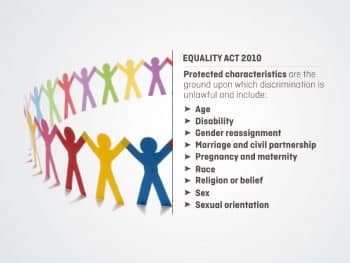
    Our Equality legislation covers nine grounds of discrimination. This reflects the worthy ambition to be comprehensive in attacking discrimination. However, Central Statistics Office (CSO) data suggest we are far from realising any such ambition. They show that 41% of people who feel they have been discriminated against perceive this discrimination to be on grounds other than the nine grounds covered. There appears to be a big hole in the protection afforded to those experiencing discrimination. These CSO data come from an equality module they introduce periodically as part of their Quarterly National Household Survey. It’s from 2014, but it was not news as the figure stood at 42% in the previous 2010 equality module. The CSO data does not identify what grounds now need to be included in the legislation, they merely allowed respondents to tick a box titled ‘other ground’. However, the indications are that a substantial element of this ‘other ground’ is the ground of socio-economic status. First to recommend the introduction of a socio-economic status ground was the Equality Authority back in 2002. In 2008 it commissioned the Economic and Social Research Institute (ESRI) to examine the CSO data on discrimination from the 2004 module. The ESRI did not reach definitive conclusions on the composition of this ‘other ground’ but noted an association between choosing this ‘other ground’ and trade-union membership, low education status, and unemployment. This supports the argument for a new socio-economic status ground to be introduced in our equality legislation. The Equality and Rights Alliance has just launched a report, by Tamas Kadar, that finds Ireland lagging behind many European countries by not introducing such a ground. The European Network of Legal Experts in Gender Equality and Non-Discrimination found that legislation in 20 of the 35 European countries surveyed provides protection against discrimination on a ground related to socio-economic status in 2016. There is, according to the Network, a significant move across the EU towards extending the mandate of equality bodies to cover socio-economic-status related grounds. The case flows first from the high levels of inequality and discrimination evident on the ground of socio-economic status. This has been exacerbated over the years of economic crisis and austerity in Ireland and across the EU. Why would we protect some groups from discrimination and not others? The Equality and Rights Alliance report found that discrimination on a socioeconomic-status ground has grown in importance in both human-rights and equality law, with a growing case-law from courts and tribunals on this ground. Experience from abroad is showing that there are important gains to be made by Ireland from introducing this ground. Casework on the socio-economic status ground, identified in the report, shows that this discrimination is predominantly reported in employment, social services, public and private housing, healthcare, and social protection systems. The significant focus on the public sector might be one reason we have been so slow to introduce this ground. Casework on this ground can be as high as 25% of the case load of equality bodies, but in most instances it is around 5%. Perhaps another reason is that most of the other grounds are identity based whereas socio-economic is status based. But research shows that to the greatest extent socio-economic status is driven by birth also. Ideologues may deny the relevance of this but research dictates its own imperatives. This elevates the socio-economic ground beyond pure status. It is time to expand the grounds covered in Irish legislation. We have waited more than the apparently required decade from the case for this change first being made. We have made the required token gesture with the introduction in 2015 of “housing assistance” as a new ground into the Equal Status Act to protect against discrimination in accommodation. People in receipt of housing-assistance social-welfare payments, such as HAP and Rent Supplement, cannot be discriminated against in the provision of accommodation or related services. Why not go the whole way and introduce a socio-economic status groundThis would best be done, according to the Equality and Rights Alliance report, in an asymmetric way designed to protect those experiencing disadvantage from discrimination. The ground could then be defined in terms of discrimination against someone on the basis of where they live, their employment status, their education status or their housing status. The introduction of this ground is a logical extension of the merger of equality and human rights issues under the Irish Human Rights and Equality Commission and of the focus on economic and social rights in the Programme for Government which includes commitments to equality-and-human-rights budgeting and policy-proofing. Adding the ground of socio-economic status is the lynchpin for integrating a concern for equality and human rights. It is the logical next step. Niall Crowley

    Loading

    Read more

  • Posted in:

    North parties agree Brexit practicalities not strategy

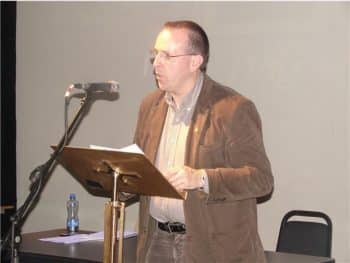
    On Sunday 28th August Dublin’s Croke Park hosted the all-Ireland football semi-final between Dublin and Kerry, with Dublin emerging victorious. As celebrations were taking place around Dublin that evening another significant event was taking place in the city. Prominent representatives from Fianna Fáil, Fine Gael, Republican Sinn Féin and Sinn Féin assumed their places on the platform in the Royal College of Surgeons for a debate titled ‘Brexit-what does this mean for the North?’. The debate which was organised by the 1916 Clubs took place in a fitting venue in this the centenary year, having been one of the garrisons of Easter week in 1916 which was held by the Irish Citizen Army under Michael Mallin and Constance Markievicz. All the speakers were given ten minutes to outline their argument before the debate was opened to the floor for questions and answers. The original participants included representatives from the SDLP and Traditional Unionist Voice who failed to materialise on the night, and a representative from the UUP who withdrew hours beforehand mysteriously citing “irreconcilable differences”. The DUP had previously refused to send a speaker, leading RSF President Des Dalton to open his remarks with: “I had looked forward to engaging with them on ideas about the future direction of the Irish people as a whole… It is sad that Unionist representatives could not take their rightful place here tonight to debate issues vital to the future of all Irish people”. However, minus the SDLP and unionist parties, the debate got underway as organiser (and founder member of the 1916 Clubs) Oisín Mac Giolla Mheana outlined the governing rules of the debate stating that it would take place on the basis of ‘mutual respect’. Return of a hard border? On 23 June this year 55.8 % of voters in Northern Ireland opted for ‘Remain’ in the Brexit referendum; despite this result, come late March 2017 it is due to be led out of the European Union as Article 50 of the Lisbon Treaty is triggered by British Prime Minister Theresa May. The DUP advocated a ‘Leave’ position as did Irish Republican parties such as Republican Sinn Féin and Éirígí. A quick survey of the Falls road in Belfast will reveal worn and wind-battered ‘Vote Leave’ posters belonging to Éirígí, stating “Vote Leave for independence, for democracy, for freedom, for Europe, for Peace”. The constitutional position of the North has led to widespread speculation on the return of a ‘hard border’ with the South of Ireland. Although Sinn Féin campaigned for a Remain vote, upon the announcement of a Leave victory Sinn Féin described the result as an opportunity and immediately called for a border poll on Irish unity. During the Dublin debate Sinn Féin speaker Matt Carthy MEP argued that “constitutional change is now in the hands of the people of the North and South”. Carthy’s arguments echo those of the Sinn Féin Deputy First Minister of Northern Ireland Martin McGuinness who has asked that the views of the majority of people in the North, who voted for Remain, be respected and has argued that the North should be exempt from Brexit. The democratic will of Northern Ireland Throughout the debate speakers’ arguments were collectively couched in language of ‘democracy’, ‘sovereignty’ and ‘mandate’. Sinn Féin’s Matt Carthy argued: “I’ve spent my life hearing you must respect the democratic wishes of the people of the North. I say that right back. We must now uphold that”. Carthy proceeded to cite the Good Friday Agreement stating that it was endorsed by 71% of people in the North of Ireland. Interestingly, Carthy’s arguments appeared to suggest that Brexit is not compatible with the Good Friday Agreement of 1998. The words ‘constructive ambiguity’ are often used, particularly in academic narratives regarding the Good Friday Agreement, suggesting that it contained necessary ambiguity; however, the Agreement does not contain ambiguity. The consent principle established clearly that the North of Ireland will remain within the UK until the majority of people within Northern Ireland decide otherwise. Any ambiguity that was present existed regarding the way in which the nationalist and unionist blocs sold the agreement to their respective bases. It is therefore unsurprising that while Matt Carthy and Martin McGuinness are calling for a border poll, the DUP’s Nigel Dodds has rejected any stalling over the triggering of article 50 and has stated “on 23 June, the British people as a whole gave a clear mandate for the UK government to leave the EU”. Who holds the power? But Remain campaigners are not taking defeat quietly and recently a cross-party group (Sinn Féin, SDLP, Alliance and the Green Party) initiated a legal challenge against Brexit stating that the North of Ireland has a veto over any constitutional change; a veto which they argue emanates from the Good Friday Agreement. Brexit has arguably opened a debate on the constitutional position of the North but has simultaneously re-emphasised the supreme authority of the British government’s legislative powers in the North of Ireland, leaving political figures such as McGuinness powerless to intervene, thus resurrecting old antagonisms regarding where power really resides in relation to the North. Republican Sinn Féin President Des Dalton argued that ultimately: “the vote that counted is the one in England. Brexit demonstrates the fundamental highly undemocratic nature of the UK”. The RSF President framed Brexit around issues of sovereignty and independence and rejected Provisional Sinn Féin’s calls for a Six County border poll stating that it would “fly in the face of Republicanism”. The traditional Republican position rejects a Six County vote on unity, arguing that it is tantamount to a unionist ‘veto’ and argues instead that the unit of decision-making should be on an all-Ireland basis. The unit of determination regarding Irish unity has assumed a central point of antagonism and division in the contemporary political period. During the Hume-Adams dialogue of the late 1980s Provisional Sinn Féin rejected the SDLP leader’s argument regarding what would become the consent principle. In correspondence to Adams, Hume

    Loading

    Read more

  • Posted in:

    Small increases to Unemployment Benefits

    ‘Building a just society’ was the title for the Irish National Organisation of the Unemployed (INOU) Pre-Budget Submission. This title reflected our concern that without a strong commitment to addressing social exclusion and economic inequalities, many people will be left to observe, rather than participate in, Ireland’s economic recovery. The recent Budget provided a key chance for Government to give some practical expression to this commitment. We particularly wanted Budget 2017 to start the process of restoring working-age social-welfare rates to 2009 levels, and to end the age segregation introduced into the Jobseekers Allowance payment during the economic crisis. It is welcome that, for most social protection payments, the claimant’s rate will be increased by €5 per week. However, this increase should start from January next year, as would have been the experience when such changes were announced in the past. This is the first increase to working-age payments since Budget 2009. However, the new rate of €193 will still be €11.30 below the maximum working-age payment made in 2009 of €204.30. The supplementary Budget of 2009 was the budget that introduced a reduced Jobseekers Allowance rate for young people of €100. This was initially for those aged 18 and 19 years. It was extended out in subsequent budgets until it applied to people aged 18-24, while people aged 25 could only receive a maximum payment of €144. Jobseekers Allowance (JA) is a means-tested payment, and the €100 is the maximum payment available for people aged between 18 and 24 years of age. For someone to receive the full amount they must be a young person who personally, and whose family, has few other means. It is disappointing that nothing was done in this Budget to address this inequality. As a consequence, young Jobseekers are only to receive a proportion of the €5 increase on other payments. This amounts to€2.70for young people aged 18-24 and €3.80 for people aged 25. On a positive note, young people will receive the full JA rate if they participate in an education and training programme. In acknowledgement of their restricted income, young people who are in receipt of Rent Supplement payment will make a smaller contribution to their rent. The big challenge on housing, for anyone in receipt of Rent Supplement, continues to be finding and maintaining accommodation that is within the agreed limits. The INOU was not alone in calling for the significant scaling-up of social housing provision to address the level of demand and need. A range of measures was announced in Budget 2017, but they are still a long way off what is required to address the current dire situation. The full restoration of the Christmas Bonus and a change in eligibility criteria was another INOU demand. An 85% restoration was announced and this is a move in the right direction. However, 100% restoration would have been particularly welcome at a time of year where inequalities are most manifest. It was disappointing that the eligibility criteria for this were not changed. Currently, unemployed persons must be in receipt of a Jobseekers payment for 15 months before they can receive this additional payment. As unemployed people are deemed to be long-term unemployed at 12 months, these should have been the new qualifying criteria. Among the earliest austerity measures was a cut in the duration an unemployed person could be on the social insurance unemployment payment, ‘Jobseekers Benefit’. As a consequence of this cut, people who did not make the transition from this payment to the means-tested payment, ‘Jobseekers Allowance’ have found themselves without access to supports and services. Many people have not made the transition because of their family circumstances. Their partner, for example, may be working, not necessarily in a well paid job, and so the family find themselves down one key income. One of the motions to the INOU’s Annual Delegate Conference earlier this year called on the Government to “restore the duration of Jobseekers Benefit to 12 months and 9 months from the current levels of 9 and 6 months for people who have, respectively, at least or less than 260 paid contributions since starting insurable employment”. This change is needed to alleviate the difficulties facing these unemployed people and their families, and to facilitate their participation in education, training and employment programmes. The INOU will continue to work on these issues, as part of our commitment to an acceptable standard of living for unemployed people and their dependents. The next step in this work is addressing the forthcoming Social Welfare Bill. Brid O’Brien is Head of Policy and Media with the Irish National Organisation of the Unemployed

    Loading

    Read more

  • Posted in:

    Oxfam: hypocrites or pragmatists?

    A man walks into a bar and orders a pint. The bartender turns to him and says: “€36.80 please”. Thinking this must be a mistake, the man asks the bartender why his drink is so expensive. “Well”, says the barman, “there was people in here earlier who got a meal and a few drinks, but they didn’t pay. We have to pass the cost on to the next customer”. This is not a joke punchline, but one of several real interactions between a barman and some of his punters, recorded in a Dublin pub as part of a hidden-camera video, to promote Oxfam’s #MakeTaxFair campaign. Oxfam says the campaign’s purpose is to highlight the injustice of tax deals that assist multinationals, and bring inequality and economic hardship to the societies in which these companies operate. The video – alluringly titled ‘Ireland’s Most Expensive Pint?’ and shared on Facebook – brings the campaign to a social media audience, and in just over two minutes offers an entertaining simplification of the effects of tax avoidance. Shots of different customers and the unreasonable barman induce incredulity, and comical threats of violence follow. The barman asks his customers if they think it’s unfair. “Of course it’s unfair”, comes the chimed response. But the campaign has an unintended side-effect: by ridiculing tax avoidance, it draws down questions of sweeping stringency about the arrangements of Oxfam itself, a multinational, albeit a multinational NGO with Charitable Exemption Status. “Every single day, we end up paying for those who don’t pick up our tab”, says the barman’s voice at the end of the video, before he’s seen biting symbolically into an apple as if at a dysfunctional iPhone launch. What gives Oxfam the right to say how other companies should pay taxes? Might it be its agenda? Well it is not the purpose of this article to take any issue with Oxfam’s dynamic and progressive agenda. So it’s not about that. These ads aren’t about that agenda, they’re about tax avoidance, tax cleverality. So it can only be its approach to tax in itself. It must be because it has a discrete and separate agenda – beyond relief of global poverty – about tax. Sure enough, and unfortunately for Oxfam, it makes this argument itself in its own promotional video. The campaign is #MakeTaxFair not MakeEverythingFair, after all. So Oxfam can expect, like those it judges, to be held to the highest standards of tax scrupulousness. In the wake of the release of the Panama Papers, Oxfam’s Irish CEO Jim Clarken made impassioned calls for the closure of legal loopholes that allow companies to avoid paying tax. “It is not good enough to argue that tax avoidance is permissible because practices fall within the letter of the law”, he told the Irish Times. “All governments, rich and poor, must work to end tax dodging because it is their citizens – their electorate – who are the biggest losers”. Oxfam is no petty player: it is respected and pioneering. Oxfam’s Irish subsidiary owns almost €4m worth of assets, had an income of €12m last year, and pays its CEO, Jim Clarken, €90,000 a year. So what does Oxfam do about its own tax? Oxfam’s retail operations, on which it made just under €1m last year, evoke an interesting comparison to how multinationals pay tax, as both Oxfam and its more capitalistic global peers are affected by commercial rates of tax under Irish law. Perhaps controversially in the context of the #MakeTaxFair campaign, Oxfam has lobbied the Government, as a member of the Irish Charity Shops Association, to have its retail trading exempted from such rates. Its tax arrangements in the UK have generated controversy. Richard Teather of Bournemouth University is one critic, arguing that Oxfam and other UK-based charities make use of legal loopholes that look “remarkably like tax avoidance” to avoid paying commercial rates on their shops there. Outlining Oxfam’s more general modus operandi for the Institute of Economic Affairs, Teather describes how, instead of managing their own shops, charities control their retail operations through a private subsidiary, which then donates its annual profits back to their parent company under a scheme called ‘Gift Aid’. Set up by the British Government under the Finance Act 1990, Gift Aid was originally intended to encourage taxpayers to donate more money to charity, and works by allowing a charity to claim 25% back on donations made by anyone subject to UK income tax as a form of rebate from the Government, effectively increasing the amount of the donation. In 2006, the scheme was extended to include the operation of charity shops. In Oxfam’s case, the parent company (Oxfam International) owns Oxfam Activities Ltd. (OAL), whose primary activity is listed as the “recovery of sorted materials”. Last year, OAL ‘donated’ £783,000 to its parent company, tax-free. Beyond rates and UK-government-encouraged tax rebates, the way Oxfam has seized on news items that have highlighted tax avoidance in the past also opens it to accusations of hypocrisy. But what would hypocrisy look like for Oxfam? We must distinguish two things. Firstly ends from means. And secondly philanthropy from profit-making. It’s a mistake to cloud the morality of tax avoidance in terms of ends and means, to believe that charities should get a free pass because of their benevolence. It cannot be the case that if the end is a good one it is legitimate to be tax-avoiding in pursuit of it. For example: Oxfam’s end is excellent; BP’s goal is not good; Apple’s is in between. So a certain logic might suggest tax avoidance is merited on a sliding scale that reflects this. But this should not be the case any more than the tax system can be tailored so the benevolent and the wise are levied for less than the malign or profit-obsessed. Such argumentation cuts across the very essence of the fairness of the system. If certain activities or individuals merit favourable treatment it must be effected by exemptions, grants and

    Loading

    Read more

  • Posted in:

    Investigation: Killusion

    The Smithwick Tribunal was set up in 2005, by the Irish Government on the advice of Michael McDowell, then Minister for Justice, and sat in public in Blackhall Place from 2011 until 2013, examining the possibility of Garda collusion in the deaths of Chief Superintendent Harry Breen and Superintendent Bob Buchanan, of the Royal Ulster Constabulary (RUC) who were murdered North of the Border in March 1989, after a brief meeting in Dundalk Garda Station. The purpose of the RUC officers’ visit was to discuss a move against the IRA’s Tom ‘Slab’ Murphy, which had been ordered by then Northern Ireland Secretary of State, Tom King. The Smithwick Tribunal ended up in 2011 with a strange, abstract, finding of ‘collusion’ in the murders of the two RUC men. Though it found “no smoking gun” in Dundalk, the Tribunal weakly decided there was indeed less specific evidence of “collusion by gardaí” in the murders. Dutifully, Enda Kenny described these findings as “shocking” and a public and media jaded in affairs Northern determined rather vaguely to remember that Smithwick was about a search for evidence of collusion which it had somehow found. What is extraordinary is that Smithwick provided no name for the ‘colluder’, though it clearly for a long time thought it was Owen Corrigan – even though it wasn’t. One of the reasons for this is that there may in fact have been no Garda colluder, a big embarrassment for those who felt a tribunal needed to be instigated and, worse, for those who conducted the inquiry without ever drawing attention to the inaccuracy of the premise that led to it but who saved face by continuingly, through the eight years of its existence, pretending there was one, albeit with less and less specificity. Smithwick was swayed into its collusion abstraction by the PSNI (which succeeded the RUC) giving untestable, very-late evidence to the Tribunal privately naming a fourth garda who was more plausible than Owen Corrigan as the colluder. Fulton: the man whose evidence led to a falsely perceived need for the Tribunal Smithwick always focused on Corrigan as the colluder because the Cory Inquiry, which prompted the Smithwick Tribunal, unduly relied on the 2003 evidence of a dissembling double agent known as ‘Kevin Fulton’ – now challenged by a source who spoke to Village – that Corrigan gave deadly information to the IRA about the RUC men. In its report the Smithwick Tribunal stated [at 15.1.2]: “This statement was a key factor in Judge Cory’s decision to recommend the establishment of this Tribunal, and Kevin Fulton was therefore an important witness before this Tribunal”. In any event Fulton actually seems to have later changed his story (when giving evidence to Smithwick in 2011) to say that Corrigan gave information to the IRA only about a 37-year-old Cooley farmer, informant Tom Oliver, who An Phoblacht then accused of passing on information to Garda Special Branch. Oliver was kidnapped, allegedly interrogated by Scappaticci and subsequently murdered. The changed story was that Corrigan gave information about Oliver, not about the doomed RUC men; but even the changed story was expressly and ignominiously disavowed by Smithwick, under pressure in a recent High Court case, to the extent it implied that Corrigan’s information led to Oliver’s death. In other words everything related to Fulton collapsed, despite Smithwick’s paean to him. Kevin Fulton had begun to engage with the Smithwick Tribunal in 2006. In its opening statement in 2011, the Tribunal made it clear that “Mr Fulton has elaborated on and expanded the statement he provided to Judge Cory”. The expanded statement was given to Corrigan’s lawyers in November 2011. For the first time they saw the central allegation made by Fulton which sensationally implicated Freddie Scappaticci, ‘Stakeknife’. It did not concern the murders of the two RUC Officers but instead implicated Sergeant Owen Corrigan in giving information which would lead to the death of an alleged IRA informer, Tom Oliver. The first reason not to believe Fulton is that a book about him makes no mention of any of this. Admittedly Fulton now distances himself from the graphic book called ‘Unsung Hero’ about his life but this is chiefly understandable as an expedient in the face of the, at least nine, PSNI Investigations arising from it, and the many civil actions in the pipeline. He has already had to pay compensation to the family of Eoin Morley, a Newry man shot dead in 1990, after failing even to enter an appearance in the Belfast High Court to proceedings by his mother. Nevertheless it is undeniably notable that at no stage in the book does Fulton mention a garda in Dundalk station passing information to the IRA, though it was scarcely something he’d be expected to omit. Nor is there any other evidence – of any sort – that he passed information about Corrigan or other Dundalk gardaí, to his handlers. Bizarrely Smithwick warmly endorsed Fulton, a man who had made a lifetime “career” of deception, as a highly credible witness, in his final report, even in effect if he completely and absolutely disavowed him in the subsequent legal action. Surprisingly, Smithwick was to say of Fulton: “He sat only metres from me and I observed him throughout. He was a very impressive and credible witness and I have formed the view that his evidence was truthful”. However, clearly there is a shadow over the statement from Fulton which inspired Cory’s call for what became the Smithwick Tribunal. If this is so it rewrites the history of both inquiries. Fulton’s’ similar role in other high-profile investigations will emerge in the coming months. But what exactly was the core allegations that convinced Cory and then hung Smithwick out to dry? This is the Fulton Statement as published originally in the Cory Report in 2003: “In 1979 I enlisted in the British Army. Within months of my posting, I was recruited by a British Intelligence Agency to act as an agent. In this capacity, I

    Loading

    Read more

  • Posted in:

    Law is boring

    I-am-a-lawyer. I’ve said it. You may feel that positions me on the level of an amoeba or vermin but I believe I am ethical, professionally competent, creative and that I and many of my colleagues often do good things fighting on behalf of the voiceless and the victimised. But I must admit there are problems within the profession domestically and worldwide. This article intends to illustrate some of the best and worst legal practice. Show me a lawyer who is genuinely intellectually interested for example in mergers and acquisitions law, save perhaps as the by-product of a professional skill well exercised, and I will call the person to book as a boor or a charlatan: not interested in mergers and acquisitions, but in the money to be got from fabricating an interest in mergers and acquisitions. The interest is fake. In fact an interest in mergers and acquisitions or taxation law connotes a deep-seated psychological malaise. There are far more interesting things in life and indeed law. Anyone who has ever worked in a corporate sweat shop, as I have – a place called Hughes, Hubbard and Reed in No 1 Wall Street “Hughes, Cupboard and Greed” – will confirm that to acquire the lucre you so assiduously seek you are boxed in a gilded corporate cage like a puffed battery hen spending as much time calculating the billable hours as actually working. Your friends think it is glamorous but you know it is ignominious. Much more important than the quality of work produced is the amount of time spent. And quality dedicated to securities and derivatives or mergers and acquisitions Oh super. Have you ever seen this stuff? You will serve as the twentieth-person backup in a deal represented by a composite document that is laboriously copy-checked and footnoted drawn from a crucial well-tested all-important template to produce something that might end up in a short hearing which you will probably not be involved in. Anyone interested in advocacy should steer far away from corporate law. There will be no showtime or theatrics. You will have no stake. This is anally-retentive churning, soul-destroying work. Practitioners of such ephemera subject themselves to endless, pointless work and no holidays. A good friend of mine, a corporate lawyer in New York, visited me for the first time in ten years on his first holiday in that time – a five-day break in Dublin – and he had to be at the computer for a few hours every day! Further, many lawyers I met on Wall Street in particular – but elsewhere too – seemed drawn unmitigated from the novel ‘American Psycho’, dangerously psycho- or socio-pathic – overorganised and compartmentalised, rigid and fetishistic. For the sake of completeness you may care to note that sex for these forensic Gordon Gekkos was a bookable appointment, boring and consumerised, between meetings. Dirty love in the afternoon. Don’t think of the day-to-day reality of the new you: shrivelled and desexed. Commodified. Ossified. Bored. Sold-out. Ascending the corporate law ladder: a misspent youth. For those who care for more gentlemanly or ladylike times there has been a foul but gradual, insidious penetration of American work practices into Ireland, blind to our native frugality, scrupulousness and indeed noble tradition of law dating back to bardic times. The IFSC is full of the elites of South County Dublin, lucubrating over the tedious clippings of global corporate avarice. Solicitors in the ‘big five’ firms are as specialist and hungry as any attorney on the seventieth story in Manhattan. They have even affected the jargon of brash US firms: corporate responsibility, doing a meeting and a range of moronic baseball analogies: touch base, rain check, curveball. In Ireland lawyers once loved – once had to love – language. Symptomatically, this country, the land of the Book of Kells and the monkish scripts, of Beckett and Joyce, characteristically generates poorly-written mass-produced textbooks like wallpaper: heavy on the facts of the law but low on criticism or analysis. In the end, anyone can write an Irish textbook on The Law of Dogs or of Parks, with a brief introduction by judge, probably over a bottle of wine, who skim-read the effort, expressing gratitude, nay respect, for the important contribution to our law. Better rather that someone should unleash The Irish Rumpole or true crime as Stig Larsen did in Sweden or as Scott Thorow and Grisham do in the states. Let us focus on law in reality not the paper rules of mass-produced textbooks. In fairness there is some civilised life at the Irish Bar. Adrian Hardiman was a famous Joycean. Frank Callinan, a senior counsel and Brian Cregan, a High Court judge, have tried their hand at Parnell with some éclat. John O’Donnell SC writes poetry and serves on the Arts Council. Not enough. Where is the Nell McCafferty who documented the dysfunctionalities of the lower courts a generation ago? We need a Dickens to chronicle the contemporary Jarnydyce v Jarnydyce that is our banking and debt collection mess. Corporate Law My East-End client was perfectly polite until after the acquittal. Then asked to meet for a ‘sing-song’ in a seedy alehouse: “I didn’t want to say it to you but you are Irish, and if you had messed up I would not have taken it kindly. Know what I mean son?” The threat was very clear. Needless to say I did not go for the pints. In any event it needs to be be said that police officers have issued me threats even more sinister – insinuating that I was some sort of juvenile delinquent gone wrong for anti-State work or Garda criticism; bugging my phones – an occupational hazard of a human rights lawyer, expressing their closeness to lower court officials and high ranking civil servants, perhaps issuing a death threat, as if we lived in a third-world police state. Nonetheless, give me an outing in criminal law for the Kray clan any time, over corporate law. East-end gangsters

    Loading

    Read more

  • Posted in:

    Ethics cases to answer for FF in SIPO, and FG

    Long-running tensions between Fine Gael members in County Kildare are about to create difficulties for Kildare County Council and Fine Gael following the suspension of righteous Councillor Fiona McLoughlin Healy from Fine Gael for making well-founded allegations about the leader of Fianna Fáil on the Council, allegations met with a deaf ear by of cials and other councillors. This energetic councillor’s refusal to submit or be silenced raises questions about cronyism, and of a traditional old boys’ club mentality. It suggests ‘new politics’ is coming only very slowly to rural Ireland. Background Up to 2011 Fine Gael had passed two electoral terms without a TD in Kildare South. However, following 16 months of difficult campaigning and his eclipse of two strong rivals, 32-year-old golden-boy local farmer Martin Heydon brought the party a landslide victory in that years General Election. He collected a remarkable 33% of rst preference votes. Deputy Heydon built a likeable persona for himself within Fine Gael, regarded by members as a politician who, in the best Fine Gael tradition, would not rock the boat. He was also believed to have found favour with the grandees in the party. Although Enda Kenny has chastised party members for the poor optics that result from favours and jobs for family, Heydon hired his sister, Rosemary, as a parliamentary assistant and co-opted distant cousin Ivan Keatley, the best man at his wedding, to take his former council seat, all without rebuke. However, there was one aspect of Martin Heydon’s career that the Taoiseach took issue with: his association with the Dáil’s ‘five-a-side’ gang, a group of about ten right-wing male TDs who met to vent their various grievances in political life with bright-eyed South Dublin toff Eoghan Murphy TD as ringleader. Once, however, Kenny’s understandable dislike of secret groups and meetings was made clear to Heydon, he parted ways with his footie pals and the group dissolved in 2014. As another General Election loomed on the horizon, Heydon was making plans. With his impressive result from 2011 in play, the party planned on running two candidates in the Kildare South constituency. The forward-looking TD already had a partner in mind, a local solicitor who had campaigned on Heydon’s behalf in the run up to the 2011 vote. The TD was ready, and appeared well positioned, to repay the loyalty. However, the Taoiseach had other plans. Having brought in gender quotas while in government, Fine Gael was in danger of damaging itself by outing them. Reeling from a collapse in support but seeing female candidates as providing an edge over their backwoods rivals Fianna Fáil, Kenny and party strategists drew up a secret list of more than a dozen women – and a few men – to fill roles across the country. Party organisers, alongside Terry Prone’s PR firm The Communications Clinic, ran a six-week course to train eager new candidates in preparation for the election, all monitored by Fine Gael general secretary Tom Curran. Speaking at the time, Mr Curran said he didn’t expect the move would cause trouble within the party. Kenny’s secret weapon for Kildare South was a relatively new politician, Fiona McLoughlin Healy, a trained nurse who had volunteered in a Romanian orphanage before returning to NUIG where she topped her class every year in both Law and Politics, and then to Ulster University where she again obtained a distinction. A councillor in the Newbridge area since 2014, who runs a property-sales website, she was seen as bouncy if somewhat politically naive. She announced at the earliest opportunity that she believed in transparent operations and the party’s commitment to gender quotas. Her appetite for ‘new politics’, a more socially liberal Fine Gael party and willingness to break ranks, irritated old-timers and made her the target of cynical ridicule in local political circles, McLoughlin Healy addressed some of the criticism, established a formidable presence on social media and seemed to be moving towards election. Yet she faced a difficult campaign. A few older male Fine Gael members in the area took issue with the very notion of gender quotas and often were quite vocal in their opposition to a female candidate, yearning for a return to past, admittedly unrewarded, selection processes. McLoughlin Healy did little to assuage their fears, pushing herself forward on national television about sexism and her belief in gender quotas. A source working in the Council told Village that it was not just the grassroots members who felt uncomfortable over the quota issue, but that the councillor’s own colleagues expressed annoyance at the special training Fine Gael had provided her. With Martin Heydon’s running mate plans scuppered by his party leader, there was animosity towards his new female colleague. He notably showed no interest in engaging over a vote-management and boundary strategy. Heydon was also proving implausibly popular with many local Fianna Fáil supporters, which only gave traction to ongoing rumours that people from the Heydon camp were mischievously stirring confusion for voters between Ms McLoughlin Healy and the similarly named, though quite different, Fianna Fáil candidate Fiona O’Loughlin who is currently a TD and leader of Fianna Fáil on Kildare County Council. This coupled with claims that Mr Heydon’s supporters had brazenly told voters to pass on their second preference to the Fianna Fáil candidate, a claim he denied to Fine Gael insiders and called a “a dreadful slur”, stoked tensions. As polling day drew near, the pair appeared on a special election edition of ‘The People’s Debate’ with a lively Vincent Browne, with rather poor results. Ms McLoughlin Healy’s energy and eagerness were striking but she was attacked from the crowd by members of her own party over gender quotas. Luckily for her, Mr Heydon’s performance drew most of the attention, as he struggled with questions and appeared unfortunately quick-tempered when challenged. It had become apparent that this election had become more difficult than previously predicted. As McLoughlin Healy gained support outside the party base on her pro-Repeal stance on abortion, adoption of

    Loading

    Read more

  • Posted in:

    French Connections

    An intriguiging High Court action which featured allegations that a leading Kildare businessman used his political “connections” to secure favourable treatment from NAMA was settled in the High Court in late October. The judicial review application taken against NAMA arose from a dispute over valuable development lands at Straffan jointly owned by retired developer, Martin Flattery, and prominent Kildare auctioneer, Arthur French, before their bank loans were taken over by the agency. Affidavits sworn by Flattery contained detailed and sensational claims of political interference based on comments allegedly made to him by French. Flattery’s lawyers argued that NAMA had acted in bad faith by refusing to complete a deal for the sale of the lands to Flattery in an ‘off market’ deal earlier this year and that there was improper interference in the negotiation process. The case was settled and the application dismissed when the parties appeared before Judge Michael White in late October. This meant that the various, and sensational, claims by Flattery against NAMA and French were not tested in court and remain hanging in the air. NAMA did not reply to Flattery’s explosive affidavit but instead has bundled the €25m loans into a larger portfolio and intends to place them for sale. Flattery, from Knockaulin, Leixlip, County Kildare had – before agreeing the recent, confidential, settlement – sought to regain control of the 35 acres of lands which were originally funded by Irish Nationwide Building Society, and to quash NAMA’s attempts to sell them. In the affidavits, he asserted that French claimed, after their business partnership collapsed, that he had “connections in high places” and a “close relationship with many high-ranking politicians in Fine Gael” which he allegedly used to secure favourable treatment from NAMA. Of course Village has no reason to believe the truth of any alleged such claims. The valuable assets, which include the Straffan land and a four-bedroom property in the exclusive K Club, were transferred to NAMA in 2011 and Flattery claimed that he has since submitted no less than ten business plans to the Agency in his effort to buy and develop them. His son, Fergal, unsuccessfully made a €3.5m offer in November 2014 through his house building firm, Mulberry Properties. Flattery claims that he was subsequently informed by French that he had used his “connections” to ensure that any proposals made by the developer for the lands would be rejected. In December 2015, NAMA called in the loans and threatened to appoint a receiver and, days later, rejected yet another proposal by Flattery to develop the site. After further legal proceedings Flattery settled the case in early 2016 on the basis that he would be allowed to make a competitive bid for the lands. Through his solicitor, Graham Kenny, he complained to NAMA that while he was being put under severe pressure, his former partner French had been permitted to keep his “luxurious K club residence and his lucrative auctioneering business, yet was not paying anything off his debt”. He was informed that French was still a debtor of the agency but received no explanation of the nature of its arrangement with the auctioneer. Notwithstanding his ongoing engagement with senior NAMA officials, Flattery alleged that at a meeting in the Ryevale Tavern in Leixlip last year, French told him that he would not be given an opportunity to develop the Straffan site. Flattery and Mulberry then bid €6.02m for the Straffan site but, again, this was rejected as an undervaluation of the landbank. A higher offer matching a valuation by DTZ Sherry Fitzgerald of €6.9 for the lands was also rejected. In a letter in March this year, the agency said that it did not wish to breach its policy of not doing off-market sales. This, despite the fact that NAMA had engaged in discussions with Flattery and his son for an ‘off market’ sale. NAMA then disclosed that it had an unsolicited bid, from a different buyer which was in excess of Flattery’s offer, despite the fact that the site had not been advertised and had no ‘for sale’ sign on it. Again, Flattery suspected that people with more powerful “political connections” were attempting to obtain the lands from NAMA. Flattery initiated the latest judicial review proceedings on the basis that he had been the victim of unfair procedures by the agency, which provided no detailed or evidential reply to his dramatic claims When the parties convened on Thursday 27th October, lawyers for Flattery and NAMA hammered out a settlement which, although confidential, apparently allows the agency to proceed with its sale of the lands by a receiver as part of a larger portfolio. Arthur French owes €50m to IBRC following a series of loans from Michael Fingleton’s Irish Nationwide Building Society and property and land purchases in Dublin, Kildare, Galway and Two Mile Borris in Tipperary. As of 2012 ten of his properties were in NAMA. The Sunday World reported that he had “cashed in around €10m of successful property developments in the last three years but has failed to pay any of what he owes to the State”. Arthur French was not a party to the action and therefore was not required to answer the assorted claims in Flattery’s colourful affidavit. Contacted by Village, French described Flattery’s claims as “absolute nonsense”. He said he was not represented in the High Court and did not know what happened at the latest court hearing. French denied Flattery’s claim that they met in the Ryevale Tavern in Leixlip last year. “I wasn’t in the Ryevale Tavern for years so I couldn’t have said anything like that to him there. I never said any such thing about high- level connections. I cannot comment any more than that”. The auctioneer said that he is still dealing with NAMA in relation to his property debts. French has enjoyed close relations with the rich and powerful given his decades long association to the K Club and its wealthy owner, Michael Smurfit. A former captain

    Loading

    Read more