admin
- Posts: 3005
- Comments: 0
- Since:
- Website: http://www.villagemagazine.ie
-
-
-
Our crumbling infrastructure for equality is symbolised by the Workplace Relations Commission (WRC). There are other symbols, but this one still stands out. The Commission was a product of the economic crisis, the official turn against equality, and the disenchantment with public-sector bodies designated by a hostile media as ‘quangos’. It was created out of the merger of five different bodies, including the Equality Tribunal; though it has been more disappearance than merger for the Equality Tribunal. The Equality Tribunal was a key part of a vibrant set of statutory institutions for equality during the 2000s. It was where cases under the Employment Equality Acts, prohibiting discrimination in employment; and under the Equal Status Acts, prohibiting discrimination in the provision of goods, services, education and accommodation; were heard and decided or mediated. The WRC was established to merge the National Employment Rights Authority, the Labour Relations Commission, the Rights Commissioner Services, and the complaints and referrals functions of the Employment Appeals Tribunal alongside the Equality Tribunal. The problems started with the name for the new institution. Equality legislation stretches far beyond the confines of the workplace. Many of the more controversial cases pursued under equality legislation and dealt with by the Equality Tribunal related to the provision of services, in particular by the public sector. A concern for rights in accessing services is hardly reflected in a title of ‘workplace relations’. The problems continued into the legislation for the new body in 2015. It was silent on issues of equality, diversity and discrimination where it set out the functions of the WRC. At best this focus can be implied in the general function to promote and encourage compliance with “relevant enactments”. Otherwise the functions are: promoting the improvement of workplace relations and maintenance of good workplace relations, providing guidance on compliance with codes of practice produced under the Workplace Relations Act 2015, reviewing and monitoring workplace relations, researching workplace relations, and providing advice to members of the public in relation to employment. Inevitably the problems have now passed into the operations of the WRC. Civil society organisations have raised issues in relation to the visibility of equality in the work of the Commission, the accessibility of the Commission for those experiencing inequality, and the procedures of the Commission in cases of discrimination. These issues dominated a recent roundtable discussion convened by the Equality and Rights Alliance, the Independent Law Centres Network, the Employment Lawyers Association of Ireland, and SIPTU’s Workers Rights Centre. WRC publications make little mention of equality cases and equality legislation. Its website, until recently, offered inadequate information and guidance on equality legislation, and continues to be difficult to use. The monthly reporting of the Equality Tribunal on equality cases decided or mediated – a valuable resource for tracking developments in implementing the equality legislation, has not been continued. There is no breakdown provided in Commission publications of cases by ground or field of discrimination and outcome. Access to justice has, in effect, been diminished with the establishment of the WRC. The demands made on people experiencing discrimination, when lodging a claim, are impossibly onerous unless they get legal assistance. The right to mediation is illusory and rarely granted, apparently for lack of resources. There are only limited concessions in the operations of the Commission to reasonably accommodating diversity, in particular for people with disabilities. There is no clarity offered as to the procedures to be followed in equality cases. Officers hearing cases appear to take different approaches. Legal practitioners openly express a loss of confidence in the competence of officers dealing with cases. The demands on complainants in making submissions take no account of the barriers faced by people experiencing inequality and discrimination and the limited resources they might have access to. New leadership recently appointed to the WRC offers some hope that change in this sorry scenario might still be possible. There have been positive indications with feedback now encouraged, changes being made to the website, and meetings held with relevant civil society groups. Change, however, must be vigorously pursued if equality and non-discrimination are to be asserted as core functions in the practice of the Commission. The civil society roundtable agreed that a time-limited problem- solving working group should be convened by the Commission to bring the relevant stakeholders together to secure such an outcome. The convening of such a working group will be a key test of the willingness to change. By Niall Crowley
-
There is much talk nowadays about the practical difficulties of multiculturalism (and of the rejection of tolerance by radicals promoting violence). With a shrinking world on our doorstep, integration of peoples of different cultures is preferable to ghettoisation and apartheid. Radicalisation is the byproduct of alienation which thrives where the legal system appears to be, or is, complex. Integration – the antidote to radicalisation – will not be achieved by shouting louder or asserting the superiority of our societal norms. Instead, the key to the dialogue, without diluting our homegrown standards, is identifying and highlighting the identical behavioural norms which underpin the laws of all cultures. But there will be no dialogue where it counts – on social media – unless the millenials have a better grasp of these shared human values. That generation has apparently forgotten, or perhaps never even heard, the old but timeless slogans with which our forebears rallied the cause of liberty. All the tenets of the Western model of society are now reproduced in its laws. Strip out the small print and it is clear that the basic similarities between legal cultures outweigh the differences. It is not a competition. We have no need to talk of imposing conformity if the grundnorms of human society are the same the world over. The minutiae of the law may be opaque, but the measure of what is or is not lawful does not really need counsel’s learned opinion. Ask any person in the street what the law is on any particular matter and you will almost always get an uncertain response. But this does not mean that there is any real disconnect between the law and the person; it is just that most people have an instinctive awareness of the general principles, if not of the minutiae, of the law. Take one example: the formalities of contract. In 1988 Judge Costello decided, after days of evidence and legal argument, that Fyffes’ offer to sell their Irish Distillers shares to Pernod Ricard was binding because, with no contract in writing, after Pernod Ricard came back into the room and announced that they were prepared to accept the offer at 450 pence per share, “there was a spontaneous shaking of hands and Mr Flavin said ‘we are partners now’ “. An essay in semiotics perhaps but most importantly and obviously a universal standard, unambiguous. The body of legal principle which is called the Common Law is composed of instinctive judgments, judgments on the basis of conscience, custom from “time immemorial” and (per Sir John Davies) “so framed and fitted to the nature and disposition of this people as we may properly say it is connatural to the nation”. We are familiar with the perspective of ‘the man on the Clapham omnibus’, with the duty of care for one’s ‘neighbour’, with the measure of ‘reasonableness’. We don’t need to refer back to the Ten Commandments, scripture, religion, Roman law, the Statutes of Edward 1, the Napoleonic Code, the Treaty of Rome or any other Declaration or Convention. Dress them up however you want, these are the layman’s yardsticks for good and bad behaviour. The context needs to be the dignity of man. If primary school children are now being taught coding, surely secondary students should get an education in the principles of Common Law? They can be told it is about good and bad and how to achieve them. The Human Rights agenda is often cited as the checklist for admission to (Western) civilisation. Doing so heightens the differences in emphasis and overlooks common denominators. Before the 1949 UN Declaration on Human Rights the preparatory commission (chaired by Eleanor Roosevelt) asked a group of philosophers from Western, Confucian, Hindu and Muslim cultures (Jacques ‘Natural Law’ Maritain, Harold Laski, Teilhard de Chardin, Mahatma Gandhi, Humayun Kubir and others) whether there were common principles to which all nations and cultures could subscribe, and in due course they reported that – somewhat to their surprise – there were a few common standards of decency (emphasis added) that were widely shared though not always formulated in the language of “rights”. Maritain wrote that “we agree about the rights, but on condition no one asks us why!”. I believe ‘decency’ is an extremely employable word for the integration dialogue. It belongs to no religion nor is it to be found as a legal term of art in any legal order. It has an unambiguously human resonance. It is a behavioural yardstick impossible to define precisely but also impossible to misunderstand. Decency is a world brand. It is a Big Mac. For Norms. You can subscribe to the ‘decency’ standard for human behaviour without subscribing to democracy as the gold standard by which systems of government must be rated. Democracy, in practice, is by no means a ‘no-brainer’! The 1789 French Assembly declaration speaks of law as “the expression of the general will of the people” and of the right of every citizen “to participate personally, or through his representative, in its foundation”. Whether by accident or design, we seem now to have government consisting of citizens,without real involvement, just getting whatever public services politicians and bureaucrats offer them; with politicians offloading difficult decisions to statutory agencies or regulators; or engineering with bureaucrats to avoid scrutiny of, and accountability for, the administrative mistakes of the past. Indeed, if the Brexit vote is anything to go by, 52% of UK voters think their “democracy” in the EU is closer to the totalitarian end of the spectrum (government by unelected Mandarins) than to the self-governing end (for example, by referendum, issue by issue, on the Swiss model). Truly, democracy is a work in progress! Perhaps indeed it has stalled in the teeth of overwhelming global forces. It is only supranational government that can counter the forces of globalisation. Nor is it necessary for all engaged in multicultural dialogue to sign up to the rights-based model. Even in the West there is concern about whether rights should be
-
by admin
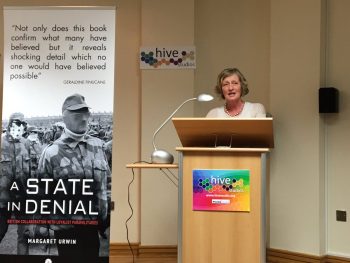
‘A state in denial’ by Margaret Urwin reveals the collusions of the British army and the paramilitar loyalist groups, during the trouble in Northern Ireland. Frank Connolly tells us why such a book is important. Frank Connolly is a journalist and Head of Communications for SIPTU.
-
Posted in:
Limerick is a lady not a dame
On Monday 19 September there was one city grabbing Irish headlines – Limerick. Unusually, it has remained in the news, as if in compensation for years of neglect. Ireland’s underdog has been thrown a €500 million bone in the form of the Limerick 2030 Plan. The fanfare for this much-needed recovery plan coincided with the launch of a new company, the Limerick Twenty Thirty Strategic Development DAC (Designated Activity Company). This meaty mouthful is the biggest single Irish commercial property development programme undertaken outside of the capital in the history of the state. If funding is, in time, secured for this wish list what lasting physical changes does this plan bring to Limerick city? Turning Heads It is no coincidence that Limerick was, innovatively if not surprisingly, unveiled as one of Europe’s most attractive investment locations a mere three months after Brexit. The UK’s moment of uncertainty has become Limerick’s opportunity. Located just twenty minutes away from Shannon International Airport, Limerick is doing everything in its power to encourage UK and US companies to set up shop in the Mid West rather than in yesterday’s Mecca, London. Its Executive Chairman Denis Brosnan, saturnine former CEO of Kerry Group, will prioritise the redevelopment of 130,000 sq m (1.4m sq ft) of prime real estate across four strategic sites into office, retail, residential, educational and enterprise space. Unfortunately, however, the all-embracing vision is in danger of being no vision at all. Certainly there is no sense that anyone thinks Limerick has a unique selling point, or at least not one they’d be proud of. The Limerick Twenty Thirty DAC is completely owned by Limerick City and County Council with an independent board which faces the arduous task of sourcing the money. The four developments that were identified to transform Limerick are the Gardens International Office, the Opera Site, Cleeve’s Riverside Campus and Troy Studios Film Hub. The removal of historic names and the creation of historic associations is very telling in this bid to rebrand, concededly undervalued, Limerick. Hangless Gardens Limerick Twenty Thirty have so far secured €18m funds for the 11,000 sq m (112, 000 sq ft) Gardens International Office with designs by Cork-based Carr Cotter Naessens Architects. The existing five-storey eyesore was partially built by developer Robert Butler in 2009 during the boom before descending into NAMA. It is located at the former GPO complex and Roche’s ‘Hanging Gardens’ building on Lower Henry Street. Limerick City and County Council acquired the site together with the adjacent No 19 Henry Street in 2014. The famous ‘Hanging Gardens’ were unique within the City, indeed (perhaps outside Babylon) in the world. They were conceived by the wealthy banker William Roche as a vast store, surmounted by enclosed gardens. “In the early years of the present century Limerick possessed a curiosity which was without a parallel in the empire”, wrote the Reverend James Dowd in 1890 in his book ‘Limerick and Its Sieges’. The design featured “stores under a series of arches ranging from 25 to 40 feet high. On top of these arches elevated terraced or ‘hanging’ gardens were created and the whole structure was crowned with classical statues”. There is no obvious reason why the evocative word ‘hanging’ was dropped by the spoilsport neophytes. Presumably some misanthropic marketing executive advised against the negative connotations of the word ‘hanging’, as if it were or ‘stabbing’ or ‘stabbed’. In its absence this fascinating building is – gratuitously – rendered duller, and ahistorical. Opera site The ‘Opera’ site entered the local vernacular as such, not because it ever accommodated an ‘Opera house’ but because the eighteenth-century opera singer Catherine Hayes was born in a house on the block, before performing the wonders of world opera worldwide, though not in Limerick. It is 3.7 acres in area and located in the oldest part of Newtown Pery. It was bought from NAMA for €12.5m, no song, by Limerick City and County Council in 2011 with funds made available from the Department of the Environment’s Regeneration budget after failure to secure investment from the private sector. Following an open-tender process, ‘a special-purpose-vehicle’ set-up by the Council – under the strangely-familiar name Aecom – will carry out the works. The Opera site contains 30 buildings, most of which are in predominantly intact Georgian terraces on Rutland Street, Patrick Street, Ellen Street and Bank Place. This development will be of mixed use with a spread of public and private sector uses and small-scale retail. The proposed scheme will cost €120m to €150m. The conservation approach is to retain the façade only on Patrick Street – a policy jettisoned worldwide and for more than 20 years in Dublin as ‘facadist’ and fake – but to emphasise the retention of (no-longer-ergonomic) existing plot and volumes. Where there has been twentieth-century intervention the design team has gone to town with proposed insertions such as the on-site replacement of the Cahill May Roberts building (1958) but in a grand new incarnation, completely out-of-scale, insensitively dwarfing its neighbours. The proposed new scheme is a grainy shadow of proposals for a €350m ‘Opera Shopping Centre’ plans which was granted planning permission in 2006 as part of the famous Limerick scorched earth policy on heritage. In December 2007 Anglo Irish Bank had acquired a 50 percent share of this ‘exciting potential landmark’ with a view to selling it on to private clients but failed to do so. Cleeve’s Riverside Campus Of the four sites only Cleeve’s will retain its historic name. The eight-acre former factory site comprising 100,000 sq ft of existing space is located on the northern bank of the Shannon River with a distinctive chimney dominating the city skyline. The Condensed Milk Company of Ireland or Cleeve’s factory was established in 1883 by Thomas Cleeve, a Canadian who first came to Ireland as a teenager to work for his uncle. Cleeve’s dairy-based products were exported throughout the British Empire, the most famous product being toffee. The processing plant was sold to Golden Vale, a
-
Posted in:
Radical copyright reform
Outline proposals for a modernised Irish copyright regime announced by Enterprise Minister Mary Mitchell-O’Connor at the beginning of August are now dead in the water, following the publication of draft directives by the European Commission in mid-September. The European plans, championed by Digital Economy Commissioner Günther Oettinger, lean heavily towards protectionism for traditional media, in contrast to the general scheme outlined by Mitchell-O’Connor, which drew from the ‘Modernising Copyright’ report prepared by the Committee for Copyright Reform (CRC) in 2013, introducing protections for online ‘innovation’. The CRC, which began its work in 2011, was headed by Trinity College associate professor of law, Dr Eoin O’Dell. While some elements of the CRC’s report – for example proposals for a Copyright Council which would have a role in resolving copyright disputes, among other things – may survive, the ‘tech-friendly’ thrust of the report stands in contradiction to the approach from Brussels. O’Dell agreed that the Commission draft took an approach to copyright diametrically opposite to that of the CRC. Both reports agreed on some aspects of copyright and reform, such as on the need to implement the Marrakesh Treaty for access by the blind to published works and on libraries’ entitlement to digitise works in their collections for conservation purposes – the “boring but necessary” reforms. However, Oettinger and the Commission had “capitulated to the content providers when it comes to a whole range of additional extra rights, in particular the ‘Google tax’- a proposal to make Google and other search engines pay for extracts from newsmedia websites quoted on their search pages”. ‘Modernising Copyright’ outlined specific proposals to allow for quoting news reports online. For example it would not be an infringement to quote up to 160 characters or 2.5% of the work, subject to a cap of 40 words). On the other hand the draft EU directive effectively outlaws any quoting. “This new right is an additional right that just applies for news, so it’s not a copyright, it doesn’t have to meet the copyright standards and it applies whether or not a copyright exception applies”, says O’Dell. “It is effectively acknowledging that copyright ends, and it is adding to it. It is the exact opposite in respect of what we had suggested”. He claims that effectively they are seeing copyright and related rights as about business models, not about rewarding creative content but rewarding particular kinds of business models: “You can them dress up as saying it is rewarding creativity and content, but there are a lot of other ways to have creativity and content beyond these particular business models. And the Commission has accepted the argument that these business models need special protection”. O’Dell notes that it has already been adopted by the Commission, “so this is the equivalent in Irish and UK terms to a first reading. They have effectively published a bill. The civil service, which is basically the Commission, have agreed this is the bill, the Commissioner – the ‘Minister’ – has agreed this bill. It has now been published and has to go through the legislative process, which involves Parliament and the Council [of national ministers]”. While the draft directive still faces legislative hurdles before the Council and European Parliament, O’Dell feels it is likely to survive the process largely unscathed. “As part of the ongoing process that has led to the directive that has been ongoing since 2012, the European Parliament adopted a report from German Green/Pirate Party MEP, Julia Reda, which was far more attuned to the needs of users in particular, and the 21st century in general, and so the Parliament made clear what it wanted to see in the package”. He considers it significant that: “Pretty much none of the Parliamentary priorities were reflected in the Commission proposals. So the Parliament is unlikely to revisit it, because they have their own already-expressed alternative view, but in terms of the power dynamics in Europe the Commission is much more powerful than the Parliament, so the Commission is likely to get its way. The way the Parliament might have had its way would have been if its report of 18 months ago had been incorporated into these proposals, but effectively it hasn’t. There are no votes in copyright, and I can’t see the Parliament blocking it, though that would be its only option”. When the Stop Online Piracy Act (SOPA) was going through Congress, the Stop SOPA campaign appeared almost out of nowhere to kill it (albeit with assistance from technology companies like Google), but Dr O’Dell does not consider it likely that history will repeat itself. “SOPA was a big deal in Europe too and there were protests; it was the biggest protest in a lot of Eastern European countries. There were more people protesting SOPA than against the Iraq war that year, in Poland. But I can’t see how the ‘Google tax’ is going to get people on the streets in the same way. ‘The web is going to go dark’, was the rallying cry; I don’t see what the rallying cry is here. So from my political perspective I think that is unfortunate and sad, but from the perspective of political realities I would be very surprised if the Parliament were to block this. Its opportunity was when it fed into the process 18 months ago, and it has been comprehensively ignored, and the Commission couldn’t have done that if it didn’t think it could get away with it”. So what next after copyright reform? Similar laws passed by national parliaments saw different responses, with Google shutting down news-search in Spain, while Germany granted Google a free licence to quote. Dr O’Dell compares the current stand-off to the Cuban Missile Crisis. “You know how the Cuban missile crisis was resolved? The Russians pulled out of Cuba, and six weeks later the Americans made a significant withdrawal out of Turkey, which wasn’t in any way related whatsoever. [In Germany], the newspapers blinked and said ‘here’s a free licence, no
-
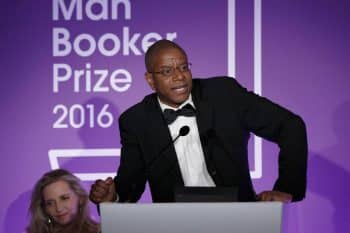
The 2016 Man Booker Prize, arguably the biggest literary prize of the English language, was awarded this year to American author, Paul Beatty. ‘The Sellout’ saw off a shortlist containing ‘Hot Milk’ by Deborah Levy, ‘His Bloody Project’ by Graeme Macrae Burnet, ‘Eilleen’ by Ottessa Moshfegh, ‘All That Man Is’ by David Szalay and ‘Do Not Say We have Nothing’ by Madeleine Thien. Beatty is the first American winner of the prize following a change to the rules merely three years ago. Previously, only writers from the UK and Commonwealth, Republic of Ireland and Zimbabwe were eligible. Raised in LA before moving to New York in his 20s, Beatty, has published three other novels and two collections of poetry. Amanda Foreman, Chair of the five judge panel, stated that ‘The Sellout’ was a “unanimous” choice. She went on to elaborate that the novel, “plunges into the heart of contemporary American society with absolutely savage wit of the kind I haven’t seen since Swift or Twain”. Narrated by African-American ‘Bonbon’, a resident of the town of Dickens situated in Los Angeles County, the novel explores America’s racial history. The narrative is told in retrospective as the opening of the novel unfolds in searing prose. Bonbon, is to be tried in the Supreme Court for attempting to reinstitute slavery and segregation in the local high school as a means of bringing about civic order. The satire on contemporary American society is offset by the novel’s depiction of the County’s decision to remove Dickens from the map due to embarrassments over its history and the unjust shooting of Bonbon’s father. These two events conjure contemporary issues: the ‘Right to be Forgotten’ and the Black Lives Matter movement. One desires the respect for absence of self and history while the other desires the respect for presence of self and history. Beatty’s book meets at the intersection of these opposing concepts, and unravels the satirical complications of developing an ideological direction for a nation which has ongoing civil rights campaigns yet has an African-American President. However, we perhaps wonder if post-Brexit Britain has swept for a moral licence for its own fractious increasingly migrant-ambivalent society. The Man Booker Prize rules stipulate that: “Any novel in print or electronic format, written originally in English and published in the UK by an imprint formally established in the UK (see 1b. below) is eligible”. As it stands only books published through a UK publisher are eligible to compete. These have included Oneworld Publications, publishers of the last two winning titles. It means, however, that the Man Booker Prize is enforcing a border patrol on those titles published in English outside of the UK. This is a major issue for independent publishers such as Sarah Davis-Goff and Lisa Coen of Tramp Press who, writing in The Irish Times 01/08/2016, elaborate: “…it empowers the world’s largest and most powerful publishers to engage, while sidelining independent publishers that don’t happen to be based in the UK. Every big publisher (Hachette, Harper Collins, MacMillan, publishers that have headquarters in France, Germany and the US) has acquired Britain-based imprints. For them, submitting work for one of the most important literary prizes in the world isn’t a problem”. The Man Booker Prize is attempting to have its cake and eat it too. On one hand it is able to comment on global geopolitical affairs as it raises the banner for liberty and tolerance internationally, yet on the other it discriminates against those who can not apply. ‘The Sellout’, according to Foreman, is “really a novel for our times”. It is timely to recognise racism and discrimination. But the Man Booker’s exclusivist demi-hypocrisy underpins, as yet unwritten, satire. By Matthew Farrelly
-
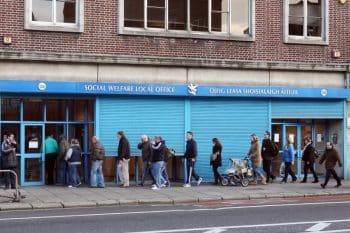
The modern State is a hybrid, an extraordinarily complex machine. Beyond the well-established remit of setting laws, collecting taxes and managing international relations, the Irish State has been involved in incarcerating women and children, commemorating the past and exploring outer space. Often, the State is idealised as a sort of referee who sets and implements rules for society, although this occurs through the highly emotional process of politics. Separate from the State there is the ‘economy’ and its ‘markets’, collections of individual actors who seek out their own profit and desire. This separation is imaginary. Arguably the welfare system is the greatest creation of the State, alleviating the vicissitudes of life whether age, health or employment status, by social solidarity. However, recent years have seen the transformation of the welfare office into a State-wide Human Resources department. Nationwide, the ‘dole office’ is now a contact point for employers who want workers. Within these offices, jobseekers are instructed to apply for certain posts, accept certain offers and take training courses. From simply providing citizens with their entitlements, the State has now become the hand-maiden of the labour market, a match-maker who can provide any employer with labour power, anywhere, for any job. So, Ireland is rapidly developing a low-wage economy. Obviously, a human resources department is a reasonable thing within a large firm which matches skills with tasks, managing the talents of a diverse work force who voluntarily have contracts with management. It is unreasonable when the State replaces the social safety net with a human resources department, so there is no way out of the company, bar emigration. Perhaps this seems like a radical critique, but really, this is government policy, announced in Pathways to Work from 2012 to the end of the FG/Labour coalition. Furthermore, it is reflected in the jargon of economists and the ESRI who stress the ‘supply side’ of labour, and the importance of ‘upskilling’, making people ‘work-ready’ or ‘maximising labour market participation’, which basically translates into making jobseekers take any job they are offered and giving them compulsory courses, often of dubious benefit. Refusal results in sanctions, the reduction or suspension of welfare entitlements, which means hunger, cold, debt and potentially homelessness. Despite the falling unemployment rate, the numbers of people sanctioned continues to grow. What are the consequences? Firstly, the State facilitates exploitative employers. Short term, part-time, insecure and high pressure ‘precarious’ work become compulsory. ‘Zero-hour contracts’ or ‘if-and-when contracts’ are an offer that jobseekers can’t refuse, even if it is only a few hours a week, without guaranteed times. At Waterford Institute of Technology, an ongoing research project examines the experiences of jobseekers. This year, in addition to pressure from the welfare office, many reported being forced to accept poor-quality employment. Of course, not all employers are exploitative, but clearly employment law is not yet stringent enough to prevent these kinds of abuses. Several respondents described how they were forced to accept unskilled work with no security after spending years gaining qualifications. While work was available, many reported hopelessness or despair about ever getting a full-time job with a living wage. The new ‘normal’ was shuttling between unemployment and poor-quality work: “It’s kind of like a revolving door, because one person is gone and another person is put in their place”. Secondly, hybrid mixtures of ‘work-experience’ and social service emerge. Those on social welfare can be compelled to join up to schemes which have little justification in terms of building skills beyond keeping them ‘work-ready’. Within these schemes, paid their basic entitlement and a negligible top-up, jobseekers perform work for the public good, like gardening, landscaping and cleaning public areas. This used to be the preserve of FÁS and now is contracted out to a host of organisations. This is publicly beneficial and necessary work, but the State doesn’t pay the minimum wage for it, much less offer full-time contracts. The taxpayer gets an unfairly good bargain, because the ‘human resources department’ has extraordinary control over jobseekers. These are not the ‘scroungers’ envisaged by tabloid newspapers, but workers who support the State. Indeed, to reverse the usual stereotype, it is now the State that ‘sponges’ off the hard work of jobseekers! Thirdly, there are long-term consequences. In Ireland welfare entitlements have been repositioned as ‘benefits’ only given to those who fulfil their ‘contractual’ obligations, to seek work, accept any offer and comply with the requirements of the State-run human resources department. This involves scrutiny, pressure and threats, and occasionally harmful sanctions. All of this assails the well-being of jobseekers, with mental-health implications. The State is inevitably involved in the labour market, but should protect the common good rather than being a human resources department for all employers. Jobseekers should not be used as a reserve army of cheap labour for public projects. Up-skilling and education should be voluntary and high quality, rather than compulsory dead-end courses. Those who have qualifications should be given supported opportunities, rather than faced with an offer they can’t refuse. Tom Boland and Ray Griffin lecture at Waterford Institute of Technology and are the authors of ‘The Sociology of Unemployment’
-
Posted in:
Not just noises
My election as Chairperson of the National Women’s Council of Ireland (NWCI) and that of a renewed Executive Board, comes at an exciting time, as the vibrant feminist movement in Ireland is experiencing a huge resurgence, particularly among younger women. As the representative national women’s organisation in Ireland, the NWCI is leading the work for change in women’s equality. Over recent years we have seen a number of successes not least the introduction of gender quotas, and the provision of two weeks paid paternity leave, which are significant and welcome. We need to increase the pace of change for women’s equality in Ireland though, and this will be a key challenge throughout the term of the new Board, until 2018. An important part of our accountability to the NWCI membership is to assess and report on the ongoing impact of the organisation’s policy and advocacy work. The NWCI’s primary objective for the foreseeable future will be repealing the Eighth Amendment and ensuring that, through legislation, women have access to the full range of essential reproductive health services. We have received a strong mandate to prioritise this issue through the members’ consultation to produce our new Strategic Plan. Through this process it was clear that the time for incremental change on abortion is long gone. We know that restrictive laws do not stop abortion, but they do cause immense hardship to women forced to travel, and even more so to women who cannot travel. The NWCI will play a part in supporting women’s voices to be heard by holding a series of regional seminars and it is vital that all women take part. In particular I hope that disabled women will participate in these conversations, and as Chairwoman I will work hard to facilitate and deliver this. Another priority for the NWCI over the next years will be the issue of men’s violence against women. Research shows that one in five women in Ireland will experience domestic or sexual abuse at the hands of a male partner, yet there is widespread unwillingness to accept, less still, address this crisis in our society, even as women continue to be murdered by their partners or former partners. We have well-resourced road-safety campaigns, which challenge all of us who use the roads to play our part in reducing injury and death. Where is the equivalent public-awareness strategy to challenge the level of violence against women? Minister Frances Fitzgerald told NWCI members at our recent AGM that she has secured funding for such a drive. We await its announcement with huge interest. The Government has signed up to the Council of Europe’s ‘Istanbul Convention’ on preventing and combating violence against women and domestic violence but we need to resource the full implementation of the Convention as a matter of urgency. This will involve increasing supports for frontline services and the Gardai in order to provide women with safety and protection and to hold perpetrators to account. In addition the Irish Observatory on Violence Against Women, which is chaired by the NWCI, will be requesting funding to research and produce media guidelines for reporting on cases of men’s violence against women. While healthcare, and ending violence against women are crucial for women’s equality, so too is the availability of accessible, affordable, quality childcare. Affordability of childcare has been consistently ignored by successive governments and parents have been left struggling to pay costs which would be unacceptable most other EU member states. As the primary responsibility for childcare in Ireland continues to be placed on women, the lack of affordable childcare continues to be a key obstacle to women’s full participation in employment and in public and civil life. Women are making decisions which affect their career progression, working hours and types of employment based on juggling expensive childcare and this cannot continue. Ireland needs to set itself on a course to provide a sustainable childcare infrastructure for children, for parents and for those who work in the sector, many of whom are women. Again, there are positive noises coming from government on this issue, but we need to see considerable progress in Budget 2017, to come even one step closer to the Scandinavian system promised by the last government. Of course, reproductive health care, violence and childcare are not the only barriers to women’s equality in Ireland, but addressing them would go a long way toward achieving a truly feminist future. Full equality will not be achieved as the afterthought of an economic system; it is the bedrock of a thriving, inclusive society. It is within our imagination to achieve gender equality across our society. We should all play our part to make it a reality. Find out how to become a member of NWCI and read our new strategic plan on nwci.ie By Frances Byrne
-
There are disturbing messages coming this autumn from the global rankings of universities. Ireland is sinking: only one Irish university retains a place in the top 100 universities of the world and that is Trinity College, Dublin, hanging on by its fingernails at 98th in the ‘QS’ rankings. In one respected index TCD was not even originally included because it had inadvertently submitted the wrong data to the organisation that compiled the ranking. During the boom years the official priority was to increase the spending on research and build up the laboratory capacity of the third-level sector. Irish Universities climbed the rankings and at one point the two main performers (TCD and UCD) were both in the top 100. Dauntingly, however, in the latest QS rankings survey TCD fell 20 places to 98th and UCD fell 22 places to 176th. The heads of both institutions issued a joint statement following the bad news attributing the setback to the paucity of funding by government. There is some justification for the academics’ blame-throwing given that Ireland is placed at 29 out of 32 OECD countries when it comes to the total amount spent on Education. This is not where a country, with Ireland’s ambition, for ‘the knowledge economy’ should be. Nevertheless, the performance of the universities in Ireland is not just down to funding and it is time that government and the sector itself analysed strategy and specialisation in particular. Apart from TCD and UCD the other universities in Ireland lag precariously behind the requisite ambition, in the short to medium term, to enter the top 100 rankings. In this sense the government may have to look carefully at the potential to augment both of these institutions so that they can remain in the top 100. There may also be a case for tighter co-operation in research and advanced research between the two institutions to assist scaling the rankings. Academics are prone to dismiss these rankings and pick holes in them. However, they do determine how attractive a country is both to international students and to high-flying academic or research talent. If a country’s universities fall down the rankings then serious talent will not move to them to work and in many cases will leave to better-performing institutions abroad. Corporations too monitor the rankings to determine where they will spend on research. One of my jobs as Minister for Science, Technology and Innovation was scouting and luring both scientists and multinational corporations to Ireland to participate in Science Foundation Ireland (SFI)-sponsored research programmes. Scientific and research talent is highly mobile these days. I got a further insight into this during my four years in Moscow bringing large companies to invest in an Innovation Hub that was being built by the Russian authorities with a budget of $10bn. My job was to create corporate and research partnerships into the project. The team I ran brought $1.2bn of R&D investment into this particular tech hub on the outskirts of Moscow. In Russia I met a huge number of CEOs and CTOs (Chief Technology Officers) of multinational companies. Getting a decision to locate R&D is complex and difficult. It depends on the company’s experience in the country and its trust that it can get relevant and excellent research. Ideally multinationals want to collaborate with local educational or research institutions. Both in Russia and Ireland these companies will focus assiduously on the quality of the science or research being conducted in a country, the talent available and the guaranteed continuity of funding from government over a seven-to-ten year horizon. If these basic elements are not there then the investment will not come, will cease or will be diverted somewhere else where the offer is better. The key advantage to Ireland of the push on science and technology spending in the boom years was that it rooted many multinationals in Ireland. In some cases the Irish R&D component is a key link in their global network of research centres. However post-Depression Ireland faces a big challenge to its reputation and ability to attract further FDI in the years ahead. The IDA does a great job but there are limits to how many companies they can attract to make R&D investments here if the perception grows that Irish education and research is sub-par. R&D investments by major corporations in a country will often lead to a further increase in both manufacturing and services wherever they locate. The risk is that if Ireland lets its universities drift down the rankings while other Irish national indicators rise, that the country will face a double whammy in the years ahead as the EU, OECD and other countries try to erode our corporate tax rate and the advantages it anchors in luring FDI to Ireland. The Apple case is emblematic of what can be expected in aggression from the European Commission about the tax practices of the multinationals in Ireland and other locations. While the heads of the universities obsess about funding, the rankings are arrived at because of quality indicators and the level of citations, research excellence and teaching reputation of the institutions involved. That is why Richard Bruton is right to pour caution on the demand from the universities for more money. He wants to see reform before increased funding. There needs to be a concentration of research spending on the universities with the capability to deliver significant research outcomes. There also needs to be a serious look taken at which institutions can best accommodate particular areas of research so we can avoid duplicating or spreading the spend over a number of third-level colleges. This will require restructuring how the universities work. The two glimmers of hope from our university sector are that The Royal College of Surgeons’ and the National University of Galway’s improved rankings showing that they, at least, must be doing something right in the era of austerity and a paring back of state funding. Both of these institutions have a very international outlook in recruiting
-
Posted in:
CETA flouts democracy
by Lorna Gold
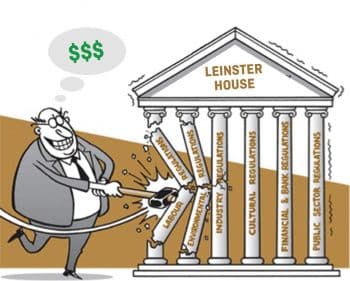
One year on from the UN Summit to agree the Sustainable Development Goals, and approaching the first anniversary of the Paris Agreement on Climate Change there are worrying signs that the consensus to ‘leave no one behind’ was no more than a shallow aspiration. The industry in measurement of the goals has intensified. There is the opportunity to develop metrics for 17 goals and 169 targets. Whilst the NGOs and the social scientists argue about the fine detail of how to measure progress, a significant violation of EU law is about to happen that will have a chilling effect on these global agreements. The EU has decided to provisionally apply the Canadian European Trade Agreement (CETA). It has done so despite overwhelming legal opinion that this would be in contravention of the EU’s founding treaties. The Agreement is not a ‘trade’ deal in the ordinary sense of the word. The scope of the deal extends far beyond trade into many areas of investment and hence, in the eyes of the law, is a ‘mixed deal’. As such it needs to be ratified by every national parliament before being applied. However, the EU decision means that it comes into force in its entirety as soon as it is signed. The most controversial element of CETA is inclusion of an Investor State Dispute Settlement (ISDS) system. This mandates investor courts which sit outside the regular national legal system, but have the ability to sue governments for actions which undermine the rights of investors. If a government moves to change policy to prioritise issues such as public health, social cohesion, or environmental sustainability over the financial profit of investors, it can and will be sued. ISDS courts exist already. They have grown exponentially in the past decade to over 600 in 2014 as bilateral trade deals have expanded. Once CETA is provisionally applied, it is anticipated that a raft of new cases will be lodged. Even if countries defy the European Commission and if CETA, as expected, is legally challenged and struck down in the Spring of 2018, corporations will still have three years to sue governments. If national and international policy frameworks were heading in a shared trajectory of social cohesion, economic prosperity and environmental sustainability, ‘copper fastening’ them into such trade and investment deals would be just about palatable. The logic of handing over huge swathes of policy to unelected and unaccountable entities could still be questioned, but there could be some merit to copperfastening good policies and suing those in violation. The problem is that any such shared trajectory is far from the current reality. CETA, and similar deals, modelled on CETA, pose a serious threat to democracy and stability globally. They will do nothing to help address major global challenges such as climate change, which requires a pro-active choice to end the fossil fuel era and shift to a zero-carbon future. They will undermine efforts to address significant public health problems as science develops, such as our over dependency on antibiotics. If CETA had been signed in the 1990s, it is highly unlikely we would have smoking bans or plastic bag taxes. Governments would have been sued to prevent them. The Sustainable Development Goals and the Paris Agreement require transformative action. Current frameworks, based on the assumption of ever-increasing trade in resources on a finite planet, are deeply flawed. Addressing climate change requires policy choices to prioritise certain forms of activity not on the basis of profit alone, but on the basis of their social and environmental good. Such choices are anathema to the provisions of CETA and its like. CETA will inevitably lead to governmental reluctance to pursue such progressive policies, for fear of being sued. Bold ideas are now needed that require radically new policy frameworks, not the chilling effect of CETA. The German population recognised this threat to democracy and over a million people took to the streets in Berlin to protest against CETA and its ‘sister’ TTIP, in mid-September. In Ireland, despite the fact that our government has endorsed the proposal, there has been no public outcry. Despite the efforts of a number of NGOs and concerned citizens, very few people are even aware that this is happening. The poorest people will suffer the most with this next generation of trade and investment. Most EU countries have already put in place significant public health and environmental frameworks. Developing countries, on the other hand, may now be further pushed to retain low standards rather than raising them. CETA moves sustainable development and curtailing climate change ever further down the agenda. Lorna Gold is Head of Policy & Advocacy with Trocaire
-
by Anton McCabe
The news that serial non-litigator Gerry Adams is to sue over allegations he sanctioned the murder of IRA informer Denis Donaldson, cannot surprise. Contrary to what has become the received wisdom, the former security force agent in the IRA did not tell BBC Northern Ireland’s ‘Spotlight’ programme on September 20th that Gerry Adams sanctioned the killing of Denis Donaldson in 2006. His allegation was much more tentative. Despite this, media outlets have run with the allegation that the decision to carry out the killing was agreed by Adams, and that the IRA carried it out. An example is the Irish Independent headline: ‘Gerry Adams sanctioned the killing of British spy, claims former IRA man’. This is based on a section of the programme, where reporter Jennifer O’Leary is interviewing ‘Martin’, a former IRA man and police agent. A transcript reads: Jennifer O’Leary: “Martin also said he told his Special Branch handlers what he had learned about the murder”. Martin: “Not too long after Denis was murdered I was told by a member of the IRA, an active member of the IRA, that the IRA had killed Denis, and not anybody else. I gave that information to the Special Branch.”. Jennifer O’Leary: “What was your handlers’ reaction to that information?”. Martin: “They were just totally mute. There wasn’t any acknowledgement of what I’d said. The subject was changed to something else”. Jennifer O’Leary: “Are you surprised?”. Martin: “No. I think they knew themselves. You see I just think you know they and the whole status quo had seen Denis’ death as internal housekeeping and they were happy enough to put up with it. I believe they acted on some information and didn’t act on other information because it was too politically sensitive to do so”. Jennifer O’Leary: “Martin believes that the shooting of Denis Donaldson was sanctioned by the man at the top of the Republican movement, Gerry Adams. Spotlight understands that by 2006 Gerry Adams had stepped aside from the IRA Army Council but Martin claims that Adams was consulted on all matters”. Martin: “I know from my experience in the IRA that murders have to be approved by the leadership and they have to be given approval by the leadership of the IRA, the political leadership of the IRA and the military leadership of the IRA”. Jennifer O’Leary: “Who are you specifically referring to?”. Martin: “Gerry Adams. He gives the final say”. Note: there is nothing indicating this IRA man had first-hand knowledge of Adams’ approving the killing. Note also: the final line is “He gives the final say”. Not “He gave the final say”. What we may call the alleged allegation runs contrary to the Real IRA’s claim of responsibility for the murder in 2009. After the programme, a former Real IRA army council member spoke to journalist Suzanne Breen of the Belfast Telegraph, and reiterated the claim. Breen is a trenchant critic of Adams and the mainstream IRA, so the claim must be taken seriously. Unfortunately, Donaldson was cavalier about his own safety. Some time after he was unmasked in 2005, he went to a cottage in Donegal that had been a safe house for the INLA and IRA for years. It was secluded, so killers could stake it out if necessary. It was near a main road, in an area with a lot of holiday homes, so escape was easy and strangers didn’t stand out. Donaldson had been an informer since at least the mid-1980s. Two groups had particular grudges: families and friends of those killed as alleged informers, people not as well-connected as Donaldson; and families and friends of those IRA members killed or imprisoned because he may have betrayed them. Crucially, the IRA did not need to kill him. He no longer had their protection, and there were plenty of others willing to do it. The killing was similar to that of Dungannon taxi driver Barney McDonald in 2002. In both cases a shotgun was used, making forensics difficult. The current story took off because there is a media obsession with Adams, who is a safety-valve for Sinn Féin’s opponents in politics and the media. It must be said that he has left himself open by seeming ridiculous with his denials of IR A membership. Martin McGuinness receives nothing like the same treatment, despite his admitting having held high rank in the IRA. As Deputy First Minister, McGuinness is central to the political process in the North. The DUP perceive him as a ‘moderniser’ in Sinn Féin. So a media campaign against him might damage the political process.
-
Posted in:
Dublin Fringe Festival 2016
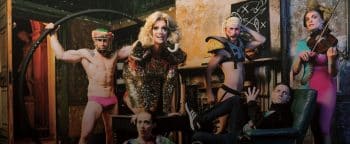
More or less pulsating since its quiet birth in 1994, the Dublin ‘Tiger’ Fringe Festival has an unusually well-defined theatrical remit, stated in its Memorandum of Association as: “the encouragement and promotion of the development of new theatre companies, younger actors and directors and to encourage more innovative theatre and performance”. While the Gate is just a little bourgeois and the Abbey statist and under pressure for its quality and its perceived overhang of gender bias, the Fringe exists to “challenge, subvert and invigorate”, and has been consistently lauded by the likes of the Irish Times for its fashionable diversity and indeed its quality. This September over 70 Fringe productions erupted across Dublin, desperate to address the difficulties of complex contemporary Ireland. Fringe 2015 focused on celebrating its 21 years of existence in exuberant style, drunk on musical acts and the return of the Spiegeltent. In contrast Fringe 2016 had to sober up after the hangover the Abbey forced on the world of Irish theatre. The passage of the Marriage Equality Referendum and the stirring of Waking the Feminists, both representing formidable political movements with strong theatrical panache, escalated the iconoclasm expected of Fringe in Dublin. Kris Nelson, Artistic Director of the Festival, pronounced on International Women’s Day 2016 on the New Politics: “even an indirect, implicit kind of equality is not enough. It’s important, now, to be explicit”. This explains much of the ambit of this Festival whichs styles itself a “riproaring festival” of the avant-garde. “We’re hosting experiences”, says Nelson, a Canadian, who took over the Fringe in 2013: “We want big nights out, we want to be taken to places we’ve never been before, we want stories that are bigger than ourselves”. Inevitably, Village only got to a sample of productions. ‘Megalomania’, making real for its audience the slaughter in Syria and provocatively staged at the Coombe Women and Infants Hospital, and ‘Hostel 16’ starkly playing out the servile and monotonous daily routine of asylum-seekers in Direct provision, stuck it to the Irish State’s treatment of refugees and were tone-setting while ‘Eggsistentialism’ attacked judgementalism on female fertility. ‘RIOT’ which won the award for Production of the Festival featured a savage riff from Emmet Kirwan on the state of the nation and imagination. Panti Bliss, who technically starred, preached a message of “Activate, Articulate, and Farrah Fawcett”, vaunting her political and thespian cojones. Whether the message will be enough for a new Millennium is one question but Panti’s message is powerful and her reflections on the power she has now accreted – like Daniel O’Connell did – are surprisingly subtle. ‘The Aeneid’ by Collapsing Horse concertinaed the story of Aeneas’ journey to establish Rome and filtered it through the lives of a group of storytellers called Rhapsodes. Maeve O’Mahony as the actor Aenen assumed Aeneas’ identity and performed his story, tragically not her own. Her single moment of individuality was eclipsed as books stacked ever higher and higher in her arms, their pages falling around the stage, a visual representation of the burden of history. ‘Monday: Watch out for the Right’ gave a European context to political correctness, demonstrating (in distracting, subtitled Portuguese) how boxing poses the question of whether we should stay ring-side, or fight. Of course even in 2016 Dublin Fringe not every production had a right-on message; some were not even overtly political. Aoife McAtamney’s ‘Age of Transition’ evoked an Elysian dream-pop slumber yard filled with the silent choreography of Berlin dance troupe Sweetie Sit Down. The conjoining of music and dance was sumptuous. Dancing automata to McAtamney’s vocals on a recycled stage, attempting to harmonise the contemporary world with the ethereal and challenging notions of individuality, when the music stopped. ‘BlackCatfishMusketeer’ probed the modern dating scene, dressing the embodied internet as a mid-twentieth century secretary and web pages, gifs and links as filing cabinets. Ultimately showing that the promise of love still relies on the exchange of letters. ‘To Hell in a Handbag’, written and performed by Helen Norton and Jonathan White, breathed new life into Miss Prism and Reverend Canon Chasuble of ‘Wilde’s The Importance of Being Earnest’ through the humorous exploration of corruptible authority. Humorously positing Miss Prism and the Rev. Canon Chasuble as liars, blackmailers and thieves. There was comedy too: Deirdre O’Kane, Jason Byrne, Alison Spittle, Al Porter, Joanne McNally, Lords of Strut and Foil, Arms and Hog. These productions are a snapshot of the Fringe Festival 2016, a staggering body of 72 works by hundreds of artists, organisers and volunteers. In the year of steady but none too imaginative 1916 commemorations, the Fringe has cascaded, avalanched an ocean of new work, most of it overtly political – no doubt a reaction against the past, indeed against much of the present. It is a phenomenonal success in the encouragement of more innovative theatre and performance. Fringe 2016 energetically sobered up from last year’s celebrations, rolled up its sleeves and dug amongst the empty cans and streamers to raise up a big filthy mirror. By Matthew Farrelly
-
Posted in:
Unemployed are mistreated
by Brid O'Brien
At the INOU’s recent Annual Delegate Conference delegates called on the Government to “significantly increase Jobseeker payments – at a minimum to the rates in early 2009 – including reversing the cuts to younger jobseekers”. This call was made in recognition of the financial difficulties facing unemployed people. It reflected that the poverty rates experienced by unemployed people are considerably higher than the national average. According to the most recent Survey on Income and Living Conditions (SILC) 2014, unemployed people’s at risk of poverty rate was 35.9% in comparison to the national figure of 16.3%. Their deprivation rate was 53.4% in comparison to a national figure of 29%. Their consistent poverty rate was 22.6% in comparison to a national figure of 8%. One goal of the National Action Plan for Social Inclusion 2007-2016, related to income support, was to: “Maintain the relative value of the lowest social welfare rate at least at €185.80, in 2007 terms, over the course of this Plan, subject to available resources”.Currently the Basic Social Welfare Allowance is €186. However, if this goal had been adhered to, the Basic Social Welfare Allowance would be €191.77, a gure that would still be below the SILC 2014 ‘at risk of poverty threshold’ by €18.34. In their report on Minimum Essential Standard of Living, the Vincentian Partnership for Social Justice noted: “The data show that working age households without dependant children are also experiencing income inadequacy when dependent on social welfare”. They added that: “The single adult household faces income inadequacy of €63 per week, despite receiving Rent Supplement and the full rate of Jobseekers”. Restoring working-age social welfare payments to 2009 levels would go some way to addressing these issues and would alleviate poverty among the unemployed. The introduction of age segregation in the Jobseekers Allowance payments was discriminatory. The INOU strongly believes that they should be reversed on equality grounds. The Vincentian Partnership for Social Justice noted that “The cost of a Minimum Essential Standard of Living for an unemployed young adult living in the family home is €154 per week, more than one and a half times the reduced rate of Job Seekers Allowance for adults aged 18 to 24 [of €100]”. There are strong social inclusion and anti-poverty grounds for this practice of age segregation to be ended and the situation of young job seekers restored. The commitment in the Programme for Government to “develop the process of budget and policy proofing as a means of advancing equality, reducing poverty and strengthening economic and social rights” should drive change in the discrimination against young people in the Job Seekers Allowance. There are anomalies in the social protection system that cause difficulties for unemployed people and their families. As the economy begins to recover it is important that these anomalies are addressed. This would be in keeping with the Programme for Government’s aspiration that, “at the same time, economic repair must be complemented by social repair”. A motion at the INOU’s Annual Delegate Conference called on the Government to “fully restore the Christmas bonus and to facilitate access to this payment for people who are unemployed for at least 12 months, i.e. when they are deemed to be long-term unemployed rather than the current access point of 15 months”. There was also a call to restore the duration of Jobseekers Benefit to 12 and 9 months from the current maximum durations of 9 and 6 months depending on the recipient’s PRSI contributions. These are issues that must be addressed in Budget 2017. The Programme for Government made a commitment to “develop a new Integrated Framework for Social Inclusion, which will outline measures to help eliminate any persisting discrimination on grounds of gender, age, family status, marital status, sexual orientation, race, disability, religion or membership of the Traveller Community”. If this commitment is to be inclusive of unemployed people it is necessary for a new equality ground to be introduced in our equality legislation. Currently the ground of socio-economic status is noticeable by its absence. The current situation of unemployed people makes this urgent. The INOU has urged the Government to ensure that Budget 2017 plays its part in securing a better future for people who are unemployed, living with a disability, parenting alone, living in communities that rarely experience economic growth or facing discrimination because, for example, of their age or their ethnicity.; and for communities that are living on the margins of Irish society. This would be a practical expression of the stated ambition of the Government when launching the Programme for Government, in stating that “at its core is a simple objective: to make people’s lives better in every part of Ireland”. Brid O’Brien is Head of Policy and Media with the Irish National Organisation of the Unemployed.
-
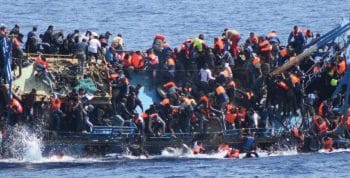
We struggle in the consumerist war-free West with the other, with Strangers. When someone with a credit card and pale skin settles in another land we often hear them referred to as an ‘expat’. Others permanently abroad are deemed ‘migrants’, ‘illegals’ or ‘asylum-seekers’. Few of us have direct experience of the conflicts that devour post-colonial states, where diffuse identities and profound inequality fuel endless conflicts which displace innocents, and sometimes not-so-innocents: humanity in its manifold complexity. But not only wars push a person to leave home: malnutrition still afflicts almost a billion; climate change will drive drought, flooding and disease; many of us are pulled simply by an evolutionary urge to improve our lot. The legal definition of a refugee as a person fleeing conflict or persecution is archaic and unfair on migrants and host nations; it takes no account of internal displacement or the soon-to-be-felt-impact of ecological wreckage. Migrants have understandably used the process as a way of bypassing dead-end legal channels, and who would blame them? But most of those forming the recent five-million-strong Syrian exodus fall squarely inside the legal definition of a refugee. Many Europeans shudder at this unprecedented encounter. Alone among politicians Angela Merkel has shown moral leadership, perhaps informed by a Christian ethos, even if she has wavered and in the end apologised. Nonetheless, civil society (especially in Western Europe) has displayed a remarkable generosity. Up to now the Irish State has responded to ‘the problem’ with the banal savagery of Direct Provision where asylum-seekers are denied employment and cooking facilities, and live on a pittance. In response to the Syrian exodus, in contrast to the charity and sympathy of most Irish citizens, the Irish State has been painfully slow at fulfilling its public commitment to take four thousand, itself derisory; the Department of Justice claim that 870 will be resettled by the end of the year. We may speculate that there is a fear in government circles that they will eventually be ‘punished’ for favouring the foreigner over the indigenous Irish; and perhaps there is a calculation that compassion will easily dissipate in the event of any problematic integration of a predominantly Muslim population. We might attribute the present moral muddle to a post-modernit world where we have difficulty determining Significance, especially against a background of declining appreciation of the narratives contained in sacred traditions. Insignificance, according to Milan Kundera in his last novel ‘The Festival of Insignificance’, has become “the essence of existence. It is all around us, and everywhere and always. It is present even when no one wants to see it: in horror, in bloody battles, in the worst disasters”. For understandable reasons, many consider religion a dirty word identified with a patriarchy where women’s bodies have emerged as a key battleground. But the philosopher Richard Kearney in his book ‘Anatheism [Returning to God after God]’ (2010) proposes “the possibility of a third way beyond the extremes of dogmatic theism and militant atheism: those polar opposites of certainty that have maimed so many minds and souls in our history”. Similarly, as the Lutheran pastor Dietrich Bonhoeffer awaited execution in a Nazi concentration camp for his apparent participation in the plot to kill Hitler, he proposed a reformed Christianity after the “Death of God” heralded by Nietzsche, Freud and totalitarianism. He wrote: “The God of religion, of metaphysics and of subjectivity is dead; the place is vacant for the preaching of the cross and for the God of Jesus Christ”. To Kearney: “Christianity thus becomes not an invitation to another world but a call back to this one, a robust and challenging ‘Christianity of this world’, a secular faith that sees the weakness of God as precisely a summons to the rekindled strength of humanity”. This is a call for compassion where we set aside our selfish desires. Kearney finds in the Abrahamic faiths as well as in Eastern traditions valuable responses to the alien stranger. Thus Jacob sees the face of God in his mortal enemy: “The message is this: the divine, as exile, is in each human other who asks to be received in our midst”. He recalls a Passover prayer: “You shall not oppress a stranger, having yourself been strangers in the land of Egypt”. Kearney contends that: “The very fact that the Lord must repeatedly enjoin justice to prevent hatred of the foreign is itself an acknowledgement that initial responses to aliens are more likely to be fear than love”. He acknowledges that “for every Francis of Assisi there is an Inquisition and for every Saint James, a Jim Jones”, but points to the Golden Rule to treat ‘thy neighbour as thyself’ found in almost all faith traditions – which demands hospitality to the outsider. We may easily wash our hands of responsibility for that alien other. The welcome of an unknown person is surely irrational, or we can imagine the possibility of an encounter with “the divine as exile,” and overcome any fears. Kearney acknowledges, however, that there are “limits to hospitality, at least for finite beings”. A particular challenge to our hospitality lies in a prevailing distaste for the Islamic faith from which is drawn most of the Syrian exodus, and which has been tainted by association with terrorism, especially after the 9/11 atrocities. Since the 1970s in the Middle East and elsewhere political grievances are often articulated through a resurgent Islam. This is in contrast to Christianity which has faded from politics, at least in Europe, mostly surviving in conservative forms that have little in common with Bonhoeffer’s idea of a “Christianity of this world”, or the early voices of Liberation Theology in Catholicism. The example of the Prophet Muhammad who began the conquest of an empire is quite different from that of Jesus Christ who demanded that his disciples put down their swords at the critical moment of his arrest. But Christianity also draws on an Old Testament replete with savagery and the wide-ranging Islamic corpus contains many teachings complementary to the
-
Posted in:
Cerberus still biting
The current Public Accounts Committee hearings into the sale of Project Eagle by NAMA threaten the careers and reputation of its chairman and chief executive, the finance minister, Michael Noonan, the Comptroller and Auditor General and a number of politicians on both sides of the border. This explains why we are witnessing a war of words across the print and broadcast media pitting NAMA against its perceived enemies. Public enemy number one in this conflict is the Wexford TD, Mick Wallace, no stranger to controversy but not immune to the hurt that comes with incessant criticism of his motives, his methods and the manner in which he tackles head-on the unfairness he perceives in many aspects of Irish life. His public clashes with NAMA chairman Frank Daly and chief executive Brendan McDonagh are likely to intensify over the coming months of inquiries, including a promised Commission of Investigation into Project Eagle and possibly other aspects of the agency’s disposal of billions of euro of distressed property assets. Over recent weeks, Wallace has been accused of making “unfounded allegations” against the two senior NAMA executives on more than one occasion, including at the PAC hearing on Thursday, 29 September, last. McDonagh in particular has been incensed at what he believes is Wallace’s deliberate misleading of the public with “incorrect statements” and “false claims”. During his evidence to the PAC, McDonagh said that it was “completely untrue” that US fund, Fortress, had been excluded from making a bid for the £4.5bn Project Eagle portfolio in early 2014 and only made the short list after making an eleventh hour intervention to the Department of the Taoiseach. The portfolio was of course sold to US fund, Cerberus, for £1.24bn. The following day Wallace posted an email from Michael George, managing director of Fortress, to Andrew McDowell in Enda Kenny’s office dated 13 February, 2014. It read: “We’ve heard that NAMA/Dept of Finance is running a ‘process’ for the loans to Northern Irish borrowers. Being from the North I’ve taken a keen interest in this €4bn portfolio and would like to throw our hat in the ring. Might you have any insight as to how we can get involved?”. McDowell replied that he had asked Martin Whelan of NAMA to put George in touch with the right officials, to which the Fortress managing director replied: “Thanks Andrew. FYI I’ve also reached out to Bren (McDonagh)”. According to NAMA, it was the direct approach to McDonagh and not the request to the most senior official in the Taoiseach’s department that prompted the late invitation to Fortress to join the race for Project Eagle. McDonagh said that he passed the request from George to Lazard’s, the external advisor on the sale, which contacted Fortress later on the same day, 13 February. “NAMA has recently been forced to correct Deputy Wallace in respect of incorrect statements he has made in respect of the Fortress bid and it is regrettable that he is compounding this situation by making further false claims now”, NAMA said. The problem for NAMA is that the complaint about having to contact the Taoiseach’s department to get into the process came from Mike George and he made it to various people in politics and business, north and south. The increasing bitterness of the exchanges is also reflected in the coverage by some news outlets which have sided with NAMA in its row with Wallace. Over recent weeks, The Sunday Times and the Irish Daily Mail have published lengthy and detailed criticisms of Wallace comparing him (“a tax cheat”) unfavourably with McDonagh (“an honourable public servant”) among other, less than complimentary, remarks. It is understood that McDonagh and his media advisors have spent a considerable amount of time briefing journalists with their side of the Project Eagle story. Conversely, the Sunday Independent has been running various claims and revelations by Wallace over recent weeks and months. This contrasts with coverage in the Irish Independent which, with the exception of Gerry Adams, singled out Wallace for its most sustained vilification in advance of the general election this year. The Irish Times has belatedly accepted that its coverage of Project Eagle and related NAMA stories has been too tame and uncritical in the past and has given an airing to the Wexford TD. An apparent desperation in the NAMA media operation was well illustrated by its attack on the Comptroller and Auditor General, Seamus McCarthy, who it claimed was not up to the job of scrutinising the Project Eagle sale. The media reported it as a row between two state agencies rather than what it was; a detailed and critical report by its auditor of NAMA: an auditor whose previous ‘value for money’ reports on the agency’s work was never subjected to such an attack. It was only when the CAG said that the Project Eagle portfolio was sold for some £190m less than it could have been that it was targeted by NAMA for attack. In fact, while NAMA’s purchase price for the portfolio was £2.2bn, for what was a par value of £4.5bn, it was eventually sold for just over £1.3bn, one of NAMA’s biggest losses. The attack tactic did not go down well with most members of the PAC, nor with Wallace, who was present for the full day hearing although he is not a member of the committee. Neither did the sometimes unconvincing claims by McDonagh about the Project Eagle sale to US fund, Cerberus. It was Wallace who first disclosed that £15m in fees were to be paid by Cerberus to US lawyers, Brown Rudnick and Belfast law firm Tughans. Wallace also told the Dáil in July 2015 that £7m had been located offshore in an Isle of Man account in connection with this payment and that some of it was intended for a politician or political party in the North. A former member of NAMA’s Northern Ireland Advisory Committee (NIAC), Frank Cushnahan has since been secretly recorded stating that he is
-
Posted in:
Village idiots
by admin
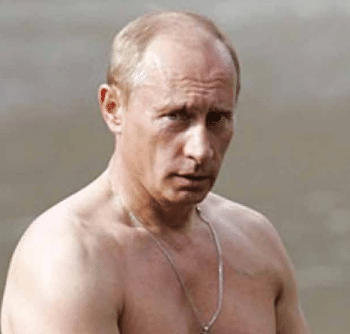
It is nearly a year since Putin’s Russia entered the civil war in Syria to save the day for Bashar al-Assad.
-
Posted in:
CETA flouts democracy
by admin
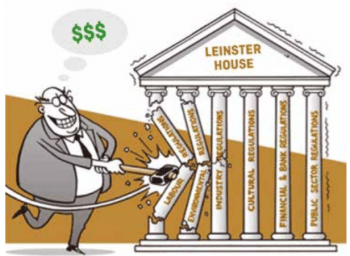
If CETA had been signed in the 1990s Governments would have been sued to prevent smoking bans or plastic bag taxes
-
Posted in:
When shall we three meet again
by admin
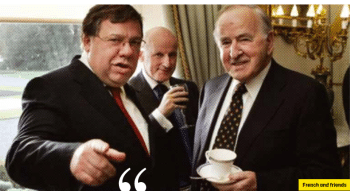
David Cameron (remember him) and the three ‘Whiches’