Posted in:
Shark Bates
Reflections on life as an agent on the border in the 1990s
Posted in:
by Village
Reflections on life as an agent on the border in the 1990s
Posted in:
by Village
Most conspiracy theorists obsess about false conspiracies, but ignore the real ones
Posted in:
by Village
Acquisitive billionaire John Magnier is determined to demolish attractive historic farm buildings — for no reason. By Dean Buckley. Some 70 people gathered outside Parkville farm on the edge of Clonmel last Thursday to protest against what one sign described as a “billionaire land grab” by horseracing magnate John Magnier. Magnier bought the 64-acre farm at auction earlier this year for €2.425m, or almost €38,000 per acre. Now a subsidiary of Magnier’s Coolmore operation called Melclon Unlimited has applied for planning permission to demolish derelict farm buildings that have been reclaimed by nature and to return the land to pasture, citing health and safety concerns. The protest was called by Hedgerows Ireland, a national campaign group founded in Tipperary to oppose the removal of historic hedgerows, which are important to maintaining biodiversity, as many plant and animal species call them home. Dr Alan Moore, Secretary of Hedgerows Ireland and Donal Ryan, President of the Clonmel Historical and Archeological Society, recently sent an open letter, opposing the plans and asking Magnier to “retain the vernacular farm building complex, walled garden and field boundaries at Parkville”. They also said an application was made to Tipperary County Council in April this year to have the buildings listed as protected structures. Planning documents submitted by agents of Melclon indicate roofs have collapsed in two of the three buildings, and describe “an extensive void dug under the floor of the dwelling, undermining the floor”. The demonstration attracted a broad range of support, including from local farmers, several environmental and historical groups, and members of the Tipp Greens and Workers and Unemployed Action (WUA), a left-wing party based in Clonmel. Many attendees were friends of John Hurley, whose family farmed Parkville for almost fifty years before the sale. Before the protest, the gates of Parkville were adorned with signs placed by Coolmore, explaining their decision and displaying both aerial and internal photographs of the farm buildings and their overgrown courtyard. The pictures amused some of the arriving protesters, who felt they captured the beauty of what Coolmore seeks to destroy. Addressing the assembled crowd, Moore said they were gathered in opposition to three things: the removal of hedgerows and ditches, the demolition of the farm buildings and the consolidation of Irish farmland into the hands of a small number of wealthy owners like Magnier. He said Coolmore has a well-known policy of destroying hedgerows to join land holdings for their tillage operation, citing the removal of hedgerows in Ballyhennebry, Loughcapple, Clonacody and Marlfield, among others. “As far as we’re concerned — and all other experts in the area agree — this is bad farming. It pays no attention to what we know about climate change, particularly flooding, the biodiversity crisis we’re all in and all the other value that hedgerows bring” . His sentiments were echoed by Myriam Madigan, Green Party general election candidate in Tipperary Southl, who told Village the countryside is being systematically destroyed by the removal of hedgerows. “These woodlands are priceless for birdlife, and don’t forget, 63% of our birds are on either the orange or red list. This is outrageous. We can’t afford to lose this precious, priceless gem and become a boring, barren prairie”. Coolmore have previously said they plant at least twice as much new hedgerow each year as they destroy, but Hedgerows Ireland reject this. In another open letter released by the group, and signed by local residents, they said: “Apart from providing a home to wildlife (95% of our biodiversity is in hedges and ditches) they also store massive amounts of carbon, they prevent flooding and provide shelter, shade and beauty to the landscape. We simply cannot afford to lose any more, and replanting new hedges somewhere else is not the answer as a new hedge will take 50 years to match the Parkville hedges which have a rich variety of plant species and are over 200 years old”. Hurley thanked the protesters for their support and spoke about some of the historic features he fears will be lost, including a seventeenth-century blast furnace previously identified as a lime kiln. If true, it would be one of only a handful of such furnaces documented in Ireland. Coolmore has a well-known policy of destroying hedgerows to join land holdings for their tillage operation, citing the removal of hedgerows in Ballyhennebry, Loughcapple, Clonacody and Marlfield, among others. He said he felt sorry for Magnier, echoing remarks made to the Irish Independent earlier this year. “He’s a billionaire with thousands upon thousands of acres, when at the end of the day, six by three will do every single one of us. And we can’t take it with us. I’ve no bother with him buying the land, but why do you have to destroy every bit of it?”. While most of the protesters wanted to preserve the buildings in their overgrown state, Mark Hampshire, a friend of Hurley’s who works in architectural restoration, expressed hope the site would be taken into public ownership by the Office of Public Works and the farmyard restored. He compared Parkville to the estates at Annes Grove Gardens and Doneraile House in Co. Cork, as well as Emo Court in Co. Laois, where the OPW maintains historic buildings for public use. “Coolmore only want it as a field. We can’t replace that…They want to take something away that’s 300 years old. It’s definitely backwards we’re going”. Daniel Long, a dairy farmer and journalist, spoke to the overriding concern of all attendees: the ability of Coolmore and other wealthy buyers to purchase land at prices far beyond the reach of ordinary farmers. He described it as not just an Irish problem, but a European problem, with institutional investors outbidding both active farmers looking to expand their operations and new farmers seeking to enter the field. Long has proposed the establishment of a land observatory which would initially gather information on land ownership in order to provide open-source data for community groups, farmers and policy makers. He
by Village
Systematic bullying at Ireland’s highest security prison, Portlaoise, ignored by prison officers’ union
Posted in:
by Village
The British Secret Service’s manipulation of the Arms Crisis
Posted in:
by Village
Exposing the flaws in Ireland’s new ‘Sustainable’ Fuel
by Village
CLM’s landmark human rights challenge to inadequate Government action on climate change is proceeding at the High Court
Posted in:
by Village
Ireland’s revised National Planning Framework lacks the teeth to curtail unsustainable, sprawl-driven, car-dependent development and fails adequately to consider climate consequences
by Village
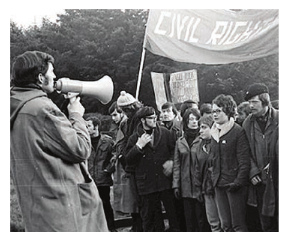
Those behind the provocative Burntollet civil rights march of 1969 have miswritten the history of IRA violence

by Village
A reply to Paul Hyde’s piece in the July Village magazine

by Village
The best lack all awareness of what implementing a climate agenda requires, especially justiciability for annual climate targets
by Village
Derivative cross-border buddy-cop algorithmic stereotype needs rewrite
Posted in:
by Village
Economics of freelance journalism risk a blow to our democracy

by Village
Kevin Kiely reviews ‘Let the Wind Speak: Mary de Rachewiltz and Ezra Pound’ by Carol Loeb Shloss
Posted in:
by Village
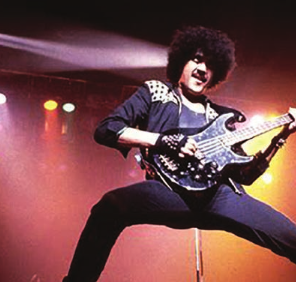
Phil Lynott is the emblem of the rise of Irish rock

Posted in:
by Village
After initial good intentions Israel has long been an apartheid state

by Village
150,000 people have died; 10m have fled their homes and famine could kill 2.5m by next year
by Village
Real-estate billionaire and reality-show host. President USA, 2017-2021; voted out 2021 though does not accept that; candidate again in November.
by Village
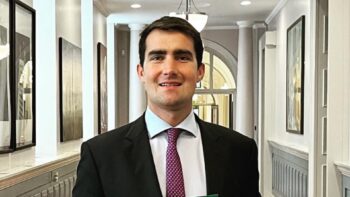
Conor Lenihan interviewed Minister for Finance, Jack Chambers on the eve of his first budget Jack Chambers assails Sinn Féin policies that would turn Irish economic success “to dust” and says Trump policies are a “present risk” to Irish growth; Conor Lenihan sees Chambers as heir apparent to Micheál Martin and says few in Fianna Fáil would consider opposing Martin if he runs for the Presidency next year. In his office on Merrion Street, Chambers told Village Magazine that Irish economic success would “turn to dust” should Sinn Féin be allowed into government. Describing Sinn Féin’s alternative budget as “reckless and dangerous”, Chambers said their policies would seriously risk and jeopardise the country’s progress. “We are in line to receive around €30bn in corporation tax this year – much of which is from multinationals operating here. Sinn Fein’s proposals would not only discourage any from setting up here but would drive the existing companies away”, he said. Chambers was surprisingly trenchant: “Worst of all, Sinn Féin have said they would raid the Future Ireland Fund which will be essential in providing for current and future generations”. His comments will be read as his first shots in the election campaign with a general election now expected by political pundits for 15 November. Both Fianna Fáil and Fine Gael are expected to target Sinn Féin which they perceive to be weak on a number of fronts. “Worst of all, Sinn Féin have said they would raid the Future Ireland Fund which will be essential in providing for current and future generations”.His comments will be read as his first shots in the election campaign with a general election now expected by political pundits for 15 November. The new Finance Minister professed admiration for some of the new initiatives on clean energy being carried out by the Starmer Labour government in the UK. Chambers acknowledges that Ireland must now pay attention to the risks we face due to the retreat from globalisation from which Ireland greatly benefited.: “The country must be prepared for potential disruptions to global trade, especially with key trading partners like the US and China. Managing these risks will require a careful balancing of domestic and international interests”. Not mincing his words, Chambers cites a Donald Trump presidency as one of the key risks we face: “It certainly presents risk and possibilities of disruption, as it did on his previous term, but some of the risk didn’t necessarily crystallise. However, some of the Trump policies in lots of areas are a present risk”. He intends to use the €8.3 billion available to him on budget day to promote growth: “Our primary focus is on providing tax relief to workers, promoting enterprise, addressing the housing crisis and securing long-term sustainability through strategic investments”. “”. Chambers has insisted that the tax package in his budget will be targeted at lower and middle income earners. He admits that the average worker on approximately €50,000 still carries a “significant tax burden”. “Beyond tax relief, a core aspect of our economic policy is fostering enterprise and innovation. These are the driving forces behind the future productivity and competitiveness of the Irish economy”. In Fianna Fáil circles his meteoric arrival in Finance and his appointment by Micheál Martin as Deputy Leader of Fianna Fail makes him the heir apparent to Martin if the latter moves on following the General Election. With Michael McGrath gone to Brussels it is hard to detect any serious opposition to him becoming leader. Of course Darragh O’Brien, Jim O’Callaghan and more recently Norma Foley have also got their supporters. Chambers, not unlike other colleagues, will not be drawn on what the future for his party will be beyond the leadership of Micheál Martin. There has of course been intense recent speculation that Martin may be a candidate in the Presidential election which will happen towards the end of next year when Michael D Higgins stands down. Few would presume to oppose Martin should he decide to run for the party. Fine Gael under Simon Harris are enjoying a huge opinion poll boost to their support. It remains to be seen if this will be sustained. Clearly Fianna Fáil are hoping that a strong budget performance from Jack Chambers will even out the extraordinary surge in support that Simon Harris has brought about. A distinct feature of the recent European and local elections was the strong rate of transfer between Fianna Fáil and Fine Gael candidates when one or the other dropped out. This is clearly giving hope to Martin and Fianna Fáil that the General election will not fare out to be bad for them. Jack Chambers (33) has been Minister for Finance since June 2024 when he was also appointed deputy leader of Fianna Fáil. He previously served as a Minister of State attending cabinet from July 2020 to June 2024, and as Government Chief Whip from July 2020 to December 2022. He has been the Dublin West constituency since the 2016 general election. He was educated at Belvedere College; Trinity College where he studied Law and Political Science; and the College of Surgeons where he completed a medical degree. He is the youngest Minister for Finance since Michael Collins and a likely successor to the leadership of Fianna Fáil. In the first part of the interview, former Fianna Fáil Innovation Minister and journalist, Conor Lenihan, discussed the budget and the Sate’s finances. In a second part, to appear in Village magazine later this week, Michael Smith talked to him about his political outlook. He gave Village over an hour of his time the week before the budget, remaining characteristically upbeat, solid and sober throughout the interview. Here’s the interview, lightly edited for length: Economic Statement on Tax, Expenditure, and Growth Since I became Minister in June, I’ve been working on the Summer Economic Statement and latterly Budget 2025. The Statement outlines a comprehensive plan to use €8.3 billion in tax and expenditure measures for sustainable economic growth. Our primary focus is on providing tax relief to workers, promoting