Archives

OK

Random entry RSS

Loading

  • Posted in:

    Direct Provisi on and On.

    By Sue Conlan. Emily O’Reilly, European Ombudsman, recently described Direct Provision as the “human-rights elephant in the room”. The Working Group on the Protection Process [for asylum seekers], that recently submitted its final report, has looked at the elephant but, perhaps not emboldened enough given its terms of reference, it decided to look away again. A fundamental human rights issue therefore still calls for political attention. For the Irish Refugee Council and others, the ‘End Direct Provision’ campaign is needed now more than ever. The origins of the Working Group lie in the ‘Statement of Government Priorities 2014 – 2016’. This committed to two related steps: bring in a single application procedure for asylum seekers through legislation; and establish an independent Working Group “to report to Government on improvements to the protection process, including Direct Provision and supports for asylum seekers”. The General Scheme of the Bill was published in March 2015. It proposes a single procedure for international-protection applications to replace the existing multi-layered system. This is supposed to lead to “more timely and efficient protection decisions”. The Department of Justice and Equality organised a Roundtable discussion for NGOs with Ministers Fitzgerald and Ó Ríordáin, before establishing the Working Group. The themes were: Direct Provision; Supports for Protection Applicants including for education, training, healthcare, social welfare entitlements and access to employment; and Issues relating to the process of determining international protection. At the first meeting of the Working Group, the Chair, Dr Bryan MacMahon, proposed that its work would be organised around similar themes: Living conditions; Supports and services; and the protection application process. The Working Group therefore proceeded on lines already drawn up by the Department of Justice and Equality. With the benefit of hindsight, it is safe to say that government did not want the Working Group to consider and provide input into the International Protection Bill. This is despite this legislation being central to the strategy underpinning the report of the Working Group. Frances Fitzgerald, Minister for Justice and Equality, indicated in her response to the Working Group report that “successful implementation of key recommendations is dependent on the early enactment of the International Protection Bill” . The Working Group ended up proposing changes to the asylum application process only because of the tenacity of individual members of the Group. You would think from reading some of the subsequent comments of the organisations represented on the Working Group that the International Protection Bill was the fruit of their work. Not so: it would have been brought forward anyway, even if the Working Group had never existed. The International Protection Bill is due to be published in September. If amendments to the General Scheme are made, based on the substantive recommendations from the Working Group, it will be a good indication that the Minister intends to have regard to the view of the Working Group she set up. But that is not certain. The main recommendation in the report for those currently in the system affects asylum seekers only once they have been there over five years, unless the application is processed resulting in either deportation or asylum. In effect, the Working Group’s proposals are founded on the principle that no person should be in the system for five years or more. That is a remarkably restricted agenda and cannot have been proposed with any regard to submissions and comments made by asylum seekers. They would not sign up to such a limiting starting-point. Even worse, the proposals for those in the system more than five years will only come to fruition if the Minister accepts the recommendations made by the Working Group about resources. Those involved will then face the uncertainty of moving on from Direct Provision with little or no support to do so. Those who have ‘served’ less than five years will continue to be left waiting in a largely unchanged Direct Provision system. A number of NGOs, and the UN Refugee Agency, UNHCR, used language to welcome the report that, it can only be assumed, had been agreed in advance. The language of decisions being reached by or through “consensus” dominated media statements on the day of the report’s release – from organisations such as Nasc, Jesuit Refugee Service, UNHCR and Spirasi. They referred to the fact that this consensus included government departments. However, now government departments have been left on their own to argue about what they can or cannot implement in a context of competing demands, particularly on their budgets. Apart from the Ministers and the Chair, it was the NGOs and UNHCR, with a few asylum seekers, that fronted the report launch, even though they are no longer able to influence its progress and implementation. • Sue Conlan is CEO of the Irish Refugee Council. She resigned from the government’s working group on refugees in March

    Loading

    Read more

  • Posted in:

    UN is not Coca-Cola

    By Lorna Gold Negotiations on the UN Sustainable Development Goals (SDGs) may still be ongoing, but the debate is shifting to questions of implementation. A strange logic is evident. A highly technocratic market-driven model of delivery is envisaged rather than any focus on embedding these goals in national political life. There appears to be little appetite to commit the substantial new public resources, estimated at over $1.5tn, required to meet the goals. The SDGs are to be universal to all countries. They cover a vast range of areas. Previously, there were eight Millennium Development Goals, focused on priority basic development areas. There are now seventeen SDGs, addressing the full range of economic, social and environmental objectives which constitute the daily public life of a modern nation. It is all about choices, contradictions and possible pathways when it comes to implementing the SDGs. Issues which are priorities for one nation, are not so vital for another. Decisions around what gets prioritised in any one country have to be embedded in the political choices of that nation if they are to be legitimate and meaningful. The SDGs must be democratically accountable if they are to be achieved. Preparations for this new SDG era is, however, giving rise to a new breed of ‘contract ready’ international NGOs, focused almost entirely on delivery of services connected to one or more of the SDGs. This new breed, such as the Adam Smith International, are winning contracts from local NGOs. Donors are favouring large-scale consortia with a private-sector ethos. In the case of the UK Department for International Development this is accompanied by a ‘payment by results’ approach. Multi-national NGO conglomerates are driving out smaller independent organisations as a result. In the absence of any significant commitment from governments to address fundamental inequalities in the global economy, SDG delivery will mainly come down to new global initiatives by partnerships involving major private-sector entities like Unilever and Coca cola. Last year, Unilever signed a multi-million dollar partnership with Solidaridad, aimed at improving livelihoods through their supply chain. Engaging in such partnerships is set to become the new norm. On the surface, such a shift seems logical. NGOs and corporations join forces to achieve common goals, or in business speak to ‘create shared value’. This ensures economies of scale, greater integration, and faster speed of response. Multinationals can readily achieve ‘market penetration at the bottom of the pyramid’. However, this shift will have serious repercussions for local civil society organisations across the world and their capacity to engage in social action and seek accountability. It will have serious repercussions for the global justice organisations that still support them. Funding for thousands of local NGOs, particularly community-based organisations, that are unable to meet the audit and reporting standards of the ‘contract ready’ NGO, is under threat. This goes to the heart of the concept of human development. It reflects a fracture between approaches to development that have co-existed for decades. On the one hand, there are those who see the business of development as needs-based, involving direct provision of essential services and, essentially, stepping in where government can’t or won’t provide. Speed and scale are off the essence. On the other hand, there are those who see development as about human rights involving action to enable and empower communities to hold duty bearers to account. Local knowledge, community participation, and political accountability are central. The SDGs are broad enough to embrace both approaches, but the needs-based, service-provision model backed by private finance now has the upper hand. The drive towards contract-based SDG provision could lock in an approach to development co-operation that is heavily skewed towards this service-provision model. The big question then is what happens to the local NGOs that focus on democratic governance, participation, empowerment and human rights? Civil society organisations across the world are already under pressure in retaining their democratic freedoms to engage in social action and participatory accountability. Finding funding for such work is increasingly challenging. In countries like Kenya, Ethiopia and Zimbabwe there is an insidious security discourse emerging about international NGOs being agents of foreign interference. These countries are already using legal, policy, and financial means to obstruct the work of vocal local NGOs. They would happily take the help of SDG contract-ready partnerships that absolve them of their responsibilities and make no noise, in preference to the involvement of organisations that support a vibrant and challenging civil society. How INGOs position themselves in regard to these issues over the coming months is critical. •

    Loading

    Read more

  • Posted in:

    Bring back wonder

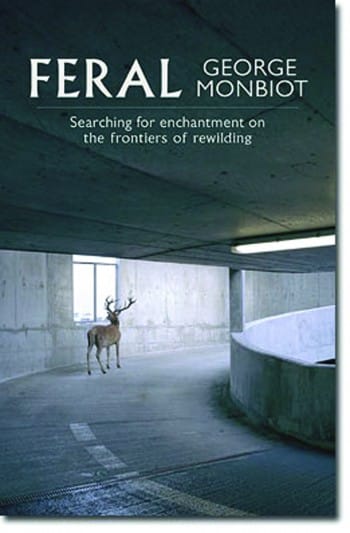
    Feral  George Monbiot Allen Lane, 2013 €14.99 Book review by Roy Johnston In this charming and inspiring book George Monbiot, environmental polymath and Guardian proselytiser, shows how, by restoring and rewilding our damaged ecosystems on land and at sea, we can bring wonder – “enchantment” – back into our lives. This book is an unusual combination of bedside reading; George goes feral, with disaster warnings and many reference sources. It thus effectively sucks in the neophyte as much as the activists who read his brilliant Guardian columns, many of which are reprinted by Village, often centring on climate change. In the first five chapters he outlines his experience with wild life in Brazil, Wales, east Africa, England and elsewhere, on land and sea, then in chapter six he homes in on the need to encourage the replacement of mountain pasture by forestry with native species, managing it without clear-felling. This ideally should reproduce the original post-ice-age ecology, which supported a rich species-mix, before its replacement by pasture mono-culture, which tends if abandoned to revert to heather. It does not appear that many others in this country (apart from articles in Village and by Michael Viney in the Irish Times) have picked up on this. Perhaps the reduction in pressure from sheep grazing over the last twenty years has reduced the imperative. Hill forestry it seems has been culturally forgotten in both Ireland and Britain, though some understanding remains in continental Europe and ecologists increasingly emphasise its value. It is being re-created in Wales and Scotland by a handful of pioneers, and Monbiot explores their experience, and looks at the positive influence of wildlife such as the wolf, boar, beaver, linx in sustaining diversity of life. As usual Monbiot writes both effectively and lyrically. Monbiot wants wolves reintroduced, for example, because “wolves are fascinating … because they feel to me like the shadow that flits between systole and diastole, because they are the necessary monsters of the mind”. He celebrates a process known as trophic cascades: predators at the top keep an ecosystem healthy via such means as reducing the number of herbivores, thus providing carrion for animals further down the food chain. Eliminating a top predator does not mean more food for humans. For example, fishermen once believed they could enlarge their catches by reducing the numbers of animals such as whales and seals, leaving more fish for human consumption. In fact, the opposite occurred, because you cannot remove one piece of an ecosystem without creating catastrophic knock-on effects. Almost everywhere, except Britain and Ireland, large charismatic species are returning. Wolves have spread across most of Europe. Between 1927 and 1993, the wolf was extinct in France. Now, helped only by the restraint of people who might otherwise have killed them, there are over 200 wolves there, in at least twenty packs, he notes. His key message is the need to conserve the complex wild ecologies associated with native forestry, especially in the mountains. He also exposes the need to reconstruct the current complex agricultural subsidy regime in the EU, if re-foresting is to be achieved politically. Monbiot doesn’t just want to return nature to its state of a hundred years ago. He believes we can reintroduce extinct species of animals and flowers, and then allow nature to run its course to bring back diversity. The implication for Ireland is that re-foresting the mountain pastures enables the heavy mountain rainfall to be retained, so that it does not immediately rush down the mountain streams to cause floods in the main rivers. This aspect of global warming, generated by the rising seas has already hit us severely. Dredging the rivers is not the right response; we must re-forest the mountains. Those who depend on mountain sheep for their livelihood need not worry, provided the State supports them in helping with the transition to becoming instead managers of energy supply in the form of wood chips and firewood from restored mountain forest. Indeed one of the differences between Ireland and Britain is that because the sheep industry was never as intensive in Ireland it was reduced in the 1990s following EU rulings on over-grazing and related changes to headage payments. The Rural Environment Protection Scheme provided generous cash payments to farmers who agreed to reduce sheep numbers on the hills. Sheep numbers more than doubled from 3.3 million in 1980 to 8.8 million in 1991 but had reduced to 3.5m by 2011 . In the UK there are over 11 million. Over-grazing of Irish uplands peaked twenty years ago. •   Dr Roy H W Johnston is a scientific consultant with an interest in techno-economic analysis. He wrote  a weekly science column in the Irish Times in the 1970s.

    Loading

    Read more

  • Posted in:

    Time on the border

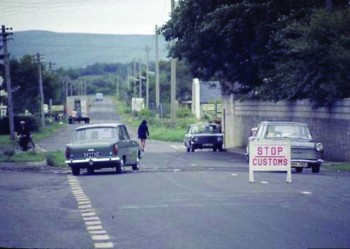
    By Shirley Clerkin Living on the border defines and determines. You are on one side or the other. You go over it. You go back again, developing an intense and intimate relationship with its nuances and grey areas. The border is the edge and the beginning, like two silk scarves with rolled French seams lying end to end, but also a place of buffering, transition and, because of that, cultural richness. Little details that ornament south or north – the road surface, the metric miles, the Slán Abhaile’s, narrate the government policies that have accumulated a different finish to the countryside and towns. If you dropped me on either side, I believe I would know which I was on eyes-shut, because I am of the border. It is in me.  It is a unified place, not a line, unified by its edginess and the distinction of experiencing  many perspectives. People interrogate you about it – your experience of “living along the border”. It becomes an exotic thing because it is deemed to be by peace-builders, social scientists and historians. Peace-funding and other EU cohesion monies are available for storytelling projects that allow you to get it off your chest, but only while a person “from the other side” gets it off his or her chest too. It is an ailment to be overcome, like a bad cough. But, what if border belonging made you a better problem-solver because of the unique experience, like Kilkenny makes better hurlers because of the unique heritage and self-belief of that place and people. Like Cork people, being so far away, and having such a rich and sophisticated hinterland, never lose the run of themselves. The ingenuity of many home-grown companies, particularly in engineering, on the border is unreplicated anywhere else on the island for example.  Problem-solving is also about co-operation and collaboration, behaviours that have been hard-wired into many, for reasons of necessity and because of initiatives to bring trans-border standards into line with each other by public authorities.  But also because those woolly sounding “storytelling projects” are much more than a hug from a warm jumper. It is not easy: cooperating is challenging, but it can be learned through doing. We need to encourage and teach these types of behaviour to force a change in how we manage our resources and how we challenge climate change and biodiversity loss. Because we in effect need to cooperate with future generations as well as with each other.  ‘Time Lapse’ from Lodovico Einauidi’s new album evokes a moving through the seasons, beaten out on the piano and other percussion – sparse, noisy, busy, constantly rhythmic but with increasing franticness.  It sounds like years ticking past, generations flickering briefly like-time lapse photographs from birth to death in a glimpse – generation upon generation – each dependent on the earth left by those who went before. Ecologically. I sometimes wonder if there would be a change if photographs were available of our ancestors. Would our sense of time shrink to see the real transference between generations, past and future? Would we become real geologists, and understand human time as just a pinhead in the history of the earth, and would this help us co-operate to protect our nature, our DNA’s future? Why people are willing, or unwilling, to make present-day sacrifices for future generations is the topic of a recent study called ‘Cooperating With The Future,’ from researchers at Harvard and Yale. They tested the conditions under which co-operation with future generations can occur in a game, the Intergenerational Goods Game (IGG). Oliver Hauser et al. developed this laboratory model of co-operation that differs from previous games in which selfishness creates social-efficiency losses for group members. Instead, selfishness negatively affects subsequent groups. Experiments involving more than 2,000 people demonstrate that when decisions about resource extraction are made individually, the resource is rapidly depleted by defectors. But, when participants are forced to vote on how the resource should be exploited, it is exploited sustainably across generations. Voting allows a majority of co-operators to constrain a minority of defectors, and as all players receive the same amount after a vote, co-operators need not worry about losing out relative to others. To be honest, the study seems like a bit of common sense, not a great discovery as such, but perhaps the best ideas are already taken in the real world outside the lab. My eye was drawn to it because if its snazzy game-show name. Unfortunately without ever-cheerful Bruce Forsyth to declare “Didn’t they do well?” no matter how poorly the contestant performed, it will hardly precipitate any great changes in behaviour. Brucie was an encouraging and motivating host. We need him now to tell us to stop the belt conveying prizes to vested economic interests and to share the cuddly toys among ourselves and our children. Time is not what we think. And it is not, nor ever was, on our side. Like Einaudi’s composition, the metronome is relentless. •

    Loading

    Read more

  • Posted in:

    Don’t go far

    By Sadhbh O’ Neill What do the recent news reports about the sale of Aer Lingus, an earthquake in Nepal and the collapse of the Greek economy all have in common? The answer is the importance of air travel for tourism, global connectivity and economic growth. The aviation industry as a whole contributes 2.6% of Irish GDP, and supports up to 40,000 jobs, in addition to contributing to taxes and indirect spending. In Nepal, where a recent earthquake has devastated the country’s infrastructure and killed over 8,000 people, the travel and tourism sector provides 3.2% of that country’s total employment. Leisure accounts for over 80% of the spending. And in Greece, that country’s economic crisis has brought a flood of tourists seeking good value and availing of cheap deals from the UK in particular. Tourism brings revenue of over €13bn to Greece annually and has seen a growth of over 30% in the past year alone. There is a problem, however. New (jet) airliner models in the first decade of the 21st Century were barely more efficient on a seat-mile basis than the latest propellor-powered airliners of the late 1950s. Carbon-dioxide emissions from aviation, while small at just 3% of global emissions, are growing faster than any other source. Globally, about 8.3 million people flew daily (3 billion occupied seats per year) in 2013, twice the total in 1999. U.S. airlines alone burned about 16.2 billion gallons of fuel during the twelve months between October 2013 and September 2014. They also originate from just a tiny fraction of the world population, which is dominated by affluent leisure travellers (that includes us, here in Ireland, flying once a year to Mediterranean holiday resorts). Dramatically, the Intergovernmental Panel of Climate Change estimates that the warming effect of aircraft emissions is about 1.9 times that of carbon dioxide alone, due to the other gases produced by planes. (A higher figure of 2.7 was previously used, but a more conservative one of 1.9 is now preferred, and is the one commonly used). So when discussing aviation’s contribution to greenhouse gas emissions, we need to take cognisance of the peculiar status this sector enjoys in our economic framework and in our cultural attitudes to wealth and personal freedom. Let’s face it: flying is enormously environmentally costly but we in the first world perceive it to be a precious luxury, one that we are not prepared to forego. So that’s why it is ‘peculiar’, and we should be wary of falling for arguments that would allow aviation emissions growth to be offset against those of other sectors. So what should we do about CO2 emissions from aviation? Well the first thing to note is that these emissions are not currently regulated at all, except in the EU under the Emissions Trading Scheme. This measure gives airlines an emissions allowance as a percentage of the EU aviation market, over which the airlines must pay for emission rights. It cost Ryanair for instance €1.7m last year, but they received 70% of their emission rights free of charge. The cost per passenger in 2014 would only have been 2c per person, hardly a punitive tax. This mechanism only applies to flights originating and ending within the EU and the cost has largely been passed onto consumers with no effect on demand or CO2. While the EU effort is clearly a start, if the desire to hold global warming below 2°C is serious, it must be translated into an effective global effort to reduce emissions by at least 80% by 2050, and not the 50% reduction favoured by the International Civil Aviation Organisation (ICAO). Under the Kyoto Protocol, responsibility for the design of an effective voluntary regime was left up to none other than the aforementioned ICAO so that airlines could figure out themselves how to square their actual emissions pathways with global expectations of limiting warming to 2°C. Given what we know about the inertia of energy systems and the incremental rate of technological advancement, policy-makers and the travelling public alike need to acknowledge an inevitable constraint on air travel. At some point, and as soon as possible, emissions need to peak and then decline to at least 80% below 2005 levels. And if we want to stick to the 2°C target we will have to peak straight away. Yes, that means no more growth at all. However, the aviation sector is still witnessing growth even in ‘mature’ markets such as the US, where emissions have increased by 64% in 20 years. The global projections to 2050 are for a rise in passenger/km of up to 500%. Just to put this into perspective, by 2010 emissions from aviation were of similar magnitude to those from the entire continents of either Africa or South America. Dublin Airport, for example, is planning and developing for a doubling of  passenger numbers from 2008 numbers to 30m annually by 2020 and for up to 40m by 2025. In 2014 the numbers rose to 22m, up 8% on 2013 due to the addition of 24 new routes and additional flights on 34 existing services, which followed the Government’s decision to drop the €3 a passenger air travel tax. Unlike other sectors, it is simply impossible to ‘decarbonise’ air travel. Technological ‘fixes’, including vaunted hydrogen and solar,  are simply less likely to be feasible than in other  sectors including other transport. The International Panel on Climate Change has said: “there would not appear to be any practical alternatives to kerosene-based fuels for commercial jet aircraft for the next several decades”. Adding an electric drive to the airplane’s nose wheel may improve fuel efficiency during ground handling. This addition would allow taxiing without use of the main engines. Other opportunities arise from the optimisation of airline timetables, route networks and flight frequencies to increase load factors. Technological ‘improvements’ can offer at best 1-2% per annum in fuel efficiencies, but it takes decades to replace entire carbon-profligate fleets, including current advance orders; and we don’t have

    Loading

    Read more

  • Posted in:

    Obesity obeisance

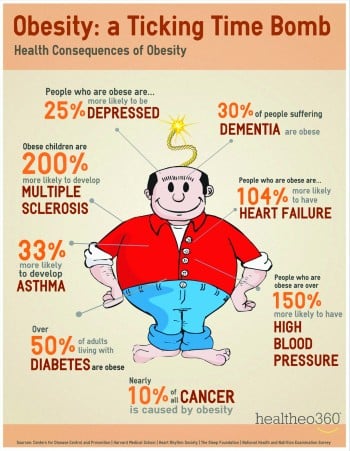
    By Greg McInerney. Ireland is set to become Europe’s most obese country by 2030 according to figures presented last month by the World Health Organisation as part of their yet to be published Modelling Obesity Project. The proportion of obese Irish men is expected to increase from 26% to 48%, with the number of men classified as either overweight or obese rising from 74% to 89%. Obesity in women will jump from 23 percent to 57% while 85% of women will be classified as either overweight or obese by 2030. Dr Joao Bredo of the WHO described the figures as painting a “bleak picture” for the continent. Professor Donal O’Shea, co-chair of the Royal College of Physicians of Ireland envisioned the scenario as “a much bigger health crisis than what cholera was back in the 1800s and HIV/AIDS was back in the 80s and 90s”. Minister for Health Leo Varadkar admitted that obesity has become a “major personal and public-health problem” and called for the issue to be treated “as seriously as we treated tobacco in the past.” The consensus would appear certain. We are getting fatter, our ever-expanding waistlines are toxic to our health and, according to most scientists, politicians, medical practitioners, teachers and journalists, we are on the verge of a seismic, generation-defining medical epidemic caused primarily by our individual eating and exercise habits. Is this consensus, however, firmly supported by the available scientific and medical evidence as its proponents claim it to be? Is being fat really that detrimental to our health or are their moral, social and economic influences pushing us towards this consensus, rendering our understanding of obesity inaccurate at best, or worse still, enormously harmful to many people’s lives? To begin to answer this question it is useful to consider the baseline unit of measurement for obesity that the World Health Organization and most medical researchers use: the Body Mass Index or “BMI”. Dating back to the early 19th century, the BMI is a simple mathematical formula that places people of different heights and weights on a single integrated scale. The index was never intended to be a measure of individual health yet despite this; it has formed the basis for almost every public policy and study on issues of weight and obesity written in the modern era. The BMI index defines obesity in a completely arbitrary and unscientific fashion.  In the late 1990’s one of the world’s leading obesity experts, Professor Philip James, set up a body called the International Obesity Task Force (IOTF). The IOTF drafted the WHO report in the late 1990’s which would define rising obesity levels for the first time as a health “epidemic”. The evidence underpinning this report was comprised largely of data provided by US health insurance giant Met Life. Joel Guerin, an American author who reviewed Met Life’s data told the Guardian newspaper that ‘’it wasn’t based on any kind of scientific evidence at all.” The funding for the IOTF report came from large multi-national drug companies, hoping to broaden the market for potentially lucrative weight loss drugs. The report led to the “ideal”, “healthy” weight for an individual to drop by 15-20 pounds. Millions of people across the globe were now considered, overnight, newly overweight or obese, despite having never gained a single pound. Not only has the BMI index been skewed to entirely unrealistic weight standards, the formula itself does not account for things like muscle mass and bone density. To put this into perspective, Chris Hemsworth, the actor who plays Thor in the popular ‘Avengers’ movie franchise and who was also voted the world’s sexiest man in 2014, is, according to the BMI index, overweight, bordering on obese. Irish rugby star Cian Healy fares worse, definitely obese according to his BMI. An influential study published in Science magazine, it was estimated a reduction in calorie consumption, or an increase in energy use, of just 100 calories per day would prevent weight gain for most people, hardly the basis for an “epidemic”. Similarly, after reviewing data from around the world, Dr Michael Gard concludes in his recent book ‘End of the Obesity Epidemic’ that in fact obesity levels for both adults and children have levelled off or declined over the past 10-15 years. Even if we were to accept the notion of an “epidemic” based on fundamentally-flawed statistics, surely the quotidian idea that being fat is bad for one’s health is beyond doubt? Not quite. A 2013 study published by The Journal of the American Medical Association, reviewed nearly three million subjects from more than a dozen countries in an attempt to determine the correlation between body mass and mortality risk. The study found that adults categorized as overweight, and most of those declared obese, actually had a lower risk of mortality than so-called thin or normal weight individuals. Average-height women, 5 feet 4 inches, who weigh between 108 and 145 pounds have a higher mortality risk than average-height women who weigh between 146 and 203 pounds. For average-height men, 5 feet 10 inches, those who weigh between 129 and 174 pounds have a higher mortality risk than those who weigh between 175 and 243 pounds. Throughout the terrors of our recent obesity “epidemic”, life expectancy in western countries has risen, not fallen, despite the many life-threatening health conditions supposedly caused by obesity. The correlations between higher weight and greater health risk are thread-bare, only significant at the extremes, severely underweight or morbidly obese. Improvements in health as a result of increased aerobic exercise have been documented in people who actually gained weight during the process. Exercise and nutrition can also effectively reduce blood pressure entirely independent of weight loss. Among overweight and obese men and women, with and without type 2 diabetes, those who reported trying to lose weight (but failed) experienced a reduction in mortality rate that was the same as, or greater than, those who reported that they were successful at weight loss. In other words weight loss itself did

    Loading

    Read more