Archives

OK

Random entry RSS

Loading

  • Posted in:

    Undaunted austerity fighter

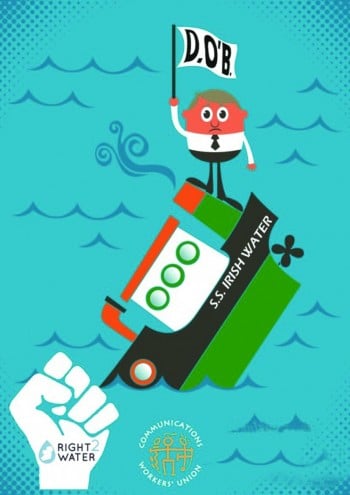
    Frank Connolly interviews Mick Wallace When Mick Wallace raised some uncomfortable questions in the Dáil last October about the sale of Siteserv to Denis O’Brien and the role of the Irish Bank Resolution Corporation (IBRC) in the deal, he was roundly abused by government ministers, including his constituency rival, Brendan Howlin. Phone calls were made to several newsrooms by O’Brien’s media handlers and Wallace’s speech went largely unreported. Some days later, the former chairman of the IBRC, Alan Dukes, protested loudly over the remarks in a lengthy column in the Irish Times and called for the comments to be withdrawn from the Dáil record by the Wexford TD. His pertinent questions about the timing of the Siteserv deal and the subsequent award of the lucrative contract to install water meters to O’Brien’s company went unanswered and the controversy was buried until Catherine Murphy revived it, not for the first time,  in the House on Thursday 28th May. Once again the media were asked to suppress her comments and O’Brien, Dukes and others trotted out widely published attacks on the Kildare deputy accusing her, among other things, of lying and using stolen documents. O’Brien was given most of a page in the Irish Times on Tuesday 2nd June to attack Murphy whom, he said, had used Dáil privilege to “gain notoriety and political advantage for herself”. “O’Brien himself with his court injunction on RTÉ has made a circus out of it to such a degree that his own friends in Fine Gael are distancing themselves from him and his threat to Dáil privilege”, Wallace said of the latest twist in the IBRC/Siteserv debacle. “I got a call from one journalist in a national paper last October to say that several news outlets had been contacted and warned not to pursue what I said in the Dáil about the Siteserv deal. Dukes had a free run at me in the Irish Times”. As someone who has been the subject of vicious attacks in the O’Brien controlled Independent newspapers with no less than 19 front-page stories published about his financial difficulties in its daily edition, Wallace knows something about media interference and selective banking practices. “I know how banks operate and the idea that Denis O’Brien would ring the bank to say he wanted the term extended on his loan repayments is perfectly normal. The difference on this occasion is that it is taxpayers’ money he is using. The question I was trying to get an answer to was: “How in God’s name did O’Brien’s company get the water contract so soon after buying Siteserv?’”. He is still waiting. Wallace is not convinced that his namesake, no relation, and IBRC liquidator, Kieran Wallace and Eamonn Richardson of KPMG, will shine sufficient light on the controversy to allay many suspicions when his review is completed and has plenty of grounds for scepticism given his experience with internal investigations he has witnessed into Garda wrongdoing and other matters during his four years in the Dáil. “If you follow what goes on in government it is a regular thing to see conflicts of interest in different inquiries and investigations. The penalty-points scandal was full of internal investigations that went nowhere. Many of the crime correspondents ignore serious wrongdoing in the force because they depend for their stories on the guards”. Wallace has, with Clare Daly, been to the fore in calling for greater transparency and fairness in the way the country is run. He has had his share of trouble since the collapse of his company, M & J Wallace, which was put into receivership after he was unable to meet bank debts of some €41m. However, he was not made bankrupt and says he still leases the wine bars and coffee shop in the Latin Quarter from the banks which took them from him; employing 55 people in jobs that pay well above the industry norm. Notwithstanding the continuous years of hostile reporting of his financial affairs by the Irish Independent, Wallace insists that he settled his issues with the Revenue over the under-declaration of VAT which arose because of his genuine efforts to save his construction business, and made payments for thirteen months until a High Court judgment for €19.4m in favour of ACC effectively brought the company down. He also insists that the widely held, and reported, view that he withheld pension entitlements from some of his employees, is simply false. “We paid every penny due of the pensions. I was fined for late payment and this was due to a row over whether we owed money for people who had left the company”. After watching assets once valued at €80m drop to €20m in the property crash he believes that there is  another scandal about to emerge over the manner in which huge profits are being made by certain investors, including US vulture funds, which are getting in on the act while others are excluded from privately-organised sell-offs. “The IBRC issue is just the tip of the iceberg when it comes to insider dealing in the sale of distressed assets”, he claims. Across the country, Wallace believes that over half of the population is struggling to pay their bills at the end of the month and these are the people searching for a political solution to their personal and family crises. “We have never witnessed such numbers of people in such a difficult place. These are whole sectors of society who are poorly represented. They want society run in a fairer manner. Sometimes I listen to people in the Dáil going on about things and they are clueless. There is a serious shortage of people with experience in the real world including how to run a business. And if you think the Dáil is a talking shop what does that make the Seanad. The greatest load of b….x”. Wallace does not do clinics or attend every second funeral in the constituency as other politicians do with their time but he is

    Loading

    Read more

  • Posted in:

    Finally, some nuance comes to NI

    By Anton McCabe The UK General Election in the North saw the stalling of the Sinn Féin juggernaut. Its share of the vote fell by 1% compared to the last election – despite fighting an extra seat, South Belfast. This was the party’s first electoral setback in the North since 1992, when Gerry Adams lost his West Belfast seat at Westminster. Overall, the long-running apparently inexorable rise of the Nationalist vote was halted. The Nationalist share of the overall vote was down 3.6%. For the first time in 32 years, Unionists took a Westminster seat from Nationalists – Fermanagh and South Tyrone. Another nationalist seat is extremely vulnerable, that of SDLP leader Alasdair McDonnell in South Belfast. He was only 900 ahead of the DUP candidate, despite a three-way Unionist scrap. In North Belfast, seen as a possible Nationalist gain, the total Nationalist vote in fact fell by 4.2%. While not as prominent as in the Republic, social issues are at last and at least bubbling below the surface. The conservative wing of the DUP were losers. Health minister Jim Wells resigned after claiming child abuse was more common among gay people, then police being called to an incident with a lesbian couple in Rathfriland. Wells stood in the Nationalist-held seat of South Down. His vote fell sufficiently to allow the Ulster Unionists to outpoll him. The Reverend William McCrea, traditionalist Free Presbyterian minister and outgoing MP for South Antrim, lost to Ulster Unionist Danny Kinahan. Kinahan was the only Unionist Assembly member to vote for equal marriage. The election has weakened the threat to the DUP from the right. The right-wing Traditional Unionist Voice polled poorly: six of seven candidates polling under 2,000 votes. A DUP source told Village this indicates the DUP’s future is in the centre, in electoral competition with more moderate forces. Under the radar, there is a peculiar development. The DUP is courting Catholic social conservatives – an estimated minimum 10% of the North’s Catholics. They are more middle-class and motivated to vote. A Catholic social conservative told Village: “I have three issues: Abortion; Homosexual marriage; A united Ireland. The DUP is with me on two of them. Sinn Féin is only with me on one, and even then it is compromised”. He said he was reluctant to vote Ulster Unionist, because some of their candidates took liberal stances on social issues. After the election, a Catholic pro-life group in Dungannon has claimed credit for the Unionist victory in Fermanagh and South Tyrone. It circulated 20,000 leaflets, targeting Sinn Fein as pro-abortion. The DUP source was careful not to exaggerate the support from Catholic social conservatives. “It may be only a handful”, the DUP source said. “But in an election, a handful of votes can make a difference”. He pointed out that, while all the Churches have sought DUP support on social issues “only one Church ever backed that up with a statement – that’s the Catholic Church”. A priest in a nationalist rural area has said he has been surprised at a number of parishioners telling him they were voting DUP. They were former SDLP voters, who saw that party as standing for Catholic principles – but have lost faith in it. Certainly, with constitutional issues and controversy over flags and marches having retreated, the DUP is no longer as toxic to a section of Catholics. Its difficulty may be that the issues which attract these Catholics are increasingly toxic to the majority of the North’s Protestants. Sinn Féin’s stalling in the North  has certain implications for the Irish general election. The political opponents most avidly anti-Sinn Féin were those who most strongly believed it was unstoppable. They will breathe more hopefully now. Sinn Féin has perhaps been nurturing excessive expectations or the next election. Strategists believe its seat tally will probably be in the mid-20s, from the current 14. It has suffered from the reduction in the total number of Dáil seats, and changes in constituency boundaries. In a number of seats, it has a weak organisation and no well-known candidate. However, North and South Sinn Féin has shown an ability to learn from setbacks. From the Northern results, it is clear that the Republic will be the area of growth. •

    Loading

    Read more

  • Posted in:

    Fine Gael may run

    By Frank Connolly Rumours and predictions of an Autumn election have been spreading like summer gorse fire over recent weeks with reports that Fine Gael is preparing its national advertising campaign for a run to the country soon after the October budget. A number of factors could point to a November campaign including the opinion polls that have consistently placed Fine Gael as the most popular party and the fact that the results in the recent Carlow Kilkenny by-election suggest that it could rely on the handful of right-wing independents likely to be elected under the Renua or Shane Ross banners. The meltdown in Labour’s vote in a constituency where it held a seat over generations could also influence the decision of the senior FG strategists as to when to pull the plug on the coalition, although their junior partners have not yet conceded that their future is completely bleak. Labour can point to the agreement reached with public-service workers which will put €2,000 in the pockets of low- and middle- income workers over the next two years as well as restore pay for higher earners and provide assurances to employees across the health, education and local-authority sectors that their jobs will not be outsourced. It can also argue that the election should be delayed to the new year until the benefits of these pay increases and the expected tax and USC concessions in Budget 2016 reach public- and private- sector pay packets. The sale of Aer Lingus was an undoubted blow to Joan Burton’s troops, even though the government stake had been diluted in significance by Fianna Fáil all those years ago, but other legislation – albeit less than robust – which recognises collective-bargaining rights for workers will appeal to the working-class base which has been deserting the party over the past four years. The by-election results show that Lucinda Creighton’s project could throw up enough seats to get her into cabinet in an FG-led government. The Ross gang too are solely interested in cabinet seats. This all serves to diminish the chances of Enda Kenny having to distastefully share power with the old enemy, Fianna Fáil. The by-election also threw up a potential interesting development on the left of the political divide. This is because Sinn Fein’s Kathleen Funchion (16%) and the hard-left candidates from People before Profit (PBP) and the Anti-Austerity Alliance (AAA) (with 4,500 between them) took 1,500 more first preference votes than the victorious Fianna Fáil candidate, Bobby Aylward. The efforts to develop an alternative platform or charter for the left bringing SF, smaller parties, Left TDs such as Mick Wallace, Clare Daly, Thomas Pringle, Catherine Murphy and others together with the Right2Water unions and community groups will continue at a meeting in Dublin in mid-June. Already the prospects of an agreement embracing all these elements looks dim given the reluctance of PBP and the ‘pure’ socialists of the AAA to engage with others who do not accept their rigid positions on a range of issues, including how to run a civilised policy debate. Others on the trade-union, SF and independent-left side of the equation are unhappy with any suggestion that the Right2Water movement could or should be transformed into a political party. However, if a loose alliance were to develop a charter of credible policies on taxation and spending, and on the solutions required to fix our ailing public services, the low-wage economy and widespread poverty it could increase the numbers of left-wing candidates, and the numbers elected to the next Dáil. Meanwhile, the latest controversy surrounding the Fine Gael’s most prominent and richest supporter, Denis O’Brien, and his dealings with IBRC and  Siteserv, as well as his other recent acquisitions, has no doubt served to focus the minds of party strategists on the benefits of a November election, before the next crisis is too far down the tracks. •

    Loading

    Read more

  • Posted in:

    Wick-lowdown

    By Frank Connolly Environment minister, Alan Kelly, has told the Dáil that he is still grappling with the series of controversies that have beset Wicklow County Council in recent years which threaten to expose deeply questionable relations between elected officials and councillors and one-time masters of the universe, Sean Mulryan and Sean Dunne. Village understands that there have been ructions in the Department over recent weeks since a number of Sinn Féin deputies, including Gerry Adams and Mary Lou McDonald, spoke on a parliamentary motion calling for the establishment of an Independent Planning Regulator, as recommended in the long-since-shelved Mahon tribunal report. Brian Stanley TD for Laois Offaly appears to have caused the greatest upset for senior department and council officials with his comments about the extraordinary transfer of lands by the council to the two developers in 2003 and 2004 as reported extensively in Village over recent months. Village has reported that the lands worth some €20m were given in what was termed an “exchange of easements” by the council and allowed the developers lucrative road access to the 1,400 home residential complex they were building at Charlesland near Greystones. It is unclear what the council received in this exchange but the valuable lands were disposed of without any vote by elected councillors as is the normal, legal requirement. Stanley said: “A large section of that land, six acres, was handed over to the developer for €10 and it is claimed that it was a deed of grant of easement, a most unusual legal instrument, to be used in the transfer of land from a local authority. I have a copy of the deed of grant of easement, which makes interesting reading. Even though it was never brought before the members of the local authority in the chamber, it has a separate folio. It is sold as a fee simple – freehold”. He went on to describe how a series of allegations by Wicklow auctioneer, Gabriel Dooley, and local councillors had been sent to the minister, including in one file which mysteriously disappeared from his desk in the Custom House last September, but to date there had been no proper investigation by his department. “These centre on the acquisition of lands, re-zonings and road access for none other than Mr Sean Dunne and Mr Sean Mulryan, around the proposed development at Charlesland near Greystones”, Stanley said. “There are also claims of improper contact between developers and key members of planning committees and local authority officials. The subsequent re-zoning of lands in question brought huge dividends for the Ballymore property group which…had distressed loans of €2.75bn from AIB, Anglo Irish Bank and other financial institutions”. Stanley referred to other bizarre events surrounding former county manager, Eddie Sheehy, in his dealings with councillors critical of his actions over the years as “akin to what took place in Mississipi under Governor Huey Long”. But it is his reference to Mulryan and Dunne in particular that has caused such sensitivity given the former’s attempts to get out of the clutches of NAMA, with its assistance, and the latter’s on-going difficulties in trying to keep his assets out of reach of various agencies and creditors, from his US refuge. In his response to the Sinn Féin contributions during the two-day debate, Kelly said: “Some deputies referred to issues concerning Wicklow County Council. As I am considering these issues, it would be inappropriate for me to make any further comment until such time as every issue has been considered”. Meanwhile, the final report by MacCabe Durney Barnes Consultants as part of the independent review of planning in Carlow, Cork, Galway and Meath county councils and Cork and Dublin city councils is, according to the department, “still awaited and Minister Kelly subsequently intends to publish it having considered its contents”. •   Gabriel Dooley has made a complaint to the Ethics Registrar of Wicklow County Council concerning the apparent failure of Wicklow Fianna Fáil councillor, Pat Vance, to declare his interest in a property in Bray. According to documents submitted to the Registry of Deeds on August 26th 2004 Vance with his wife, Mary, and son, Peter, raised a mortgage on the property at 15 Saran Wood, Killarney Road, Bray. A year to the day previously, in August 2003, the property was registered in the name of Peter Vance. The house was built by McInerney’s on a site under Bray Head in the early 2000s. Pat Vance and his wife own another investment property built by McInerney’s at Briar Wood, Bray. The Council confirmed that Dooley’s complaint had been received and will be investigated. “Wicklow County Council confirms that the Ethics Registrar received a complaint in relation to Cllr Pat Vance on the 28th May 2015. This complaint will be investigated in accordance with the process outlined in Part 15 of the Local Government Act 2001, as amended”, a spokesperson told Village. Councillor Vance told Village that the house belongs to his son and he had no reason to include it in his Declaration of Interests for Wicklow County Council at any time between 2004 and 2014. •

    Loading

    Read more

  • Posted in:

    The Equality Agenda

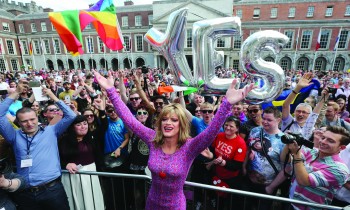
      Village champions equality: equality of outcome It was pleased to see gay people advance one step towards a particular equality with straight people, obtaining  the equal right to marriage. Ideally Village would take that equality further and extend it not just to the family based on marriage, gay or straignt, but to all families. That seems fundamental. Indeed, though people must make whatever private domestic arrangements best suit their circumstances, Village does not favour special state support for married people (as opposed to for children). There is no reason to favour families by taxation for example, especially if all they represent is a union based on love, as opposed to a commitment to open  a baby-making factory. The real issues that needed addressing  are the stresses that are placed on young  people between the  ages of 12, when, on average, gay people realise they are gay, and 21 when, on average, they ‘come out’. Anti-bullying campaigns and civic education are a crucial part of this. Certainly the juggernaut that  drove the Yes campaign will have helped generate discussions and an aura around homosexuality that can  only help to undermine such stresses. Important too  is  to inculcate in parents the importance of making it clear to their children, as a component of the love all parents feel for them, that they are as worthy and as loved whether  they are gay or straight. Particular efforts should also be put into campaigns to eliminate prejudice against lesbians and trans people. For Village the campaign often seemed intolerant. Of course it is good to be intolerant of intolerance. But it is a respectable, if – for this magazine – unattractive component of  many religions, including Catholicism, to elevate the roles of the family, of children and of procreation and to denigrate sex without marriage.  Nevertheless, civilisation does not require that Catholicism immediately surrender the integral edifice of Thomistic thinking that underpins it and move on an onward journey via tolerant Anglicanism to an admirable liberalism and onward to equality (of outcome, mind). No. Religion may be wrong-headed but democracy requires it be  tolerated. It was wrong for many liberals to impute homophobia as the driving motivation of the likes of the Iona Institute. Indeed it was suffocating to see that the Catholic Church seemed so fearful of defending its traditional Aristotelian, teleological view of Nature. In many ways indeed it seems the old societal certainties of Catholicism have been replaced with more practical though none the more compassionate certainties of Anti-Catholicism. The most important egalitarian imperative is to ensure that every child at two years of age has the prospect of being anything he or she wants to be. It is important that excellent education is available for all to compensate for, and help eliminate, the unfairnesses of background. Childhood deprivation and unequal opportunities should be eliminated as a priority by any regime for which this magazine would have any respect. Yet it is the priority for none of our political parties. Beyond this, Village believes that every policy and every institution should be assessed (‘equality-proofed’) for the extent to which it contributes to equality. The state’s principal role is to provide for equal quality of life for all of its citizens (and through sustainable development for that of future generations). The best method for evaluating equality is the Gini coefficient and it is shocking that so little is heard about it in the discourse in 2015, even from the parties of the Left. If Labour could point to year-on-year improvements in the Gini coefficient during its periods in government, there might be a reason to vote for it. Equality-proofing would be useful for any policy: for example the national development plan, departmental strategies and policies, local authority development plans, and all town and country planning decisions should be assessed for their impact on equality of outcome; and if they do not conduce to it , they should be changed. Institutions from the Trade Unions to Nama to Sinn Féin could usefully subject their policies and actions to a rigorous scrutiny as to what they tend to achieve for equality, as registered by the Gini coefficient. Finally. of course there must be practical application of abstract theories of equality. Certain spheres must be priorities. Any sector that has been discriminated against deserves measures to protect it against prejudice and indeed positive discrimination to reverse the prejudices of the ages. It is exciting to live in an age when so  much progress has been made on women’s rights, the rights of ethnic  minorities  and in rights  for gay people.  But there remains a slate of actions to right historical wrongs for these and other sectors. For Village the most  important sectors for attention are those  that get it the least. The rights of Travellers, of people with disabilities, of asylum seekers, of trans, of fathers, the standard of living of the working poor and the unemployed, and the rights  of future generations faced with  climate change and species collapse. Because it converges on, though never meets, a great human goal  the agenda of equality of outcome is a comprehensive one. Sadly the recent economic displosion and oncoming environmental cataclysm should have catalysed a radical shift towards more egalitarianism, and ultimately towards equality. Stringency, education, compassion, imagination and rat cunning are necessary virtues in its promotion, overt and otherwise. •

    Loading

    Read more

  • Posted in:

    Portuguese Parallels

    In 2011 Portugal was at the forefront of Europe’s anti-austerity movement. Yet, four years later, as elections approach in the Autumn, there is no chance of a Left government to ally with Greece’s Syriza or the recent municipal victories in Spain. What went wrong? And can Portugal return to the frontlines?

    Loading

    Read more