Archives

OK

Random entry RSS

Loading

  • Posted in:

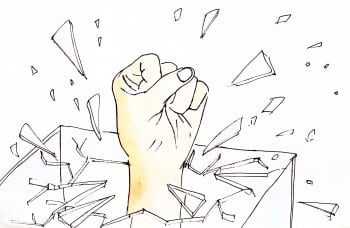
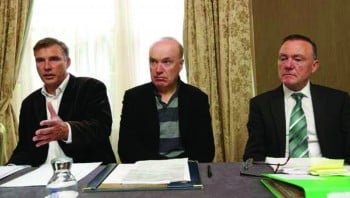
    Enough! The left needs to collaborate. By Frank Connolly.

    By Frank Connolly. The megaphone diplomacy involving prominent voices on the Left has brought some clarity to the task of preparing a common platform around which progressive parties, independent TDs, trade unions and other organisations and groups could unite in the months before a general election. At the Labour conference in Killarney there was a not unexpected but unhelpful and open hostility from the leadership towards Sinn Féin, the party most likely to dominate any such left formation or alliance in the next Dáil. The presentation of the James Larkin ‘Thirst for Justice’ Award to Belfast woman and rape victim, Mairia Cahill, was cringe-inducing, according to many of those in attendance, because of the overt politicisation of her trauma. Her case has been a cause celebre for many months for Independent Newspapers in its less than subtle political campaign against Gerry Adams, an irony not lost on many of those present. However, the overt criticism of Syriza by some Labour cabinet members was even more confusing for many delegates who might have thought that its historic election victory and forceful engagement with the EU over bank-debt restructuring could only be in Ireland’s long-term interests. Instead, prominent party figures have joined forces with the European centre-right as they seek to make domestic political capital out of the Greek crisis. The Labour Party appears to be in denial about its election prospects and is desperately clinging to the life-raft of potential Fine Gael transfers to save itself from oblivion. That may be the only strategy it has to emerge with more than 10 seats (from 34) but it has managed to alienate a large swathe of its left-wing support, internally and otherwise, in the process. In a wide-ranging speech to a fringe conference meeting SIPTU President, Jack O’Connor, enthusiastically welcomed the Syriza victory and suggested that its political agenda was not unlike that of Labour in Ireland over the past four years in government. O’Connor called on the party, of which he is a member, to pursue a progressive agenda for a society “in which all the services that are essential for the maintenance of a decent life, from healthcare to eldercare to childcare, through education, training, housing and the quality of the environment are available to citizens free at the point of use and funded through collective endeavour”. He called for the replacement of the Universal Social Charge with a social solidarity contribution that is spent on necessary health services, free third-level tuition, a greater role for public enterprise in job creation, and a referendum to prevent the privatisation of water, among other measures. He also called for dialogue with the Right2Water campaign, hundreds of whom protested in the rain outside the conference venue, an accelerated housing programme and a re-distribution of the burden of taxation from the lower paid to the wealthy. A day after the conference adjourned, Reform Minister Brendan Howlin proposed a new, public forum to consider proposals for pay, tax and spending as the economy recovers and preparations begin on Budget 2016 and for “an inclusive, societal debate about what a functioning modern economy looks like”. However, the outcome will be dictated by negotiations within cabinet and by what Fine Gael, and the wealthy people it represents, will seek in terms of tax cuts. Labour will be hoping that continuing economic recovery will allow for significant concessions to lower and middle income groups in the run in to the election. Either way, its leadership will have no truck with calls by O’Connor and Gerry Adams, as well as other voices on the Left, for a common anti-austerity platform, at least this side of the election. But for many members and supporters a return to the traditional values of Connolly and Larkin may be the only guarantee of the long-term survival of the party. As Sinn Féin delegates assemble in Derry this weekend (6th/8th March) they will also be tempted to reciprocate the attacks on their party in Killarney. For its leaders, the challenge of the coming months is the most significant since it opened the way to parliamentary participation in the south in the mid-eighties. To achieve their stated aim of a left-wing, or left-led, government Sinn Féin needs allies among the other independent left TDs, smaller parties, trade unions and progressive economic, cultural and non-governmental organisations. Time is pressing. Those who recognise the responsibility of the Left to provide an alternative to 90 plus years of centre-right-led administrations know that radical policies must also be credible ones, that every spending plan requires a source of revenue. It would be helpful if these could be worked out in a spirit of co-operation and dialogue among those who are serious and up for the challenge. Let’s see what happens. • Frank Connolly is  Head of Communications for SIPTU

    Loading

    Read more

  • Posted in:

    Facebook and me.

    By Alicia Garrigan. In a recent article in the Derry Journal the writer, Tiarnan McCarthy, describes coming across a tweet coming from an account titled ‘Worthless’. “If I ever ran away from home, I’m sure my family wouldn’t even notice”, it lamented. He notes that similar despair is “not in short supply”. He goes on: “After around ten minutes or so of Twitter surfing I came across another account from a girl who was “…so tempted to cut, but it’d be over the cuts from yesterday”. So she decided to “just live with the pain”. Another account, disturbingly contained the line, “…loves seeing blood drip down her legs”. And what shocked me even more were the accompanying images. Bleeding and scarred arms, collections of razors and even instructions on self-harm. Nine out of ten teenagers use social networks and over 57% of those have a Facebook profile. When I was younger social networks were not even a thought in kids’ heads until the age of 12 (13 being the legal age limit to sign up). But now children as young as nine seem to be getting profiles. I’m 15 years old now and social media are a massive part of my life as they are for nearly all my peers. From the minute we wake up in the morning to the minute we go to sleep we are using at least one social networking site. Popular social media sites include: Facebook, Twitter, Instagram, Pinetrest and the infamous Snapchat. A central part of the Facebook ritual is writing ‘statuses’ sharing with the world your views and opinions on certain topics, but then you find yourself anxious when the comments flooding in with negative attacks. As a teenager, the most self-esteem destroying part of the day is scrolling through social media sites, though you always enter the process expecting the best. Some of the appeal of social media is certainly harmlessly catching up on people’s lives and liking (or not) the photos and content they have shared with the world, but it’s also part of the kick that you find yourself judging everything you see. And being judged. You innocently upload a well-edited photo onto Instagram but wonder why it isn’t getting many likes, but rather rude comments. Threats, personalised hate pages and casual abuse by rumour are the currency of teenage social media. Soon you start to take it personally, to feel like you are in the wrong.  Worse still, in dealing with this, you start to wonder if you are good enough and may even find yourself reacting in depression to the nastiness. Being yourself online is laughed at nowadays and originality is rare. Your values come under threat and you find you are contradicting yourself to pacify the mob. Teenagers are so busy on their phones and computers they don’t have time to dwell on all this or on the repercussions of their behaviour on social media. According to Facebook, 55% of teens have given out personal info to someone they don’t know, including photos and physical descriptions, 29% of teens have posted mean info, embarrassing photos or spread rumours about someone and 24% have had private or embarrassing info made public without their permission. Sometimes I wonder why we bother committing ourselves online to the public but, adults and teenagers alike, we enjoy the addictive adrenalin rush of checking people’s response to our views, be it by email or on Facebook. And having the public profile has become the norm. Most people vilify cyberbullying as the main cause of depression amongst teenagers. From the knowledge I have about depression for teenagers, the main cause isn’t cyberbullying, it is in fact the way the media promotes vacant self image. Society and the media portray “perfect” as skinny, tall with flawless skin and silky hair. In fact the majority of the population aren’t supermodels and teenagers seem to lack this knowledge. You find yourself constantly wondering why you aren’t as pretty or as popular as the person you are looking at online, being influenced by strangers’ “perfect” flat stomachs and wishing you looked like them. The problem isn’t the medium, it is the message. Many teenagers have been brought up to be confident in their views, and ambitious in their expectations.  It is not surprising that they aspire to whatever the all-knowing media is telling them they should be even if their parents convey other messages. Teenagers are not adults and the underlying confidence they have built up over childhood can be easily knocked, and values learnt from home or school distorted. And of course it is part of being a teenager to care what people think about us.  Or even appear to think! All we want to be is accepted but social media make it so hard because most people don’t realise the effect the content they are posing online has on other people. Self-harm is one part of the problem, but lost esteem, originality and independence may be far more pervasive. And the education we receive from parents and in school, in parallel to this extra-curricular reality, does nothing to equip us to deal with it. •

    Loading

    Read more

  • Posted in:

    Fracture

    ‘Values’ clash with a ‘prosperity’ imperative in Ireland’s new foreign-policy framework. By Lorna Gold

    Loading

    Read more