Archives

OK

Random entry RSS

Loading

  • Posted in:

    Duping our ‘cherished’ 16-year-olds .

    By Niall Crowley. If Alex Fogarty was told one more time how mature he was he could really have claimed the right to violence. Alex, 15 years old we were told repeatedly, from the National Youth Council of Ireland was on the ‘Prime Time Debate’ on votes for 16-year-olds. He was up against Noel Howard of the Irish Association of Social Care Workers. We never got to hear Noel’s age. However, it was clear that his Association is no country for young people. In May we will vote on reducing the age a person can stand for the Presidency from 35 to 21 years – on the same day as the referendum on same sex marriage. The Government has said it cannot have too many referenda on the one day and its commitment to hold a referendum on reducing the voting age to 16 has therefore bitten the dust, been “abandoned”. Leaving aside misplaced concerns from the likes of Diarmaid Ferriter as to whether 21-year-olds exercise what they see as the requisite “wise discretion”, how could it possibly be more important to reduce the age at which one can stand for President than to reduce the age at which one can vote? A central political issue has been subordinated to a more obscure one. Noel Howard was full of concern. We don’t want to ‘adultify’ young people. This seemed like a stretchify of the English language. He was worried about the erosion of childhood. They will have plenty of time for voting when they are older he suggested. Politicians will exploit the idealism of young people with promises he argued. This ignores that promises are clearly the engine of our politics for all age groups. He expatiated reams on ‘children on the margins’ whom he felt don’t have the maturity, despite admitting that most of them had no childhood. Alex Fogarty, ever mature, pointed out that 16-year-olds can go out to work and are liable for taxes and wondered why they can’t vote. He suggested that allowing these children on the margins a vote is hardly negative and merely gives them the voice that they need. He said that giving a vote to 16-year-olds would ensure that politicians have to engage with young people. The Government has said this decision is not about electoral strategy. The case for change is so clear, the evasion of a referendum that they had already committed to so brazen, that it is hard to believe otherwise. They are afraid of what young people will vote for. If young people were predicted to vote Fine Gael and Labour the referendum would have been deemed a top priority. If young people were predicted to vote Fianna Fáil we would have had this referendum during the last Government. The National Youth Council of Ireland ‘Vote@16’ campaign makes a compelling case that giving the vote to 16-year olds would generate greater interest in politics among young people. It would promote their participation in politics and put the issues of young people, as defined by young people, onto the political agenda. Research in Austria suggests that 16- and 17-year-olds are every bit as politically sophisticated and indeed turn out in greater numbers than 18 to 21-year-olds.Ireland ratified the UN Convention on the Rights of the Child as far back as 1992. This committed us to ensuring the right of children to “express (their) views freely in all matters affecting the child, the views of the child being given due weight in accordance with the age and maturity of the child”. If we were in any way serious about this part of the Convention we would be giving the views of 16 year olds “due weight” by allowing them to vote. We prize youth. They are our greatest resource, we say. But we fear young people. We stereotype them as irresponsible, given to excess, and even violent, a worldwide survey last year in the Economist was headed: “Today’s young people are held to be alienated, unhappy, violent failures. They are proving anything but”. The media predominantly portray young people as a problem or as having problems. In fact it is not young people but youths that get coverage.The Economist survey notes subversively that “The media are struggling to cope with the rising temperance of youth”. If the coverage is not about crime or violent behaviour or binge drinking or teenage sex, it is about vulnerability due to lack of care or supports or being victims of physical or sexual abuse. This distorted generates and reinforces our stereotypes and reflects what we really think behind our patronising wonder at the potential of young people. This debate is about power and empowering young people. A vote is only a small step in this regard. It is shameful that we fail to take it. •

    Loading

    Read more

  • Posted in:

    Our top-heavy Arts Council.

    By Kevin Kiely. The 1951 Arts Act established the Arts Council and charged it with stimulating public interest; with promoting knowledge, appreciation and practice; and with assisting in improving standards in the arts. It is a voluntary body of 12 members and a chair, appointed by the Minister for Arts, Heritage and the Gaeltacht for a term of five years. The ongoing work of the Arts Council is delivered by the executive. In addition to the Director, a staff of 41 full-time equivalents carries out the daily functions of the organisation. Arts advisers, who provide additional expertise and strategic advice on different aspects of the arts, are retained on a consultancy basis. The 1973 Arts Act developed that role, particularly by increasing public access and engagement. The 2003 Arts Act reiterated the three key purposes of the Arts Council and re-calibrated the relationship between it and Government. It underlined the autonomy of the Council as the expert body for funding the arts, steering their development, and offering advice on arts and cultural matters. Its mission is to promote and develop the arts in Ireland.  It does this by: Supporting artists to make work of excellence; Enabling people to experience the arts; Working with partners and stakeholders; Advising and advocating. In 2014, the Arts Council commissioned an independent Steering Group to examine how it currently addresses its role and remit.  It has just embarked on a process to develop a new strategy for the arts in 2015. The Arts Council’s current Strategic Statement 2013 continues to guide the work and policies of the Arts Council. An interview in the Irish Times last year of Sheila Pratschke, Arts Council chairperson, suggests an awareness of a need to change though cynics may find the language suspiciously lacking in passion or innovation . “We need to conceive of our activities in a different way. We can’t keep shrinking to fit the budget. We have to be more imaginative and proactive. I would say that all of us in the arts sector have been talking to each other too much. We need to turn outwards, towards the citizen and the taxpayers, be more conscious of audiences and families”. Most of the companies and organisations who receive funding are urban-based, with more than 80 in Dublin city and county, 15 in Galway city, 17 in Cork city and nine in Limerick. Most smaller arts organisations get funding through their local county council. Funding for national cultural institutions. such as the National Museum and the National Library, is allocated separately and directly by the Department of Arts. The Oireachtas grant to the Arts Council in 1980 was £3m, latterly supplemented by lottery funding and steadily increased from £5.8million in 1986 to £16m by 1995. In 2000, it was €59m with increased staff levels and administration costs. In 2004 it was €55m. An Bord Snip Nua proposed in 2009 that “substantial reductions in expenditure on arts and culture were warranted given the large increases in recent years”. Reflecting this philistinism, between 2008 and 2011 the Arts Council lost 20 staff , down from 65 to 45. In 2010 the funding had been  €68m but by 2014 it was down to €56m. In 2015 for the first time in six years the Council did not suffer a cut in funding, most organisations have received similar amounts to 2014 from the council which is being allocated €56.7 million. In a typically artistically promiscuous and tiring statement the council said it was “mindful in its allocations to help position the arts to benefit from, and play a full part in, the national recovery”. There is a sense that funding is awarded to the same old faces.  When cuts were implemented it tended to be on the smaller, more precarious operations. Sheila Pratschke recognises this. “We give 80% in recurring funding and 20% in non-recurring funding. I’m sure the strategic review is going to challenge us with that almost autopilot recurring funding”. For 2015, the Abbey Theatre gets €6.2 million, a decrease of €300,000 on last year, after recording a profit of over €700,000 for 2013 and a likely profit for 2014. The Gate’s funding is €860,000, down from €908,000 in 2014. The theatre made a profit of €34,464 in 2012 and abridged accounts show a surplus for 2013.

    Loading

    Read more

  • Posted in:

    Decriminalise outdoor prostitution.

    By Sarah Benson. Buying sex is not illegal in Ireland. Neither is selling sexual services. The law protects these transactions as agreements between consenting adults. Some activities associated with prostitution are outlawed, however, as public order offences. These include curb-crawling, soliciting in public, loitering in public places, brothel-keeping and living off immoral earnings. Until passage of the 1993 Sexual Offences Act, most female prostitutes worked on the streets, but, since this time, brothels marketed as escort agencies have been the most prevalent form of prostitution. Advertising in print publications is illegal, but a very developed Internet market prevails. Last November, the Minister for Justice Frances Fitzgerald finally published the Sexual Offences Bill (the “Heads”) which will make buying sex illegal, finally. Ruhama recognises this legislation as a landmark step for the Government in the fight against exploitation of prostitution and sex trafficking. However, there is a gap in the legislation which, if filled, could enormously enhance the positive impact on the most vulnerable in prostitution; the policing of the Bill and the overall normative message about prostitution the Bill will convey to the public. The Heads of the Bill are extensive, running to 101 pages, and will undoubtedly evolve before becoming law. They cover many important areas including very welcome measures to address child grooming and exploitation and child pornography. This article will, however, focus on Heads 10 and 11 of the Bill: offences of purchasing sexual services. We have advocated for legislation to reflect societal compassion towards those prostituted for the sexual satisfaction of a small minority of Irish men. Only one in 15 men in Ireland purchase sex compared to far higher numbers in other jurisdictions. In Spain it’s one in three. And yet every day we witness the misery perpetuated by this small cohort, and the organised criminals who are largely responsible for ensuring that there are sufficient women available to service them. Minister Fitzgerald stated of Heads 10 and 11 when launching the Bill: “I strongly believe that this proposal…sends a clear message that purchasing sexual services contributes to exploitation… The proposal … reflects an All-Island consensus to targeting the predominantly exploitative nature of prostitution”. This gives a strong indication of the intention to protect the most vulnerable. The sentiments echo those of the Joint Oireachtas Justice Committee that produced the report unanimously recommending legislation addressing the demand for prostitution (the buyer) and the problems of organised crime (pimps, traffickers etc). The statement accompanying the launch of the Bill clearly states that, in respect of any offence for purchasing sex: “The persons selling the sexual service will not be subject to an offence”. This will protect those in indoor prostitution, but there is a need to repeal the soliciting offence for selling sex in on-street prostitution contained in the 1993 Criminal Law (Sexual Offences) Act. Similar legislation in Sweden, Norway, Iceland (known as the ‘Nordic approach’) and in Northern Ireland where it has just been introduced, criminalises the buyer while also taking the critical step of explicitly decriminalising those vulnerable persons working in prostitution. This is on the premise that no one should face conviction for their own exploitation. Irish law will not truly reflect the ‘Nordic approach’ if those in prostitution on the streets are not also protected from criminalisation. The Human Trafficking and Exploitation Act in Northern Ireland, included a declaration that those in prostitution are not liable for an offence for selling sex, and also repealed the existing soliciting offence for the ‘seller’ in on-street prostitution. The law importantly maintains the ‘kerb-crawling’ offence. There was cross-party support there for the provision. The approach of targeting only the buyer in an ‘on street’ setting in the Republic has already proved effective in practice in North Dublin. Through ‘Operation Kerb’ Gardaí in Dublin 7 targeted sex buyers ‘on-street’. At the same time they took a more compassionate approach to vulnerable people in prostitution. Rather than arresting women Gardaí engaged with them and made referrals to local drugs projects, support and health services (if women themselves requested this). This approach had the positive impact of supporting the sharing of intelligence from women who felt more empowered to speak to the Gardaí about a number of violent offenders targeting those in prostitution. Making the law clearer in its express intent to tackle demand and protect the vulnerable would support expanding efforts by An Garda Síochana nationally to work from a human rights perspective with persons in prostitution, indoors or outside. • Sarah Benson is CEO of Ruhama

    Loading

    Read more

  • Posted in:

    Media diversity delusion.

    By Gerard Cunningham. The Bell Telephone Company was born out of the great communications revolution at the end of the 19th century, and dominated the American business landscape for a century, until it was broken up by the US Justice Department in 1984. In its place, the ‘Baby Bells’ were left to compete both with each other and with new upstarts entering the no longer monopolistic marketplace. The resulting competition has been credited with multiple innovations in communications technology including mobile wireless service, fibre optics, microprocessors, internet protocol, Wi-Fi, landline broadband, and wireless broadband. It’s difficult to imagine the same break-up happening today. Ronald Reagan may be venerated by US neo-conservatives, but they show little inclination to prevent monopolies forming, still less to break them up. The prospect of any White House administration (either Democratic or Republican) trust-busting a modern communications giants such as Google or Apple is slight. Any justice department plan to do so would quickly be vetoed by the West Wing. The same reluctance may be behind the slow-motion roll-out of proposed guidelines on media mergers in Ireland, with the political will blunted even more by the target, the media outlets which can make or break political careers by the tone of their coverage. An advisory panel was first set up to look at media mergers in March 2008. The Competition and Consumer Protection Act puts the recommendations of the group into law, and moves responsibility for media mergers away from Jobs, Enterprise and Innovation to Communications and Natural Resources. Submissions on the draft guidelines under the act are invited before 22 January 2015, but in truth, the entire effort is a soaking squib. In a speech in early 2012, the then minister Pat Rabbitte spoke about media diversity at a conference organised by Nessa Childers MEP. But unlike recently retired Press Ombudsman Prof John Horgan, who last May identified the elephant in the room in any discussion on media in Ireland as ownership concentration, Rabbitte identified a different species of elephant: the internet, one conveniently for him whose regulation he could do little about. Rabbitte’s speech, which was long on the business difficulties facing media owners both from recessionary markets and new online competitors, said little beyond broad statements of principles about how media diversity might be ensured, save that it required both diversity of ownership and diversity of content. The draft guidelines, prepared by a new minister, follow much the same tone. “Significant interest” in a media company is defined (“generally” as more than 20% of voting strength, although it “may” be significantly less, at 10-20%). The Minister can turn down a proposed merger if it is “contrary to the public interest in protecting plurality of the media”. However, importantly, there are no iron-clad definitions of what constitutes “significant interest” across multiple media organisations. And of course – conveniently for Denis O’ Brien – the Fine Gael-led government didn’t even consider making the legislation retrospective so ensuring diversity under the status quo would be assessed. It’s very definitely about ‘mergers’ not ‘ownership’. History suggests this will lead to a benign regime of non-regulation. Ownership regulations laid down when local radio was legalised and licensed were progressively stripped away over the years as media groups accumulated properties. The Broadcasting Authority of Ireland decided in 2012 that there was no reason to investigate whether Denis O’Brien, owner of several radio stations and major shareholder in Independent News and Media, had excessive influence. There is little evidence of any political will to stop the same process continuing in and across Irish media today. When the final decision is made by a minister, whether Alex White or his successors and not by a politically independent statutory regulator (though the Broadcasting Authority of Ireland advises), the chances of upheaval are even less likely. At the heart of this non-regulation is a singular failure of will. Rabbitte noted in 2012 that with diversity of content essential to ensuring that the full spectrum of views, interests and concerns prevalent in Irish society is represented fully in media. “This plurality is the key metric – and the one that should concern us most”, Rabbitte intoned. But by not defining the “key metric” in the legislation, the government has ensured that any concerns over future merger proposal can be fudged. In this respect, the internet is a handy scapegoat. Don’t be surprised to hear mergers defended with arguments to the effect that a newspaper/broadcasting consolidation cannot pose a threat to diversity of content, because anyone with a smartphone can set up a blog. •

    Loading

    Read more

  • Posted in:

    Meat causes flooding.

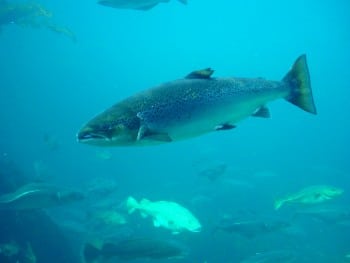
    By Cathal O’Meara. Landscapes that support extensive meat and dairy farming are dramatically damaging our rivers and contributing to flooding in our towns and cities. Globally livestock accounts for 70% of all our agricultural landscapes and contributes more greenhouse gasses (18%) than the entire transport sector (12%). However, our livestock-dominated landscapes are having their most significant impacts not on climate but on our rivers and watercourses. Current flood-relief schemes in Ireland appear to exemplify a linear pattern of thinking about watercourses. Recently completed schemes in Fermoy and Mallow, on the Munster Blackwater, treat the towns in isolation from the catchment of the rivers that periodically flood them. This, however, is addressing the symptoms without considering the cause, of flooding. Landscape policies that encourage and subsidise livestock are compounding flooding nationally, remains rarely discussed, the opposition cowed. Soil compaction, and faecal matter runoff due to overgrazing and overstocking in the Blackwater Valley Much of our uplands are maintained in a state of arrested ecological development where grazing, often combined with annual burning of the vegetation, is used to retard the development of vegetation that is unwelcome (from a livestock perspective). This is despite the fact that the productivity of these lands is so marginal as to render them unworkable without grant aid. Often vegetation in these uplands remains below half a metre tall for the limited grazing benefit of sheep (and deer). Policies that promote cattle or dairy cows on better-quality “improved” land prevent us from realising the potential of a sustainable forestry policy. A recent study undertaken by the Centre for Ecology and Hydrology in Wales found that: “Water sinks into the soil under trees at 67 times the rate at which it sinks into the soil under grass”. A series of studies undertaken by various bodies including the Department of Environment and Cork County Council concerning the water quality of the Blackwater River, as well as similar work undertaken by the Department for Environment in Britain all come to the same conclusion that “animal trampling” (soil compaction) and “intensive cattle grazing” pose a risk to the “riparian areas and to the water channel itself”. The risk is multifaceted and includes intensified sedimentation from increased runoff of rainwater due to soil compaction and also from increased nutrient content within the water itself from the faecal matter of cows, leading to eutrophication of the water. Recent Cryptosporidium outbreaks nationally highlight the dangers of untreated human and animal waste. There is a further complication with livestock due to the growth of maize to supplement the diet of cows and cattle. Maize, which is increasingly being grown here, is harvested in the autumn – leaving the soil bare during its most critical time, the winter months. Without vegetation there is little capacity for the soil to retain water and the winter rains wash the sediment into the rivers. A 1998 Study by Morgan et al estimates that this loss of soil can be as significant as several tonnes per hectare, per year. Drainage schemes throughout river catchments in Ireland complete this picture. The remit of the Office of Public Works (OPW) under the 1945 Drainage Act empowered it to carry out drainage of agricultural land. Under the 1995 Act the OPW was charged with the protection of urban areas subject to flooding. However, both of these issues arise from the same logical fallacy. The desire to increase the speed of water flowing from the land and through the rivers has increased the propensity of our towns to flooding. Recent inspiring projects are being undertaken internationally that aim to slow down the speed of water flowing through our landscapes, seeking instead water-attenuating solutions. ‘Room for the River’ is a Dutch Government programme that seeks space to allow the callows and lowlands to flood. ‘Adaptive Land Use for Flood Alleviation’ in France seeks to create sacrificial wetland landscapes upstream of Paris on the River Seine to prevent downstream flooding. How can we use these concepts for reinvigorating rural Ireland? Perhaps we need just to look to Mayo where the success of the recently completed Greenway provides inspiration. We could add to this a network of campsites, horse-riding bridle paths and walking trails along our river valleys. Our growing agri-food sector and craft breweries would benefit from this expansion of rural tourism. We could go further and reintroduce the wolf, ensuring not only increased rural tourism but also increased biological diversity, as the wolves would maintain the deer populations at sustainable levels. We could also combine this with agriculture looking instead to different models of lower-intensity silvopastoralism and locally-grown organic production instead of a one-size fits all beef or dairy model. However to do this we may first need to challenge the sacred cow in Irish agriculture. • Cathal O’Meara is a chartered landscape architect and runs the practice www.cathalomeara.com

    Loading

    Read more

  • Posted in:

    Universities no longer encourage intellectualism.

    By Donncha O’ Connell.   Academics exist professionally in universities and work within academic units, usually within one unit of primary affiliation like a Faculty, Department, School or Centre. Thus, after announcing that one is an academic, the reflexive, almost existentialist, response is: ‘What Department are you in?’ Immediately, one is defined by one’s departmental specialism, reflecting the organising principle of universities once memorably described as a series of independent sovereignties linked by a heating system. Universities have for some time embraced what Anthony T Kronman calls a ‘research ideal’, founded upon disciplinary specialisation having moved from a culture of ‘secular humanism’, which itself had replaced an ‘age of piety’ and the scholastic tradition. It is arguable that the embrace of the so-called research ideal has entailed an abandonment of scholarship or, at least, a diminution in status of individual scholarship that is not quantifiable as research. How many times have you read university policy documents with phrases like: ‘The University is committed to inter-disciplinary, collaborative research on an inter-institutional basis while respecting individual scholarly endeavour…going forward’. For ‘respect’ read ‘tolerate’ and note the unsubtle construction of a new norm understandable by reference to the eccentricity that it replaces…going forward! It could, of course, be argued that this ‘new’ research ideal involving collaboration across disciplines and between institutions is exactly what is needed to turn academics into higher functioning public intellectuals ranging freely across disciplines without frontiers, although no one would be so naive as to say this. To make such an assertion would miss the point of such research, as orchestrated through competitive funding bids, and would also miss the point of what it takes to make a public intellectual. In Ireland, third-level research funding initiatives have been preoccupied with establishing and building a research infrastructure and contributing to ‘the knowledge economy’ or ‘the smart economy’. There is nothing intrinsically wrong with this. In fact, it makes good business sense to blue-skies philanthropists and, perhaps, to hesitant state funders. However, there is an undoubted bias in favour of natural sciences and engineering of various kinds in such core funding drives that confirms and embeds a pre-existing weakening of the humanities, broadly understood, in the third-level sector. The implications of this for the intellectual life of a university are obvious. Irish universities and ITs have bought into an emphasis on added-value research – with all of the connotations of ‘excellence’, in the Orwellian sense, that this entails – leaving them open to the risk of becoming the R&D wing of the state. This is not as monopolistic as it sounds when one considers the emphasis on partnerships with industry, but that hardly lessens the cause for concern in terms of independence and the sharing of public benefits of such applied research. Education, at all levels, must be more than an instrument of state industrial policy. Universities have a moral purpose beyond the imperatives of flexibility and institutional survival. For those of us who work as academics in universities, it is vital to re-establish an open and pluralist appreciation of what it is to be a good academic. By that, I do not mean that what passes for good teaching should be patronised with awards, or that the happenstance of wider community benefits that leak out of universities should be branded or sold as commodifiable ‘civic engagement’. It should still be possible to be a good academic – and, therefore, a successful one – by inspiring others to learn through scholarship grounded in a genuine passion for one’s subject, whether broad or narrow. That should be the ‘key performance indicator’ and not whether, in a survey of opinions, nine out of ten student ‘customers’ who expressed a preference said your course met their expectations or that they liked you. It is harder to measure, in numerical terms, the success or failure of an academic according to this more open and pluralist set of requirements, but it is an infinitely more meaningful standard and, surprisingly, harder to manipulate than what passes for performance evaluation now. Restructuring universities: ‘smaller numbers of larger units’ Any individual who served a period as dean during the recent period of university restructuring, and thus bears a commensurate level of emotional scars (visible only to other deans!), probably sympathises and agrees with the desire to make academic units more manageable and more connected to an agreed university mission. However, there are some who remain unconvinced that this can be achieved by melding barely cognate units. The other reason put forward in favour of mergers was that levels of inter-disciplinary academic activity would increase. This seems both fanciful and disingenuous, especially in the cases of Law and Commerce. Most universities opted for ‘melding’ Law and Commerce. Law, my own area,  is an ancient discipline that draws on and is open to other disciplines. It can be intellectually rich and is, undoubtedly, a source of monetary riches to universities and other institutions offering law programmes. It also attracts students who are often as animated by the desire to be rich as the desire to do justice. (In this it differs little from vocations like Medicine or Dentistry where the opportunities for doing justice are obviously weaker!). In a world where knowledge is (allegedly) power, legal knowledge can also be a ticket to power—the ideal of ‘a government of laws and not of men’ permitting distinct advantages or privileges to ‘legal men’ – a most apposite observation in the case of the US. In fairness to legal academics, they are no strangers to the public square, but it does not follow that they are more likely than other academics to be public intellectuals, despite the utility of their discipline and its broad relevance to public affairs. The usual role for a legal academic commentator, whether in the written or broadcast media, is to explain or comment upon the outcome of a case or some legislative proposal. In the US this can earn one minor celebrity status depending on how ‘colourful’

    Loading

    Read more

  • Posted in:

    A cause to freeze for.

    By Oliver Moore. Berlin in January is a very cold time to have a demo. Yet 50,000 people – about the same number as attended Dublin’s biggest water protest, the zenith of Ireland’s opposition to long and oppressive austerity – marched the frosty streets that month not for a high profile march against cuts or Islam, but rather to march against food. The Wir Haben Es Satt, or “We are Fed Up” protest attracted 80 tractors and 120 organisations to demonstrate against the globalised, industrialised extremes of the food system. Germany is not known for its protests, and 50,000 is 20,000 more than the previous year’s event. This was one of the biggest protests in Germany in decades. The 80-tractor bit is interesting too, especially for an Irish person: these events are often, especially when held in very urban countries like Germany, seen as for naïve city types who don’t know farming. There may of course be an element of truth in this. However, as one of the organisers, organic farmer Jochen Fritz pointed out, when 75% of the pig farmers who were in business in 2000 are now gone, something has to give. Farmers for business as usual is a bit like turkeys voting for Christmas: even the organic ones get slaughtered in the end. A recent high-profile publication in one of the world’s leading journals Science gives us some background. Rockstrom conceived idea of planetary boundaries. That’s the safe operating space for humanity, or the earth’s natural carrying capacity for certain practices. In these areas – climate change, biochemical cycles (nitrogen and phosphorus) biosphere integrity (biodiversity loss and species extinction) and finally land-use change – we are exceeding our carrying capacity. Climate change and biodiversity loss were considered by the team to be core boundaries defining the future. EU agri-food will reduce its climate change impact by 1% by 2020, yet we need global decarbonisation of 80% by 2050 to prevent runaway climate change. An area in the Baltic Sea sometimes rivalling the size of Germany is stubbornly covered in a polluting algal bloom thanks in large part to the excessive nitrogen and phosphorus levels industrial pig farming off-loads there. Agri-food with its land-use, processes and pesticides, undermines biodiversity. Species are disappearing at between 100 and 1000 times the natural extinction rate. The Food and Agriculture Organisation of the UN classifies 80% of fish stocks as “fully or excessively depleted”. Scientists asked for a 20% reduction in the EU fishing quotas. What happened? A 5% increase was granted in January. There are socio-economic measures of agri-food’s poor performance but exceeding planetary boundaries is a solid indicator. TTIP – the Transatlantic Trade and Investment Partnership – was credited by organisers as bringing the extra thousands out onto the streets this year. Ostensibly about trade, many civil society organisations fear TTIP is more about a race to the bottom for food standards, where the lowest standard becomes the norm. This suits corporations but not threatens citizens’ hard fought labour, health and environmental standards. TTIP is inimical to national standards. To take a relevant example, the EU’s precautionary principle is seen as a barrier to equivalence, or harmonisation, of pesticide rules between the EU and US. Europe adopts a precautionary approach to pesticides, while in the US proof has to be provided that damage is being done. While currently pesticides like paraquat, and many class 1 organophosphates are not allowed in Europe, a recent report highlighted 82 potential new and very strong pesticides that would come on the market in the EU, were the US standards to be applied. There is evidence that a regulatory chill on, for example, endocrine disrupting pesticides is already happening in the EU, simply because legislators anticipate TTIP coming into effect. It is interesting to see how these issues morph into each other. Walter Haefeker, President of the European Professional Beekeepers’ Association, spoke from the stage about TTIP because he feared the EU’s partial ban on bee-killing pesticides (neonicotonoids) is under threat: already “the manufacturers in question do not accept even the current temporary partial ban and have initiated legal action against the EU Commission at the European Court of Justice”, he said. One of the main provisions in TTIP is to make it easier for companies to sue governments or the EU potentially in Investor State Dispute Settlements (ISDSs). Indeed this partial neonicotonoid ban has been specifically cited by US negotiators as problematic for regulatory harmonisation. It is worth remembering that, while 97% of replies to a recent EU consultation were against either TTIP or ISDSs most lobbying on TTIP is by the corporate sector, the biggest component of which is agribusiness and food. It’s definitely a cause to march for. What happened to the environmental movement, and its marches, in Ireland? • Dr Oliver Moore works for UCC’s Food Business and Development Department

    Loading

    Read more

  • Posted in:

    New data show wealth tax good for €200m a year.

    By Micheál Collins. Despite its prominence in various public policy discussions over recent years, detailed information on wealth in Ireland has been sparse. For the most part discussion on the distribution of wealth, and concepts such as a wealth tax, were based on hunches and guesstimates or assumptions that the wealth distribution must have in some way resembled the income distribution (at least as unequal and probably worse). Finally, that has changed with the publication in late January of the results of a new survey from the Central Statistics Office (CSO) – The Household Finance and Consumption Survey (HFCS). The HFCS is part of a European initiative to improve countries’ knowledge of the socio-economic and financial situations of households across the EU. For the first time, its results offer robust information on the types and levels of wealth that households in Ireland possess. The data were collected for 2013. Overall, the level of household net wealth in Ireland amounts to €378 billion. The CSO’s net wealth measure includes the value of all assets (housing, land, investments, valuables, savings and private pensions) and removes any borrowings (mortgages, loans, credit card debt etc) to give the most informative picture of households’ wealth. On average the results imply that Irish households have a net wealth of almost €225,000 each. However, averages are very misleading for wealth data, as they are skewed upwards by high wealth households. Looking closer at the data, the CSO show that the bottom 50% of households have a net wealth of less than €105,000. While there is much analytical work yet to be undertaken on this new data, the initial results offer some details on the distribution of wealth across society. Firstly, there is some wealth present across most of the population – 95% of households have some ‘real assets’ such as houses, land, business wealth, vehicles and valuables and 90% have some ‘financial assets’ such as savings, investments and private pensions. Of course, the scale of wealth that households possess in these assets differs. Comparing net wealth across the income distribution, the HFCS results show that those in the top 20% of the income distribution possess 39.7% of all the wealth – this is the same sum as those in the bottom 60% of the income distribution. Net wealth also has an unsurprising relationship with age – it is lowest for younger households and increases to a peak between the ages of 55-64 before declining in retirement. Across the various household types that the CSO examined, those with the lowest wealth were single parents, the unemployed and those under 35 years. The data also offer an insight into the composition of households’ wealth across Ireland. 36% of households own their home outright (no mortgage), and 34% own their home with a mortgage. 11% of households own land, many of these are farmers whose land carries a high value, though for the most part the income return from this land is relatively low. More than 88% of households have some savings and 82% possess a vehicle. 61% of households have some valuables and 20% have wealth in the form of a business which they own and work in. Unfortunately, the new data are less than comprehensive on pension wealth – capturing only those with private voluntary pensions (10% of households) and do not record those with entitlements to pensions which will flow from a collective pension pool or other source which is not explicitly owned by any member of the household. As such the data miss the value of pension wealth for those with defined benefit entitlements and the pension entitlements of most of those working in the public sector. Knowing all of this about the levels and composition of wealth in Ireland brings new light to the recurring discussion about the broadening of the tax base and the potential for a wealth tax – a topic that is bound to reappear in various debates and discussions this side of Election 2016. Using the indicative data contained in the CSO report (there are more detailed data to come in the months ahead), it is possible to consider the shape of a potential net wealth tax and the quantum of revenue it could raise. A wealth tax which excluded people’s homes, farmland, vehicles and pension savings would exclude between €260bn and €300bn of the overall net wealth of households. The remaining €78bn would be the tax base and were wealth taxed at a rate of 0.5% it could raise approximately €400m per annum for the exchequer. Such a tax would fall on wealth in the form of investments in property, shares and bonds alongside business assets and savings. Further exclusions of assets, or the (realistic) introduction of wealth thresholds below which a liability would not arise, would reduce this potential revenue further. Overall, it is hard to imagine an annual recurring revenue flow from a 0.5% wealth tax of more than €200m – a not insignificant amount of money, but not the silver bullet that would close the gap between current levels of taxation revenue and those required to sustainably fund the demographic demands and public service improvements needed in the years ahead. It is clear from the new wealth data, that most household wealth in Ireland comprises family homes, farm land, the ownership of businesses, investment property and to a lesser degree valuables (jewellery, antiques and paintings) and savings. In terms of any reforms to current taxation policy, there seems to be merit in revisiting the structures of inheritance taxes (Capital Acquisitions Taxes) and in particular the generous thresholds and exemptions that facilitate tax-free inter-generational transfer of large amounts of wealth. A reformed CAT combined with a property tax, an appropriate taxation of capital gains and a progressive income tax system are necessary ingredients in any further broadening of the tax base. As the new CSO data show, there is a lot of wealth and wealth inequality in Ireland. Now that we finally (after many years of waiting)

    Loading

    Read more