Archives

OK

Random entry RSS

Loading

  • Posted in:

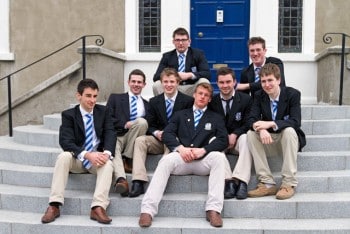
    Ah, lads.

    Private educational privileges. By Niall Crowley The current defence of inherited privilege in the debate about the Education (Admissions to Schools) Bill is ugly no matter how you dress it up. There is the call to ethos and tradition, the soothing reassurance that this is not about excluding the disadvantaged, and the satisfying flexing of legal muscle and ‘contacts’. There is the inevitable support of the Catholic Church. The Bill requires schools to implement an admissions policy that respects “principles of inclusion, equality and the right of parents to send their children to a school of the parents’ choice”. That seems right and proper. An accompanying draft regulation sets out that, where there are more applicants than places available, priority may not be given to a relative of a former student of the school. Schools are allowed to seek a derogation from this which would allow no more than 25% of available places in any school year to be filled by application of a past-pupil criterion. The Joint Oireachtas Committee on Education and Social Protection found this derogation too generous. They suggested it was “unclear as to why the relevant percentage was set at 25%” and that “there should be no such derogation, and that a school should not be permitted to give priority to a student on the grounds that he or she is the son or daughter of a former student of the school”. The Catholic Church rushed to the barricades. The executive chair of the Catholic Schools Partnership stated: “We are strongly of the view that admissions should not be dealt with by legislation”. The elite ranks of the privately educated then moved in. The ‘Unions’ of past pupils of some fee-paying schools took up the cause. This was despite their schools still being able to protect privilege behind the barrier of high fees. They did so without consultation with their alumni ‘members’ on the assumption that this defence of inherited privilege would inevitably be supported. The Belvedere Union wrote to its members, “This isn’t just a threat to us, it is a threat to all schools in the country who rely on the goodwill, generosity and buy-in of past pupils”. Money in other words is the tradition, to be defended. The Blackrock Union wrote to its members: “Blackrock College has operated a fair and transparent admissions policy without unjust State interference” and “The admissions policy has engendered a positive community spirit through many generations of ‘Rockmen’ and has never before been so unjustly challenged by the State”. Transparent: perhaps, but fair? On what definition? Gonzaga Union sought to “maintain its autonomy in admission policy” but “this should not be interpreted as a desire to foster privilege or exclude pupils from entry to Gonzaga”. But – whatever the desire – it patently is about privilege and exclusion. A discrimination case taken by a Traveller woman whose son was not admitted to Christian Brothers High School in Clonmel has recently ended up in the Supreme Court. The complaint was about the school’s policy of giving priority to students whose fathers were past pupils. It was pointed out that Travellers were statistically much less likely to have a father that attended secondary school. Only 10% of that child’s parents’ generation progressed to secondary school compared to 66% of the general population. The Equality Tribunal found this policy to be discriminatory, though the High Court overturned the decision – and the Supreme Court decision is awaited. A 2009 ESRI study on the integration of pupils in schools considered the effects of admission practices and polices on the distribution of ‘newcomer’ pupils across schools. Some of the selection criteria applied by schools were found to exclude newcomer pupils including giving preference to those applicants with siblings already in the school and to children of staff or past pupils. This was already leading to a level of segregation at primary level. Those most engaged in this defence of inherited privilege are fee-paying schools which couch their defence in terms of autonomy and freedom from state interference. This is principle-free self-serving selectivity, given their equally stout defence of state interference when it comes to any challenge to the €100 million annual subvention to these schools – from the state. Education is the engine of equality. Particular scruple is required to avoid the privileged perpetuating their privilege through weasel words that underplay the signicance of exclusionary practices in private education. •

    Loading

    Read more

  • Posted in:

    Germany’s unwavering ambition.

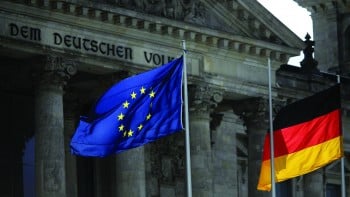
    By Anthony Coughlan. The EU establishes a post-war arena where European Nation State interests continue to work themselves out. Take Germany for instance. That great realist Germany’s own Otto Von Bismarck once said:  “I have always found the word ‘Europe’ on the lips of those powers that wanted something from others which they dared not demand in their own names”. The myth of origin of the European Union is that it is a peace project to prevent wars between Germany and France – as if a collective tendency to go to war were somehow genetically inherited. Historically in fact the EU’s origins lie in war preparations. The first step towards supranational economic integration in Europe, the European Coal and Steel Community of 1951, was to facilitate German rearmament at the start of the Cold War between the USA and its allies on one side and the USSR and its allies on the other, and to reconcile France to that fact. The USA wanted a rearmed West Germany inside NATO on its foundation in 1949. This greatly alarmed France, which had been occupied by Germany just five years before. Jean Monnet was America’s man in the affair. To assuage French fears of German rearmament Monnet drafted the Schuman Declaration proposing to put the coal and steel industries of France, Germany and Benelux under a supranational High Authority as “the first step in the federation of Europe”. The EU celebrates the anniversary of this Declaration each year as “Europe Day”. In his memoirs French President Charles de Gaulle characterised the ambitions of the first President of the  European Commission, Walter Hallstein, for Germany and the then European Community as follows: “ I think that if in his own way  Hallstein is a sincere ‘European’, this is only because he is first of all an ambitious German. For the Europe that he would like to see would contain a framework within which his country could find once again and without cost the respectability and equality of rights that Hitler’s frenzy and defeat caused it to lose; then acquire the overwhelming weight that will follow from its economic capacity; and, finally, achieve a situation in which its quarrels concerning its boundaries and its unification will be assumed by a powerful coalition”. Forty years later a major shift in Franco-German power, Germany’s reunification in 1991 as a side-effect of the collapse of the USSR, led the two countries to establish the European Economic and Monetary Union and its single currency, the euro. The increase in Germany’s size and population consequent on its reunification greatly alarmed France. But France possessed nuclear weapons, which the reunification treaties debar Germany from having. The deal between the two of them, set out in the 1992 Maastricht Treaty, was EU Monetary Union for Political Union or, put crudely, the Deutschmark for the Euro-bomb! Germany would give up its national currency, the symbol of its post-war economic achievement, and share the running of a new supranational EU currency with France, while France agreed to work jointly with Germany towards a supranational EU political union with its own common foreign, security and defence policy, and in time a common EU army. This would give Germany a central role in running a potential EU world power, with its finger eventually on a European nuclear trigger. France in turn hoped the euro would give it a political lock on Germany. A Franco-German army brigade, with joint officers and a joint command, was established simultaneously as symbol and prototype of the EU army of the future. France and Germany are often said to share a common interest in being joint motors of the EU integration “project”. As Charles De Gaulle once remarked: “Europe is France and Germany. The rest is just the trimmings”. But Chancellor Helmut Kohl, who pushed through the euro in face of a reluctant German public opinion, was less bifocal: “The future will belong to the Germans when we have built the House of Europe. In the next two years we will make the process of European integration irreversible. This is a really big battle, but it is worth the fight”. Germany’s post-war political elite saw economic success as the way back to great powerdom. The Eurozone allows Germany free rein to pursue a mercantilist strategy of seeking export domination (“Export Weltmeister Deutschland”) by enjoying a significantly lower currency exchange rate with the euro than it could enjoy on its own were it to retain the Deutschemark. This is a consequence of the internal imbalances within the Eurozone whereby Germany, with its persistent trade surpluses, can avoid an upward currency revaluation and thus enjoy a stimulus to its export economy, while countries like Italy, Spain and France, with persistent trade deficits, cannot enjoy a downward currency devaluation and are thus condemned to permanent economic stagnation domestically. This grounds the Eurozone austerity regime we now live under. In 2009 inflation-obsessed Germany amended its Constitution to adopt a balanced budget regime forbidding the Federal Government from running a structural deficit – that is, a surplus of government spending over government revenue leaving aside the cost of national debt service – of more than 0.35% of GDP in any year.  Chancellor Merkel then pushed the Stability Treaty embodying a similar rule on the rest of the Eurozone.  Irish voters adopted this by constitutional referendum in 2012. The Stability Treaty is a constitutional ban on Keynesian-style deficit budgeting by EU governments. It means that Ireland and the other Eurozone States are legally bound to balance their budgets or run budget surpluses each year. It ordains that the maximum underlying gap between public revenue and public spending, excluding debt interest, which a national Government can have in any one year is 0.5% of GDP if its total debt is over 60% of GDP. Ireland’s national debt is currently double that. The treaty requires national debts of over 60% of GDP to be reduced by one twentieth of the excess each year. On 1 November this year

    Loading

    Read more

  • Posted in:

    Unleash the Irish park.

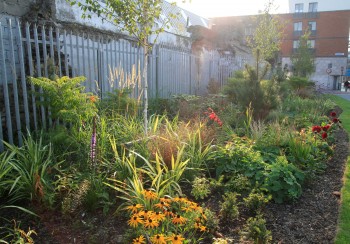
    By Hayley Farrell. Dublin is the 21st greenest out of thirty leading cities in Europe according to the 2010 Green Cities Index. London is in 11th place and Berlin, with an impressive 40% percent parks cover, is Europe’s eighth greenest city. Scandinavian cities occupy the top three places of the ranking. Dublin has a modest 17% parks cover. Walking around London, you’ll stumble upon countless small pocket parks, squares and green spaces. Some of these resemble a courtyard you might find in an apartment complex or attached to an up-market hotel. The prevalence of parks and squares as places to rest, congregate and take stock is an important aspect of any city experience. Pocket parks work with our climate, providing cosy rest areas to allow shelter from the skittish elements. They also help distinguish one street from the next. Arriving into Dublin from the south you might consider the city to be rich in green spaces, as most of the central parks are located to the south of the city; the added bonus of Trinity College providing a significant open green space. It is only when you cross the river into the north inner city that you are struck by the absence of open space and particularly of green spaces. Chancery Park beside the Four Courts represents the only open green space with a place to sit along the LUAS line before reaching the Phoenix Park from Connolly and the Docklands. This part of the city does admittedly pose some challenging social issues. Despite expectations, the new temporary park at North King Street has been largely devoid of anti-social behaviour. The park has not attracted vandalism or become a haven for substance abuse as predicted. It is therefore  proving a successful landscape-planning trial site. Several derelict sites along the Luas would make ideal locations for small pocket parks or interim parks in the north inner city between Smithfield and the Docklands. These pocket parks need not take up more than the size of an average private city garden to open up a space onto the street, though the larger the park the greater the need for surveillance. Blessington Street Basin, a modest-sized hidden gem close to the Mater Hospital benefits from the presence of parks staff in a depot located in a small cottage on the site. Temporary structures attended by parks maintenance staff, art studios and café kiosks could provide comforting presences within these spaces. In Seattle, through the city’s Land Use Code, they have been actively encouraging the creation of POPS – Private Owned Public Spaces, for several decades. POPS are accompanied by incentives to construct and maintain them on their property. Developers are given additional development rights, often additional permitted building height. The spaces range from rooftop gardens to raised beds with seating similar to the new landscaped promenade in Dún Laoghaire. Some are passive, some active, but all are open to the public with their owners responsible for their maintenance. POPS should not replace parks but can help encourage developers to consider the relationship of office blocks with the streetscape and complement dense development.  Incentives need to be considered for the reinvestment and upkeep of such  spaces lest they risk becoming unattractive and dated spaces. The new North King Street Temporary Park could be incorporated into the architecture of the proposed Grangegorman DIT development as an internal courtyard, or better still be kept as a green frontage where students could congregate. The temporary element to parks and the recent debate about temporary housing solutions offers an opportunity to discuss creative alternative interventions such as ‘Box Park’ in the trendy Shoreditch area of London. Shipping containers were converted into shop units to transform a derelict site into a thriving streetscape. Puma, Starbucks and other leading retail firms have opened outlets in shipping containers converted into creative temporary spaces, around the globe. This notion of transient or interim use is emerging from various design professions from architecture to public art  to landscape architecture to planning, with pop-ups as a form of demonstration. Artists are not strangers to this concept, with the likes of Christo having embraced it since the sixties. In more recent times Marco Casagrande, the award-winning Finnish architect and landscape architect, artist  and environmental activist used landscape as a platform for socio-political comment. Perhaps it was Casagrande’s occupation of a section of road with lawn that inspired ‘Parking Day’ that allows the public to take part in the design of parking spaces creatively for one day each year. Granby Park, a pop-up that was installed for one month in Dublin’s north city, is more adequately described as an artistic installation than urban greening. The Art Tunnel in Smithfield was an earlier pop-up installation combining art and planting, which has now been reconstituted on a derelict site on nearby Mary’s Abbey along the LUAS, behind palisade fencing. On the south side, Clarendon Street is now dressed with street trees in moveable containers as a temporary intervention. And nearby Fade Street has been resurfaced and dressed with containerised trees as a trial solution to the domination of a street by cars, affording tangible benefits to local business. People now spill out onto the road in the evening, transforming the streetscape into a vibrant social hub. Critics of interim use claim they may be wasteful, but perhaps in some cases they can provide powerful tools to evoke dialogue, testing solutions against public feedback. A temporary park for local children lasting for two or three years for example can raise their quality of life during formative years of development. Cities such as Vancouver and San Francisco have recently adopted the concept of the mobile pop-up park with components in moveable planters, raised beds, art and street furniture. This approach puts a positive slant on derelict sites as it provides a solution to the waste element of the pop-up. The park can be moved to various locations without disturbing the root systems of the trees that are donated or planted

    Loading

    Read more

  • Posted in:

    EU’s Roman values.

    By Niall Crowley. Sandro Gozi, Secretary of State for European Policies in Italy, caught the spirit of it. On behalf of the Italian Presidency of the European Council he spoke of a lost decade where the main reason for establishing the European Union: the advancing of fundamental values such as equality and human rights, was forgotten. He called for a return to these guiding values. Salla Saastamoinen, Director of Equality at the EU’s Justice Directorate was equally upbeat and more practical. She confirmed the European Commission’s commitment to prioritise unblocking of the proposed EU Equal Treatment Directive. She stated that the Commission would establish a new High Level Group on Non-Discrimination, Equality and Diversity to be operational in 2015. This new energy for equality at European level was evident at a recent high-level event organised by the Italian Presidency and the European Commission. Our own Aodhán O’Ríordáin, Minister of State at the Department of Justice and Equality, was an enthusiastic and articulate participant. He was one of the first signatories of the ‘Declaration of Rome’. The declaration commits the signatories to an impressive range of actions to advance equality and non-discrimination. The challenge is to make sure the declaration is signed by a significant number of Member States and to ensure that it is implemented by those who sign it. The declaration is ambitious in its commitment to ‘mainstreaming’. This involves taking account of the situation of groups experiencing inequality when Government is developing new policies, plans and programmes. Mainstreaming aims to ensure the effectiveness of such policies, plans and programmes for these groups. It is a powerful tool for equality that has yet to be implemented to any adequate extent in Ireland or elsewhere. The declaration commits signatories to: “Mainstream and promote the principle of equality and non-discrimination for all groups at risk of discrimination across relevant government departments so that these concerns are integrated into all policy-making and policy-implementation, establishing, if appropriate, structures for this task and providing training and other support, as necessary, on human rights and equality-related issues, to develop mainstreaming capabilities within the civil service”. The Minister has a useful starting point for giving expression to this commitment. The Irish Human Rights and Equality Commission Act 2014 includes a requirement on public bodies to have regard to equality and human rights in carrying out their functions. Public bodies are required to make an assessment of equality and human rights issues of relevance to their functions in their strategic plans and to set out policies, plans and actions already in place or to be put in place to address these issues. The Minister and his department need to champion this legal requirement across all government departments. The Department of Justice and Equality should emerge as an enthusiastic exemplar in implementing this public-sector duty. The Minister needs to ensure that a standard is set in the public sector for an ambitious and effective implementation of the public-sector duty, and that necessary supports for achieving this standard are put in place across the public sector, if the commitment made in the declaration is to resonate. The signatories to the declaration welcomed “the establishment of a High-Level Group on Non-Discrimination, Equality and Diversity by the European Commission” and committed to “support the development of common objectives for equality and non-discrimination to guide and focus the work of this Group”. Common objectives established at a European level for equality and non-discrimination could be a valuable driver for progress on these issues. They must be wide-ranging enough to embrace the full spectrum of groups covered by equal treatment legislation. They must be ambitious enough to advance progress on advancing equality for these groups. We need new forms of co-operation at European level for equality and non-discrimination. Ireland should emerge as an imaginative leader co-operative challenging of the European Union to reconnect with its fundamental values of equality and human rights. •

    Loading

    Read more

  • Posted in:

    Vipers’ nest: Ansbacher.

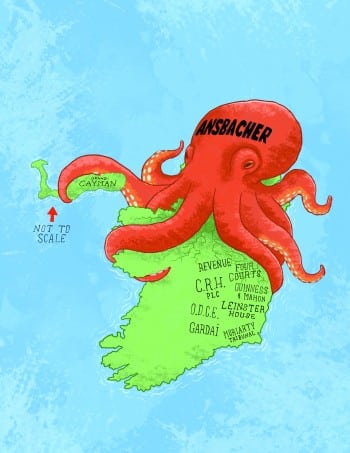
    By Séamus Maye. Just when it seemed that the Ansbacher scandal had receded into the distant past, up pops Gerard Ryan, a respected civil servant with an explosive dossier. Ryan’s revelations and indeed frustrations, go to the very core of what has passed for Irish politics and institutional regulation for several decades now. The suppression of the Ryan dossier further exposes a reprehensible culture of tolerance of white-collar crime and the clubby and corrosive relationship between big business and politics. This rampant culture underpinned Ireland’s socio-economic collapse and inspires the current unprecedented level of dissatisfaction with establishment parties. Ansbacher facilitated the wealthiest in evading tax. In the early years, the Central Bank rumbled Ansbacher and concluded in a 2002 report that the accounts were created to facilitate tax evasion, though subsequently senior Central Bank lackeys changed the wording in its report from tax evasion to tax avoidance. Despite the Central Bank holding talks with Des Traynor in regard to the cessation of the illegal scheme, it was allowed to operate for another two bold decades. In September 1999, the then Tánaiste, Mary Harney, gave the following excuse for not publishing the Ansbacher names.  “If the Government were to break the law and publish the names, everybody on the list would walk free and prosecutions would not be brought”. So, who were the great and privileged? For starters, Ansbacher was run from the offices of Ireland’s largest company, CRH Plc. The CRH Chairman Des Traynor dominated Ansbacher in tandem with acting as Charles J Haughey’s financial advisor. Eight of fifteen CRH Plc directors held Ansbacher accounts. One director, Jim Culliton, was chairman of the RTé Authority and also a director of Allied Irish Bank. Another CRH director, Michael Dargan, was CEO of Aer Lingus. Yet another director, Tony Barry, held a longstanding directorship of Bank of Ireland and was Deputy Governor from 1997-2000. The connection with CRH has never really been expurgated. The Ansbacher inspectors had this to say about CRH’s involvement with Ansbacher: “The Inspectors are struck by the range of activities carried out on CRH premises and making use of the CRH facilities. Mr Traynor’s activities bore all the hallmarks of banking and he carried out these activities in CRH for almost six years. The range and duration of the activities is suggestive, but no more than that, of the idea that CRH was actually aware of Mr Traynor’s conduct”. It proceeded: “The Inspectors are satisfied that CRH did in fact assist Ansbacher in the carrying out of its business in the manner described above. The question arises however as to whether or not CRH may be said to have done so knowingly or unknowingly. The Inspectors have already concluded that there is evidence tending to show that Ansbacher was guilty of the criminal offence of carrying on unlicensed banking business within the State contrary to the Central Bank Act, 1971 and the Central Bank Act, 1989. If the Inspectors conclude that CRH knowingly assisted Ansbacher in the carrying out of its business in Ireland then there would be evidence tending to show that CRH was also guilty of the criminal offence of carrying on an unlicensed banking business within the State by virtue of having aided and abetted Ansbacher to do so. One who aids and abets, by virtue of Section 8 of the Accessories and Abettors Act, 1861 and Section 7(1) of the Criminal Law Act, 1997 is to be treated as a principal offender. The Inspectors will consider therefore the evidence suggestive of knowing assistance and the evidence suggestive of unwitting assistance”. In the event, the inspectors found that CRH did not knowingly assist Ansbacher. On any objective perusal, this was an astonishing finding, given all of the circumstances, the effect of which was to let CRH off the hook in relation to criminal charges, which would have had serious implications for its stock exchange status and indeed for its directors and shareholders. CRH has also been the beneficiary of an extraordinary catalogue of failures to act, by a range of State institutions including the ODCE, Moriarty Tribunal, Garda Síochána, Competition Authority and Revenue Commissioners. Over the years this failure to act has turned into outright protection. In February 2000, Mary Harney gave an undertaking that the authorities would carry out a comprehensive investigation into anti-competitive practices at CRH, but this has never happened. Patrick Massey, then head of the Competition Authority, resigned his position that very same month stating:  “it is no longer possible for me to continue as director of competition enforcement due to the failure to provide adequate resources to enable me to do the job properly. My experience has convinced me  that price-fixing cartels represent a serious widespread problem in this country…the resources available are wholly inadequate for carrying out the sort of complex and highly intensive investigations that are required to obtain evidence”. Massey went on to say, “certain complaints made to me in recent months involve matters that would occupy four or five staff full-time for the best part of a year. I simply do not have such staff resources and given the very real concerns expressed to me by the complainants as to the consequences for them if the matter is not pursued properly, I have concluded that it is simply not possible to pursue the matter”. Court challenges have proved gruelling. The ‘Framus’ proceedings began in 1996 and there is still no end in sight. Goode Concrete initiated proceedings in 2010. That’s twenty-two years of aggregated litigation with hardly a blow landed. Both sets of proceedings allege a web of competition law breaches, most of which run parallel to findings made by the EU Commission and subsequently upheld by the EU Court of First Instance and the European Court of Justice. The proceedings continue to founder on a sea of relentless procedural delay and legal costs. At present, both plaintiff parties are locked in procedural combat over allegations of objective bias on the part of retired Judge

    Loading

    Read more

  • Posted in:

    Ebola’s stigma recalls leprosy

    By Caroline Hurley Ebola was first identified in 1976 in Sudan in a cotton factory, with bats suspected as the reservoir species. The disease typically occurs in outbreaks in tropical regions of sub-Saharan Africa, though also in Venezuela, Cambodia and Indonesia. The largest outbreak so far is the ongoing epidemic in West Africa, which is centred in Guinea, Sierra Leone and Liberia, and has occasioned 16,203 reported cases and 7,275 deaths. President Obama has called it “a horrific disease”, “a public health emergency”. The international community has been providing aid, especially after the death of Duncan Thomas in the US in early October. The Irish Department of Foreign Affairs donated €200,000 in November. The paranoia and the stigma associated with Ebola are nothing new – they parallel historic, and some contemporary, reactions to leprosy. Moreover the historic primary incubator for both is poverty While Ebola is a virus, leprosy is a bacterial infection. The incubation period of ebola is two days to three weeks while the incubation period for leprosy is around five years. And while Ebola is highly infectious, 95 per cent of people have natural immunity to leprosy. Unlike the Ebola virus, leprosy itself seldom leads to death. It is a disease of the skin and nerves that, if untreated, often led to a lifetime of severe disfigurement. There was no effective medical treatment until the development of the drug dapsone in the 1940s. But as yet there is no effective treatment for Ebola. With luck and vigilance Ebola will never reach Ireland, but leprosy affected millions of people all over the world, including here. Just 150 years ago, in January 1864, notice of the death of a young woman from leprosy appeared in the Limerick Reporter & Tipperary Vindicator. Leper houses in Limerick and Waterford were mentioned. Leprosy predominated as Ireland’s national disease since at least the time of St Patrick who, like St Brigid, healed lepers. Indeed it was widespread until quicker killers such as the plague, tuberculosis and famines claimed more casualties. Although in 1970 there were over ten million cases, the World Health Organisation (WHO) now estimates that globally less than 200,000 people have leprosy, including 400 new cases annually in the US. Aid workers contest the figure and the methodology used to reach it. The WHO definition of cure, bacterial negativity, disregards complex after-effects, and only entitles patients using multi-drug-treatment (MDT) to be registered. Stigma still poses an obstacle to treatment-seeking – and the statistics. Moving into his new office Ireland’s Minister for Health, Leo Varadkar. may have been aware of the reputation Hawkins House has as a sick building, but less enlightened about other facets of its history. For centuries the area hosted a residence for lepers. Until 1815, Townsend Street, which adjoins Hawkins Street, was known as Lazar’s Hill. The so-called “lane leading to the Long Stone”, beside the Viking harbour built in 841 became known as Lazar’s Hill after 1220 when Henry of London, Archbishop of Dublin, established a ‘lazaretto’, a quarantine station for maritime travellers. This particular hospice sheltered leprous pilgrims sailing to Santiago de Compostela for a miracle cure. Immigrants assumed infected were probably quarantined there too. Floods and storms wreaked periodic damage on ‘Lazy Hill’ until 1662 when William Hawkins had a wall built, running from Corn Exchange Place to modern-day Temple Bar. As detailed in Gerard A Lee’s 1968 book, ‘Leprosy and Leper Hospitals in Ireland’, many place names refer to patron saints associated with leprosy, such as Mary Magdalene, Lawrence, Nicholas, Stephen and Lazarus/Bethany (‘beloved of Christ’, a term  often applied to lepers). Place names reflect the Irish word for infirm or leper, lobbar – Knocknalour, Dromalour, Flowerhill. Many townlands recall the old word for hospital and hotel – spital. Several other Dublin hospitals specifically catered for leprosy cases. St Stephen’s Hospital, which gave St Stephen’s Green its name, was situated on Diggis Lane where Mercer’s Hospital was subsequently built. The intended transfer to lands bought at aptly-titled Leopardstown (lepers’ town, Baile An Lobhar) never took place. The Order of Hospitaller Knights of Jerusalem ran leper-houses in Kilmainham, and Chapelizod, meaning ‘leper church’/ Séipéal an Lazar. Leprosy is called The Great Disease in both Sanskrit (maha rog) and Anglo-Saxon (seo mycle ail). The Indo-European word for the condition – leper – means something that peels off. It is liber, for tree bark, in Latin. Sometimes normally-aloof aristocrats were spurred to compassion by the affliction, as necessity dictated. Around 1230, Cashel Leper Hospital was built by Sir David Latimer after his daughter contracted it. King John set up St Stephen’s Leper Hospital in Waterford when he and his family erupted in sores. In history, leprosy became endemic around the river Nile from 3000 B.C, dreaded as the ‘death before death’. Jesus famously cleansed and healed a leper, in the New Testament of the Christian bible. The first-century physician, Aretus, bemoaned callous public attitudes to lepers. By the time of the Crusades, the disease had reached epidemic proportions in Europe, provoking laws requiring exclusion and isolation, in line with seventh-century decrees restricting leper marriage. Banished individuals were obliged to broadcast warnings, wear long cowls, and sound bells or wooden clappers when others approached, after undergoing living funeral ceremonies. Whoever refused to go, to beg and forage for a precarious existence, could be harshly dealt with by statute, even put to death. Mere guesswork passed for most clinical diagnosis. The rise of leper houses in towns across Europe started in earnest when early Church Councils in the sixth century committed to the cause. As early as 869 Arlaf the Dane recorded the destruction of leper houses in Ireland. Some blamed the Irish for an outbreak in Norway after Viking raids here around 1000 A.D. Leprosy rapidly spread from the tenth century and claimed 10-50 victims per thousand at its thirteenth-century peak before retreating. The 273 leper houses in England, rapidly becoming redundant, had mutated into almshouses by the fourteenth century, harbouring hardly any leprosy cases. The suppression

    Loading

    Read more