Archives

OK

Random entry RSS

Loading

  • Posted in:

    Healthcare demands equality

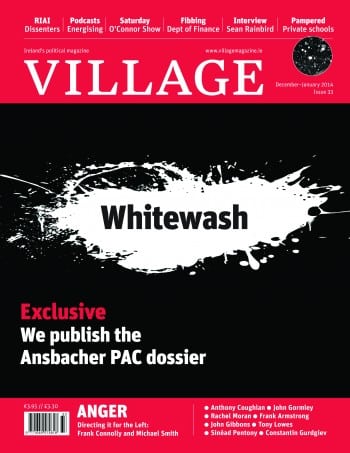
    By Sinéad Pentony Health is life-defining. We all experience ill-health during our lives and need health services. Health inequalities are reflective of injustice and inequality in society. Austerity has exacerbated this injustice and deepened these inequalities in Ireland. Three studies have recently been published which examine the impact of austerity on access to health services and the impact of geography on cancer survival rates. A common thread through the research studies is inequality – of access to health services and of health outcomes in cancer survival rates. Health inequalities refer to the differences in the experiences of health among different sections of the population. Although some people will live longer healthier lives due to genetic or hereditary factors, health inequalities refer to inequalities which are unnecessary, unjust and avoidable, and could be addressed through public policies. The European Foundation for the Improvement of Living and Working Conditions research on ‘Access to Healthcare in Times of Crisis’ found that the economic crisis has had a negative impact across Europe on access to healthcare services not only because of budget cuts, but also because access to healthcare for households has been reduced when their disposable income has declined, creating new barriers to diminished health services. In Ireland, the ESRI budgetary analysis has previously illustrated the disproportionate effect of successive austerity budgets on low-income families, which are also particularly dependent on the public health system and therefore most affected by cuts in health services. The situation in Ireland thus presents a particularly acute case in the European context. The funding of the Health Services Executive (HSE) was reduced by €3.3 billion (22%) over a four-year period, 2009-2013. Health staff levels have been cut by approximately 10% since the 2007 peak. The health system was able to ‘do more with less’ to a certain extent in the early years of the cutbacks. However, in more recent years it has been more a case of ‘doing less with less’. This is evidenced by the growing numbers of people on trolleys in emergency departments, increased waiting times for public appointments, and the removal of medical cards from significant numbers of people. Alongside this there has been a growing trend towards cost-shifting by Government to individuals and families through the introduction of, or increase in, charges and thresholds for reimbursements (illustrated in Chart 1). In 2013, cost-shifting meant that on average every person in Ireland was paying about €100 in additional costs for care and prescribed drugs (Lancet, 2014). This cost-shifting further worsens the inequities in access to health services by low income families. Budget 2015 included a slight improvement in Government funding for health, which was increased by just over €300 million. This brought the health budget up to €13.1 billion. While this modest augmentation is to be welcomed, Ireland has a growing and ageing population and the additional resources are likely to be eaten up by increased demand for existing services. This leaves little or no scope to extend and improve health services. The latest OECD data show that Ireland’s total health spend was 8.9% of GDP in 2012. This was the second lowest in the EU (15), which had an average total spend on health of 9.9% of GDP. It is also necessary to remember that private money from health-insurance premiums and out-of-pocket spending on various health-related charges make up a lot of our total health spending. On average, public spending on health in the EU accounts for 75% of all spending on health. In Ireland, this figure is 68%, and we rely more on private sources of funding than most other EU countries. This mix of public and private resourcing of health services has resulted in a dual system which means that health services can be assigned on the basis of medical resources (i.e. health insurance) and not medical need. A funding model that supports a single-tier healthcare system capable of providing universal access is long overdue. The Government had planned to reform the funding of health services and address the inequities in the system through Universal Health Insurance (UHI). While it is questionable whether these goals could have been achieved through the model proposed by the Government, its planned introduction has now been shelved indefinitely. It appears that the Government has gone back to the drawing board in seeking to develop a sustainable funding model. In the meantime, low-income individuals and families with limited means will continue to face barriers to access to health services, while others continue to skip the queue and receive treatment and care in a timely manner. For some reason it has been accepted that treating patients on the basis of their ability to pay instead of medical need is acceptable in Ireland. Perverse incentives are hard-wired into the health system and will only be addressed through root and branch reform. The current system of healthcare is a contributing factor to the prevalence of health inequalities, and research projects from the National Cancer Registry (NCR) and NUI Maynooth clearly illustrate the effect this is having on cancer patients living in deprived communities. There have been many advances in the early diagnosis and effective treatment of cancer in recent years; however, these improvements do not always reach the population in the same way. The NCR research shows that people living in deprived areas experience a poorer survival from cancer than those who live in more affluent parts of the country and it found that breast-cancer patients from the most deprived areas were about 30 per cent more likely to die from their cancer than patients from the least deprived areas. Those from more deprived backgrounds were more likely to present late with advanced stage cancers and were more likely to present with symptoms rather than present on foot of screening. The research found death rates from cancer in some of the poorest parts of Dublin were more than twice as high as in more affluent areas. The NUI Maynooth research found that some of these disparities are due

    Loading

    Read more

  • Posted in:

    Letters December – January 2014

    On the provenance of Kevin Kiely Dear Editor: Some of your contributors merit a brief – and very useful – biographical note. Others do not. For this reader at least, the most glaring omission in the November issue was the lack of any provenance of the writer of the bilious article ‘The I.T. Gang’. While I have read and enjoyed the output of many of the award-winning authors mentioned in the piece, John Banville, Colm Tóibín, Roy Foster, Roddy Doyle et al, the name Kevin Kiely is unknown to me. Perhaps he too has been garlanded with literary honours, an Impac or Man Booker, an American National Book Award? Sadly word of these literary distinctions has yet to reach here. Yours faithfully Terry Kelleher St Remy de Provence, France Ed’s note: Dr Kevin Kiely is a former literary editor of Books Ireland; Fulbright scholar; Professor of Irish Literature, University of Idaho (2008-2009); biographer of Francis Stuart; poet, novelist, critic and playwright.  He was awarded the Patrick Kavanagh poetry fellowship in 2006. Village generally takes a dismissively egalitarian stance on garlands. On Village’s Parks Special Dear Editor: Reading your Parks Special (Nov Village), I agreed with the section relating to staff: most Local Authorities have a core of professional staff – architects, engineers and planners, but only a limited number employ professional parks staff. However, in respect of Dublin its still amazing to think that a small number of highly motivated professional staff achieve so much with so little and in the process have left a legacy of immense recreational value for the present and the future in outstanding parks, including Marlay, Corkagh, Tymon North, Malahide Castle, Newbridge Demesne and Ardgillan. As to Ciaran Cuffe’s suggested steps for better parks, I think the author of the article and I see elements of the landscape in a different way. You need to know what you are looking for to be able to find it. For example, many years ago while walking for the first time through Alpine meadows in the Spanish Pyrenees, I asked what do Gentians look like. Our guide, a famous British horticulturist, said look under your feet, you have been walking on them for the past hour but not knowing, did not see them. Suddenly my eyes were opened and I saw them everywhere. I see wild flower meadows in the Tolka Valley, at Robswall Park in Malahide, at Malahide Castle, and have enjoyed participating in the Bio-blitz at St Anne’s park. One of my favourite urban parks for viewing nature in all its forms be it wild flowers, majestic native trees, birds, animals, bats and an amazing variety of habitats must be the Phoenix Park . Others use the Park for active recreation be it formal sports, play facilities at the Visitor Centre, or just to run or walk. Long may it survive in this form and be known as one of the premier world parks, a rare jewel to be treasured. Rare breeds of cattle are used to graze vegetation at Robswalls, and in St Catherine’s. In fact it has been my experience that innovative land-management techniques are part of every day life in Irish parks. Extensive usage is made of native tree species in planting schemes. However, diversity is important as you never know what aggressive pathogen is about to pounce – look at the demise of the elm. What grows in the hostile environment of a roadside margin rather than survives is often a difficult choice. From my experience play – be it formal or informal – is encouraged, the problem being in the Irish context that we seem all to ready to make claims. Perhaps a bit more parental responsibility might be desirable. The role of trees and woodland in terms of biodiversity, carbon sequestration and enjoyment needs to be reinforced. Hopefully the legislation in relation to tree preservation will be updated, and possibly the right of appeal to An Bord Pleanála reintroduced. Yours faithfully Peter W Cuthbert Landscape consultant and former senior executive parks superintendent for Fingal County Council On our kind direct provision system Dear Editor: Frank Connolly’s use of a case-history to illustrate the “inhumane” direct provision system (Village, Nov  2014) was quite extraordinary. “Ramesh”, he told us, came to Ireland in January 2010, applied for asylum and got refugee status that same year. Refugee status gives you the same entitlements as any Irish citizen. On getting it, you leave direct provision. You are not thrown out overnight, but given some time to make new arrangements. But Connolly tells us that “Ramesh” has “recently”, i.e. four years later, left direct provision. Given his fragile mental state, after torture in Sri Lanka, we must assume that he was allowed to stay for four years out of kindness and consideration for his vulnerability. Yet Connolly uses this kindness and consideration as a stick with which to beat the direct provision system. How very logical. Yours faithfully Áine Ní Chonaill, PRO Immigration Control Platform PO Box 6469 Dublin 2

    Loading

    Read more

  • Posted in:

    Publish or … (Editorial December)

    In the following pages Village publishes the Ansbacher dossier which ‘Authorised Officer’ Gerard Ryan has been attempting to submit to the Public Accounts Committee. We print it because it seems to us there has been a whitewash to prevent investigation of its mostly tightly documented allegations of widespread offshore untaxed bank accounts being held by the political ascendancy. It’s time  the role of lawyers, toffs, prosecutory authorities and a range of political parties – and their grandees – in the debasement of Irish society, was recognised. It’s been all too convenient to load all the blame on the buccaneers in Fianna Fáil, but they were supported by the professional establishment and the local gombeens of international finance. The Ryan dossier paints a picture which its compiler clearly feels extends to the contemporary. Most of the substance is printed in Village, though it has been necessary to redact a lot. A few tracts have been edited out, and the appendices omitted, for reasons of space. In publishing, we are confident that we have avoided defaming anyone and have attempted to be fair to all, alive or dead. In this context we note that Mary Harney has claimed that she closed down Ryan’s investigation only after it got bogged down and only to ensure that it was not waylaid after she left office. “I made it clear, regardless of who might have been involved, it had to be investigated correctly and thoroughly”, she has said, adding that departmental records would prove this, that the bonuses offered were entirely bona fide and that she did not direct that letters drafted by Ryan not be sent to Des O’Malley, Ray Burke and Liam Lawlor. Des O’Malley has said he opened a Guinness and Mahon account only as a blind trust to ensure his business affairs were handled at arm’s length while he was a Minister. The family of Declan Costello has asserted that he opened his (onshore) account because the main banks were on strike at the time (1976), and he needed to bank a recent inheritance. The transactions appendixed to the dossier are certainly compellingly consistent with this. The Moriarty and Mahon Tribunals are no doubt unimpeachable. Village is well aware that it is illegal under s21 of the 1990 Companies Act to publish or disclose any  information, book or document relating to a body obtained by an authorised officer under the Act. We have therefore removed ‘information’ relating to it. Happily moreover, Mr Ryan and other media have beaten us to Ansbacher. There is no difference in law between publishing the dossier and publishing extracts or summaries of it, if they relate to Ansbacher. So the Irish Times has reported that Ryan “had discovered in 2003 records of a deposit account in Guinness and Mahon in the name of Declan Costello…Mr Ryan suggested in the dossier that Mr Costello had had “a major undisclosed conflict of interest” while he led the High Court investigation into the company”. The Irish Independent reported that the Ryan dossier claims: • “Declan Costello held an account with Guinness & Mahon bank, which was at the centre of the offshore tax evasion scandal. • Former Fianna Fáil and Fine Gael ministers held Ansbacher accounts, which were not revealed by an investigation into the offshore tax evasion scheme. • The Moriarty Tribunal did not properly investigate Ansbacher – a state of affairs that undermines the integrity of the tribunal and the reliability of its findings. • Des Traynor was the accountant who set up offshore Ansbacher accounts, allowing hundreds of well-heeled individuals to evade tax. “Mr Declan Costello had a major conflict of interest”. And the Sunday Times has printed allegations of a “cover up”; and named Helen Downes as being in charge of updating the ‘black briefcase files’ where “the names of the Cayman account holders were kept in a separate safe from the lists of their ‘very substantial’ account balances, to avoid any chance of the senior politicians being identified”. Some of the dossier appears unfair and we have eliminated it. Unlike many media we have not unfairly reiterated the names of alleged Cayman account holders that have entered the public domain  – as they were received by the Authorised Officer as mere hearsay from a junior employee in Ansbacher. Not, in any event, that all Cayman account holders failed to pay tax. Furthermore we believe the Authorised Officer makes some inferences about Costello and O’Malley that are not justified by the evidence adduced in the rest of the dossier. Nor does he prove his allegations that the Moriarty and perhaps Mahon tribunals were compromised in their lack of zeal in pursuit of Ansbacher, though Village has always questioned the extent to which the tribunal  reports managed to probe and explicate all the allegations presented to them, even if in the end the tribunal reports were afforded a blind imprimatur by a gormless press. The tribunals were inert in the absence of investigatory powers, with Mahon in particular relying too much on unreliably dysfunctional whistleblowers, and ultimately toppling too few among the still powerful. It is necessary also to be fair to the prosecutors: one of the problems for authorities is that the investigations came too late and were hampered by the blanket immunities conferred by a cynical tax amnesty in 1993, though Revenue still expects to extract €250m from recalcitrants. The gardai did in fact investigate  ‘Ansbacher’ but not the secret ‘black briefcase’ with its dozens of allegedly dodgy accounts. The fraud squad was advised such an investigation would be barred under the terms of Bertie Ahern’s 1997 Taxes Consolidation Act which prohibits them or the Revenue prosecuting offences more than ten-years old; and the DPP decided not to prosecute the more general claims of Ryan, following submission of a Garda file. The Ryan dossier is creditable but it remains unresolved. Uniquely we have published it – in the hope this might help this process. We have published but we have been careful and

    Loading

    Read more

  • Posted in:

    Hackles RIAIsed.

    By Michael Smith. Floppy-haired RIAI president Robin Mandal recently wrote to members expressing his exasperation at allegations of impropriety and misgovernance at the Royal Institute of the Architects of Ireland (RIAI). “I am genuinely at a loss to understand how there could be even a perception of lack of appropriate governance at the RIAI and, in particular, a claim by a director who resigned that Council ‘have been unwilling to address properly very serious matters of governance’”. Mandal provocatively put the resignations down to a failure of the six to “get their way” on policy change. He also addressed concerns raised about the RIAI’s finances – the 2013 accounts show a deficit of €480,000 before tax on an operating income of €2.9m: “It is worth noting that the Institute’s independent Auditors, BDO, are on record as stating that the RIAI’s internal financial controls exceed that required/expected from an organisation of the scale of the RIAI. Notwithstanding this, I have prioritised a governance review to ensure we are operating to best practice, work of [sic] which is ongoing”. Eoin O’Cofaigh, a  disenfranchised and irritable ex-President (1998-9) of the RIAI, had complained about the payment without any tender process of €500,000 to Bluebloc digital, a company 50% owned by Odran Graby, son of veteran RIAI Chief Executive John Graby. “None of us want a Rehab, a Positive Action, a DSCPA situation”, O’Cofaigh wrote to the board before resigning. With six others. After a failed mediation process with the RIAI executive. So what is going on in this Royal Institute? It seems a lot of the fuss is down to personalities and the economy. O’Cofaigh was a particularly thoughtful president, promoting architecture over architects, but he has been the most prominent member of an RIAI “reform group” campaigning against an amendment to building control regulations, which make it mandatory on beleaguered architects to certify that new buildings comply. There is a perception that the executive of the RIAI is perhaps more established than some of the economically traumatised younger members for whom the additional regulatory and insurance burden has seemed like the last straw. However, this onerous imposition is a side issue in the debate over propriety. What clouds the issue for outsiders is that the likes of O’Cofaigh and another prominent resignee, former president  Joan O’Connor – a favourite architect of Treasury Holdings and boomtime member of the Docklands Authority, are scarcely callow nobodies. The executive has always preferred to lobby the government behind the scenes on the Regulations issue and indeed the Council voted at its November meeting against seeking revocation of the amendment – but rather for its own amendment. The Council of the RIAI – which ‘governs’ it has 26 members, not untypical for a company limited by guarantee and one of the mechanisims whereby the efficacy of NGOs is diminished. Governing bodies of this size are set up to fracture, for cabals to champion particular personalities and employees, and for gossip and leaks. It cannot be assumed that it serves the public interest for all decisions and information of the executive body led by the CEO, to be shared with the cumbrous council. Pleas to the gallery that financial information isn’t fully forthcoming resonate but may in fact not be reasonable. Perhaps reflecting the clumsiness of the governance through Council – which is in fact the board of directors, the CEO, John Graby, appears to have been invested with too many, sometimes conflicting, powers. For example he is the conduit for complaints against RIAI architects but also an architect himself – a clear conflict. It is also bad practice to expect the chief executive to pursue complaints against those who pay his salary. And undesirable that he is Director of an architects’ insurance company which needs to get sensitive information about the members who pay his salary. It seems to be the case that Frank McDonald, veteran Irish Times environment correspondent, whose waning ecological attentions have long had a focus on architecture and architects, is close to some of the gang of six. Their resignations were reported on the Irish Times website before they were announced to the Council at its 4 November egm. Mandal claims he was “shocked” when he first heard about the resignations from the journalist “before I had a chance to see it myself”. It is not recorded if Mandal regards it as shocking that he had lunch with the same journalist that day. As to the substance of the allegations,  it is certainly unusual that BDO signed off on accounts although the treasurer, Garrett O’Neill, had not been willing to approve them when issues were raised before the AGM in September about the propriety of the CEO not divulging his salary, but sometimes honorary officers in voluntary councils can be more squeamish than the hard-nosed corporate accounting fraternity. BDO claimed not to have been aware of the Treasurer’s concerns before the AGM but contorted to suggest that a Governance Review should be carried out as a priority. O’Cofaigh opposed such a move. The six resignees had requested that Hayes solicitors (the RIAI’s legal advisors) and BDO be present but it turned out that the request was not forwarded. This precipitated the resignations. It sounds like a reasonable request but it may have been unnecessary, an avoidable cost for the struggling RIAI. In any event a meeting was scheduled between the reform group and the professional advisors, but the reform group declined to attend it since it was only proposed after they resigned. Former President, Joan O’Connor, resigned because the council had “failed in its responsibilities” to ensure that the institute was “solvent, well-run and delivering the outcomes for which it is set up; and repeated requests” from individual council members for “essential financial information” about the institute’s affairs  had been met by “hostile questioning of the motives of the authors”, President Robin Mandal – who became president after television presenter Duncan Stewart’s candidacy was ruled out on a technicality – said Ms

    Loading

    Read more

  • Posted in:

    More fibbing from the Department of Finance.

    By Rachel Mullen. The Government is opposed to the introduction of a Financial Transactions Tax (FTT). There is, however, a lack of transparency about how the Department of Finance position of opposition to the FTT was arrived at. There is also a failure to update the Oireachtas on recent developments concerning the proposals for a FTT at EU level that have the potential to make the FTT a more favourable proposition for Ireland. In 2011 the European Commission put forward proposals for the introduction of an EU-wide Financial Transaction Tax. However, with the member states failing to agree it, the proposal was shelved in mid-2012. Under the new European Enhanced Cooperation Procedure, eleven member states (representing some 90% of Eurozone GDP) agreed to proceed with an FTT. Roll-out of an initial phase is now scheduled for January 2016. The Minister for Finance, Michael Noonan, has stated that Ireland will not be joining the eleven member states in introducing an FTT. His first objection is a concern that the introduction of an FTT would result in the flight of financial institutions from the IFSC to London or other global financial centres with a consequent loss of jobs. The second objection is based on the estimated revenue from an FTT, which, it is suggested, would be negligible when a number of issues are factored into the equation. During a briefing to the Oireachtas Joint Committee on Finance, Public Expenditure and Reform, on November 8th 2012, the Minister for Finance was asked how the Government arrived at its position of opposing the FTT. Noonan noted that a briefing document, produced for the Department by the ESRI and the Central Bank in April 2012 (‘The EU financial transactions tax proposal: a preliminary evaluation’) formed the basis of Government thinking. This was queried during the debate by Labour Deputy Kevin Humphreys, who asked Noonan what role the IFSC Clearing House Group played in influencing the development of the Government’s position. Concerns have been raised about the influence afforded to this Clearing House Group, whose members constitute Big Finance. Their meetings are chaired by the Department of the Taoiseach and attended by representatives of Government Departments. In a subsequent Oireachtas briefing, on October 2nd 2013, an official from the Department of Finance, Brenda McVeigh, was again asked, by Fianna Fáil deputy Thomas Byrne, what, if any, briefings the Department had taken on the FTT from the IFSC Clearing House Group. The official said that the Department of Finance had not met with the Clearing House Group regarding the FTT nor had the Department “invited” any groups to discuss the FTT. This is patently not the case. The minutes of ‘An FTT Roundtable’, held in October 2011, with financial sector bodies and Department officials were obtained by Nessa Childers MEP under Freedom of Information legislation. The roundtable was attended by three officials from the Department of Finance and representatives from the finance industry (including key members of the IFSC Clearing House Group – KPMG; PWC; IFSC Funds; State Street; ISE and IBF). The meeting note indicates the circulation of a questionnaire from the Department of Finance to “various financial service organisations” inviting their views on the FTT. This questionnaire was distributed by the Tax Division of the Department of Finance. This is the same division in which the official briefing Byrne and the Oireachtas Committee is based. Was the official unaware of the distribution of this questionnaire on the FTT to the financial sector by her own division, given that she appears to be a lead on the FTT having been the official who briefed the Oireachtas Committee in 2012 and again in 2013? The questionnaire has nine questions asking about likely impact, cost and knock-on impact of the FTT on the financial sector. There is no question soliciting views on the benefit of the FTT to the economy. One key pillar of  Government opposition to the FTT is that the revenue raised would be negligible. This assertion is based on a calculation in the ESRI/Central Bank  report. This estimated the likely revenue to Ireland from an FTT (based on the proposed level of the tax in the original EU proposals) at between  €490m and €730m. At an Oireachtas Committee briefing in November 2012, the Department of Finance set out how this gross figure would be reduced to a negligible amount. The official explained that under the EU Commission’s proposal, two thirds of this yield would go directly to the EU to fund its budget leaving a net yield to Ireland in the region of €163m to €243m. This yield, she explained, is not dissimilar to the current yield from Stamp Duty on share transfers, which was €195m in 2011, and which Ireland would have had to abolish if it introduced an FTT. Deputy Kevin Humphreys pointed out that the official had failed to factor into her calculations the fact that if the EU did recoup two thirds of the FTT yield, this would be off-set by a reduction in the member states’ annual contribution to the EU. Even with this correction, the sums did seem to be the knock-out blow to any suggestions that an FTT might be a means of raising much needed revenue in Ireland. In addition, the idea of the EU recouping two thirds of the yield to fund its budget was unpalatable to some. Sinn Féin Deputy Pearse Doherty voiced concern that the EU Commission should in no way be given the power to raise its own revenue in this way. This issue was also raised by Doherty in a recent meeting on the FTT with Claiming our Future, as a key factor in Sinn Féin’s opposition to the FTT. However, what the Department of Finance neglected to point out to Oireachtas members during the November 8th 2012 briefing was that once the proposal for an EU-wide FTT was removed from the table (since mid-2012) the idea of the EU Commission recouping two-thirds of the yield was also off the table

    Loading

    Read more

  • Posted in:

    Charter for the Left for 2016.

    By Frank Connolly. The Syriza victory in Greece has its foundations in the polarisation of that society following the collapse of the economy in the great financial crash of 2008/2009, and since. It is rooted in the implosion of the traditional parties, and in particular of Pasok, the social democratic party that dominated the Greek left, and many governments, in the post-dictatorship era. The emergence in a few short years of an alliance of former communists, euro communists, radical economists, trade unionists, community organisations and cultural groups to displace the traditional Left, and take political power, has now inspired similar movements across Europe, notably with Podemos in Spain, but also now in Ireland. Its plan is to renegotiate its huge debt burden by swapping it for bonds linked to growth, among other anti-corruption and tax-raising measures. Hardly revolutionary and well short of burning all bondholders, but enough to bring the wrath of the austerity-mongers in the ECB, on to the charismatic Alexis Tsipras and his finance minister, Yanis Varoufakis. On the commemoration of his death in January 1947 of that great socialist and subversive, Jim Larkin, the president of SIPTU, Jack O’Connor, recently told the crowd assembled in Glasnevin cemetery that it was an opportune time, in the wake of the welcome and dramatic Syriza victory, for the Left in Ireland to cultivate and harvest a similar ambition, a year ahead of a general election and the centenary of the Easter Rising. He also set out the parameters of a possible charter of principles and policies which could underpin a Left platform on which different parties, organisations and individuals could combine to offer an alternative government. “Dramatic possibilities are now opening up here in Ireland as we approach the centenary of the 1916 Rising. At this extraordinary juncture, history is presenting a ‘once in a century’ opportunity to reassert the egalitarian ideals of the 1916 Proclamation which were suffocated in the counter-revolution which followed the foundation of the State. It is incumbent upon all of us Social Democrats, Left Republicans and Independent Socialists who are inspired by the egalitarian ideals of Jim Larkin and James Connolly to set aside sectarian divisions and develop a political project aimed at winning the next general election on a common platform, let’s call it ‘Charter 2016’. This would entail the most difficult and challenging intellectual and political task because, when the moment arrives, t the proportion of the electorate who will decide the outcome will demand to know what we are for, as distinct simply from what we are against, and we have to be able to answer the question comprehensively”. O’Connor set out the challenges facing those with different perspectives and positions on issues ranging from taxation and spending to stealth charges, sustainable economics, industrial policy, social welfare and Europe that could easily scuttle any such project at birth. He warned that having a wish list of demands would not suffice and that any proposals would be scrutinised in forensic detail by those who will claim that such a Left alliance could never present a viable taxation and spending programme. You can’t rebuild the health service, eradicate housing lists, provide proper pensions while abolishing all the unpopular taxes and charges at the same time, he said. But he also argued that where there is a will, and more importantly a necessity, to provide the hard-pressed citizens – arguably the majority – of the country with the prospect of a radical, Left-leaning government, then there must be a way. “What the first Left of Centre government in the history of the State could do is to reassert the interests of the common good, shifting the balance decisively in favour of working people and those who depend most on public services”, he said. Welcoming his call, Declan Kearney, the national chairperson of Sinn Féin (which will almost certainly comprise the single largest left-wing bloc in the next Dáil), said: “There is an obvious need for a democratic, inclusive and politically non-sectarian discussion among all those genuinely committed to opposing austerity, supporting equality, social solidarity, and the protection of citizens’ welfare. Those who recognise the need for an alternative political and economic vision and strategy across the island have a responsibility to discuss how that can be brought forward”. Kearney had earlier called for the opening of formal discussions between “ourselves, progressive independents, the trades union movement, grass roots community organisations, and others on the Left in Ireland, North and South….on the ideas and strategies which will ensure the future election of a Left coalition in the South dedicated to establishing a new national Republic”. Crucially, he acknowledged that, while Sinn Féin wants to be in government to advance republican objectives, it cannot achieve this without “a new critical mass for change” that “presupposes increased unity within progressive, Left, national and democratic opinion”. The challenge is to find areas of common interest and agreement rather than focus on differences, and there are potentially many. The future of Europe, the North, climate change, environmental, foreign policy, corporation, water, property and other taxes and charges, democratic reform, gay and reproductive rights, migration, local government funding, are just a few. Over recent months and years others on the Left, in the various progressive think-tanks and trades unions and through the media, have elaborated the broad principles and strategies, including detailed economic, spending and taxation, and jobs- and-investment proposals that could underpin such a Charter for change. There is no need to reinvent the wheel in this regard, only to find agreement on workable solutions and proposals that do not pander to the dogmatic or the egocentric. There is an urgent need, however, given the imminence of a general election, for those who share the ambition for a government of the Left, and who recognise the opportunity presented by the national and European political climate, to act. It is evident that the likely headcount of left-wing TDs after the election, based on current trends, and including SF, Labour and

    Loading

    Read more

  • Posted in:

    Villager – February 2015.

      Saving trees from themselves. In keeping with its general philosophy of doing more to achieve less Dublin City Council has erected signs in Merrion Square signalling that it is about to begin cutting down 300 trees there in accordance with a Conservation Management Plan. The idea is… well actually Villager couldn’t really see the idea at all. But it’s dressed up as facilitating more visitors and of course deterring ‘anti-social’ and something about freeing up the lucky 700 trees that will be spared. Then-Lord Mayor Oisín Quinn told the Herald in 2013 that officials wanted to remove trees to protect older tree species. “And a sizeable number will be removed in order to revitalise it”. The foolish, busybody idea is to reinstate the park closer to the way it was originally intended, with views of the architecture beyond. No importance is afforded those of us who just want to get away from the city (and its Council) for a while. Merrion Square was laid out after 1762 and was largely complete by the beginning of the 19th century. The government of Éamon de Valera proposed plans to demolish the “un-natural” ie tree-filled Merrion Square. These plans were only prevented from going ahead by the Nazi invasion of Poland. Villager looks forward to a similar philosophy of weeding out excessive buildings on the square that surrounds the park. Inevitably a shop and “amphitheatre” are also on the way. Obedientia-civium-urbis-felicitas: Give it back to the Archbishopric. Mates of Yates Under this heading in the last edition Villager made reference to Leo Varadkar. The intention of the piece was to imply that sexuality is workaday and of no particular interest but Village accepts that the reference was offensive and a mistake. In general, Village does not support the outing of the sexual orientation of anyone. Villager and Village apologise to all concerned. Inishbuffoon More than €9m was spent in the five years up to 2009 constructing airstrips on Inishbofin that have never been used and are dilapidating. The entire annual budget for the islands for Department of Arts, Heritage and Gaeltacht’s is now only €600,000. Éamon Ó Cuív was Minister for Community, Gaeltacht and the Islands from 2002-2010, so the usual rules did not apply. DoEing very little Village has now asked the Department of the Environment Press Office twice in the last three months if there is any progress on the advice from the AG received in August 2014. Or on the independent report into the other six planning authorities that was expected in June 2014 to “be concluded soon”; or on the possible extension of the independent report into other counties, notably Wicklow. To no avail. The Department won’t reply to emails. Villager gets good story “Exclusive: Irish VIP in Sex Tape Scandal. Naked hotel romp with escort”. So ran the cover of the Irish Sun in early January. But it wasn’t an exclusive, for Villager in his modest way had scooped the Sun in the last edition and even named Ben Dunne (“Zip it upstairs and down, Big Man”). Meanwhile the editor’s been assailed by emails from Dunne’s escort promising cash for “XXX videos, dates and room numbers”. He says the magazine can’t afford it. Other Celebrity Sex Stories to Villager c/o far corner, Village office, Ormond Quay. Exclusives only, please.             Silence from Law Library on defamation proceedings Meanwhile the proceedings drafted by Michael McDowell last year rest on the Village mantelpiece. They seek “damages, punitive damages, aggravated damages and an order prohibiting the further publication” of unspecified statements the subject of the proceedings. The proceedings relate, if it even matters, to evidence given in the High Court by Gerard Convie, who worked in Donegal County Council as a senior planner for nearly 24 years and has claimed, in an affidavit opened in court, and reported in Village, that during his tenure in the Council there was bullying and intimidation of planners who sought to make decisions based exclusively on the planning merits of particular applications and that planning irregularities were perpetrated by named officials at the highest level in the Council including former Manager McLoone, as well as named county councillors.The action has not proceeded to court. Curry my yogurt can coca coalyer The Ceann Comhairle was beaten to the Village Idiot spot by Isis this February, so the editor gave him to Villager. Seán Barrett comes from the John O’Donoghue school of discreet speakery. He reminds Villager of urchins who, in the 1970s, used to stop him in the street and ask him if he was starting. To which there is no good answer. Talking to Miriam O’Callaghan about the Opposition, Barrett said they were “out to get him” but withdrew the comments in the Dáil. He said he made the comments in the heat of the moment. Speakers are only really supposed to have cool moments. Barrett has now told the Dáil the Committee on Procedure and Privileges will consider if the ambiguous standing order, under which he ruled out a debate on a motion setting up a commission of inquiry into alleged Garda malpractice in Cavan-Monaghan, is susceptible to another interpretation. In December Barrett accused Sinn Féin of using him as a “pawn to deflect attention” from their own political difficulties, such as the Maíria Cahill controversy. “If there is one thing I take grave exception to, (it is) accusing me in the wrong and . . . briefing people outside. Morally, it’s wrong”, he fulminated. Of course: but you’re the Speaker, man, you’re not allowed to whinge. You’re supposed to be the sort of guy who dreams in the third person, not someone who goes on the media making personal comments. In 2006 Barrett told the Mahon Tribunal he had been offered an £80,000 consultancy to lobby for a land swap involving the movement of either Killiney or Dún Laoghaire golf course to lands at Cherrywood near Loughlinstown in County Dublin. In 2000 Barrett, who stood strongly against

    Loading

    Read more

  • Posted in:

    Environmental and social agenda Juncked.

    New commission has learnt nothing from manifest anger in recent elections. By Lynn Boylan So it’s business as usual at the European Commission. At best. Anyone hoping that the European elections would change the eurobureaucrats will be deeply disappointed. Last month Jean-Claude Juncker, the new EU Commission President, having vowed contrition after his role in promoting offshore tax avoidance in his native Luxembourg was exposed by LuxLeaks, outlined his priorities for 2015 in the Commission workplan. It is clear from this that his priorities are to continue to push the anti-environmental and corporate agendas. There isn’t even much sign of his vaunted talent for generating consensus. On January 15th the European Parliament was asked for its opinion on this workplan but failed to reach a common position. I was part of the negotiating team for the GUE/ NGL Group of which Sinn Féin are a member. What became clear very soon in that negotiating room was that the largest group, the European People’s Party of which the four Fine Gael MEPs are members, was not prepared to allow any criticism of Juncker’s workplan. This is despite the criticism that came from many quarters once the content of the workplan first became available. Green NGOs and other civic organisations such as Corporate Europe Observatory, which exposes the power of corporate lobbying in the EU, and Alter EU, an organisation that campaigns for greater transparency on lobbying, were quick to point out flaws and glaring omissions in Juncker’s priorities. His proposals for a lobby register provides one example. It goes nowhere near establishing a mandatory lobby register. In order to have any level of transparency when it comes to lobbying it is essential that any register created is legally binding. Juncker’s proposal will instead continue to allow corporations to ‘play’ the system as it includes no detailed disclosures or sanctions for lobbyists, who are famously influential here, particularly in the earliest stages of the complex Eurolegislative process. According to AlterEU Goldman Sachs, the ‘vampire squid’, one of the largest and best-connected investment banking firms in the world, claimed it spent just €50,000 on lobbying in the EU in 2013. At the same time in the United States where there is a mandatory lobby register with very precise disclosure, the same firm disclosed that it had spent $3.6 million on lobbying activities. Instead of taking the opportunity to deal with the concerns of transparency in how the EU conducts business, Juncker has instead opted for a ‘nothing to see here’ approach. Juncker’s workplan for 2015 confirms that his Commission will, like the Barroso Commission before it, continue to place corporate interests before those of social justice and the environment. For example, Juncker has withdrawn the Maternity Leave Directive which sought to guarantee working women 20 weeks of maternity leave, and protection when they returned to work. One of the intentions of the Commission’s ‘REFIT’ exercise which is withdrawing 80 of the 400 EU legislative proposals currently in train, is to withdraw proposals that do not advance in the legislative process, in order to allow for a fresh start. The Commission claimed that “including this [Maternity Leave] file on the list of withdrawals would open a door for a new beginning, allowing for a more modern directive”. Juncker has also dropped the Air Quality legislation despite evidence showing that 400,000 premature deaths are attributed to air pollution in the EU. In 2013 in Ireland alone, 3,400 deaths were linked to air pollution. He has also dropped the Waste Management Proposals. These proposals sought to improve recycling and the reuse of raw materials and resources. It appears that Juncker’s attitude is that environmental protection is an inconvenience rather than a central priority. He failed to give any of his Commissioners a remit for sustainable development. Instead he chose to merge the energy and climate change portfolios and to appoint the controversial Miguel Arias Canete to this merged portfolio. Canete has openly acknowledged his links to the oil industry and he was also a member of a Spanish Government that had a reactionary record of coal promotion, and a lack of interest in renewable energy. The fact that the European People’s Party in the European Parliament had no criticism whatsoever of Juncker’s workplan speaks volumes of where their interests lie. Every other group that took part in the negotiations to find a joint resolution had one criticism or another. Juncker could have chosen to invest in green jobs and innovation. He could have chosen to put the needs of society before corporations. He could have ensured that working women were given all the protection they require to realise their potential. Instead he opted to continue the EU policy of protecting big business and the interests of the cosy consensus of elites. • Lynn Boylan is Sinn Féin MEP for Dublin

    Loading

    Read more