
final pdf ansbacher


Ireland's political and cultural magazine
final pdf ansbacher

Posted in:
The Vagabond Spirit of Poetry by Edward Clarke. Review by Frank Armstrong. Few of us can recite a poem in its entirety. Perhaps this no longer matters as even an infant can now find whatever it was on YouTube. Yet many of the outstanding technological advances humanity has made only seem to increase stress levels, generate inequality and cause environmental degradation. What is the antidote? Is it possible that close engagement with Romantic poetry can bring us from the brink of meltdown? Edward Clarke, the author of ‘The Vagabond Spirit of Poetry’, believes so. In recent times many in the West have been drawn to the non-dogmatic spiritual traditions of the East from Buddhism to yoga as they search for tranquillity and deep meaning. But Clarke suggests that we “we have our own traditions and mysteries, our own ways of taking hold of breath” that can be found in our inherited poetry. He argues that “by reciting poems and remembering them, we find that we have been provided with narrative exercises sufficient to apprehend that we are greater than we know”. Clarke writes of how he continues to draw inspiration from a passage from Milan Kundera’s novel ‘Slowness’. Kundera enquires in one powerful passage: ‘Why has the pleasure of slowness disappeared? Ah where have they gone, the amblers of yesteryear? Where have they gone, those loafing heroes of folk song, those vagabonds who roam from one mill to another and bed down under the stars? Have they vanished along with footpaths, with grasslands and clearings, with nature? There is a Czech proverb that describes their easy indolence in a metaphor: ‘They are gazing at God’s windows’. A person gazing at God’s windows is not bored; he is happy. In our world, indolence has turned into having nothing to do, which is a completely different thing: a person with nothing to do is frustrated, bored, is constantly searching for the activity he lacks”. Clarke makes bold claims on behalf of his poetic ideal: “Swearing by capitalism, democracy, reason and science, we are all the while cheerfully ignorant about supernatural powers that hide themselves in great poetry”. Essentially Clarke holds a neo-Platonic, pre-Enlightenment worldview, much like that of most of the poets he adulates including Shakespeare, Milton, Wordsworth and Yeats. Unlike most critics Clarke is unabashed at the suggestion that great poetry engages with supernatural forces: “I contend that the greatest poetry can make us apprehend that God, the centre of religious celebration, whatever we call that nothingness or darkness, incomprehensible and vast in its own being, is a force within man”. Clarke’s deep engagement has brought him to an explicit belief in the supernatural. He poses the question: “If a work makes us believe in fairies, even temporarily, do they thus come into existence within that work whenever it is read with the most believing mind, however strange that seems?” The author is unrepentant in response to an accusation from one critic of “spiritual literalism” in his first book. He says: “I will persist in what many critical contemporaries see as a folly because the older poetry calls for it (such is my piety)”. Surely Clarke cannot be faulted for giving poetry a neo-Platonic reading considering the poets he parses would have approved of it rather than the sociological or deconstructive approach now favoured in academic institutions? Clarke is wary of a melancholic trend in modern poetry. He argues that the worst kind of poetry is confessional. He identifies Sylvia Plath among a raft of poets who he says “are depressingly limited and dangerously egotistical poets”. Clarke insists that poetry should seek to answer eternal questions and eschew self-indulgence. William Wordsworth’s poetry encapsulates this tension between a Romantic poetry searching for a ‘great beyond’ and the self-referential poetry he holds in contempt: “Wordsworth worries me because he becomes so consumed by the story of his life, ‘The Prelude’, so obsessed with what comes before, that he neglects to develop his capacity to look after, his ‘capacity of thee’, or that which comes to us from the future”. Clarke identifies historical episodes when pre-modern ideas encounter industrial civilisation as propitious for poetic invention and the other-worldly forms that inhabit such verse. He claims: “Supernatural forms have a habit of entering a country’s literature when its oral culture is dying out and the population becomes more urban and sceptical. In England, genii have flocked to our literature from the sixteenth century onwards. When Yeats was recording the last vestiges of ancient tradition in Ireland during the nineteenth century, the fairies began to find a new home in his verse”. Clarke endorses the revolutionary ideas of William Blake who favoured a sacramental poetry, and a universal form of religion: “The Religions of all Nations are derived from each Nation’s different reception of the Poetic Genius, which is everywhere call’d the Spirit of Prophecy… As all men are alike, tho’ infinitely various; so all Religions: and as all similars have one source the True Man is the source, he being the Poetic Genius”. There is a clear divergence between Clarke’s approach and that of one of the leading Modernist poets and critics of the twentieth century, T. S. Eliot. As a devout Christian Eliot rejected what he regarded as the paganism of Romantic poetry. Clarke claims that: “Eliot’s major problem with this book would have been due to his critical position as a Christian”. But Eliot’s devotion led him ultimately to admit that: “The poetry does not matter”. Clarke is convinced that: “Poetry does matter because it opens paths to self-knowledge by acknowledging indirectly and formally that which I had better call ‘The bright eternal Self that is everywhere’; ‘that is immortality, that is Spirit, that is all”. This divergence between Christianity and older form of religiosity is identified by the anthropologist Barbara Ehrenreich in her book Dancing in the Streets: A History of Collective Joy (2006). She argues that “today’s ‘faiths’ are often pallid affairs – only by virtue of the very fact

Posted in:
By Tom Boland. Protection’ can sometimes be a euphemism for threats. A classic mafia racket is to ask businesses for money in exchange for ‘protection’, which is actually a threat of violence for non-payment. However, the extortion is dressed up as a community service. Recently, social welfare in Ireland has turned into a ‘protection’ racket. While officially called the ‘Department of Social Protection’, its protection comes with threats attached. Unlike the mafia, these are not even thinly-veiled threats. Unemployed people with no other means are monitored, assessed and ordered around under the threat of having their welfare payments reduced by 1144 or suspended for up to nine weeks. Almost every single communication carries a threat, for instance: “If you fail to attend, your jobseeker’s payment may be reduced or stopped completely. Your payment may also be reduced or stopped completely if you refuse to co-operate with Employment Services in its efforts to arrange employment, training or education opportunities for you”. Like the mafia, this new ‘protection’ racket is in the business of making people offers they can’t refuse. Of course, those on social welfare receive money from the Department of Social Protection. If they didn’t, they would be completely destitute. Therefore, the threats to reduce or rescind welfare entitlement are threats to expose people to hunger, cold and homelessness. It is not a humane policy, even if it is dressed up as “helping people to return to work”. Jobseekers were always obliged to look for work, but since 2012 Pathways to Work has given power to social welfare offices to oblige clients to attend meetings, seek work, take internships, join schemes, acquire work experience and accept job offers, no matter how unsuitable. Of course, many officers apply the policies sensibly and humanely, but this October the Taoiseach and Tánaiste announced that the long-term unemployed would now be the target of intensified intervention. 100,000 people will be assessed by case-officers, directed to re-training and generally cajoled and coerced into taking whatever work is available. Furthermore, the business of ‘returning people to work’ will be out-sourced to private companies, which will be rewarded as people take up and retain posts. Does Pathways to Work really work? Even the government hedges its bets, by stating that positive trends in employment growth “…are arguably due, at least in part, to the programme of work mandated by Government under Pathways to Work and the Action Plan for Jobs”. To analyse ‘the precise impact’ a systematic study will be initiated. It is disappointing that no analysis of the impact of a pilot or trial run of these policies was made, as was done in the UK. Instead, these policies are nationwide and pervasive, for good or for ill. So, is an increase in employment due to Pathways? Here we must be wary of ‘post hoc ergo propter hoc’ arguments: that is, the presumption that something which precedes something causes it. According to the Quarterly National Household Survey, the most reliable figures on employment and unemployment, in 2012 employment grew by 20,000, and in 2013 by 35,000. In 2014, the figure will probably be between the two. This is not an accelerating growth in jobs; in fact, since the population is expanding and emigration decreasing, growth in employment is scarcely keeping pace with demography. However, the main point is that in 2012, jobs were created, despite the fact that there were only a handful of social welfare offices operating the Pathways programme of monitoring and sanctions. These Intreo offices in Sligo, Arklow, Tallaght, and Dublin’s King’s Inns Street were opened in October, and surely cannot be the cause of 20,000 new jobs. So, jobs in 2012 would have happened anyway. 2013 saw the ‘roll-out’ of dozens of Intreo offices across the state, and coincided with an increase in jobs growth. Yet, this jobs growth has flat-lined even though the ‘roll-out’ continued through 2014. So there is not even a clear correlation between the nationwide implementation of Pathways and growth in jobs, much less causality. Yet it is still quite possible that Pathways does make people work. It mightn’t actually create jobs, unless one counts shifting people onto CE and Tús schemes or JobBridge and Gateway internships; but this is more like free labour for employers or public bodies. However, what it may do is place such pressure on people that they are willing to travel abroad or to cities in order to find work. It could also ensure that people must either take a job or become destitute, so that night-work, poorly remunerated strenuous manual labour, unpredictable ‘zero-hour contracts’ or sales-on-commission jobs become compulsory. Simultaneously, Joan Burton has aspirations for the creation of a ‘living-wage’ sufficient for a decent standard of living in Ireland, yet the Pathways system in reality means that jobseekers must accept any job at the minimum wage, which is scarcely enough. Without having access to the case files of hundreds of thousands of job-seekers, we cannot be sure if Pathways has really made a difference for individuals actually securing a job, nor can we know how many people have accepted work – or internships – only because of the threat of sanction. But overall, it is clear that Pathways pressurises the unemployed and guarantees a steady stream of applicants to any job, no matter how difficult or unappealing. The overall effect may actually be the reduction of the Live Register by forcing thousands of people to take on and repeatedly quit dead-end jobs that are monotonous, unfulfilling and poorly remunerated. Research carried out recently at Waterford Institute of Technology with long-term unemployed people showed several problems with Pathways. Firstly, they are quite aware that they are being coerced to seek work, regardless of whether it is suitable in the long term; for instance, one man was told to attend an interview or lose his benefits, despite having no experience or interest in the job – and little to no chance of succeeding in the interview. Another described the panic and desperation of

For understanding so little about life and death that they would burn a man alive.

Pressure intensifies on Irish Aid to engage the private sector more pro-actively.
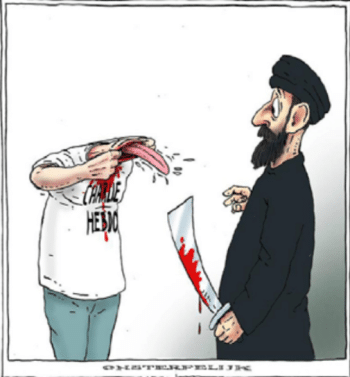
Journalism gets used to the idea that principle can be dangerous.

Multinational States to break up into national ones.

Are Clooney and wife losing touch?