Archives

OK

Random entry RSS

Loading

  • Posted in:

    Treating immigrants as we’d have our emigrants treated.

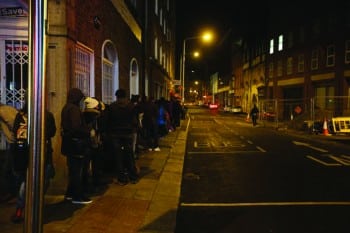
    By Edel McGinley. Enda Kenny wrote to President Obama in November to commend him on the “humanity and leadership” he had shown in his efforts to regularise undocumented migrants in the United States. The Taoiseach’s words demonstrate great empathy for the many undocumented Irish in the US and an understanding of the need for decisive, pragmatic and comprehensive action on this issue. His sincerity was so patently heartfelt it was almost as if he’d thought it through. The following day, Migrant Rights Centre Ireland (MRCI) released the results of a small survey, of 540 undocumented migrants in Ireland. Like the undocumented in the US, they are unable to travel back home for a father’s funeral or a daughter’s wedding. Like the undocumented in the US, they live in fear of contact with the authorities, afraid to report assaults or burglaries. Like the undocumented in the US, they work hard and provide essential services. The Taoiseach, who has such empathy for the undocumented, could change their lives in the morning. We estimate that there are up to 26,000 undocumented people in Ireland, including thousands of children. During the ‘boom’ years, people from all over the world responded to Ireland’s urgent need for labour. Our immigration system, constructed in a hurry and a mess of ad hoc and piecemeal policies, failed to keep up with the demand. According to our survey, 86.5% of undocumented migrants entered the State legally and subsequently became undocumented, falling through gaps in the system. Of the 540 people surveyed, 81% have lived in Ireland for over five years. One in five has been here for over 10 years. For these people, workers, children, families, Ireland is home. Abdullah is a statistical engineer, undocumented in Ireland since 2006. He runs a restaurant in Dublin, and pays tax. He speaks of feeling stuck, unable to move forward, and of the grief of missing his father’s funeral. The painful experience of watching a family funeral on Skype is now familiar to many undocumented migrants both in Ireland and the US. Contrary to the popular myth, undocumented migrants cannot claim social welfare in Ireland, or any benefits whatsoever. The survey revealed that 87% of the migrants are in paid employment. Over half of the remainder, which includes stay-at-home parents, have been out of work for less than six months. A third are current taxpayers. Over half have paid tax in Ireland at some stage, despite serious obstacles to doing so. The survey found that undocumented migrants in Ireland are concentrated in low-paid work. Undocumented workers cook and serve your meals, they mind your children, they care for older people. They clean homes, restaurants and offices across Ireland. This is a significant contribution in labour alone, but there is also consumer expenditure to consider. We estimate that undocumented migrants currently contribute €255 million a year in consumer spending. In return, Ireland’s politicians lobby for immigration reform in the US and celebrate Obama’s plans to regularise the undocumented, while essentially ignoring the thousands of undocumented men, women and children living here in Ireland. MRCI have worked with undocumented migrants since 2001. The findings of our survey are supported by an analysis of over 2,600 MRCI case files from the past five years. This is not a new problem, and it won’t go away on its own. However, there is a straightforward and sensible solution: a regularisation scheme. Such a scheme is far from unprecedented. Regularisation schemes have already been introduced in at least 17 other EU countries. Irish politicians have lobbied for a US scheme for years. Regularisations do not ‘reward illegality’, they are a common-sense response to an inescapable reality. If this issue is not addressed now, in ten years’ time we could be saying that one in five undocumented migrants has spent over twenty years in Ireland. The Government has a choice: it can act now, showing the humanity and leadership for which the Taoiseach praised President Obama, or it can wait, and knowingly allow thousands to live in fear, afraid to go to hospital, afraid to speak to a Garda, afraid to stand up to an exploitative employer, and afraid, in the case of undocumented children, to hope for any future in the only country they have ever called home. In the spirit of Christmas, let’s imagine a system where we treat our immigrants as we want to have our emigrants treated. • Edel McGinley is director of the Migrant Rights Centre Ireland

    Loading

    Read more

  • Posted in:

    (Fake) Letter from Dr O’Brien to Dr Desmond

                                                                    DENIS O’BRIEN     Denis celebrates his widening ascendancy in the rich lists with his even less-press-friendly co-baron, Dermot. Dear Dermot, Bit quieter this month. Coulda been something we said. Better off away, the likes of us. I’ll never forget your saying: “the reason I left is to have the freedom to do what I want to do. I’m avoiding politicians, I’m avoiding the press and I’m avoiding small-minded people”. Forbes. 233 in the list of the world’s wealthiest people  with a net worth of $5.2bn (€3.9bn), as of March 2013. Naughton 736 at $2bn. You 831 with $1.8bn. Get used to it Father Time. Joking aside, glad to see Intuition Publishing, your e-learning company, grew its pretax profits last year by more than 15 per cent to over €6 million – selling web-based training tools to banks and industries such as life sciences and the oil and gas sector. It has more than 150 staff, and has invested heavily in mobile phone-based training tools in recent years. Profits of almost €25 million and a cash pile of €23.8 million, according to recently filed accounts. CEO is David Harrison, top geezer, your nominee on board Independent News & Media, where you’re  the second-largest shareholder. After ahem. Bagged meself ‘Nero’, super-yacht for just over €30 million from Neil Taylor, founder of Game. Corsair theme – VIP suites, library, jet-skis. Still holdin’ onto me roots though, just. Amused to see us in the Business Post 25-year retrospective. By the way I’ve gone quiet on the whole suing the shit out of anyone who cuts across me thing so I’m not suing them for mixing me up with a ‘Denis O’Brien’ who’s being investigated by the revenue, last year.  Who owns the Business Post – ie Key Capital – anyway and shouldn’t it be us? Anyway there I am in 2007, the year I officially  became a billionaire.  Four times that in seven years.  But I’m not counting. Profile is by Richard Curran, general miseriguts.  Net point is he addresses the whole Denis/Sir Anthony thing. He quotes a “market source familiar with both men” [probably Madser from Old Belvo] saying, “This is now gearing up to be he biggest fight in Irish corporate history but the real endgame could be four or five years away”. High-five, Dr D. How right he was. Did you see the state of your man on RTé – Morrissey had a DVD DHLed to Valletta: “the jury is out on AJF O’Reilly and it will be out until the full-time whistle blows”. Cue oily grin. Well you  blew it yourself, Sir Anthony. You and I could show RTé a little what the ‘Real Deal’ means, Dermo, and it’s not Kipling’s ‘If’. Anyway then I came across yourself, ‘Mr Midas’, Ireland’s richest man at 1.23 – ironic that (see pararaph 2 above)! “I never came across any journalist I would trust to publish [your barrister’s report into the Glackin Report. I find journalists lazy and they don’t do their homework”. Beautifully and presciently said, sir. That’s enough of you. Back to me. Digicel, which has operations in the Caribbean, Central America and the south Pacific pulled in flattish revenues – $678 million (€535 million) in the three months to the end of June, the first quarter of the group’s financial year. Its net loss widened to $49.3 million in the quarter from $10.8 million in the same period of 2013 due to higher finance costs. Interest costs on its debts rose to $185 million in the first quarter from $144 million in the previous year. We increased customers to 13.3 million at the end of June, up from 12.9 million a year earlier. The results also show that “significant progress” has been made in the rollout of our telecoms towers in Burma, where we didn’t pay any ministers at all and the company bid unsuccessfully for a mobile licence. By the end of June, construction had started on 628 towers while our tenant, Ooredoo, launched its wireless services in the country. Digicel provided $22 million in the first quarter for its Burma operation. In July Digicel announced it had agreed to acquire a cable and fibre network in Jamaica from Telstar Cable. This fourth cable acquisition in a number of months increases our reach to six Caribbean markets. Digicel’s long-term debt widened to $5.8 billion at the end of June from $5.4 billion. This primarily reflects an additional $500 million in loan notes issued in December 2013. It’s all in hand, you know, we really are very profitable. Out there in the Caribbean, being charitable. Profitable and charitable. I’m interested in both, you know. I get equal fun out of business and doing things that I hope help people. We invest very heavily in poor countries and get a very good return on investment. You could easily be a kind of modern-day conquistador or a modern-day multinational and not do anything – and there are a lot of big multinationals doing nothing. However, I think you can do something impactful not in a scatter gun approach, but focus in concise areas where you bring your commercial project management skills to bear to do good projects. That obviously helps your business too. Digicel’s earnings before interest, tax, depreciation and amortisation (Ebitda) were unchanged at just more than $290 million. Nearly all of this payment went to…me. Will be in Harto’s before Australia. Morrissey will arrange. Denis

    Loading

    Read more

  • Posted in:

    In the bath with Minister for the Environment, Heritage and Local Government, Alan Kelly

    Alan Kelly contemplated his navel over the water, Irish Water, in his dirty bath. I fully accept the dirty bath, he practised, ministerially.  Errors were made in how it was run at the beginning. But they were not my errors. We will now take clean steps out of the dirty water. We or, should I say, they have not communicated why I am in this dirty bath. A drop of this valuable resource plashed into the foam.  But he didn’t cut it off. The water supply will not be reduced or cut off, he mouthed. Did I say timelines yet? Confusion. Other people’s confusion. My hyper-confidence. Fianna Fáil in the  bath. I have my ear in the  bath, listening to the people. The bath will not cost what people think. Better communication. Less confusion. €200. O Jeeeasus I didn’t say that. Less than €400. Leader Burton, in the way, those funny ideas about iquity, she said. Equetty. Ek-wetty. It sounded good. That was what he was for. While the timelines may have been dictated by the Troika, we all accept at this stage that they were simply too ambitious. I fully accept this. While I was not a member of cabinet at the time, it is important that as a Government we acknowledge that errors were made – the timelines, the complex nature of the charging structure and poor communications by Irish Water. We must now take steps to address them and we will. The timelines have led to confusion, uncertainty and huge frustration for the public. Again, I fully accept this. As a Government, it is time for us to listen and we are doing that. We are working on a package to bring the necessary certainty and clarity to the charging structure so that the public do face water charges which are modest and affordable. Many people are preparing for bills in the region of €500, €600 or €800. Based on the package we are bringing in, nobody will be paying these levels for their water. Let me repeat that, nobody will be paying these levels for their water services. I fully acknowledge there have been failures in communication.  Irish Water have correctly and appropriately apologised to its customers and elected members for this and are taking steps to remedy it. I apologise myself even though I have nothing to apologise for. Sorry. Sorry.  Apology. Eqwetty. There is nothing I will not accept. He couldn’t remember a thing about what was good or bad about water, baths or taxes. It was all about avoiding reaching for the towel. The bath was nice if dirty. Emissions. And getting hotter. Like the country’s climate. He let the hot tap run some more. Some of it splashed over the side down onto his jocks. I am on record as stating that the 2020 targets were unrealistic and unachievable and that did not take into account Ireland’s dependence on agriculture or the fact that we have one of the most climate-friendly agricultural systems in the world. This deal recognises that we have secured recognition across the EU of the importance of a sustainable agriculture  as a key consideration in ensuring coherence between the EU’s food security and climate change objectives. I made it clear that Ireland would not be signing up to any future targets that would be unachievable. Ye can’t eat the environment. Couldn’t give a rat’s arse he confided to himself and moved his head forward on its plane, like he used to do before he’d become an important man. He’d the lip under control since he’d become the big man. Fuck the climate. Doesn’t vote. Beef.  Beef, belching Beef forever he couldn’t get enough of it. 500 votes that was worth. And he emitted again. He caught a glimpse of the biggest bullox in the cabinet, through the soup below. And a night out on Macra, Christmas week. Minister for Local Government, he mused. He loved Government. But he if anything preferred Local. Local Funding he thought and fisted one out of the water. €1.1m New Ambulance Base, €350,000 Jimmy Doyle Road, €140,170 Thurles Leisure Centre, €95,000 Thurles Town Council for Pre-Approved schemes, €200 million investment in Limerick Institute of Technology’s Limerick and Tipperary campuses, €71,000 extra for road maintenance & major funding for Thurles bridge rehabilitation, €66,000 MUGA Monakeeba, €50,000 Thurles Walkway, €25,000 Thurles Boxing Club, Substantial funding for the CBS and the Presentation Secondary school and the Thurles international festival of hurling. Huzz-fuckin-Ah. And jobs. I am delighted to announce that a Tipperary company is among the preferred bidders to deliver the Government’s Jobpath programme. FRS Recruitment, who are based in Roscrea form part of the Consortium who have been selected to deliver the Jobpath programme in the Southern half of the country for the Department of Social Protection. 500 employees with their head office expected to be located in North Tipperary. Fuckin A. I haven’t even realised it’s privatisation of essential services. Better Tipp and private than the pale and public, he thought then threw himself back under the water confused. Jayz but amn’t I against privatisation? The bloody referendum.All that thinking they were expecting of him now in the senior hurling. Nobody seemed to care he’d the MPhil from Boston, founding chair Kemmy Branch Labour UCC,  former Chair Labour Youth. TD.  Minister for the Environment and especially local government.  And the other thing. MEP, BA, MPhil, Dip (Leadership) Bost, MBS. Deputy leader Labour Party. And still under thirty. Had anyone so unknown been gifted such a role (the brother, maybe)? Youngest ever Taoiseach he splashed the water which wasn’t really that dirty he thought. Imagine if he’d been in SF how he’d be poised for greaterness without Dame Joan Burton holding him back, reminding  him of his Mam. 40 he was, actually. He snarled cos no-one was looking, and gullied one into the broth. Now he was panicked. What do I understand about privatisation? What if I comes out I don’t believe in anything?

    Loading

    Read more

  • Posted in:

    Confusion on the Continent.

        Book review Don’t Mention the Wars: a Journey through European Stereotypes Tony Connelly New Island Press €19.99.   By Ronán Lynch. In late October, a Ryanair flight from Kraków to Dublin was delayed by fog, prompting an adventurous Irishman booked on the flight to take to social media to complain. After taking his children to the death camp in Auschwitz on an educational weekend, he was raging at being stuck at Kraków airport, and wrote that he and the other passengers had been crammed ‘like cattle’ into the departure lounge. Such fantastic lack of awareness and reflection is fertile ground for writers and a decade in Europe convinced RTÉ’s Tony Connelly that there was comedy gold to be mined by trawling through intra-European misunderstanding and conflict. The foreign correspondent is the professional version of the innocent abroad and has produced some gems of 20th century literature, notably Evelyn Waugh’s ‘Scoop’, based on Waugh’s own experience of covering the Italian invasion of Abyssinia in the 1930s. Covering the war for the Daily Mail, Waugh scooped a story and sent it back in Latin for secrecy. The editors thought it was gibberish and binned it. Connelly’s book does not suffer from over-sophistication. In 2009, to mark the 20th anniversary of the fall of the Berlin Wall, Connelly travelled by train through central Europe, stopping off in Germany, Poland, the Czech Republic and Hungary, and that journey appears to have given him the idea for this book. Perhaps that’s why the book sometimes has the air of a 1990s ‘Let’s Go Europe’ minus the hotel tips and exchange rates. Connelly had also visited Denmark, Sweden, Finland, France, Spain and Italy, and these countries attract the rest of his focus. The formula is straightforward: Connelly spends a couple of days talking to expats to see how their initial impressions changed after spending some time living in the adopted country, follows that with some historical background, and then wraps up with some more amusing anecdotes. So, a chapter on the Czech Republic starts in breweries, is followed by a bit of history, and then moves to a Semtex factory. Unless you’re an explosives expert, you won’t be aware that plastic explosives are a Czech invention, but do they say something about the Czech character? Is the Czech Republic synonymous with beer? The Germans and the Polish would argue with that. That’s the problem with writing about stereotypes: to undercut them requires – at the very least – sharply observed and insightful anecdotes, or reflection on the deep cultural and social mores of a country. It’s hard enough to work up the stereotypes in the few days allocated, but whatever energy was expended seems to have left none for some serious insight into any of the cultures, as evidenced by Connelly’s visit to Scandinavia. Connelly spends a few weeks travelling at low speed through Denmark, Sweden and Finland and it may take readers just as long to get through the sleep-inducing 80-plus pages devoted to the Scandinavian countries. Other bits stay in that should have gone. In France he visits a vineyard run on biodynamic principles which is inaccurately simplified as ‘organic plus’ and even ‘homeopathy’, suggesting he just doesn’t care enough about what is on offer. That’s the type of marketing exposure that vineyards simply can’t buy. Glass of homeopathic wine, anyone? Otherwise, Connelly seems quite happy to be in France but that first chapter lays out the Anglocentric bias, and of the more than twenty people interviewed, only six are French. It’s a view of France from an Anglophone journalist drawn from English-speaking sources and English historians. France has borders with seven other lands; it would have been interesting to get a bit of perspective from citizens of those countries. In places like Holland, schoolchildren learn the language of nearby countries, and common languages taught in border areas reduces the banal national stereotyping. How did linguistically diverse Belgium throw up the multiculturalism-reviling Vlaams Blok/Belang? Unfortunately, as it is, the book could be more fairly subtitled ‘A Journey through Anglophone Stereotypes’. Ask Germans and Poles for their impressions of one another and you’ll start getting some fascinating insights into each country. Poles often discuss Germans and Germany (and it’s not pretty) and assume that Germans think badly about Poland in return; they get even more annoyed to find that despite being 90km from Berlin, Poland barely registers with Germans at all. Or take Poland and the Czech Republic. A lot of young Poles gaze longingly over the border at their Slavic neighbours and admire their tolerance, freedom from religious doctrine and liberal laws. In return Czechs mock the agricultural Poles and their clerical ways, but with a bit of provocation, young Czechs might allow that they have serious questions about their own country, and even that theatrical sleigh-of-hand was at work while former leaders under communism dropped out of sight for a time, all the while moving effortlessly into dominance in new businesses. What happened to their industry, and competition? Why was Volkswagen allowed to buy Skoda? How did T-Mobile, Vodafone and O2 end up in control of the telecoms business? These issues and questions seem beyond the grasp of Connelly. The chapter on Italy comes closest to a proper analysis of the bobbling European economy, alleged cause the updating of this book. The Germans may churn out cars but do Berliners really shop in centres built to launder Italian mafia money? Apparently so – but you already know that if you’ve read ‘Gomorrah’, Roberto Saviano’s grim account of the Naples mafia and their effortless acccomodation of globalisation of commodities from cocaine to couture. Is there more than a passing link between the oligarchies of Naples and the march of global capitalism? We never find out, because we’re flying along on the surface rather than stopping to poke around a bit. The book does have a good bibliography, and points readers towards Norman Davies on Poland or Giles Tremlett’s ‘Ghosts of Spain’.

    Loading

    Read more

  • Posted in:

    Campaign

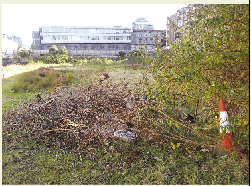
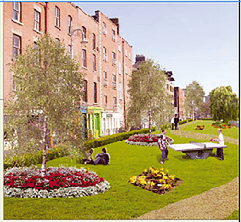
    By Ciaran Cuffe Dublin city, particularly as Hayley Farrell notes [p64-65] the north inner city, could do with more parks, and luckily there is space to spare. Apart from the dozens of parcels of derelict land under the control of Dublin City Council there are also many large sites under the control of NAMA, and other bodies. The Law Society controls a significant site beside the Luas on Benburb Street and CIE controls a large site beside the Jervis Centre. These lands could be converted to parks, even on a temporary basis as with the pop-up ‘Granby Park’ that appeared on Dominick Street in the north inner city in 2013. One of the more suitable sites is a large empty patch of land just off Church Street between Smithfield and the Four Courts. The site of the former Maguire and Paterson match factory has languished derelict for over a decade.  It is over an acre in size, and the Red Line Luas passes by its northern boundary. Tourists on their way to the Generator Hostel and the Jameson Whiskey Corner pause as they go past, and gaze down into the crater. The factory that occupied the site was demolished in 2002. Since then it has been under the ownership of the Office of Public Works. An archaeological dig in 2009 revealed traces of an old Viking House, but the site has been vacant since the dig occurred. On a recent visit to the site bulrushes and reeds were growing on the lower end of the site, and buddleia, rushes, grasses and willow trees had colonised the upper levels. A blackbird was perched next to some rubbish and a traffic cone. Even in the space of a few short years the site is developing its own unique ecosystem that could be protected as part of a park proposal. (Note to the OPW – send in the bulldozers to level off the site again, quick!) An inquiry to the Office of Public Works received a reply from Commissioner John Sydenham who stated: “The site is being retained by the State for development and is under consideration for the possible location for key institutions of State (sic) in the medium term. To this end I am afraid that we could not consider any other use for the site even on a temporary basis”. To be fair he went on to say that they would consider placing information panels giving details of the archaeological investigations undertaken at the site. They also have removed some of the ugly hoarding that surrounds the site, allowing the public to see what they’re missing in the green chasm beside them. The beleaguered north inner city is desperate for more parks and space for children to play. This could be an ideal site for sports and leisure. It is big enough to accommodate a five-a-side football pitch or basketball court as well as trees and planting. Instead it has been an eyesore for over a decade. Will it take another ten years before the OPW decide to do something with the site? Ten years ago the OPW said they wanted to build a Land Registry Office on the site. If they really need more office space they could consider using some of the Dublin Institute of Technology buildings that will be vacated arising from the move of the Institute to Grangegorman. It is unacceptable for the OPW to say they are retaining the site for ‘strategic’ purposes. In the north inner city it is strategic to plan to create an environment suitable for families! They should put up or move on and make this oasis available to the local community. Smithfield has only a handkerchief of greenery on it, and is mostly cobblestones. It always seems to come back to land in Ireland, and both individuals and institutions seem to hang on to it atavistically, even if it lies uselessly derelict for generations.  It is unacceptable that large urban sites are left empty for decades, doubly so in the hands of a public agency. The board of the OPW under chairperson Claire McGrath as well as Junior Minister Simon Harris should rethink their decision to leave these lands idle. If you’d like to see the area converted to park, even on a temporary basis why not drop a line to info@opw.ie or Simon.Harris@Oireachtas.ie, and perhaps you’d copy your email to me at Ciaran.Cuffe@DublinCity.ie. The campaign for a new park in the North Inner City starts here. •

    Loading

    Read more

  • Posted in:

    Quays are key

    By Michael Smith After the Second World War private cars began to fill the streets of cities across the western world. In the 1960s Dublin’s traffic authorities began to contemplate radical interventions to accommodate the influx of cars. One scheme involved covering the river over and using the new surface for road widening and car parking. This was rejected but Dublin’s quays are nevertheless today almost completely dominated by vehicular traffic. Traffic danger, crime, noise and air pollution makes them a blockage that cyclists and pedestrians make an effort to avoid. Some of the riverside footpaths are so narrow they can only be passed in single file.  The advent of the port tunnel has failed to alleviate the sense that crossing the quays risks a mowing down by a fast-moving juggernaut. The quays have the potential to become a great urban boulevard. The river needs to become an asset, not an untouchable sump. The quays are the city’s principal artery, indeed its most distinctive feature, and they should be a destination in themselves, not a means to an end: a great city’s living room: a worldwide urban-renewal talking point. The rejuvenated quays could support a pedestrian trail linking the IFSC and the National Convention Centre in the east with the National Museum at Collins Barracks, Heuston Station and the Phoenix Park in the west and in between inject life into the knife-edge city markets and Smithfield areas. The High Line in NewYork was conceived by two local artists who set up a trust and  spent seven years campaigning before finally convincing the authorities to solidify the plan which hovers like an oasis over the hard-edged meat-packing district. Dublin needs an alliance of residents, planners, architects and radical artists to promote something subversive of the mediocrity that can hold it back. Dublin City Council has committed to prepare a local area plan for the quays by 2017 “in order to develop the public realm of the river and anchor it as a central civic spine”. Plans are being drawn up for a change in traffic on Dublin’s north quays introducing a new two-way cycle lane and restricting private motorists to one lane instead of two, while maintaining the  bus lane. City council chief executive and zealous cyclist Owen Keegan has acknowledged the proposal would slow up traffic on the busy north quays, but told the Irish Times “It is not something that we have to apologise for…Cycling has to be for the unbrave as well”. Removing one and sometimes two traffic lanes would have an obvious short-term effect on the flow of traffic along the quays. It should not, however, be a substitute for Greening. Fresh radical thinking is needed and unfortunately for those who actually might use the space it is not possible to have an inspirational park next to lines of traffic. We should be planning for a hundred years not five years hence. While integrated with the water the whole space needs to feel self-contained. Wild greenery could be peppered with diversions such as bandstands, cafes, playgrounds, meadows; activities such as cycling and picnicking; and events including occasional markets, funfairs, film showings and the like. But the ensemble should centre on the omphalos of the city, the river. The quays should afford ready access to the river so it rings with the joy of organised leisure. Imagine a Liffey alive with boating, canoeing, swimming, diving, fishing and the like. Perhaps a barrage would be necessary to sustain the tide above the level necessary for the Liffey to become something it has not been in a century – useful. In this regard, the boardwalk is ambiguous being perhaps as much a substitute, as a complement, for imaginative thinking about the quays’ relationship to the water.  Proposals for a Suas – an overhead cable car intermittently mooted for the quays – need to be scrutinised with extreme aesthetic caution for the quays have their own gentle momentum. Inevitably, even the modest proposal from City Hall was attacked, including by the Irish Times’ Kathy Sheridan who seemed to feel Dublin with its privileges and responsibilities gets a good deal already and that the quays need to be as much for optionless commuters as for locals and Dubliners generally. She seems wedded to the notion that someone else’s environment can be ordained somehow secondary to the interests of others, specifically those of free-riding if immiserated commuters. Meanwhile there are separate but linked plans to extend the scandalously under-usable Croppies Acre memorial park, at the front of Collins Barracks, out onto the riverside, allowing for a car-free public park and two-way walking and cycle route in the vicinity. Public consultation could start in the new year, according to the city council. It’s all go in the City Council but breaking taboos shouldn’t limit its imaginative horizons to the short and medium term. •

    Loading

    Read more

  • Posted in:

    Green on Wood

    By Ciaran Cuffe It’s Culture Night in Galway. Under a small marquee a few steps away from Eyre Square plans are being discussed for the future of Wood Quay, an historic part of the city that has become over-run by traffic and parking in recent years. Students from the School of Architecture at the University of Limerick (SAUL) have been sketching out ideas for the upgrading of this historic streetscape. Currently the area is a morass of car-parking with a sliver of a park that you’d miss if you blinked while walking past. Wood Quay was one of the earliest inhabited parts of Galway. There was once a Quay where cargo and passenger boats landed from Connemara, and a potato market took place where now there are now only cars. Wood Quay is triangular in shape with narrow footpaths and is surrounded by a mixture of two and three story shops, pubs and houses. The area feels like it was busier in years gone by. The project is being run by Rosie Webb, the Galway City architect. She is hoping that the project will open up a debate about parks and public space in the city. Local people have been invited to participate, and a handful of them turned up to add their voices to the discussion. An older man raises the problem of an increasing student population who live nearby and party loudly on Thursday nights leaving detritus of urine and vomit behind. A young Brazilian couple take their cat to the small grassed area by the lake, but complain about its lack of maintenance. Cars are everywhere, parked on footpaths, on double-yellow lines, and in the allocated spaces provided. Some of the students’ projects involve reorganising or removing part of the car parking. Local businesses voice their concerns. A local paint shop owner is worried that less parking means fewer customers, but no-one is really sure. Perhaps the city could follow the example of the Dublin City Beta projects where changes are made temporarily  and can easily be reversed. This might allow a temporary park or performance area to be installed at Wood Quay. If it doesn’t work out it can be removed, and other ideas can be considered or it can simply remain in its current state. This might help avoid the cost over-runs that occurred when the city’s Eyre Square was redesigned a few years ago. It could well turn out that a carefully designed small public park might become a catalyst for the regeneration of this historic area. However, in order for changes to be acceptable they will have to be made in partnership with the area’s residents and businesses. An important issue that comes up time and time again is the lack of management and maintenance of the public domain. These issues will have to be addressed by the Local Authority and An Garda Síochána if residents are to feel confident about the area’s future. It won’t be easy to achieve though, as Government and elected representatives are under pressure to reduce Local Property Taxes and spending wherever possible. Galway’s economy is heavily reliant on tourism. Certainly Wood Quay is underperforming, and improvements such as introducing a well maintained larger park have the potential to revolutionise the area. The conundrum in Galway is typical of the challenges facing towns and cities around Ireland. A spiral of decline has led to families living further out of town and commuting in by car. Much of the town centre is left to a transitory population of students and temporary workers who have not the clout or commitment to improve the area that they live in. More parking is then required which consumes the space that could be given to other uses such as parks, playgrounds or markets. One way of breaking this vicious circle is for Councils and citizens to come up with a vision for what improvements it might be possible to achieve in the short to medium term. The people of Wood Quay have yet to agree on the common vision for the future of their area, but the work with the Council, the area’s residents and the students from the University of Limerick appears promising. •

    Loading

    Read more