
Posted in:
Village Idiots February 2015


Ireland's political and cultural magazine
Posted in:
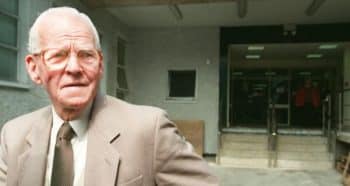
Twenty years ago Colm MacEochaidh and I offered a reward of £10,000 for information leading to the conviction of persons on indictment for rezoning corruption. I had spent a year campaigning against a controversial rezoning of attractive fields in Cherrywood, Co Dublin, pushed through in murky circumstances by Monarch Properties which was subsequently found to have acted corruptly. I wanted to get to the bottom of it. We needed to do something dramatic as a) tribunals had been discredited following the weak Beef Tribunal report and b) there was a perception – following an Irish Times investigation by Frank McDonald and Mark Brennock (George Redmond’s son-in-law), billed as ‘Fields of Gold” which had managed to name one, but only one, dead (and therefore defenceless), councillor as corrupt – that planning corruption was a ball of smoke. Our anonymous stratagem was fronted by Newry Solicitor, Kevin Neary. He eventually received 55 separate sources of information. We threatenedthat, unless immunity was granted from prosecution to whistle-blowers and ultimately a tribunal – which we said should be cost-effective and streamlined like the British Scott Inquiry – instigated, we would start naming the people about whom we were receiving serious and verifiable information. We also introduced our informants to journalists who, once they verified the information, printed it. Our best informant was James Gogarty. We visited him in his house in Sutton. He was pleasant but a little cranky, determined to nail his employer for, as he saw it, shafting him on his pension. Gogarty had been persuaded to go back to work for Joseph Murphy Structural Engineering – a building company, after his initial retirement. He was particularly venomous about Joe Murphy Junior who he saw as an upstart. He was bitter that the then Minister for Justice, Nora Owen, was not taking his claims seriously enough and he ventilated about Seamus Henchy, a Supreme Court judge.What he said to us about Owen, Murphy Jr and Henchy had to be taken witha pinch of salt. But what impressed us was the information he had about a bribe he had paid one-time Environment Minister, Ray Burke. For us it was morally certain that the information about Burke was true, since it was backed by documentation and had to be extracted from him, while he really only wanted to moan on about his pension. He was disillusioned with the failure of the Irish Times to take his story seriously and it took some persuasion to get him to talk to any other newspaper but in the end he spoke to the Sunday Times on the eccentric basis it was not Irish. In the end this did not work out and he only really became confident when we linked him to Frank Connolly, then of the Sunday Business Post. A lot of the information we received was rubbish – one man said he knew the burial place of racehorse Shergar but several of the allegations resulted in criminal prosecutions or appearances before the planning tribunal. The pressure built up through Neary’s appearances on the media, Connolly’s articles in the Business Post, some pieces by Matt Cooper in the Sunday Tribune and an article by John Ryan in Magill, ultimately made a tribunal unavoidable, and it was duly established in 1997. In the end it established corruption against Ray Burke and Padraig Flynn and resulted in the resignation of Taoiseach, Bertie Ahern, who made up a cock and bull story about a digout in order to avoid questions about unexplained sums of around €200,000 that passed through his accounts. We never paid the reward as no-one claimed it. The £10,000 went in legal fees. Ultimately, the tribunal found systemic and endemic planning corruption in County Dublin. So far so good. But it had relied too much on two whistle-blowers, Gogarty and Dunlop one of whom was sporadically unreliable and the other of whom was serially mendacious. The judges and lawyers who cost so much and took so long simply didn’t have the nous to investigate the allegations presented to them, forensically. Particularly when Judge Mahon took over from Judge Flood the tribunal found both too much and too little. It found mostly against those whose reputations were already destroyed. It did not make some of the findings that it could have made not just against Bertie Ahern but also against many other senior serving politicians. It also perhaps made too many findings based predominantly on the evidence of the serially dishonest Dunlop. It did not find a street-wise way of analysing evidence where there was not a whistle-blower and much of its proceedings were ill-focused. In the Cherrywood rezoning, for example, a number of councillors had changed their minds and voted for rezoning, after they’d been paid money by the corrupt developer or corrupt Frank Dunlop. They weren’t even asked to explain their changes of mind though, even before we knew that there was any corruption, campaigners had (in 1993) hammered the mysteriously-changed minds as suspicious. Where the tribunal had failed to ask the right questions in several cases the report simply omits the issue, including the failed line of questioning, completely. Someone should research how much money and time was wasted pursuing issues that were never resolved. The judges and their legal teams fell short and were laid bare by an admittedly over-zealous Supreme Court. That is not surprising when you consider the same minds allowed the tribunals to go over budget and over time. The mentality is captured by the attitude of the judges when John Gormley, as Environment Minister, arranged for Mahon to be aided by two other judges. When he asked the judges how much time the extra judicial repower would save, on the assumption they’d divide up the material to be investigated in three, he was told that if anything it would take longer than with one judge only, as they were going to sit together in every case. In the end court decisions have resulted in the unravelling of all adverse

BID (Business Improvements District, now known as DublinTown) is a not-for-profit quango, funded by hundreds of retailers in an area, 2,500 of which are compelled by the City Council – acting under the Local Government BIDs Act 2006 – to pay an extra rate to it. Businesses must vote in favour of becoming a Business Improvement District in order for it to be established. BID’s role was originally to ensure that an area would be clean, green and accessible. Its chief executive is Richard Guiney formerly prominent in the Dublin City Business Association and its chairman is Ray Hernan, CEO of Arnotts. Itsboard comprises city business people and councillors including myself and Ciarán Cuffe, as well as Rose Kenny, Dublin City Council Area Manager. The problem is that its principal functions are already dealt with by the City Council. Additional tasks undertaken by BID, a US-inspired initiative much promoted by the City Business Association, include intense cleaning such as graffiti removal, managing the Christmas lights, tackling the anti-social behaviour that obsesses its members, organising festivals, collecting waste, ‘lobbying’ and ‘branding’. Ultimately it seems that BID is more concerned with employing marketing companies to gure out what consumers are buying than it is about husbanding ratepayers’ and taxpayers’ money to make the city a cleaner, safer place with. BID is attempting to run before it has shown it can walk. The problem for its beleaguered compulsory members is that its functions are ill-defined and many claim that despite its expansionary intent it is not delivering on its original functions. Business owners in Capel St recently took the BID to court and won their case, and some are now seeking to exit the BID and be free of the extra rate levy. BID has brought us branded quarters like Dame District, Talbot Area District and the Creative Quarter. It even has ambassadors directing the public to top Dublin attractions. It is improper, against a background of suspicion of local authorities and the indictment of the Temple Bar Cultural Trust for the City Council to collect over €2m as an extra rate levy forBID/Dublintown, but to have no audit control on how or where this money is spent, if only because DCC is the overriding rating authority. I have a motion before DCC calling on councillors to instruct the CEO to forensically audit this company. At its most recent EGM a strong group of members including some on the Board challenged the CEO and the chairman about a process that would give the BID company the legal right to borrow moneyand begin to acquire property, including for a €1.5m headquarters in the former TSB on Lower Abbey St. Serious questions were raised by members of the organisation about whether such functions wereultra vires the objects of the company and the terms of the 2006 Act. The meeting collapsed in acrimony over the issue of allegedly dubious proxies. Tempers were further frayed by the secrecy of BID/DublinTown’s salvo with Dublin City Council into the Christmas Market business at St Stephen’s Green in 2014, franchised to an outfit called Milestone Inventive whose shareholders include Enterprise Ireland. Due to its faux-ski-resort tackiness, over reliance on fast food and beer and close proximity to what is already a very busy commercial area, this so-called Christmas market caused great annoyance to many local rate-paying businesses, including many BID members, to the Restaurants Association of Ireland and car-drivers. Dublin City’s CEO, Owen Keegan professed himself “underwhelmed” by it, and it duly made noises about improving for next year. BID/DublinTown company is primarily interested in Dublin’s big-beast retailers: BT, Arnotts, Clearys, O’Carrolls Gift Shop, the Ilac Centre etc. It appears more concerned with employing marketing companies to gure out what consumers are buying than it is about making the environment of the city a cleaner, safer place. While some of this might be admirable in its place, it is undemocratic and perhaps even illegal to do so with rate-payers’ money that has been compulsorily extracted from hard-pressed businesses. It also gets the City Council o the hook for some of its own delinquent services. Unsurprisingly, the CEO of Dublin City Council is not impressed by BID marketing initiatives or its property adventures, but claims to be legally powerless since itis accountable only to its own shareholders. The BID/DublinTown brand with its limited remit is inconsistent with Dublin City’s own brand of promoting Dublin. The arrogance and indifference of BID’s current leadership has ensured the discontent of many BID members and will ensure their downfall or discontinuance. It is marshalling its diminishing credibility to ‘love bomb’ Sinn Féin, frantic to burnish its business credentials, the biggest group on the Council – one time bolsterers of now disgraced Temple Bar Cultural Trust. As a Board member of BID I have little confidence in the company. A Business Improvement District’s mandate is for a maximum of 5 years. A Business Improvement District wishing to continue beyond 5 years must reaffirm its mandate through another ballot, based on a further proposal. I support the bid for freedom. • Mannix Flynn
Posted in:
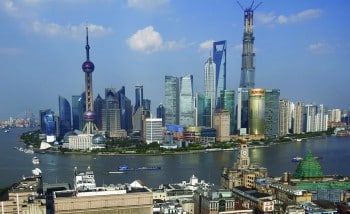
By Peter Emerson. Nineteen eighty-five: Mikhail Gorbachev; the start of the end of Soviet communism. Those were exciting times. The collapse of the Berlin wall, the first Russian elections, the quests for Georgian/Lithuanian independence, and so on. Life was changing, fast. And even those who opposed such changes, like those of the Albanian regime, with their sealed borders of barbed wire and a ‘no-man’s land’ of mines, could not prevent the winds of change blustering into Tirana as well. There was no stopping a movement whose time had comprehensively come. Exciting, and dangerous. The first inter-ethnic conflict was in 1988, in Nagorno-Karabakh. This was followed by more wars, in Georgia – Abhazia and South Ossetia – in Moldova, Tajikistan, throughout Yugoslavia, and the problems rumble on, now in Ukraine. For many non-Russians, then, the excitement ended in misery; while in Russia itself, there was first economic collapse, and then the rise of authoritarianism under Vladimir Putin. 1978; Dèng Xioǎping; China; the embrace of capitalism and global markets leading to galloping economic growth and then came the internal party disputes, the first against the rightists, some versus the revisionists, and the last against the leftists, the Gang of Four. Exciting and dangerous times now from Táiwān in the East to Xīnjiāng in the West and even Hong Kong – as well as many socio-economic and environmental problems. There is talk of democracy, socialism etc., with “Chinese characteristics.” Well, what might they be? One clue lies in the language which is dichotomous. One sentence could be: you can/cannot speak Chinese? – nǐ huìbùhuì? Another might read, Ireland is very beautiful, yes or no? – duìbùduì? Furthermore, the history of the Chinese Communist Party is riddled with binary struggles, initially against the perceived minority of landowners and kulaks (slightly better-off peasants). In fact, early communist policies were often based on a majoritarian ethos; and many, in the villages, were sent to their deaths by majority vote. Is it wise, then, for westerners to argue for a majoritarian democracy in complex territories? And socialism? Well, there’s not much of that either, not yet anyway. During the course of the last century, the influences from Moscow on the politics of China have been enormous. The lessons from the collapse of the Soviet Union have already been learnt in Beijing. If China is to have its dream, it will indeed be exciting; but first things first, it must suppress the danger. The Socio-political questions China (Zhōngguó, the Middle Kingdom) – the People’s Republic of China – is a one-party state of over 1.3 billion mainly Hàn people. It is also home to 55 recognised minorities, some of which, like the Hakka (Kèjiā), are quite large by Irish standards – there are 80 million of these. Another is the ‘Muslim’ community, although Buddhists and other religious groups are not classified in this way. Some minorities, as in Tibet (Xīzàng), have their own language and a very strong sense of identity, even if many Tibetans live in neighbouring provinces like Qīnghǎi and Sìchuān. Meanwhile, the Uyghers (Wéiwú’ěr) in Xinjiang share their province with others – Kazakhs and Tajiks, for example, not to mention lots of Han, many recently arrived. Han settlement programmes have also been underway in Tibet and Inner Mongolia (Nèi Měnggǔ). Problems, then, abound. Taiwan – the Republic of China, to give it its official name – is a multi-party democracy. Initially, the Kuomintang (KMT – Nationalist Party) fought for a one-party state, first on the mainland, and then, after 1949, on the island. In the 1990s, it adopted a more western structure – i.e., one based on the two-option majority vote – and so, like Britain, Ireland, the United States, etc., Taiwanese society has also divided into two main blocks: the blue, the KMT and allies; and the green, the opposition. Furthermore, there is talk of a constitutional referendum on the question of independence, and all too little awareness of how this might affect mainland China: Xinjiang, for example. Then there’s Hong Kong (Xiāng Gǎng – Fragrant Harbour). Under British rule, the locals got second-hand double-decker buses, left-hand drive, a reputation for plastic, no cycle lanes and no democracy. Only when the colony had to be handed back did the British suddenly get terribly concerned about governance. Hence, the present arrangement, which is binding for just 50 years: one country, two systems. Hong Kong has elections but, at the moment, candidates for the top post are first vetted by Beijing. The 50-day protest blockades and tents have now been cleared; these somewhat disparate groups of students and others can nevertheless rest assured that their mainly peaceful demonstrations have definitely had an impact. The mistakes of 25 years ago in Tiānānmén Square transcend. The Socio-economic questions China operates a draconian regime for consumers. In Tiānjīn, for example, only some car owners can drive on certain weekdays, depending on their cars’ registration numbers, but all of them can drive on Sundays – which means the day of rest is one of frustrating traffic jams. The basis of the policy, however, is absolutely sound: if the city’s population is to be able to breathe, there have to be limits as to how much pollution each individual can cause. It is a question of human rights. Similarly – despite the many, horrific stories which relate to its implementation – the basic idea of a one-child policy is sound. If the human and other species are to survive, there have to be limits. And China is actually trying to restrict the otherwise Malthusian growth of its urban Han population. Here too, then, the problems are huge. Every year, millions of people migrate from the countryside to the city; Chóngqìng, for example, has an annual increase in its population, the size of all of Belfast’s. The city is the basic administrative unit, and it is large; towns are few; and just beyond the urban boundaries is an endless scattering of villages, all under the authority of the city. The urban

Posted in:
Stop Feeding Your Cancer: One Doctor’s Journey Dr John Kelly Pentheum, 2014 $13.99 Review by Frank Armstrong A documentary called ‘Cowspiracy’ is currently doing the social-media rounds. In time it could have an influence comparable to Al Gore’s ‘An Inconvenient Truth’ as the devastating impact of animal agriculture and fishing is laid bare. ‘Cowspiracy’ takes aim at how prominent environmental organisations, including Greenpeace, fail to bring this number one cause of climate change and biodiversity loss to the public’s attention. The sources of funding for environmental organisations are also questioned and the powerful reach of the animal agriculture industries highlighted. Another Cowspiracy seems to operate in the medical community where unwillingness to engage effectively with the crucial importance of diet, especially the observed benefits of plant-based approaches in terms of longevity and incidence of pathology is apparent. A host of epidemiological studies, notably the Oxford Vegetarian Study in 1999, have shown that those on plant-based or largely plant-based diets live longer and have lower disease risk including of cancer. Yet, despite this being well established in the peer-reviewed literature, there are few peer-reviewed studies on the link between cancer and diet. In the absence of hard evidence those who advocate plant-based nutrition as a form of treatment are dismissed as charlatans. It’s a scenario that suits the pharmaceutical industry that funds most research. Recently John Kelly a Dublin-based general practitioner of long-standing was inspired by T Colin Campbell’s ‘The China Study’ to take matters into his own hands and encourage cancer patients to adopt plant-based diets. He developed an informal study of cancer patients who he persuaded to adopt that diet, and has just written a book about it. He claims: “Rigorous adherence to the diet showed extraordinary results; those who lapsed suffered relapses and declined in health”. Kelly will be criticised for failing to incorporate peer review in his methodology, leaving him and his work open to the imputation of cherry-picking data for ideological reasons. But there is no indication that Kelly is an ethical vegan using the false promise of long life to persuade people to stop killing animals. Indeed, at one point he suggests that eating fish does not have the same carcinogenic effect as consuming meat, dairy and eggs. Moreover Campbell himself pointedly avoids describing himself as a ‘vegan’ preferring instead to advocate a “whole food, plant-based approach”. Campbell used animals for laboratory experiments which Kelly refers to in passing, without comment. Indeed the data which Kelly finds so compelling are derived from trials conducted by Campbell using laboratory rats, in which two groups were infected with cancer. The first group was given a diet comprising 20% animal protein. They all promptly died. But the second group was given a diet of only 5% animal protein, and all survived. Campbell performed these experiments after observing a lower survival rate among affluent human cancer patients who had diets high in animal products compared to their impoverished peers, in the Phillipines. In the laboratory Campbell also found that vegetable proteins did not promote cancer, even when eaten in very large amounts. Kelly might also have engaged with a greater range of research in the field, notably a recent study by Dean Ornish showing that the growth in the number of prostate cancer cells was related to the consumption of animal products. He could also have explored criticisms of the ‘China Study’. For his own cancer patients Kelly found that “rigorous adherence to the diet showed extraordinary results; those who lapsed suffered relapses and declined in health”. Some patients found the conversion too difficult, and tragically died. He did though discover that it did not have a beneficial effect on cancer of the pancreas for reasons he explores. Surprisingly, according to Kelly: “The main obstacle to patients given the diet on trial is the fact that no support has been forthcoming from the cancer specialists”. Worryingly he notes: “When patients mentioned the fact that they are considering the diet to their specialist they are routinely told that they are wasting their time”. Kelly attempted to bring the contents of the book and his own research to the attention of specialists but was rebuffed. He argues that: “The minds of cancer specialists were so cluttered with their pharmaceutical and surgical obligations that they were unable to accommodate critical revisionary thinking”. He also acknowledges that “Persuading patients suffering from cancer to eliminate animal protein from their food intake is especially problematic in Western countries, where dairy and meat are very much a part of the diet”. He admits to a paradox where “the fact that our favourite food is also the favourite food of cancer cells doesn’t compute”. On the other hand he also found that many of his patients were perfectly happy with the new regimen. This coheres with Campbell observation that over time an individual’s taste will change after adopting a 100% plant-based diet. But Kelly still sees a place for current cancer treatments. He writes: “When my patients query the value of medication in a general sense I always remind them of the time-tested benefits of sound pharmacology”. Of course if the state medical authorities accepted the argument that a whole-food, plant-based diet is indeed the best healthcare policy this would have huge repercussions for the powerful agricultural lobby. But Kelly warns Simon Coveney et al: “change happens whether one likes it or not; so, perhaps far better to be driving change than burying one’s head in the ground like the proverbial ignorant ostrich”. Irish agriculture may be producing increasingly obsolete foodstuffs for sale in affluent, educated countries that will be the first to jettison them. Recently the huge American healthcare provider Kaiser Permanente adumbrated that: “Physicians should consider recommending a plant-based diet to all their patients”. The Cowspiracy attests to the difficulty for individuals even those in the healthcare or environmental sectors to make profound dietary change. Until individuals empathise with the pain and suffering of other animals this may well be insurmountable. History
Posted in:
By John Gibbons and Paul Price. It is difficult to get a man to understand something when his salary depends upon his not understanding it”. Novelist Upton Sinclair’s famous observation could well have been describing Agriculture Minister, Simon Coveney, a rare ambitious and ascending star on an otherwise jaded Fine Gael front bench. Coveney’s understanding of the most basic of scientific facts will clearly not encumber his possible trajectory towards the goal of being Cork’s first Taoiseach since Jack Lynch. So, when Coveney appeared on a recent edition of RTÉ’s ‘PrimeTime’, only the thinnest of smiles betrayed the fact that he was selling a series of fat porkies on national television. Coveney’s claim that the Irish dairy herd could be expanded by over 300,000 cows in the next five years “while maintaining the existing carbon footprint of the agriculture sector” is, he must well know, nonsensical. To defend it, he engaged in some unconvincing waffle about higher yields per animal somehow magically offsetting the massive increase in our national herd. This manifest nonsense is blown out of the water by data from the Environmental Protection Agency, which show that methane (CH4) emissions from ‘enteric fermentation’ in Irish dairy cows actually increased, from 101kg per head per annum in 1990 to almost 113kg per head in 2012. Methane is a potent greenhouse gas, at least 28 times more powerful as a heat-trapping gas per molecule than CO2. The reason for the large increase in as few as 20 years? Almost certainly, it’s greater dairy intensification. So much for Coveney’s blarney about higher yields lowering emissions. This sleight of hand also conceals a much wider truth about the nature of greenhouse gas emissions. And that is, what goes up, for all intents and purposes, stays up. Each year’s emissions are yet another warming addition to the human-caused accumulation in Earth’s atmosphere. So, even levelling annual emissions adds to total emissions and climate risk. It is the sum of accumulated emissions to date, and the future emissions we choose to add to that absolute total that counts, not any efficiency measure such as emissions per animal or per kilogramme of milk or beef. The atmosphere does not care about ‘efficiency’ or ‘yield’ it just traps more heat as humans add to the sum total amount of resident greenhouse gases. This is important because anyone who tries to argue that improving efficiency somehow reduces emissions does not understand reality, or does not want us to. Simply put, any given global warming policy limit, such as the 2ºC Ireland has signed up to, has a related amount of remaining emissions that can ever be emitted. Taking from Ireland’s share of the global carbon budget is a zero-sum game: more, used now by us, simply means less for others, elsewhere or in the future. In opposition, Coveney had a clear grasp of the reality of climate change. Indeed, he spoke publicly that what he knew about the science of climate change “sent shivers down my spine”. But of course, Coveney was merely the Environment Spokesperson then, and free to speak truthfully since he had no actual political power. That was then. Since becoming Agriculture Minister, Coveney has quickly embraced the first rule of his office: keep the IFA off your back. And the IFA has applied its formidable muscle to vehemently opposing even the most modest steps towards addressing climate change. This is deeply ironic given that agriculture is, by definition, highly weather-dependent, and therefore uniquely exposed to the impacts of the very same climate change that farmers’ leaders are busy convincing themselves and us is ‘not our problem’. The IFA is following the same mad, tragic logic as the global fishing lobby which has stymied every effort at imposing science-based fisheries quotas and which, in its thirst for short-term gain, is systematically wiping out the very basis of their livelihood for the future. While Coveney is snared by his ambitions, and the IFA blindsided by its inability to think strategically, where are the expert advisors in all this? Teagasc is the semi-state body, 75% paid for by Irish and EU taxpayers, that supports science-based innovation in the agri-food sector. Is Teagasc’s definition of ‘carbon footprint’ the same as climate science’s ‘sum total’? No, it is not. Instead Teagasc repeatedly redefines carbon footprint as ‘production efficiency’ based on emissions per unit product. Nowhere is this clearer than in the 2011 publication ‘Irish Agriculture, Greenhouse Gas Emissions and Climate Change: Opportunities, Obstacles & Proposed Solutions’, in which Section 3.4 “From absolute emissions to emission intensities” spells out the codology: “Under Section 5(9) of the Climate Change Response Bill, sectoral plans must account for the need to (a) promote sustainable development, (b) safeguard economic development, (c) take advantage of economic opportunities within and outside the State and d) be based on scientific research. Under these criteria, Teagasc contends that an ‘absolute emissions’ metric is inappropriate for the agricultural sector”. The Earth’s climate system is entirely indifferent to economic imperatives. All that matters is physics. X amount of additional emissions begets Y increase in average surface temperatures. And known increases mean measurable, extremely dangerous and largely irreversible impacts on all life on Earth, be it human, dairy-cow or polar-bear. All that matters to the climate system is absolute emissions. For Teagasc, a body claiming to be science-driven, to describe this metric as “inappropriate for the agricultural sector” strongly suggests the organisation has undergone ‘agency capture’. Instead of being the arbiter of the best available scientific evidence, it sees itself as ‘pulling on the jersey’ for its many friends and colleagues in the agriculture sector, the people it works with every day, the people who it identifies with. If the facts about the impacts of climate change are inconvenient or likely to create tensions between Teagasc, the Minister and the IFA, well, let’s find some other, less unpalatable facts, dress them up with some scientific-looking charts (while burying the uglier realities deep in the bowels of their reports) and,

By Frank Connolly. Judging by the speakers at the massive rally in Dublin on 10th December against the Government’s water charge regime, the protest is far from over – and it is no longer just about water. Despite media efforts, most notably in RTÉ, to downplay the scale of the mobilisation on a mid-week, mid-winter, working day, the turnout was impressive with up to 60,000, at its peak, gathering at Merrion Square for the speeches and entertainment. Although there were plenty of Right2Water, Sinn Féin, anti-austerity and People Before Profit banners the crowd largely comprised working people, young and old, from across the country who are clearly of the view that water is one charge too many. While there are differences of opinion on whether water charges, even as a conservation measure, are wrong in principle, or whether people should be encouraged to break the law and refuse to pay, those on the march appear to be of a mind that the issue has moved on: to the credibility of the Government itself. In their contributions from the platform, Gerry Adams, Richard Boyd Barrett and Clare Daly, among others, predictably made the government parties the target of attack, not only for their mishandling of the water debacle but for all the other austerity measures that have devastated the lives of so many, and forced the young away in droves, over the past six years. Trade-union speakers warned of the hidden agenda of privatisation that clearly influenced the architects of the new water regime, most notably the former environment minister and now EU Commissioner, Phil Hogan. The dramatic climbdown on charges and the decision not to deploy metering until well into the life of the next government may not be enough to persuade sufficient numbers of a deeply sceptical, and cynical, public to register with Irish Water by next April. Already the forces of the Right are railing against the prospect of Sinn Féin as the lead partners in a Left administration. Efforts to construct a new party from former Fine Gael and other right-wing independents around Lucinda Creighton or Shane Ross, or even Michael Fitzmaurice, reveal a level of disarray that is seriously frustrating for those most fearful of a Left alternative. Within the government parties there is an element of panic over opinion polls that suggest that many first-time TDs elected in the 2011 ‘democratic revolution’ will remain just that. The desperation is most acute for Labour given recent figures that suggest it will be lucky to retain 10 seats from the remarkable 37 they won last time. But Fine Gael too is in trouble as it drops below 20% from its election high of more than 36%. Although these trends can, and most likely will, be reversed as the election approaches and voters interrogate the actual detail of party policies, there is no question that a fundamental change can be expected in the historic year of 2016, if not before. Fine Gael may cobble together something with a bloc of like-minded independents, or if it comes to it and needs must, in a coalition with Fianna Fáil. The Left, on the other hand, can always snatch possible defeat from the jaws of victory by failing to take an opportunity to generate fundamental political and radical change. It can do its best to convince people that socialists and their progressive allies could never really run an economy (unlike those bright sparks in FF, the PDs and FG) or it can seek to provide solutions to the challenges that confront the Irish people over the coming decade. There is a potentially sizeable bloc of progressive parties, and of left-wing and independent TDs who could help propel a real alternative to the various formations on the right. This would require a dramatic initiative by trade unions, community organisations, progressive NGOs and think-tanks, Sinn Féin, Labour and other serious left-leaning politicians and parties, in the new year. It would be aimed at finding an agreed charter for government that can embrace the key concerns of an austerity-fatigued electorate and be focused on radical political reform; the replacement of regressive charges, including the hated USC; on water and property taxes; and promote a progressive taxation system that targets corporate and other wealth. It could address fairness and equality, low pay, poverty, youth unemployment and emigration, and public and private debt. Given the approaching anniversary of the Rising, it could set out the strategy for an agreed, democratic and genuine Republic. To succeed it will require a degree of ambition and political courage that has been absent for too long in the culture of the Irish left. •