
Culture

Random entry RSS

  • Posted in:

    Conor Lenihan reviews ‘Up Like A Bird’, by Brendan Hughes: an edifying and fair account of one of Republicanism’s most colourful serial escapees and bank-robber, who has little to say about today’s Sinn Féin’

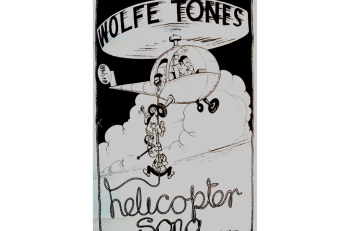
    ‘A founder of the East Tyrone Brigade, Hughes was the key planner of the two most successful prison escapes staged by the IRA of the 1970s’ ‘The springing of three IRA men from the rooftop of Mountjoy prison by helicopter caused a sensation, as well as inspiring a hit ballad by the Wolfe Tones’   This is one of most edifying works produced by a senior member of the IRA. During his period of active service, Hughes survived both British and friendly fire before leaving the IRA or, as he delicately puts it, the IRA leaving him, in 1975. This book is an account of his experiences, recounting daring plans and prolonged bouts in prison. A great many of the colleagues mentioned are dead and those who have survived are either household names or have their identities disguised.  Co-written with Kerry-based journalist Douglas Dalby, the book also includes photographs from the late P Michael O’Sullivan, who was given exclusive access to document IRA operations – including some that Hughes himself was involved in. Hughes is laudatory of the photographer, stating that “he never hid when the firing started”.  The views expressed are balanced, and while a few of his pet-hate individual IRA members and jailers get singled out for special mention, Hughes says of prison officers and gardaí in general: “A few gave me a hard time, but the vast majority were decent people doing a job”.  A founder of the East Tyrone Brigade, Hughes was the key planner of the two most successful prison escapes staged by the IRA of the 1970s – much to the embarrassment of the  Cosgrave Fine Gael government of the time. The springing of three IRA men from the rooftop of Mountjoy prison by helicopter caused a sensation, as well as inspiring a number-one hit ballad by the Wolfe Tones. Less than a year later he engineered the mass escape of himself and 18 colleagues, this time from inside Portlaoise prison.  Skilled at more than organised prison escapes, Hughes’ meticulously planned bank robberies in the Republic and made enough of a splash to get his own hand-picked IRA unit, to raise  funds for the movement. His initial decision to move from his job as a plasterer to full-time active IRA membership was caused by the discrimination he felt as a Catholicgrowing up near Coalisland, Co Tyrone. In the late 1960s, he had thrown himself into the agitation of the Northern Ireland Civil Rights Association. He seized a home for himself and his family by squatting there.   “We tried politics and the state beat us off the streets. I don’t recall any fear or doubt. I hated them. I couldn’t wait to get going”.  Hughes suspected the British were using the 1975 ceasefire to harvest intelligence on the IRA. He offered to perform a few “deniable” operations against them but senior leadership turned him down. That was when he began to realise that he was being dropped. He was offered a small sum to take a break with his wife and family. “I felt it was disrespectful after all the years of work and money I had brought in. I suppose that, stupidly, I had developed a sense of entitlement”. He went rogue, starting his own for-profit bank raids which made him both a pariah and a threat to the organisation. “I had let myself, and most of all my family and close friends down. I make no excuses for my behaviour, but it seemed the best option at the time”. Thanks to the peace process, there are now a number of seminal accounts of life within the IRA – from those with no regrets, like Hughes; those who changed sides, like Eamon Collins; and those who infiltrated the Republican movement on behalf of the British, like Willie Carlin. It was the graphic but apparently untrue narrative by the informant Sean O’Callaghan that prompted Hughes to pick up the pen and set the record straight. It is to be hoped, as the years pass, we will gain more reliable reports of what exactly happened in the North. This was a squalid conflict. History,more than sectarian struggle, needs to be recorded – so that the people can move on.  Hughes didn’t leave prison until 1999 and his career in the IRA ended before the peace process started Now splitting his time between the Republic and the North, he firmly sees the era of armed struggle as over. He has little insight to offer about modern Sinn Féin, only the rather sanguine advice that people should try them in office and see if they succeed – if not, they can always just throw them out again.  Hughes himself said it best: “I never felt more alive than I did back then. But don’t listen to any of that shit about living fast and dying young. I may have treated it like a game at times, but it wasn’t like that”.

    Loading

    Read more

  • Posted in:

    An Elegant cacophony: Fontaines DC at the Iveagh Gardens.

    Fontaines DC have become part of rock’s rich tapestry,  living proof that rock’s canvass is far from complete. Countless band set out to bring something new to the party. Most fail. Fontaines deliver in spades. Better again, they do so with an intelligence that permeates the lyrics and music. The group kicked up a sonic storm at the first of their two gigs at Dublin’s Iveagh Gardens on Saturday night. The hurricane was sustained by waves of intricate cross patterns delivered by the band’s guitar players, Conor Curley and Carlos O’Connell. The sensation was intensified by a series of teasing, delicate otherworldly sounds that made fleeting appearances. Grian Chatten’s mesmerising mantras  locked to the propulsive explosion of Tom Coll’s drumming; and Conor Deegan’s hypnotic bass completed a wall of sound that dominated the venue. A lot of bands labour to achieve a sonic atmosphere such as this live;   Fontaines DC do it at the flick of a switch. The future of rock ‘n’ roll is in safe hands and they are Irish, poetic, elegant and loud.

    Loading

    Read more

  • Posted in:

    Rory O’Sullivan reviews the compelling ‘It Is Good We Are Dreaming’ at the New Theatre, Dublin: Western ennui, our heads and our exterior faces

        These days normally we divide the world into halves: one which is inside our imagination, and another which is real and outside of us.   The first half includes things like love, sentiment, beauty, laughter, and is necessary for our own sanity but a dangerous falsity; the second is bare and severe, a brutal volcanic eruption of the elements on the periodic table, spilling over themselves onto the ground, life as a devouring tapeworm in the stomach of a small child.   Historically, ideas tend to have been veiled behind opposed contradictories. Here and now these two things: the blissful dream and the terrible sober waking morning, only seem to be in conflict with each other, but in fact they are mutually supporting.   Hedonism has power only because it is considered the sole alternative to what Kurtz saw: “The horror! The horror!”.   On the other hand, hedonism tranquillises people and stops them from fighting for the world, or even just looking out at it for themselves: it allows a certain image of the ‘real’ world to be forced on people as if it were something beyond their capacity even to observe.   Pages and pages have been written on the malaise – depression, anxiety, indifference – characterising young life in the contemporary West.   Malaise for example is at the core of Sally Rooney’s books. But the heart of this malaise is a belief, which goes by the name of ‘unbelief’, that the world is simply a horror from which our only refuge is one or another variety of hedonism.   Baudelaire’s word for that malaise was “ennui”.  The great French critic, Sainte-Beuve, horrified with Baudelaire’s poetry, wrote that it was “where the pleasure of ornament is united with self-inflicted torture”: “the extreme point of the Romantic Kamchatka [in furthest Russia]”.   But now ennui has become the frozen climate of every city that calls itself ‘Western’.   But now ennui has become the frozen climate of every city that calls itself ‘Western’.   The greatness of the sadly missed cultural theorist Mark Fisher was to perceive this, which he called “Capitalist Realism” – neither a political nor artistic strictly speaking, but a spiritual phenomenon.  It is about our current collective relationship with the real.   In this play, ‘It Is Good We Are Dreaming’, written by Ultan Pringle, directed by Julia Appleby, staged by Lemonsoap Productions in the New Theatre, the spiritual disaster of our age is perfectly visible.   The characters are 20-something Fionn, 30-something Fiadh, and their absent offstage mother -with the voice of Fionnuala Murphy which has its moments but is sometimes too hushed like the whisper of Gollum.  They are caught between the fantastical and purple poetic stories their mother told them and believed (in particular that the love of her life was a stone man she met once by the sea), and their grim and loveless daily existences.   They do not recognise how much these have in common: like a screen, each half prevents the characters from understanding the true nature of the other.   Fionn and Fiadh are consistent, believable, and well-drawn as a dichotomy: two alternative responses to the mother’s principled choice of a life of destructive fantasy at the cost of her children.   The performances (by Laoise Murray and Luke Dalton) are compelling, but sometimes too comfortable: they should be more desperate, more anxious.   The difficult thing about any relationship like theirs is that the two people cannot find their level.  They love each other but do not know how to love each other.  They know one another perfectly in a sense but not at all in others, so that naturally they always say too little or too much and they offend and are offended, and they know that this will happen for as long as they continue talking.  This makes talking as unbearable as silence: that is why things are hard for them.   These performances were not tense enough; but in other ways they achieved a great deal.   The audience feels like they know Fiadh and Fionn and their mother by the end – these people are all out there, we have met them, but they have not previously been on stage or brought together artistically.   The production has altogether managed a creative, compelling and emotive story that feels like it is already happening somewhere at a kitchen table — two things hold it back, one smaller and the other bigger.   The production has altogether managed a compelling and emotive story that feels like it is already happening somewhere at a kitchen table.   A creative and interesting play, overall – two things hold it back, one smaller and the other bigger.   The first is that the dialogue is sometimes too conscious of the audience: the seeding of expository details is a bit rough especially at the beginning, and later on the abrupt changes of tense, as Fionn or Fiadh launches into describing a scene from their childhood, jar.  They are moments when the play steps out of itself inadvertently.   The second is that the play has not been put together with a rigorous enough sense of what it means for something to be beautiful. The reason why the parts when the mother speaks – and the ones where Fionn and Fiadh describe their dreams – are so easily dismissed as purple passages or empty fantasies is that, essentially, they are.  They invent an alternative reality and sit back finding that beautiful, which is the easy and corrosive thing, rather than making the actual world beautiful and strange as it is in front of us.   This is nothing to do with fantasy as a literary genre (c.f. the books of Ursula Le Guin). It is everything to do with fantasy as an escape into meaninglessness.   Some of the writing in these dreamy passages is like simulated poetry: plenty of stars and meadows, a great deal

    Loading

    Read more