
Culture

Random entry RSS

  • Posted in:

    Haughey: Conor Lenihan reviews the well-written, but unfortunately authorized, biography of the disgraced former Taoiseach

    60March/April 2022Both the source of the Haughey money and his energetic libido deserve more detailed exploration GARY MURPHY of Dublin City University hit the pre-Christmas market with a 716-page tome on Charles J Haughey. Unfortunately it will not be the last word on his subject.It is not a criticism of this book to state that many more books will emerge on the topic of Mr Haughey. Murphy has provided the most exhaustive account to date. The DCU academic has been greatly helped by his access to the Haughey private papers and assistance from the Haughey family. The result is a colour portrait of a man who has often been painted in black and white.My own book, ‘Haughey – Prince of Power’,  written in 2015, drew from my own connections with the former Taoiseach. The pressure for me was to pare the material down to make my biography readable and accessible to younger readers. Gary Murphy, as befts an academic, has written at length and in great detail. His  portrait of Haughey’s early years and fam–Haughey: Conor Lenihan reviews the well written, but unfortunately authorised, biography of the disgraced former TaoiseachHis assertion that “there was no evidence of any political impropriety by Haughey in relation to the monies he received” counts as one of the most egregious misjudgements in recent Irish political biographyily background is new and insightful. However, Murphy treads carefully and too cau–tiously on the two explosive aspects to the Haughey career – his corruption and his 27-year relationship with femme fatale Terry Keane.The frst Moriarty report concluded that Haughey “unethically” received more than £9m from busi–nessmen between 1979 and 1996, and that he had done corrupt favours for some donors including a youthful Revenue-challenged Ben Dunne and a passport-seeking Arab sheik. The incidence and scale of these payments, Moriarty declaimed, “particularly when governments led by Mr Haughey were championing austerity, can only be said to have devalued the quality of a modern democracy”. CULTUREFlash, for the 1960s March/April 2022 61Murphy unwisely downplays this. His assertion that “there was no evidence of any political impropriety by Haughey in relation to the monies he received” counts as one of the most egregious misjudgements in recent Irish political biography. Certainly the book sufers as the ofcial or authorised biography and UCD professor Diarmuid Ferriter inferred that Murphy was derailed by deference. It as if Murphy has both a disdain and mental reservations on Haughey’s prime delinquencies. Wide-ranging existing research on his seamier sides: corruption and Keane, goes unreferenced. Keane gave a series of very telling interviews about her fery and longstanding relationship with Haughey. Both the source of the Haughey money and his ener–getic libido deserve more detailed exploration. For instance with the Haughey millions stashed in the Crown colony of the Cayman islands it is hard not to believe that CJH was fatally compromised in relation to dealing with the British, a belief propounded by his successor Albert Reynolds. Haughey’s furtive ofshore accounts can hardly have passed unnoticed by hostile UK security services.I knew Terry Keane and conclude the opposite to Murphy –  she was very infuential and did act as a political confdante to Haughey throughout their time together. My father, Brian, often dined with the couple. He often noted that in many respects her political judgements were far more acute than Haughey”s. Terry Keane also brought an eclectic string of new admirers to the Haughey table – drawn from the world of media, the arts, and fashion and not naturally supporters of Fianna Fáil.Haughey’s supreme failure was his caution. He rarely refound in his late career as leader and Tao–iseach the extraordinary reforming and enlightened approach that he purveyed as Minister for Justice and Finance in the 1960s – the Succession Act, the tax exemption for artists and free travel for the el–derly.   The decisiveness of the early years years was later superseded by a surprisingly dithering Charvet modality.The Arrns Trial, a serious car crash and repeated health problems seem to have rendered him risk averse on key agendas. On the positive side, unlike his nemesis Garret FitzGerald, he had tremendous executive skills and could both conceive and imple–ment big, some might say grandiose, projects or plans; the IFSC, Temple Bar, the Museum of Modern Art. Haughey was also the frst Taoiseach to hire an advisor on the environment, academic ornithologist David Cabot, well before ecology was normalised in the Irish public consciousness.For ofcial Ireland his greatest shame is his naked venality and criminal pursuit of money to support his lavish lifestyle and high-maintenance political career. Ownership of racehorses, a Gandon Mansion with a stocked cellar and an island of Kerry, sparked rumours but embarrassingly little media investiga–tion. It’s honestly difcult to say if the same caution would prevail today.Unfortunately, very few villains of Irish public life actually go to jail. The irony in Haughey’s case was that it was prejudicial gauche comments by the often zealous Mary Harney that allowed him to avoid the rap of the criminal law.In the Gary Murphy version Haughey’s dodginess reads like the prosaic graft and cor–ruption of US city bosses like Boss Croker and James Cur–ley of Boston. Such carry-on was of course antithetical to statesmanship. Counter-intu–itively the abrasive Haughey was chronically insecure ap–parently preferring to play as a big fsh in a small pool than risk his strokes in a big pool. The novelist Francis Stuart once acerbically remarked that the problem with Haughey was that he wasn’t gangster enough.Disillusioned with his early experiences as Taoiseach Haughey confded in Terry Keane that he wanted to quit public life and settle in the South of France, with her of course. Sadly he spent so much efort becoming Taoise–ach he was either too cynical or too exhausted by the time he ascended. His success after 1987 was largely due to an under-appreciated new-found humility and the knowledge that he only had a very short time to confound his critics.Insecurity didn’t cut across his ego. PJ Mara recorded that Haughey had “a

    Loading

    Read more

  • Posted in:

    Shot at by a handkerchief. A review of 'One Para' at the New Theatre, Dublin. By David Burke

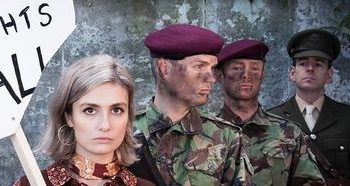
    When Stephen Spielberg was making ‘Schindler’s List, in the early 1990s, he invited some of the Holocaust survivors who had been saved from the gas chambers by Oscar Schindler onto his movie set. The guests mingled with the actors and crew during a break. Amid all the lights, the electrical wires criss-crossing the set,  the extras who were playing the SS chatted amicably with each other. Someone noticed something odd: the SS group – and they alone – were being shunned by Spielberg’s special guests, the survivors. This was because the extras looked so much like the real thing, they exuded a cruelty that, nearly half a century later, disturbed the visitors. I felt something similar watching  the actor playing Sergeant Hutton of 1 Para during Gerard Humphrey’s riveting new play about Bloody Sunday, ‘One Para’ at the New Theatre. Andrew Kenny plays a foul mouthed, racist bigot who bullies one of his more junior colleagues, Scarrif, urging him to shoot at the unarmed and harmless civil rights marchers in the Bogside. His bragging about his colonial exploits in 1 Para is a whirlwind education in the crimes committed by men like him. Every so often he cracks a crass joke or make a jibe that should make the audience wince but something more disturbing happens: there is nervous laughter. The audience out in the dark is cowed by Hutton. If you want to know what Stockholm syndrome is like, go and see this play. Sergeant Hutton on internment and the Ballymurphy massacre: We sorted Belfast out in one night… You saw the photos put up on the wall in the corporal’s mess. .. we swept down the Black Mountain straight into Ballymurphy and shot forty bogwogs – we wasted eleven of them. Victor got himself a priest and all. He won the regimental sweepstake! The UDR wallahs told him he should put in for a bounty! While the menace and darkness of this 75 minutes play shoots at the audience through the mouth of Kenny, the piece works because each cast member hits their target dead centre. The overarching ingredient, however, is the crisp dialogue Gerry Humphreys places in their mouths. He manages to convey the complexities of  Brigadier Frank Kitson, the MRF death squads, the Ballymurphy and Bloody Sunday massacres with rapid fire shots of succinct dialogue that hits you in the solar plexus. He has a genius for boiling down the complex into brilliant historical one liners. When Hutton is asked about his actions by a military police officer he barks: “I am a professional soldier. If I had not shot – I truly believe he would have shot me! The military police officer snaps back at him: With a handkerchief? Humphreys sprinkles the script with the occasional piece of humour to lighten the brutal dialogue, but he does so with such subtlety and deftness that he never once crosses the line or disturbs the equilibrium of what is a deadly serious issue. One Para is directed by Anthony Fox. The set design is by Robert Ballagh. The show continues until the weekend. If you can, catch it. The run comes to an end on Saturday. OTHER STORIES ABOUT BLOODY SUNDAY, THE BALLYMURPHY MASSACRE, BRIGADIER FRANK KITSON AND COLONEL DEREK WILFORD ON THIS WEBSITE: Bloody Sunday: Brigadier Frank Kitson and MI5 denounced in Dail Eireann   The covert plan to smash the IRA in Derry on Bloody Sunday by David Burke Soldier F’s Bloody Sunday secrets. David Cleary knows enough to blackmail the British government. Learning to kill Colin Wallace: Bloody Sunday, a very personal perspective Lying like a trooper. Internment, murder and vilification. Did Brigadier Kitson instigate the Ballymurphy massacre smear campaign? Where was Soldier F and his ‘gallant’ death squad during it? Another bloody mess. Frank Kitson’s contribution to the wars in Afghanistan and Iraq. 300,000 have died in Afghanistan since 1979. Lying like a trooper. Internment, murder and vilification. Did Brigadier Kitson instigate the Ballymurphy massacre smear campaign? Where was Soldier F and his ‘gallant’ death squad during it? A Foul Unfinished Business. The shortcomings of, and plots against, Saville’s Bloody Sunday Inquiry. Kitson’s Private Army: the thugs, killers and racists who terrorised Belfast and Derry. Soldier F was one of their number. Soldier F and Brigadier Kitson’s elite ‘EFGH’ death squad: a murderous dirty-tricks pattern is emerging which links Ballymurphy with Bloody Sunday. A second soldier involved in both events was ‘mentioned in despatches’ at the behest of Kitson for his alleged bravery in the face of the enemy. Mentioned in Despatches. Brigadier Kitson and Soldier F were honoured in the London Gazette for their gallantry in the face of the enemy during the internment swoops of August 1971. Soldier F, the heartless Bloody Sunday killer, is named. Mission accomplished. The unscrupulous judge who covered-up the Bloody Sunday murders. Soldier F and other paratroopers have been protected by the British State for five decades. None of them now face prosecution. This perversion of justice began with the connivance of the Lord Chief Justice of England and Wales, John Widgery, a former British Army brigadier, Freemason and oath-breaker. Counterinsurgency war criminals, liars and cowards: Kitson and Wilford, the brigadier and colonel who led the soldiers who perpetrated the Ballymurphy Massacre. Brigadier Kitson’s motive for murdering unarmed civilians in Ballymurphy. The McGurk’s Bar cover-up. Heath’s Faustian pact. How a British prime minister covered up a UVF massacre in the hope of acquiring Unionist votes to enable the UK join the European Economic Community, the forerunner of the EU.

    Loading

    Read more

  • Posted in:

    Harry Kernoff, The Little Genius.

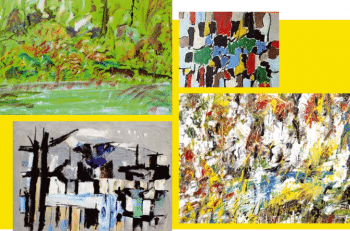
    By David Burke. The Liffey Press has just republished Kevin O’Connor’s 2012 gem, ‘Harry Kernoff, The Little Genius’, the only  full-length biography of the painter. The original edition became impossible to acquire years ago. The reprint is lavishly illustrated with hundreds of Kernoff’s pictures, made possible by years of detective work on the part of O’Connor, who managed to track so many of  them down. A few dozen are reproduced in colour. Kernoff’s family fled from Vitebsk, Russia, during the 1890s. The artist was born in London in 1900  and moved to Dublin in 1914. He spent most of his life without the recognition he so richly deserved, yet continued to paint the world around him.  O’Connor captures the essence of the man thus:  “He lived among and studied [Dublin’s] people, recording them in their infinite variety and was rivalled only by James Joyce in bequeathing a narrative of the city. As Joyce departed shortly after turn-of-the-century, Kernoff was left with the clear palette to record Dublin’s complexion as it changed with the century. By birth a Londoner, by family Russian, by religion Jewish, his paintings show iconic respect for those who impacted upon history in revolutionary times leavened with warm affection for the ordinary people who suffer the history”. One of his works, Misery Hill (1943), depicts the “despair of man who props his arse against the wall, a common posture of the time, his entire demeanour one of defeat”, as O’Connor puts it. “Other men, no better off, are followed by Kernoff’s cheerful poodle, a common whimsey in his work. Another man carries a sack of coal while a woman pushes a handcart of offal stew, another woman passes a poster Vote Labour. The area known as Misery Hill was on a long stretch of road faced by men from the slums hoping for a day’s work unloading ships. Unusual for the time, its realism was of a poverty largely ignored by most of his contemporaries, with the exception of George Collie. Indeed, it may be seen as another iconic painting, given the official denial of such poverty. Those that lived on state salaries were consoled by the emigration of males, a safety-valve on civic unrest. These particular paintings by Kernoff did not prove popular. In time, the district of Misery Hill would become so painful to urban planners as to be raised during the Celtic Tiger boom years of 2000, replaced by a New Dublin of hotels, walkways and desirable apartments with sea views-modelled on the Wall Street area of New York. But even that became fatally prescient as a model in the financial downturn of 2008, when the grandiose schemes were abandoned as the country coped with bankruptcy”. Kernoff began to receive recognition for his talent towards the end of his life. O’Connor’s book plants him among the greats of the 20th century.  Harry Kernoff died in 1974.      

    Loading

    Read more