

Culture

Random entry RSS

  • Posted in:

    Trump: Philosopher Mogul

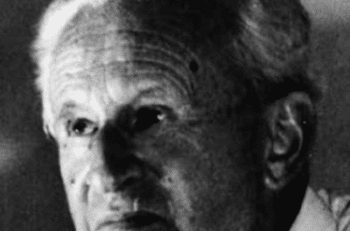
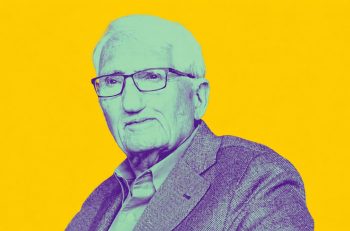
    A group of United States mental health professionals has expressed concern about the mental health of Donald Trump. Psychologist Dr John Gartner said: “We do believe that Donald Trump’s mental illness is putting the entire country, and indeed the entire world, in danger. As health professionals we have an ethical duty to warn the public about that danger”. But what about duty to warn about his philosophy? Let us imagine that four famous dead philosophers, Herbert Marcuse, David Hume, Immanuel Kant and Plato, have been resurrected, and applied themselves to Trump. More unlikely, let’s pretend Trump opens himself to his philosophical side.     Herbert Marcuse is very, very worried In his famous 1960s book ‘One-Dimensional Man: Studies in the Ideology of Advanced Industrial Society’, Herbert Marcuse described the Happy Consciousness, the amoral product of the technocratic age, in which “guilt feeling has no place”. A person with such a deficiency, Marcuse says, “can give the signal that liquidates hundreds and thousands of people, then declare himself free from all pangs of conscience, and live happily ever after”. Trump, No? In ‘One-Dimensional Man’, Marcuse explained how nuclear-war planners represented this Happy Consciousness. They weirdly mixed the business of planning death on a nuclear scale with ‘fun’ talk about playing interesting games so trivialising mass murder. Trump’s frivolous flippancy about the possibility of nuclear war between North Korea and its neighbours: “Good luck, Enjoy yourself folks”, and his failure to rule out using them in Europe reflect this. Trump is a product of what Marcuse’s Frankfurt School colleagues called the Culture Industry – movies and TV. Despite its popularity the mass media is not democratic. The Culture Industry is an anti-democratic con job. As its Wikipedia entry says, “The culture industry perpetually cheats its consumers of what it perpetually promises”. Trump is a creation, Marcuse would conclude, of the fraudulent Culture Industry that perpetually dupes addict-consumers by conjuring up prefabricated fantasies about the endless promise of the American Dream. Donald Trump used his image as a wealthy celebrity showman to spread these fantasies and manipulate voters, who were desperate for a glimmer of success, glamour or fame, as well as for someone to bring them well-paying jobs. Marcuse claims that “advanced industrial society” creates false needs, which integrate individuals into the existing system of production and consumption via mass media, advertising, industrial management, and contemporary modes of thought creating a “one-dimensional” universe of thought and behaviour, in which critical thought and oppositional behaviour dissipate. Philosopher Roland Barthes, quoted by Marcuse, speaks of “magic-authoritarianism” where “there is no longer any delay between the naming and the judgement, and the closing of the language is complete”. Examples of this include the casual way Trump declared to her face that he’d prosecute ‘crooked’ Hillary Clinton and his judgement of Barack Obama as “Bad (or sick) Guy”, after he decided the former President had had him bugged. Trump lies – and lies about his lies – because he is a One-Dimensional Man entirely severed from the Truth and its ascendancy over falsity. It is all just a narcissistic magic show, hypnotic entertainment – the Post-Truth Triumph of the Spectacle. But in our fractious and dangerous era of media-generated ‘false news’ supported by international strategic hacking, leaking and subversion his powers are politically lethal.       David Hume warns not only about Trump, but his followers too David Hume, the apostle of scepticism, might also have something to say about Trump’s dangerous personality cult. In Hume’s essay ‘That Politics may be reduced to a Science’, citing the political vagaries of humanity, he declared “should be sorry to think that human affairs admit of no greater stability, than what they receive from the … characters of men”. In other words, Hume as a professional historian, would declaim the folly of Trump thinking that only he – just one leader – could fix America’s problems – an assertion that history tends to mock. And being an astute moralist, and observer of human nature, Hume would also have questioned why Trump’s followers were gullible enough to be fooled by overbearing bombast into heralding him as the master problem solver. In another essay ‘Of Impudence and Modesty’, Hume remarked: “Such indolence and incapacity is there in the generality of mankind, that they are apt to receive a man for whatever he has a mind to put himself off for; and admit his overbearing airs as proofs of that merit which he assumes to himself”. Moreover, Hume forewarns not just about about Trump, but his indolent supporters.     Kant: Donald Trump is my worst nightmare Immanuel Kant would have been disgusted by Donald Trump, appreciating in him the philosopher’s worse nightmares. For Kant integrity, honesty and consistency were everything. Trump would be akin to a philosophical pornographic website (we assume that our reborn Kant is up-to-the-minute). Kant had a dim view of an exclusive focus on sex. In his lectures “Duties towards the Body in Respect of Sexual Impulses”, he notes: “Sexual love makes of the loved person an object of appetite; as soon as that appetite has been stilled, the person is cast aside as one casts away a lemon which has been sucked dry… Taken by itself it is a degradation of human nature…”. Donald Trump, of course, engaged, as Kant would now be aware, in just such degradation: from beauty-contest-sponsorship to casual sexism and alleged real-life gropings. Kant might agree with Michael Moore, who noted that this predation explain why Trump rejects global climate treaties. Sexual predation against women and corporate predation against the environment are part of the same amoral game, which he characterizes as “crimes against humanity”. Yet what makes this even worse for Kant is that Donald Trump has been elected President of the United States of America, a nation for whose original revolution he had been an enthusiast, even though he denied the right of revolution. Morally, Kant invested every action with the importance of a universal action. But nearly all

    Loading

    Read more

  • Posted in:

    Henry Phelan: First Garda murdered

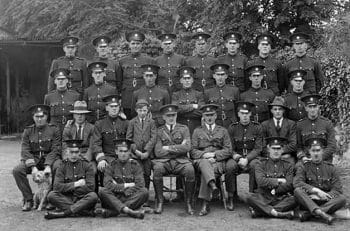
    The Garda is in trouble, morale is low and there are numerous investigations into alleged incompetence and cover-ups. Village has been to the fore in detailing these delinquencies.  The purpose of this article is something different: to highlight through a not untypical case the extent of the duty and the dangers of service.  Overall, 88 gardaí have been killed in service, 23 by individuals or groups associated with the IRA/dissident republican paramilitary and terrorist groups, this being the most common cause of death apart from accidents. The most recent death was that of Garda Tony Golden, who was murdered in October 2015, while attending a domestic dispute, by dissident republican Adrian Crevan Mackin, who also shot and critically injured his partner before taking his own life. This article looks at the first Garda murder. In 1922. The War of Independence was ended by a truce on 11 July 1921 and the Anglo-Irish Treaty was ratified by Dáil Eireann early in 1922. Agreement was also reached by the British and the newly formed Provisional Government to disband the Royal Irish Constabulary, and in February 1922 a meeting was held at the Gresham Hotel Dublin to establish a police force to replace it. The Civic Guard was formed on 22 February 1922 and renamed the Garda Síochána on 8 August 1923. The Civic Guards were initially armed and trained at the Royal Dublin Society Showgrounds, Ballsbridge, Dublin and transferred from there to Kildare Military Barracks on 25 April 1922, and later to Collinstown before returning to the former RIC headquarters in Dublin’s Phoenix Park. Following a mutiny in Kildare the first commissioner, Michael Staines, TD tendered his resignation on 18 August and he was succeeded by General Eoin O’Duffy in September. Dublin Castle and nearby Ship Street Barracks was taken over by the Civic Guards on 17 August 1922. Following the accidental death of Charles Eastwood the Civic Guard became unarmed. Later that month the Gardai moved to Collinstown, County Dublin, and then to the Phoenix Park RIC Depot. The Civic Guard was then sent out among the people. The bitter civil war was still raging and the deployment of thousands of government-backed gardaí was certain to cause unrest, particularly in areas that were still controlled by republicans. The assurance that the Garda were above politics and concerning themselves only with criminal matters failed to impress the anti-Treaty IRA and their supporters. Dozens of barracks were attacked in the first months and it seemed only a matter of time before a garda would find himself on the wrong end of an IRA bullet. Henry Phelan would be the unfortunate victim after a tragic encounter in Mullinahone. Henry Phelan was born in 1899 neat Mountrath in County Laois. He was the youngest of a family of nine children but his father had died, forcing his widow and children to manage the farm alone. As Henry grew older he became interested in nationalism, eventually following the well-worn path of many of his generation to serve in the IRA during the war of independence. After the truce Phelan considered membership of the Civic Guard. He applied and was quickly accepted into the force, undergoing a short period of training in the Curragh. He qualified and was amongst the first detachment of twenty-six gardaí sent to the old RIC barracks on Parliament Street in Kilkenny City on 27 September 1922. At the end of October, along with twelve of his colleagues and a sergeant, Phelan was transferred to the town of Callan. Just after 3 pm on Tuesday, 14 November 1922, Phelan, along with two colleagues, garda Irwin and garda Flood, were granted an afternoon’s leave from their superior officer, a Sergeant Kilroy. The men had decided to cycle the five miles to Mullinahone. The trip was a recreational one and the guards’ intention was to buy a sliotar and hurleys for a new team that garda Phelan was attempting to set up in the Callan district. Like much of the county of Tipperary, Mullinahone was supposedly under the command of the government at that time but realistically the anti-Treaty IRA held great power in the area. Phelan and his colleagues decided to go to the village nonetheless. The gardaí succeeded in their mission of purchasing the goods, afterwards deciding to go to Miss Mullally’s licenced premises and general grocers on Kickham Street. The men ordered and were given a couple of glasses of lemonade which they finished quickly. Just then, three armed men rushed into the premises. The first of the intruders produced a revolver, while the man directly behind him held a rifle level with his hip. The first man fired a shot in the direction of the three men from a distance of about three or four yards. It hit garda Phelan in the face and he fell heavily onto the pub’s floor. The belated order was then given by the second man “Hands up”. The remaining two gardaí were horrified but complied with the command. The shooter then asked the shocked policemen if they had any arms. They replied that they did not. The second raider, who was still pointing a rifle at Irwin and Flood, seemed just as surprised by the shooting as the two gardaí and he asked his compatriot “What are you after doing; why did you fire?”. The first man muttered something inaudible and placed the revolver back in its holster. The third man was still standing at the door and said nothing during the altercation. Garda Flood begged the men to allow him to come to the aid of the stricken Phelan, who was still lying on his face and hands. They replied “You may”. They then left as garda Irwin went for help. The local doctor came swiftly but could not be of any assistance as Phelan was already dead. He had not spoken after the shot and died almost instantly. Word spread quickly about the first member of the Civic Guard to be killed

    Loading

    Read more

  • Posted in:

    Reality as mad as TV

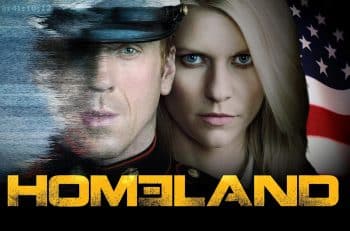
    After a couple of stuttering seasons, Season 6 of ‘Homeland’, which ended in April, pulled off a decently gripping story this time round. The writers make life difficult for themselves, as with its predecessor ‘24’, by making daring near-future predictions about the political reality that will be in place by the time the show airs. ‘24’, with its never-ending terrorist emergency, struck a lucky chord when it came to screens in the first week of November 2001, at the height of post-9/11 hysteria. That show ran for eight seasons, and in fact still produces the odd additional couple of hours of material, though the quality, always dodgy, really is inexcusable at this point. Many things appealed in ‘24’ – Kiefer Sutherland’s depressive charisma, Chloe O’Brian’s Aspergersy fixity of purpose, the sneering and maniacal baddies, and, a consistent ingredient, the palace intrigue surrounding the US President. Even before Barack Obama became the junior senator for Illinois, and while Hillary Clinton was the senator for New York, ‘24’ had two black Presidents and one female President, all establishment-liberals in exactly the Obama-cum-Clinton mode. These seem daringly prescient at this remove, though at the time they felt rather poorly paced. The black Presidents pre-dated Obama by too long and so seemed too far-fetched, and Clinton never even got her party’s nomination in 2008. ‘Homeland’ picked up where ‘24’ left off in several other respects. Although it has always positioned itself as a rather more intelligent version of things, it has continued the steady stream of terrorism-induced paranoid fear and sustained our fascination with the alternately high-functioning/highly dysfunctional US security apparatus. Its slower pace has always given it a more measured air, and its relatively considered depiction of mental illness (bipolar disorder) leaves ‘24’’s depiction of its array of gibbering misfits, Jack Bauer chief among them, look like the parts cut out for being too incoherent from the fantasy world of a Tom-Clancy-inspired 4channer who cannot make eye contact with anyone but his dog and his mother. ‘Homeland’ even has a tang of John le Carré-lite with its nostalgic sequences of good old-fashioned spycraft and face-to-face encounters between old rivals and enemies. In ‘24’, most of the time the connection between the good guys and the bad guys was mediated by a surfeit of fantasy surveillance technology, and when enemies met face to face they were usually in a homicidal mood, or at least they would be trying to cut each other’s fingers off or somesuch. In ‘Homeland’, we’re in a more interesting milieu of Russian agents who we feel are really idiosyncratic failed novelists, Iranians who are ruthless and entirely secular Realpolitikers, and Israelis who are weird self-deceiving liars, with the tanned unblinking vacuousness of hothoused transnational professional tennis players. With the first episode of season 6 coming out in the days running up to the inauguration of Donald Trump, ‘Homeland’’s bad luck was to forecast a Democrat-style woman as the brand new President-elect. It would have been great to see this drama unfold parallel to the first months of Hillary Clinton’s term in office, but instead it just felt like they’d backed the wrong horse, like most of the rest of the media. It would be interesting to know how much time and leeway the makers had in skewing the narrative to bring it into line with the phantasmagoria of Trumpism. Because one thing they get spot-on is the alt-right racists and America Firsters, whose tactics are borrowed straight from the Russian hacker playbook and whose vitriolic rhetoric (brilliantly ventilated by Jake Weber) blends elements of Rush Limbaugh, Stephen Miller, Bill O’Reilly, and Richard Spencer. In this story, these guys are on the losing side, and they do all they can to destroy the President and the Presidency from within. What the show did not dare to predict was victory for Trump. They can hardly be blamed – if they did have a Trump-style victor but with no corresponding real-world Trump victory, the show would come across as a rather dystopian paranoia-fest. Whatever the case, what their choices provide proof of, if it were needed, is that these shows are the dream of American Hollywood liberalism. This is not immediately apparent, especially to us politically anaemic Europeans, but these TV shows of political nightmares, permanent wars, state-sanctioned torture, the State on the brink of attack and its values under constant attack from its own security services, are ultimately stabilising for the American self-image and even for the American State itself. Clinton was more of the same dressed up as a change (the first female President!), Trump was something different (the first unpredictable President!). Despite their seemingly nightmare visions, these shows did not predict Trump. He has proved literally unpredictable. This is part of his uncanniness, narratively speaking. In the normal run of things, our fears, racisms and intolerances can be effectively masked by narratives about terrorism and intelligence and prediction, prevention and risk and probability, and that is part of the magic formula of ‘Homeland’. In the early seasons, we could hate the Islamic terrorist villain and fervently support the extraordinary reach of the security apparatus to catch him, all the while not feeling like racists because he was a red-haired, white-skinned American, played by an Englishman (Damian Lewis). What job is left for these narratives to do now? The Trumpian disruption could well provide yet another threatening obstacle that will provide the opportunity for shows like these to depict the ever-evolving deep-State establishment triumphant once more. This desperately needs to happen in order for things to carry on roughly in the same mode, both in the world of screen fantasies and in the real world of politics, which are not two separate realms. But the other danger is that the Trumpian disruption will, when it ebbs, leave behind the full normalisation of the extraordinary measures undertaken by surveillance (private and public) and by neoliberal economic reform (private and public), which got its great initial momentum with the election of George

    Loading

    Read more

  • Posted in:

    Needed: Compassion for all nature

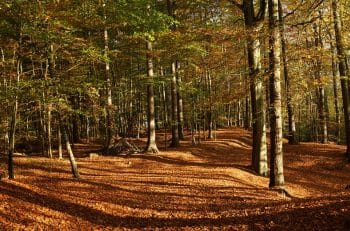
    Dante Alighieri opens ‘The Divine Comedy’ with the immortal lines: Nel mezzo del cammin di nostra vita mi ritrovai per una selva oscura, ché la diritta via era smarrita. (In the middle of the journey of our life I found myself within a dark wood where the straight path was lost) To the medieval mind of Dante, the great forests of Europe were a fearsome spectre of numinous presences, but by entering the wood of doubt he gained a deepened awareness. We retain these competing instincts: a wariness of wilderness that incites conquest, beside reverence for the sylvan mysteries. It is this latter instinct that requires nurturing. On a recent visit to Italy I embarked with a friend on a ramble towards Mount Sole near Bologna. This park had been the scene of a final battle in April 1945 between the Allies and Germans, along with their Italian fascist allies. Unfortunately our time was short, and as we ascended the narrow path, wending steeply through dense woodland towards the summit, a lengthy walk seemed imminent. In order to return for an appointment we had a decision to make. We had three alternatives: follow the path in the hope it would soon loop backwards; return the way we came; or take a short cut by descending directly through the thick deciduous forest flanking us. Contrary to good sense, we chose the latter course. Initially we divined a trail through the thickets of hornbeams and Turkey oaks – laid perhaps by the native cinghiale (wild boar) – but these soon lapsed as the descent became more precipitous. By then we were using trees, many tilted at curious angles, to lever ourselves like firemen down an increasingly sheer slope. This is when it became slightly dangerous as a surprising number seemed dead, giving way at the slightest pressure. The humous around the trees was also amazingly loose, and over some stretches we slid down soil that felt like snow. We had arrived in a natural sanctuary, and were cutting a swathe through it like a pair of conquistadores rampaging through an Indian village with steel. The acute angle of the hillside made this a route only the most foolhardy of large fauna would descend. In remote areas such as these we find fragile remains of unmolested old-growth European forests, although in these conditions only hardier species are in evidence, rather than the great beeches that once dominated the continent. This was, nonetheless, an impressive ecosystem that concentrates great wealth in the soil, and where old trees are allowed to live out their days in peace. Until we arrived that is. Then my friend’s foot came in contact with a hard metal object in the brittle soil, which on inspection proved to be a gun cartridge. Wiping away the earth revealed the inscription: “RH 1943 20mm”. A subsequent Internet trawl showed that it was a Spitfire Cartridge manufactured by the Raleigh Corporation in 1943. Bob’s Your Uncle! By happenstance I was then reading the German forester Peter Wohlleben’s remarkable little book: ‘The Hidden Life of Trees: What they feel, How they communicate; Discoveries from a secret world’. It seems we had made another, less explosive, discovery. “On hillsides”, he writes, “it is sometimes the ground itself that is sliding extremely slowly down to the valley over the course of many years, often at the rate of no more than an inch or two a year”. He continues: “Trees are losing their footing and being thrown completely off balance in the mushy subsoil. And because every individual tree is tipped in a different direction, the forest looks like a group of drunks staggering around. Accordingly, scientists call these ‘drunken trees’”. Coincidentally, on returning home to Ireland stories were emerging of one of the worst fires in living memory on thousands of acres of Coilte land in Cloosh Valley, east Galway. I knew this had to be coniferous cash crop as Wohlleben points out that a deciduous forest is not susceptible to fire: it lacks resins or essential oils, and must be seasoned for two years before it can serve as fuel. Conversely, the destruction of non-native evergreens offers a rare opportunity to use the site to reduce Ireland’s contribution to Climate Change. The great deciduous varieties are vast carbon storehouses, and incredible photosynthesisers (releasing oxygen in the process): just to grow its trunk, a mature beech requires as much sugar and cellulose as that yielded from a 2.5 acre field of wheat. This demands over 150 years, so our descendants are sure to be very grateful for measures taken today. If we assume (conservatively) 500 such beech trees grow on one acre, this offers space for 1250 trees on a 2.5 acre site. Its (stored) energy value can be calculated as follows: over one hundred and fifty years a wheat fields gathers an energy value of 150x (where ‘x’ is one year’s sugar and cellulose from a 2.5 acre site); whereas an acre of undisturbed beech trees offers 1250x for that period. This is both a potential energy source (that would eventually yield a fossil fuel) with over eight times more capacity than a wheat field, unsurprisingly considering heights of 150 feet. This leaves aside potential food (assuming we learn to process trees nuts better) and medicinal sources. Moreover, the expanding humous around trees contains vast carbon reserves, and trees, unlike wheat and most other crops, fix their own nitrogen. Suffice to say, old-growth forests are the leading weapon in the battle against Climate Change. According to Wohlleben the best thing to do in order to generate growth on a site is absolutely nothing, leaving Nature (relying on birds to carry seeds) to find a balance. In Ireland this will give us a summit vegetation of oak and hazel, which given the opportunity would colonize the whole country, and offer only marginally less bulk than beech. As it is, old-growth forests are virtually absent in the least-wooded substantial European country, which, paradoxically, has some

    Loading

    Read more

  • Posted in:

    Science ficsean

    Ireland is known for its literature, but not for its science fiction. There is not a great number of Irish writers in the genre, but it is a puzzling fact that major international authors such as James White and Bob Shaw are barely known in their native Ireland. Science fiction often imagines alternative life-worlds, which give writers the chance to assess the present by composing thought experiments that explore the implications of a new technology, new social structures, or encounters with alien others. It might be a good idea, then, to look to Irish science fiction as a source of incisive critical comment on all aspects of Irish life.     The first published catalogue of Irish science fiction came out as recently as 2014. ‘Irish Science Fiction’ by Jack Fennell of the University of Limerick traces the genre as far back as Fitz-James O’Brien’s ‘The Diamond Lens’ (1858) and Robert Cromie’s ‘A Plunge into Space’ (1891) all the way through to what he calls “the shape of Irish science fiction to come”. Fennell lists many strange and wonderful pickings from the Irish science-fiction tradition, such as Tom Greer’s ‘A Modern Daedalus’ from 1885, which outlines the invention of flying machines by a Dublin man and his inner conflict at using the technology to gain independence for Ireland, and James Creed Meredith’s ‘The Rainbow in the Valley’ (1939), in which Martian contact becomes a trigger for philosophical speculations and reflections on the War of Independence.     Fennell also uncovers science fiction in Irish. The four Captaen Spéirling novels by Cathal Ó Sándair were space-going adventures written in the early 1960s for children. Fennell points to the optimism engendered by an economic upturn in Ireland in the period as crucial for understanding the stories, with Spéirling described as “nothing more than a gaelgeoir Buck Rogers or Dan Dare”. Fennell also points to an imperialist theme throughout the Spéirling series, with the suggestion in the novels that Ireland’s history as a colony will ensure that aliens on any inhabited planets will be treated with the utmost respect when an Irish interplanetary imperialist project is established. One author not covered in Fennell’s volume is Joseph O’Neill, whose ‘Wind from the North’ (1934), ‘Land Under England’ (1935) and ‘Day of Wrath’ (1936) arguably also belong to the genre. A friend of W.B. Yeats, O’Neill was the Secretary of the Department of Education in the early Irish Free State. In The Irish Press in 1944, O’Neill reminisced about his younger days as a member of the Gaelic League, travelling the countryside with his boyhood friend, Pádraig Pearse, collecting stories and handing out cash prizes to anyone who could speak Gaelic. However, O’Neill’s interest in Gaelic antiquity never translated into political action. The O’Neill expert Kelly Flynn Lynch writes that at Easter 1916, the author was “incapable of evincing a passion or even an enthusiasm for popular Irish causes”. But O’Neill did have a passion for the science fiction of H.G. Wells. Upon publication of ‘Land Under England’, he sent the father of modern science fiction a copy of the book with a letter telling him that “‘Land Under England’ in so far as it has value, owes it to you more than to all other writers put together, because it is your works, the early ones as well as the later, that kindled my imagination to the point at which I felt that I wanted to create”. ‘Land Under England’ provides a fascinating inverse view of the newly independent Ireland. The novel details the adventures of a young Englishman who follows his father into a secret cavern beneath Hadrian’s Wall. His father’s obsession with the ancient Romans has led to the discovery of a hollow beneath the historic wall into which Roman civilisation has retreated. In their isolation, the Romans have evolved telepathic mind-control techniques in order to control their subjects and exist as a society of automatons. The novel is usually connected to the rise of fascism in Europe, but it also echoes events closer to home, in what Diarmaid Ferriter calls the “frenzied and paranoid” atmosphere of 1930s Ireland. Indeed, after its publication, reviewers wondered whether its depiction of Roman automatons was a sly critique of Irish Taoiseach Éamon de Valera’s Fianna Fáil party, or his rivals in the fascist Blueshirts. In his role in the Department of Education, O’Neill was said to have been one of Archbishop McQuaid’s favourite civil servants, and O’Neill’s official writings on education and the church certainly bear this out. However, O’Neill’s final novel ‘The Black Shore’, published posthumously in 2000, reveals a more sardonic take on the relationship between church and State in Ireland, and perhaps adds a new dimension to the metaphorical significance of O’Neill’s Roman automatons.     The bulk of Irish science-fiction literature has been produced by three Belfast writers: Bob Shaw and James White, who both wrote from the mid-twentieth century to its end, and Ian McDonald, whose career spans from 1989 to the present. Science fiction is a genre that tends to arrive with late modernity, so it is probably no surprise that a science-fiction tradition would take root in Belfast, given the history of industrialisation in the city. Bob Shaw and James White were friends who worked together at the Shorts aerospace company. White set up the Irish science-fiction group Irish Fandom in 1947 with his friend Walt Willis, with Shaw joining the group soon after. White and Willis met through the pages of the British speculative fiction magazine Fantasy, when White noticed a Belfast address in one of the letters to the editor and tracked Willis down. Irish Fandom was nominally a non-sectarian grouping, although White remained the only Catholic member throughout its existence. The group self-published the science-fiction fanzine Slant, which was printed using a hand-levered flatbed printing press. White made prints using woodcuts of rocket ships, astronauts and planets for the illustrations.     White saw his science fiction as an antidote to the violent and

    Loading

    Read more