Environment

Random entry RSS

  • Posted in:

    Limerick is a lady not a dame

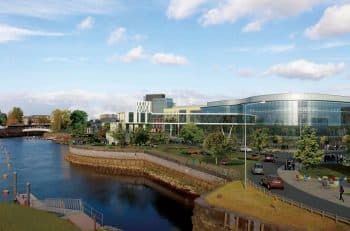
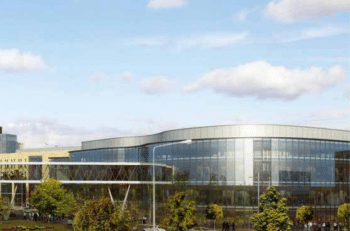
    On Monday 19 September there was one city grabbing Irish headlines – Limerick. Unusually, it has remained in the news, as if in compensation for years of neglect. Ireland’s underdog has been thrown a €500 million bone in the form of the Limerick 2030 Plan. The fanfare for this much-needed recovery plan coincided with the launch of a new company, the Limerick Twenty Thirty Strategic Development DAC (Designated Activity Company). This meaty mouthful is the biggest single Irish commercial property development programme undertaken outside of the capital in the history of the state. If funding is, in time, secured for this wish list what lasting physical changes does this plan bring to Limerick city? Turning Heads It is no coincidence that Limerick was, innovatively if not surprisingly, unveiled as one of Europe’s most attractive investment locations a mere three months after Brexit. The UK’s moment of uncertainty has become Limerick’s opportunity. Located just twenty minutes away from Shannon International Airport, Limerick is doing everything in its power to encourage UK and US companies to set up shop in the Mid West rather than in yesterday’s Mecca, London. Its Executive Chairman Denis Brosnan, saturnine former CEO of Kerry Group, will prioritise the redevelopment of 130,000 sq m (1.4m sq ft) of prime real estate across four strategic sites into office, retail, residential, educational and enterprise space. Unfortunately, however, the all-embracing vision is in danger of being no vision at all. Certainly there is no sense that anyone thinks Limerick has a unique selling point, or at least not one they’d be proud of. The Limerick Twenty Thirty DAC is completely owned by Limerick City and County Council with an independent board which faces the arduous task of sourcing the money. The four developments that were identified to transform Limerick are the Gardens International Office, the Opera Site, Cleeve’s Riverside Campus and Troy Studios Film Hub. The removal of historic names and the creation of historic associations is very telling in this bid to rebrand, concededly undervalued, Limerick. Hangless Gardens Limerick Twenty Thirty have so far secured €18m funds for the 11,000 sq m (112, 000 sq ft) Gardens International Office with designs by Cork-based Carr Cotter Naessens Architects. The existing five-storey eyesore was partially built by developer Robert Butler in 2009 during the boom before descending into NAMA. It is located at the former GPO complex and Roche’s ‘Hanging Gardens’ building on Lower Henry Street. Limerick City and County Council acquired the site together with the adjacent No 19 Henry Street in 2014. The famous ‘Hanging Gardens’ were unique within the City, indeed (perhaps outside Babylon) in the world. They were conceived by the wealthy banker William Roche as a vast store, surmounted by enclosed gardens. “In the early years of the present century Limerick possessed a curiosity which was without a parallel in the empire”, wrote the Reverend James Dowd in 1890 in his book ‘Limerick and Its Sieges’. The design featured “stores under a series of arches ranging from 25 to 40 feet high. On top of these arches elevated terraced or ‘hanging’ gardens were created and the whole structure was crowned with classical statues”. There is no obvious reason why the evocative word ‘hanging’ was dropped by the spoilsport neophytes. Presumably some misanthropic marketing executive advised against the negative connotations of the word ‘hanging’, as if it were or ‘stabbing’ or ‘stabbed’. In its absence this fascinating building is – gratuitously – rendered duller, and ahistorical. Opera site The ‘Opera’ site entered the local vernacular as such, not because it ever accommodated an ‘Opera house’ but because the eighteenth-century opera singer Catherine Hayes was born in a house on the block, before performing the wonders of world opera worldwide, though not in Limerick. It is 3.7 acres in area and located in the oldest part of Newtown Pery. It was bought from NAMA for €12.5m, no song, by Limerick City and County Council in 2011 with funds made available from the Department of the Environment’s Regeneration budget after failure to secure investment from the private sector. Following an open-tender process, ‘a special-purpose-vehicle’ set-up by the Council – under the strangely-familiar name Aecom – will carry out the works. The Opera site contains 30 buildings, most of which are in predominantly intact Georgian terraces on Rutland Street, Patrick Street, Ellen Street and Bank Place. This development will be of mixed use with a spread of public and private sector uses and small-scale retail. The proposed scheme will cost €120m to €150m. The conservation approach is to retain the façade only on Patrick Street – a policy jettisoned worldwide and for more than 20 years in Dublin as ‘facadist’ and fake – but to emphasise the retention of (no-longer-ergonomic) existing plot and volumes. Where there has been twentieth-century intervention the design team has gone to town with proposed insertions such as the on-site replacement of the Cahill May Roberts building (1958) but in a grand new incarnation, completely out-of-scale, insensitively dwarfing its neighbours. The proposed new scheme is a grainy shadow of proposals for a €350m ‘Opera Shopping Centre’ plans which was granted planning permission in 2006 as part of the famous Limerick scorched earth policy on heritage. In December 2007 Anglo Irish Bank had acquired a 50 percent share of this ‘exciting potential landmark’ with a view to selling it on to private clients but failed to do so. Cleeve’s Riverside Campus Of the four sites only Cleeve’s will retain its historic name. The eight-acre former factory site comprising 100,000 sq ft of existing space is located on the northern bank of the Shannon River with a distinctive chimney dominating the city skyline. The Condensed Milk Company of Ireland or Cleeve’s factory was established in 1883 by Thomas Cleeve, a Canadian who first came to Ireland as a teenager to work for his uncle. Cleeve’s dairy-based products were exported throughout the British Empire, the most famous product being toffee. The processing plant was sold to Golden Vale, a

    Loading

    Read more

  • Posted in:

    Galway Sprawlway

    The proposed ringroad and continuing prevalence of one-off housing applications symptomise historical planning anarchy and the derivative current planning stasis in Galway City and County

    Loading

    Read more

  • Posted in:

    Galway Sprawlway

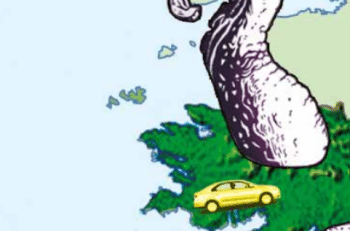
    Around one hundred submissions were received by Galway’s City Council on its Draft Development Plan 2017-23 by the deadline of 5 October. Meanwhile, a number of well-known community and environmental activists in Galway City have come together to form a new alliance to promote a ‘Future Cities’ concept based on “regenerative urban development, ‘green’ living, smart technologies and a sustainable transport. They have a lot on their plate. It’s a planning and transportation mess with no visionary Messiah. In many small cities comparable in size to Galway, people are regenerating and humanising their urban environments by introducing woodlands, gardens, recreational parks and city-wide 24/7 cycling, walking and public bus or train systems. Yet here in Galway City we are now proposing to build the N6 ringroad that will cut through homes, villages, neighbourhoods, farmland, key wildlife habitats, a university campus and sports elds, and lead to further mindless urban sprawl of this, in so many ways, creative city. Then, having spent €700m on a new road, there will be no incentive or money left to introduce the Public Transport improvements being promised “after the road is built”. If Galway City is to have a sustainable future, the authorities should immediately bin a policy based on a discredited ‘predict and provide’ private car-based transportation model and instead should use the available €500-750m to construct a hierarchical transport model based on a ‘new mobility’ prioritising pedestrians, cyclists and users of public transport”. When the IDA first developed its business parks at Parkmore in the early 1970s there were very few businesses initially established out that far. So having only one main entrance avenue wasn’t a problem. In the intervening years the estate has exploded so it now accommodates many of the world’s leading medical device and IT manufacturers. With very little available public transport passing, let alone actually entering the estate: the sheer number of private cars coming in has now reached crisis point. Yet Galway Co Council actually gave permission for a new sub-standard entrance/exit point and junction giving the planning board no choice but to refuse permission. In September An Bord Pleanála duly reversed the permission because “its construction would endanger public safety by reason of traffic hazard”. This decision could, should, force debate about the much larger can of worms around Ireland’s lack of a ‘sustainable’ National Spatial Strategy’. The daily traffic chaos in Parkmore is a symptom of the much wider problem we have in historic spatial planning in Galway, with rapidly increasing numbers of people having to commute from their new homes in County Galway to their workplace in the city, by car. This phenomenon has become overwhelming over the past 40 years. Workers living in the city but working in Parkmore/Ballybrit have been failed by the lack of civic imagination that might have provided an adequate public transport system in the city. For a youthful and fashionable city, capital of ‘craic’, dubbed as progressive, and once crowned ‘the fastest growing city in Europe’ this is anachronistic. In its May 2014 Newsletter, the Western Development Commission – using an IDA case-study, stated that “of the 16,701 rural dwellers commuting to work within the gateway of Galway city, one quarter (25.6% or 4,285) commute to work in the IDA estates”. The first figure refers not just to people heading in to Ballybrit, Parkmore and Galway Technology Parks, but others who commute further still into the heart of Galway city, for work at GMIT, NUIG and UCHG, our largest city-centre employment nodes. As James Wickham said in his book ‘Gridlock’: “Car dependency is an issue for social policy. Car dependency exacerbates social exclusion, for those who do not have a car run the risk of being excluded from normal life. Their access to jobs is restricted, they find it difficult to move around the city, they are not full citizens”. There is a belief that transportation problems result from the antedeluvian planning policies of the 1980s and 1990s, both at local and national level. These intensi ed in Galway from the time Colin Buchanan and Partners published its ‘Galway Transportation and Planning Study’ in September 1999. This report together with its subsequent 2002 ‘Integration Study’ commissioned jointly by Galway City and County Councils, led to a situation in Galway, not dissimilar to that of Dublin, where availability of sufficient reasonably priced housing units in the city failed to keep up with growing public demand. This, combined during the madness of the Celtic Tiger years, with pressure being applied by county councillors and developers turned Galway’s surrounding towns, villages and particularly countryside into worker dormitories: for families that had been priced out of continuing to live in Galway city. The Galway County Development Plan of 2002, which integrated the recommendations from the Buchanan Report, facilitated development in places ringed around the city: Bearna, Moycullen, Claregalway, Tuam, Oran- more and Athenry. And everything in between. Responding to Galway County Council’s then- Draft Development Plan in July 2002, then City Manager John Tierney wrote to Donal O’Donoghue, then County Manager, expressing some concern over proposed policies which would continue to promote a wider spread of settlement, and not the concentration into the 38 towns, villages and proposed development at Ardaun that had been planned. He stated: “The cumulative effect of these policies/objectives all greatly undermines the ‘Galway Transport and Planning Study’ GTPS, any sustainable approach to a settlement structure and consequently any ability to promote a sustainable public transport system. It would exacerbate the current dependence on private vehicular transport and the consequent negative effects of this”. Tierney’s pleas went ignored, and widespread ‘one off’ housing development in County Galway continued unabated, with septic tanks mushrooming leading to water pollution, cryptosporidium, and a culture of lengthy commutes into once homely Galway City. So a long-term strategic policy for planning where people might be sustainably housed was scupperedd, due to the regime, the report and thousands of concomitant individual acts of planning anarchy, cumulatively undermining any regional strategy. The problem is now self-pepetuating and solution-less.

    Loading

    Read more

  • Posted in:

    Documenting what’s left

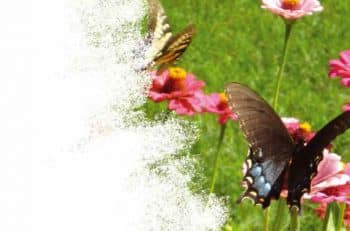
    John Gibbons interviews Liam Lysaght, Director of the National Biodiversity Data Centre. Ireland’s largely dysfunctional relationship with its natural environment was neatly summed up by former Taoiseach, Bertie Ahern, when he moaned that his ill-fated Celtic Tiger was being stymied “because of swans, snails and the occasional person hanging out of a tree”. While the Ahern era was hardly a high watermark of environmental awareness and ecological literacy, one useful resource to emerge from this time was Ireland’s National Biodiversity Data Centre, which was established by the Heritage Council in 2007 and is funded by it and the Department of Arts, Heritage and the Gaeltacht. The Centre was set up to collate, manage, analyse and distribute data on Ireland’s biodiversity. Headed by Dr Liam Lysaght, the Centre is based in Waterford city. “We are trying to put in place systems to track changes in the countryside”, Lysaght told Village in a recent in-depth interview. “It’s about building the evidence base to support biodiversity policy”. It is, he adds, “quite remarkable that at the moment we don’t even know how many species of organisms we have in Ireland. We know of 31,000 (species) but it’s estimated the total is closer to 40,000, yet they remain to be discovered, so we’re trying to build knowledge on what species there are in Ireland, where they occur and how they are changing over time. That is absolutely vital to feed into policy development”. Biodiversity and nature conservation, he notes, are seen in Irish public life as a problem rather than an opportunity. Hence the decision by Heritage Minister, Heather Humphries, at the behest of the Irish Farmers Association, earlier this year to extend the hedge-cutting season.The ban is vital in protecting habitats during nesting and breeding season. Ireland’s hedgerows are among our few remaining semi-intact areas of biological diversity. This IFA-led and politically sanctioned incursion underlines the asymmetrical balance of power between those trying to defend Ireland’s imperilled wildlife and the well funded and politically connected lobby groups seeking to erode environmental safeguards at every turn. Lysaght is an advocate for education and enlightenment rather than conflict. “We have to counteract this view… people love getting out into the countryside, they love being out in the natural environment”. To coincide with the International Year of Biodiversity in 2010, the Centre pioneered an ongoing initiative called the Bio Blitz. This brings together groups of people to see how many species can be identified within a defined area. While the Bio Blitz is an imported idea, the particular spin put on it in Ireland results in four or five teams simultaneously in the field at various locations, competing against one another. “It’s astonishing: everyone is surprised when you tell them there might be 900 different species of moths or 100 species of bees. These kinds of figures communicate very simply and effectively”. A winning Bio Blitz site can expect to record over 1,000 species in a 24-hour period – an illustrative glimpse into the staggering complexity of the natural world in a country that is in no way thought of as a biodiversity hotspot. Lysaght is intrigued by the paradox that while nature conservation, at least in Ireland, has negative connotations, on the other hand: “There’s hardly a person in the country that isn’t moved by hearing a cuckoo in the wild. If you talk to those same people about the need to conserve the countryside, or do something positive for nature conservation – well, there is a disconnect there”. The ongoing ecological catastrophe of bogmining is, in Lysaght’s view, “symptomatic as to how poor our attitudes to nature conservation are. Frankly, what we are doing to Irish peat bogs is a scandal, there’s no getting away from it. And that’s both private individuals and the State”. Raised bogs are, he reckons, probably the rarest habitat that we have in Europe: “Ireland is fortunate to still have some of them remaining, but only a very small percentage of our raised bogs are still intact, and frankly I don’t understand why, for the common good, we don’t just say these, for the common good, have to be protected. Full stop”. While fair compensation for existing turbary rights needs to be paid, there is, he says, absolutely no reason, other than politics, that this is being allowed to continue. Contrast, he says, projects like the Abbeyleix bog, where the locals have taken ownership of a raised bog donated by Bord Na Móna. This is an oasis of diversity, especially when compared to the adjacent ‘commercial’ bogs, where, he notes, “the scale of destruction is just staggering”. Their dual role as carbon sinks makes this even more reprehensible, he adds. Lysaght was unimpressed by Bord Na Móna’s ‘Naturally Driven’ advertising and PR campaign earlier this year: “I think it’s disingenuous; what I would say about Bord Na Móna is there are some very good staff in the company who are trying to do a lot in terms of giving back some of the land that’s been cut away; I’d like to see more of these sites being given over to biodiversity and tourism”. Lysaght finds it ironic that MEP and bog-cutting lobbyist Luke Ming Flanagan is also a big fan of Dutch liberalism, particularly regarding cannabis, but seems to have failed to notice that the same Dutch have spent over €100 million on peatland conservation. Amazingly, as far back as the late 1970s and early 1980s, a Dutch foundation raised the money to buy three Irish raised bogs and donated them to the Irish State for nature conservation. The crucial role of the National Biodiversity Data Centre is gathering, computerising and making sense of reams of raw data, in an attempt to benchmark the state of Ireland’s biodiversity. Without this, how can we measure future losses or gains? Examples of this are two insect-monitoring schemes it operates. These are spread across more than 120 sites all over Ireland. “This is the kind of empirical data that are needed.

    Loading

    Read more