Posted in:
Where optimism died
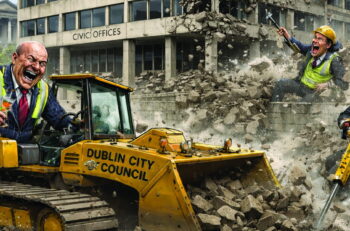
n Shanganagh Vale, in the Dublin suburbs, the 1960s American dream was bludgeoned
![]()
Posted in:
by admin
n Shanganagh Vale, in the Dublin suburbs, the 1960s American dream was bludgeoned
![]()
Posted in:
by admin
We need an independent State conservation-promotion office
![]()
Posted in:
by John Gibbons
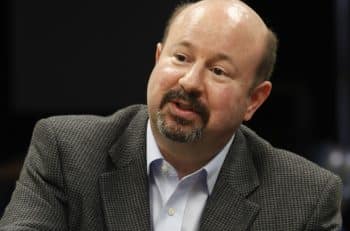
Imagine for a moment the dilemma: you’re a celebrated paleoclimatologist whose work has helped shape the modern science of climate change. In the course of your work, you have gradually come to the same basic conclusion as most of your professional colleagues: humanity and the industrial civilisation we have constructed is hurtling on a oneway collision course with physics. Clearly, as a scientist, your job is to check and recheck the numbers, then, once the evidence is solid, alert the politicians and policymakers and provide them with the expert guidance so they can make the toughbut- necessary decisions to avert the worst of the projected negative impacts, while hunkering down for those which can’t be entirely avoided. That, in a sane world, is how the system works. This is not, however, the world in which we live, and it certainly is not the planet that renowned paleoclimatologist, Professor Michael Mann inhabits. He sprang to fame in 1999 with the publication of a reconstruction of the global climate record stretching back some 1,000 years, which became known as the ‘Hockey Stick graph’ since, from past to present, it slopes gently downwards, before turning sharply upwards in recent decades, like the blade of an American ice-hockey stick. This graph appeared in the IPCC’s Third Assessment Report in 2001 and quickly became the signature icon of rapid climate change. This made Mann the target of vicious and sustained personal and professional attacks by shills funded by fossilfuel interests, culminating in the ‘ClimateGate’ smear attack in 2009 which targeted hacked personal emails written by Mann and other climate scientists. This scam was swallowed whole by many in the mainstream, including Irish Times columnist, Professor William Reville, who described ClimateGate as an “explosive development” that will “undoubtedly weaken the AGW case…”. Reville went on to defame the entire field of climatology, claiming there was “an understandable temptation for environmental scientists, who depend on government grants, to exaggerate dangers”. When ClimateGate was finally exposed as a canard many months later, Reville duly reported this fact in his column, while modestly omitting his own role in promulgating this sinister campaign in the first place. It may seem hard to believe in the post-factual era of Donald Trump and the Republican party’s long-running war on science, but not that long ago, politicians of all hues actually listened to – and generally acted on – the advice of scientific experts. Even as recently as 1987, a binding international agreement to rapidly phase out the use of ozonedestroying CFCs could be rushed through by politicians (led by Margaret Thatcher, a scientist) in response to a newly identified threat to the global ozone layer. It is almost inconceivable that such concerted bipartisan action could happen today, no matter how dire the threat and no matter how strong the scientific evidence. There is no greater or better-researched threat than that of climate change, but instead of mobilising societies to act, financially compromised politicians dither and squabble as the climate crisis slips into an ineradicable emergency. In Ireland and around the world, the mainstream traditional media, struggling with declining revenues and shrinking newsrooms while chasing clickbait, have spectacularly failed in their primary watchdog duty of alerting the public to the greatest existential threat human civilisation has perhaps ever faced. The media that have been most surprisingly effective at communicating climate change, and why we are screwing up royally in our response have been the US comedy channels. First, Jon Stewart on the influential ‘Daily Show’ on Comedy Central, and now John Oliver’s often brilliant ‘Last Week Tonight’ on HBO have deployed biting satire and ridicule to rip into climate deniers and anti-science zealots, the people who have been so skilful in abusing the mainstream media’s conventions, including their obsession with ‘balance’. This leads to the constant framing of TV discussions as representing two diametrically opposed views of equal status. This may work reasonably well for politics and opinion, but when it comes to science, it’s a recipe for disaster. Closer to home, RTE’s vanishingly rare forays into covering climate change (via Prime- Time’s ‘balanced’ studio debates) are casebook studies in how not to present science. “The success of the industry-funded climatedenial machine derives in part from media outlets’ willingness to emphasise conflict over consensus, controversy over comprehension”, is how Mann and Washington Post cartoonist co-author Tom Toles put it in their new book, ‘The Madhouse Effect – how climate change denial is threatening our planet, destroying our politics and driving us crazy’. By stripping away the pretence of balance and focusing instead on the motivation, techniques and shady funding sources of the main actors, under the umbrella of satire, Jon Stewart and John Oliver have been devastatingly effective at uncloaking a panoply of fraudsters, from the seemingly plausible to the downright crazy, and exposing them to contempt and ridicule. After all, when the so-called news channels like Fox and CNBC are a joke, many are now turning to actual comedians for the real news. In the print media, a few cartoonists have been effective where their editorial colleagues have stumbled and failed, none more so than the brilliant Tom Toles who has kept a constant bead on the climate crisis, deploying scores of cartoons to the subject and, more specifically, mercilessly lampooning the crooks, phoneys, blowhards and liars collectively known as climate deniers. In what is by any measure a highly unusual collaboration, ‘The Madhouse Effect’ sees the left-brained scientist and the right-brained satirist put heads together to see if they could somehow bridge that gap between what we know about the science of climate change and how we feel about it. “A scientist tries to understand the way the world works. An editorial cartoonist tries to show the ways it doesn’t”, is how they squared their joint venture. It’s worth taking a moment to consider what science is exactly, how it works and what distinguishes it from opinion, dogma and pseudoscience. Here, ‘Madhouse’ provides an excellent guide. It also clearly sets
![]()
Posted in:
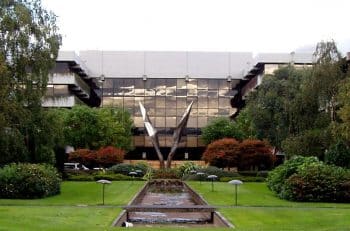
Andrew ‘Andy’ Devane may not be familiar to you. However the buildings, mostly ergonomic and beautiful democratic public buildings in concrete, always imbued with his generosity and modern perfectionism, certainly will be. Early Years Andy Devane was born on 3 November 1917 in 1 Upper Hartstonge Street, in Georgian Limerick. He was the eldest of four sons, the rest of whom studied medicine like their father John Devane who maintained his practice in respectable 3 Pery Square nearby and was also a consultant on St John’s and Barrington’s Hospitals. Dr Devane was personal physician to various Limerick bishops and to the Mary Immaculate college from 1915 until his retirement in the 1950s, connections which undoubtedly helped his son’s architectural career. As befitted the son of a doctor young Andy attended Clongowes Wood before choosing to study architecture in UCD. After graduating in 1941 with a degree that was mediocre down, apparently, to “intemperance and arrogance” after he had soared high in his early years in the College, Devane turned to town planning and became an associate of the professional institute, the Town Planning Authority. In 1945 he was among a group of young architects who joined the practice of Robinson and Keefe (RKD), injecting worldly and modern ideas, and dynamism. Established in 1913, the practice had initially received commissions for housing and small commercial projects quickly winning high-profile projects such as the structures for the Eucharistic Congress 1932, the Gas Company building on Dublin’s D’Olier St and Independent House on Abbey St. But for a man of his verve the Modern School was beckoning with new paradigms. Cheeky Letter Exactly 70 years ago a mischievous Devane wrote to Frank Lloyd Wright, the genius behind the Guggenheim Museum in New York and Fallingwater, citing the low public opinion of the works of Le Corbusier and the Bauhaus, ending with the provocation: “I cannot make up my mind whether you are in truth a great architect or just another phoney”. Perhaps not knowing that he had sent a similar letter to both Mies Van der Rohe and Corbusier, Wright generously responded,“Come along and see”. He did: when offered a partnership at RKD in 1946 he deferred, to take up the Taliesin Fellowship at Frank Lloyd Wright’s studio in Scottsdale, Arizona. This decision would change his life. Devane was one of the first to cross the Atlantic to study under the great architects of the time but others followed. These included Kevin Roche, who later designed the Ford Foundation building in New York and Dublin’s anodyne Convention Centre; Robin Walker, who became a partner in Scott, Tallon and Walker and who sought the tutelage of Mies van der Rohe; and Shane de Blacam who designed the Beckett Theatre in Trinity College Dublin and who worked under Louis Kahn. American Schooling Devane diarised his first thoughts on America and Wright: “My first sighting-impression of Taliesin West sums it all up. I have never forgotten it. After four days of continuous travel (Shannon, Labrador – blizzard in both places- Boston, New York- all in TWA Constellation) – change of places in New York to DC3s, hopping across the apparently endless vastness of America- and ending up (with no bags and a last few dollars) walking into the desert from Scottsdale, hot (so hot), exhausted, confused, convinced I had made a huge mistake in my quest I was picked up in a supply truck driven by FLW’s daughter-in-law, Svetlana, on her way to Taliesin. I will never forget those first glimpses of canvas, Redwood and stone in its desert setting of cacti and mountains – and then walking into a dream- a reality of form and material such as I had never known before – and meeting ‘the man’ himself – so different – so familiar. I was home!!!”. A year after Devane returned to Ireland, another young Irish architect, Jack O’Hare, made his way to do his apprenticeship under Wright, inspired by Devane’s journey. In a public interview in 2011, O’Hare described the large open drawing-room where each student would sit hand-copying the master’s drawings. Devane kept a sample of the exquisite blueprints he copied for ‘Oboler House’, commissioned by the film director Arch Oboler and his wife Eleanor who set out to create an estate called ‘Eaglefeather’ in the Santa Monica Mountains above Malibu. Return to Ireland Devane returned to Ireland in 1948, enthusiastic about taking Wright’s ‘Usonian’ [his word for US-derived] style of architecture, seeing it as a template for post-war Ireland and eager to set himself apart from the UK models. Prosaically he mourned that, “On my return my first ‘major’ (to me) project was a mortuary chapel tacked on to the RC Church in Naas”. Educational Buildings More technicolor work soon followed: St Mary’s Girls’ National School, King’s Island, Limerick which began in 1949 and was completed in 1951. There is a striking similarity between the drawing room of Taliesin West and the auditorium of St Mary’s with its exterior ‘knuckles’ and sloped roof. This was the first of many Devane national schools in the working-class areas of Limerick city. As a true disciple of Wright he wanted to showcase concrete as the perfect building material. Devane’s mantra was: “Basic building at basic cost with real community benefit”. But I would disagree – these were not ‘basic’ buildings. With economical materials he was able to create buildings for Limerick’s poor that would make their equivalents in grander areas look dull and outdated. Wide cantilevered concrete canopies tested the limits of contemporary engineering. The clever insertion of clerestory windows, sloping ceilings, primary colours and terrazzo flooring created warm, bright rooms to ignite the children’s imaginations. His attention to detail easily extended to the playground, with tactile concrete blocks giving texture to fun shelters for children’s play in bad weather. Among his ventures in Dublin were Inchicore Technical College, Emmet Road, (1952-54) and Mary Immaculate College Dormitory Building (1955-57) both Wrightian. For Gonzaga College (1955, with Chapel later 1966-67, a rare private-school
![]()
Posted in:
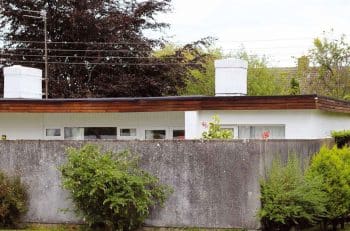
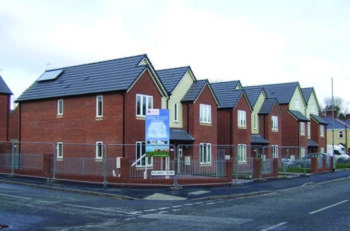
Driving down the dreary N11 eight miles out of Dublin a curious grouping of houses peeks intermittently over a high County Councilissue boundary stone wall. It’s just another far-flung estate. But in 1963 this represented the modernist dream: open-plan clapboard-fronted American-style houses with two garages adjoining the convenient new tree-lined dual-carriageway, one of Ireland’s first. You can still catch glimpses of its adulterated sleek lines and its once-utopian, now often octogenarian and jaundiced, first settlers. With the rapid uptake in private car ownership the new professional middle classes had realised they could set up home further and further away from the office. Speculative builders were only too happy to facilitate modern suburbia. Louglinstown – just beyond Cabinteely – was a buffer zone between city and countryside cushioned by green fields as far as the eye could see, watched over by rural Carrickgollogan and within striking distance of Killiney Bay, Shankill and Bray, all then established and desirable. Excitingly half of Loughlinstown village, including its celebrated ‘Big Tree’ had been demolished to smooth the tarmac of the spanking new dual-carriageway. It was a playground for the 1960s dream. Shining Shanganagh Shanganagh Vale tapped the optimism. It was named after a beleaguered local river, the euphonious name celebrated by James Joyce: it was originally to be called the less mellifluous Hawthorn Court but individualistic residents kicked up and changed it. Shanganagh Vale was utterly undeferential to the Irish vernacular or the lumpen housing estates on the way out from the city; it was a-contextual, streamlined, uncompromising, unIrish, American. Modern. All of the houses were oriented to give maximum sunlight throughout the day. The entrance curved the road around greens of newly planted poplar trees and detached, single-storey houses hidden by shrubbery. Reflecting the age of the car as symbol of democracy, the houses originally had double garages and were surrounded by generous roads and inviting footpaths. Walking around the estate each turn brought secret laneways and pockets of green. Shrubbery, defiant of boundary lines, made the houses seem to snuggle together. It was an opportunity for Merit Homes to create a new world on a blank canvas, not contextualised. Shanganagh Vale was a Garden City model of out-of-town suburb away from the morally and physically corrupting urban centre, surrounded by parkland and connected to the city centre by unclogged roads. It was visualised as sprawling down the whole Shanganagh Valley towards the Ramblers Rest pub in rustic Ballybrack. Builders Shanganagh Vale was a the first (and last) residential development for Merit Homes Ltd, a subsidiary of John Sisk and Sons which still collects some of the land rents today. The initial modernist development was phased through four different house types, ranging from singlestorey flat-roofed houses to single-storey and two-storey, pitched roofed four-bedroom houses. Architects It was the first residential estate for the London-based practice, Diamond Redfern Anderson. This was one of the first times an architect was used to design the new rash of residential schemes. Other works by Diamond Redfern Anderson include Oak Apple Green, Rathgar; Golden Bay, Lough Corrib, Co. Galway and Claremount Court, Glasnevin Dublin. Architect Denis Anderson, now in his eighties and retired in Holywood outside Belfast says that: “Architects shied away from housing at the time”. The practice is best known for its celebrated Castlepark Village, in Kinsale Co. Cork (1969- 72), considered a seminal work of Irish residential architecture. It is renowned. By contrast little has been documented on Shanganagh Vale. Arab Quarter Anderson told Village it had been important during the design process to separate vehicular traffic from pedestrian traffic – which was novel at the time. Landscaping was also a priority to the practice and the relationship of house to site. The estate is a combination of private and public spaces along with in-between greens which ease the relationship between the houses and the road. high-screen walls around patios gained the houses the nickname the ‘Arab Quarter’, from the confounded local Edwardians. All the houses in Shanganagh Vale were at angles to each other, with different heights of walls projecting here and there and vastly different open spaces, some of which were not clearly designated public or private. It all betokened a relaxed attitude to space and property. The word that best fits the untidy house cluster is one often heard in Ireland – ‘throughother’. Denizens could shape it themselves. The estate was so green that the architects were soon receiving phone calls from the residents complaining about weekend picnickers. The lanes were ideal for the wellspoken children of the estate to cycle their Raleigh Chopper cycles in file, and years later to sneak an occasional unobserved smoke. Flat Scandinavians Closest to the entrance are the Scandinavian-looking, flat-roofed single-storey bungalows. Architect Denis Anderson comments that he took his inspiration from Finland. House+Garden magazine had started to churn out issues on Scandinavian homes, which the perspicacious Irish consumer was taking notice of. Vancouver, Loughlinstown Again fashionably foreign-inspired, the Vancouver – the second look Diamond Redfern Anderson launched was characterised by a box-like structure, low projecting roofs and balconies across the white wooden-panelled frontage. The Vancouver show-house advertised in the Irish Times on 9 November 1963 was completely furnished and “decorated by Brown Thomas and Co Ltd of Grafton Street”. The description reels off the mod cons of the day: “large plate-glass sliding windows, which may be double-glazed if desired”; “large open-plan lounge and dining area, with its fine fireplace of brick and Parana wood paneling”. The kitchen had “attractive breakfast bar with an ‘adjoining laundrette”. Upstairs the bedrooms boasted built-in wardrobes and dressing tables. The asking price was £5150. More than you’d pay for something red-brick in the inner suburbs. But then this was a different land with different rules. The Theory In a literary timepiece, Ruairí Quinn, later leader of the Labour Party, wrote in the Architects Journal in 1974: “Anderson’s design approach is a reversal of the conventional wisdom of the architecture schools, as he first formulates the solution and works back
![]()
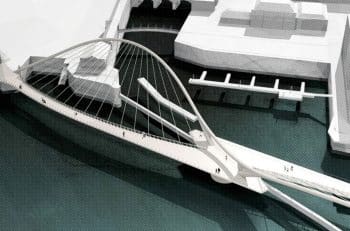
The Limerick 2030 Economic and Spatial plan, published in 2013, proposes a new bridge for the city. However, the plans are wading through deep controversy about the design, location, funding, timing, public consultation process and even intent.
![]()