
Environment

Random entry RSS

  • Posted in:

    Theatre without actors or action

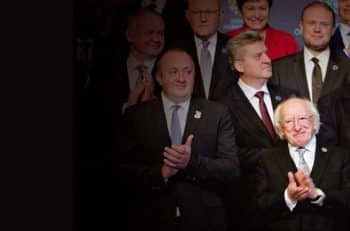
    The first ever World Humanitarian Summit, held in Istanbul last month, is symptomatic of everything that is wrong with our world and our politics today. It brought the global political theatre, which has replaced real action at the UN in recent years, to new lows. These lows are all the more reprehensible when the lives of millions of people, caught up in humanitarian emergencies of all types, depended on the success of this Summit. Such a summit has been long overdue and will now become a regular event. It was the first time that the ‘humanitarian eco-system’ – the plethora of agencies involved in the burgeoning humanitarian industry, came together to examine their mission and role. The system is almost at breaking point, with the scale of need outweighing the funding and the capacity made available. Climate change and continued protracted conflict are destroying lives and economies. This year alone, El Niño, compounded by a spike in global temperatures due to climate change, has resulted in 50 million people right down along the east coast of Africa being in need of food aid. The UN Sustainable Development Goals cannot be reached if such calamities persist. Despite an 18-month lead-in process, and the substantial efforts of the humanitarian community, the Summit produced no outcome of substance. All that resulted was a weak communique, rich in hyperbole, but devoid of political reality. Most world leaders declined the invitation to attend. The failure of the G7 nations, particularly the permanent members of the UN Security Council, to attend the Summit meant no serious political discussion could take place. Angela Merkel was the only G7 leader who made it. The ongoing widespread violations of international humanitarian law in conflict zones, such as Syria, and the failure of countries to honour their responsibilities to take in refugees were the two big elephants in the room at the Summit. The choice of Turkey to host this Summit predated the crisis now unfolding on Europe’s borders. The location, and the EU’s seemingly unending migration crisis formed a critical backdrop. Yet none of this political context was even discussed. Médecins Sans Frontières (MSF) called the event a “fig leaf of good intentions”. They refused to go, given the controversy about the EU-Turkey migration deal and the ongoing targeting of their hospitals in conflict zones. Last year 75 MSF hospitals were bombed, killing and injuring hundreds of civilians, including their staff. However, the Summit did produce some small shifts, which will have an impact on the delivery of humanitarian relief, if implemented. One of these was the so-called ‘grand bargain’ which recognises the importance of international actors working together with smaller, national organisations in crisis situations. The irony of most current humanitarian responses is that the arrival of major international agencies often crowds out the local ones. This makes them more vulnerable to future crises and more dependent on external support. There were some important statements about the need to increase funding and to make it more flexible. The reality is that the humanitarian aid system is at breaking point. It is being overwhelmed, and the Summit did nothing to stem this trend. This is because there are simply too many crises; too many people displaced for too long who cannot integrate, cannot live lives without dependency on humanitarian aid; and the very high cost of sustaining people while wars continue. The resolution requires sustained political will and attention. This was not evident at the Summit. Ireland was represented at the Summit by President Higgins rather than a member of the Government. Perhaps this was a matter of timing, given that the Minister of State for Development Aid, Joe McHugh, was only appointed the week before the Summit. President Higgins made a big impact, if not on the outcome, certainly on the tone of the debate. His interventions at the Summit stood out because he chose to focus specifically on the many issues which were not up for discussion. These included the root causes of the growing humanitarian crisis globally, the need for reform of the international political system, and the urgency of a new ‘paradigm’ or economic order. His message resonated at the Summit. For those unfamiliar with the constitutional role of the President in Irish politics, including the international media, it may have appeared that the Irish Government had suddenly undergone a major conversion. Ironically, the a-political President Higgins got closer to addressing the politics of the situation than any other leader at the Summit. By Lorna Gold

    Loading

    Read more

  • Posted in:

    Ireland’s first frack

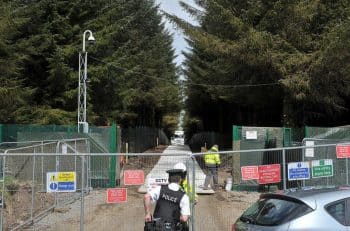
    On Tuesday 17th May exploratory drilling for oil began in Woodburn Forest, near Carrickfergus, County Antrim, the first adventure of fracking on this island. There are serious concerns about a lack of transparency and democracy as the project comes to life, despite an official moratorium on fracking. Campaigners point to a litany of governance and regulatory failures surrounding the scheme. Oil exploration has been allowed to proceed on publicly-owned land without planning permission, public consultation, due-diligence checks or an assessment of environmental impact. The UK-based energy company InfraStrata expects to find oil at Woodburn. It was granted a petroleum exploration licence for the Larne and Lough Neagh basin in March 2011 which was renewed in March 2016. This licence area stretches 520sq km across north-east Northern Ireland. It encompasses a site at Islandmagee in Antrim, where the company is constructing an underground gas-storage facility. Should InfraStrata find oil, it will secure the right to extract hydrocarbons across the entire licence area without ever having been subject to public scrutiny. The DUP’s finance spokesperson, Sammy Wilson has colourfully suggested he’d like to see “as much oil in Carrickfergus as there is in Texas”. Neither the DUP’s nor Sinn Féin’s MLAs seem exercised by the issue. Once oil or gas is found, any attempt by the Northern Irish executive to halt drilling would allow InfraStrata to make claims for compensation for loss of profits. In a similar ongoing case concerning the fracking company Tamboran Resources in County Fermanagh, the company is suing the state for compensation of up to £3bn. Members of the Stop the Drill campaign have maintained a vigil at the InfraStrata site in Woodburn, since February. They are highlighting the democratic deficit in the project, as well as the danger that drilling poses to the local community’s water supply. The drill rig is situated on land leased to the company by the public water utility, Northern Irish Water. The fifty-year agreement between Northern Irish Water and InfraStrata gives the company permission to re-inject petroleum, water and any other fluids into the ground at the site. It is just 300 metres from a reservoir that supplies water to 130,000 homes in Carrickfergus and Belfast. Situating the well on publicly owned land has meant that InfraStrata does not need to negotiate consent from local landowners. Legislation provides that if the company decided to proceed with the production phase, it can acquire the land without landowner’s authorisation. The use of public land to facilitate contentious energy projects over community objections echoes Shell’s lease of land from Coillte for its Corrib project. It raises serious questions about a lack of meaningful public consultation in the planning and development of energy projects in Northern Ireland. Such consultation is a right enshrined in the EU Aarhus Convention on access to information, participation and redress in environmental decision-making. After securing the site from Northern Irish Water, InfraStrata by-passed planning permission for the Woodburn project by exploiting a loop-hole in regulations known as ‘permitted development rights’ (PDR). This is normally used for minor, non-contentious issues. PDR was granted by default in November 2013 after the Department of Enterprise Trade and Investment failed to assess the application within the required statutory deadline. It also seems to breach the EU Environmental Impact Assessment Directive. Despite calls from the Stop the Drill campaign to review the project on the grounds that it should not be permitted under PDR, Minister Mark Durkan and the Mid and East Antrim Council allowed work to begin in February 2016. As tree-felling on the site began, the local community was alarmed that the company had still not produced a Waste Management Plan for the handling of toxins and dealing with any contamination on the sensitive water-catchment site. The arrival of the drill rig on site on 9th May was delayed by courageous action of the local community who maintained a defiant slow walk in front of the rig as it travelled to the site. A retired teacher attached himself to the rig with a bicycle lock, in a symbolic act of protest. In a statement to the assembled media, he declared his belief that he was justified in carrying out this act of civil disobedience in order to prevent what he saw as a larger crime from being committed by InfraStrata. A member of the local community, Richard Irwin, has taken two judicial review cases in an attempt to stop the drill. The first case refers to InfraStrata’s alleged breaches of its “permitted development rights”. The second seeks to question Northern Irish Water’s decision to lease land in a statutorily protected water catchment to an oil company. These cases are both continuing. In the meantime, community members and supporters continue to gather at the vigil camp in Woodburn Forest. For further information on the Stop the Drill campaign: www.stopthedrillcampaign.com. Jamie Gorman is a community worker undertaking PhD research on environmental justice

    Loading

    Read more

  • Posted in:

    New divestmentality

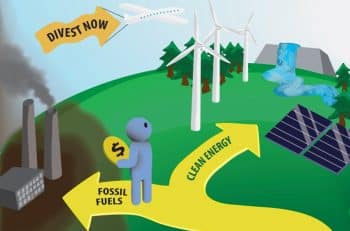
    The global climate movement is making a comeback. In the last two years alone it has managed to mobilise millions of people on to the streets. Over 500 institutions worldwide, with assets worth €3.5tr have committed to taking their money out of the fossil-fuel industry. The key shift has been to focus squarely on the primary cause of climate change and the principal culprits of inaction – the fossil-fuel industry. In short, the focus has shifted away from uncontrollable forces to controllable forces. Every campaign needs a good villain. The leaked evidence that the fossil-fuel companies, such as Exxon, have colluded for decades to bury scientific evidence on climate change has been dynamite. As far back as the late 1960s the industry knew that the burning of fossil fuels would lead to global warming, yet this was completely ignored. The industry allowed a situation to develop where the reserves currently on the books of fossil-fuel companies are now up to five times what can safely be burnt. As well as getting feet on the street, a key tactic of the climate movement has been to present the financial sector with the financial arguments for decarbonisation. For some, this has been about coherence of their ethical vision with their financial position; for others it has been about reading the market signals. After the Paris Agreement, and the growing momentum to ratify the treaty, the possibility of fossil-fuel investments losing value and becoming ‘stranded assets’ is clear. Fossil fuels are becoming a risky investment. Such a tactic has been highly effective and has challenged old stereotypes of campaigning. The movement has become more sophisticated. When it comes to climate activism, looking and talking like a city slicker doesn’t preclude activism. In fact, some of the biggest gains in recent years have come about through engaging a growing number of oil and finance industry ‘defectors’ in the campaign. Far from donning ripped jeans and t-shirts or scaling buildings, they have worked on the inside, using their professional status and image to get access and wield real influence. They have made significant gains in winning the arguments that matter on the inside. The campaign in Ireland has been slow to get off the ground, but things are moving fast. Recent visits of global campaign leaders including Bill McKibben of 350.org, Mark Campanalle of Carbon Tracker, and, in May, Naomi Klein, have ignited new campaigning vigour in civil society. Students are at the forefront. Divestment campaigns have taken off in Trinity College, UCD, NUI Galway and Queen’s University. Maynooth has become the first university in Ireland to set out an ethical investment policy which excludes investments in fossil fuels. Trócaire has launched the ‘burning question’ campaign calling on the Irish Government to divest the Irish Strategic Investment Fund from fossil fuels. Currently €72 million of public money is invested in some of the worst-offending companies including TransCanada, Peabody Energy and Exxon. Other linked campaigns are focused on ending future investments in the peat industry and oil exploration. The movement is diverse, energetic and growing fast. The signs this global strategy is working are evident in the way the establishment has started to fight back. In the USA, President Obama is facing a multi-million law suit challenging his decision to block the Keystone XL pipeline on grounds of climate change. In the UK, the Conservative government is planning an unprecedented move to curtail the powers of local councils over their own investments. This is in response to campaigners, backed by the Guardian newspaper, attempting to subvert the ethics-free investment policies of local authorities. The Conservative government has announced plans to amend the Local Government Pension Scheme Regulations 2009 “to prevent local government from choosing not to invest funds in companies involved in the arms trade, illegal settlements in the occupied West Bank, tobacco industries or fossil fuels”. If successful, this would limit the freedom of local authorities to make investment choices on grounds other than financial performance. Such moves will not deflect campaigns. In many ways they play into their hands. Margaret Thatcher stopped councils from divesting from the South African regime in the 1980s. This only served to focus public attention on the issue and led to a significant growth in the anti-apartheid movement and its eventual success. In the face of an ethics-driven uprising against wayward corporations, history shows that there can be only one winner

    Loading

    Read more