

Environment

Random entry RSS

  • Posted in:

    Wicklodium

    Litigation and allegations of wrongdoing dog the garden county as a motion to downzone Newtownmountkennedy data-centre lands is defeated

    Loading

    Read more

  • Posted in:

    Meat-hane

    The figures were so astounding that I refused to believe them. I found them buried in a footnote, and assumed at first that they must have been a misprint. So I checked the source, wrote to the person who first published them, and followed the citations. To my amazement, they appear to stand up. A kilogramme of beef protein reared on a British hill farm can generate the equivalent of 643kg of carbon dioxide. A kilogramme of lamb protein produced in the same place can generate 749kg. One kilo of protein from either source, in other words, causes more greenhouse gas emissions than a passenger flying from London to New York. This is the worst case, and the figure comes from a farm whose soils have a high carbon content. But the numbers uncovered by a wider study are hardly reassuring: you could exchange your flight to New York for an average of 3kg of lamb protein from hill farms in England and Wales. You’d have to eat three hundred kilograms (300kg) of soy protein to create the same impact. In choosing what we eat – or making any other choice – we appear to take informed and rational decisions. But what looks and feels right is sometimes anything but. In this case, the very features we have been led to see as virtuous – animals wandering freely across the mountains, tended by horny-handed shepherds, no concrete and steel monstrosities or any of the other ugliness of modern intensive farming – generate astonishing impacts. The figures are so high because this form of husbandry is so unproductive. To produce one lamb, you need to keep a large area of land bare and fertilised. The animal must roam the hills to find its food, burning more fat and producing more methane than a stalled beast would. Yes, there are payoffs here. What is good for farmed animals is often bad for the natural world. The cruelties of intensive indoor production are matched by the wreckage of extensive outdoor production. Free-range pig and chicken farming, practised on the current scale, can be environmentally disastrous. Nitrates and phosphates sometimes pour from their paddocks and into the rivers. Unless they are kept at low densities or on well-drained fields, pigs tend to mash the soil: a friend describes some of the farming he’s seen as opencast pig mining. You can raise production – which means fewer greenhouse gases per kilo of meat – by dosing your animals with hormones and antibiotics. But this too has a cost. It’s now almost too late, the director of Antibiotic Research UK warned this week, to prevent a global superbug crisis. This is partly because unscrupulous farmers have been chucking shedloads of the antibiotic colistin – the last great hope of killing resistant bacteria – at their animals, as it raises their weight. But of all forms of production, the most attractive is one of the worst. Hill farming not only makes a wildly disproportionate contribution to climate change; it also trashes our watersheds, increasing the chances of dangerous floods, and destroys what would otherwise be our wildlife refuges: the great empty uplands, in which economic activity is sustained only through lavish farm subsidies. It is hard to think of any human activity with a higher ratio of destruction to economic product. My friends in the industry accuse me of being anti-farmer. It’s true that I emphasise the dark side, largely because so few other journalists seem prepared to cover these issues. But I have no visceral dislike of farming – quite the opposite. Visiting a farm on Exmoor last week, I was reminded of all that is beautiful about keeping sheep. The Arcardian idyll, a conception of the shepherd’s life (in both Old Testament theology and Greek pastoral poetry) as the seat of innocence and purity, a refuge from the corruption of the city, resonates with us still. But in the midst of a multifaceted crisis – the catastrophic loss of wildlife, devastating but avoidable floods, climate breakdown – entertaining this fantasy looks to me like a great and costly indulgence. As for eating local food, well in some cases it makes sense. It helps to engender a sense of place and belonging, which should not be lightly dismissed. When we buy seasonal fruit and vegetables from local farmers, it works environmentally as well. But we’ve tended to over emphasise food miles and to under emphasise other impacts. On average, transport accounts for just 11% of the greenhouse gas emissions caused by the food industry. Pulses shipped from the other side of the world can cause far lower impacts than meat produced here. A paper published in December suggests that switching from meat to green vegetables would be environmentally damaging. Per calorie, growing lettuces produces more greenhouse gases than rearing pork. But all this establishes is that lettuces are low in calories. You would need to eat 15kg of lettuce to meet your daily energy requirement, which might be reasonable if you were a 200kg rabbit. As another study remarks, “20 servings of vegetables have less greenhouse gas emissions than one serving of beef”. As the world’s people adopt the Western diet, a paper in Climatic Change estimates, the methane and nitrous oxide produced by farming could rise to the equivalent of 13 billion tonnes of carbon dioxide per year by 2070. This is more than all human activities combined can safely produce without exceeding two degrees of global warming. Climate breakdown looks inevitable – unless we change our diets. This, above all, means swapping most of the animal protein we eat for vegetable protein. It’s not painful, unless we make it so. Many British people used to eat dhal every day. They called it pease pudding, pease pottage or pea soup. As in South Asia, its ingredients varied from place to place and season to season. It’s just one component of a diet that offers plenty of variety – without trashing the great variety of

    Loading

    Read more

  • Posted in:

    We’re deluding ourselves – note my words

    If you’re looking for a chirpy, upbeat assessment of how humanity will, in the nick of time, get its clappy act together to tackle dangerous climate change, then Kevin Anderson is probably not the person you need to talk to. Professor of Energy and Climate Change at the University of Manchester and deputy Director of the Tyndall Centre for Climate Change Research, Anderson is one of the world’s best known and most influential – and outspoken – climate specialists. On a recent working visit to Ireland, he ripped into any complacent notion that the Paris Agreement signed up to by almost 200 nations, including Ireland, last December meant that we could all relax a little in the knowledge that our politicians, guided by the best scientific advice, are finally getting on top of this crisis. Some of his most devastating critique is reserved for the IPCC itself or, more specifically, the wishful thinking that underpins many of its model projections. He fleshed this out late last year in a commentary piece published in Nature Geoscience, where he took apart some egregiously fanciful assumptions. “The complete set of 400 IPCC scenarios for a 50% or better chance of 2°C assume either an ability to travel back in time or the successful and large-scale uptake of speculative negative emission technologies. A significant proportion of the scenarios are dependent on both time travel and geo-engineering”, wrote Anderson. He repeated this point forcefully during his presentation at the Royal Irish Academy in Dublin, to the obvious discomfort of the representative of Ireland’s Environment Protection Agency, who found himself trying to explain how completely untested technologies could, somehow, be massively deployed to remove upwards of ten billion tonnes of carbon dioxide (CO2) from the air every year, liquefy it and pipe it into vast underground storage where it would have to remain securely for at least the next 1,000 years. Village sat down with Professor Anderson for an in-depth interview in Dublin. First question: what about our recent steps, such as the new Climate Act – does Anderson think Ireland is grasping the nettle of climate change? “I think certainly not; what Ireland has signed up to in the recent Paris Agreement, and particularly when you think that Ireland is one of the wealthier countries in the world, isn’t anywhere near what is necessary to meet its (Paris) commitments”. While the same can be said for the UK and much of Europe, Anderson stresses that “Ireland is a particularly wealthy nation, and it has wonderful renewable (energy) potential; it also has a very educated workforce. It has all that is necessary to make the rapid transition to a low-carbon energy system and indeed a much-lower-carbon agriculture system – at the moment, it is choosing to do very little in that direction”. So what about the view propounded by Irish politicians from Enda Kenny to Simon Coveney, that climate action is something we can kick down the road for another five or ten years, while concentrating on economic development instead? “That view completely, and I would say, deliberately misunderstands the science”, he retorts. “It’s the emissions that we put into the atmosphere now that really matters…these build up every single day in the atmosphere”. As for the oft-quoted argument that Ireland’s emissions are a small fraction of the global total, Anderson replies that every sector, from aviation and shipping to countries large and small, makes the argument that it only contributes a small share of the global total, but every percent is equally important. He is scathing of Ireland’s major expansion of its ruminant-based agriculture sector, believing the argument that if we don’t produce vast amount of beef and dairy products here, someone elsewhere will do it less efficiently, is bogus. “The climate does not care about (emissions) efficiency, it only cares about absolute levels of emissions, so if you are going to look at Ireland you have to look at these absolute levels”. Measuring ‘efficiency’ of CO2 per kilo of beef or ton of dairy produce is not, he argues, the right way to think about it. “If you are really concerned about feeding the world, then you measure it in terms of the CO2 per useful calorie you produce – that will almost certainly mean you will have to move away from the types of agriculture that have innately very high greenhouse-gas emissions”. Anderson describes the types of measurements being deployed to promote the ‘Origin Green’ image of Irish agriculture as “inappropriate and misleading”. A staunch public defender of agricultural emissions is retired UCD meteorologist, Professor Ray Bates, who has repeatedly argued against an ‘over-alarmist’ response to climate change that might, in some way, curtail our beef and diary sectors. Bates’ principal argument is that ‘climate sensitivity’ to CO2 may be on the lower end of the scale. Anderson is unimpressed. “I think it would be a foolish mistake to go down the ‘let’s keep our fingers crossed that climate sensitivity is on the low end’ dead-end, despite the fact that by far and away the majority of scientists think it’s likely to be on the middle to the upper end of the (sensitivity) spectrum”. What’s at stake, after all, is the habitability of the entire planet, and who would want to leave that to the toss of a coin?”. Anderson knows only too well the appetite among politicians, policy-makers and parts of the media for people who are prepared to downplay the risks and urgency, but believes that only by acting now in line with the scientific advice can potentially disastrous and irreversible damages be avoided. Quite how close we already are to the point of no return, no one can say for certain, but there is growing consensus that +1.5C, rather than +2C, should be the upper limit before really dire consequences become locked in. The findings emerging from climate science pose “fundamental questions about how we have framed modern society, the whole concept of economic growth, of progress – all

    Loading

    Read more

  • Posted in:

    Pray he’s wrong

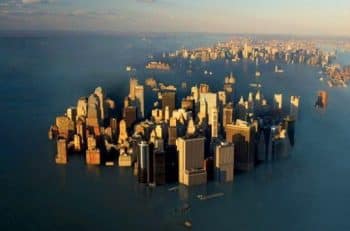
    Former NASA chief climatologist, Jim Hansen has a prejudicial knack of being right a lot more often than he’s wrong. And when it comes to projecting the future path of climate change, he has an equally unfortunate habit of being well ahead of the scientific posse. Back in the sweltering summer of 1988 Hansen testified to the US Congress on climate change, a phenomenon that was, until his electrifying presentation, seen as something of a scientific curio, an issue that distant future generations would, eventually, have to confront. Hansen confirmed that not only was it real, it was already happening. Calculations Hansen published in the late 1980s of likely future climate change track what has actually occurred with uncanny accuracy. Fast forward to 2015, a year in which global temperatures were smashed by record margins to make it, by some distance, the hottest ever recorded. And temperatures recorded in the first two months of 2016 have been described by climate scientists as “off the charts”. The February 2016 global temperature anomaly is +1.35C above average. It took from the beginning of the industrial revolution until October 2015 to record a +1C global temperature rise. To add another 0.35C within less than six months has left the scientific community running out of superlatives. And now Hansen is back. He and 19 colleagues have just published a blockbuster paper in the journal Atmospheric Chemistry & Physics. While the IPCC’s assessment reports represent the conservative mainstream view of climate science, Hansen and his colleagues can be said to be at the bleeding edge. What their research has concluded is profoundly disturbing, throwing into question almost everything we think we know about how climate change is likely to play out in the 21st century. While the IPCC plumped for a likely maximum sea level increase this century of around 1 metre, Hansen argues this may be a hopeless underestimate. “The models that were run for the IPCC report did not include ice melt, and we also conclude that most models, ours included, have excessive small-scale mixing, and that tends to limit the effect of this freshwater lens on the ocean surface from melting of Greenland and Antarctica”, Hansen told a press conference marking the launch of his paper last month. How Hansen sees this playing out in the real world reads like apocalyptic science fiction. Instead of a slow, incremental increase in sea levels, he believes we are looking at multi-metre sea-level rises in the coming decades, not centuries. Nor will this be a gentle process: he predicts devastating superstorms quite unlike anything since the last Ice Age, and the near-shutdown of major ocean currents such as the Atlantic Meridional Overturning Circulation (AMOC), or the Gulf stream, that vast current of warm tropical water that keeps northwest Europe, including Ireland, from not being frozen solid for several months a year. If this is beginning to sound familiar, you’re probably thinking of the movie ‘The Day After Tomorrow’, where abrupt climate change triggered a massive freeze in the northern hemisphere. That, of course, is purely speculative; there is already far too much excess heat in the system for the return of widespread Ice Age conditions anytime in the next hundred millennia. What is truly alarming, according to Hansen, is that as the heat differential between the equator and the northern hemisphere increases, this is likely to fuel powerful mid-latitude storms, on a scale not endured in thousands of years. Such storms could be powerful enough indeed to pick up massive boulders weighting thousands of tonnes and toss them hundreds of metres inland. We have clear evidence that this has happened before – and he believes it can happen again. With severe storms battering the world’s coastal regions, compounded by rapid sea-level rise, the nightmare scenario of most of the world’s great cities being lost to coastal inundation moves from being some distant spectre far beyond the year 2100 and bang smack into the middle of this century. Cork, Dublin, Galway, Belfast, Limerick, Wexford… the list goes on, and that’s just on this tiny island. Apart from the unimaginable human misery and forced migration of millions, the economic impact is almost incalculable Most of our critical infrastructure, including all the world’s great ports and trading hubs would be lost. Not everyone agrees. Professor Peter Thorne of NUIM was among those who reviewed Hansen’s paper, and while not ruling out worst-case scenarios, believes publicising them may be counterproductive. “Does this actually confuse, does it cause despair, does it help or hinder? I don’t know whether communicating something like this actually elicits a response that says: let’s do something”, he cautions. By John Gibbons

    Loading

    Read more

  • Posted in:

    Inconvenient then and now

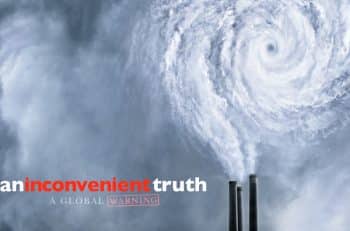
    How’s this for a deeply unpromising script idea: making a movie about a failed politician trailing around the world presenting wonkish slide shows on his laptop to mostly small audiences about, of all things, climate change? It hardly helped that the ex-politician in question, former US vice-president Al Gore was reviled across the political spectrum. Democrat supporters blamed him for gifting the White House to George W Bush with his incompetent run and premature concession in Florida in November 2000, while Republicans hated him mostly for not being a Republican. It might have been only a slight overstatement to call Gore a pariah in the mid-2000s. For him to then choose to relaunch into public life by campaigning on one of the few topics even more unpopular than himself seemed to underpin his tag as a serial loser. The film that emerged from Gore’s travelling slideshow, ‘An Inconvenient Truth’, didn’t exactly blow Hollywood away either – at least not at first. Director David Guggenheim recalled that before its debut at the Sundance Festival in June 2006, they brought the film reel to a major studio for a preview, which Gore attended. “I remember listening to one of them snore, then waking up awkwardly when the lights came up”, said Guggenheim. “I saw the executives going into another room and huddling, then coming back and the head of the studio saying to us: “We do not believe that this will ever have a theatrical distribution. We do not believe that anyone will pay to have a babysitter come so that they can go see this movie. Stop dreaming, this movie will never have a theatrical release”. And yet. The film became a critical success, landing two Oscars along the way and grossing over $24m in the US, small beer by Hollywood standards, yet one of the most commercially successful documentaries of all time. More importantly, it reignited the moribund environmental movement in the US after years of Bush-era denialism. Globally, it helped redefine ‘environmentalism’ as being a far broader church than that occupied by traditional environmentalists. Along the way, it helped to squarely frame climate change as the overarching ecological – and existential – crisis of the 21st century. Watching ‘An Inconvenient Truth’ was a deeply personal, emotionally wrenching experience for many people back in 2006. I know because I was one of them. Climate change had long been lurking in the shadows of public consciousness, poorly understood, frequently misrepresented and, as an issue, desperately short of passionate, persuasive advocates. “Men occasionally stumble over the truth”, Winston Churchill drily noted, “but most of them pick themselves up and hurry off as if nothing ever happened”. My first time to stumble over the deeply inconvenient reality of climate change in a world of ever-escalating human impacts had happened in the first two or three years of the 2000s, as I began to read my way into the subject, initially as an intellectual curiosity. The more I researched, the greater grew my sense of personal unease. Yet all around, life went on as before. Not a single person in my work, family or social circle at that time shared this growing sense of dread. It’s neither pleasant nor healthy to remain in a constant state of high anxiety, especially when all around you seem perfectly relaxed. So, despite being fairly well informed, I too began to relax, to compartmentalise my anxiety and box off my concerns. Though unaware at the time, I was probably experiencing what psychologists call the bystander effect: surely if things were really as serious as all that, other people would be alarmed too? But they weren’t. The invisibility of the issue in the media was both baffling and oddly reassuring. If there really was a massive story here, wouldn’t the media be all over it by now? The bystander effect hobbles us in three ways: first, there is a lack of sense that it’s anyone’s job in particular to intervene, so we’re off the hook as individuals for failing to act. Second, we all engage in social referencing, subtly aligning our actions with those around us; if they aren’t bothered, why should I be? Finally, few of us are comfortable sticking our necks out, especially if the issue seems complex or contested, so we mostly stay schtum. By mid-2006 my incessant low-level ecological panic was showing signs of finally receding. Watching ‘An Inconvenient Truth’ in the cinema changed all that. It was an environmental epiphany – that electrifying moment when everything I’d been reading and trying to process emotionally for several years came crashing into focus. It was like waking from a dream into a world that looked familiar, yet felt changed, utterly and beyond recognition. I knew in that moment that the days of being an eco-bystander were over. For me, the stand-out moment from the film was when Gore produced a chart on a giant screen tracking the uncanny lock-step relationship between CO2 levels and global temperatures stretching back through the millennia. By 2005, the year of filming, global atmospheric CO2 levels were approaching 380 ppm (parts per million), the highest level in at least 800,000 years. In a sleek piece of visual theatre, Gore then climbed aboard a cherry-picker and began to ascend, all the while tracking the graph showing CO2 levels 50 years into a business-as-usual future as they spiralled out of sight. Allowing such a future to come to pass was, he argued, “deeply unethical”. He could have added: suicidal. Today, more than one fifth of the way into that momentous half-century, the global CO2 figure has smashed through the 400ppm level, and continues to climb at the rate of some 3ppm every year, taking us rapidly into a completely new climatic era, the anthropocene. “Future generations may well have occasion to ask themselves: what were our parents thinking? Why didn’t they wake up when they had a chance? We have to hear that question from them. Now”. These were the sombre remarks

    Loading

    Read more