
Environment

Random entry RSS

  • Posted in:

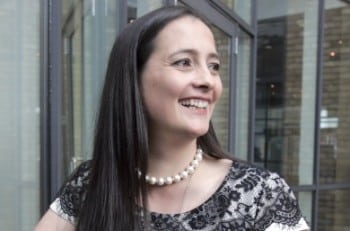
    Green Party’s Catherine Martin on life, politics and everything.

    What’s your geographical and professional background? I am originally from Carrickmacross, Co Monaghan, but moved to Dublin over 20 years ago. I have worked as an English and Music teacher in St Tiernan’s Community School in Dundrum for the past 16 years. How long have you been in the Greens and how did you first get involved? My husband and I joined the Green Party shortly after the birth of our first child, Turlough, in 2007. I got involved for the sake of his future and the future of all of our children. They were, to me, the only party looking to the long-term. Are you on the practical or radical wing? I don’t think the two are mutually exclusive. I believe in practical, long-term sustainable solutions, but I also think we really have to change the way we think and do politics before we can implement the solutions. What motivates you? Looking at things in an innovative way, seeking solutions, and my children of course! What is your political priority? To provide a voice for real equality of access to quality education for all. How would you reform education? We don’t just need more investment in education we need innovation and creativity and a more user-friendly system for all. We need to formally incorporate wellbeing into the curriculum so that the way we teach our children is more individualised for each student. Teachers are under-resourced and over-stretched and that needs to change too. What instrument do you play? I sing and I also play the piano. How would you get more women into politics? Show them it is possible to effect change and reform systems, and make it possible to have quality family time. How comfortable are you debating the fiscal space? It’s another complex label for something reasonably straightforward. To the detriment of other issues, it dominated the first week or so of a short general election campaign. What simple changes could best be made to health policy? The simplest and most effective change would be to integrate effective mental-healthcare services into mainstream health and education policies. What is your environmental priority? We have to strive to meet our 2030 emissions reductions targets. If we don’t it will cost us a lot of money – nobody is spelling this out. The previous government would sooner incur fines than come up with solutions. What are the biggest local issues in your constituency? Equal access to quality education and childcare are huge issues for families and people are genuinely stressed, worried and losing sleep over these issues. Providing effective crime-prevention is also a big concern for many. What is your political philosophy? Everything is interconnected. We need to bear this in mind when tackling problems and providing solutions. How would you describe yourself on a left-right or liberal-conservative scale? I am not into political labels. Actions speak louder than labels. Do you believe in equality and if so which type eg opportunity, wealth or outcome? I strongly believe in equality of opportunity. Nobody should be at a disadvantage in life because of where they were born, their socio-economic circumstances, their gender or race, and so on. I think that’s the Government’s duty to the next generation: to ensure equality of opportunity. How many hours a week have you been devoting to Council work? Every hour that was feasibly possible! Did the Greens do a good job in government? Yes and no. The Greens were tasked with dealing with an economic collapse that was not of their making. It would have been very easy to walk away from that saying it wasn’t our fault, but they didn’t, and they knew they’d take a hit for it. Balancing the books was never going to be easy, but every budget that the Greens were involved in was progressive, at least, which can’t be said of the outgoing Government. Many of the Greens’ achievements that were tangibly good were lost with poor communicative messaging. What lessons have they learnt? To be extremely cautious about going into Government again and be absolutely insistent on a dividend of delivery of green policies. To communicate in a clearer way that the green message is one of social justice. How would they do it differently a) in a future government and b) if negotiating a role in government in the 2016 Dáil? We will insist on a progressive policy platform, one that looks to the long term, and exploits the green economic transition that will happen in the next 50 years. The party has learned lessons from its time in Government, and we will tread carefully if the opportunity arises again. How much of the Green vote was for the Greens and how much for the environment and oppositionalism?  I think there were two elements to the Green vote: a vote for the party itself and a vote for the environment. There has been a Green voice missing from the Dáil for the last five years. Nobody was raising environmental issues. They wanted that Green voice back in the Dáil, and they trusted the Green Party to be that voice. I also believe the vote was due to the hard work we have been doing in our communities across the length and breadth of the country. What would the Greens do about quality of life? Our first priority would undoubtedly be ensuring that every citizen has access to a warm, comfortable, affordable home. This would involve an ambitious state-backed building scheme to deliver the housing stock needed. We would also ramp up the home retrofitting scheme that was introduced during our time in Government, so that the elderly or at risk can have their homes insulated. Another priority would be childcare. These are critical issues that need to be addressed. great sense of happiness, relief and satisfaction that the hard has paid off. Many of them worked alongside me for the past 5 years. I personally feel a tinge of sadness that both my parents did not

    Loading

    Read more

  • Posted in:

    We’re deluding ourselves – note my words

    If you’re looking for a chirpy, upbeat assessment of how humanity will, in the nick of time, get its clappy act together to tackle dangerous climate change, then Kevin Anderson is probably not the person you need to talk to. Professor of Energy and Climate Change at the University of Manchester and deputy Director of the Tyndall Centre for Climate Change Research, Anderson is one of the world’s best known and most in uential – and outspoken – climate specialists. On a recent working visit to Ireland, he ripped into any complacent notion that the Paris Agreement signed up to by almost 200 nations, including Ireland, last December meant that we could all relax a little in the knowledge that our politicians, guided by the best scientific advice, are nally getting on top of this crisis. Some of his most devastating critique is reserved for the IPCC itself or, more specifically, the wishful thinking that underpins many of its model projections. He fleshed this out late last year in a commentary piece published in Nature Geoscience, where he took apart some egregiously fanciful assumptions. “The complete set of 400 IPCC scenarios for a 50% or better chance of 2°C assume either an ability to travel back in time or the successful and large-scale uptake of speculative negative emission technologies. A significant proportion of the scenarios are dependent on both time travel and geo-engineering”, wrote Anderson. He repeated this point forcefully during his presentation at the Royal Irish Academy in Dublin, to the obvious discomfort of the representative of Ireland’s Environment Protection Agency, who found himself trying to explain how completely untested technologies could, somehow, be massively deployed to remove upwards of ten billiontonnes of carbon dioxide (CO2) from the air every year, liquefy it and pipe it into vast underground storage where it would have to remain securely for at least the next 1,000 years. Village sat down with Professor Anderson for an in-depth interview in Dublin. First question: what about our recent steps, such as the new Climate Act – does Anderson think Ireland is grasping the nettle of climate change? “I think certainly not; what Ireland has signed up to in the recent Paris Agreement, and particularly when you think that Ireland is one of the wealthier countries in the world, isn’t anywhere near what is necessary to meet its (Paris) commitments”. While the same can be said for the UK and much of Europe, Anderson stresses that “Ireland is a particularly wealthy nation, and it has wonderful renewable (energy) potential; it also has a very educated workforce. It has all that is necessary to make the rapid transition to a low-carbon energy system and indeed a much-lower-carbon agriculture system – at the moment, it is choosing to do very little in that direction”. So what about the view propounded by Irish politicians from Enda Kenny to Simon Coveney, that climate action is something we can kick down the road for another five or ten years, while concentrating on economic development instead? “That view completely, and I would say, deliberately misunderstands the science”, he retorts. “It’s the emissions that we put into the atmosphere now that really matters…these build up every single day in the atmosphere”. As for the oft-quoted argument that Ireland’s emissions are a small fraction of the global total, Anderson replies that every sector, from aviation and shipping to countries large and small, makes the argument that it only contributes a small share of the global total, but every percent is equally important. He is scathing of Ireland’s major expansion of its ruminant-based agriculture sector, believing the argument that if we don’t produce vast amount of beef and dairy products here, someone elsewhere will do it less efficiently, is bogus. “The climate does not care about (emissions) efficiency, it only cares about absolute levels of emissions, so if you are going to look at Ireland you have to look at these absolute levels”. Measuring ‘efficiency’ of CO2 per kilo of beef or ton of dairy produce is not, he argues, the right way to think about it. “If you are really concerned about feeding the world, then you measure it in terms of the CO2 per useful calorie you produce – that will almost certainly mean you will have to move away from the types of agriculture that have innately very high green-house-gas emissions”. Anderson describes the types of measurements being deployed to promote the ‘Origin Green’ image of Irish agriculture as “inappropriate and misleading”. A staunch public defender of agricultural emissions is retired UCD meteorologist, Professor Ray Bates, who has repeatedly argued against an ‘over-alarmist’ response to climate change that might, in some way, curtail our beef and diary sectors. Bates’ principal argument is that ‘climate sensitivity’ to CO2 may be on the lower end of the scale. Anderson is unimpressed. “I think it would be a foolish mistake to go down the ‘let’s keep our ngers crossed that climate sensitivity is on the low end’ dead-end, despite the fact that by far and away the majority of scientists think it’s likely to be on the middle to the upper end of the (sensitivity) spectrum”. What’s at stake, after all, is the habitability of the entire planet, and who would want to leave that to the toss of a coin?”. Anderson knows only too well the appetite among politicians, policy-makers and parts of the media for people who are prepared to down-play the risks and urgency, but believes that only by acting now in line with the scientific advice can potentially disastrous and irreversible damages be avoided. Quite how close we already are to the point of no return, no one can say for certain, but there is growing consensus that +1.5C, rather than +2C, should be the upper limit before really dire consequences become locked in. The findings emerging from climate science pose “fundamental questions about how we have framed modern society, the whole concept of economic growth, of progress – all of the things that have served us very

    Loading

    Read more

  • Posted in:

    Salmon eile

    Government, IFA and multinational fish-farmers deny reality that typical farmed smoked salmon contained 10 unsafe chemical residues

    Loading

    Read more

  • Posted in:

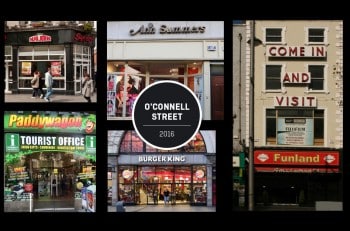
    The National Thoroughfare

    O’Connell Street is the epicentre of Irish Constitutional Nationalism and its GPO the principal locus for the Easter Rising and the Proclamation of the Republic. So how’s it doing?

    Loading

    Read more