General

Random entry RSS

  • Posted in:

    Inequality is rising in Ireland.

    Important research from Unite shows Irish Times wrong on most important social issue of our time. By Suzie Mélange. In a report entitled, ‘Hungry bellies are not equal to full bellies’, to be launched on Monday 1 March, Unite Trade Union in the Republic of Ireland will provide lengthy research-based evidence of the growing inequality and deprivation in our society. The report was produced with the assistance of Dr Conor McCabe. Ireland’s fragile boom was sustained by a dangerous mix of hubris and myth-making: First, an ‘Economist’ or appointed ‘expert’ would produce an ‘economic analysis’ to tell us that what we were seeing before our eyes – an impending catastrophe – was in fact a mirage. Second, the media would take that ‘analysis’ and bestow upon it legitimacy and gravitas, with unhealthy dollops of scorn for naysayers. Third, Politicians would then lift this economic hocus pocus and media spin and use it to define political direction. The methodology is still in use. On 5 December 2020 the Irish Times, once known as the ‘paper of record’, published a gushing piece selling Ireland again as a world-beating nation where wealth was rising, and inequality falling, at the same time. RTE’s Brainstorm website had published a similar article on 19 November, by the University College Cork Economist Seamus Coffey. The claims made by Leahy and Coffey are misleading and unfair. There is a danger that, unless challenged, these claims will become accepted as facts.Disproving them is not a straightforward process because the issues at hand are somewhat technical. But Unite has applied itself to the task. It makes the case that both Coffey and Leahy use specialist terms and methodologies and in the process gloss over the limitations, contradictions, and failings of the surveys they put forward in their articles as objective and unassailable evidence of their claims. In the hubristic words of Leahy, “the data is the data, the facts are the facts”; while for Coffey, “Everyone can have their own opinion on the best way forward, but they cannot have their own facts”. In the time-honoured way Senator Jerry Buttimer, speaking in the Seanad on 14 December, referenced both authors and stated that they had both showed that in Ireland ‘people are getting richer and we were becoming more equal’. He seized upon the narrative to celebrate these “facts”, namechecking the “paper of record” (though the Irish Times itself now prefers the word reference to record) on the Oireachtas record in doing so. But falling inequality is not a “fact”. Unite claims it is a conclusion drawn and presented from incomplete and deeply flawed data: It is wrong to present the “Gini Co-efficient” as pointing to a fall in income inequality without any explanation of the serious and acknowledged systemic flaws in the “Gini” method. This method (Gini) consists of a survey of a small number of self-selected households, such method being known to under-report high incomesA more universal set of figures based on actual taxation levels which points in the opposite direction, to a rise in income inequality, needs to be acknowledged and included. The usual one is that of the income of the richest 1% relative to others. Income inequality itself does not suffice as a measure of economic inequality anyway. It is but one of at least seven, according to left think tank, TASC. The reason why a wider assessment of inequality beyond mere incomes is necessary would appear to be obvious, but it can be stated as follows – if that which we all need to live including shelter, food, healthcare and other essential needs are removed from an assessment of inequality, and mere income is assumed to be given to us free of these needs, then of course inequality can be presented as falling. There are serious issues with the historic nature of data presented as showing falling inequality in any event, with some key data relied upon dating back to the ‘Celtic Tiger’ period up to 2007 – before the financial crash of 2008, the unequal ‘recovery, and now a global pandemic Other data which Unite present show “zero real income growth” from 2007 to 2017 but is ignored in the reportage, even though the source of that data is relied upon in other ways. There is no discussion of wealth inequality – even though we know from international research that wealth is more unevenly distributed than income. In his article, Leahy uses three different terms for inequality as if they are interchangeable. But they are not.He starts off with economic inequality. He says that “One of the most corrosive trends in western democracies – a social and economic problem that has impoverished millions of ordinary people and fuelled the rise of far-right populists from the US to Britain to Europe and beyond – is the rise of economic inequality”.Leahy does not provide a definition of the term but according to TASC, economic inequality “refers to the unequal distribution of material resources – that is the resources people need to attain goods and services to satisfy their diverse needs and to flourish as individuals”. It is clear therefore that this refers not only to income, but also to access to essential services such as health, education, childcare, homecare, and housing. It also relates to personal capacities and how this affects inequality, such as illness or disability.TASC, which ironically Leahy cites, says that “economic inequality is about more than income, since it is only one of the material factors that affect people’s ability to flourish. Income disparities may matter less in a society with strong universal public services than in a society without them”.When measuring economic inequality, TASC looks at seven distinct yet interrelated factors. These are: income; wealth; public services; tax; capacities; family composition; and the costs of goods and services.In his article, Leahy goes from economic inequality to immediately talking about incomes, which is only one element of economic inequality. He then moves on to equate income inequality with “inequality”. What started

    Loading

    Read more

  • Posted in:

    Out of Time

    How the newspaper of reference dealt with correspondence challenging an important article it published about equality Brendan Ogle Of Unite submitted the following article to the Irish Times on 15 December 2020 Unite House Unite the Union 55/56 Middle Abbey Street                        Dublin 1 D01 X002 Republic of Ireland Republic of Ireland Head Office 15th December 2020 On 14 December 2020 Jerry Buttimer stood up in the Seanad and said that in terms of personal finances, Ireland was becoming a more equal place. ‘The reality is that income growth and inequality is falling in our country at this time’ he said, ‘and as Mr. Pat Leahy wrote recently in The Irish Times, people are getting richer and we are becoming more equal.’ Those seeking to help families and individuals suffering from shocking deprivation here this Christmas will be shocked at this news. And so they should be. Because it is false. It is not acceptable for Journalists to present as ‘facts’ things that are not facts and present them as seasonal gifts to ideologically driven Politicians practised in the policies of division, isolation, poverty and deprivation.  The article cited was published the previous week and contained the claim that rising incomes and falling inequality ‘is a neat trick, managed by very few.’ Both Buttimer and Leahy also criticised the naysayers and NGOs who argue otherwise in tones that remind me of Bertie Ahern’s infamous ‘pre-crash’ invite to those ‘talking down’ the economy to consider suicide. Leahy put himself out there as far as to say ‘the data is the data, the facts are the facts… we have been getting richer, and also more equal at the same time.’  Wow! So let’s talk about ‘facts’. Leahy highlights this quote from a 2020 report on inequality by TASC: “while inequality was on the rise elsewhere, it was falling here.” But the next sentence – literally the next sentence – says that ‘Another explanation for Ireland’s stability is that it is only apparent, and that inequality has actually been increasing. The data presented so far has ultimately been drawn from surveys, which have well-known limitations when it comes to the measure of income, and hence inequality.’ Leahy leaves this vital context out.  The survey in question is the CSO’s annual Survey on Income & Living Conditions (SILC). It supplies the information for calculation of the ‘Gini coefficient’, a formula used to calculate income inequality that Leahy presents as showing falling inequality. The SILC is a sample survey of just 4,183 households out of 1.7 million in the state (around 0.2 per cent of the total).  The survey is voluntary and only 40% of those sampled agreed to take part. Almost 2,000 households refused outright, while another 2,800 gave various reasons listed as ‘other’ by the CSO.[1]   So, while the CSO conducts a random selection of private households for the initial catchment, within that random selection there is a form of self-selection, there are households that will not share their income data, and it is only those that freely volunteer the information that end up in the survey.  But that’s not all. The CSO employs around 100 people to carry out this work, but often they call to a house and not everyone is at home. So they conduct interviews ‘by proxy’ –  information is provided by ‘another resident of the household due to unavailability of the person in question’. [2]   Up to 50 percent of all interviews for the income survey are by proxy, which gives rise to issues ‘with the quality of data for proxy responses for certain variables’. [3] This leads to acknowledged and well flagged ‘statistical bias’ that Leahy leaves out in his rush to declare what ‘facts’ are. He also fails to tell us that the report actually says ‘high incomes tend to be underreported when they do respond.’ It is no surprise then to hear that the data collected from household surveys has to be ‘cleaned up’ by the CSO before it ends up in the final survey. This requires the use of various statistical weights and assumptions to compensate for missing data and known bias.  However, even if the survey and its methodologies were absolutely flawless, there would still be issues with their underlying assumptions within an Irish context. The ‘Gini coefficient’ formula strives to capture income distribution after income tax and social welfare transfers, which it labels as ‘disposable income’. However, the Irish welfare system is different from others within the EU in that it is geared more towards monetary transfers and less towards the provision of services.  Put simply, in Ireland the formula does not take into account the cost of housing, rent, health, childcare, utility services, transport, or education. In other words ‘Gini’ only measures ‘income’ before Irish people pay their bills. So much for ‘facts’! It gets worse. The second source that Leahy draws upon is an article by UCC economist Seamus Coffey which is on RTÉ’s Brainstorm website. Coffey argues that Ireland is ‘one of the few developed countries that has had high income growth and falling inequality’. He says that while people may disagree on the way forward, they cannot disagree on that point. As with Leahy, he says that the facts speak for themselves. Coffey underpins his point with data taken from a paper that was published in the Journal of Income Distribution in 2018 entitled, ‘Rising Income Inequality and Living Standards in OECD Countries: how Does the Middle Fare?’.  Guess what he uses? Yes, you got it, the ‘Gini coefficient’. He even uses it to claim that Ireland ‘is the only country in the sample to achieve both high income growth and falling income inequality’.  However, the 2018 paper from which Coffey draws this information cites not one, but two, indicators of income inequality.  The first is ‘Gini’ which measures everything except what poor people need to live, and the second is the income share going to the top 1%. This shows income inequality rising. In fact it’s not only rising. Ireland actually had the third highest rise in income share going to the top

    Loading

    Read more

  • Posted in:

    NAMA Shrugs Again

    State’s bad bank fails to take responsibility for another inept hit to the public purse as it improperly sells to someone connected to the original debtor, blaming IT systems. By Frank Connolly (November edition, Village) NAMA Chief Executive, Brendan McDonagh, appearing before the Oireachtas Public Accounts Committee (PAC), failed to deliver a credible explanation as to how the agency handled the disposal of a lucrative portfolio of loans which was sold at a significant loss. The Committee was convened to discuss the investigation by the Comptroller and Auditor General (CAG), Seamus McCarthy, into the dis- posal in 2012 by NAMA of Project Nantes, which was part of the larger Avestus portfolio. Avestus included valuable properties in Europe and the US which in turn were part of the loans of former Revenue Commissioner, Derek Quinlan and the Quinlan Partnership. According to the CAG, the agency, contrary to its code of practice, “did not seek current inde- pendent valuations of the Project Nantes loans or of underlying property collateral. Furthermore, NAMA did not pursue a competitive sales pro- cess”.The final valuation was short by some €29 million, the CAG said. Instead, NAMA negotiated exclusively with a US-based fund, Clairvue, which was introduced to the agency by Avestus, the owner of the dis- tressed loan portfolio before it transferred to NAMA. What emerged from the CAG’s investigation is that Avestus was informed by the agency of the “residual amount NAMA needed to raise through the Project Nantes loan sale in order to achieve its repayment target. The Clairvue offer was very close to that amount”. At the request of NAMA, Clairvue made a dec- laration  that it was not connected  to  the debtor i.e. Avestus, before it purchased Project Nantes. However, it emerged in 2018 that the loans  were purchased by a Luxembourg-based com- pany in which a former Avestus director was in- volved. This revelation by then-TD, Mick Wallace, prompted the CAG investigation. In his response to the PAC on 8 October last, McDonagh confirmed that NAMA made a loss of €10 million on the sale of Project Nantes and that it had made a miscalculation in setting a tar- get of €125.5 million for the portfolio. He said the mistake was due to the fact that “the transaction occurred early in NAMA’s life cycle when we had no central IT systems and relied on multiple spreadsheets with volumes of data”. PAC member and FF TD, Marc MacSharry, sought to interrogate McDonagh and his col- league about the weakness of the valuation process and the research carried out by NAMA in relation to the disposal. “At what point during the normal company searches that can be done did NAMA become aware that somebody was a director and share- holder of both Avestus and Clairvue-Nantes?”, MacSharry asked. McDonagh said that Avestus and Clairvue had signed a declaration stating that the buyer was not a connected party (to the debtor) but conceded that “it would have been better if Avestus was upfront…”. However, he said “the man was not, nor had he ever been, a NAMA debtor and Avestus was never a NAMA debtor”. “The only failing was a moral failing on the part of Avestus because it should have been up- front with us and said that one of its colleagues had been asked to be a director of this entity by Clairvue but that he was not a NAMA debtor”, he said. SF TD, Matt Carthy, asserted that NAMA was ‘played’ by the individual and companies in- volved and should be “angry as hell” at the outcome. “A guy who was operating for a company that it employed was also a director of the company for somebody who was purchasing the portf lio that was for sale through a non-competitive process…I do not understand why Mr McDonagh is not as angry as hell with this individual and the companies involved because they played NAMA”. According to McDonagh, he is angry and unhappy that Clairvue-Nantes did not inform NAMA that “one of their colleagues who was not a NAMA debtor was being asked by Clairvue to be- come director of this Luxembourg entity which bought the portfolio”. Fortunately for McDonagh, he was not more closely questioned on the role played by the NAMA office which dealt directly with Clairvue in relation to the sale. When Clairvue purchased the Project Nantes portfolio in 2012 its US executives wanted to issue a press release to mark the successful ac- quisition. The NAMA office involved said that the agency did not wish such publicity as “the loans were not openly marketed”. NAMA told Clairvue that “it should be satisfied they acquired the loans at arguably below market value”. For some members of the PAC there were echoes of the Project Eagle debacle when the massive Northern Ireland portfolio of distressed loans was sold by NAMA in 2014 to US fund, Cerberus, in extremely controversial circumstances. McDonagh deflected the issue by insisting that he was prohibited from discussing Project Eagle due to the ongoing and lengthy inquiry by Judge John Cooke into the controversial sale. One of the reasons it has gone on for so long has been the delay by NAMA in handing over crucial documents to the State investigation.

    Loading

    Read more

  • Posted in:

    The Death Spiral Of Trust In Capitalism

    In the US, UK and Ireland Trump, Johnson – and throttled SMEs – threaten a revolution By Gary McCarthy Ireland’s consumption collapsed by 20% in the first half of 2020 – the worst in Europe except Spain and the UK. The economy is on its knees and SMEs have only drawn on €180 million of state funding’ All that was missing from the Truman balcony of the White House was the horse. The mad emperor was back. Only a few days previously a seemingly healthy President Trump had hosted a Supreme Court nomination ceremony for Judge Amy Coney Barrett (not a horse) in the gardens below. Historians with a fondness for the Game of Thrones fantasy series may in years to come refer to this Rose Garden event as the ‘Red Wedding’ viral massacre of the Republican leadership. The Covid-19 super-spreading ceremony resulted in the hospitalisation of Trump, the infection of 34 people across the Trump White House staff and the quarantine of most of the top brass in the US military. Trump instructed the nation to face the Covid-19 virus without fear and witness the “immunity” of their “favourite President”. There was no mention of the now 225,000 deaths caused by the virus, the millions of jobs lost and levels of social unrest not seen since the Vietnam War era. The world’s foremost capitalist empire is burning literally and politically but the Washington DC insanity continues. Trump wanted a Supreme Court appointment secured before a fiscal support package for the nation’s struggling economy. The traditional Republican and big business voices of ‘responsible capitalism’ and economic liberty for the individual are curiously quiet and in effect enabling an administration swamped by its own corruption, lies and incompetence. US capitalism has reached a crisis where the pandemic is revealing truths which cannot be spun through the Fox News fear factory. The deaths of more than 225,000 people, 25% of the global total, is already adding to the decades-long erosion of trust in US institutions. However, the emergence of a K-shaped economic recovery which destroys the livelihoods of the asset poor and accelerates the wealth build of the asset-own- ing top 1% of the population might be the tip- ping point for trust in capitalism itself. Income inequality fueled by strong financial markets of recent years has been as pronounced as it was in the 1930s. That’s probably not a great decade with which to resonate. Worryingly, the situation has worsened with the global pandemic. According to the Guardian, ten of the richest people in the world boosted their already vast wealth by more than $400bn in the first nine months of the coronavirus pandemic b as their businesses were boosted by lockdowns and financial crises across the globe. In a related report, the campaign group Americans for Tax Fairness estimated the collective wealth of America’s 651 billionaires has risen by $1.1tn over the same period. Meanwhile, only 9 million of the 22 million US jobs lost in pandemic shutdown had returned by November 2020. Vast swathes of the US retail, travel and hospitality landscape remain in deep freeze. Yes, there is recovery in the broader US economy but there is a real danger of capital- ism evolving into K-shaped ‘Kapitalism’ with a subsequent extreme social and political back- lash. The Trump report card will be brutal and lay bare an exercise in mass delusion. Twenty years of successful capitalism and economic growth has been based on three key drivers: technology, trade, and population/immigration growth. The final one might surprise but the US has added an additional 100 million people to its current population of 330 million in less than 40 years. The current stewards of right-wing capitalism in the Republican party have misty-eyed economic memories of the Reagan years but they depend on facilitating immigration. Trump of course has curtailed it. Instead, the Trump economic focus is on “clean coal” and automobile factories. Technology, science and climate change are mistrusted. Trade wars and ripped-up international treaties are apparently putting America first but the US monthly trade deficit has just hit a 14-year high. US farmers must be thrilled. Furthermore, the first and second generation immigrant founders of much of the US technology sector are warning of similar unplanned damage being inflicted on the economy if the world’s best minds and ideas can no longer find a home in the United States. However, the US is not the only capitalist champion trying to convince its citizens to em- bark on a nostalgic economic journey. Boris Johnson and his Conservative Party don’t even have the benefit of a world-beating technology sector. The recent Covid-19 testing fiasco involving an Excel spread sheet error is a stark reminder of how badly the UK has fallen behind in global technology leadership. The UK has chosen Brexit to “take back control” of trade and immigration on an Elgar sound track of ‘Rule Britannia!’. Sadly, dreams of empire have spawned epic levels of delusion and in- competence. The mad emperor Boris has not yet managed to appoint a horse to sit in Cabinet but there are no shortage of donkeys in his current administration. The risky and complex departure from the largest trading bloc in the world is in the hands of serial incompetents like Gove, Patel, Williamson and Hancock. Meanwhile, the rest of the world watches aghast as the Brexit clown car hurtles towards economic chaos whose enormity remains unclear. They are not just watching, they are selling UK assets too. The once proud benchmark of UK capitalism, the FTSE 100 index of Britain’s finest, is now boasting a total value which doesn’t even match the value of one technology company, Apple Inc. The Great British Pound now trades with a volatility which would typically be associated with emerging market currencies but the delusion of future trade success continues. Ireland would be tempted to laugh but not this time. The damage of Brexit will have a big economic impact here and the timing is particularly poor as the

    Loading

    Read more

  • Posted in:

    Covid Leaves Youth With Nothing To Waste

    As Covid takes everything from the Young, Society and the Media single them out for even rare breaches of the rules. By Zoë Jackson McGrath Youth is about the only thing worth having, and that is about the only thing youth has. Unfortunately a global pandemic has challenged even this iron law of cynicism and regret. Nature gives youth a great deal, but appears to be the only force on its side – this generation are maturing in a society typified by housing crises, limited job opportunities, boundless inequalities and a planet that appears to be wilting before our very eyes. As such, anxiety among the young had heretofore become remarkably prevalent in Ireland, the youngest country in Europe. The last thing the these already precarious conditions and pessimistic outlook of this generation needed was an all-encompassing Act of God or Nature (or the last hoorah of Twentieth-Century Man). It appears the received wisdom on Covid-19 is often purveyed by those who seem to have forgotten what it is to be young. Pope Fran- cis condemned the “cruel abandonment” of the elderly in his third encyclical published in early October. He is not wrong. The elderly and those with underlying medical conditions – the most vulnerable among us – are undeniably the most strongly affected by the pandemic. In Ireland approximately 90% per cent of those who have died with Covid-19 are over 65, a demographic which has been subject to oppressive, if necessary, cocooning and which inevitably has been suffering commensurately from angst over possible infection, and ennui around frittering away scarce months in the absence of cherished loved ones, who often tend to disproportionately illuminate the lives of those in old age. Notwithstanding these truths, the wide- spread social and emotional impact of the pandemic cannot be understated. The physiological risk is greatest for the elderly and those with co-morbidities but the indirect consequences endured by younger generations have been inadequately addressed. An EU-wide survey by Eurofound in April 2020 reported that almost a quarter of aged 18-23 in Ireland felt lonely all or most of the time over the two-week period before inter- view – the second highest rate in the 17 EU countries for which data was available. Euro- found said that the “lowest levels of mental well-being are reported among young people and those looking for work”. A recent report, ‘How’s Your Head?: Young Voices During Covid-19’ found the Covid-19 crisis had negative effects on young people’s health and well-being, especially amongst some marginalised groups. The most common negative effects related to the mental health of respondents, including overthinking, concern, worry, anxiety, depression and a sense of utter hopelessness. In all 751 (35 per cent) of 2,173 people aged between 15 and 24 said not being able to see their friends, boyfriends and girlfriends, was the most difficult consequence of the pandemic and pursuant lockdown. They report a distinct lack of “timely” and “clear” communication during such a transient and formative period in their lives about “important matters”, such as the Leaving Certificate and college accommodation. One in 10 could not name a single positive about their pandemic experience. What effect can this have on the innocence, effervescence and adventurousness of youth? The youth have been deprived of rites-of-passage and legitimate youthful expectations due to Covid-19, left unable to engage in the activities that should colour our formative years. Young people work disproportionately in retail, hospitality and tourism – these sectors have been devastated by the fallout of the virus. Unemployment among those aged 15-24 in Ireland is estimated at 51 per cent compared to 26% in the population generally before the October ‘level 5’ lockdown. Economic scarring results in young people who leave school or college in recessions being doomed to occupy a lower wage bracket for the entire duration of their careers compared with those who graduate in more economically favourable times. According to Irish Times economist, David McWilliams: “When American baby boomers (born 1946-1964) hit a median age of 35 in 1990, they collectively owned 21 per cent of the wealth. By contrast, my generation, the Gen Xers (born 1965-1980) who collectively turned 35 in 2008, owned just 9 per cent of American national wealth. The Millennials (born 1981-1996), are on average 31 now. They only own 3 per cent of America’s wealth. It’s hard to see them ever catching up under present policies”. Over four in ten younger adults in the CSO’s Social Impact of Covid-19 Survey reported that the pandemic had a negative financial impact on them, compared to two in ten of respondents aged 70 and over. Leaving Cert 2020 has been an infamous debacle: students were robbed of experiences previously taken for granted, tirelessly rehearsed plays were never staged, hours of training and tactics for sports finals went to waste and the concept of a graduation ceremony to celebrate and even say goodbye to their friends was unthinkable. They then had to endure the distorted calculation of grades, compounded by fundamental data errors and revisions: a disgraceful experience for these individuals to be forced to undergo at a stage in life where pressure has always been notoriously heaped on them. For those who then made it to college the would-be ‘college experience’ has been utterly diminished by the virtualisation of lectures, reducing education to academia, which should be merely one facet of this varied, enriching time. Young people work disproportionately in retail, hospitality and tourism – these sectors have been devastated by the fallout of the virus.  Playing or watching live sports have been almost eliminated. Night-life is entirely gone with no promise of a future for an unprecedented amount of time. Forming new friendships and relationships is almost impossible, and temporary emigration has become impracticable. This demographic have endured “by far the biggest well-being hit of anybody who hasn’t directly suffered from the disease”, confirms the ESRI’s Behavioural Research Unit. When America’s Centre for Disease Control and Prevention carried out a survey this summer, it found that one

    Loading

    Read more

  • Posted in:

    Our Congested Transport System Needs an Era-Defining Reset, Now

    A recent EPA Report has highlighted how policy problems are interconnected, and need a whole-of-government response By Tadhg O’Mahony Transport and the environment are in the air. Recent weeks have brought debates on CETA and the evolving Climate Bill, and on radical moves by local authorities to facilitate pedestrians and cyclists. Far deeper EU targets have been set for reduction of greenhouse gas emissions, 55% by 2030, and a new EU mobility strategy. The EPA produced a report, Ireland’s Environment: An Integrated Assessment 2020. Published every four years, the report is “not optimistic”, and shines a new light on the transport sector in Ireland. Transport is our second-highest carbon-emitter, and emissions continue to grow, despite the urgent need to rapidly reduce its footprint. Globally, transport is a major carbon emitter. It is associated with significantdeath, injury and disease, from air pollution and road traffic accidents, and imposes major costs on economies through traffic congestion. In Ireland, many of these problems are even more pronounced. Our carbon emissions, per capita, are the fourth highest in the EU, while our cities rank amongst the most congested in the world, according to data collected by INRIX and TomTom. Six years on from Ireland’s original Low-Carbon Development Act 2015, and after declaring a ‘climate emergency’ in 2019, Ireland still has no plan to reduce emissions to 2050, and transport is a chief area for concern. As the pressure for change builds, understanding how Ireland has developed these systemic problems is essential to moving forward. Our History in Transport, and how we Became ‘Locked-In’ The total number of vehicles on our national roads, squeezing into our towns and cities, is now heading towards three million, and the private car has come to dominate travel in Ireland. According to the latest survey from the CSO, almost 80 per cent of journeys are made by private motorised forms, even dominating the shorter journeys of up to two kilometres. “National energy and emissions modelling studies have consistently focused on changing vehicles, fuels and behaviour – reinforcing the dominance of the private car and road freight, pushing more beneficial systems change out of policy discussion” The Irish transport system was very different a century ago, at the time of Independence. Dominated by sustainable modes, an extensive rail network served communities throughout the country, from the Hills of Donegal to the Dingle peninsula. Much of our national rail network was dismantled over the course of the last century. This coincided with the rise of the private car, and glossy industry advertising promising ‘freedom’.The car was marketed as a potent status symbol, and signifier of ‘success’, and it was adopted in ever greater numbers as the expression of a prosperous lifestyle. Fast forward to the 1980s, and the vision of successive Irish governments to grow the economy, develop the regions and drawdown European funding, was for major investments in roads, and a new motorway network. Incomparison, public transport largely stagnated, rail freight became almost non-existent, and walking and cycling were reduced to more nicheactivities than sensible mobility options. We were diverging substantially from our European neighbours. At the same time, laissez faire spatialplanning allowed proliferation of one-off housing in the countryside, and low-density suburban and commuter developments. This ‘urban sprawl’renders alternatives to the private car far more difficult to implement. Our towns and cities were increasingly designed, car-first, human-second,with wide roads and narrow paths making our public realm more unsafe for vulnerable users and less comfortable for everyone. Our physical settlement and infrastructure were becoming deeply set. From the mid-1990s, policy, investment, market and lifestyle all dictated that we would funnel our growing economy and population into the private car. When all of these factors line-up it is called ‘lock-in’. Described by global sustainability expert Gregory Unruh, and later platformed by the Nobel-winning Intergovernmental Panel on Climate Change, ‘carbon lock-in’ becomes both inevitable and difficult to escape, blocking off options for more beneficial outcomes. Successive spatial, transport and emissions policies came and went, and all failed. The focus, largely fromengineering and economics, was on improving technology, through efficiency, and implementing a carbon tax. This narrative, andthe measures it encouraged, were far too weak to overcome lock-in. Throughout the ‘boom years’ transport carbon emissions continuedtheir inexorable rise. The financial crisis and recession, in the late noughties, were a blip in the long-term trend of increasing vehiclenumbers and burgeoning emissions. An Appetite for Change, but Deep Structural Problems Block our Progress In recent years, the Citizens Assembly and an Oireachtas Committee have demonstrated that there is significant public and political appetiteto change course. The main policy response, the government’s 2019 Climate Action Plan, had the laudable goal to bring a new seriousness to tackling emissions, to pursue our 2030 targets, and “put the country on a trajectory to net zero by 2050”. Yet two critical flaws had already undermined the Plan’s approach to transport, and these were baked-in from its inception. The plan did not address the long-term, to at least 2050: a key precondition documented by the Intergovernmental Panel on Climate Change, the gold standard of scientific knowledge on the topic. Even more problematic, the most important decisions had already been taken, in the much heralded ‘Project Ireland 2040’. This establisheda settlement plan up to the year 2040, known as the ‘National Planning Framework’, and an infrastructure investment plan to 2030. It aimedfor 40 per cent of new housing development to be “within or close to built-up areas”, and for the addition of 500,000 active and public transportjourneys per day. The targets are at the lower-end of ambition – compromises that could evade political challenges, but insufficient to overcome lock-in and support transition. Project Ireland was not subject to analysis of the long-term emissions implications, of the kind that couldprovoke reflection on alternative paths. As the Climate Action Plan was developed, it became clear that Project Ireland would not help in achieving 2030’s emissions targets, let alone2050’s. In a sign of desperation, the Plan continually ramped up the number of electric

    Loading

    Read more

  • Posted in:

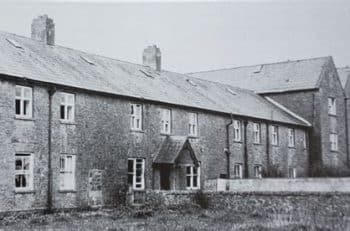
    Mother and Baby Homes: A Crime against Humanity.

    By Christopher Stanley. [i] “Ireland was a cold harsh environment for many, probably the majority, of its residents during the earlier half of the period under remit. It was especially cold and harsh for women”. (page 1) The Irish government may have hoped in vain that the publication of The Report of the Mother and Homes Commission of Investigation would provide a moment of catharsis and suture to what Caelainn Hogan calls The Republic of Shame for the people of Ireland. It did not. [ii] Criticism of the work of the Commission; and of its Report and Recommendations has been fierce from victims/survivors. In addition it is the tone of the prose of the Report which also angers: “Responsibility for that harsh treatment rests mainly with the fathers of their children and their own immediate families. It was supported by, contributed to, and condoned by, the institutions of the State and the Churches. However, it must be acknowledged that the institutions under investigation provided a refuge – a harsh refuge in some cases – when the families provided no refuge at all”. (page 1) As the Taoiseach stated on the day following the publication of the Report “the shame was not theirs; it was ours”. Therefore, everyone is to blame, and no-one is to blame – because there is no evidence in spite of the testimony of survivors. This statement only serves to demonstrate the continued and entrenched lack of respect for the dignity and rights of victims/survivors of a system of coercion, control and abuse administered by the church and funded by the state over decades of of systemic human rights abuses. As Colm Toíbín noted in The Sunday Times (17 January 2021): “The problem with these apologies is that we cannot be sure that those who offer them really mean them. In his apology, the prime minister, Micheál Martin, said that the report presented ‘all of Irish society with profound questions’ and ‘we did this to ourselves…All of society was complicit in it””. Toíbín reads this as letting the church “off the hook”. Not that the church co-operated with the Commission to any great, extent noting that its archives are private. The Commission was “perplexed and confused” by this deliberate block by the church. As Emer O’Toole noted in The Independent (14 January 2021): “Tuesday’s report does not close a dark chapter in Irish history. Rather, it opens a book filled with fragments and missing pages, with many vital details redacted and a narrative voice that comes to feel less trustworthy the more you read. This story is still being written, and we must support survivors as they continue their fight for justice.” She continued: “The investigation was conducted in secret, in a manner completely incompatible with international best practice for inquiries into human rights violations. Those affected had no access to evidence or their own records; they could not testify publicly or suggest modes of enquiry. Despite government assurances that survivors have the legal right to access their records, the commission of investigation is still denying any requests for information. In short, survivors and adopted people continue to be treated appallingly.” [iii] For example, one of those fragments referred to by O’Toole is that within the Report there is only one mention/example/testimony of the medical procedure of symphysiotomy, an outdated surgical procedure in which the cartilage of the pubic symphysis is divided to widen the pelvis allowing childbirth when there is a ‘mechanical’ problem. As the Commissioner for Human Rights of the Council of Europe noted following his visit to Ireland (22 to 25 November 2016): “184.  It is estimated that 1,500 women underwent symphysiotomy in Ireland mostly between the 1940’s and the 1980’s. Symphysiotomy is a surgical procedure that involves sundering the mother’s pelvis to enable difficult childbirth. This procedure was not performed in other European countries during the same time period, as caesarean section was the procedure generally used in cases of difficult births.” The United Nations Human Rights Committee noted (19 August 2014) also noted: “The Committee expresses concern that symphysiotomy, a childbirth operation which severs one of the main pelvic joints and unhinges the pelvis, was introduced into clinical practice and performed on approximately 1,500 girls and women in public and private hospitals between 1944 and 1987 without their free and informed consent … The State party should initiate a prompt, independent and thorough investigation into cases of symphysiotomy, prosecute and punish the perpetrators, including medical personnel.” This is just one significant example of absence/silence within the Report but it is indicative and illustrates the human rights deficit criticism which plagued the work of the Commission throughout the duration of its work. But the Commission was not mandated to conduct a human rights investigation: “Prior to the establishment of this Commission, the Irish Human Rights Commission (now the Irish Human Rights and Equality Commission) told the Government that ‘it is critically important that any such investigation should take place within a human rights and equality framework and in particular that it conforms with the State’s human rights obligations under the Constitution and under international human rights law’. The Irish Government did not opt for that approach in its mandate to the Commission.”(36.2) The Commission states: “36.80. There are no clear absolute rights.” Article 3 ECHR (the prohibition against torture, inhuman and degrdaing treatment) is an absolute right. [iv] The Irish government has therefore failed to discharge its positive investigatory obligations as demanded under the ECHR following a human rights violation, specifically regarding the right to life (Article 2), the prevention of torture, inhuman and degrading treatment (Article 3) and the right to private life (Article 8). This is why there have been calls for a human rights’ compliant investigation into Mother and Baby Homes. Taken together with demands that the Garda investigate the criminality and culpability of both individuals and organisations both religious and state. This should include those employed within the medical profession and social services and those charged with their governance and

    Read more