General

Random entry RSS

  • Posted in:

    MI6 traitor George Blake has died. The KGB’s penetration of British Intelligence may have gone far deeper than the public has ever been told. It may still be deeply compromised by Russia.

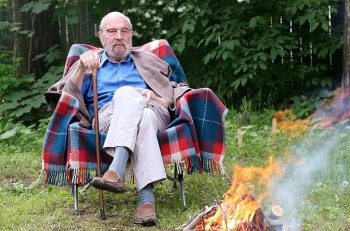
    By David Burke. George Blake has just died aged 98 at his dacha outside Moscow where Putin’s overseas intelligence service, the SVR, was protecting him from Covid-19. Blake was held in high esteem by the Russians. Putin has said that the “memory of this legendary person will be preserved forever in our hearts”. Putin awarded him a medal in 2007. Blake was arrested in London in 1961 and sentenced to 42 years imprisonment but escaped from Wormwood Scrubs in 1966 with the aid of Sean Bourke from Limerick. He then spent two months in London before making his way to East Germany. The story of his escape and the time he spent in hiding in London is astonishing. Blake may have been helped by Soviet agents inside the British Establishment. The Director-General of MI5, Roger Hollis, 1956-65, was believed by many to be one such agent. He retired the year before Blake made his escape, something which gave him four years to help the KGB prepare a plan to break Blake free. Roger Hollis, another traitor? Roger Hollis was investigated on an official basis on a number of occasions by MI5 and MI6 officers for treachery. The evidence against him was compelling. At the very least, if he was not a traitor, there must have been another very senior mole inside MI5. Outside MI5, Christine Keeler was adamant that he was a traitor. Keeler was at the centre of the Profumo spy scandal involving Stephen Ward. Keeler revealed that Hollis and Ward were part of a spy circle involving a confirmed MI5 traitor Sir Anthony Blunt. Further details can be found here: Keeler Concealer: the British Establishment’s severe embarrassment at the depth of the Soviet Union’s penetration of MI5 and MI6. If Hollis was indeed a traitor, he would have installed other agents inside MI5 to keep the red flag flying behind closed doors after he left. One possibility is that it was these who could have helped move Blake from London to East Germany in 1966. One thing is clear: it is inconceivable that the KGB would have let Blake rot in jail for 42 years if there was any chance to spring him. At the very least, his severe sentence was a deterrent to all of its agents and potential recruits in Britain. If Hollis was a traitor, it is obvious that the KGB would have relied heavily on him to help them plan Blake’s escape. Even if one allows that Blake’s escape from the confines of his goal in London was something he and the Irishman Bourke achieved on their own, there is still the difficult question of how he managed to hide in London for two months and then made it to East Germany. According to the official narrative, we are meant to believe that he had no help from MI5 traitors or the KGB, merely two CND activists, Michael Randle and Pat Pottle, who took him across Europe in a camper van. The allegations of Patrick Meehan The only evidence that MI5 – or a faction within it – wanted Blake to escape emanates from the late Patrick Meehan, a criminal from Scotland. He produced a book in 1989, ‘Framed by MI5’, in which he claimed that in 1963 he was approached by a man he dubbed ‘Hector’ to spring a ‘spy’ in an English prison. The man portrayed himself as a Soviet sympathiser but Meehan reckoned he was an MI5 officer. ‘Hector’ had known that Meehan had briefly been a member of the Communist Party in 1950. Nothing of substance emerged from the approach but it alerted Meehan to the possibility MI5 was prepared to stage an escape. Whether ‘Hector’ was a KGB officer who knew about Meehan’s communist past or an MI5 officer with the same knowledge, what is important is that Meehan concluded he was from MI5. After Blake escaped, he began to talk about this and circulated the theory that MI5 had wanted to spring Blake. Meehan was not involved in any way in the later 1966 escapade involving Sean Bourke. For his part, Blake has always maintained that Bourke acted without any outside help. The implications of Meehan’s Book Let’s give Meehan the benefit of the doubt and see where it takes us. For a start, this involves accepting that ‘Hector’, was indeed from MI5 and therefore acting on the orders of D-G Roger Hollis. This scenario raises one question MI5 should be made to answer: why did they never ask Meehan to help them in any sort of an inquiry into the mysterious ‘Hector’, the man who knew of Meehan’s communist past and wanted to recruit him to spring a ‘spy’ in an English prison. Meehan wrote the book in revenge for being framed for the murder of Rachael Ross in Ayr, Scotland in 1969. Although innocent, he was convicted but received a Royal pardon in 1976 after years in prison. He also received £40,000 in compensation after a campaign by the likes of Ludovic Kennedy. This, however, was not enough to assuage his anger and he had his revenge – as he saw it – by producing his book in 1989 while the Peter Wright ‘Spycatcher’ book storm was still raging. It was an expansion of an earlier book he had written in 1978 called ‘Innocent Villain’ (Pan books Limited 1978). Meehan’s conviction had been secured by ‘rigging’ an identification parade, the planting of evidence and the committing of perjury at his trial by high-ranking detectives. According to Meehan, “In the conspiracy to frame me high-ranking detectives, acting on the instructions of MI5, found it necessary to suppress evidence that would have led to the arrest of the two men who did in fact commit the Ayr murder; namely, William McGuinness and Ian Waddle. Framing me for the murder was an exercise calculated to put me out of circulation.” Waddle admitted his guilt. McGuinness was murdered in Glasgow. Meehan’s pardon was followed by a report by Lord

    Loading

    Read more

  • Posted in:

    Mountbatten’s paedophile abuse: letter from definitive biographer Andrew Lownie not published by Sunday Independent.

    By Andrew Lownie. A few weeks ago the Irish Times ran an article on the death of Mountbatten linked to the new series of The Crown in which the murder features in the opening episode. As the author of the most recent biography ‘The Mountbattens: Their Lives and Loves’, I was interviewed for the piece on the discrepancies between the reality and the drama, telling the paper the programme left out “some significant details about the killing, most notably that Mountbatten had ignored the advice of his personal security officer not to go to Ireland that year and that his security had been reduced”. The paper then raised some of the other discoveries  from my book namely the FBI file which revealed Mountbatten as a “homosexual with a perversion for young boys” and  my interview with two men, one of them from the Kincora Boys Home,  who claimed to have been abused by him in the summer of 1977 . In passing,  I mentioned there were rumours that Mountbatten had not been killed for political reasons but because of his paedophile activities. The article ended with references to my problems securing the release of the car logs for Classiebawn for August 1977 and the continuing closure of papers relating to the murder  and also the Kincora Boys Home in archives in Britain and Ireland . Some 40 years after Mountbatten’s death, there were details the authorities clearly did not want the public to know. Shortly afterwards Colin Armstrong popped up in the letters page of the Sunday Independent suggesting, as he has done in previous similar letters to papers, that the abuse could not have happened  because no one reported it. A former staff member at Classiebawn joined in the debate saying no-one at Classiebawn had seen anything and my assertions were pure fiction. This followed comments from Jeffrey Dudgeon that my interviewees were fantasists like Carl Beech and inferring that as they hadn’t appeared at the Hart enquiry they couldn’t be legitimate, and a story in the Sligo Champion/Weekender of “ignoring the facts”. In all this coverage, no journalist asked me to respond. I was quite happy to defend my research  and contacted  various journalists at the Irish Times, Sunday Independent and Sligo Weekender. No response. When I chased, I was told the story had moved on – after five days. So to set the record straight here is the letter I sent Dear Sir, It is natural and admirable that John Barry should seek to defend Lord Mountbatten, who employed him, his mother and brother but, just because Mountbatten’s  ‘family, friends, staff and local staff’ saw no paedophile activity, it  does not mean that it did not happen. By its very nature such proclivities are kept private. In fact my research shows that only one member of staff was well aware what was happening but chose to remain silent. If he reads my book ‘The Mountbattens: Their Lives and Loves’, rather than dismiss my findings as “implausible fictional claims” , he will see I have produced extensive evidence to back up my claims of Mountbatten’s paedophilia. Stories about Mountbatten’s proclivities have circulated in the media for over forty years including accounts in Private Eye and the International Times where the newspaper proprietor Cecil King described Mountbatten as a “sexual pervert”. There was also a report in Now Magazine in 1990 where the Northern Ireland author Robin Bryans claimed that “leading British establishment figures were in a vice ring which abused boys from the notorious Kincora Home in East Belfast” and named Mountbatten as one of them. It also reported that Mountbatten “was particularly attracted to boys in their early teens”. Bryans in private correspondence, which I have seen,  wrote that “Kincora and Portora Boys’ Schools were used as homosexual brothels by many prominent figures, including Lord Mountbatten”.  Joseph de Burca in Village Magazine has written extensively about Mountbatten’s paedophile networks. In my book I reproduce FBI files going back to 1944 with interviews with people in Mountbatten’s circle . One, the American writer and society figure, Baroness Decies, when interviewed on another matter reported ‘that Lord Louis Mountbatten was known to be a homosexual with a perversion for young boys’. Interestingly I was told that other FBI files I had requested under Freedom of Information legislation had been destroyed – after I requested them. Mountbatten’s wartime driver Norman Nield is on record saying he “was ordered to take young boys who had been procured for the admiral to his official residence in Lord Mountbatten’s Humber car” . According to Nield, Mountbatten, known as LL, used brandy and lemonade to help seduce the boys, who ranged in age from 8 to 12. I interviewed two boys who said they were abused by Mountbatten. Knowing of the controversy their testimony would generate, I was particularly keen to ensure what they said was true. Everything I could check was found to be accurate but clearly these were recollections over forty years after the event. One boy was abused in Classiebawn’s boathouse, away from the house, another in a local hotel where before the days of cctv it was very easy for a visitor to nip briefly upstairs. I have never suggested that boys stayed at Classiebawn castle itself let alone overnight. Contrary to claims, one has gone public with his claims and has brought legal action which is almost concluded. I am hoping he will shortly appear in a television programme on Mountbatten. Likewise my interviewee had agreed to participate in the HIA Inquiry but the Inquiry served several hundred pages of information on his solicitors just before the weekend prior to his appearance at the Inquiry.  His solicitors rightly told the Inquiry that, in the time allowed, it was impossible for them to read and study all the documents, let alone advise him properly.   In ‘The Mountbattens’,  I reveal that Mountbatten was probably himself abused as a teenager by a bachelor clergyman Frederick Lawrence Long who acted as a private tutor. On legal advice, some material was removed from my book , referring to Mountbatten’s paedophilia and murder,

    Loading

    Read more

  • Posted in:

    Please help me.

    Transgender people are not getting appropriate psychological or medical treatment and, in breach of WHO guidelines, are being treated as if they have mental health problems By Rachel Rathbone. I always knew I was female, from an early age. Never more so than when I went to primary school, an all-boys school with me, a little Transgender Girl, in among the chaos of the boys  in the 1970s and 1980s when even being gay was outlawed and ridiculed.  I spent six long years being beaten and bullied by students and teachers alike, day-in, day-out without fail. I was left depleted and in the end destroyed. I dug down deep to try and hide myself, Rachel.  I found it hard to learn so I taught myself how to read and write at home. I was scared mentally and still am physically. I thought a lot about suicide from around the age of 9. At the age of 14 I, Rachel, found out about a woman like me in an article I read, about her transition, her feelings and her struggles. I promised myself that I would one day make that change too As I grew older life got harder for me within my own self, Rachel. I always felt scared, alone and somehow different. I thought a lot about suicide from around the age of 9. At the age of 14 I, Rachel, found out about a woman like me in an article I read, about her transition, her feelings and her struggles. I promised myself that I would one day make that change too. Until I read that wee article, I thought I was the only person in the world who felt the way I did.  That was 1985.  I carried around a profound sense of sadness, hopelessness and hurt, all throughout my life, but I tried to make the best out of it and my darndest to conform. I became a single parent at the age of 28. By the age of 45 I simply could not take it, as that Rachel.  It was either “Woman up” or take my own life. I asked the world to accept a new Rachel, my full identity. Now I am openly living as Woman age 49, Rachel.  You cannot understand what that means to me.  I have been out, living my authentic self for almost four years. I have changed my name by deed poll and have my gender-recognition cert since March 2019 also. I would have obtained this on day one, but it took me a while to save up for it.  That was my social transition, to the world. But I need medical changes too.   So, after a long search as to what to do, in October 2017 I went onto the specialist gender clinic list at the National Gender Service (NGS) at St Colmcille’s Hospital in Dublin, which runs transgender healthcare for the HSE. I was told that the waiting time was 17 months but in fact I waited 2 years on the gender clinic’s list, only to be told in November 2019, that I along with over 100 other Trans-folk, had mysteriously been lost from the list.  We had been put on other lists e.g. obesity, kidney function. This seemed like a negligent approach to a vulnerable community. The Transgender Equality Network Ireland (Teni) said it was “shocked and disappointed at this disregard for patients. This will have a devastating impact on our community. It is a breach of trust”.  In the meantime, dejected, I started self-medicating with internet-acquired medication and informed both my GP at the time and the gender clinic as I was asking for at least some oversight of my blood-hormone levels  but to no avail. I was completely ignored. I was having trouble getting my medication on the internet so in May 2020 I contacted a UK/EU-based Transgender Clinic where I got a diagnosis and received a prescription. I am now paying privately for the meds they prescribed out of my dole, which is very hard and has left me in abject poverty. It is unfair. Trans people have to become experts in their own hormones.  In many ways we are the best people to ask how we should be treated and what we need prescribed Reflecting this, our healthcare should be a GP-led, free service.  As it is, any time I go to my pharmacy there seems to be a problem with giving me my correct amount of hormones.  This is predictably dangerous to my wellbeing. In particular I cannot get the necessary oestrogen patches. Hormone Replacement Therapy is prescribed as standard to women undergoing hormone changes. Failing to deal properly with my hormones is an abjuration of my human rights and is literally destroying me.  I was quite frankly better off buying them illegally on the internet. Along with all of this I have been getting both laser treatment and electrolysis on my face, both painful procedures that come with costs. Procuring medication has become a full-time job, and an incredibly stressful one at that. I have not missed one day of the hormones since April 2018, even when I was gravely ill a couple of months back. The stress is now so bad that I have developed a tumour on my adrenal gland, the gland that controls stress hormones. I have also suffered at times from extreme anxiety so that I get violently ill; and sadly my teeth have been destroyed from the acid. Against this background and after 3 years of waiting, I was seen in early September this year. I was questioned about many things unrelated to being transgender.  For example, what the “occupation of my friend at school’s father was” (whatever the relevance of that!), “How did you feel about having wet dreams when a child”, something I had not mentioned nor feel has anything to do with me being Transgender. I was also interrogated about the cup size of my bra and what size my breasts are, which made me

    Loading

    Read more

  • Posted in:

    A Banquet of Ringforts. By Michael Smith.

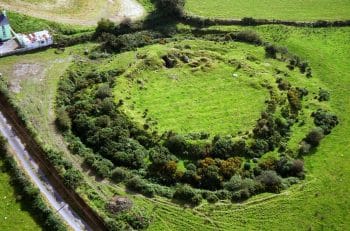
    Michael Smith reviews ‘The Men who eat Ringforts’ by Sinéad Mercier and Michael Holly, featuring Eddie Lenihan   The title of the delightful ‘The Men Who Eat Ringforts’ gratifyingly, replicates the headline for a typically incisive article by Tony Lowes published in this magazine in 2010. It complained that there was no legal protection for ringforts. Sinead Mercier grew up in An Cheathrú Rua and got a first-class honours law degree from Trinity. She was the primary researcher for the Green Party but has now resigned from the party. She is the daughter of Paul Mercier, playwright, of the Passion Machine. Michael Holly is an artist and non-fiction film-maker. Ringforts or fairy forts are circular mounds often surrounded by trees; some are natural, more were originally stone- or wood- surrounded and were used as forts for housing between 600 and 900 A.D. Some are much larger: Newgrange and Tara Ringforts are also known as fairy forts and are the most common archaeological feature in Ireland. They are circular mounds often surrounded by trees; some are natural, more were originally stone- or wood- surrounded and were used as forts for housing between 600 and 900 A.D. Some are much larger: Newgrange and Tara. Strangely, some were used for burial of the unbaptised. The fairy forts are generally seen as the mythological underworld of ‘the good people’ who are not ordinary fairies but the spirit of the land, part of a belief that the cosmos is a living organism. They look like us: are mischievous, but are deadly if disturbed.This sets the tone for the book. The fairy forts are spiritual and emblematic, poetic dwellings, a “letting things be”. They are being casually disturbed, indeed destroyed, by the current generation. Sadly it appears around 34% of ring forts have been destroyed since the 1820s and a further 10% cannot be located. Sinéad Mercier makes the arresting case that Enlightenment rationality discredits all perspectives of nature that do not “instrumentalise towards the ends of the market or a particular productivist definition of science”. She denigrates modernity’s reduction of pre-Enlightenment beliefs to mere superstition. The book is a fabulous admixture of the poetic and the forensic. It is lavishly footnoted, and illustrated. Mercier’s prose is unusually vibrant and rich, often exhilarating: “A fairy fort cannot be described as neutralised, abstract space. It has a recalcitrant materiality of its own. It exists as a clearing”. There is no cliché here.She outlines the uselessness of the National Monuments Acts – intrinsically toothless they were defanged by Dick Roche around the time the large road was built near Tara. They embrace fairy forts, in theory. Their calculated uselessness has been laid bare from Wood Quay through Tara, Carrickmines, Kilcullen and Waterford: débacles all. She might also have mentioned they were useless to prevent the 1997 destruction of ringforts of Tailteann the site of Ireland’s ancient Games, in Meath. The only environmental legislation with teeth comes through the transposition of EU law. But in any event law “refuses to venture beyond the limited Cartesian spatiality of quantifiable, fixed on a map, empirical, absolute space”, making nature interdependent with men and giving it no value of its own. She inveighs against nationality and “heritagisation” and culture as resource. Mercier dates Irish environmentalism not to reaction against the destruction of Georgian buildings but to Carnsore and the reaction against nuclear which she traces through Shell to Sea. She says Ireland has a history based on a concept of spatial justice. I think there was a sense of spatial justice but not in modern times. Even ringforts were thought to be Viking until the nineteenth century. I don’t think Carnsore or Shell to Sea, isolated protests, reveal deep-rooted Irish environmentalism. Mercier makes the charitable case that the destruction is not down to the rural public but the system which she castigates as the Lawscape. I do not think there is any evidence that there is a well of Irish environmentalism ready to be tapped. And I think it is a pity in the end she does not identify the men eating the ringforts. This is a lovely book that will advance popular outrage and private contemplation about the place of the land Her solution seems to be people’s emplacement in land. Urbanists might prefer people’s emplacement in cities but hers is a tenable view, one passable as radical and even sustainable albeit it was also De Valera’s.A few quibbles: Cluain Meala – Clonmel – is the meadow, not valley, of honey. She claims the “majority of remaining ringforts largely remain on rich pastoral and zoned development land”. There does not appear to be survey evidence to this effect and it is unlikely since only a small percentage of the island is zoned. There are other essays, by Michael Holly. In the first he describes the finding of a henge near Newgrange by a drone in 2018 made possible because its outline was revealed by the hottest summer on record. In another essay Holly and folklorist Eddie Lenihan seek out damagedringforts in County Clare. One near Doonbeg was cut in half as long ago as around 1840. Typically the men visit a local house to find out the view on the ringfort. A man at Cooraclare says a fairy fort was demolished and within a week the farmer was dead. The man says his parents told him not to play near the area. Lenihan once told Clare FM that a damaged fairy fort between Crusheen and Gort was causing motorway accidents. The National Roads Authority phoned in to say it was caused by “a microclimate”. This is a lovely book that will advance popular outrage and private contemplation about the place of the land.

    Loading

    Read more

  • Posted in:

    Review of A Promised Land By Barack Obama (2020, Viking, €29.99)

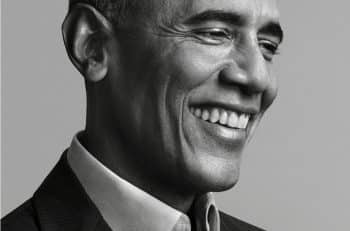
    Style with some substance By Mehar Luthra I used to pride myself on being the most politically unaware human on the planet. I revelled in my political illiteracy. Politics was a snooze-fest. Until, that is, the advent of Obama and Trump. Obama came along, made politics cool and accessible and inclusive and he actually talked sense. But in defiance of what I thought was history’s established course, after eight years, we were given an inarticulate and divisive, orange-tanned monster who made no pretensions of being intelligent, smart or even particularly interested in his citizenry. Obama, with his cheerful smile and penetrating intellect, seemed to me as comforting as chocolate chip cookies. So, I reached out for A Promised Land with relief. The 700+ pager tome details Obama’s life from growing up in Hawaii (his mother was a badass rebel who married an immigrant from Kenya) to his slow slog through the Illinois State Senate and eventual election to the US Senate, where he amassed enough legislative cred to be considered a contender for the 2008 presidential election. The story first showcases the behind-the-scenes of a high-stakes presidency bid and then affords us, the readers, a peek into the cohesive, logical and mostly straightforward decision-making process that he adopts throughout his term in office. I particularly found it fascinating how, right before the election, he had a bit of a pissing contest with John McCain, who had, inexplicably, walked into an Oval Office summit he had insisted on after halting his campaign schedule, completely unprepared. McCain was painted as a clueless schmuck whose ill-thought-out campaign bluff had been called. For anyone looking to get some triumphant, vicarious and wholly petty thrills while hoping that that cough you just had was only anxiety-induced, this is the motherlode.  There’s not much insight into his home life, but he does address the fact that after all the smiling and hand-holding and kissing of babies in the streets, he knew that his wife, Michelle and two daughters, Malia and Sasha, had NOT signed up for this. There were missed birthdays, anniversaries and an inadequate distribution of the workload, and this caused domestic consternation.  Touted as the selling point of the two-part series is Obama’s commentary on world leaders. However, he sidesteps in favour of tamped-down but still insightful opinions. Considering that some of these world leaders no longer occupy the sensitive positions of power they once did, I would have liked to see some peel-back-the-protocol truthfulness.  There is a vast cast of characters. We are introduced to various staffers who are colourfully described with their own quirks, shortcomings and talents. Almost akin to character arcs on a well-written TV show, we are taken through their evolution as Obama settles into his role from the President-elect to POTUS. A heartwarming aside is when Obama describes the subtle but unbridled joy the predominantly-Black White House staff feel on serving a Black First Family. It’s important to celebrate these revolutionary joys. The book also takes a good, hard look at how the Obama phenomenon came into existence. His message was simple and extremely effective – he intended to work for the average, hard-working American who simply wished to lead a dignified life with healthcare without going broke and putting kids through college and owning a house; that if you worked hard enough, you could have a good life for yourself and your family. His was a politics of inclusiveness, of common purpose that transcended party lines. It was also what enabled him to reach out and win the votes of everyone, regardless of colour or social standing. Obama knew early on that if he wanted to become the first African American president, his agenda had to include EVERYONE and not just people who looked like him. And that’s just what he did. Obama is famously sharp.  He writes and speaks extraordinarily well, colourfully, eschewing cliché.  Vladimir Putin‘s “satirical image of masculine vigor” is the result of “the fastidiousness of a teenager on Instagram”.When he wins the 2009 Nobel Peace Prize, he writes that his simple response was “for what?”.  Sometimes the book is earthy.  His senior advisor tells his chief of staff: “Goddamnit Rahm, slow down – your ass is in my face.“, as they descend the pyramids in Egypt on a state visit. Obama’s extraordinary grace, refined humour and his confident wisecracks in the face of even the stiffest of challenges is refreshing and contrasts with boorish Trumpism. This man, the former leader of the free world, enjoys a game of basketball with his staffers and used to get exasperated when everyone stood up as soon as he entered the room. He is not yet warped by his own sense of self-importance, and that can only be a good thing. ‘A Promised Land’ delves deep into policy-making and the mechanics that go into getting legislative agendas through the two Houses in the US. He gives us an insight into the prevalent back-scratching brand of bargaining routinely employed by any President in an effort to reach across the aisle and make a deal with the other party. Carefully peppered with self-aware propaganda, the book gives us what is essentially ‘his’ side of the story of why and how he failed at what he failed, and the fact that the Republican Party is more concerned with image and the propagation of fear than enacting measures that may actually help the public and frankly,  For a political memoir, it’s a page-turner: full of details and introspective cogitating, While Obama’s policies may leave people divided, the man has style.

    Read more

  • Posted in:

    The McGurk’s Bar cover-up. Heath’s Faustian pact. How a British prime minister covered up a UVF massacre in the hope of acquiring Unionist votes to enable the UK join the European Economic Community, the forerunner of the EU.

    Tory PM Edward Heath concealed the identity of a paramilitary organisation which perpetrated a massacre in Belfast in 1971. He did so in the hope of acquiring the votes he needed to win a majority in the House of Commons to enable the UK to join the EEC, the forerunner of the EU. What he did has remained the best kept and murkiest secret of the EEC-EU-BREXIT saga of the last 50 years. A string of declassified documents have now emerged which, when read together, expose what Heath, the British Army, propaganda operatives and the RUC Special Branch did. The documents are about to be presented to the new British Cabinet Secretary, Simon Case. By David Burke. INTRODUCTION. Ted Heath’s role in the cover-up of the McGurk’s Bar bomb atrocity of 4 December 1971 is the best kept dirty secret of the EEC-EU-UK-Brexit saga of the last 50 years. It would have remained under wraps indefinitely but for the determination of the historian, author and McGurk’s bomb campaigner Ciarán MacAirt. Irrefutable documentary proof of the Heath-McGurk’s scandal is about to reach the Whitehall desk of Simon Case, the former GCHQ spook and Northern Ireland Office official who is now Cabinet Secretary to Boris Johnson’s government. Case was a key figure in the British Establishment conspiracy which refused to order a judicial inquiry into the murder of the lawyer Patrick Finucane two weeks ago. Everyone in Whitehall – including Case – knows that MI5-FRU and RUC agents in the UDA murdered Finucane with ‘cabinet level’ approval. If Case was unhappy with this, he did not resign or protest publicly (nor even discreetly to a friendly journalist). The Finucane decision was an affront to decency, democracy and a direction from the UK’s Supreme Court. Case has surely learnt by now that a key aspect of his job is to cover up for a certain type of murder carried out during the Troubles. He is now about to be put to the test again. On this occasion it will involve his approach to the massacre of 15 decent and honest people:  the innocent victims of The McGurk Bar bomb massacre of 4 December 1971 in Belfast. HEATH’s FAUSTIAN PACT In December 1971 the UK’s prime minister, Edward Heath, was working to secure Britain’s entry to the EEC, the forerunner of the EU. He needed all the votes he could attract to get his legislation over the line in Westminster. One group with the potential to help was the Official Unionist Party. It was led by Brian Faulkner, the Prime Minister of Northern Ireland. The Unionists held eight key votes in the Commons in London. Faulkner had just taken over from James Chichester-Clark as prime minster of NI on 23 March 1971 on the basis he was the Unionist hard man who would defeat the IRA. As minister for home affairs during the IRA’s Border Campaign, 1956 – 1962, he had introduced internment, something Unionists credited with defeating the IRA on that occasion. It has never been a secret that there was a price to pay to keep Faulkner happy: Heath was to re-introduce internment. Although Faulkner was prime minister of NI, he still needed Heath and his army to make it happen. Crucially, Faulkner wanted internment for the IRA only. This meant – and Faulkner knew full well – that the UVF, Red Hand Commando and the UDA would to be left alone to bomb, kidnap, torture and murder Catholics. Heath’s cabinet had sought a balanced internment with the IRA and loyalist groups being swept up at the same time. They also wanted guns held by rifle clubs called in. The overwhelming majority of these weapons were in Unionist hands. A third requirement was a ban on parades. None of this was acceptable to Faulkner who went as far as to suggest there was no evidence of Loyalist terrorism and that the guns held by the members of rifle clubs were not a security threat. A ban on parades, he argued, could not be enforced. Heath caved in on all three issues., save that there was to be a six month ban on parades. An overview of UVF terrorist actions – including those of the 1960s and the period 1970 – 1971, can be found at: https://en.m.wikipedia.org/wiki/Timeline_of_Ulster_Volunteer_Force_actions Despite the murders and bombings perpetrated by the UVF and Red Hand Commando, when internment was introduced in August 1971, Loyalist paramilitaries were not swept up by the Army. Instead, they were let go about their gruesome activities. Heath was a man with a ruthless edge perfectly capable of bending the rules to get what he wanted. As a junior minister in the Foreign Office, he had been involved in machinations that led to the murder of the democratically elected prime minister of the Congo, Patrice Lumumba. An official at the Foreign Office – Howard Smith – had started the murder ball rolling by suggesting that MI6 assassinate Lumumba. In his private life Heath was just as selfish. In August 2015 the Wiltshire Police launched ‘Operation Conifer’ into allegations that he had been a paedophile. In 2017 the force announced that grounds existed to suspect him of child abuse. As a matter of law, the force was not entitled to reach any conclusions about the potential guilt of Heath and it did not. The furthest it could go was to state that if Heath were alive, he would have faced further questioning about the accusations levelled against him. Mindful of this, the force revealed that Heath would have faced questions under criminal caution relating to: One incident of rape of a male 16; Three incidents of indecent assault on a male under; Four indecent assaults on a male under 14; Two indecent assaults on a male over 16. The investigation spanned the period 1956-92. None of these incidents took place while Heath was PM, 1970-74. See also Carl Beech and the ‘Useful idiots’ at the BBC. The inco6mpetence of the BBC has now made it

    Loading

    Read more

  • Posted in:

    Trump’s Your Fault

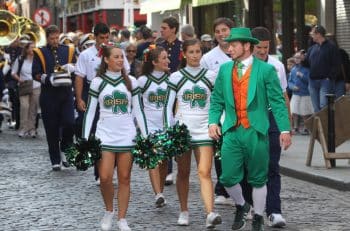
    Trump and Biden are culturally Irish By Stephen Corbett Donald Trump could repatriate Apple and Google, rip up the Good Friday Agreement,  and next March 17th spend the day on the greens at Mar Al Lago. Expect anything from the United States nowadays. That’s why I’m sounding the alarm from Scranton, Pennsylvania, birthplace of Democratic presidential nominee Joe Biden, though not somewhere he spent much time after the age of ten. That’s also why I’ve been trying to give Ireland fair warning. But, for whatever the reason, it looks like I’ve worn out my hundred thousand welcomes in the land of my grandfather’s birth. Judging from Irish media’s recent reaction to my recently released novel, ‘Paddy’s Day in Trump Town’, you’d think I accused local lads of peeing on the Blarney Stone and then wrote a novel exposing their gross national sacrilege. Which, I did, of course. But that doesn’t excuse bougie Irish publishers, smug radio talkshow hosts, pompous book reviewers, and other elite social commentators of the Gael who ignore my Siren’s wail about our mutually bleak future if America’s 45th president gets re-elected. I blame the Irish for Trump’s ascendancy in the first place. Had countless long-ago Irish ancestors not given birth to brave immigrants and sent them to my Northeastern Pennsylvania part of America to mine anthracite in underground hard coal country, their descendants’ bigotry would never have propelled Omadhaun Trump over the top and into the White House. These same lads, the “Irish Guys” as I call their racist, sexist, white male social club in my book, are now doing anything and everything in their power to guarantee Trump’s re-election. That terrible prejudice once endured by the Irish themselves is what my disturbing novel is all about. And now once again in November Irish America will push this bigot, this imposter, the man who threatens life itself, back towards office. My tribe of Irish Americans shat on what the shamrock symbolised. And that’s news, not good for the Irish tourist industry, corporate media and the island economy, of course, but news nonetheless. I know both sides of this sharp Celtic dagger. As a two-fisted, award-wining newspaper columnist for decades, I created a career knocking out politicians who were crooked in that Irish-American way. Government officials once arrested me and my bosses for doing journalism in America. But we fought the corrupt system, winning one of the nation’s most prestigious journalism honours for our service to a free press. As the big, loud Yank host for numerous CIÉ bus tours, I also sang the praises of the auld sod and escorted mostly Irish-American tourists on their oftentimes first and last trip to the land of their forebearers north and south. Oh yes, I know the appeal. So does self-consciously Irish-American Biden.  But he’s no Brian Ború. When I interviewed Biden on my radio show in 2008, he told me how he listened to me whenever he was working late in his Senate office in Washington, D.C. and got homesick for Scranton. The truth is, until then, Biden had never heard of me. When Biden and I met face-to-face in 2011, Biden humiliated a decent man who just lost his house in a flood. After a heartfelt, tearful struggle the man decided not to rebuild because he had rebuilt after a previous flood and could no longer face the gruelling uncertainty for him and his family. Biden questioned whether the man’s dead father and grandfather would have quit. As I stood glaring at the vice president, Biden looked at me with his toothy grin and said, “You can smile, Doctor Death”. I left the room before I created an international incident. Ah, the clumsiness of the Irish-American politician. McCarthy, Daley and Buchanan; Pence, Spicer and Conway. Isn’t it grand? I just turned 21 when I first set foot in Dublin in 1972. During three leisurely months living in a third-floor Ranelagh bedsit, I drank nightly in Humphry’s, finished as runner-up in a National Stadium boxing tournament, drank tea with the late Victor Bewley, and journeyed by train and bus to walk the sacred land of my coal miner grandfather’s birth in Cornamona, County Galway. None of my lovely background apparently matters to the Irish literary and media gentry. One beautiful people publisher in Dublin, whose roots run deep in my family’s Gaeltacht village, cold-shouldered my warm, personal inquiry the way she might stare down a spoiled salmon salad. Radio legend Pat Kenny, who loved talking with me on the air when he reached out during the 2005 Michael Jackson pedophile trial I covered for a small California paper and Sky News ignored my collegial email. Christ, after three emails, I couldn’t even get a response from Declan Varley, novelist and Galway Advertiser editor. Because these blatherskites get timid when it comes to Trump, tourism and outlaw troublemakers like me, Ireland better beware. Weak-kneed press clerks and publishing prima donnas stifle creativity, freedom and the unbridled hunt for truth. Let them eat peat. Leo Varadkar will be much better off next time he heads to the White House if he talks of the bog rather than the golf course. Remembering what part of the bog you came from will set us free. Jesus didn’t say that. I did. And Paddy’s Day in Trump Town is better than the Bible. So thanks to your wanker American cousins our worst man might somehow win again. If the orange menace does emerge victorious from the darkness of our soul, the Irish will feel the global pain and change utterly. I’m warning you, Ireland, because I’ll always love you. So kiss me, I’m Irish-American. On second thought, keep your distance. COVID-19 and bad American Presidents can both be deadly, for in Ireland-loving Trump and Biden are encapsulated the limitations of the Irish-American dream. And you haven’t, let’s face it, had much trouble with the incumbent.

    Loading

    Read more