General

Random entry RSS

  • Posted in:

    THE ACCUSED AND THE ACCUSERS: CLOSED SESSION

    By Christopher Stanley Litigation Consultant KRW LAW LLP Belfast. Last year I wrote piece for Village called The Accused and the Accusers: If Not Now, When? There,I offered an analysis of the proceedings of the Independent Inquiry into Child Sexual Abuse Inquiry (IICSA) in relation to its investigation into the allegations of child sexual abuse against former British Labour MP Greville Janner (Lord Janner of Braunstone QC). (Braunstone is mentioned in the Domesday Book of 1086, giving a population of “two sokemen and four villeins”). Child sexual abuse whether within a public (institutional/official) or private (familial/domestic) setting occurs behind closed doors. Part of the power/violence of the abuser is the assumption of or enforcement of silence upon the abused. The abused is made mute even though their abuse may be known by many who either decide not to intervene or are themselves objects/subjects of abuse. It is ironic therefore that on the 12 October 2020 IICSA commenced its ‘public’ hearings under the title “Institutional responses to allegations of child sexual abuse involving the late Lord Janner of Braunstone QC”. Public hearings about silenced acts in private spaces from muted voices. These hearings were subject to a Restriction Order under Section 19 of the Inquiries Act 2005. Restriction Orders and Notices were controversial additions to the Inquiries Act 2005 as they have the effect of running counter to the principles of transparency and openness in the administration of justice and due process. A Restriction Order denies the public access to the hearing (in whole or in part), it denies the public access to the oral and written evidence (in whole or in part) and it restricts an inquiry from publishing a complete report of Conclusion and Recommendations (in whole or in part). It excludes the public gaze. It can also appear to exclude or silence the victims if an investigation is examining a matter such as systemic institutional abuse where the testimony of the victims is core to testing the allegations. The IICSA accepted the need for anonymity of victims: “As a matter of law in this country, a complainant who makes an allegation of sexual abuse is entitled to lifelong anonymity. The right to anonymity is enshrined in section 1(1) of the Sexual Offences (Amendment) Act 1992. This prevents any matter being published, which includes, for these purposes, references in a speech or in writing, about the complainant which might enable the public to identify them as being someone against whom a sexual offence has been said to have been committed.” Open Session 12 October 2020 page 20 A distinction needs to be made for the sake of clarity. When identifying witnesses there are those witnesses who are the victims of Janner’s alleged sexual abuse. They are identified by the IICSA as the Complainant Core Participants. These witnesses speak through their witness statements and through their legal representatives. They may waive their anonymity. Then there are those witnesses who represent institutions, police officers, prosecutors, politicians. They cannot waive their anonymity but give their oral evidence either in Open or Closed session. Evidence of several witnesses is read into the Record of the Hearings. The ‘institutional witnesses’ are identified by their Name in the Timetable of the Hearings but become Witness 1 in the Open Summary of the Closed Session. For example, Matthew Baggott 26 October 2020 of the IICSA hearing becomes Witness 2 in the Open Summary of the Closed Session of 26 October 2020. I refer you to the Timetable for Week 1 Closed Session (1). There were 17 morning and afternoon sessions timetabled. 13 were Closed Session. The Witnesses being heard were either from members of the police service or from the Crown Prosecution Service (CPS). The Timetable for Week 2 commenced hearing evidence from more police officers or prosecutors Closed Session (2).The Timetable for Week 3 Closed Session (3) heard evidence from the police and members of the Labour Party including former Prime Minister Tony Blair. Janner (dead) cannot be a witness save through the venting anger of his family. No victims’ voices are heard save by way of their witness statements and the voices of their legal representatives. Some victims may not want to speak or accept they can be spoken for, but some may want to be heard in their own voice either as themselves or as their ciphered selves. The List of Core Participants identified in the IICSA include 28 ciphered persons in the Janner Investigation. These are victims or as IISCA identifies them the Complainant Core Participants. They are Janner’s Accusers. “6. In summary, I have concluded that, by reason of the allegations they have made, all the complainant core participants have (and, for the avoidance of doubt, continue to have) a significant interest in the matters under investigation.” “10. Messrs Janner and Butler are wrong to say that only three of the complainant core participants had made allegations of abuse against Lord Janner at the time that the Inquiry was established. On the Inquiry’s present understanding of the evidence, 19 of the 33 complainant core participants had made such allegations to the Police by the time that the Inquiry was established in March 2015.” Determination 27 October 2017 But the only ‘live’ voices in these virtual hearings were from the Corridors of Power (Westminster) which Janner stalked, or those institutions charged with investigating the allegations against him (the Labour Party, the police and the Crown Prosecution Service (CPS), and Local Authorities). The Chair of IICSA must have been relieved that there were hearings at given the resistance and protestations of the family of Greville Janner which I examined in my earlier piece. In a spirit of transparency IISCA has published certain documents referenced or relied upon in its investigation. For example, “Charges brought against Lord Janner in 2015” including: “6. INDECENT ASSAULT on a Male Person contrary to section 15 (1) of the Sexual Offences Act 1956 (multiple incidents – forced JA-A27 to perform oral sex on him) Between 21 November 1972 and 22 December 1975”

    Read more

  • Posted in:

    Accelerating The Three-Billion-Year-Old Dance of Phages With Bacteria

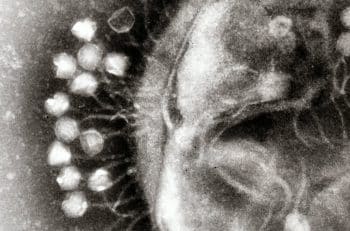
    As Covid-19 and other diseases spawn resistance to over-used antibiotics, phages – viruses that naturally infect and kill bacteria – may be a long-term replacement By Shane Raymond Doctors Globally worry daily about fighting Covid-19. However, some doctors and medical experts now worry not just about the damage the virus can cause, but about the medical battles that will follow in its wake. Under guidelines produced in April  by  the  Health  Service Executive’s Antimicrobial Resistance and Infection Team, antibiotics are to be given to Covid- 19 in-patients with symptoms of bronchitis or pneumonia, or who produce coloured sputum when they cough. The guidelines also stated that “frail elderly patients” are at greater risk of death from infections and, so may need to be prescribed with antibiotics far earlier than doctors might otherwise do with patients of that age. While often necessary to save lives, the long- term result of a growth in the already high use of antibiotics worries some healthcare professionals, including Dr Liam Burke, a bacteriology lecturer and researcher at the Centre for One Health at NUI Galway. “With Covid, the whole world is using tons of normally don’t cause any problems at all. But, when our immune system is down they can cause an infection. The more antibiotics we use, the more bacteria get resistant”, he considers. The World Health Organisation (WHO) has stated that antibiotic resistance is “one of the biggest threats” today, warning that a host of infections including pneumonia, tuberculosis, food poisoning and gonorrhoea are becoming harder to treat as antibiotics become less effective. Because of that, WHO says health professionals should only prescribe antibiotics when necessary and patients should make sure not to share or use leftover antibiotics. New treatments are needed, but they are hard to come by, Dr Burke says. Antibiotics take years to develop, cost billions, and are only taken for a few days by most patients and so are not lucrative. Drugs for chronic diseases such as diabetes are taken daily for years, and so are far more profitable. The incentive to develop new antibiotics is also reduced by bacterial resistance – since Big Pharma cannot sell a drug that no longer works. One of the most promising avenues, Dr Burke goes on, is the use of phages – viruses that naturally infect and kill bacteria. Colin Hill, Professor in the School of Microbiology at University College Cork, is a leading researcher in the field: “Phages are the most abundant biological entities on the planet”, he says. There’s about ten quintillion

    Loading

    Read more

  • Posted in:

    Let Theresa May, Who Has Not Sinned, Cast the First Stone: the 32-year cover-up of the Finucane assassination, its link to Kincora and the hypocrisy of the former prime minister.

    By Joseph de Burca. This week marks the 32nd anniversary of the assassination of the Belfast solicitor Patrick Finucane. In 1989 he was shot dead by UDA killers controlled by MI5 in front of his young family at his home. The British government continues to resist a judicial inquiry into the murder despite castigation from its own Supreme Court and human rights groups across the globe. No-one in the Tory party is putting Boris Johnson under any pressure to resolve the matter. LET THERESA MAY, WHO BELIEVES SHE HAS NOT SINNED, CAST THE FIRST STONE Johnson’s predecessor, Theresa May, however, has accused him of abandoning Britain’s “position of global moral leadership”. Johnson, she said, has failed to honour British values by threatening to break international law during Brexit trade negotiations. Another criticism was that he had backed away from Britain’s foreign aid targets. These two developments had not “raised our credibility in the eyes of the world”, she argued. She then proceeded to lecture him to live up to “our values”. And just what does she think the image of UDA assassins acting on the orders of MI5 to murder an Irish lawyer followed by a 32-year cover-up is doing for “Britain’s credibility in the eyes of the world”? Peter Cory, the Canadian judge who looked at the issue discovered that the murder had been discussed at “Cabinet level”. Sadly, May’s ‘values’ never included an attempt to bring the long-running cover-up that has swirled around the assassination of Finucane to a halt. In her attack on Johnson, May diverted to describe the election of the “decent” Joe Biden as US president as a “golden opportunity” for Britain to become a force for good in the world again. Would an inquiry and the resolution of the scandal surrounding the Finucane assassination not also provide a “golden opportunity” for Britain to show that it can become a “force for good in the world again”? WHAT THERESA MAY DID (AND DIDN’T DO) WHEN SHE WAS IN CHARGE OF MI5. There is a more to May’s hypocrisy than meets the eye: she was the Home Secretary who thwarted earlier demands for a judicial inquiry. MI5 is part of the Home Office and reported to her. At the time she was covering up for MI5, David Cameron was prime minister. He met with the Finucane family at 10 Downing Street where he told them that he could not order a public inquiry. When Finucane’s brother Martin asked him why, he turned to Mrs Finucane and said: “Look, the last administration couldn’t deliver an inquiry in your husband’s case and neither can we”. According to Cameron, this was because “there are people all around this place, [10 Downing Street], who won’t let it happen”. As he was saying this, he raised a finger and made a circular motion in the air. Cameron has not – and probably never will – expose the figures around him in Downing Street who were able to dictate what he could and could not do. Theresa May must know who the culprits are. (They are presumably high-ranking civil servants who have seen the files and know precisely who ordered the murder of Finucane. The list of suspects includes Margaret Thatcher whom May admires.) It clearly does not bother May that State officials have been – and continue to be – complicit in the perversion of justice. One of the officials suspected of complicity in the murder in 1989 – long-since retired – is still alive. So too is Patrick Walker the director-general of MI5 at the time. THE DAUGHTER OF A MAN OF THE CLOTH. May likes to project the image of a deeply religious woman with a moral compass handed to her by her father, a man of the cloth who also understood right from wrong and was possessed of the right ‘values’. Yet, if this was so, why did Team May scrub details of his life from Wikipedia? The mainstream media ignored this act of censorship. There are few comments about the development anywhere but it is addressed in this intriguing article: https://vocal.media/theSwamp/theresa-may-s-father As prime minister May was never bothered by British sales of weapons to an array of foreign powers. How does she feel about the tens of thousands of people who have died as a result? Clearly, slaughtering children in the Yemen is acceptable in her eyes if it generates income for the economy of the UK. Mark Curtis and his colleagues at Declassified UK have covered this scandal in great detail. Interested readers should consult: http://markcurtis.info/category/yemen/ SUFFER LITTLE CHILDREN Privately, May has always been disdainful of Johnson’s prodigious sexploits. Yet, Johnson’s sexual partners have always been adults who have been willing – no doubt eager – to sleep with him. This highlights another dimension to May’s hypocrisy: she is critical of consensual sex between adults while covering-up VIP sex abuse involving children. She helped to cover-up the Kincora scandal by assigning the latest investigation of it to the extraordinarily dim-witted and gullible Judge Anthony Hart who made an unholy mess of it. Hart even managed to contradict himself in the body of his own report, a first by any low standard. Unlike George Terry, the former Chief Constable of Sussex, who had reported on Kincora decades earlier, Hart was not corrupt, merely a fool who would have been out of his depth in a puddle. By giving it to this dolt, May was able to separate it from the ongoing Independent Inquiry into Child Sexual Abuse (IICSA) which was meant to investigate VIP sex abuse involving, inter alia, MPs. Assigning the probe into Kincora to Hart made no sense as it was part of an Anglo-Irish vice ring with connections to Westminster MPs. However, the existence of Hart’s impotent inquiry gave the dreadful IICSA grounds for ignoring Kincora and the abuse perpetrated by English VIPs of Kincora boys such as Enoch Powell MP, James Molyneaux MP, Knox Cunningham MP and others. Not a peep out

    Loading

    Read more

  • Posted in:

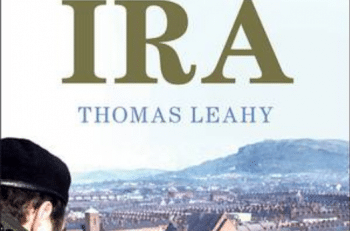
    Nobody Won: debunking the myth the Provisionals were brought to their knees by British spies. Margaret Urwin reviews ‘The Intelligence War Against the IRA’ by Thomas Leahy.

    By Margaret Urwin. In ‘The Intelligence War against the IRA’, Thomas Leahy, Senior Lecturer in Politics in Cardiff University, challenges the growing dominant narrative that the IRA was brought to the negotiating table in the 1990s because they had been ‘brought to their knees’ by British intelligence. Since the outing of State agents, Stakeknife and Denis Donaldson in particular, in the early 2000s, many academics, historians and commentators have concluded that the IRA campaign ended in defeat because it was fatally compromised by agents and informers. Existing books and articles, while not studying the intelligence war in any significant detail, yet conclude that British intelligence was vital in forcing the IRA into peace. Leahy meticulously, painstakingly and, indeed, convincingly, debunks that conclusion.  Leahy meticulously, painstakingly and, indeed, convincingly, debunks that conclusion.  The book is the first to evaluate fully the impact of British intelligence agents, SAS and other operations against the Provisional IRA. From the wealth of material examined in Irish and UK archives, interviews and memoirs, Leahy argues that British intelligence did not force the IRA into surrender and that political factors were crucial in delivering peace. He suggests that, in fact, particular intelligence operations may have, rather, increased IRA support in its heartlands because of anger against the British State. It is one of the first studies of the conflict that researches what happened by region. It examines British intelligence and security strategy impact on IRA urban units in Belfast and Derry but also rural units in south Armagh, north and mid-Armagh, Fermanagh, south Derry, north Down, south Down and Tyrone. The IRA campaign in England is also considered in detail. Leahy concludes that a previous major focus on the IRA in Belfast has overlooked crucial aspects of the overall picture of what happened and why during the conflict and the regional factors affecting it. A range of republicans (both pro-peace-process and dissentient) have been interviewed, as well as British security personnel; also memoirs from all sides of the conflict including self-confessed IRA informers and intelligence handlers have been accessed. Of particular value is the extensive use of the relatively new sources of personal papers of Brendan Duddy (intermediary between the IRA and the British at critical times during the course of the conflict), Ruairi Ó Brádaigh and Daithí Ó Conaill, which provide crucial behind-the-scenes insights. Both British and Irish Government policy towards republicans is reviewed. Leahy suggests that, from 1969 to 1972; 1973-74 and 1976-90, the British State sought to contain IRA violence at ‘an acceptable level’. Evidence is provided to show that that this policy failed. After the breakdown of the 1975 ceasefire, from 1976, in particular, policies were enacted to marginalise the IRA, e.g., the abolition of ‘Special Category Status’ and the introduction of ‘criminalisation and Ulsterisation’. The intention was ‘to isolate republicans from political settlements whilst eroding the IRA’s armed capacity to a point where they no longer had any influence on Northern Irish politics’. After Roy Mason was appointed as Secretary of State for Northern Ireland, he told Prime Minister Callaghan in January 1977 that there was no intention of engaging in further talks with Sinn Féin and he ended all contact with intermediary Brendan Duddy. As part of the strategy of marginalising republicans, from my own research I am aware that, also in 1977, the British made vigorous efforts to prove a link between Sinn Féin and the IRA  so that Sinn Féin, which had been a legal organisation since May 1974, could be re-proscribed. A lengthy intelligence operation involving surveillance, searches of Sinn Féin offices, seizures of documents and interviews with suspects were carried out for more than a year. However, when the investigation was complete and a report produced in October 1978, the result showed the evidence did not support the view that the IRA and Sinn Féin were inextricably linked and so Sinn Féin could not be re-proscribed. The book presents original evidence suggesting that republican leaders were seeking talks towards a political settlement in the early 1980s, as Sinn Féin’s electoral mandate was increasing. This was, however, ignored as the British Government tried to negotiate a ‘moderate’ peace settlement with the SDLP and the UUP. The book presents original evidence suggesting that republican leaders were seeking talks towards a political settlement in the early 1980s, as Sinn Féin’s electoral mandate was increasing. This was, however, ignored as the British Government tried to negotiate a ‘moderate’ peace settlement with the SDLP and the UUP. This initiative failed due to persistent IRA activity, Sinn Féin’s electoral mandate in Northern Ireland and, by 1990, both the Irish Government and the SDLP were anxious to include Sinn Féin in peace talks. The importance of the rural IRA to the overall campaign is emphasised. South Armagh, in particular, was the strongest unit and, with significant support from the local community, was almost impenetrable. The community had been incensed by the building of watch-towers and constant helicopter flights.  Its position of strength enabled it to carry out operations in England in the late 1980s and 1990s. If the IRA was heavily infiltrated it would not have been possible to carry out a litany of spectacular bombings in England – Brighton (1985); the Royal Marine School of Music (1989); a booby-trap bomb under a car killing Ian Gow MP (1990); the firing of mortars into the back garden of 10 Downing Street (1991); the bombing of the Baltic Exchange (1992) and the NatWest Tower at Bishopsgate (1993); the firing of mortars onto runways at Heathrow Airport (1994) and, after the breakdown of the ceasefire in 1996, the Docklands and Manchester City bombings. Leahy agrees with Jonathan Powell that talking to all sides involved in the conflict was necessary in order to deliver peace. Sinn Féin’s electoral support was too sizeable to be ignored in a political settlement. He suggests that, ultimately, it was the political mandate and persistent conflict that led all sides to negotiate and to accept a peace settlement. Nobody ‘won’. It

    Loading

    Read more

  • Posted in:

    AstraZeneca

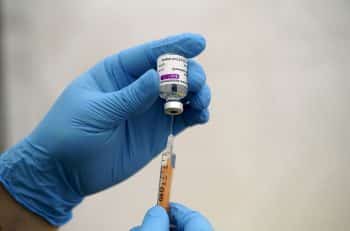
    A poem in the pandemic, by Kevin Higgins after Brian Patten  Now all the old gods have died or are on life support in the prison infirmary psychiatric wing we have a new name for the absolute: AstraZeneca. Even those who get  emotional at dinner parties about the state of the planet know there’s no talking back to AstraZeneca, the one who now decides who gets to go outside and who must remain in the cupboard. Old women, whose husbands haven’t come back out of  the bedside locker since this time last year, get down on their bony knees and ask AstraZeneca to please keep them in there for good. The Minister for Exams clasps her sad hands together and pleads that AstraZeneca intercede  before she’s pushed  through the streets by students in a shopping trolley  wearing a dunce’s hat. Diplomats, Popes, and  Patriarchs of Constantinople  issue joint communiqués begging AstraZeneca to save us  from the Russians. Like most gods, AstraZeneca  has a customer help-line  it never answers. But we dial it in any case, our nerve endings electric at the thought of what we’re at the mercy of. As the next war starts every side claims this new deity belongs to them, and the streets ring with the sound of AstraZeneca laughing.

    Loading

    Read more

  • Posted in:

    The public interest for sale in Kildare.

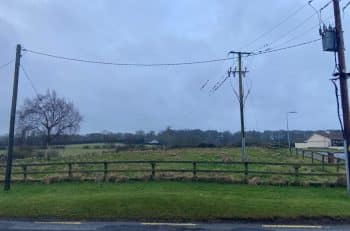
    Kildare Councillors flouted the public interest and perhaps the law in approving the sale of Council land without including its additional actual value to the purchaser as a “ransom strip” – following a valuation by a former Fine Gael Councillor By Fiona McLoughlin Healy. The role of Councillors in disposing of assets is an important one.  It is a power vested in them by Section 183 of The Local Government Act.  The Council’s Chief Executive has the power to acquire land but only the Councillors, ie the elected members of the Council acting collectively, can approve the sale of publicly owned land. Under Section 211 (2) of the 2000 Act, the disposal of publicly owned land must be for “the best price reasonable obtainable”, and if it is not, the Housing Minister’s consent is required for the sale.  The disposal of publicly owned land must be for “the best price reasonable obtainable”, and if it is not, the Housing Minister’s consent is required for the sale. Just five of 31 Councillors present (and a total membership of 40) voted against the sale. On Monday 30 November 2020, Kildare Councillors voted to dispose of 0.796 acres of publicly-owned land in Athgarvan to a private individual for the sum of €100,000. Just five of 31 Councillors present (and a total membership of 40) voted against the sale, and in substance in favour of my proposal that, as a result of concerns expressed, we adjourn the decision to dispose. Adjournment would have allowed for a second valuation to provide reassurance in relation to some of the issues I outline below.   The founder of Sherry Fitzgerald Reilly, the man who carried out the valuation is a former Fine Gael Councillor. The founder of Sherry Fitzgerald Reilly, the man who carried out the valuation, is Sean Reilly, a former Fine Gael Councillor. Here’s his signature on the valuation: Given the responsibility that rests with Councillors to obtain the best price reasonably obtainable, one would expect a certain level of due diligence in considering a disposal of state land. Having access to and being able to review the valuations that form the basis for the proposed sale price is, I would aver, a basic due diligence requirement.  Certainly as the schedule below shows a lot of money is spent annually by the Council on the services of estate agents and valuers.  But reviewing valuations  has not been the practice in Kildare. At the previous full Council meeting in October 2020 I had again raised my concerns that, despite repeated requests and reassurances given, the Council Management were still failing to circulate valuation documents with Section 183 notices.  As a result, my colleagues and I were provided with a copy of the full valuation carried out by an auctioneer for and on behalf of the Council for the proposed disposal of .796 acres at Athgarvan, at the November 2020 meeting. Two things struck me after reading the valuation document, the Council’s notice and the map circulated to Councillors in advance of the meeting.  First, although section 183 (v) requires that notices to elected members include “any covenant, conditions or agreements to have effect in connection with the disposal” ie for Councillors to be fully informed as to the piece of the jig-saw they are looking at, the explanation provided under that section left me unclear about why we were selling the land to the applicant. In fact I was more confused about why the land was being sold after reading the valuation and the Council’s notice.  The value of the piece of land being disposed of lay not in its intrinsic development value but in its value as the only access route to two developments that had been given planning permission a year earlier Second, here is the valuation document with map. It appeared to focus on the negatives as opposed to the benefits of the land and therefore read more like a valuation one might expect from a potential buyer, not from a seller. It highlighted for example that:  “The majority of the land would be extremely difficult to develop as it is undulating and at different levels”.  And without clarifying the relevance and significance of planning permissions 19/117 and 19/118 it further added that the: “Different levels etc of the land, planning ref 19/117 and 19/118, will make it very expensive to develop”. This is just not the way things operate with valuations. Quite why an opinion had been offered on how difficult it would be to develop the land was perplexing particularly as it was clarified under  “valuation assumptions, caveats and disclaimers” that “in undertaking the valuation we did not, unless otherwise stated; carry out a structural survey or test grounds for stability, bearing, capacity, presence of rock or other matters. Any comments in our report concerning the state of repair, structural condition, ground conditions etc are of a superficial nature only and may require to be verified by a building surveyor or structural engineer”.  Having read the document and the Council’s notice of disposal I proceeded to look up the two planning applications that had been referenced but whose relevance had certainly not been clearly articulated in either document.  It soon became apparent that the value of the piece of land being disposed of lay not in its intrinsic development value but in its value as the only access route to two developments that had been given planning permission a year earlier – one consisting of 90 units, the other of 14 units.  Neither development was shown on the map, issued to Councillors, that had accompanied the valuation. The full jigsaw had not been presented. The value of the adjoining developments not shown on the map, is crudely estimated to be anywhere in the range between €20 to €30 million. Thus, the piece of land being disposed of was a ‘Key Value’ site.  Extraordinarily, Kildare County Council had effectively asked the valuer to include the ransom-strip/key-site value but the valuer had not; and now Councillors were approving the deficient valuation. The relevant case law for valuing what is termed a ‘Key Value Site’ or  ‘Ransom Strip’ is Stokes vs Cambridge (1961) which determined that if a parcel of land was needed for access to develop adjacent property, its owner was entitled to up to one third of the resulting value of the developed property.  Based on a crude calculation, had the shoe been on the other foot and the Council required the piece of land in question to develop adjacent land, it would have had to fork out somewhere between €6 and €10 million to acquire the land in question. It’s difficult to be more

    Loading

    Read more

  • Posted in:

    Apologies

    By Kevin Higgins Inspired by the apologies of British Labour Party leader Leader Keir Starmer for his party’s “anti-Semitism” and his recent appointment of a former Israeli intelligence officer as Labour’s head of social media. To any white South Africans hurt  by the anti-Apartheid movement. To any tobacco plantation owner’s son barred  by Emancipation from dragging his father’s  private property for a spot of fish-eyed non-consensual in a barn that has seen it all,  despite the absolute lack of light in there. To General Custer for any inconvenience  caused by the tribes who sent him home  by a road he did not know.  To any Frenchmen or women savages with Russian guns robbed  of their own personal slice of Algeria. To any Havana casino owners or pimps offended by the extent of Fidel Castro’s facial hair.  To the small part of Ian Paisley Junior that dies every time someone calls Judea and Samaria or Londonderry by its proper name.  To any cats hurt by mice who didn’t lie down and just  let themselves be eaten. KEVIN HIGGINS 

    Loading

    Read more