General

Random entry RSS

  • Posted in:

    So help me God

    Drafters of the US Constitution foresaw violent demagogues, and Presidential Inaugurations have mostly befitted the momentous transfers of power By John Vivian Cooke. Exactly on the stroke of noon on 20 January, Donald Trump will be out of office. There will be no more lies, frauds, outrages, or broken laws from President Trump.    His presidency as a whole, and the violent death throes of its final days, have stretched democratic norms to their breaking point, but the inevitable messy end of his term proved the resilience of the US Constitution.    Some of the dangers they sought to guard against were instability, confusion and attempts by factions to mask violence under the Constitution The drafters of the Constitution foresaw exactly such a demagogue. They published extensive commentaries addressing concerns about the effective operation of republican forms of government. Their plan sought to resolve the paradox that without order there can be no freedom; to give sufficient powers to the government to allow it to fulfil its essential functions without diminishing the liberties of citizens. Some of the dangers they sought to guard against were:  ¨(T)he instability, injustice, and confusion introduced into the public councils, (which) have, in  truth, been the mortal diseases under which popular governments have everywhere perished”. (James Madison, Federalist Number 10)  They foresaw the danger posed by organised and violent malcontents, whom they knew as ¨factions¨, who would seek to subvert the operation of government.   ¨By a faction, I understand a number of citizens, whether amounting to a majority or a minority of the whole, who are united and actuated by some common impulse of passion, or of interest,  adversed (sic) to the rights of other citizens, or to the permanent and aggregate interests of the  community”. (James Madison, Federalist Number 10)  Benefitting from thorough classical educations, they readily drew on analogies from antiquity.   ¨It is impossible to read the history of the petty republics of Greece and Italy without feeling sensations of horror and disgust at the distractions with which they were continually agitated,  and at the rapid succession of revolutions by which they were kept in a state of perpetual  vibration between the extremes of tyranny and anarchy”. (Alexander Hamilton, Federalist Number 9) Supporters of Publius Clodius Pulcher, Trump in a toga, sacked the Senate in 52 BC If they had witnessed Trump’s mob desecrating the Capitol Building, they would have recalled the career of the ancient Roman politician, Publius Clodius Pulcher, whose enraged supports attacked and destroyed the Senate building (Curia Hosta) in 52 BC.  Indeed, the parallels between Clodius and Trump are more than incidental. Clodius was a demagogue with a record of numerous public sex scandals; a wealthy aristocratic who surrender his status as a Patrician to further his anti-elites appeal to the poor; whose term as a Plebeian Tribune in 59 BC was marred by violence, intimidation, and the abuse of power in the vindictive settling of old scores. In short: Donald Trump in a toga.   Informed by historical precedent and wary of the risks of disorder, the Constitution was designed with such specific hazards in mind.   ¨If a faction consists of less than a majority, relief is supplied by the republican principle, which  enables the majority to defeat its sinister views by regular vote. It may clog the administration,  it may convulse the society; but it will be unable to execute and mask its violence under the  forms of the Constitution”. (James Madison, Federalist Number 10)   Donald Trump has repeatedly attempted to frustrate this safeguard.  His attempts to overturn the election results escalated into an act of domestic terrorism that was an attack on the personal, physical, and institutional manifestations of American democracy.  That those efforts failed when Congress completed the constitutional processes of certifying the election results vindicates James Madison`s opinion that:  ¨AMONG (sic) the numerous advantages promised by a well-constructed Union, none deserves to be more accurately developed than its tendency to break and control the violence of faction.  The friend of popular governments never finds himself so much alarmed for their character and fate, as when he contemplates their propensity to this dangerous vice. He will not fail, therefore, to set a due value on any plan which, without violating the principles to which he is attached, provides a proper cure for it”. (James Madison, Federalist Number 10) The inauguration ceremony for President-elect Joe Biden and Vice-President-elect Kamala Harris will be a celebration of this transfer of power in accordance with the democratically expressed will of a sovereign people.   This ceremony has occurred with metronymic regularity since 1797, and each scheduled change of president (with the exception of Rutherford B Hayes` inauguration of 1877) has been celebrated in public.  Quadrennial public inaugurations of the president also serve the practical political function of legitimising the handover of power from one party to another and are the reason the bipartisan Congressional Joint Committee on Inaugural Ceremonies has chosen ¨Our Determined Democracy: Forging a More Perfect Union” and ¨America United¨ as this year`s themes.  The Presidential Inauguration Committee, which is responsible for organising broader celebrations, has been forced to abandon many longstanding traditions to comply with public health restrictions so, although the Pass in Review by members representing every branch of the armed services will still take place, this year there will be no Capitol luncheon, no inaugural parade and the series of inaugural balls have moved online.    What remains is the formal inaugural ceremony during which the incoming Vice President and then incoming President will swear their oaths of office, followed by the new President’s inaugural address. While all the pomp and ceremony are familiar, only the administration of the oath of office is constitutionally mandated. Article II, Section 1, Clause 8 states:  ¨Before he enter on the Execution of his Office, he shall take the following Oath or Affirmation:  – I do solemnly swear (or affirm) that I will faithfully execute the Office of President of the  United States, and will to the best of my Ability, preserve, protect and defend the Constitution  of the United States”.  Franklin Pierce is the only president to have affirmed rather than sworn the oath of office. Many witnesses to Herbert Hoover`s inauguration thought

    Loading

    Read more

  • Posted in:

    The Treaty

    Having failed to crush, flatten, or close our borders against it, as Winter begins to put its uncouth fingernails all over us there is talk of negotiations. King Virus comes to the table  wearing a crown of spikes that fans out to fill the whole room and can’t be removed except on the day of its state funeral, for which – item one on its agenda – we’re expected to pay. Its minions scuttle in all sporting slightly smaller but equally spiky headgear not to be hung on the hat-stand until its wearer has been scrubbed to death by soap and alcohol even a journalist wouldn’t drink. We are busy being impressed by the tall portraits of its ancestors which adorn the conference room walls when its chief negotiator cuts through gristle to bone: it wants all our old age pensioners and chronics.  In terms of the drag they are on the economy,  it’s doing us a favour taking them  to the processing plants it’s building here, here, and there on the map it keeps pointing at with its big long stick. Being realists – on financial matters at least – we have no alternative but to agree and, as is our custom on such occasions, offer it a little extra: everyone over the age of sixty. Its final condition, to which we’re delighted to nod statesmanlike agreement: the rest of the population will be known by this treaty, which will have full force of international law, as the ‘unoccupied zone’. Congratulating ourselves on another deal done, we bark our ribs up (or try to)  and sweat in unison  into the perfect white of the handkerchiefs  we brought to wave at the world’s media. KEVIN HIGGINS 

    Loading

    Read more

  • Posted in:

    Assange’s Extradition, for Conspiracy and Espionage, Unlawfully Political

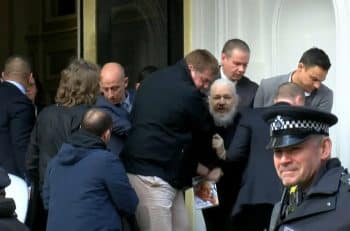
    London extradition hearing was the last stand of either Wikileaks founder or Western Intelligence Imperialism, and awaits January decision By Caroline Hurley Queensland-born Julian Assange (49) founded Wikileaks in 2006. Four years later it published several huge and devastating leaks provided by US Army intelligence analyst Chelsea Manning, including: the Afghanistan war logs, the Iraq war logs and Cablegate. Wikileaks notably published 250,000 redacted documents and footage of US troops in an Apache Helicopter gleefully shooting dead what turned out to be two Reuters employees and Iraqi civilians fleeing in Baghdad (Collateral Murder video). Evidence of torture of Guantanamo Bay detainees also created shockwaves, as did revelations of Hilary Clinton’s entanglement with Wall Street and military regimes.The model of public-interest publishing pioneered by Wikileaks, which facilitated anonymous submission of classified material and organised collaborative reporting across jurisdictions, is now widely practised in mainstream media. The threatened indictment of Assange, symbol of press freedom, puts all investigative journalism on trial.Critics of Wikileaks’ releases included Julia Gillard, then Australian Prime Minister, who said they were illegal, and the then US Vice-President, Joe Biden, who significantly called Assange a terrorist. In 2017 then-CIA director Mike Pompeo declared that Wikileaks was a “hostile intelligence service” aided by Russia.AccoladesOn the other hand, Julian Assange was named Time Magazine Person of the Year in 2010, and then awarded the Martha Gelhorn Prize in England and the Walkley, an Australian Pulitzer Prize equivalent. However, the US Justice Department embarked on a mission to criminalise him and his associates. Swedish Rape Allegations As Assange kept slipping through his pursuers’ fingers, new jeopardy swooped in 2011 from Sweden where, surviving largely without a fixed address, Assange had been spending much of his time. He was recalled there for questioning about two women’s accusations of sexual assault. He agreed to travel from his temporary UK base to answer the charges on condition the Swedish government promised not to extradite him onwards to America. Assange Seeks Asylum Refused these terms, and after exhausting British legal options, in 2012 Assange sought asylum at the Ecuadorian embassy in London.In 2016, the UN Working Group on Arbitrary Detention upheld Assange’s plea as eligible, supported by various statements including one signed by 500 high-profile figures from more than 60 countries. Nothing changed. His house-arrest-like limbo lasted until 11 April 2019 when he was handed over to police.On 20 February 2019, the International Monetary Fund had given Ecuador a $4.2 billion financial package subject to Washington’s approval. Within days, Wikileaks’ prize source, Chelsea Manning, was subpoenaed to inform on Assange, and punished for non-co-operation by a month in almost total solitary confinement, during which time Ecuadorian president Moreno, formerly a fan, came out against Wikileaks.With Assange firmly in the clutches of Anglo-American law enforcement, the Swedish sexual assault charges were finally dropped. Assange Jailed After the police arrest, Assange appeared at Westminster Magistrates’ Court. The District Judge remanded him to Belmarsh maximum security prison until 2 May 2019, when another Judge at Southwark Crown Court sentenced him to fifty weeks in jail for violating his 2012 bail conditions.Handled like a violent criminal, Assange was held in an isolation cell and denied virtually all contact with other prisoners, visitors and his legal representation. Reports of his deteriorating mental and physical health spread. US Indictment The US government launched a criminal investigation into WikiLeaks and is now seeking Assange’s extradition from the UK. He faces one charge of conspiracy and 17 charges of espionage.On 11 April 2019, the US District Court for the Eastern District of Virginia unsealed a 2018 indictment charging Assange with conspiring to commit computer intrusions by assisting Chelsea Manning with breaking a US-government password. Having, under extradition rules, only a 60-day window from the date of Assange’s arrest in London to add more charges, the US Department of Justice unveiled a further seventeen criminal charges against Assange on 23 May 2019, alleging he contravened the Espionage Act of 1917 by publishing the names of classified sources and conspired with and assisted Manning in obtaining access to classified information. The eighteen charges mean a potential cumulative 175 years in prison on conviction.The US-UK extradition treaty cited in the demand that Assange be handed over explicitly forbids political extraditions – and the US government itself had designated him a political actor in 2010.Human Rights Watch and others condemned the move as a regulatory weapon of mass destruction aimed at journalists, whistle-blowers and other truth-tellers. Pariah Assange remains a controversial figure, due mainly to allegations about his temperament and conduct, to the sexual assault allegations and to his alleged support for Donald Trump during the 2016 US Presidential Election when WikiLeaks released documents from the Democratic National Committee (DNC) showing that it favoured Hillary Clinton and had tried to subvert Bernie Sanders. In 2018, Special Counsel Robert Mueller charged twelve Russian intelligence officers with computer hacking and working with WikiLeaks and other organisations to disseminate the documents but Assange said that the Russian government was not the source of the DNC documents. In 2019 CNN reported that Assange had used the Ecuadorian embassy to meddle in the 2016 election.Perhaps partly because of this record, the media internationally went cold on Julian Assange. The BBC’s website covered the hearings in just four – unquestioning – pieces. The Logistics of the Hearing The extradition hearing began at Woolwich Crown Court on 24 February 2020 but was largely adjourned until 7 September. Consortium News and Courage Foundation supplied coverage daily; Counterpunch and Defend Wikileaks did frequently. Even The Guardian engaged though not enough to impress demonstrators outside its offices or signatories of a petition complaining it profited from publishing his leaks yet did not cover the extradition hearing every day one of many leading news outlets, including the Bureau of Investigative Journalism that had extensively exploited Wikileaks files.Reporters Without Borders (RSF) was the only NGO permitted court access. A crowd of hundreds gathered outside the Old Bailey as the case began – speakers included Wikileaks’ Editor Kristinn Hrafnsson, journalist

    Loading

    Read more

  • Posted in:

    Stalwart Hopes, Stunted Growth.

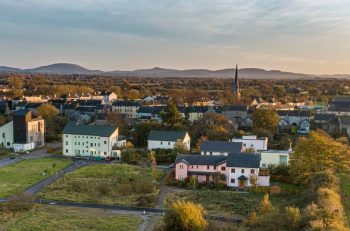
     Cloughjordan Ecovillage Two Decades On. By Caroline Hurley. Cloughjordan So Far In September 1999, at the Central Hotel Dublin, Gavin Harte and Gregg Allen launched Sustainable Projects Ireland Ltd. (SPI) trading as The Village, whose aim was to create Ireland’s first eco-village, with a stress on sustainability, community, and promoting mainstreaming environmentally-friendly ideas.  Rising property prices pushed site options farther from the capital than originally envisaged but after advertising in the Farmers Journal, specifying requirements for clay-rich soil to build, a south-facing orientation, and adjacency to an existing village (a serendipitous Council stipulation contrary to SPI’s green-field site preference), community leaders from Cloughjordan on the Tipperary-Offaly border made contact to urge purchase of land meeting these criteria, which were being sold by the Baker family.  Cloughjordan’s population then, about 400, was one-tenth of its pre-Famine size. As the transaction progressed, talks eventually allayed locals’ concerns about an influx of strangers with fringe beliefs and practices.  Cloughjordan’s population then, about 400, was one-tenth of its pre-Famine size. As the transaction progressed, talks eventually allayed locals’ concerns about an influx of strangers with fringe beliefs and practices.  North Tipperary County Council agreed to rezone the agricultural fields for sustainable development, and the application for outline planning permission for private houses, roads and community buildings was made after land purchase was finalised in 2003. Planning permissions sought and granted can be viewed on www.eplanning.ie using reference numbers 04511649 and 08510334. An archaeological survey conducted on the sixty-seven acres by Dennehy and Gowan revealed signs of occupation from the Bronze Age. Regrettably never signposted, findings included Fulachta Fiadh, ring forts and barrows, ditches, a moat, a fever hospital and starch house.  In 2007, a Village Finance Group published a comprehensive document entitled ‘Information About Site Prices’, explaining how 2004 site costs were calculated, why they had gone up so much by 2007, and steps being taken – such as bulk buying – to curb higher price impacts. The low-lying aspect of the field, formerly containing an old well, hugely upped infrastructure quotes.  The plan to complete building on all 130 sites by 2010 was frustrated by exorbitant boomtime bills putting almost half of the subscribers to flight.  Delays were compounded by the recession and logistical complications. The plan to complete building on all 130 sites by 2010 was frustrated by exorbitant boomtime bills putting almost half of the subscribers to flight.  Delays were compounded by the recession and logistical complications. Borrowings were in the millions, contrary to the original no-debt policy, resulting in unintended long-standing liabilities, and diluting autonomy.  The County Council absorbed more funds after rejecting developer proposals for a social-housing element provided for by Government housing-legislation guidance at the time. Those who paid deposits for initially oversubscribed plans were later asked to sign “statements of integrity” undertaking to build by a certain date, but many could not meet changing conditions as escalating site costs were re-calculated, and as properties they meant to sell to pay balances lost value. Marketing to find replacements for drop-outs had to be stepped up again as subscribers still-in forged ahead, though SPI’s weakening finances led to staff being let go. Researcher Campos (2013) noted, “the project hasn’t been able to get around the predatory price system of the formal economy”, and Nelson (2018) added, Cloughjordan “is the most market-oriented … and the least affordable” of several ecovillages analysed, placing it outside the price bracket of many desirable ecovillage candidates. Steps to address this barrier are now afoot. Already, the presence of ‘communities within the community’ has been observed.  By 2011, diverse nature-inspired buildings were going up on certain sites sold; mainly of passive timber frames with sundry insulations and finishes including Durisol blocks (blocks of chipped waste-wood bonded with eco-cement), sheep’s wool, and cellulose (shredded newspaper). Constructions with hemp-lime (traditional Irish finish of lime, strengthened by adding hemp) and cob (clay, sand and straw) also feature, as does a Canadian stick-frame house with double stud walls (with no cold bridging), and kit houses. Anyone with business ideas could opt for live-work units.  Natural slates, recycled plastic roof-tiles and ‘green roofs’ are on display. This distinctive colourful collection of low-carbon emission builds secured some of Ireland’s best Building Energy Ratings (BER). 28 bought sites not yet developed are levied charges, variably met, leaving 47 sites to sell as of 2021. Instead of using fossil fuels, the District Heating System (DHS) burns biomass: waste wood from a Galway sawmill.Although this cutting-edge renewable solution of the noughties has since drawn scrutiny due to forestry pressures and particulates affecting air quality, the system meets village-wide heating and hot-water requirements, emits no excess greenhouse gases, and has been estimated to save about 113.5 tonnes of carbon annually compared to conventional house heating. 2.5 kg of piping distributes hot water to all sites.  Manufacturer failures jinxed the ground solar array slated to support the DHS. About a fifth of residents have roof photovoltaic panels. In 2014, a survey carried out by Tipperary Energy Agency confirmed an ecological footprint of 2 global hectares, the lowest recorded for an Irish settlement. Rainwater harvesting is a common feature. The Sustainable Drainage System (SuDS) is designed to direct water runoff from houses, roads and hard surfaces to a stream leading offsite. Stormwater is managed as close to source as possible to mimic natural drainage and encourage efficient biological infiltration, attenuation and passive treatment. Water flows through conventional roof drainage pipes and road surface filter drains (stone filled trenches) to swales or basins to be stored during periods of heavy rainfall, before stream discharge.  As of 2021, fifty-five unique energy-efficient houses and a hostel are occupied by 135 residents, many of whom work from home. Most remain involved in the myriad businesses of ecovillage life and, even if bruised by experience, report satisfaction As of 2021, fifty-five unique energy-efficient houses and a hostel are occupied by 135 residents, many of whom work from home. Most remain involved in the myriad businesses of ecovillage life and, even if bruised by experience, report satisfaction.  This well-educated population of teachers, nurses,

    Loading

    Read more

  • Posted in:

    Celebs get it in the neck

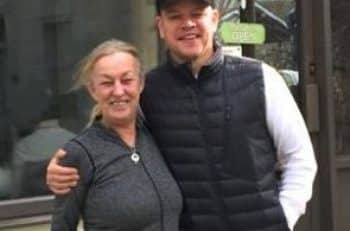
    Twitter rejects lockdown relatability ‘We all hate you’ By Sam White  Tom Hanks and Rita Wilson, Placido Domingo, Idris Elba, Harvey Weinstein, Donna Air, 1960s songstress Marianne Faithful, Kodaline guitarist Mark Prendergast, Prince Charles, Boris Johnson and Dominic Cummings, Prince Albert of Monaco, John Taylor from Duran Duran, Ireland’s Ryan Tubridy and Mary Lou McDonald, and ‘Bond Girl’ Olga Kurylenko. Celebrities can get Covid-19, certainly, but do they feel our pain? For many of us, with human interaction at an all-time low, a lot of what we have left is entertainment – and that business is dominated by celebrities. Of course Matt Damon famously holed down in a palace in Dalkey.  He managed to remain charming and got nothing but undeserved accolades.  Madonna has purveyed a number of  slick lockdown Instagram videos featuring, according to the New York Times, the Material Girl “undergoing a bizarre healing procedure at her personal health clinic and bending over a typewriter in a kimono, pontificating about the social effects of the virus”. For Madonna, public performance is “another luxury gone, for now”, she says in one video. “The audience in my house is not amused by me”, she concedes. Later, from the bath, she concludes that Covid-19 is “the great equalizer”.  But there is a backlash, particularly online. For many decades, celebrities have been hoisted onto pedestals out of reach: totems of cultural worship and obsession. But since the virus, it seems we are seeing a huge public shift in the way people are viewing the rich and famous.Attacking, not slavering over,  them has become the greater entertainment. The #guillotine2020 hashtag is hopping as cynics with time on their hands get stuck in to celebrities who don’t realise that they are not having it bad. Regular (non-famous) people on social media have been hit with an onslaught of “we’re all in this together” tweets and Instagram posts by the world’s most famous people in an attempt to come across as ‘relatable’. The response has been a resounding, “…but are we? Are we really?”. What was once the intoxicating allure of a life completely different from your own has now become the impersonal barrier that divides those who understand the struggles of real life, and those who live in their own luxurious and entitled bubbles.  People all across the world were losing their jobs and sources of income; facing eviction, foreclosure, credit-card debt, soaring medical bills, loss of child care, and a looming existential uncertainty that only comes with being “the little guys” of society. With seemingly insurmountable obstacles in front of them, sentiments of “we’re all in this together” have been as hollow and meaningless as designer purses. Most dramatic was the infamous “Imagine” compilation video. Yeah, the one where Gal Gidot and a bunch of other celebrities put together a cringe-worthy remote compilation of them singing John Lennon’s famous song about world peace, “imagine no possessions … no need for greed or hunger” – sung by members of the 1%. This video immediately went viral drawing harsh criticism.  As popular chatshow host, Ellen DeGeneres lounged on her sofa, calling for global kindness, the comedian Kevin T Porter, an ex-employee, solicited stories from service workers who had had problems with DeGeneres, who he called “notoriously one of the meanest people alive”.  “Respond to this with the most insane stories you’ve heard about Ellen being mean & I’ll match every one w/ $2 to @LAFoodBank”, he tweeted before eventually donating €600. With a new celebrity seemingly self-crucifying every day, the dramatic content kept rolling in with more crying videos and Instagram captions about the struggle for  ‘sanity’ during quarantine. But ordinary people had lost  patience for this—“you’re crying about having to order Postmates in your 35 room mansion while I’m crying about how I’m going to keep a roof over my head and food in my stomach?”. When Jennifer Lopez posted a video of her family sheltering in the backyard of Alex Rodriguez’s vast Miami compound, the public was unimpressed. “We all hate you”, was a typical, if harsh, response. The public paradigm on celebrities and their extreme wealth seems to be tipping. What was once viewed as something to aspire to is now viewed as gross wealth inequality. While this certainly won’t ruin any careers, even Ellen’s,  it will definitely affect how people consume media and treat celebrities in the nastier, saner post-Covid world. Sama White is the US-based host of whiteemberwriting.com (July 2020)

    Loading

    Read more

  • Posted in:

    Paudge Brennan, the forgotten man of the Arms Crisis

    A note from the editor:  This article is about the late Paudge Brennan, the Fianna Fáil Minister who resigned a little over 50 years ago after the eruption of the Arms Crisis. It is written by his son, Sean. Not surprisingly, it is partisan. It does, nevertheless, yield an insight into a perspective on Irish politics that has been shielded by the mainstream media, especially The Irish Times  and RTE.   Not a word of it has been changed. Introduction Shortly before Neil Blaney died, he went for a meal with some very close friends.  Blaney reminisced about his political career. When it came to the period of the Arms Crises 1970 Blaney told the others that as far as he was concerned the unsung heroes of that period were “Kevin and Paudge”. He was of course referring to his two closest political friends and colleagues, Kevin Boland and Paudge Brennan. Paudge Brennan was my father. When the events of the 1970 Arms Crises are discussed, the name Paudge Brennan is rarely mentioned. However, Paudge’s political career was hugely influenced by these events. Shortly after Neil Blaney was sacked on 6 May 1970, Paudge tendered his resignation as Parliamentary Secretary to the Minister for Local Government. At the time, the media generally reported that my father resigned out of loyalty to Neil Blaney. This was not the case. While my father was always a very loyal colleague and friend, he did not resign out of loyalty to Blaney or Haughey but rather out of loyalty to his own principles and high personal standards. He did not wish to be part of a set-up which was riddled with deception, lies, treachery and betrayal. He knew that Jack Lynch’s actions in sacking Blaney and Haughey for their involvement in the government-approved plan to import arms was  treacherous and dishonest and motivated by the then Taoiseach’s desire to preserve his own position at all costs. It was a huge act of betrayal by Lynch of his cabinet colleagues.     Because of Paudge Brennan’s very close relationship with Neil Blaney and Kevin Boland, who were key players in the events leading up to the ministerial sackings, I believe that he was very much aware of the arms importation plan. He would also have been aware of the pivotal role played by the Minister for Defence, Jim Gibbons, in the events surrounding the arms importation plan.  My father also believed that Lynch was aware of the plan to bring in the arms but then, when the plan was in danger of being uncovered, Lynch denied all knowledge of it in order to preserve his own position – and betrayed his ministerial colleagues, Blaney, Haughey and Micheál O’Moráin.   Paudge Brennan did not want to be part of that deceit. Not only did he sacrifice his position as Parliamentary Secretary but due to the fact that there were now four ministerial vacancies and only six Parliamentary Secretaries of which he was one of the most senior, there was a very strong probability that he would have been appointed a minister in May 1970. After Fianna Fáil won the 1969 General Election there was much speculation by political commentators that Paudge Brennan was going to be appointed the Minister for Defence. This did not happen, however – and Jim Gibbons got this job. If Paudge Brennan had been appointed the Minister for Defence in 1969, then history would have been very different and there might not have been an arms trial. Lynch would not have been able to manipulate my father into colluding with him in telling lies and covering up Lynch’s role in the arms plan.  My father was far too honourable to behave in such a deceitful manner. TOM BRENNAN Paudge Brennan’s father, Tom Brennan, was the Commandant of the 4th Battalion of the North Wexford Brigade of the IRA during the War of Independence.  He took the anti-treaty side in the civil war. When my father was a baby his mother brought him by pony and trap to Enniscorthy so that his father, who was in prison, could see his young son. However, the prison guard on duty refused to allow my grandmother and my father in to see my grandfather. Tom Brennan was interned in Tintown Prison Camp at the Curragh.  During his time there he went on a three- week hunger and thirst strike. One of his fellow internees in Tintown was Niall Blaney whose son Neil became a great friend and political colleague of Tom’s son Paudge  many year’s later. Paudge was one of 10 children and grew up in the village of Carnew in south County Wicklow. The village population consisted mainly of pro-Free State supporters, with the result that my father, being a son of a Republican, would have been an outsider in political terms. However, he was well able to stand his ground and look after himself and was hugely proud of and loyal to his father. My grandfather Tom Brennan was asked to stand for Fianna Fáil in the 1927 General Election in the constituency of Wicklow. As he was originally from Wexford, he felt that he was in some way a blow-in in Wicklow and he was therefore not comfortable standing for election in that constituency. By 1943, however, he agreed to be a candidate for Fianna Fáil in Wicklow in that year’s General Election. Kevin Boland’s first time in Carnew was when he accompanied his father Gerry Boland to Carnew to persuade Tom Brennan to stand for Fianna Fáil in the 1943 General Election. While Tom failed to get elected in 1943, he was elected in the general election in 1944. My father was a very good footballer and played corner forward for Wickow for many years during the 1940s and 1950s. Wicklow had some very good players during that period. My father took over the family’s successful building-contracting business when his father was elected a TD in 1944. The contracting business specialised in

    Loading

    Read more

  • Posted in:

    Just declassified UK memo on John Hume reveals interest of PM John Major’s top civil servants in “possible press stories regarding John Hume’s private life”.

    By David Burke. A memo has just been released from Britain’s National Archives. It concerns discussions at the apex of the British government about salacious rumours relating to John Hume’s private life. It was sent to Sir Robin Butler, Cabinet Secretary to John Major’s government, and also to Major’s private secretary, Sir Alex Allan. Allan is not as well-known as Butler (although he once surfboarded to work on the Thames). He was later appointed Chairman of the Joint Intelligence Committee (JIC). The JIC overseas the activities of MI5, MI6 and GCHQ, which indicates Allan had plenty of experience in the murky world of intelligence before he became the head of the organisation which ran the whole show. The John Hume ‘private life’ memo Major, Butler and Allan are all still alive. It will be fascinating to hear any context they can add to the memo which is reproduced in full below: Recalling our conversation the other day about possible press stories regarding John Hume’s private life, you and Alex Allan to whom I am copying this letter may like to know of something John Hume said to me today (13 January [1997]) unprompted. In the course of the conversation on his discussions with Adams, John Hume mentioned that on at least two occasions over recent months he had been told of stories circulating among journalists to his discredit regarding his private life, specifically in terms of his conducting an affair or affairs in London and elsewhere. He said that following the article by Bruce Anderson a few weeks ago which did not name him but clearly pointed in that way, he had spoken directly to the Political Editor of the News of the World. He had been told that stories were indeed circulating, but that the News of the World had no evidence to support them and did not intend to print anything in consequence. For his part, John Hume said that he and his wife Pat would both dismiss such stories out of hand, and if anything appeared in print he would expect to become the richer in consequence. He said that the extreme form of the stories were that the IRA were blackmailing him: he said that that was the most absurd nonsense and anyway recent disputes, very public, with Sinn Fein on electoral matters gave it the obvious lie. Who is Bruce Anderson? Who is Bruce Anderson, the journalist who had so annoyed John Hume? Originally from Orkney, Anderson was apparently once a Marxist and even joined the People’s Democracy movement in Northern Ireland where he participated in civil rights activities including the march that was attacked by Loyalists at Burntollet bridge in 1969. In a bizarre twist, he later became the editor of the right-wing pro-Tory Spectator. Later again, he worked for Sir Tony O’Reilly’s UK Independent newspaper between 2003 and 2010. While at the Independent he wrote an article which would have shocked his former civil rights activist comrades in Ireland. It was entitled  “We not only have a right to use torture. We have a duty” (The Independent, 16 February 2010.) In that article he wrote that: When our intelligence services were invited to share the harvest reaped by the Pakistanis, there appears to have been no hesitation. Nor should there have been. We needed the information. Perhaps we should have offered the Pakistanis some advice on interrogation techniques which do not involve knife-work on suspects’ genitals. It may be that we have indeed done so, in private. But Pakistan is a sovereign state and an embattled ally; a far more attractive state and a far less dubious ally than Russia was in the Second World War. We should be grateful for the Pakistanis’ efforts on our behalf. Equally, what must Anderson’s former Marxist comrades make of his 29 December 2010 article in The Telegraph, where he propounded that: For decades, it has been apparent that the misuse of the welfare state has created an ill-fare state. As a result, work-shyness is cascading down the generations. There are at least a million people who believe that they have a hereditary right to subsidised unemployment. Nor are they all inactive. In plenty of cases, the devil finds work for idle hands. The ill-fare state is a recruiting office for the criminal underclass. Anderson defends MI5 and describes Patrick Finucane as ‘a senior Provo’. Anderson has defended the activities of MI5 (attached to the Home Office) in Northern Ireland and is one of a small number of commentators who has claimed that the solicitor Patrick Finucane, who was murdered by British agents in the UDA, was ‘a senior Provo’. (See Thatcher’s Murder Machine, the British State assassination of Patrick Finucane.) Clearly, Anderson has sources inside MI5 who talk to him. This is a most curious set of affairs as MI5 normally distrusts former Marxists, especially those who were involved with an organisation as radical as NI’s Peoples Democracy. Defending MI5 dirty tricks, Anderson wrote in the Independent that: According to Sean O’Callaghan, himself for many years a years a highly placed informer within the IRA, Pat Finucane was one of the guilty. Finucane, he claimed, was a senior Provo who used his privileges as a lawyer to liaise between the IRA and its operatives in custody. He was only innocent in the sense that no case had been proved against him in a court of law. It is also possible that the agents who may have been complicit in Finucane’s death were the same ones who intervened to foil the assassination attempt on Gerry Adams. The security services’ willingness to save Adams’ life does not suggest that they were out of control. There were problems. Back in the late Eighties, difficulties arose with intelligence co-ordination in Ulster because too many organisations were involved. The RUC Special Branch, the mainland Special Branch, the Army, MI5 and – for a time – MI6 were all operating. This inevitably led to departmental rivalries and conflicts of modus operandi. Policemen are

    Loading

    Read more